Contemporary Extension Design Melbourne: Fresh, Functional, and Fit for Purpose
Contemporary extension design in Melbourne has shifted away from cookie-cutter additions toward spaces that genuinely reflect how you live. At Cameron Construction, we’ve seen homeowners increasingly demand extensions that balance clean aesthetics with everyday practicality.
The best modern extensions don’t just look good-they perform harder, cost less to run, and add real value to your property. This guide walks you through the design principles, current trends, and financial benefits shaping extensions across Melbourne right now.
Designing Spaces That Actually Work
Open-Plan Layouts That Adapt to Real Life
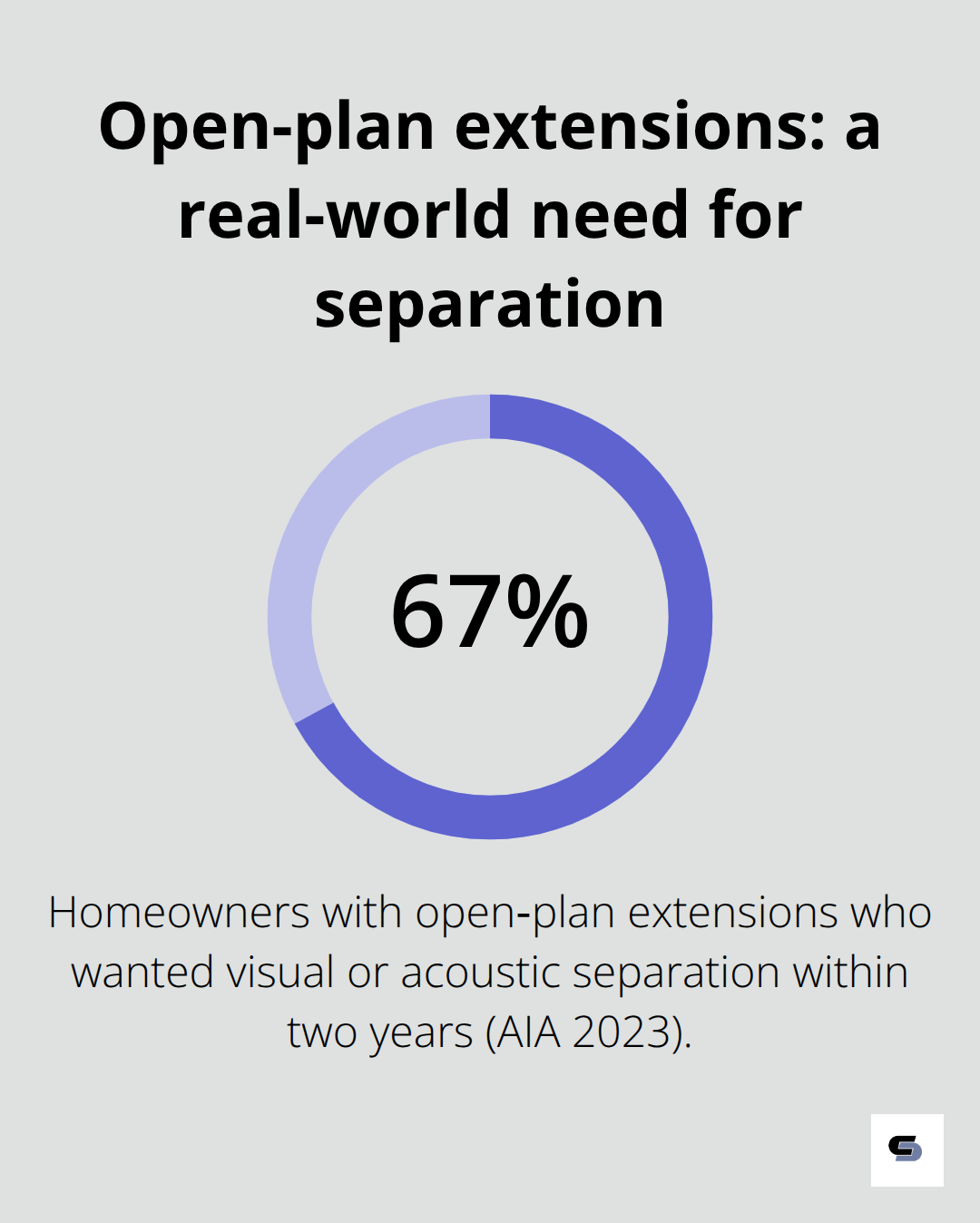
Open-plan layouts dominate contemporary Melbourne extensions, but the trend works only when you plan for how people actually move through and use the space. Too many open-plan designs look impressive on paper yet feel awkward in practice-no acoustic separation between the kitchen and living area, no place to retreat from noise, no visual break. The solution is flexible zoning. Instead of walls, use level changes, strategic furniture placement, or sliding screens to define zones without closing off light and sightlines. A 2023 survey by the Australian Institute of Architects found that 67 per cent of homeowners with open-plan extensions wanted some form of visual or acoustic separation within the first two years.
Design your open-plan extension with movable elements or subtle material shifts that let residents adapt the space to different activities-cooking, entertaining, working from home, or quiet focus time.
Material Choices That Perform and Sustain
Material choices drive both aesthetics and sustainability outcomes. Sustainable timber from certified sources performs well in Melbourne’s climate and reduces embodied carbon compared to conventional materials. Concrete, recycled steel, and low-VOC finishes align with NCC 2022 energy efficiency requirements and keep indoor air quality high. When you specify materials, ask suppliers for embodied carbon data; this metric measures the environmental cost of production and transport. Locally sourced materials cut transport emissions and support Victorian manufacturers.
Natural Light and Outdoor Connection
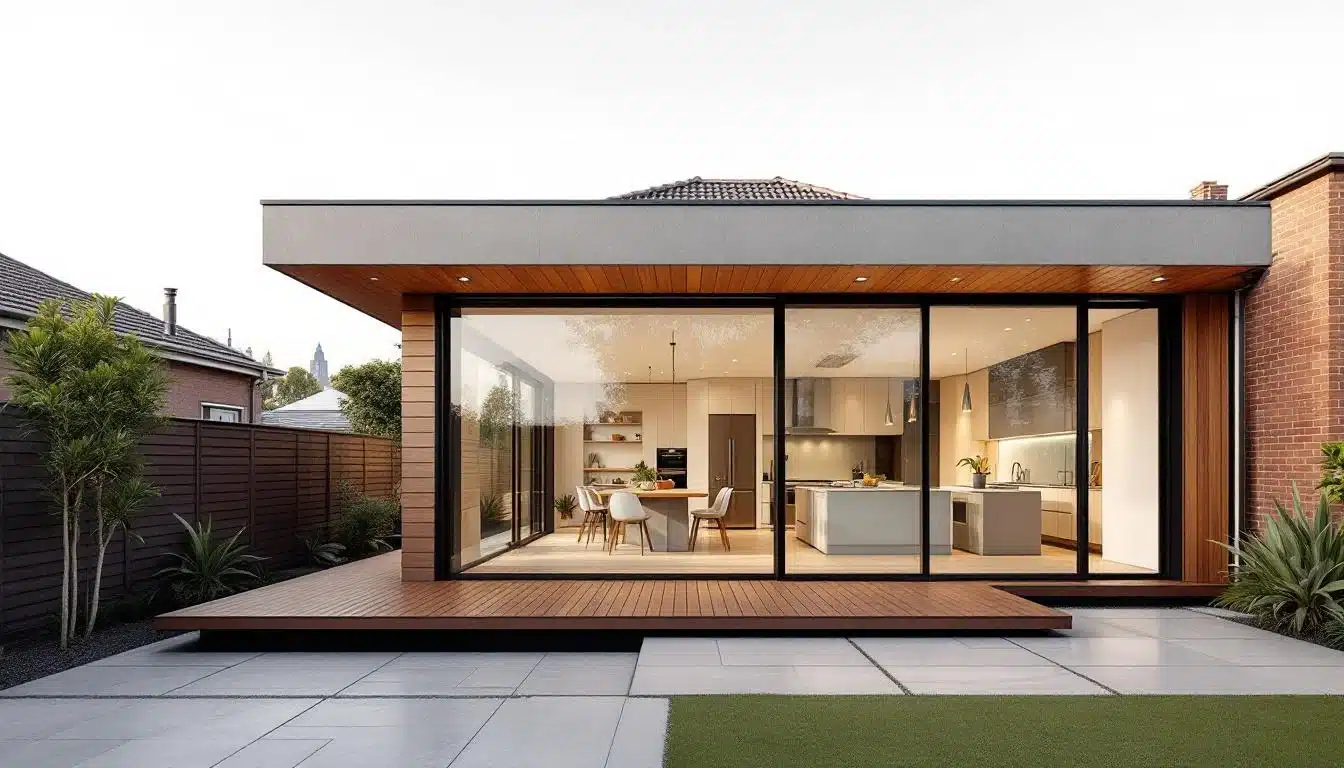
Natural light and outdoor connection improve mental health and reduce energy costs. North-facing windows in extensions maximise winter warmth and summer shading when paired with eaves or external shading devices. Collingwood Yards, Melbourne’s adaptive reuse arts precinct, demonstrates how strategic window placement and cross-ventilation reduce heating and cooling loads while maintaining occupant comfort. Skylights and roof lights work well in second-storey extensions and ground-floor additions, but they require careful orientation and shading to avoid summer heat gain. Seamless transitions to outdoor space-via frameless glass, sliding doors, or level floors-extend the usable footprint and create visual continuity. These design moves directly reduce energy consumption and add functionality that homeowners use every day.
The aesthetic and performance benefits of contemporary design principles set the foundation for understanding how these choices translate into measurable value and cost savings for your property.
What’s Trending in Melbourne Extension Design Right Now
Minimalist Aesthetics That Perform Better
Minimalist aesthetics have moved from design magazine fantasy into everyday Melbourne extensions because they genuinely reduce clutter and make smaller spaces feel larger. Clean lines, neutral palettes, and uncluttered surfaces work particularly well in second storey additions and ground floor extensions where floor area is constrained. The trend isn’t about sterility-it’s about intentional material choices and purposeful spatial planning. Melbourne homeowners specify fewer but higher-quality finishes: polished concrete floors instead of multiple materials, timber cabinetry without fussy detailing, and walls painted in soft whites or warm greys that reflect northern light. This approach costs less to build because fewer material transitions mean faster installation and fewer trades involved. It also ages better than trend-heavy design; a minimalist extension designed in 2024 will still feel contemporary in 2034, whereas heavily styled spaces often feel dated within five years.
Indoor-Outdoor Living That Works Year-Round
Indoor-outdoor living has become a non-negotiable feature for Melbourne extensions, and the focus now is on making the transition genuinely usable year-round rather than just installing large doors and hoping. Successful extensions blur the boundary through consistent flooring (outdoor pavers matching interior finishes), aligned ceiling heights between interior and exterior, and strategic weather protection. Alfresco areas designed without full roofs gain increasing popularity because they provide flexibility-open to summer breezes but sheltered through retractable shade systems or pergolas during hotter months. This design approach maximises usable outdoor space without the cost and visual weight of permanent structures.
Smart Home Systems That Cut Energy Bills
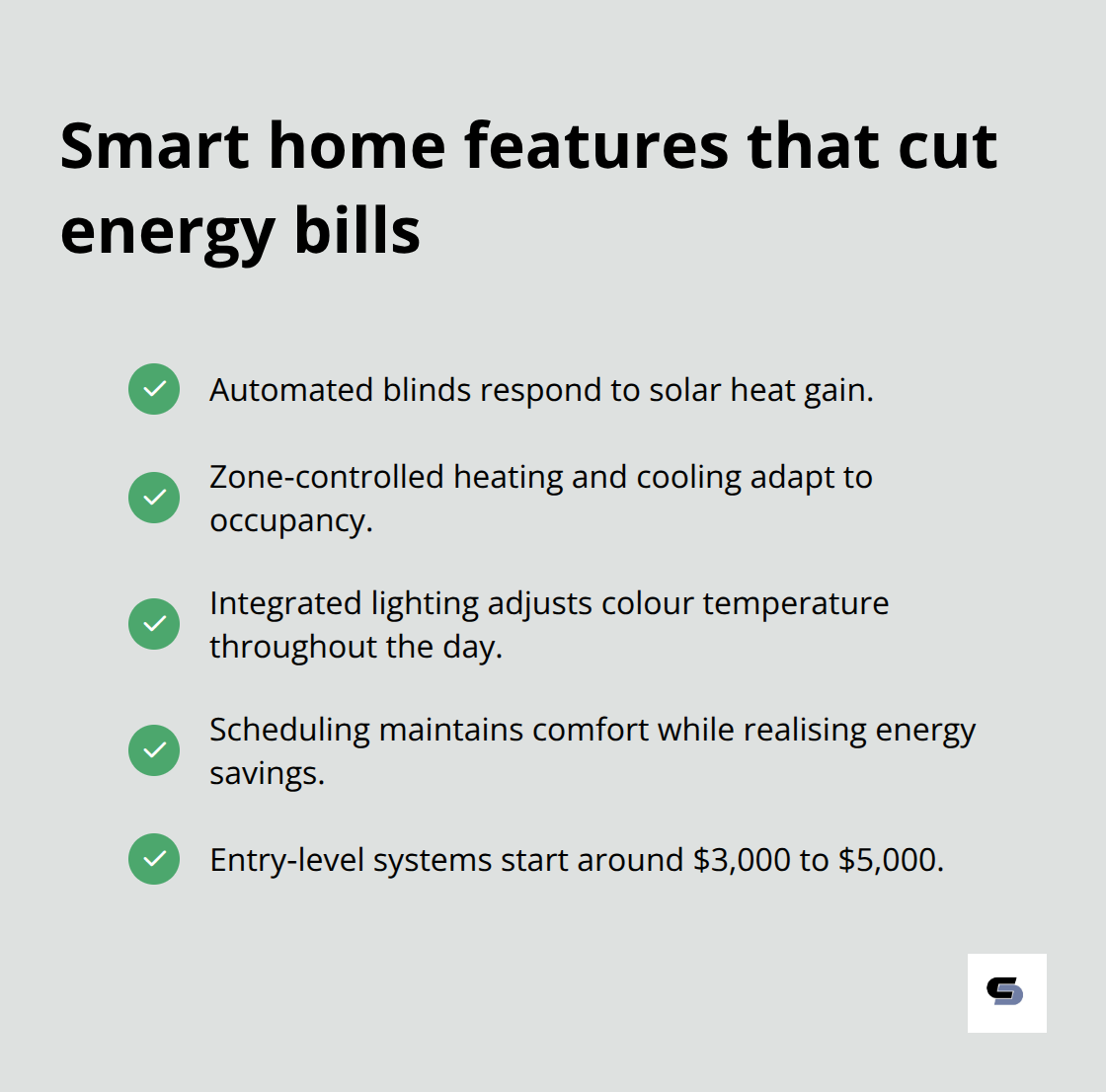
Smart home integration in Melbourne extensions has shifted from novelty to practical necessity. Automated blinds respond to solar heat gain, zone-controlled heating and cooling adapt to occupancy, and integrated lighting systems adjust colour temperature throughout the day. Smart home systems that reduce energy bills use scheduling features to maintain comfortable temperatures while realising energy savings. Smart home systems also improve livability-occupants control comfort without manual adjustments, and remote monitoring means you can manage temperature or lighting before arriving home. Installation costs have dropped significantly; basic smart systems now start around $3,000 to $5,000 for an extension, making them accessible for most new builds rather than premium-only additions.
These design trends directly shape how much value your extension adds to your property and how efficiently it performs in Melbourne’s climate.
How Contemporary Extension Design Adds Value to Your Home
Market Value Uplift From Smart Design
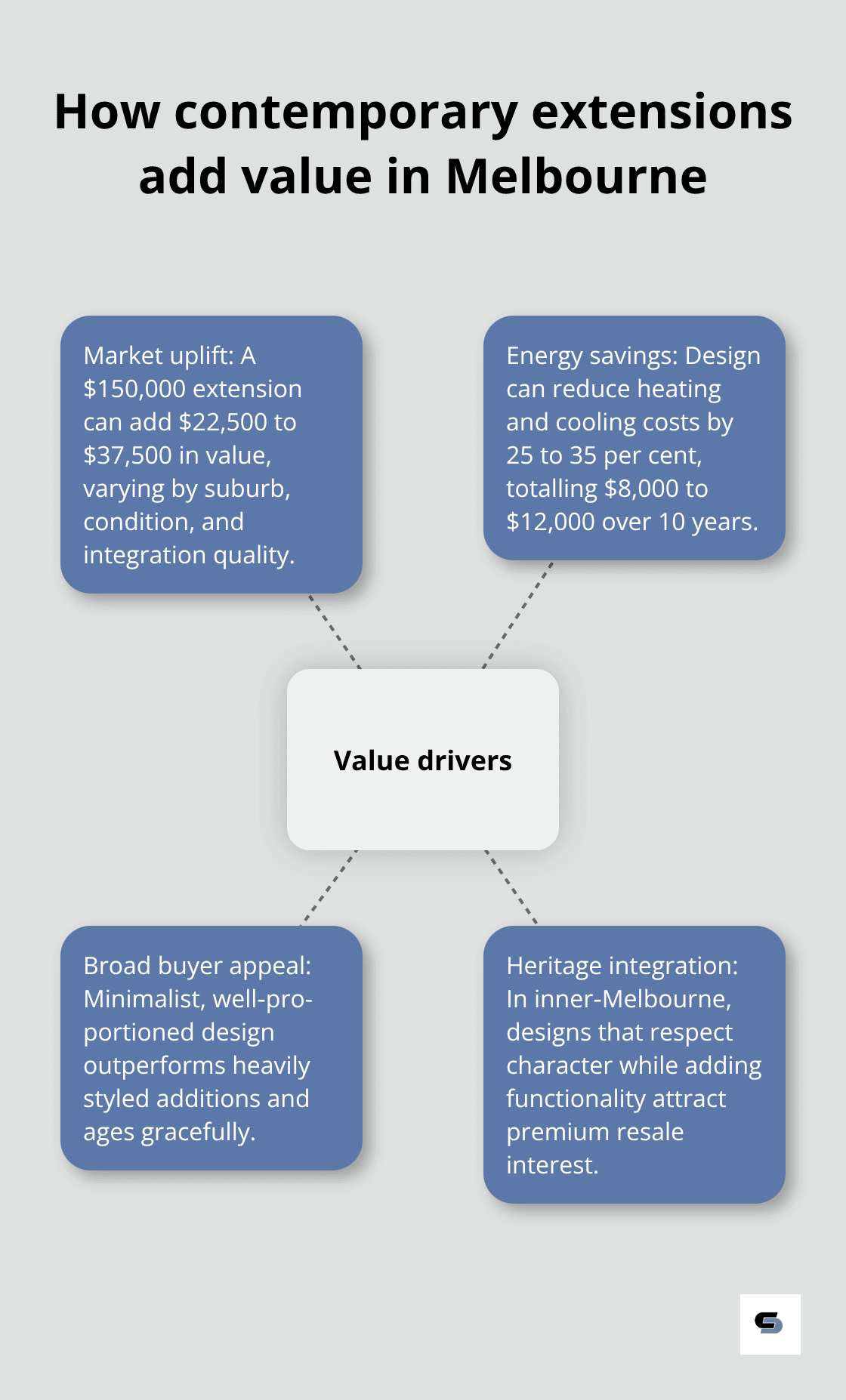
Contemporary extensions deliver measurable returns across three distinct areas that directly impact your property’s market performance and your daily quality of life. Research shows that well-designed extensions can add value to your property when executed with attention to finish quality and functional design. A contemporary extension that costs $150,000 to build typically adds $22,500 to $37,500 in market value, though this varies significantly by suburb, existing home condition, and how seamlessly the extension integrates with the original structure. Minimalist, well-proportioned extensions outperform heavily styled additions because they appeal to a broader buyer base and age more gracefully. In inner-Melbourne suburbs like Collingwood, Fitzroy, and South Yarra, contemporary extensions that maintain heritage character while adding modern functionality command premium resale appeal.
Energy Savings That Compound Over Time
The financial case strengthens when you factor in reduced energy consumption. A contemporary extension designed with north-facing glazing, thermal mass, and automated climate control can reduce heating and cooling costs by 25 to 35 per cent compared to poorly designed additions, according to modelling by the Australian Institute of Architects. Over a 10-year ownership period, those energy savings accumulate to $8,000 to $12,000 on a typical Melbourne household. Smart home systems use scheduling features to maintain comfortable temperatures while realising savings. Automated blinds respond to solar heat gain, zone-controlled heating and cooling adapt to occupancy, and integrated lighting systems adjust throughout the day-all without manual intervention.
Functionality That Adapts to Life Changes
Open-plan layouts with flexible zoning mean your extension adapts as your household needs change-from young families requiring play space to remote workers needing quiet focus areas to empty-nesters entertaining frequently. Spaces that accommodate multiple life stages retain usability and appeal far longer than single-purpose designs. Practical advantages include fewer maintenance costs because minimalist contemporary design eliminates fussy detailing, ornate finishes, and material transitions that deteriorate or fall out of fashion. A polished concrete floor and timber cabinetry specified today will still look intentional and contemporary in 15 years, whereas heavily trend-driven finishes often require costly cosmetic updates within five years to maintain market appeal.
Final Thoughts
Contemporary extension design in Melbourne delivers measurable returns across property value, energy efficiency, and daily livability. A well-executed extension adds market value, reduces energy costs by 25 to 35 per cent over time, and adapts to changing household needs without costly redesigns. Minimalist finishes and intentional spatial planning eliminate the maintenance burden of trend-heavy design, keeping your extension relevant for decades rather than years.
We at Cameron Construction have spent over 40 years designing and building extensions that balance aesthetic ambition with practical performance. Our in-house designers, engineers, and project managers work from concept through to completion, managing planning approvals, building permits, and BCA compliance across Melbourne’s councils. Whether you’re planning a double storey extension, ground floor addition, or second storey conversion, we handle the full scope-from initial design through final handover-so you navigate permits, timelines, and technical requirements with expert guidance.
Contact Cameron Construction to discuss your extension vision and start your contemporary extension design Melbourne project. We’ll review your site, understand how you actually use your home, and develop a design that reflects contemporary principles while fitting your budget and timeline. Your extension should work as beautifully as it looks.