How to Plan Your Second Storey Extension in Melbourne
Adding a second storey to your Melbourne home can double your living space without sacrificing garden area. However, the planning process involves complex regulations, structural requirements, and permit applications that many homeowners find overwhelming.
At Cameron Construction, we’ve guided hundreds of Melbourne families through successful second storey extension projects. This comprehensive guide breaks down everything you need to know about planning your second storey extension Melbourne project from initial design to final approval.
Planning and Design Considerations for Second Storey Extensions
Melbourne Planning Regulations and Council Requirements
Melbourne’s planning regulations determine whether your second storey extension needs council approval beyond standard building permits. Properties within heritage overlays require planning permits for any additions. The Melbourne Planning Scheme sets maximum building heights at 9 metres (or 10 metres on sloping sites), while site coverage cannot exceed 60% of your total lot area.

Front setbacks must align with neighbouring properties, typically 4-6 metres from the street boundary. Your extension must sit behind the primary dwelling’s front wall to maintain neighbourhood character. These regulations protect Melbourne’s residential streetscapes while allowing homeowners to expand their living space vertically.
Structural Engineering Requirements and Foundation Assessment
Your existing foundation system requires professional structural assessment before you add a second storey. Most Melbourne homes built before 1990 need significant foundation strengthening, as original footings weren’t designed for additional loads. Soil reports cost approximately $800-1,200 and identify bearing capacity requirements for your specific site conditions.
Structural engineers charge $2,500-4,000 for comprehensive foundation assessments. Clay soil conditions (common across Melbourne’s eastern suburbs) require deeper footings and underpinning work that adds $15,000-25,000 to project costs. Concrete slab homes typically need less foundation work than pier and beam constructions, though both systems require professional evaluation.
Design Options to Maximise Space and Natural Light
Second storey extensions should incorporate north-facing windows to capture maximum natural light while maintaining 9-metre minimum distances from neighbouring habitable rooms. This prevents overlooking issues and complies with planning requirements. Void spaces above living areas create dramatic ceiling heights and improve light penetration to ground floor rooms.
Clerestory windows and skylights positioned on northern roof planes provide consistent daylight without privacy concerns. We recommend 2.7-metre minimum ceiling heights upstairs to meet contemporary comfort standards, with 3-metre heights in main bedrooms creating premium living spaces. These design choices add significant property value while improving daily comfort for your family.
The next step involves understanding the specific permits and approvals your project will need from Melbourne councils.
Permits and Approvals Process in Melbourne
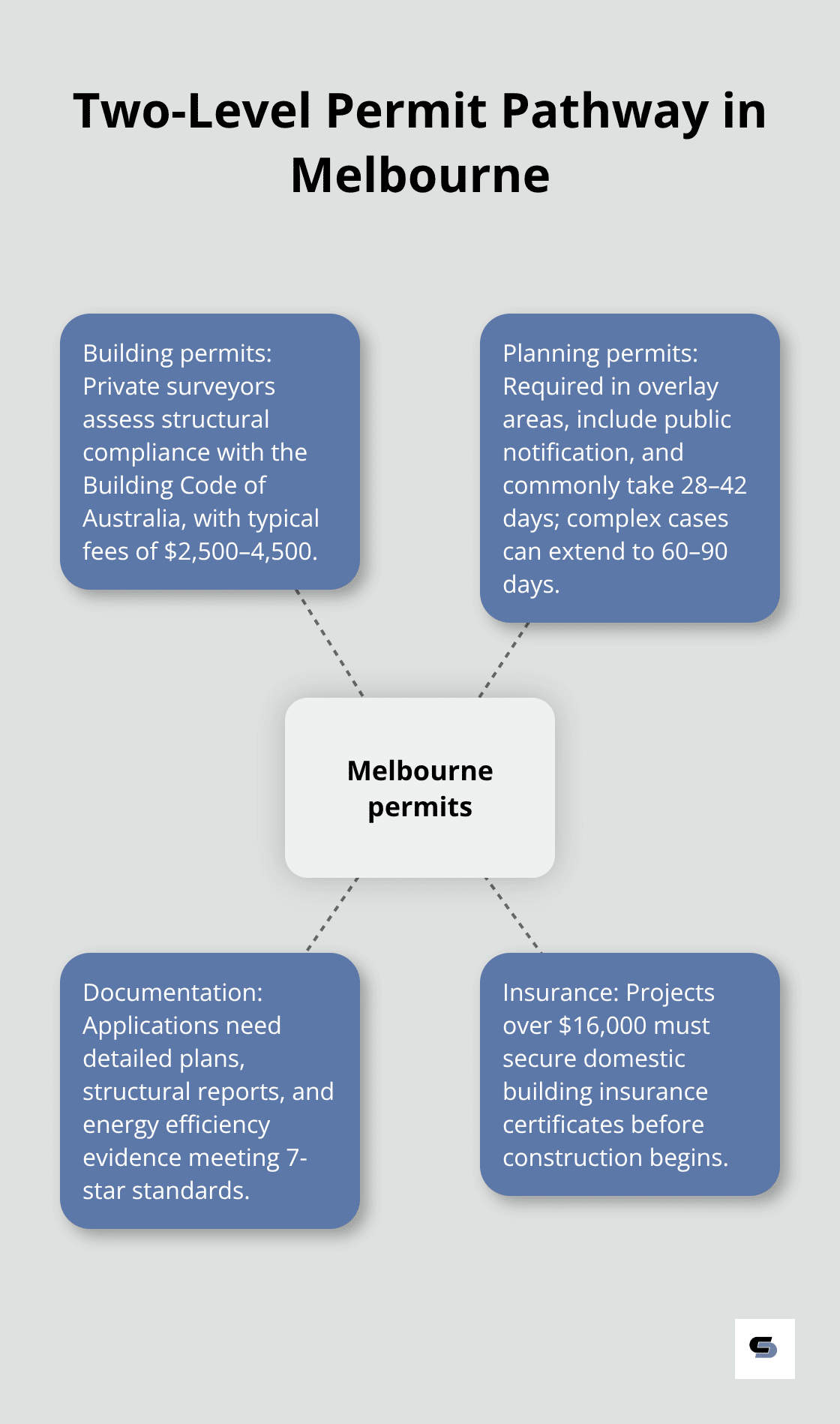
Melbourne’s permit system operates on two distinct levels that homeowners must navigate simultaneously. Building permits through private building surveyors cost $2,500-4,500 and focus on structural compliance with the Building Code of Australia. These permits require detailed architectural plans, structural reports, and energy efficiency documentation that shows your extension meets 7-star ratings. The Victorian Building Authority mandates that extensions over $16,000 require domestic building insurance certificates before construction begins.
Building Permit Documentation Requirements
Your building permit application demands comprehensive technical drawings that include floor plans, elevations, cross-sections, and structural details. Private building surveyors typically process applications within 10-15 business days once complete documentation arrives. Incomplete applications face rejection, which adds 3-4 weeks to your timeline. We recommend that homeowners engage building surveyors early in the design phase to identify potential compliance issues before they finalise architectural drawings.
Planning Permits for Heritage and Overlay Areas
Properties within heritage overlays, neighbourhood character overlays, or Design and Development Overlays require separate planning permits that cost $1,419-2,850 (depending on project value). These applications involve public notification periods that last 14 days, during which neighbours can lodge objections. Council planning departments take 28-42 days for straightforward applications, though complex cases that require planning committee approval extend timelines to 60-90 days. Applications over $1 million trigger Metropolitan Planning levy payments of $1.30 per $1,000 of development value.
Council Processing Times Across Melbourne
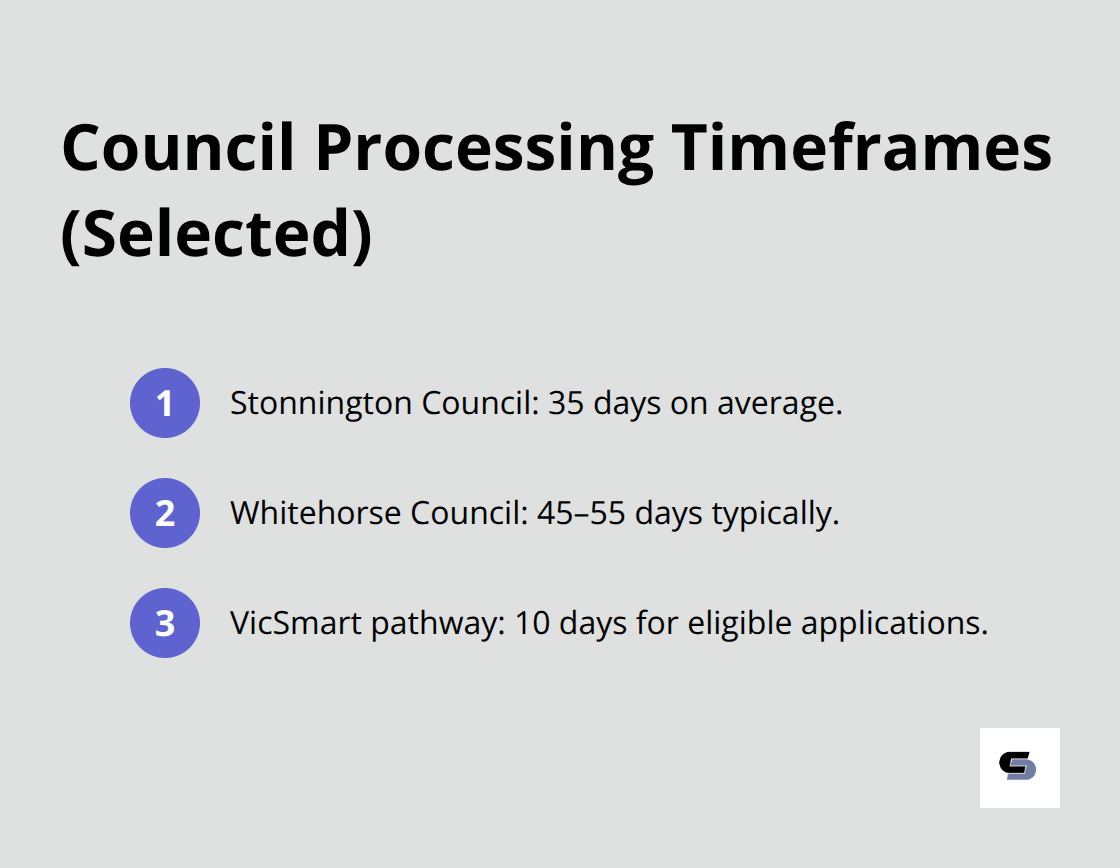
Inner Melbourne councils like Yarra and Port Phillip process planning applications faster than outer suburban councils due to higher staff levels and streamlined systems. Stonnington Council averages 35 days for residential extensions, while Whitehorse Council typically requires 45-55 days. VicSmart applications for compliant extensions under heritage overlays offer expedited 10-day processing for fees that start at $226.90, though strict design criteria limit eligibility to straightforward additions.
Understanding these permit requirements helps you plan realistic timelines, but the financial investment extends well beyond application fees to encompass the full scope of your extension project.
What Will Your Second Storey Extension Really Cost
Second storey extensions in Melbourne demand substantial upfront investment beyond construction costs. Foundation work represents the largest expense, with clay soil conditions across eastern suburbs that require underpinning work costing $15,000-25,000 for typical single-storey homes. Concrete slab foundations need pier and beam reinforcement that averages $12,000-18,000, while brick veneer homes on reactive clay soils face costs up to $35,000 for comprehensive foundation upgrades.
Structural engineers charge $2,500-4,000 for detailed assessments, though this investment prevents costly surprises during construction. Soil reports cost $800-1,200 but identify bearing capacity requirements that determine your foundation work scope.
Professional Design and Engineering Investment
Architectural fees for second storey extensions range from $8,000-15,000 depending on project complexity and design customisation. Building designers charge lower rates at $4,000-8,000 but offer limited structural expertise compared to registered architects. Structural documentation costs $3,500-6,500 beyond initial assessments, while energy efficiency consultants charge $1,200-2,000 for mandatory 7-star compliance reports.
Planning consultants cost $2,500-4,500 for heritage overlay applications (though this expertise prevents application rejections that add months to your timeline). These professionals navigate complex council requirements and increase approval success rates significantly.
Council Fees and Permit Expenses
Building permits through private surveyors cost $2,500-4,500 for extensions valued under $500,000, with increases to $6,000-8,500 for larger projects. Planning permits vary based on development value and complexity, with fees determined by state and local authorities for planning and subdivision services. Metropolitan Planning levy applies to projects over $1,311,000 at $1.30 per $1,000 of development value.
Council fees add charges for newspaper notices plus $10 per neighbour notification letter. VicSmart applications offer reduced fees but strict eligibility criteria limit availability to straightforward additions without design variations.
Hidden Costs That Impact Your Budget
Domestic building insurance adds 0.5-1% of construction value for projects over $16,000. Temporary accommodation costs average $2,500-4,000 monthly if your extension affects essential living areas. Utility connections for new electrical, plumbing, and gas services cost $3,500-6,500 depending on existing infrastructure capacity.
Site preparation work includes asbestos testing ($400-800) for homes built before 1990, tree removal permits ($150-500), and temporary fencing requirements ($800-1,500). These expenses accumulate quickly but remain necessary for project compliance and safety standards.
Final Thoughts
Your second storey extension Melbourne project demands careful coordination of design, permits, and professional expertise. Start with a structural engineer who will assess your foundation requirements, then work with an architect or building designer to create compliant plans that maximise space and natural light. Submit building and planning permit applications at the same time to reduce delays, and allow 6-8 weeks for council processing in most Melbourne areas.
Budget realistically for foundation work, professional fees, and permit costs that often exceed initial estimates. Properties in heritage overlays face additional planning requirements that extend timelines but protect neighbourhood character (though experienced extension specialists streamline this complex process and prevent costly mistakes). Working with professionals who understand local regulations saves time and money throughout your project.
We at Cameron Construction handle concept to completion delivery for Melbourne homeowners, and we manage design, permits, and construction coordination across all council areas. Our team helps families navigate planning regulations while we create beautiful, functional living spaces that add lasting value to their homes. Contact us today to discuss your second storey extension project and discover how we can transform your Melbourne home.