Melbourne Home Extension Costs: Budgeting for Space and Style
Melbourne home extension costs vary dramatically depending on where you live and what you’re building. At Cameron Construction, we’ve helped hundreds of homeowners navigate these decisions without overspending or cutting corners.
This guide breaks down real pricing for double storey and ground floor additions, plus practical strategies to stretch your budget further.
What Drives Extension Costs in Melbourne
Your extension’s price depends on three interconnected factors that vary wildly across Melbourne. Location matters far more than most homeowners realise-a block in Toorak or Brighton carries a different land premium than one in Footscray or Coburg, and this affects not just construction but also planning complexity and labour availability. The Department of Treasury and Finance tracks construction cost inflation through annual indexation factors, which showed residential extensions in metropolitan Melbourne rose 4.3% across 2025, compared to 5.8% in regional Victoria. This means a project costed at $150,000 last year reaches $156,450 today, even before site-specific challenges enter the equation. Soil conditions, heritage overlays, sloping blocks, and proximity to neighbours all push costs up, and these vary dramatically between suburbs.
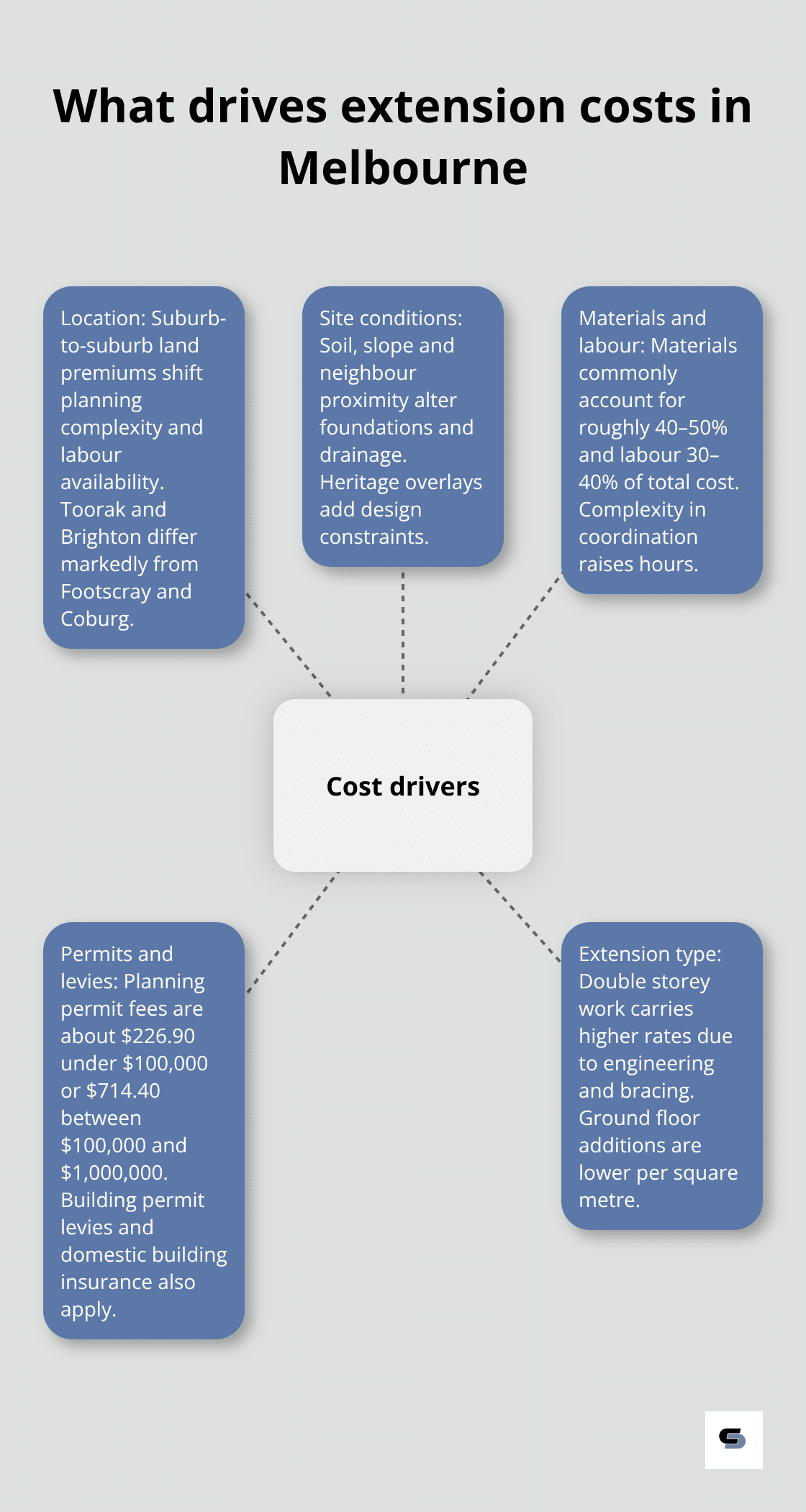
A double storey addition on a standard rectangular block in one suburb might cost $45,000 per square metre, while an identical structure on a sloping block two suburbs away reaches $55,000 per square metre simply due to foundation and drainage complexity.
Materials and Labour Form Your Budget Foundation
Materials account for roughly 40–50% of your total extension cost, with labour taking another 30–40%, leaving permits, design, and contingency to fill the remainder. Your choice of finishes-whether you select standard brickwork or premium cladding, basic kitchen cabinetry or custom joinery-shifts material costs significantly. Labour costs reflect not just hourly rates but also the complexity of coordination; a ground floor addition requiring minimal structural work costs less per hour than a second storey conversion that demands temporary bracing, careful load transfer, and staged construction.
Permits and Levies Add Mandatory Costs
Permits and levies add another layer that you cannot avoid. The Victorian Building Authority requires a building permit levy that depends on your estimated construction cost and your local council area. For projects exceeding $16,000 you must hold domestic building insurance before taking a deposit. Planning permit fees for a standard dwelling extension under $100,000 run about $226.90 in 2025–26, though extensions valued between $100,000 and $1,000,000 jump to $714.40. These fees are non-negotiable, and they compound if your design requires amendments or if your block triggers additional approvals. Understanding these fixed costs upfront helps you build a realistic budget before you speak with builders about construction pricing.
What Each Extension Type Costs in Melbourne
Double Storey Extensions Command Premium Pricing
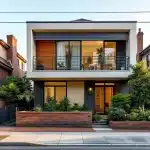
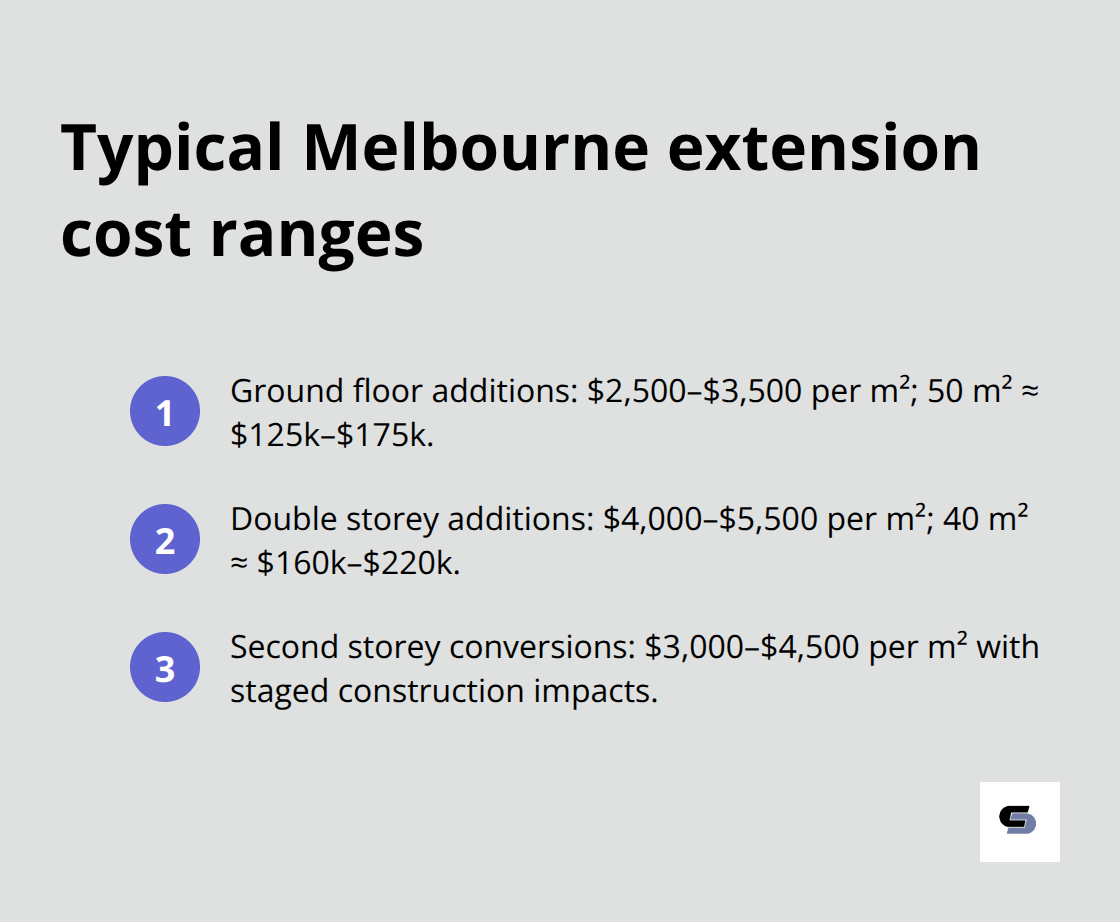
Double storey extensions attract the highest per-square-metre rates because structural engineering, temporary bracing, and careful load transfer to existing foundations all add complexity and cost. Across metropolitan Melbourne, double storey additions typically run between $4,000 and $5,500 per square metre, though sloping blocks, poor soil conditions, or heritage overlays push prices higher. A 40-square-metre double storey addition on a standard block costs $160,000 to $220,000 before finishes, but the same footprint on a sloping site with clay soil reaches $240,000-foundation work, drainage, and temporary support systems multiply both labour and material expenses.
The structural demands of upper-level work mean you cannot cut corners on engineering or temporary bracing without risking safety and compliance failures.
Ground Floor Additions Offer Lower Per-Metre Costs
Ground floor additions sit lower in the price range at $2,500 to $3,500 per square metre, since they avoid second-storey structural complexity and often require less temporary bracing. A 50-square-metre ground floor extension costs roughly $125,000 to $175,000, making this option attractive for homeowners who need additional living space without the engineering overhead of upper-level work. Ground floor work typically progresses faster than double storey construction because you eliminate staged building sequences and the need to support the existing structure while adding new load-bearing elements above.
Second Storey Conversions Occupy the Middle Ground
Second storey conversions represent a middle path-you add no footprint, but you convert roof space into habitable area, which still demands structural review, new floor systems, and careful integration with existing walls. This conversion typically runs $3,000 to $4,500 per square metre because staged construction keeps the home occupied during renovation, and workers must coordinate around your daily life. The work involves staged construction to maintain occupancy, which extends timelines and labour coordination compared to ground floor additions.
Material Choices and Labour Rates Shift Final Costs
Material quality and labour availability shift these figures significantly within each category. Choosing standard finishes versus premium joinery, selecting off-the-shelf kitchen components versus custom cabinetry, and opting for brick veneer instead of rendered blockwork each alter the final cost by 5–15%. Labour rates also vary by suburb-inner-Melbourne trades command higher hourly rates than outer-region builders, and this compounds across a six-to-twelve-month project. The Victorian Building Authority’s building permit levy, calculated through the Building Activity Management System, adds $500 to $3,000 depending on your estimated construction cost and council area. Planning permit fees add a further $226.90 for extensions under $100,000 or $714.40 for those between $100,000 and $1,000,000, according to 2025–26 Victorian planning fee schedules. Domestic building insurance, required for projects exceeding $16,000, costs roughly 1–2% of your contract value and protects both you and the builder if disputes arise during construction.
Fixed Costs Sit Outside Per-Square-Metre Calculations
These fixed and semi-fixed costs sit outside the per-square-metre calculation but must feature in your budget alongside construction pricing to avoid shortfalls mid-project. Understanding where your money flows-into structural work, materials, labour, permits, and insurance-helps you identify where you can adjust without compromising quality or safety. Once you know what each extension type costs, the next step involves identifying which cost-saving strategies actually preserve quality rather than simply postpone problems.
How to Cut Costs Without Cutting Corners
Saving money on your extension means timing your decisions strategically rather than simply choosing cheaper materials or rushing through planning. False economies-selecting budget finishes that fail within five years, or skipping proper design work to save a few thousand upfront-create expensive mid-project changes that cost far more. Real savings come from sequencing your project smartly, locking in material prices before inflation climbs further, and investing time in detailed planning that prevents costly variations. Construction cost inflation in metropolitan Melbourne reached 4.3% across 2025 according to the Department of Treasury and Finance, meaning delays or poor planning decisions that extend your timeline directly inflate your final bill.
Phase Your Construction to Spread Costs
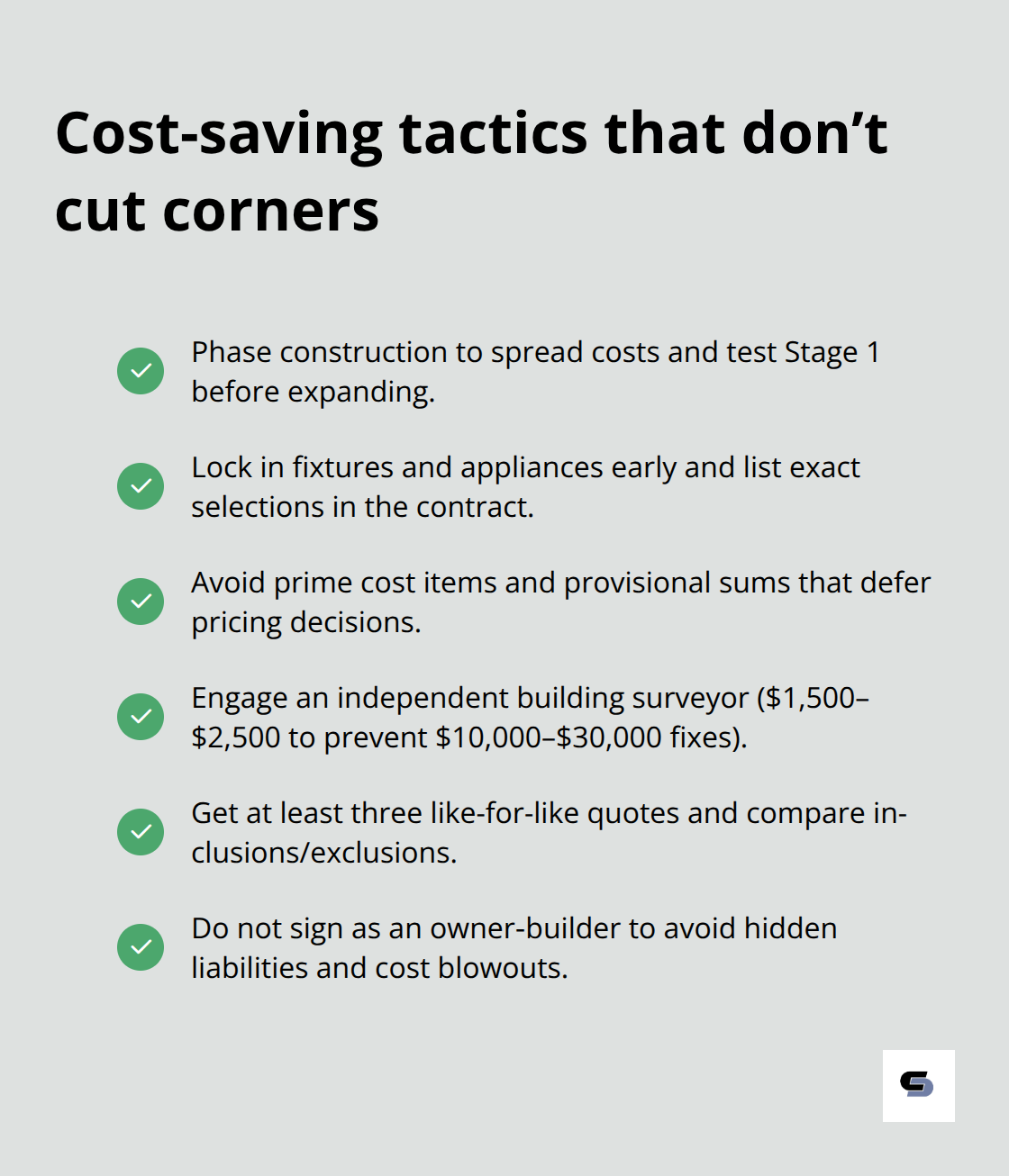
A phased approach lets you build the core extension now-perhaps a ground floor addition at $2,500 to $3,500 per square metre-then add a second storey conversion later once you’ve recovered costs and building prices stabilise. This strategy also lets you occupy and test the first phase before committing capital to the next, and it spreads labour and material costs across two financial years, potentially capturing tax advantages. The key involves designing your foundation and structural systems upfront to accommodate future expansion, which costs almost nothing extra during initial construction but saves thousands if you attempt to retrofit later.
Lock in Materials Before Prices Rise
Material timing matters far more than most homeowners realise. You should lock in your fixture and appliance selections months before construction begins, list them specifically in your contract rather than using prime cost items, and avoid provisional sums that builders use to defer pricing decisions until mid-project. These tactics alone typically save 8–12% on material costs and eliminate change orders that derail budgets.
Invest in Independent Professional Advice
Engage a building surveyor independent of your builder before you sign any contract; the Law Institute of Victoria can help you locate one, and this investment of $1,500 to $2,500 typically identifies design flaws or specification gaps that would cost $10,000 to $30,000 to fix once construction starts. Work with a building designer who understands Melbourne’s planning rules and BCA compliance requirements, so your plans move through council approval quickly without expensive amendments.
Compare Quotes and Avoid Hidden Costs
Obtain at least three written quotes based on identical plans and specifications, compare what each builder includes or excludes, and resist the urge to sign with the cheapest option if their scope differs from others-the lowest price often masks hidden costs that surface mid-construction. Do not sign as an owner-builder to save fees; this shifts legal responsibility to you, inflates your costs, and typically costs far more than the modest savings it promises.
Final Thoughts
Melbourne home extension costs reflect real decisions about location, materials, labour, and timing rather than fixed formulas. The figures we’ve outlined-$2,500 to $3,500 per square metre for ground floor additions, $4,000 to $5,500 for double storey work, and the mandatory permits and levies that accompany them-give you a framework to build realistic budgets before you commit capital. Your actual costs depend on whether you phase construction strategically, lock in material prices before inflation climbs further, and invest in independent professional advice that prevents expensive mid-project surprises.
A well-planned extension adds genuine value to your home. Ground floor additions improve daily functionality and often recoup 60–70% of their cost at resale, while double storey conversions and second storey additions capture additional land value that Melbourne’s constrained housing market rewards. The key lies in treating your extension as a long-term investment rather than a short-term expense, which means you spend time upfront on design, permits, and builder selection rather than rushing to save a few thousand dollars that evaporate the moment construction begins.
Your next step involves gathering detailed quotes from builders who understand Melbourne’s specific challenges-soil conditions, heritage overlays, council variations, and the building regulations that differ between suburbs. Contact Cameron Construction to discuss your extension plans and receive a realistic assessment of what your project will cost and how long it will take.