How Much Does a Home Extension Cost in Melbourne?
A home extension cost in Melbourne varies significantly depending on what you’re building and where you’re building it. We at Cameron Construction have guided hundreds of homeowners through this process, and the price range can shift dramatically based on a few key factors.
Understanding these costs upfront helps you plan your budget and avoid surprises down the track. This guide breaks down exactly what you’ll pay for labour, materials, design, and the variables that push prices up or down.
What You’ll Actually Pay for Labour, Materials and Design
Labour Costs Drive Your Budget
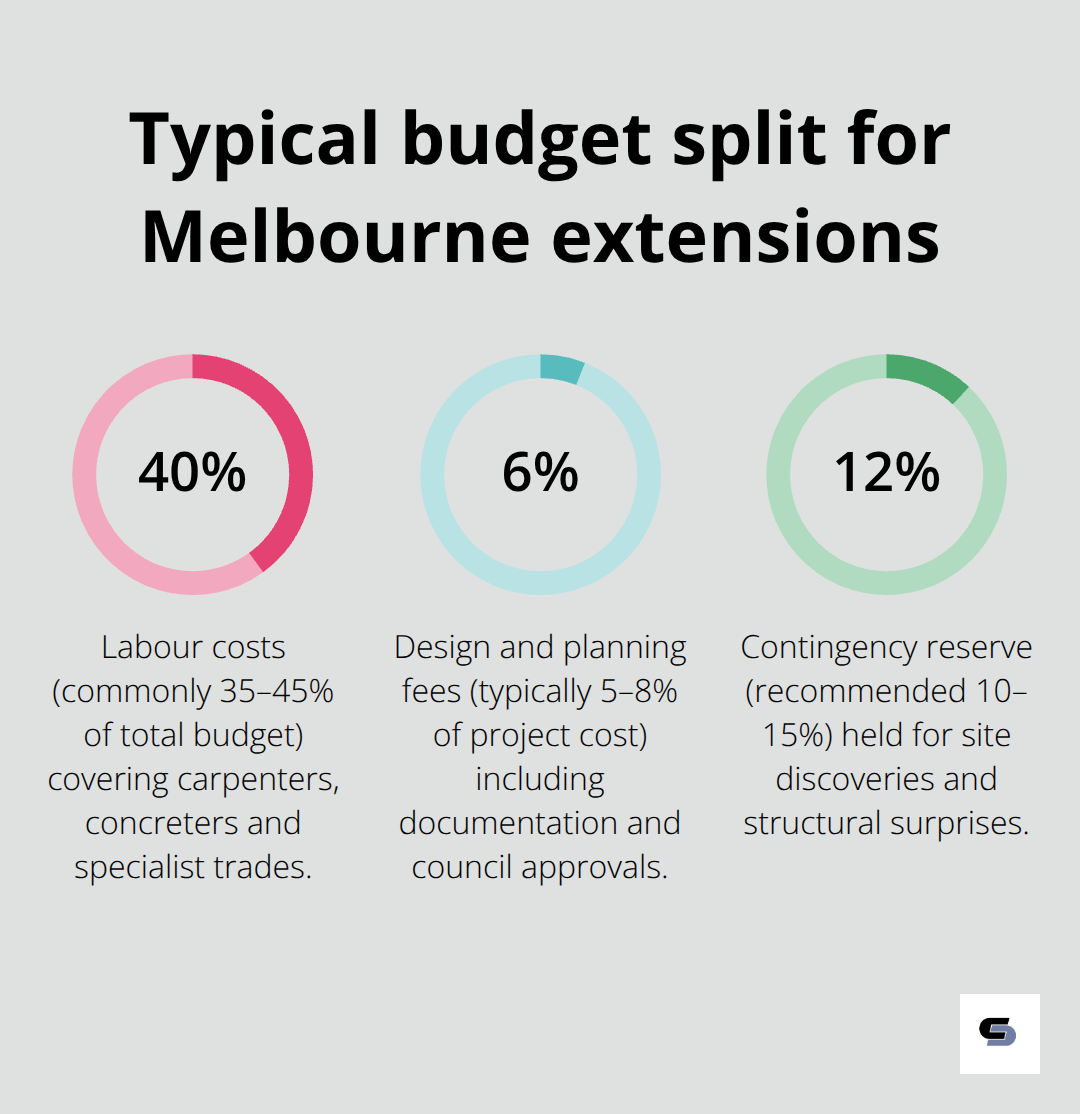
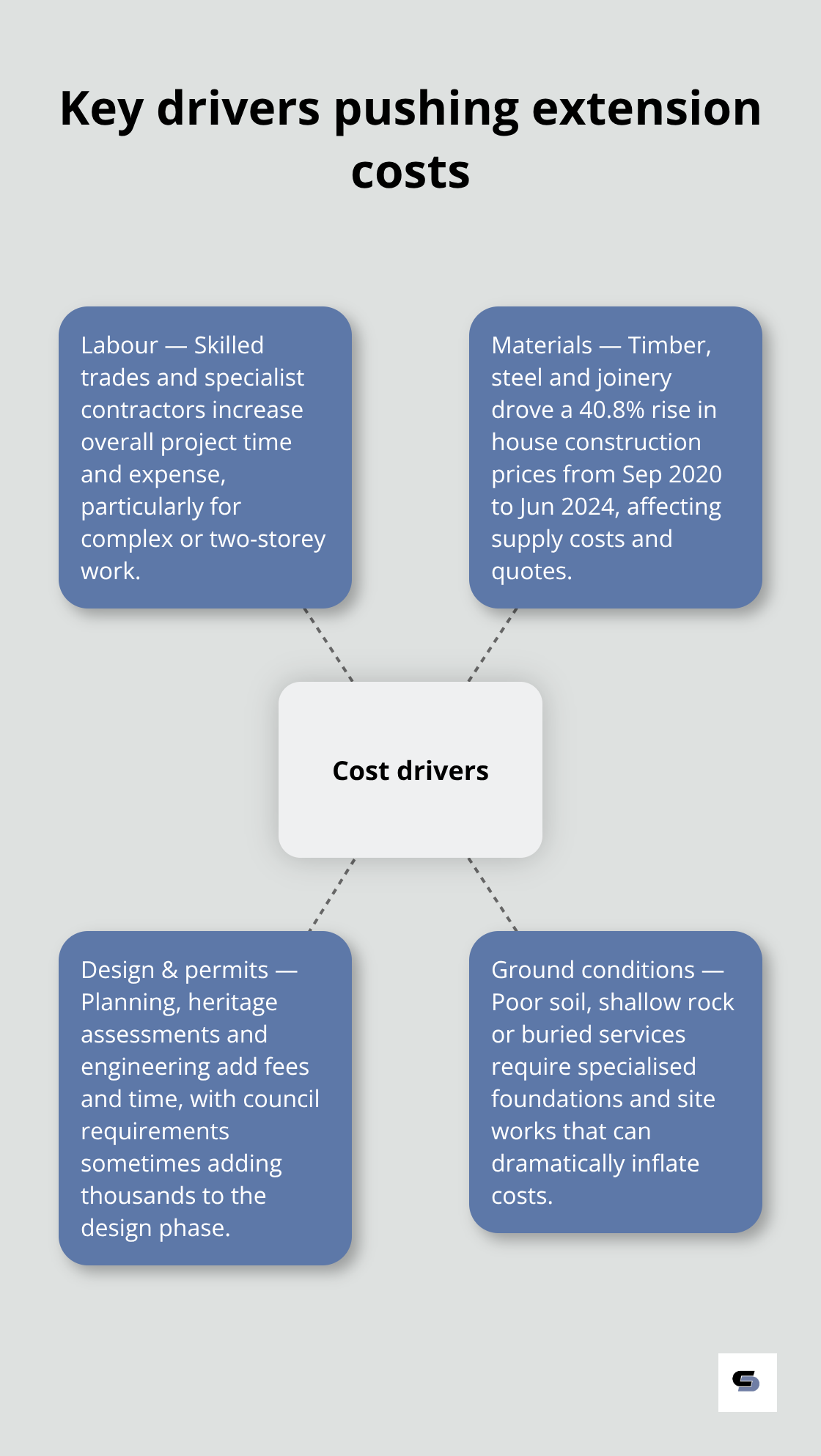
Labour represents the largest expense in most Melbourne home extensions, typically consuming 35–45% of your total budget. Private sector wages rose 4.1% annually to the June quarter 2024, which means labour costs have continued rising. A qualified carpenter or concretor in Melbourne now commands premium rates, and you’ll pay more for specialists like structural engineers or licensed electricians.
The complexity of your extension directly affects labour duration. A straightforward single-storey addition takes less time than a double storey extension with structural work. Trade licensing matters significantly here. Electricians must hold registration with Energy Safe Victoria, plumbers and gasfitters with the Building and Plumbing Commission, and asbestos removalists with WorkSafe Victoria. Hiring unlicenced trades might seem cheaper initially, but it creates liability issues and can void your warranty.
Materials and Supply Expenses
Materials and supply costs have stabilised after the dramatic spikes of 2021–2022, but they remain elevated. House construction prices rose 40.8% from September 2020 to June 2024, with timber, steel, and joinery products driving much of that increase, according to ABS data. Structural timber and steel products peaked around mid-2022 with year-on-year rises of roughly 24%, then eased through 2023–2024.
For your Melbourne extension, you should price timber framing, steel beams, and metal roofing carefully when obtaining quotes. Material selection affects both upfront costs and long-term performance. Specification clarity in your contract prevents cost blowouts. Define every fixture, fitting, and material grade upfront rather than leaving items as prime cost or provisional sums, which are notorious for budget surprises.
Design and Planning Fees
Design and planning fees typically run 5–8% of your total project cost, though this varies. A building designer costs less than an architect but still provides essential documentation for council approval. Planning permits for extensions in Melbourne range from straightforward approvals to complex applications requiring heritage assessments or town planning reports.
If your extension encroaches on public space, you’ll pay separate fees. The City of Melbourne charges $197.70 for temporary protective structure permits plus $2.50 per square metre per day for space occupation. These additional costs add up quickly on larger projects, so factor them into your initial budget planning.
Understanding these three cost pillars positions you to evaluate quotes accurately and identify where you can make strategic choices. The next section examines how your specific extension type, location, and site conditions push these baseline costs higher or lower.
What Pushes Your Extension Cost Up or Down
Extension Type and Complexity Shape Your Budget
Your extension type fundamentally determines labour hours and material volume. A single-storey ground floor addition costs considerably less than a double storey extension because it avoids structural complexity, upper-level framing, and additional engineering. Double storey work requires more detailed structural design, additional bracing during construction, and longer trade sequencing-electricians and plumbers must coordinate across two levels rather than one. A straightforward rectangular addition on level ground costs less than an L-shaped or wraparound design that demands more complex roof lines and corner details. Sloping blocks introduce foundation challenges that inflate costs significantly. House construction prices rose 40.8% from September 2020 to June 2024, but this masks regional variation. Victoria’s price growth cooled to around 0.9% by September 2023 compared to New South Wales at 7.9%, meaning Melbourne’s market has stabilised faster than other states. This stability helps you budget more confidently, though labour costs remain the sticky element-the Wage Price Index for Construction climbed to 6.3% year-on-year by June 2024.
Location and Council Requirements Add Hidden Costs
Location and council requirements create hidden costs most homeowners underestimate. Extensions in heritage areas require heritage assessments that add $2,000–$8,000 to your design phase alone, and council approval timelines stretch to 8–12 weeks instead of the standard 4–6. If your extension touches public space or street frontage, you must obtain a temporary protective structure permit from the City of Melbourne at $197.70 plus $2.50 per square metre per day for space occupation. Structural engineers must certify the hoarding or scaffolding before installation and recertify every six months, adding recurring costs.
Ground Conditions Determine Foundation Expenses
Ground conditions are equally critical-a soil report costs $800–$1,500 but prevents far costlier surprises. Poor soil or shallow rock requires deeper, more expensive footings; expansive clay soils demand specific foundation design. Foundation costs can swing from $8,000 to $25,000 depending on what the ground reveals. Wet sites need drainage solutions and potentially raised floor systems that multiply costs. Existing services-water pipes, gas lines, electrical conduits-buried in unexpected locations force redesigns and trade delays. Factor in 10–15% contingency specifically for ground and service discoveries; this is not theoretical padding but protection against real costs that emerge once excavation begins. These site-specific variables often outweigh the baseline costs you calculated from quotes, so understanding your block’s characteristics before committing to a builder selection process protects your timeline and budget.
Control Your Extension Budget Before It Controls You
Obtain Three Written Quotes from Registered Builders
Obtain three written quotes from registered builders-this is non-negotiable, not optional. Each quote must detail labour costs, material specifications, timeline, and payment terms separately so you can compare apples to apples. Most builders inflate quotes when they sense budget uncertainty, so arrive armed with site soil reports, council planning feedback, and design documentation. A soil report costs $800–$1,500 upfront but prevents builders from padding foundation estimates with vague contingencies.
When comparing quotes, ignore the lowest price entirely. Builders quoting significantly below market rates either cut corners on quality or underestimate hidden costs that surface mid-project. Contract disputes often spike when homeowners chase cheap quotes and discover mid-way that materials weren’t specified, trades weren’t licenced, or structural work wasn’t properly engineered.
Specify Materials and Lock in Costs
Specify every material grade, fixture, and fitting in your contract rather than accepting prime cost items or provisional sums. Prime cost items are notorious budget killers; a builder might quote $15,000 for kitchen cabinetry as a prime cost item, then source $22,000 cabinetry and pass the difference to you. Contractual clarity prevents these surprises.
Request that your builder provide a detailed foundation cost estimate based on actual soil data-foundation expenses swing wildly from $8,000 to $25,000 depending on ground conditions, and this is where contingency padding often hides. Material selection strategy matters more than chasing discounts. Timber framing and steel products remain elevated compared to pre-2020 pricing, so locking in material costs early through your contract prevents price escalation clauses from pushing costs higher mid-project.
Protect Your Budget with Contingency and Stage Payments
Set a contingency reserve of 10–15% above your base budget and treat it as untouchable except for genuine site discoveries or structural surprises. This contingency protects against the real costs that emerge once excavation begins-unexpected services, poor soil requiring deeper footings, or asbestos in existing structures. Avoid selecting finishes during construction; choose all fixtures, paint colours, and fittings before work starts so builders price accurately rather than managing change orders that add 5–10% to labour costs.
If your extension touches public space or street frontage, budget separately for temporary protective structure permits at $197.70 plus $2.50 per square metre per day for space occupation-these costs are easily overlooked but accumulate quickly. Request stage-based payment schedules tied to completed milestones rather than calendar dates; pay only when you inspect and approve each stage, whether foundation, frame, lock-up, or fixing. This approach protects your money and maintains builder accountability throughout the project.
Final Thoughts
Your home extension cost in Melbourne depends on three interconnected factors: labour and trade expenses that consume 35–45% of your budget, material costs that remain elevated from 2020–2024 price spikes, and design plus planning fees that typically run 5–8% of total project cost. Extension type, location, council requirements, and ground conditions create the real cost variation-a double storey addition costs substantially more than a ground floor extension because of structural complexity and engineering demands, while heritage areas add assessment costs and longer approval timelines. Poor soil conditions discovered during excavation can swing foundation expenses from $8,000 to $25,000, meaning two identical-looking extensions can cost dramatically different amounts depending on where they sit and what lies beneath.
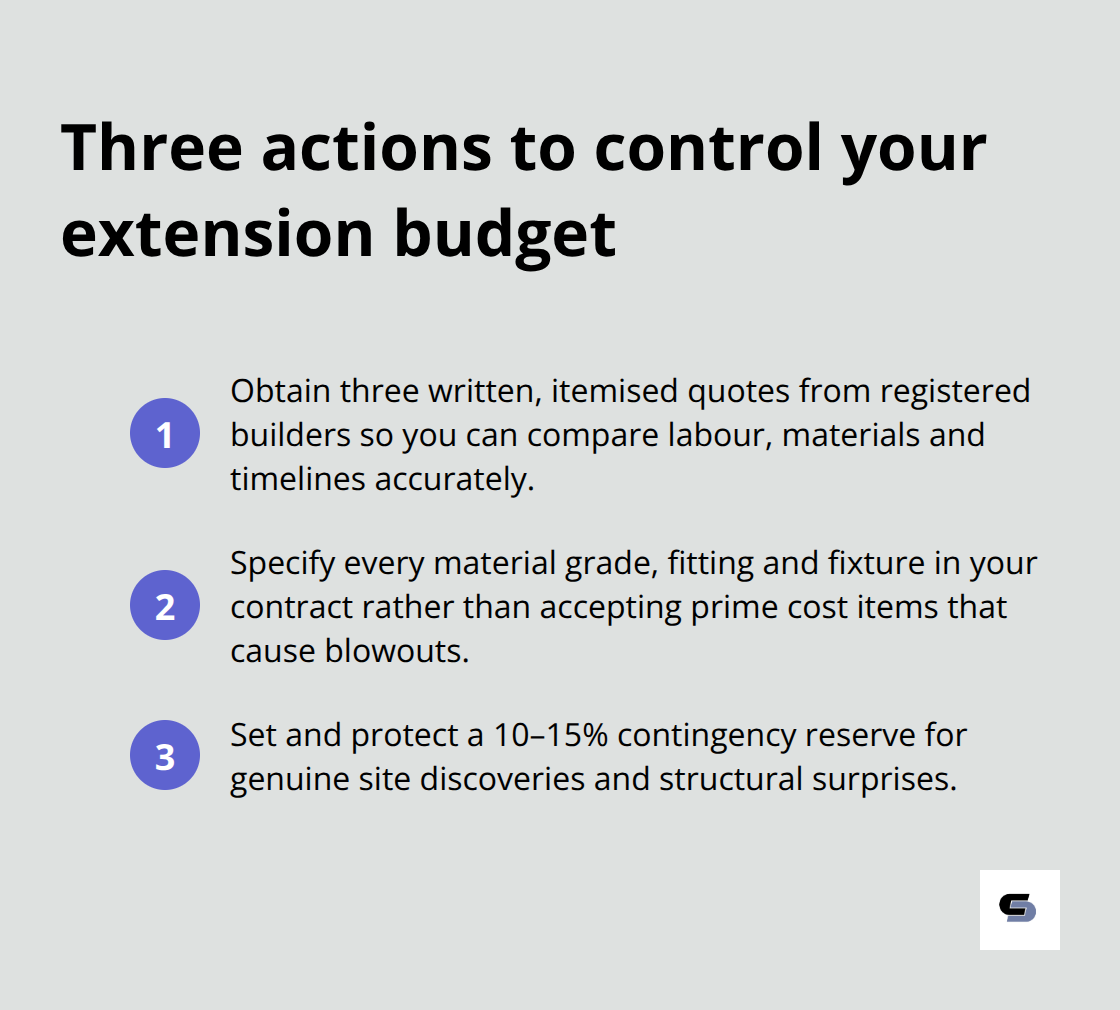
Controlling your budget requires three concrete actions before you commit to a builder: obtain three written quotes with itemised labour, materials, and timelines so you can compare accurately, specify every material grade and fixture in your contract rather than accepting prime cost items that hide cost blowouts, and set a 10–15% contingency reserve for genuine site discoveries. Protect your money through stage-based payments tied to completed milestones, not calendar dates, and request that your builder provide detailed foundation cost estimates based on actual soil data. These protections transform your home extension cost Melbourne project from a financial gamble into a controlled investment with clear accountability.
We at Cameron Construction have guided hundreds of Melbourne homeowners through this process, handling everything from concept through to completion, including planning permits and BCA compliance across Melbourne’s councils. Contact us to discuss your project and get started with confidence.