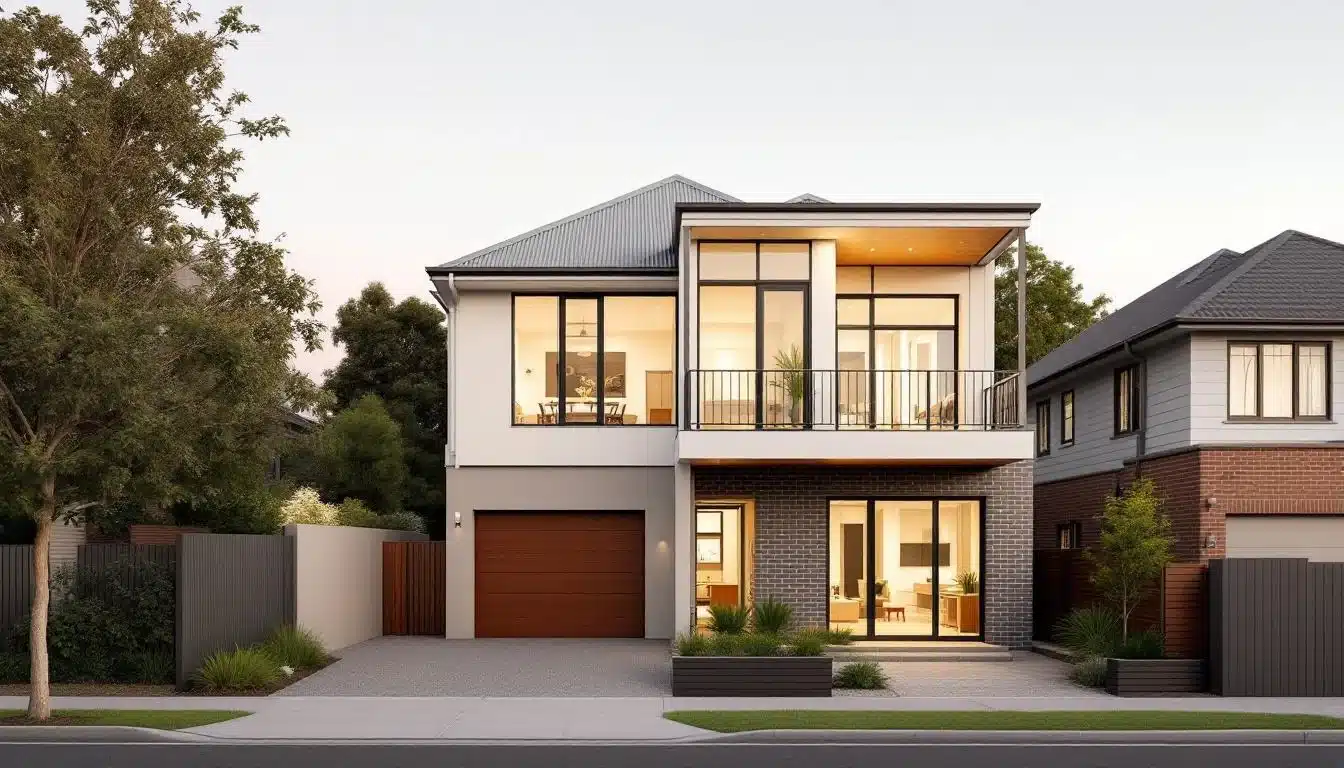
Double Storey Extensions Melbourne: From Ground To Lofty Living
Melbourne’s established suburbs are running out of room. Most blocks are fully developed, and moving house costs a fortune in today’s market.
Double storey extensions Melbourne offer a smarter alternative. We at Cameron Construction have helped hundreds of homeowners add genuine living space without abandoning their neighbourhoods. This guide walks you through everything from council setbacks to final handover.
Why Double Storey Extensions Beat Moving House
The True Cost of Relocation
Melbourne’s property market makes relocation financially punishing. Moving costs typically run 5–10% of your property value when you factor in agent commissions, legal fees, and stamp duty. A homeowner in a $1 million property could spend $50,000 to $100,000 just to change addresses. Double storey extensions eliminate this penalty entirely.
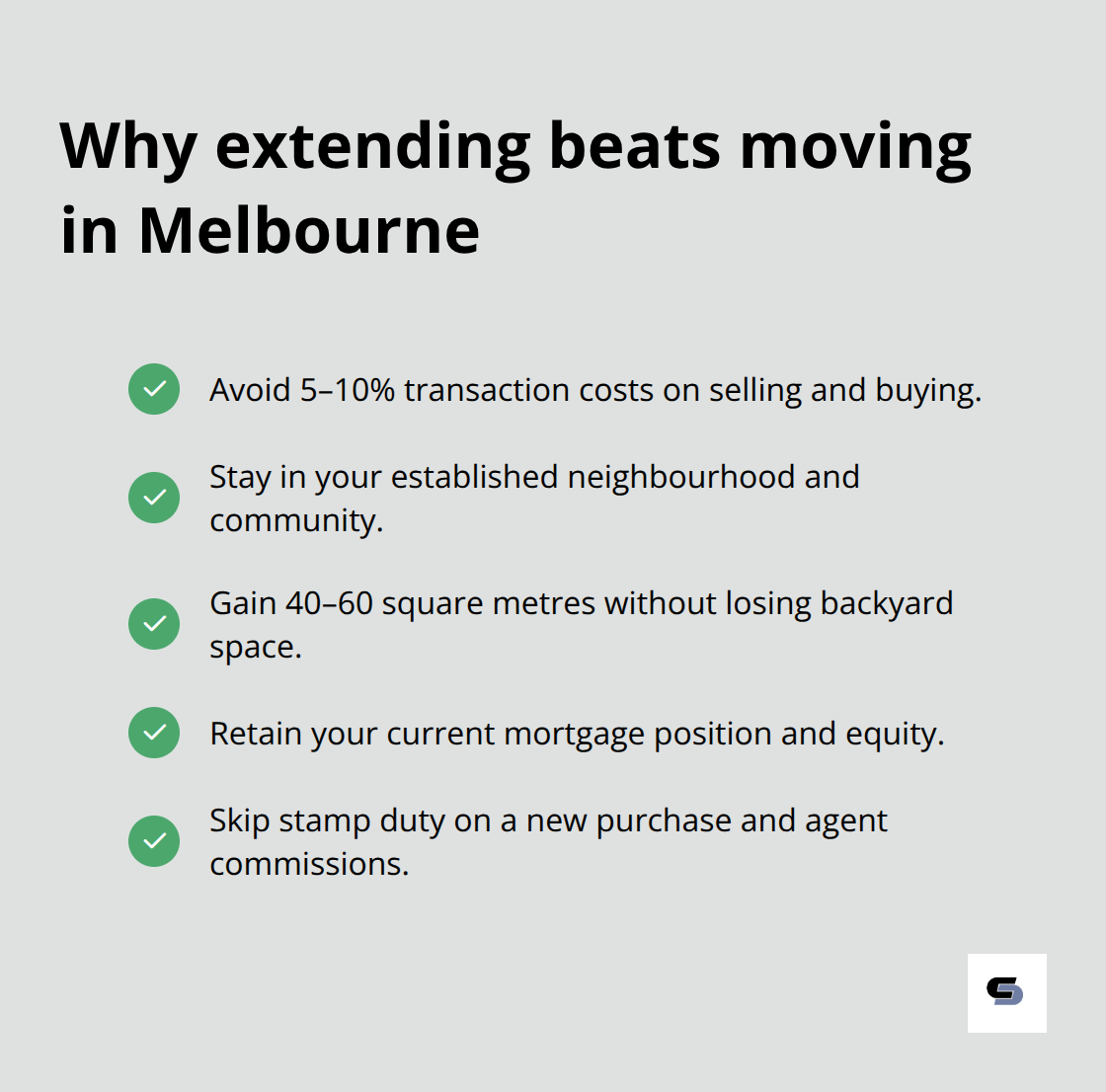
You stay in your established neighbourhood, keep your community connections, and add the space you need without the transaction costs that make moving prohibitive.
The maths is straightforward: a well-designed double storey extension costs substantially less than the combined expense of selling, buying, and moving to a larger home in the same suburb. You retain your existing mortgage position, avoid stamp duty on a new purchase, and skip the agent commissions that drain equity from most property transactions.
Building Upward, Not Outward
Melbourne’s established suburbs sit on blocks that rarely exceed 600 square metres, and most are already fully developed at ground level. This means your backyard space is locked in. A double storey extension builds vertically instead. You gain 40–60 square metres of additional floor space by constructing upward rather than outward.
Plan for Victoria specifically targets concentrating new development in established urban areas rather than sprawl, which means councils increasingly support vertical additions over horizontal expansion. Your extension aligns with planning priorities while solving your space shortage. The underutilised airspace above your ground floor becomes a genuine asset-extra bedrooms, a study, a second living area, or expanded kitchen and bathroom facilities.
Property Value and Space Gains
Well-executed extensions in Melbourne suburbs typically deliver property value uplift according to standard valuation practices. Most homeowners gain 25–30% additional usable floor space through double storey work, which transforms how your home functions without forcing you to abandon the suburb you’ve chosen.
This combination of retained location, avoided transaction costs, and measurable value uplift makes double storey extensions the logical choice for Melbourne homeowners facing space constraints. The next step involves understanding how planning and design considerations shape what you can actually build on your block.
Planning and Design Considerations for Double Storey Extensions
Understanding Your Council’s Setback Requirements
Melbourne councils enforce setback requirements that vary significantly between suburbs, and understanding your specific council’s rules before design work begins saves thousands in rework. Setbacks define how far your extension must sit back from property boundaries, and they differ for side boundaries, rear boundaries, and street frontages. A suburb like Hawthorn might require 1 metre side setbacks while a neighbouring suburb enforces 1.5 metres. The Victorian Building Authority and your local council planning scheme contain these specifications, but most homeowners discover them late in the design process.
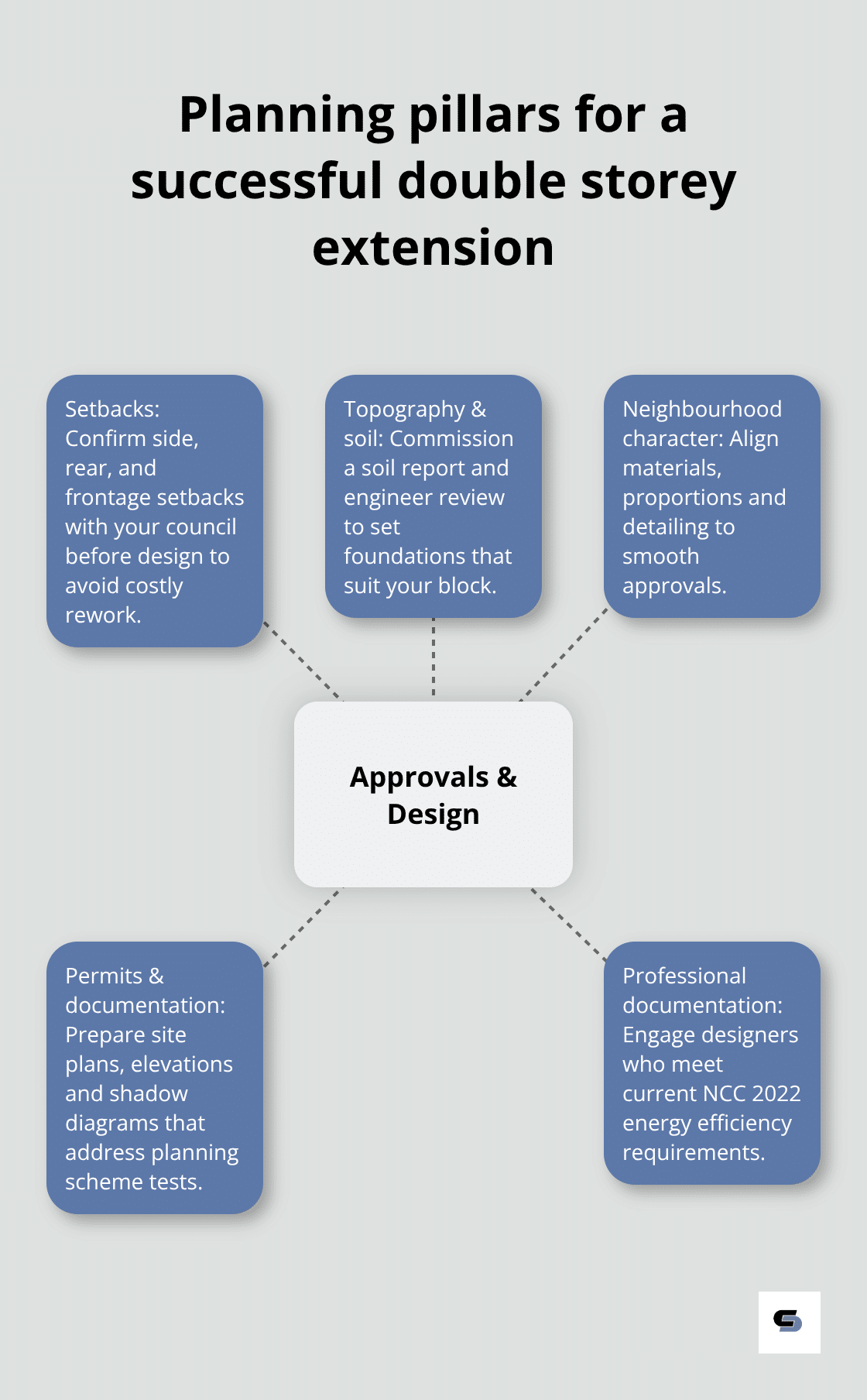
Obtain setback requirements and overlays from your council before you commit to any design direction.
Assessing Your Block’s Topography and Soil Conditions
Your block’s topography compounds design complexity significantly. Sloping blocks require foundation design that accounts for level differences, and councils increasingly scrutinise how extensions sit within the existing streetscape and neighbourhood character. A building surveyor must assess foundation requirements and soil conditions before your architect finalises drawings if your block slopes significantly. This soil report typically costs $800–1,200 and is non-negotiable for structural integrity and council approval.
Integrating Architectural Style With Neighbourhood Character
Plan for Victoria emphasises concentrating development in established areas, which means councils support well-designed vertical additions that respect neighbourhood character. Your extension must integrate with your home’s existing architectural style rather than clash with it. A modern box tacked onto a Victorian terrace invites council objections and neighbour complaints; thoughtful design that references existing materials, proportions, and details secures faster approvals.
Navigating Planning Permits and Documentation Requirements
Council approval timelines typically span 8–12 weeks for straightforward extensions, but this varies based on application complexity and whether your council requires referrals to water authorities, heritage advisers, or traffic engineers. A planning permit application requires detailed documentation including site plans, elevation drawings, shadow diagrams showing winter sun impact on neighbouring properties, and a planning report justifying your proposal against planning scheme requirements. The National Construction Code 2022 introduces stricter energy efficiency standards, so your design must demonstrate compliance with insulation, glazing performance, and thermal performance targets from day one.
Accelerating Approvals Through Professional Documentation
Once planning approval arrives, the building permit process adds another 2–4 weeks if your building surveyor has all required consents and documentation. A qualified building designer or architect who understands your council’s expectations and the current planning framework accelerates this timeline considerably. Many homeowners attempt to fast-track approvals by cutting corners on design documentation, which backfires when councils request further information or refuse the application outright. Invest in thorough documentation upfront, including professional shadow diagrams and detailed specification schedules, because this typically reduces overall approval time despite the initial effort. With planning and design locked in, the next phase shifts focus to the structural and construction realities that transform your approved plans into a finished extension.
Building Process: From Approval to Completion
Foundation Work Sets Your Structural Course
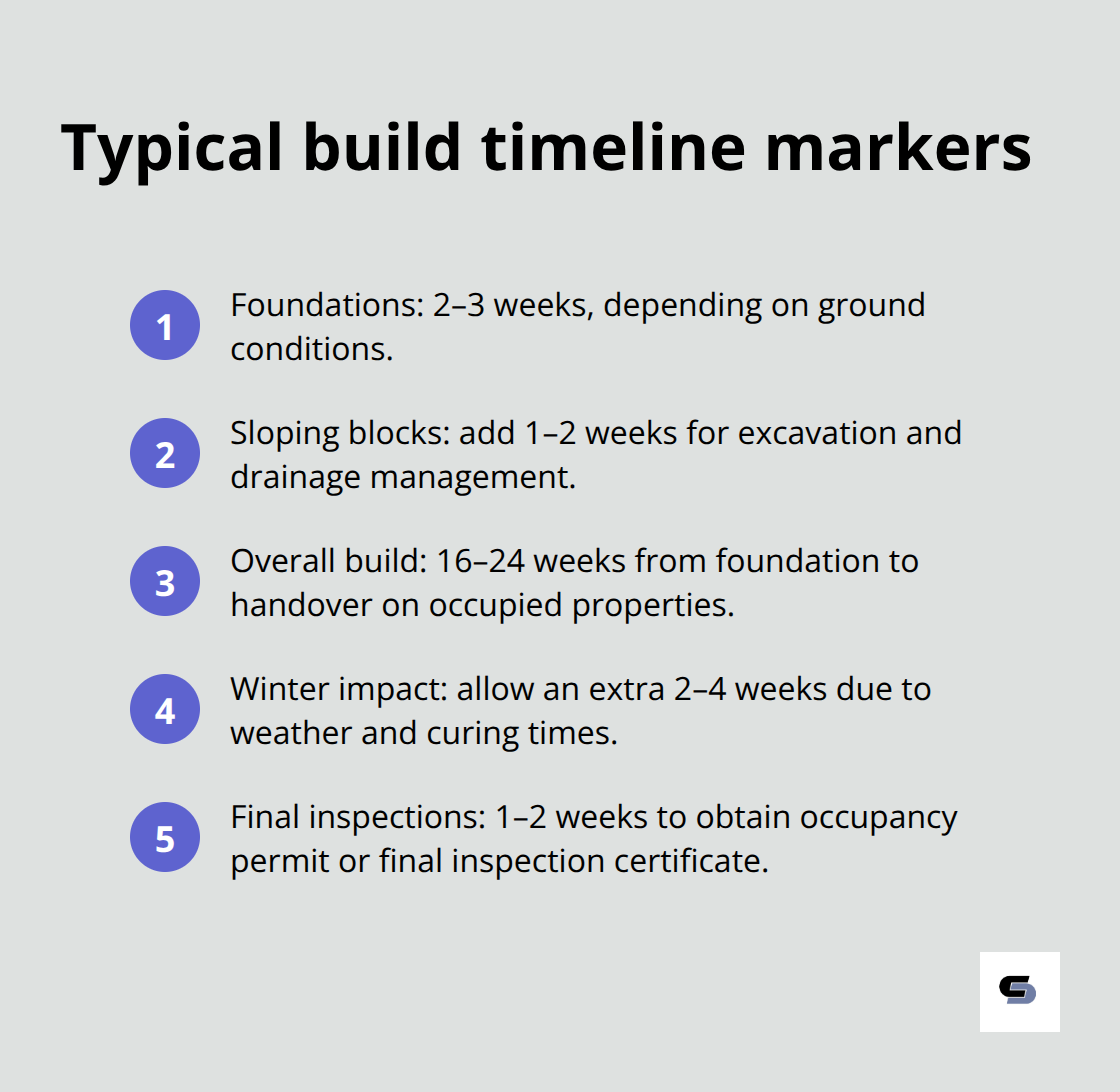
Once your planning and building permits arrive, construction begins in earnest, and this is where theoretical designs meet the practical constraints of your actual block. Your building surveyor and structural engineer have already assessed your site surveys, ground conditions and the availability of utilities during the permit phase, but construction demands constant verification. Foundation work typically takes 2–3 weeks and represents your extension’s structural foundation. The builder excavates to the required depth, installs footings that match the soil report specifications, and pours concrete that must cure properly before frame work commences.
Weather delays this phase significantly in Melbourne’s winter months, so scheduling foundation work for spring or early summer reduces weather-related setbacks. If your block slopes, foundation complexity increases because the builder must manage level differences and potential water runoff, adding 1–2 weeks to the schedule. The structural engineer inspects foundations before the builder proceeds to frame installation, and this inspection is mandatory regardless of cost.
Managing Construction on Your Occupied Property
Construction on an occupied property demands clear communication and realistic expectations about disruption. Most double storey extensions run 16–24 weeks from foundation to final handover, and your family lives through noise, dust, and tradesperson access during this period. The builder should establish site boundaries that protect your existing home, schedule noisy work during daylight hours only, and provide temporary fencing that contains dust and debris.
Winter construction in Melbourne introduces weather delays that can extend timelines by 2–4 weeks because concrete curing slows in cold temperatures and wet conditions halt exterior work. Your builder must coordinate site access, material deliveries, and waste removal to minimise disruption to your daily routines while maintaining construction momentum.
Controlling Costs Through Variation Management
Cost management hinges on tracking variations carefully because additional work discovered during construction-structural repairs, soil conditions worse than the soil report indicated, or design changes-adds thousands to your budget. Obtain written quotes for any variation before the builder proceeds, and insist that variations remain in writing rather than verbal agreements.
Most experienced builders maintain contingency budgets of 5–10% above the base contract price specifically because unforeseen conditions on sloping blocks or older properties inevitably surface once excavation begins. Your building contract should specify stage payments tied to completed work milestones rather than time-based payments, so you pay only when the builder delivers completed phases to your satisfaction.
Inspections and Final Handover
Final inspections occur once the builder finishes all work, and you must obtain either an occupancy permit or certificate of final inspection before legally occupying the new space, which typically takes 1–2 weeks after construction completion. The building surveyor conducts mandatory inspections at key stages (foundation, frame, lock-up, and fixing stages) to verify compliance with the Building Regulations 2018 and the National Construction Code 2022. These inspections protect you by confirming that the builder has followed approved plans and met all structural and safety standards before you occupy the extension.
Final Thoughts
Double storey extensions Melbourne deliver measurable outcomes that justify the planning, design, and construction effort required. You gain 40–60 square metres of additional living space, avoid the 5–10% transaction costs that make relocation prohibitive, and retain your established neighbourhood without compromise. The value uplift from a well-executed extension typically ranges 25–30% additional usable floor space, which transforms your home’s functionality and market position simultaneously.
Professional design and structural engineering are non-negotiable because they determine whether your extension gains council approval, meets building standards, and performs structurally over decades. A qualified building designer understands your council’s specific setback requirements, neighbourhood character expectations, and the National Construction Code 2022 energy efficiency standards that govern modern construction. A structural engineer assesses your soil conditions, foundation requirements, and load paths to ensure your extension sits safely on your block regardless of topography or existing ground conditions.
We at Cameron Construction have spent 40+ years designing and building double storey extensions and ground floor additions across Melbourne’s diverse councils and neighbourhood types. Our in-house designers, engineers, and project managers handle planning permits, building permits, and BCA compliance so you navigate approvals and construction without stress. Contact Cameron Construction to discuss how we transform your established Melbourne home into the space you actually need.

![Second Storey Additions For Growing Families [Guide]](https://www.cameronconstruction.com.au/wp-content/uploads/emplibot/second-storey-additions-hero-1772259809-150x150.webp)