
Western Suburbs Extensions Melbourne: Smart Additions for Family Growth
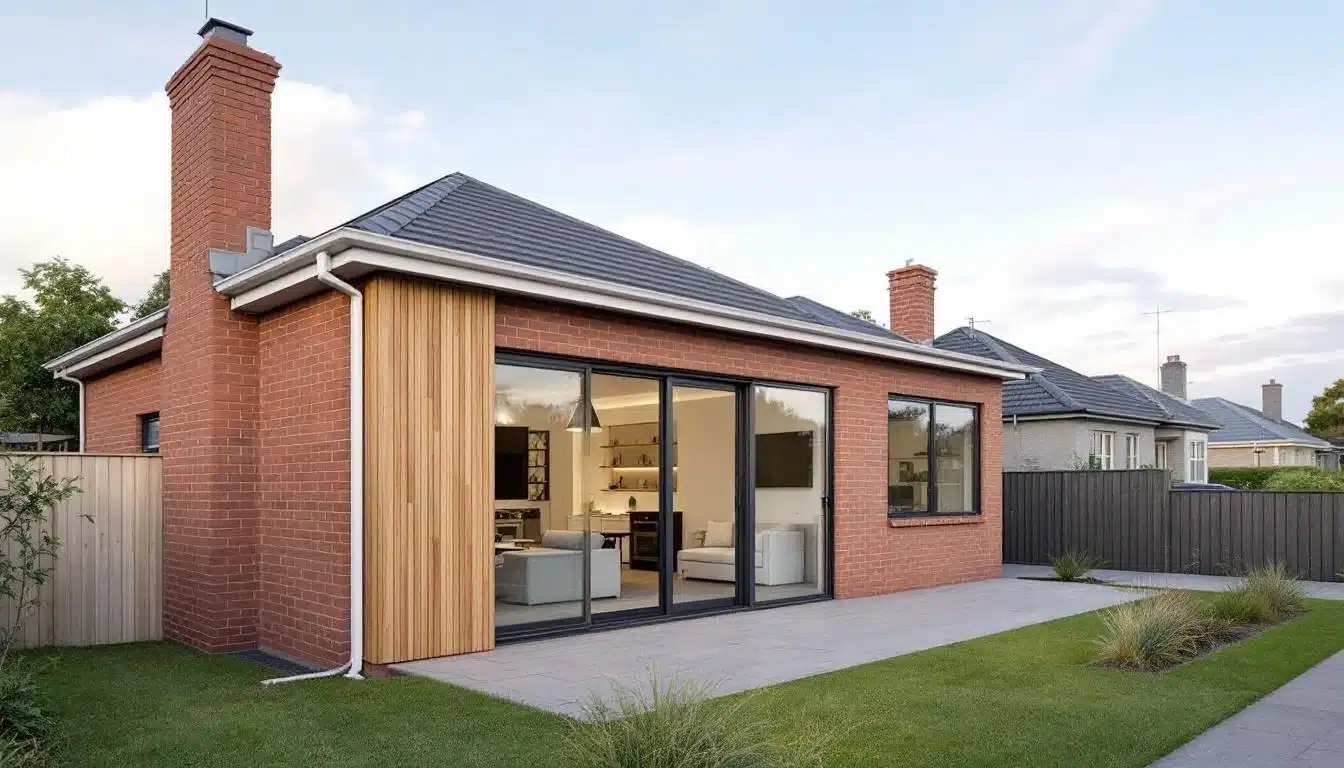
Western suburbs extensions Melbourne are becoming the go-to solution for families who’ve outgrown their homes but want to stay in their communities. Rather than packing up and moving, homeowners are discovering that adding space-whether upstairs or out the back-makes far more sense financially and practically.
At Cameron Construction, we’ve helped dozens of western suburbs families expand their properties to suit their growing needs. The process is straightforward when you have the right team guiding you through planning, permits, and construction.
Why Extensions Beat Relocating for Western Suburbs Families
The Financial Reality of Moving vs. Adding Space
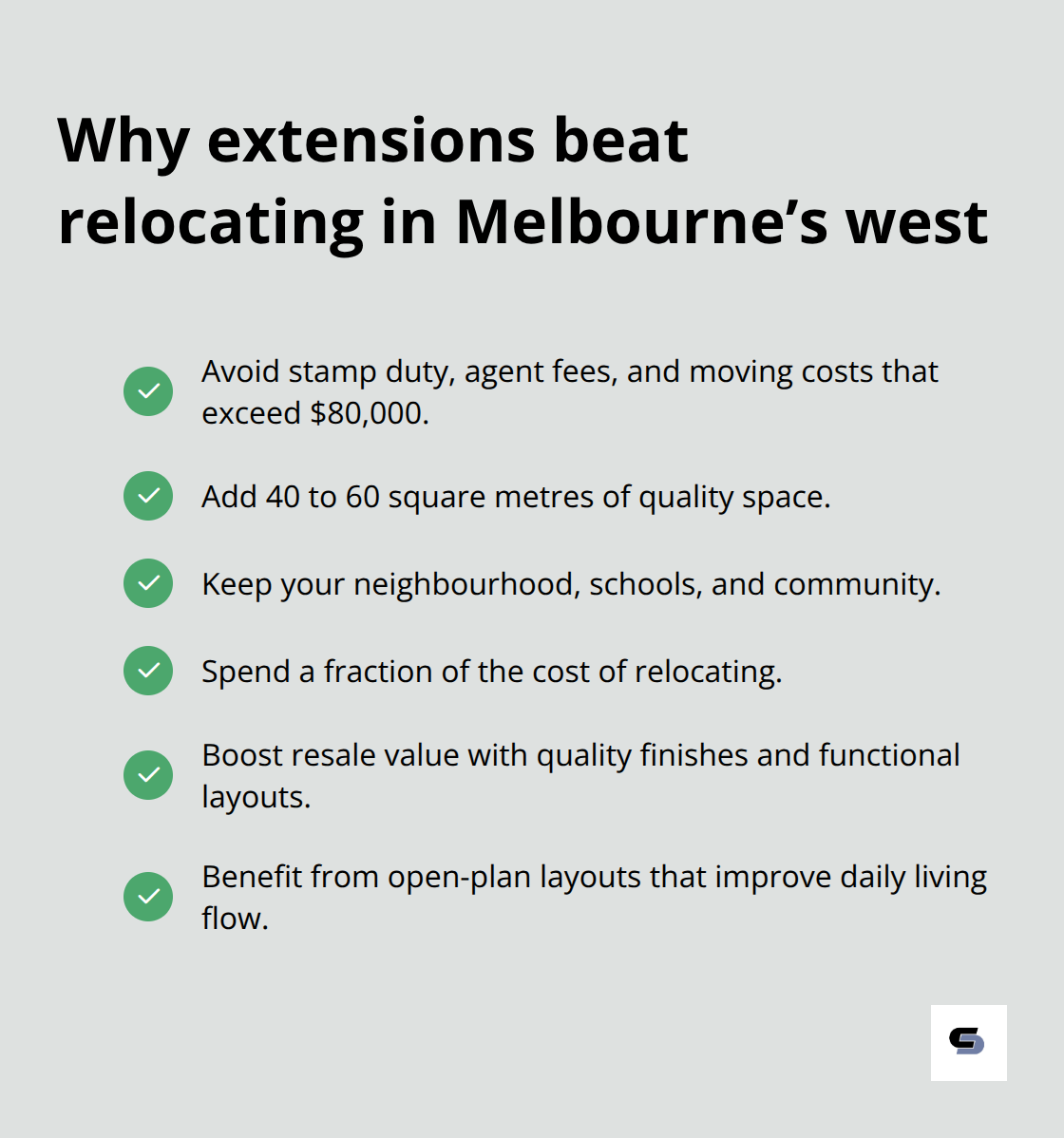
Western suburbs families face a genuine problem: the homes they bought five or ten years ago no longer fit their lives. A second child arrives, a parent moves in, or work-from-home becomes permanent. The instinct is to sell and move, but the numbers tell a different story. Relocating in Melbourne’s western suburbs now means paying significantly more for a similar property while absorbing stamp duty, agent fees, and moving costs that easily exceed $80,000. Extensions avoid this entirely and let families add 40 to 60 square metres of quality space for a fraction of what they’d spend relocating. Homeowners keep the neighbourhood, the schools their kids attend, and the community they’ve built.
Growth Corridors Make Extensions a Smart Investment
The western suburbs are growing fast. Suburbs like Tarneit, Werribee, and Wyndham have seen strong population growth in Australia’s western suburbs according to the Australian Bureau of Statistics. That growth means property values are climbing, making extensions a smart financial decision rather than just a practical one. A well-designed extension boosts resale value through quality finishes and functional layouts, with higher price-per-square-metre outcomes compared to keeping the original footprint. This matters when you eventually sell. Wyndham’s Connecting Wyndham infrastructure program is investing heavily in roads, schools, and community facilities across the western suburbs, signalling long-term growth corridors. That infrastructure investment means extensions built now will hold and grow in value as the area develops further.
Speed and Control Over Your Space
The real advantage comes down to timing and control. A ground floor addition or double storey extension takes 4 to 6 months from design to completion, whereas selling, buying, and settling into a new home stretches across 6 to 9 months minimum, often longer. Extensions let families choose exactly what they get. Open-plan living spaces that connect kitchen, dining, and family areas are especially popular because they improve daily living flow without wasting space on unused rooms. Homeowners gain the ability to design spaces that match their actual lifestyle rather than compromising on what the market offers.
With the financial case clear and the timeline advantages obvious, the next step is understanding which extension type works best for your block and your family’s needs.
Which Extension Type Fits Your Western Suburbs Block
Western suburbs blocks come in three main configurations, and each demands a different approach. Understanding your block’s shape and your council’s rules determines which extension type delivers the most usable space at the best cost.
Double Storey Extensions for Narrow Blocks
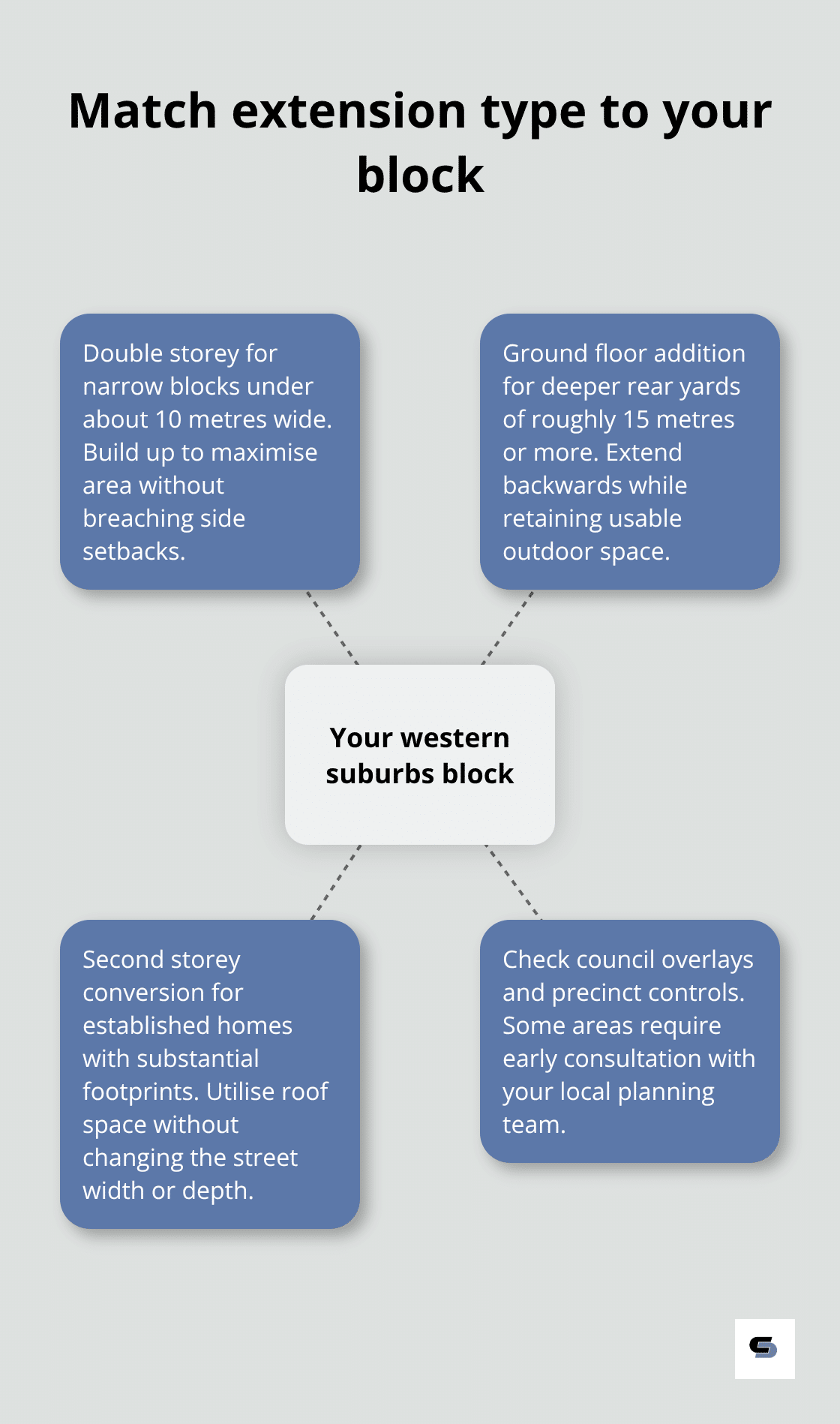
Narrow lots-common across suburbs like Tarneit and Werribee-eliminate side extensions because setback rules leave no room to work. A double storey extension solves this by building upwards rather than outwards, maximising usable floor area without breaching side boundaries. Double storey additions work particularly well on blocks under 10 metres wide, letting families add a second bedroom, study, or expanded living zone on the upper level while keeping the footprint tight. The cost per square metre stays reasonable because you work with the block’s constraints rather than against them. Structural engineers assess your existing foundations early to confirm they support the additional load, and this assessment shapes your budget and timeline from the start.
Ground Floor Additions for Deeper Rear Yards
Ground floor additions suit properties with deeper rear yards, typically 15 metres or more, where you extend backwards without losing usable outdoor space. These additions work best for families wanting an extended kitchen-dining area or a dedicated home office that connects to the backyard. Single-storey rear extensions build faster than double storey work and avoid the structural complexity of stacking loads, though they consume more land. Drainage and site grading matter here-poor water management leads to future problems, so your designer and builder assess stormwater flows before finalising the layout.
Second Storey Conversions on Established Homes
Second storey conversions suit established single-level homes on standard rectangular blocks where the existing footprint is already substantial. Rather than adding to the footprint, you utilise the roof space by adding a second level. This approach works well in suburbs where councils favour infill that respects neighbourhood character-it doesn’t change the street appearance significantly since the building envelope stays the same width and depth. Roof condition and internal reconfiguration needs affect both cost and timeline for this work.
Block Shape, Council Rules, and Your Family’s Needs
The critical difference between these types comes down to block shape, council requirements, and what your family actually needs. A narrow block in Wyndham demands vertical thinking; a generous rear yard demands horizontal expansion; an older single-storey home on a decent footprint suggests going upwards. Most western suburbs blocks are zoned to accommodate one of these three approaches without requiring a planning variance, though some councils apply stricter controls in specific precincts. Tarneit and Werribee typically allow double storey extensions on residential blocks, while some areas near heritage overlays or particular street patterns require early consultation with your local council’s planning team.
Timeline Differences Between Extension Types
The timeline differs significantly across extension types. Double storey extensions usually take 5 to 6 months from approval to practical completion, ground floor additions run 4 to 5 months, and second storey conversions fall somewhere between depending on roof condition and internal reconfiguration needed. Getting the extension type right at the outset prevents expensive redesigns later and ensures your new space actually solves the problem you set out to fix. Once you’ve identified which extension type suits your block, the next step involves navigating council requirements and understanding what permits your project actually needs.
Planning and Permits for Western Suburbs Extensions
Council requirements across western suburbs vary more than most homeowners expect, and mistakes at the start cost time and money later. Wyndham City Council, which covers much of the western suburbs, requires a building permit for virtually all extensions, and most projects also need a planning permit depending on your zoning and the extension type.
Confirm Your VicSmart Eligibility Early
The critical first step involves confirming whether your specific project qualifies for VicSmart eligibility, Victoria’s fast-track planning pathway. VicSmart eligibility depends on your extension size, setbacks, and whether your property sits in a heritage overlay or environmental management zone. Check your council’s planning department guidance early because many homeowners waste weeks assuming their project is exempt when it is not. Ground floor additions under 70 square metres often qualify for faster approval, while double storey extensions above that threshold typically require the standard planning assessment.
Prepare Documentation to Current Building Codes
Building permit applications need detailed plans, site plans, and structural calculations prepared to current building codes. These documents form the foundation of your entire project timeline. Most western suburbs extensions take 8 to 12 weeks from permit submission to approval, though VicSmart projects compress this to 2 to 3 weeks. Your designer and structural engineer must understand Wyndham’s specific requirements around building setbacks, floor area ratios, and heritage considerations if your property sits near protected streetscapes.
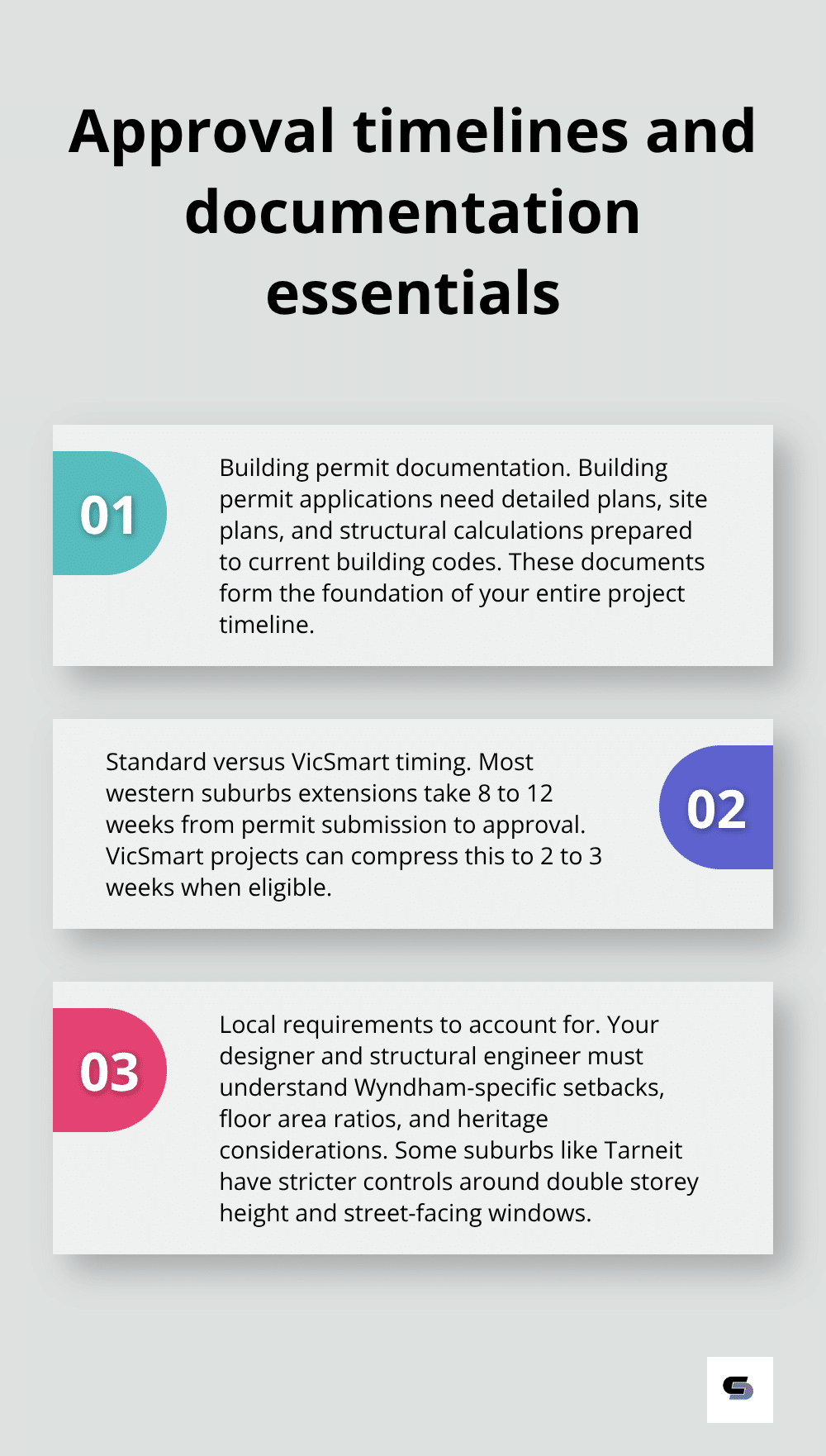
Some suburbs like Tarneit have stricter controls around double storey height and street-facing windows, so what works on one block may require modifications two streets over.
Engage Designers and Engineers Who Know Local Requirements
A designer familiar with Wyndham’s planning scheme knows which design decisions trigger additional scrutiny and which sail through approval. Structural engineers assess your existing foundations, roof condition, and soil capacity to confirm your extension is structurally sound before plans go to council. This assessment informs both your budget and timeline. Many homeowners skip the engineer consultation upfront thinking it saves money, but councils request engineering reports anyway, adding weeks to the approval process. Your designer and engineer must work together because planning approval and building code compliance are different requirements that demand different expertise.
Understand Planning Approval Versus Building Compliance
The planning stage focuses on neighbourhood impact, street setbacks, and whether the extension fits the suburb’s character. The building compliance stage focuses on structural integrity, fire safety, insulation standards, and accessibility. Drainage and stormwater management assessments matter particularly for ground floor additions where poor site grading creates future water intrusion problems. Energy efficiency requirements have tightened significantly, so your designer must integrate insulation, double-glazed windows, and thermal design into the initial concept rather than adding these later. Roof condition and internal reconfiguration needs affect both cost and timeline for second storey conversions, and early assessment prevents expensive surprises during construction.
Start With a Clear Design Brief and Planning Checklist
A clear design brief and a 30-point planning checklist covering site conditions, budget constraints, timeline expectations, and team responsibilities keeps the approval process moving smoothly. This checklist addresses site assessment, permits, budget allocation, schedule expectations, team selection, and warranty documentation. Once permits are secured and your team is locked in, construction timelines become predictable and your project moves from planning into delivery.
Final Thoughts
Extensions solve the real problem western suburbs families face: outgrowing homes they love in neighbourhoods where they belong. Rather than absorbing relocation costs that exceed $80,000 and disrupting established schools and communities, extensions add 40 to 60 square metres of quality space while you stay put. The financial case is clear, the timeline is predictable, and the value uplift is measurable when you eventually sell.
The challenge lies in navigating the planning, permits, and construction process without wasting time or money on mistakes. At Cameron Construction, we handle western suburbs extensions Melbourne from concept through to completion, managing every stage so you don’t have to. Our in-house designers understand local council requirements across Wyndham, Tarneit, Werribee, and surrounding areas, our structural engineers assess your existing foundations and site conditions upfront, and our project managers coordinate permits, building compliance, and construction timelines so your project stays on track.
If you’re ready to stop compromising on space and start building the home your family needs, contact Cameron Construction for a consultation. We’ll assess your block, confirm which extension type works best, and walk you through the planning and construction process with clarity and confidence.


![Heritage Extensions That Respect Original Character [Guide]](https://www.cameronconstruction.com.au/wp-content/uploads/emplibot/heritage-extensions-hero-1772691912-150x150.webp)