Understanding House Extension Costs Before You Commit To Building
A house extension cost can quickly spiral without proper planning and understanding of what drives the price tag. At Cameron Construction, we’ve seen homeowners shocked by final invoices because they didn’t anticipate the full scope of expenses upfront.
This guide breaks down every cost component you’ll face, from site conditions to labour rates specific to Melbourne. Armed with this knowledge, you’ll make confident decisions about your extension project.
What Drives Extension Costs in Melbourne
Site Conditions Shape Your Budget Foundation
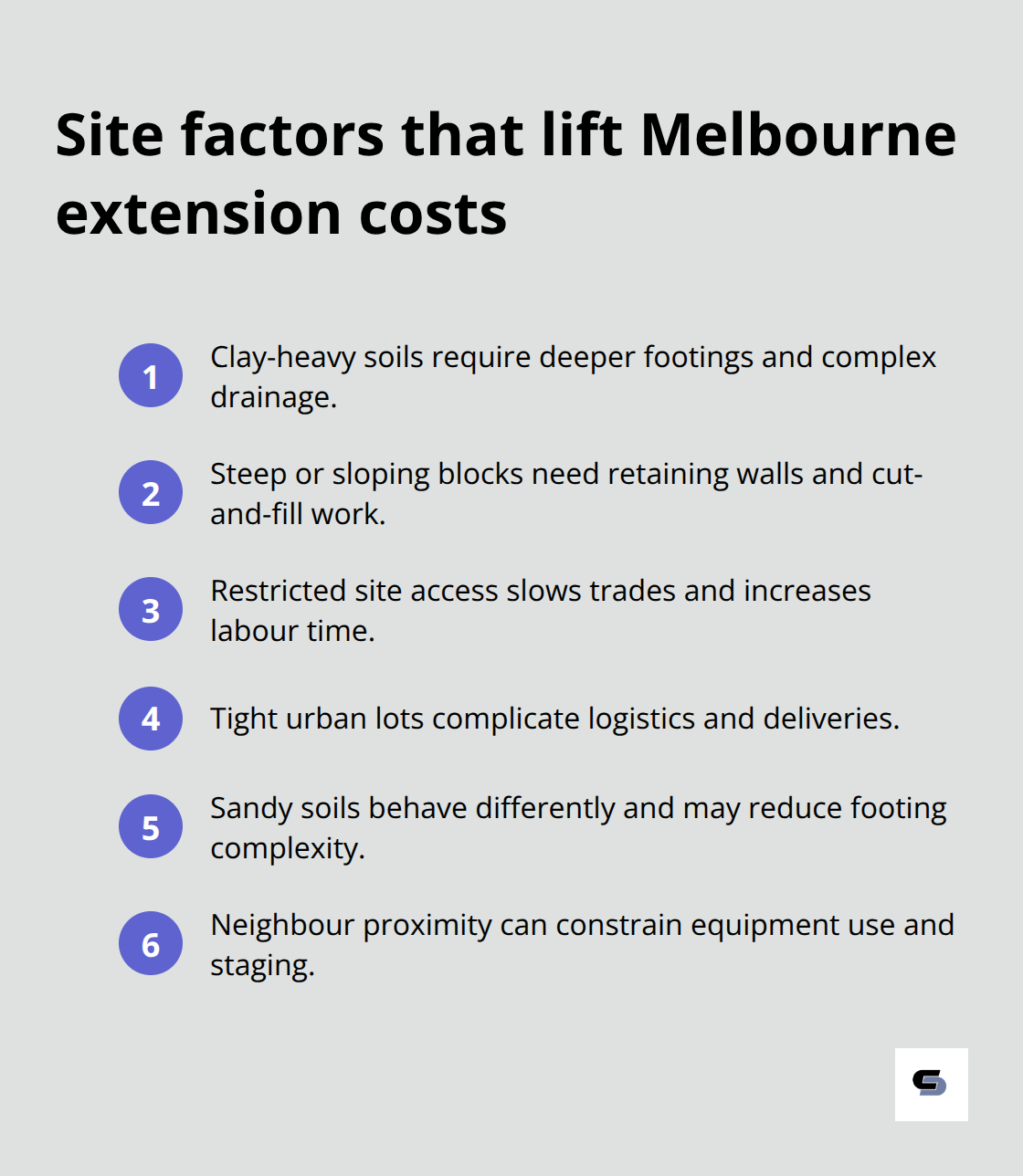
Your Melbourne property’s characteristics dictate a significant portion of your extension budget before design or construction even begins. Soil type, slope, and site access create vastly different cost scenarios across suburbs. Clay-heavy soils in areas like Balwyn require deeper foundations and more complex drainage solutions than sandy soils in beachside suburbs, adding thousands to your project. A sloping block in the Dandenongs demands retaining walls, cut-and-fill work, and specialised engineering that a flat block in Box Hill simply doesn’t need. Poor site access-narrow driveways, limited parking for tradespeople, or proximity to neighbours-forces contractors to work slower and manage logistics differently, which translates directly into labour costs.
A 60-square-metre extension on a difficult site costs substantially more than the same extension on a straightforward block. A soil report costs around $800–$1,200 and reveals exactly what your foundations will face. Your builder should assess site access and drainage before quoting, not after.
Design Choices and Heritage Considerations
Design complexity separates affordable extensions from expensive ones, and this is where your choices matter most. A straightforward rectangular double-storey addition with standard materials costs far less per square metre than a bespoke design with angled roofs, multiple materials, or intricate joinery. Melbourne’s varying council requirements add another layer: heritage overlays in suburbs like Toorak or Hawthorn demand specific design approaches and approvals that standard suburbs don’t, increasing design and planning costs by 15–25%.
Custom features like statement kitchen islands, built-in cabinetry, or premium finishes push costs upward quickly. Experienced designers who understand Melbourne’s climate and council landscapes help keep costs realistic without sacrificing quality or longevity.
Labour and Material Rates in Melbourne
Timber framing, brickwork, and skilled trades run higher in Melbourne than regional areas, with experienced builders charging premium rates for quality work. Double-storey extensions in Melbourne typically cost between $2,200–$3,200 per square metre depending on finishes and site conditions, according to industry cost guides. Ground floor additions generally run $1,800–$2,600 per square metre.
These rates reflect Melbourne’s competitive market and the expertise required to navigate council approvals, BCA compliance, and complex site conditions across different suburbs. Your next decision-how to break down these costs into specific components-determines whether your budget remains realistic throughout the project.
Breaking Down the Cost Components
Construction costs form the largest slice of your extension budget, but they represent only part of the story. For a double-storey extension in Melbourne, construction typically accounts for 70–75% of total project cost, covering structural work, frame, roof, external walls, internal fit-out, and connections to existing services. A 60-square-metre double-storey addition at $2,600 per square metre ($156,000 total) means roughly $109,000–$117,000 flows directly into construction labour and materials. Ground floor additions run similarly, with $1,800–$2,600 per square metre translating to substantial construction outlays once you factor in site preparation, concrete work, and internal finishing.
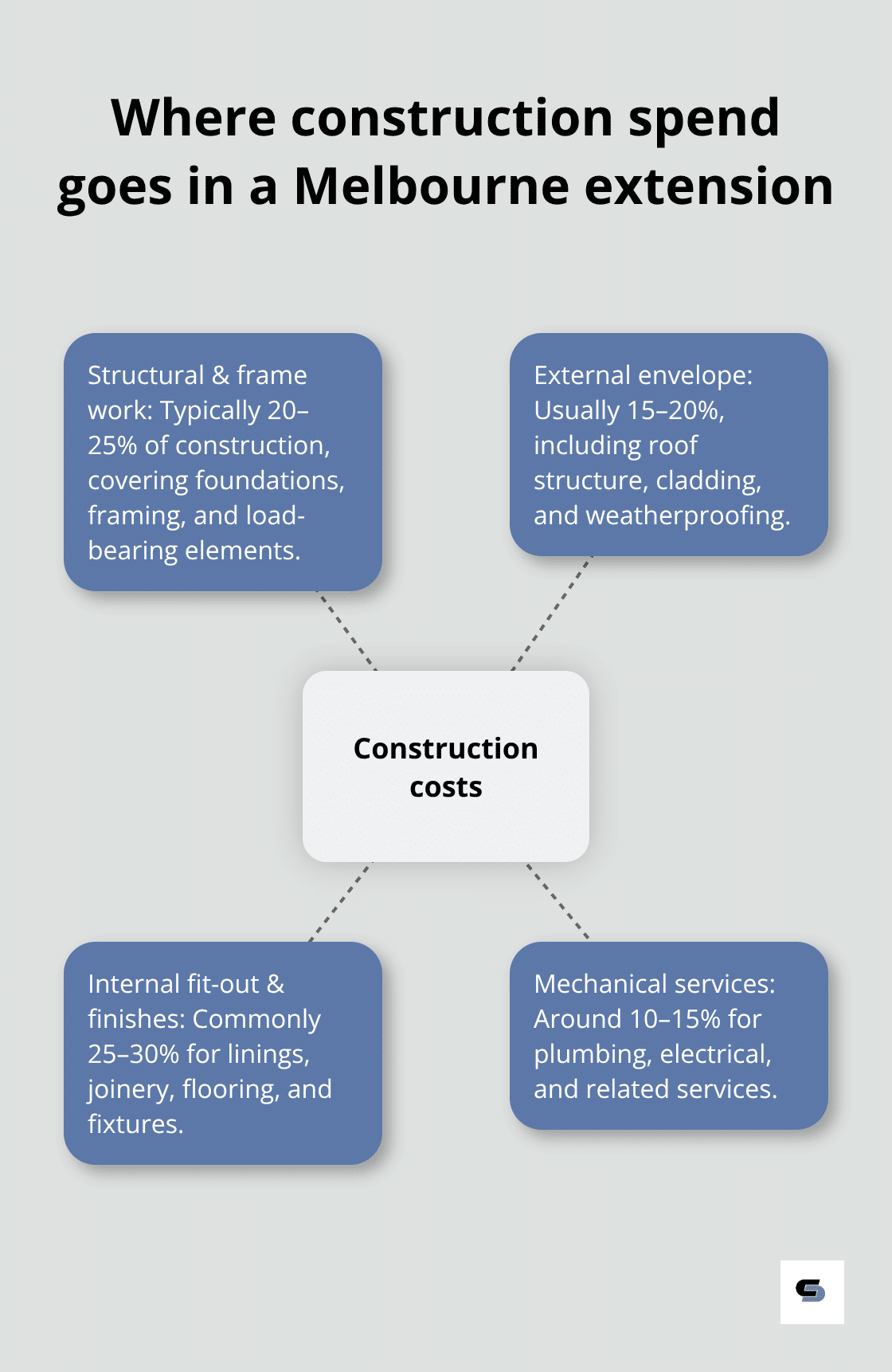
Your builder’s quote should itemise major cost categories separately: structural and frame work (typically 20–25% of construction), external envelope including roof and cladding (15–20%), internal fit-out and finishes (25–30%), and mechanical services like plumbing and electrical (10–15%). This transparency shows where costs can flex based on material choices and design refinement.
Design Fees and Planning Professional Costs
Architectural and design fees typically consume 8–15% of your construction budget according to industry guidelines from the Royal Australian Institute of Architects. For that $156,000 extension, expect design fees between $12,500–$23,500 depending on complexity. Structural engineering consultations add another 1–3% of build cost, so roughly $1,560–$4,700 for engineering input.
These fees aren’t optional if you’re building a quality extension that passes council scrutiny and performs well over decades. A designer who understands Melbourne’s council requirements, heritage overlays in your suburb, and passive design principles for our climate prevents costly redesigns later. Town planning consultants, needed only if your extension triggers planning permit requirements in your area, typically charge $2,000–$5,000 depending on complexity and whether objections arise. Many Melbourne suburbs allow extensions under permitted development rights, which eliminates planning consultant costs entirely, but your local council determines this.
Permits and Compliance Costs You Must Budget
Building permits in Victoria require a building permit levy calculated by the Victorian Building Authority based on estimated construction cost and your property’s council area. The levy funds building control, dispute resolution, and cladding rectification programs. For that $156,000 extension, the levy typically ranges from $2,500–$4,500 depending on your municipality, though the Victorian Building Authority’s building permit levy calculator provides exact figures once you input your council area and estimated cost.
This levy is non-negotiable and must be paid before your permit number is issued. A Registered Building Surveyor lodges your application and manages inspections throughout construction, typically costing $1,200–$2,500 depending on project complexity and fee structure. Mandatory inspections during construction-usually at foundation, frame, and pre-completion stages-occur before work proceeds to the next phase.
BCA compliance work, particularly around energy efficiency standards in the National Construction Code 2022, may require upgrades to insulation, glazing, or mechanical systems that weren’t in your original design, adding 2–5% to construction costs. Setting aside 5–8% of your total project budget for construction, professional fees, and compliance costs protects your finances when these essential expenses arise. Understanding these three major cost buckets positions you to make informed decisions about where to allocate your budget and which areas offer flexibility.
Controlling Your Extension Budget From Quote to Completion
Request Detailed Quotes With Identical Scope
Three to four detailed quotes from different builders reveal the true range of what your extension will cost and expose where price differences actually originate. Many Melbourne homeowners obtain one or two quotes, assume they’re comparable, and select the cheapest option-a mistake that costs thousands when corners get cut or hidden costs emerge mid-project. Request quotes with identical scope: same drawings, same specifications, same material schedules. A builder quoting $150,000 and another quoting $180,000 on the same project isn’t random variation; the difference sits somewhere specific, whether in labour rates, material quality, site management approach, or overhead structure. Ask each builder to itemise their quote: structural frame costs, external cladding, internal fit-out, electrical and plumbing separately. This breakdown shows whether a lower quote achieves savings through material substitution, faster labour methods, or simply underpricing to win work.
Lock in Fixed-Price Contracts
Fixed-price contracts protect you far better than cost-plus arrangements where final costs remain uncertain until completion. Fixed pricing for projects with clear, detailed specifications applies to most extension work once design is locked down. If a builder won’t quote fixed price, understand why-genuinely complex sites or phased construction sometimes require flexibility, but straightforward extensions have no excuse for open-ended pricing. This approach eliminates surprises and holds your builder accountable to the agreed scope.
Set Aside Contingency for Unexpected Issues
Contingency planning separates realistic budgets from fantasy numbers. Set aside 10–15% of your construction cost as contingency for genuinely unexpected issues: discovering inadequate existing foundations during excavation, encountering underground services not marked on council records, or unexpected soil conditions revealed during digging. A $156,000 extension needs a $15,600–$23,400 contingency fund sitting unused until real problems arise. This isn’t pessimism; it’s experience.
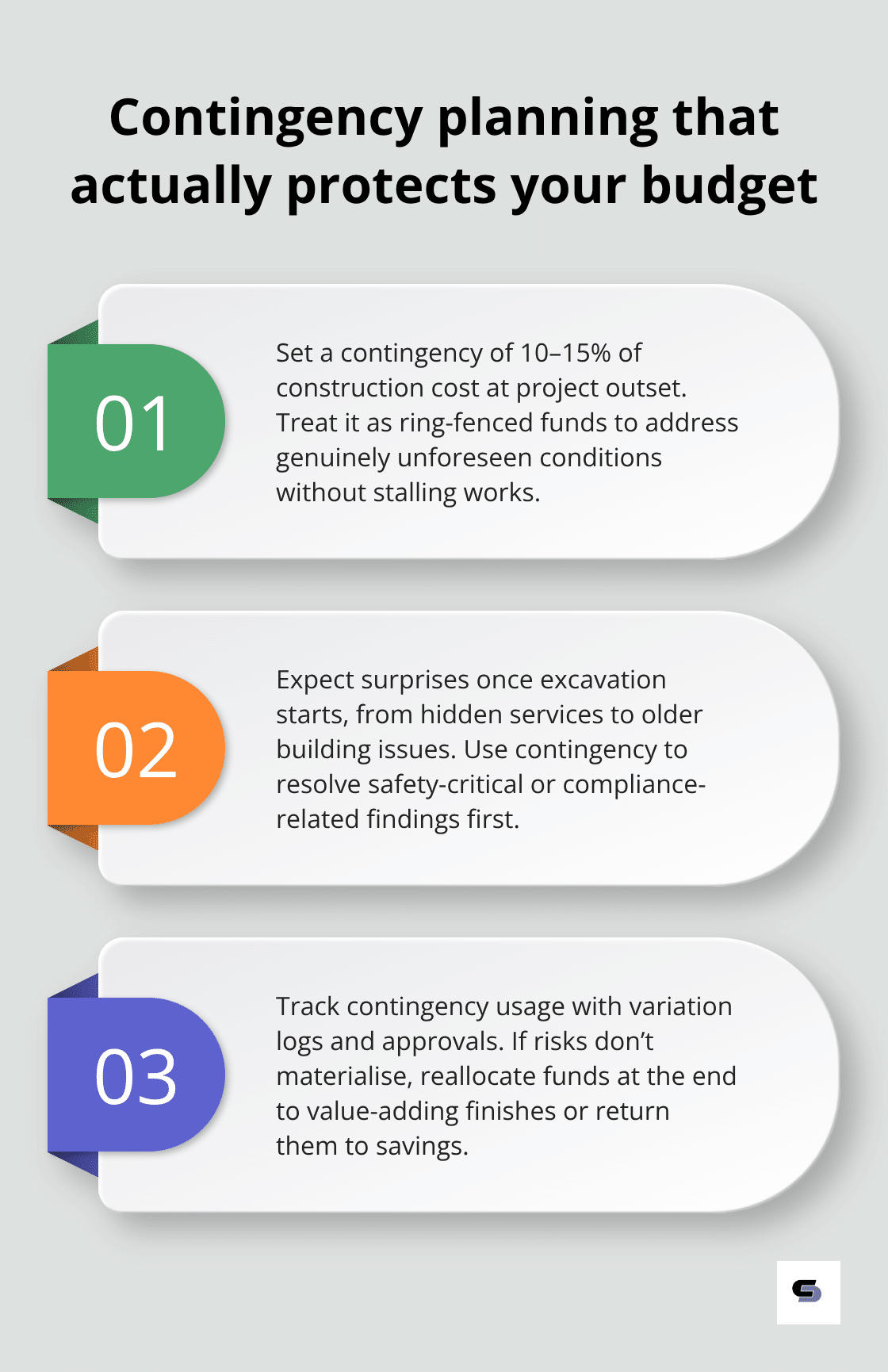
Most Melbourne extensions encounter at least minor surprises once excavation begins, whether asbestos in old buildings, drainage complications, or structural issues in existing walls. Builders who refuse to acknowledge contingency risk are either inexperienced or dishonest about what their quote covers.
Select Materials Strategically for Value
Material selection determines whether your extension delivers premium results or feels compromised within your budget. Specify materials clearly in your brief before quotes arrive: concrete slab thickness, brick versus rendered block, roof tile quality, window frame material, kitchen benchtop specifications. Generic quotes assuming standard materials often hide significant cost jumps when you later request upgrades. Double-glazed aluminium windows with thermally broken frames cost substantially more than basic double glazing but deliver measurably better thermal performance and comfort in Melbourne’s climate-a worthwhile investment that justifies itself through reduced heating costs and improved livability. Structural engineer recommendations about insulation, glazing ratios, and thermal mass align with the National Construction Code 2022 requirements anyway, so building these properly from the start avoids expensive retrofits later.
Negotiate material selection strategically: premium finishes in high-visibility areas like kitchens and bathrooms deliver satisfaction, while standard-grade materials in storage areas or utility spaces control costs without compromising the extension’s core function. Your builder should identify which material choices directly affect cost and which deliver value beyond the price tag. Builders experienced in Melbourne extensions understand cost-quality tradeoffs specific to our climate and council requirements, steering you toward decisions that balance budget reality with long-term performance and satisfaction.
Final Thoughts
House extension costs in Melbourne reflect the complexity of your site, the sophistication of your design, and the quality of your builder’s execution. Site conditions, labour rates, and material choices form the foundation of your budget, but your decisions about builder selection and contingency planning determine whether you stay within that budget or face costly surprises mid-project. Working with experienced builders who understand Melbourne’s varying soil conditions, council requirements, and unexpected site issues protects your investment far better than selecting the lowest quote.
Your next step is straightforward: gather your site information, clarify your design vision, and request detailed quotes from builders with proven track records in your suburb. Lock in fixed-price contracts once you’ve selected your builder, set aside realistic contingency, and maintain clear communication throughout construction about any scope changes or cost implications. Request identical scope across all quotes so you compare apples to apples and understand exactly where price differences originate.
We at Cameron Construction have spent 40+ years delivering double storey extensions and ground floor additions across Melbourne, handling everything from concept through to completion including planning approvals, permits, and BCA compliance specific to your council area. Contact Cameron Construction to discuss your project and understand what your specific house extension cost will be.
![Second Storey Additions For Growing Families [Guide]](https://www.cameronconstruction.com.au/wp-content/uploads/emplibot/second-storey-additions-hero-1772259809-150x150.webp)