Town Planning Extensions Melbourne: Navigating Approvals with Confidence
Town planning extensions Melbourne can feel overwhelming, but it doesn’t have to be. Most homeowners we work with at Cameron Construction underestimate how straightforward the approval process becomes with the right guidance.
This guide walks you through every stage, from permit requirements to council liaison, so you can move forward with confidence.
Understanding Melbourne’s Town Planning Requirements
What Permits Do You Actually Need?
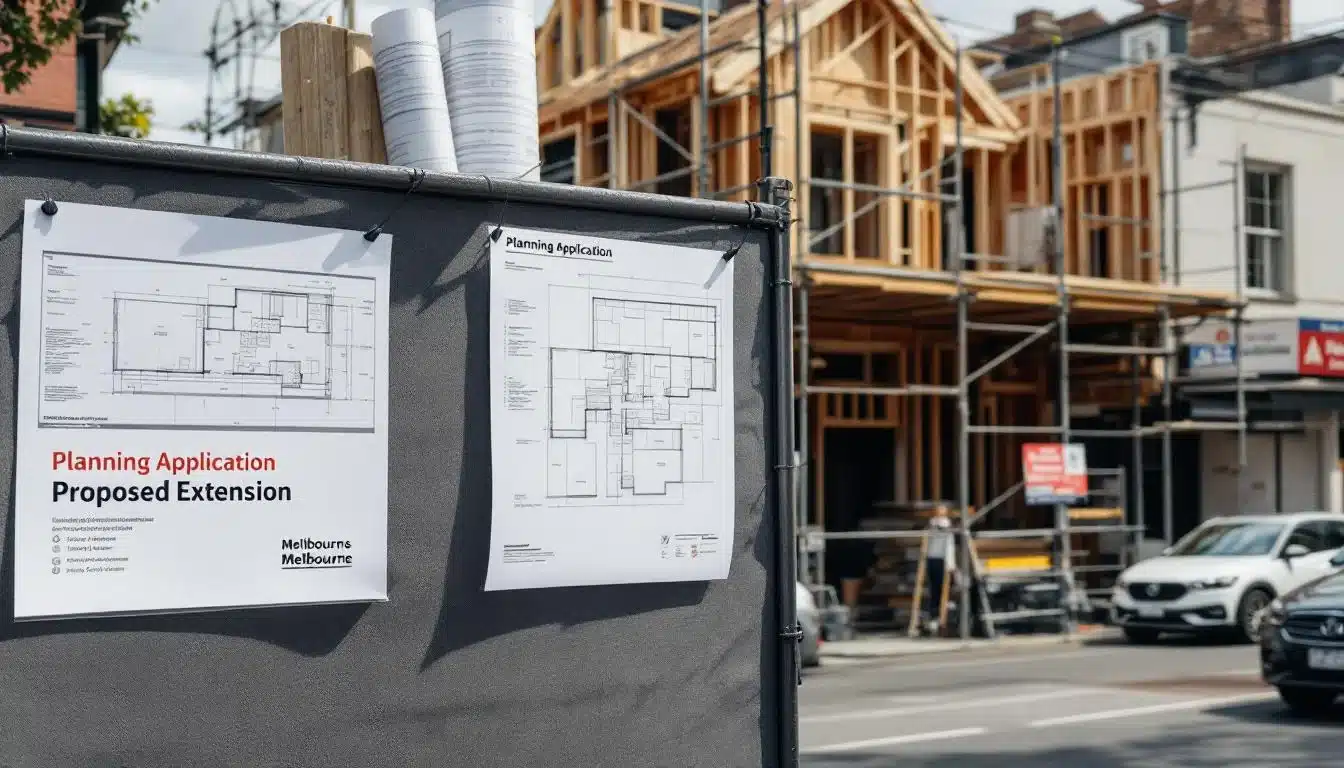
Not every extension requires a planning permit, and this is where most homeowners get confused. In Victoria, planning permits govern land use and development, while building permits govern the actual construction work. You need a planning permit if your extension involves a change in building envelope, exceeds height limits, or breaches setback requirements. Ground floor additions and double storey extensions almost always require planning approval because they increase the building footprint or height. However, some changes in land use may be permitted without a planning permit, provided conditions are met.
The critical step is to book a pre-application meeting with your local council before you spend money on detailed designs. This meeting costs nothing and clarifies exactly which permits apply to your property. Your council can confirm whether your extension qualifies for the VicSmart pathway, which offers faster approvals for eligible projects. Without this conversation first, you risk designing something that cannot be approved or face unnecessary delays.
How Your Suburb’s Planning Rules Shape Your Extension
Melbourne’s 31 councils each manage different planning schemes, overlays, and height restrictions. An extension that passes easily in one suburb may face significant hurdles in another. Erosion Management Overlays, Bushfire Management Overlays, and Environmental Significance Overlays commonly affect extensions and may require additional specialist reports like geotechnical assessments or bushfire risk assessments.
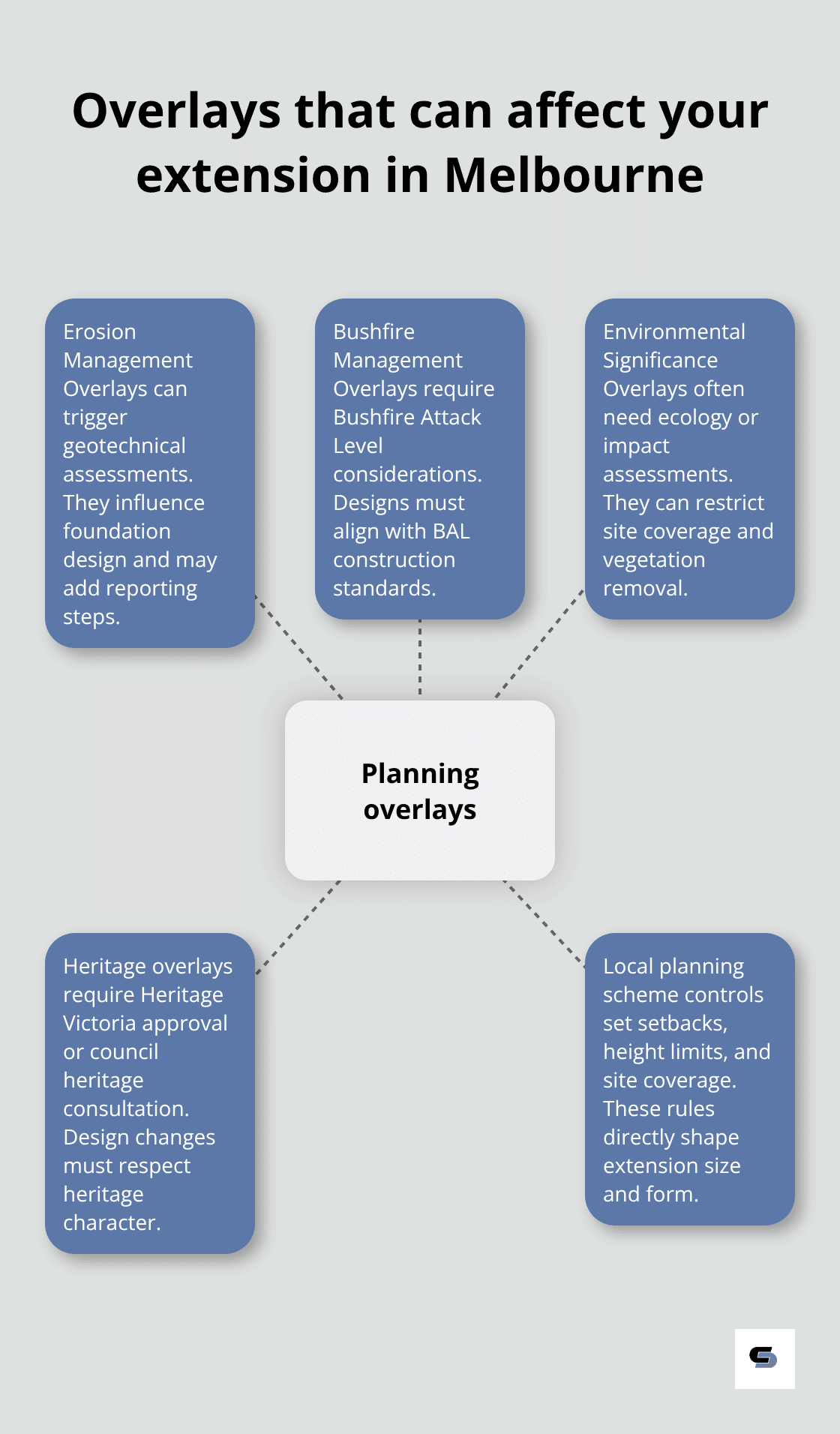
Heritage overlays present another critical consideration. If your property sits within a heritage precinct or has a local heritage overlay, you need Heritage Victoria approval or council heritage consultation before you proceed. The Planning Scheme for your local area specifies setback requirements, building height limits, and site coverage restrictions that directly impact your extension’s size and design.
Check your property’s zoning, title, and applicable overlays before you engage a designer-this saves thousands in rework. Your council’s online portal shows current zoning and overlays, and your town planner should verify this information before you lodge any application.
BCA Compliance and Building Standards
BCA compliance is non-negotiable for all extensions. The National Construction Code 2022 sets minimum standards for structural safety, energy efficiency, accessibility, and fire safety. Double storey extensions must meet specific structural requirements, and ground floor additions must comply with waterproofing and drainage standards.
Your building surveyor confirms BCA compliance during the permit stage and conducts mandatory inspections at key construction milestones. Extensions near bushfire-prone areas must meet Bushfire Attack Level construction standards, which your designer and builder incorporate from the start. These compliance requirements are not optional hurdles; they protect your investment and ensure your extension is insurable and safe.
Once you understand your permit requirements and compliance obligations, the next stage involves preparing the documentation and designs that councils actually assess.
Getting Your Application Approved
Documentation That Councils Actually Assess
Submitting a town planning application without proper documentation guarantees rejection or significant delays. Councils assess extensions against specific design standards, and incomplete submissions waste months waiting for clarification requests.
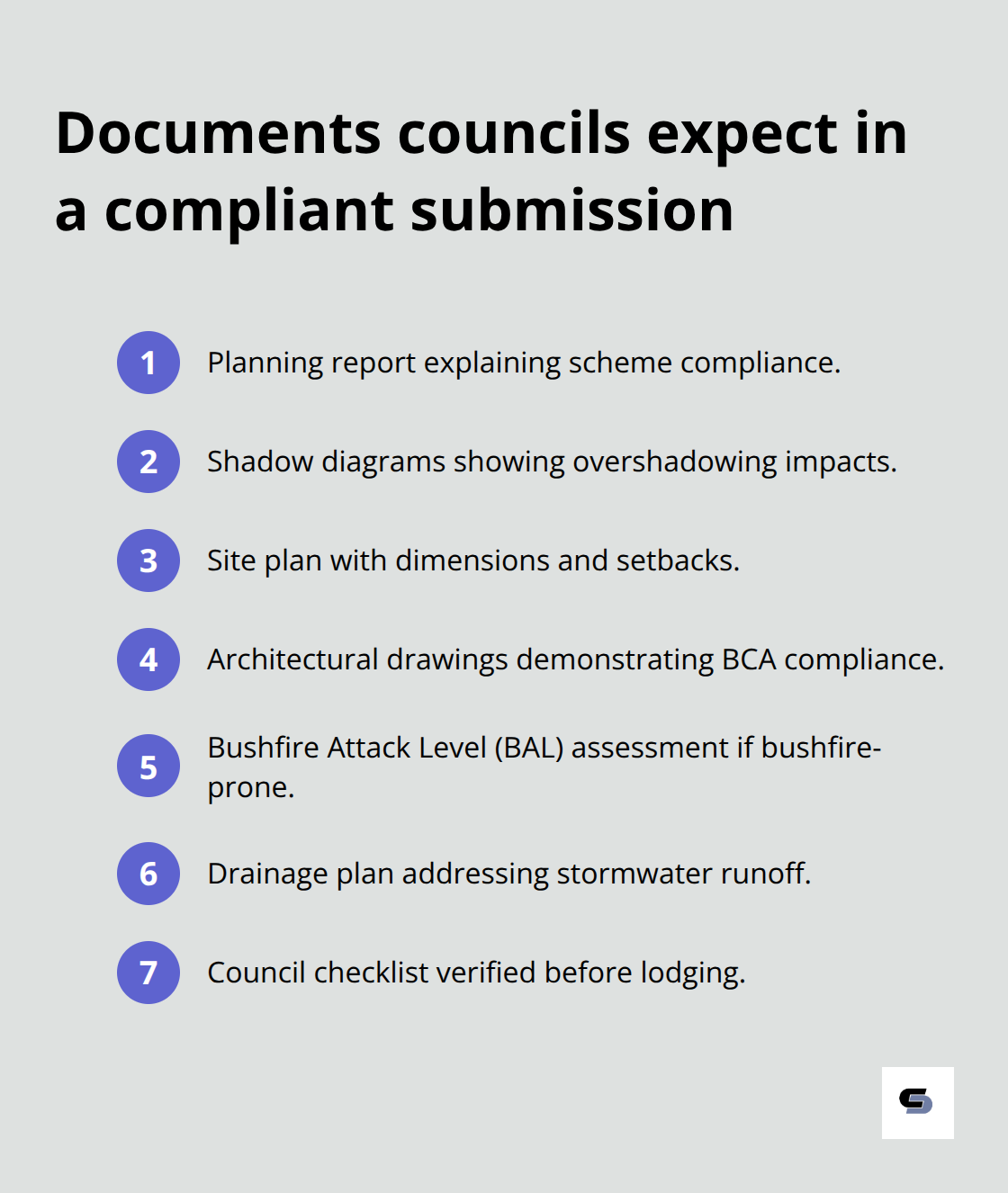
Your application needs a planning report that explains how your extension complies with the planning scheme, shadow diagrams showing how overshadowing affects neighbours, site plans with dimensions and setbacks, and architectural drawings that demonstrate BCA compliance. For extensions in bushfire-prone areas, you must include a Bushfire Attack Level assessment prepared by a qualified consultant. If your property has drainage issues or stormwater concerns, include a drainage plan showing how your extension manages water runoff. The Victorian Government’s planning portal provides a standard checklist for each council, and your town planner should verify all requirements before lodging to avoid costly resubmissions.
Addressing Objections Before They Derail Approval
Common objections from neighbours and council officers fall into predictable categories, and you address them before they derail approval. Overshadowing concerns rank as the most frequent objection for double storey extensions, particularly where neighbours face south or have solar panels. Your shadow diagrams must show winter and summer conditions; if winter shadows exceed three hours on a neighbour’s main living area, redesign the extension or reduce height. Setback breaches trigger immediate refusal, so confirm exact setback requirements from your planning scheme before finalising designs. Parking concerns arise for larger additions; verify off-street parking requirements and include parking details in your submission. If your extension increases floor area beyond certain thresholds, some councils require traffic and parking impact statements. The most successful applications anticipate these objections in the design phase rather than hoping they disappear.
Understanding Council Processing Timeframes
Processing timeframes vary significantly across Melbourne’s councils. VicSmart applications for eligible extensions typically take 10 business days, while standard planning permits are processed more efficiently, depending on whether neighbours object and whether additional reports are required. Building permits cannot be issued until planning approval is secured, and mandatory inspections during construction add 4–8 weeks to total project duration. Extensions requiring specialist reports (such as geotechnical assessments or heritage approvals) extend timelines to 120+ days. Budget for at least six months from application lodgement to construction commencement if your extension requires standard planning approval and multiple specialist inputs. Once your council issues planning approval, the next stage involves appointing the right professionals to manage building permits and construction compliance.
Working with Professionals to Streamline Approvals
Choosing Between Town Planners and Building Designers
Town planners and building designers serve different but complementary roles, and understanding when you need each one prevents wasted spending and approval delays. A town planner assesses planning scheme compliance, prepares planning reports, coordinates specialist reports like shadow diagrams and bushfire assessments, and lodges applications with councils. A building designer focuses on architectural drawings, spatial layouts, and BCA compliance documentation. Simple ground floor additions in straightforward zones often require only a building designer who understands your council’s specific requirements. Double storey extensions in heritage precincts or areas with multiple overlays demand a town planner’s expertise to navigate overlays, setback variations, and neighbour objection risks.
When You Need Both Professionals
Your extension’s complexity determines whether you appoint one professional or both. Extensions involving heritage considerations, bushfire overlays, or councils with stringent assessment criteria benefit from a town planner’s involvement. A town planner coordinates with your building designer to ensure architectural drawings align with planning scheme requirements before submission. This collaboration prevents costly redesigns after council feedback. For straightforward extensions in low-risk zones, a single building designer with council experience may suffice, though a pre-application meeting with your council confirms this approach.
The Financial Case for Professional Appointment
Town planning applications rejected for incomplete documentation or non-compliance cost between $8,000 and $15,000 in rework, redesign, and resubmission fees. A town planner charges $2,500 to $4,500 for a standard planning application but prevents costly rejections through upfront verification of requirements.
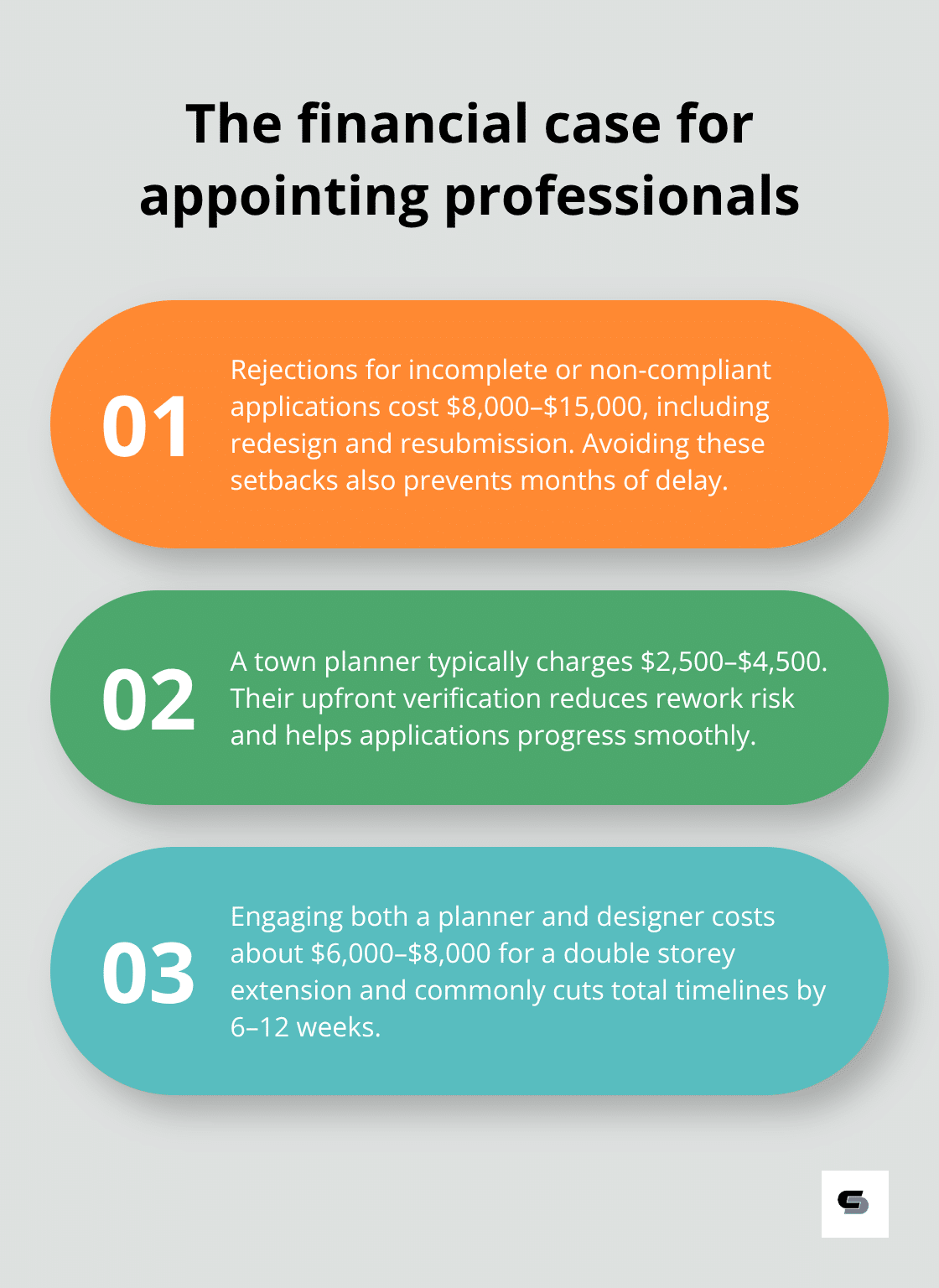
Building designers typically charge $1,800 to $3,500 for extension drawings, depending on complexity. The combined cost of appointing both professionals sits around $6,000 to $8,000 for a double storey extension, yet this investment protects against rejections that cost substantially more. Councils process applications faster when documentation is complete and compliant on first submission, reducing overall project timelines by 6 to 12 weeks.
Managing Council Liaison Through Professionals
Your professionals should manage council liaison directly rather than leaving this responsibility to you, since councils respond more efficiently to qualified practitioners than to homeowners navigating unfamiliar processes. A town planner or building designer handles clarification requests, submits additional information, and interprets council feedback without the delays that occur when homeowners manage these communications. This professional intermediary also shields you from informal council conversations that may contradict written requirements. After approval, your building surveyor and builder take over, but the foundation laid by competent planning and design professionals determines whether construction proceeds smoothly or encounters mid-project compliance issues that delay completion.
Final Thoughts
Town planning extensions Melbourne requires you to understand three fundamentals: your permit obligations, the documentation councils assess, and the professionals who manage the process efficiently. Most homeowners underestimate how much time and money incomplete applications cost, yet appointing a town planner or building designer prevents rejections that cost $8,000 to $15,000 in rework. A pre-application meeting with your council takes an afternoon and clarifies exactly which permits apply to your property, while professional guidance typically costs $6,000 to $8,000 for a double storey extension.
Your extension’s success depends on professionals who manage council liaison, coordinate specialist reports, and verify BCA compliance from design through construction. Councils process applications faster when documentation arrives complete and compliant on first submission, and your building surveyor conducts mandatory inspections at key milestones to confirm compliance throughout construction. This structured approach transforms what feels overwhelming into a manageable sequence of steps that protects your investment and compresses overall timelines by months.
We at Cameron Construction have guided Melbourne homeowners through town planning extensions for over 40 years, with in-house designers, engineers, and project managers who handle planning, permits, and BCA compliance across Melbourne’s councils. Contact Cameron Construction to discuss your project and confirm which professionals your extension requires-the right guidance today prevents delays and costly rework tomorrow.