Split Level Builders Melbourne: Expert Construction Services
Split level homes suit Melbourne’s terrain perfectly. Sloping blocks that seem impossible to build on become valuable assets with the right design approach.
At Cameron Construction, we’ve built dozens of split level projects across Melbourne. The complexity of these builds demands expertise in structural design, council approvals, and managing multiple trades on challenging sites.
Why Split Level Design Works for Melbourne’s Sloping Blocks
Solving Melbourne’s Slope Problem
Split level homes solve a problem that plagues Melbourne homeowners with sloping terrain: wasted space and awkward layouts. Rather than building a conventional single-level home that sits high on stilts or requires extensive earthworks, split level design steps down the slope and uses the natural gradient to create multiple functional levels without excavation costs spiralling out of control. This approach transforms a challenging block into a genuine advantage.
Melbourne’s terrain varies significantly across suburbs, with many areas featuring slopes between 5 and 15 degrees. The NCC 2022 standards require that any structural work on sloping sites meets specific safety and foundation requirements, which split level design naturally accommodates when planned correctly.
Creating Distinct Functional Zones
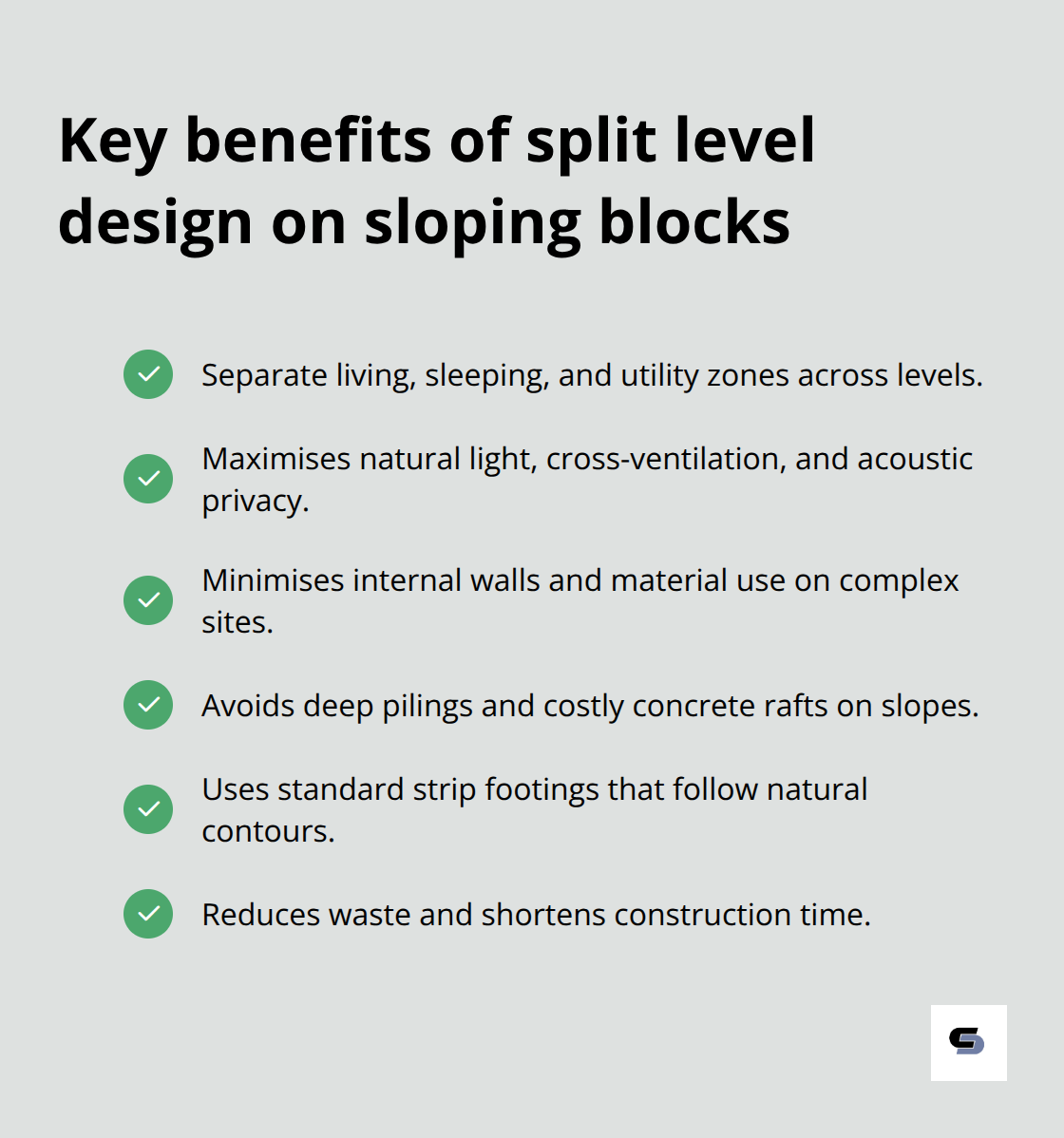
The design creates distinct zones across different levels, meaning living areas sit at one height, bedrooms at another, and utility spaces at a third. This separation improves natural light, ventilation, and acoustic privacy without the cost of extensive internal walls. From a practical standpoint, you avoid the massive foundation costs associated with conventional homes on slopes, where deep pilings or concrete rafts become necessary. Split level construction typically requires standard strip footings that follow the natural contours, reducing both material waste and construction time.
Maximising Space and Compliance
Melbourne homeowners increasingly favour split level design because it maximises usable floor area on difficult blocks while maintaining compliance with council planning requirements across suburbs like Hawthorn, Balwyn, and the Dandenong ranges, where sloping terrain is common. The design naturally creates separate functional zones, so a family of four gets distinct living, sleeping, and working areas without the home feeling cramped or requiring extensive internal circulation.
Energy Efficiency and Resale Value
Energy efficiency improves because the stepped design allows better cross-ventilation and natural light penetration across multiple levels, reducing reliance on artificial heating and cooling. When you align split level design with NCC 2022 energy efficiency requirements (including proper insulation and glazing standards), heating and cooling costs drop noticeably compared to conventional homes on similar blocks. From a resale perspective, split level homes in Melbourne suburbs command premium prices because they offer something rare: intelligent use of difficult terrain combined with modern functionality.
Why Expert Builders Matter
The structural complexity demands expertise during planning and construction, which is why engaging builders experienced in slope-site construction matters from day one. Understanding how to navigate foundation design, council approvals, and multi-level coordination separates successful projects from costly delays and compliance issues.
How Long Does a Split Level Build Actually Take
Understanding the Full Project Timeline
Building a split level home in Melbourne takes longer than a conventional single-storey project, and understanding the timeline prevents frustration and budget overruns. Most split level projects span 18 to 24 months from initial design through to final occupancy permit, though this varies based on block complexity, council responsiveness, and whether heritage overlays or planning restrictions apply. The first three to four months focus on design refinement and securing permits, which represents roughly 20 per cent of your total project duration. Most homeowners underestimate this phase because nothing visible happens on site, yet it determines whether your build proceeds smoothly or encounters costly delays.
Design and Permit Phase: The Foundation for Success
Your building designer works with a structural engineer to develop foundation plans that match your specific slope, soil conditions, and council requirements. Each sloping block demands site-specific solutions rather than generic approaches. Once designs are locked, you submit building permit applications through a registered building surveyor, and Victorian councils typically take four to eight weeks to issue permits after lodgement, assuming no requests for additional information. Planning permits, where required, add another six to twelve weeks depending on whether your council processes applications in-house or refers them to a planning panel.
The NCC 2022 standards now require energy efficiency documentation upfront, so your designer must include insulation specifications, glazing performance data, and HVAC strategy before permits are issued. This adds complexity compared to older builds but prevents compliance failures mid-construction. Soil reports and foundation data become essential at this stage-your builder obtains these reports to accurately price footing type and depth, preventing later price shocks when unexpected ground conditions emerge.
Construction Phases: Sequential Work Across Multiple Levels
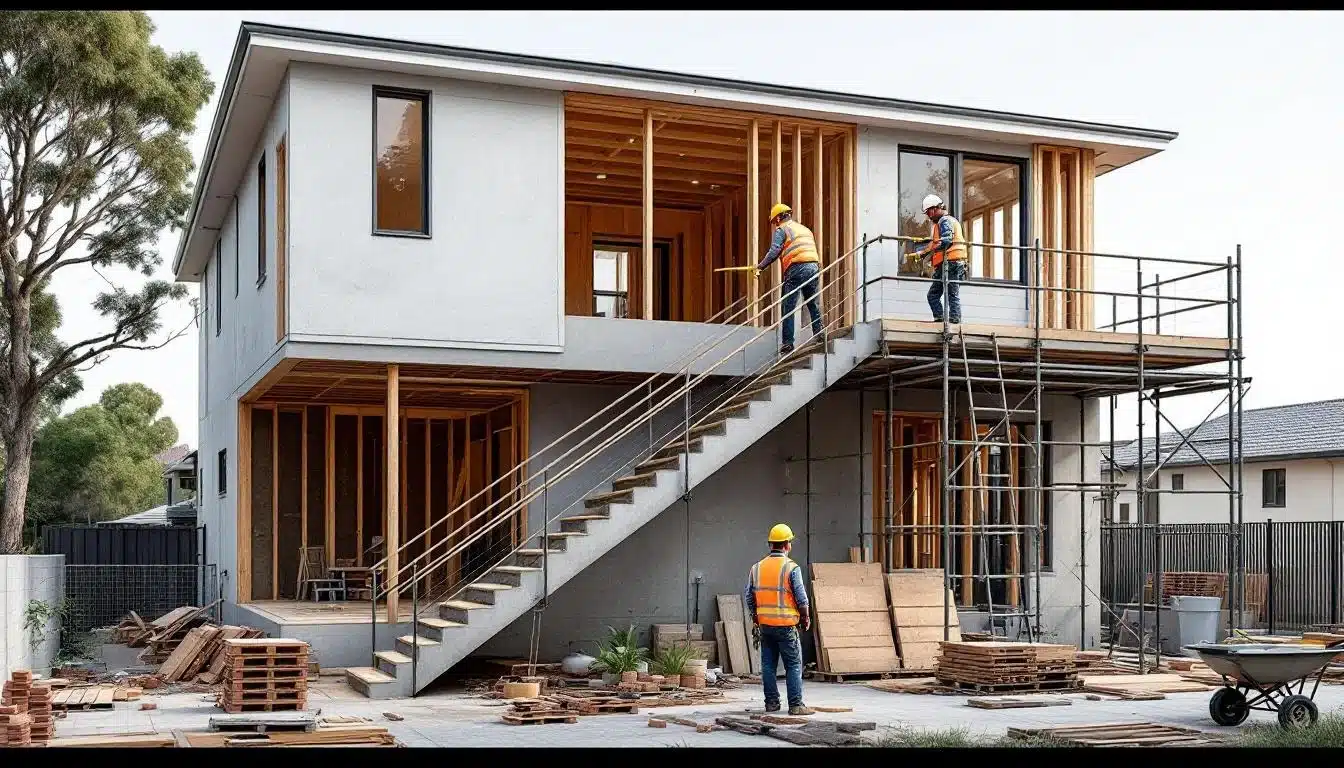
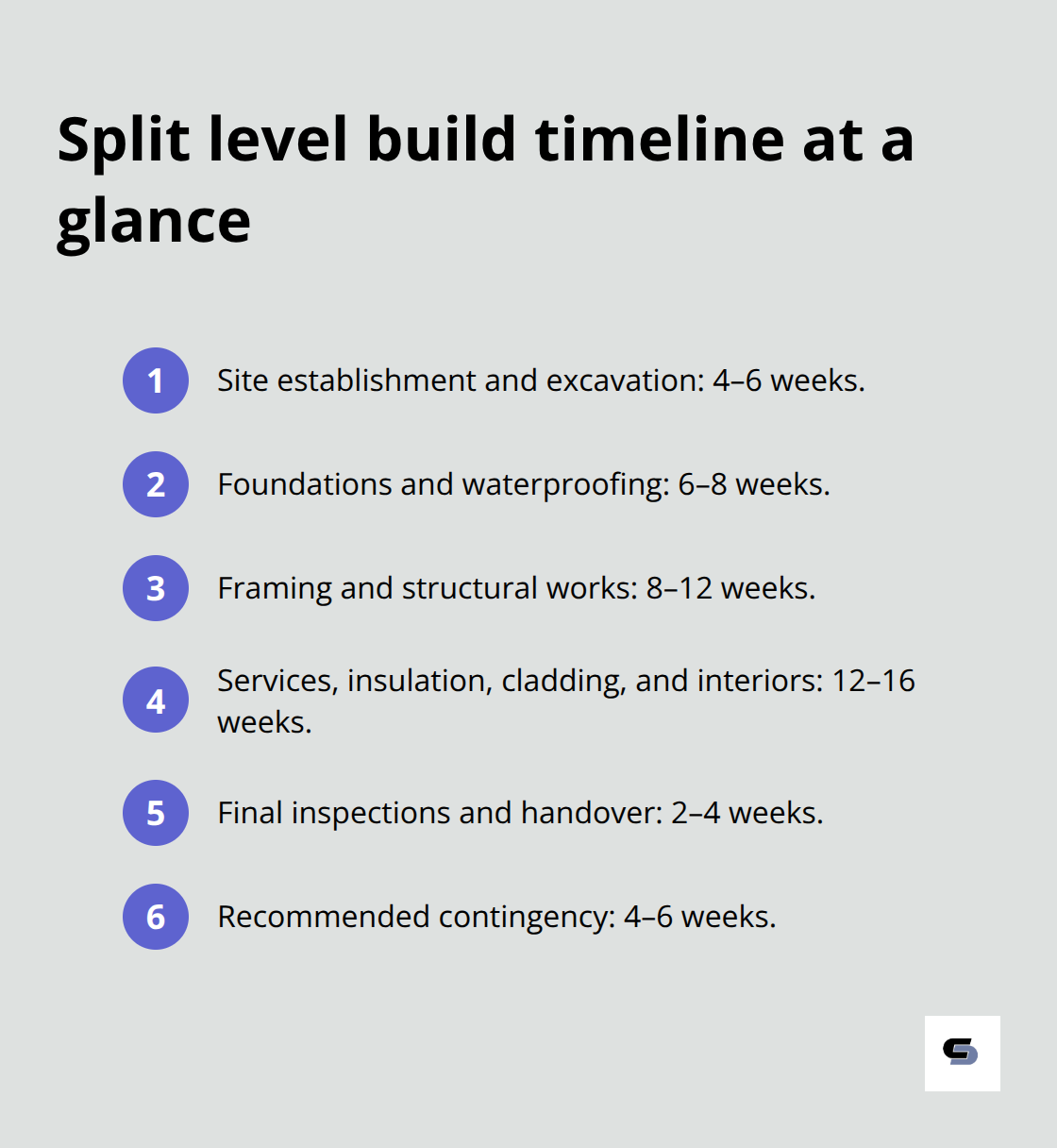
The actual construction phase spans 14 to 20 months and divides into distinct stages that must progress sequentially. Site establishment and excavation typically take four to six weeks, during which your builder manages earthworks to create level platforms for each split level section. Foundation work follows immediately and usually takes six to eight weeks-this includes footing excavation, concrete pours, and waterproofing, which demands precision because poorly executed foundations on sloping sites lead to structural movement and cracking.
Framing and structural work consume another eight to twelve weeks as carpenters and steel fixers build the skeleton across multiple levels. At this point, mandatory building surveyor inspections occur at foundation stage, frame stage, and lock-up stage, and your surveyor will not sign off if standards aren’t met. Fixings and finishes-plumbing, electrical, insulation, cladding, and interior walls-run concurrently across 12 to 16 weeks and represent the longest phase because multiple trades coordinate on different levels simultaneously.
Managing Trade Coordination and Inspections
This coordination complexity is why split level projects demand experienced project managers who schedule trades precisely; one delayed plumber can cascade delays across electrical, HVAC, and wall linings. Final inspections and handover typically occur over two to four weeks as your surveyor conducts final checks against the building permit conditions and issues your occupancy permit. We recommend building a four to six week contingency into your timeline because soil conditions sometimes require foundation design changes, council requests for additional documentation occur, and trade availability often extends schedules by several weeks.
The structural complexity of split level home extensions means that managing multiple trades across different levels requires coordination that single-storey projects simply don’t demand. Your builder must synchronise foundation work, framing, and finishing trades in a sequence that respects the stepped design while maintaining safety and compliance standards throughout construction.
What Really Stops Split Level Builds
Foundation Complexity Across Sloping Terrain
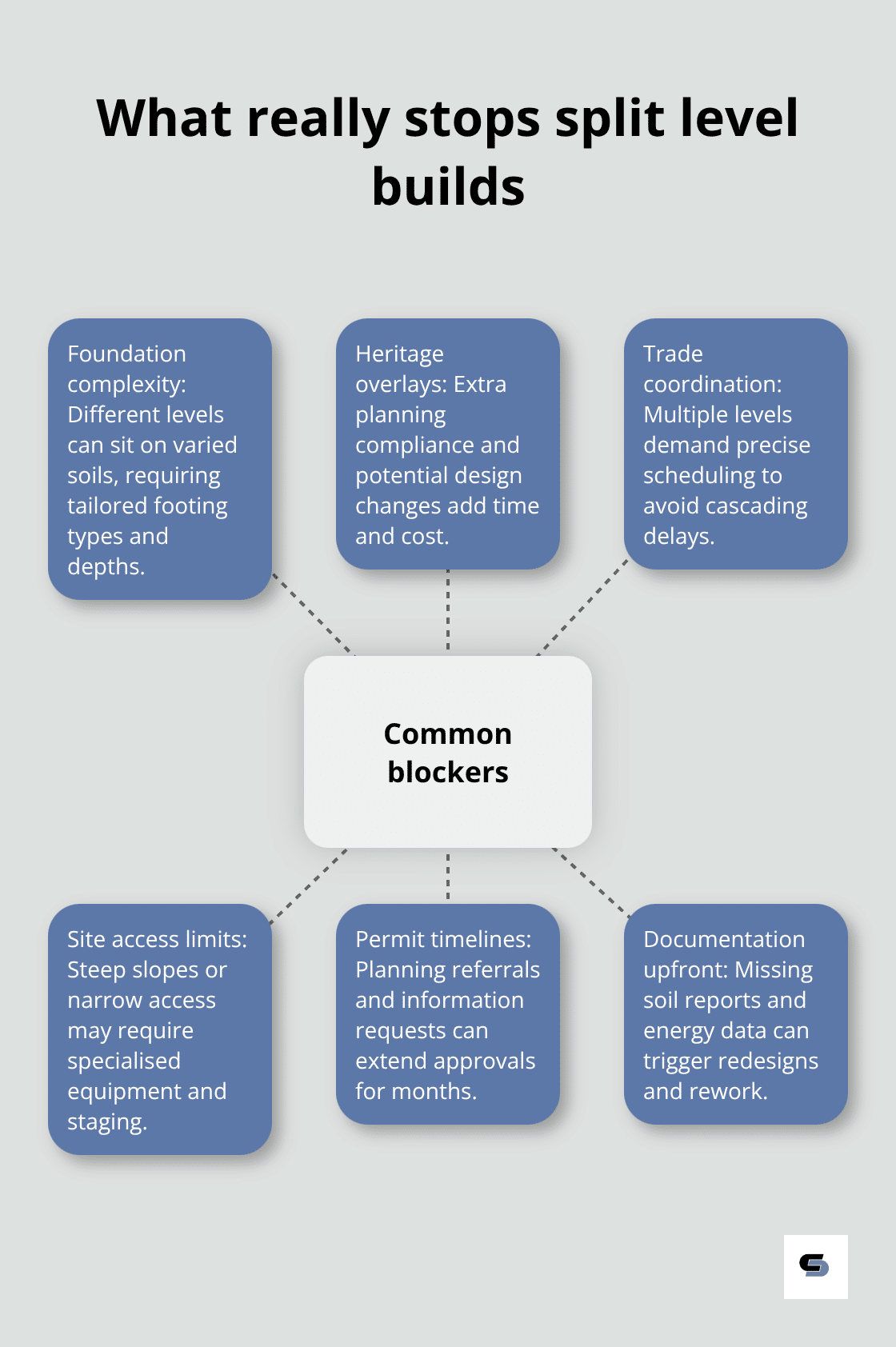
Split level construction in Melbourne encounters four specific obstacles that inexperienced builders either mishandle or ignore entirely, resulting in timeline blowouts and budget overruns. The structural demands of stepped construction require foundation designs that vary across different levels on the same block-your builder cannot apply a standard footing approach when one section sits on bedrock and another on clay. Detailed soil reports must precede finalisation of foundation specifications because unexpected ground conditions cost thousands to rectify mid-construction. One section may require strip footings while another demands deeper pilings, and builders who fail to obtain this data upfront face costly redesigns once excavation begins.
Heritage Overlays and Planning Restrictions
Heritage overlays complicate matters further; suburbs like Hawthorn and Balwyn contain significant heritage zones where split level designs must satisfy both council planning requirements and heritage planning overlay conditions simultaneously. The Domestic Building Contracts Act 1995 and Building Regulations 2018 mandate that any structural work requires a registered builder and building permit, yet many homeowners discover mid-project that their original designer failed to account for heritage restrictions or that council requires modifications costing 10 to 15 per cent of the original budget. Planning permits, where required, add six to twelve weeks to your timeline, and if your council refers applications to a planning panel, delays extend to four months or longer.
Trade Coordination Across Multiple Levels
Trade coordination across multiple levels demands scheduling precision that separates professional operators from amateur builders. Plumbing and electrical work must be roughed in before wall linings proceed, yet on split level sites, these trades often work simultaneously on different levels, creating congestion and rework. Your project manager must synchronise multiple trades across different heights and functional zones, a complexity that single-storey projects simply do not present. One delayed plumber cascades delays across electrical, HVAC, and wall lining schedules, extending timelines by weeks.
Difficult Block Configurations and Site Access
Difficult block configurations-steep slopes exceeding 15 degrees, narrow access points, or neighbours’ boundary proximity-force builders to develop custom site logistics and often require temporary structures or specialised equipment costing 5 to 8 per cent of total project value. Sites where conventional crane access proves impossible require smaller mobile units or manual material handling that extends timelines by weeks. These site-specific challenges demand builders who understand slope-site logistics and can adapt equipment and sequencing to match your block’s constraints rather than applying generic construction methods.
Planning and Contingency from Day One
Homeowners who secure detailed soil and heritage information upfront, engage builders experienced specifically with split level complexity, and build realistic contingency into both timeline and budget from day one avoid most disruptions. Those who skip these steps consistently report surprise costs and delays; those who invest in thorough planning rarely encounter significant disruptions.
Final Thoughts
Split level builders Melbourne specialise in solving problems that conventional builders struggle with, and the structural complexity we’ve outlined throughout this article demands expertise that only repeated experience on sloping terrain provides. Decisions made before construction begins-obtaining detailed soil reports, securing all permits upfront, and selecting a builder with proven experience on slope-site work-prevent the timeline blowouts and budget overruns that plague homeowners who cut corners during planning. Your builder should demonstrate familiarity with NCC 2022 compliance requirements, maintain current domestic building insurance and public liability coverage, and provide references from similar projects in your suburb.
We at Cameron Construction have spent over 40 years delivering home extensions and premium renovations across Melbourne, including complex split level projects on challenging blocks. Our in-house designers, engineers, and project managers handle everything from concept through to final occupancy permit, managing planning approvals, BCA compliance, and multi-trade coordination so you don’t have to. We understand how sloping terrain becomes an asset rather than a liability when approached with the right expertise.
Your next step is straightforward: contact experienced builders in your area, request references from recent projects on similar blocks, and compare their approach to foundation design and council approvals. Ask how they manage trade coordination across multiple levels and what contingency they build into timelines. Contact Cameron Construction to discuss your split level project and discover how professional expertise transforms challenging terrain into exceptional homes.