Sloping Lot Extensions Melbourne: Smart Angled Additions
Sloping lot extensions in Melbourne demand a different approach than standard renovations. Most homeowners see steep terrain as a limitation, but we at Cameron Construction view it as an opportunity to create something genuinely distinctive.
The right design transforms grade changes into architectural advantages-better views, improved natural light, and more usable living space. This guide shows you how.
Why Sloping Blocks Create Real Advantages
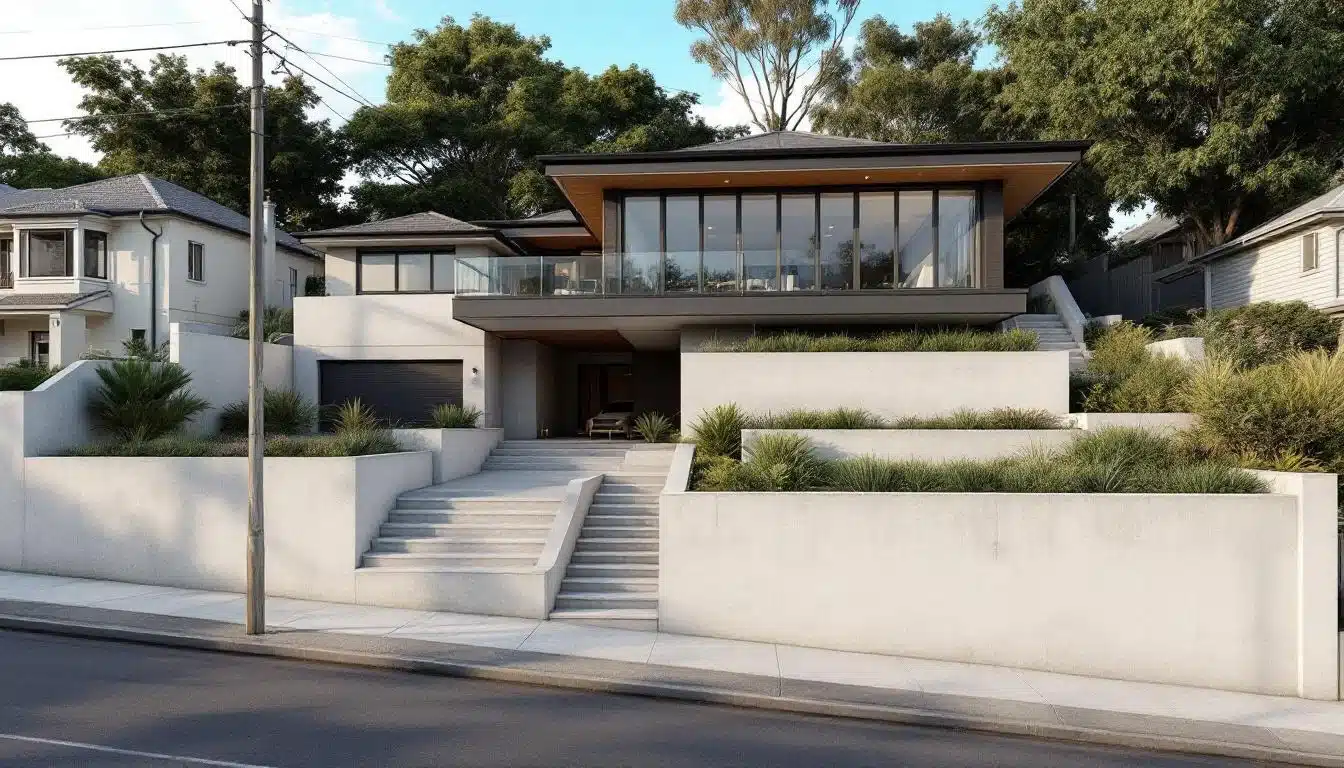
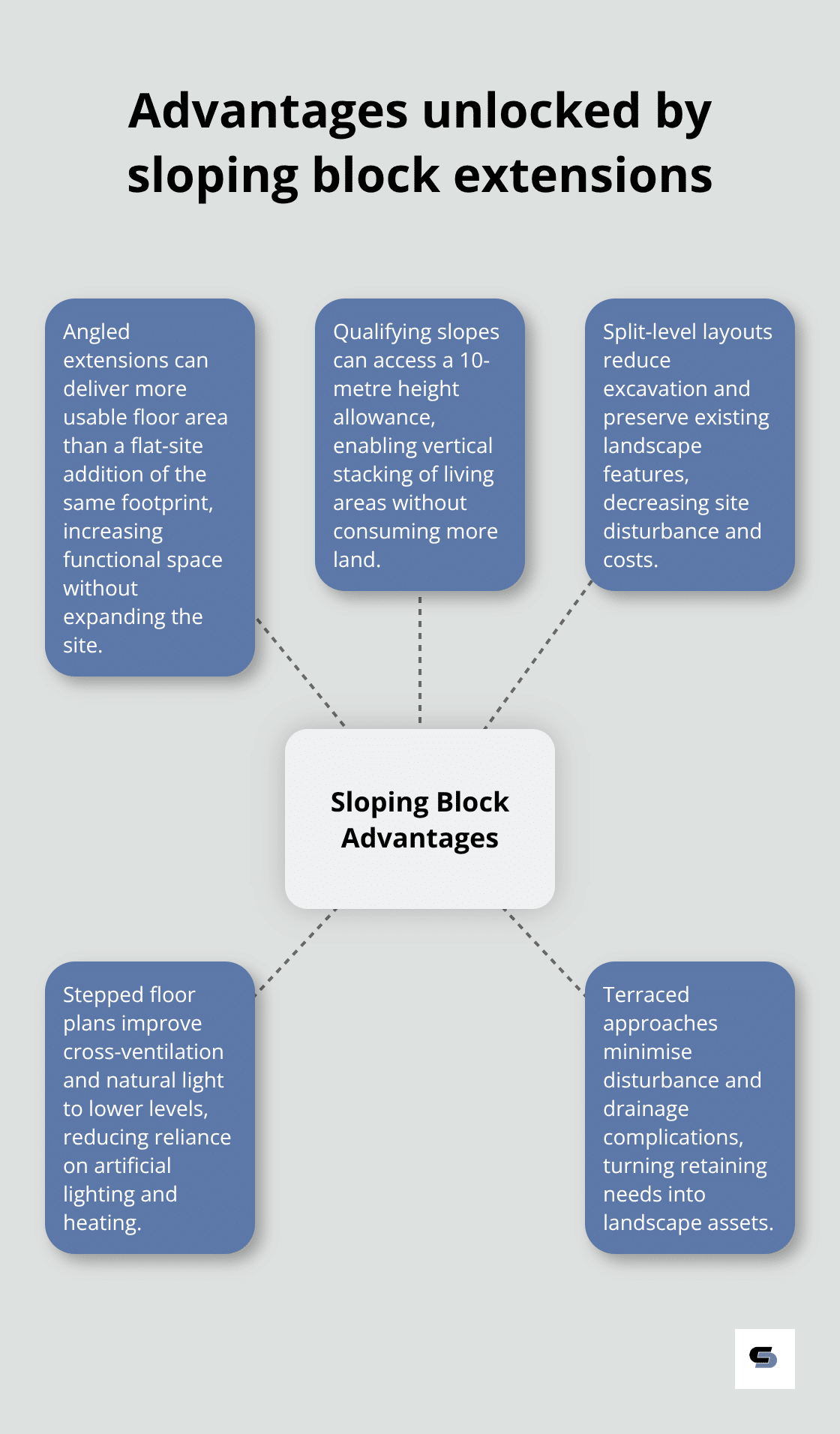
Sloping terrain in Melbourne works in your favour if you design with it rather than against it. A well-planned angled extension delivers more usable floor area than a flat-site addition of the same footprint. The Victorian Planning Provisions allow buildings up to 10 metres on qualifying slopes where the slope of the land is greater than 2.5 degrees through the cross section, compared to the standard 9-metre height limit in many zones. This height allowance lets you stack living spaces vertically without consuming more land, a significant advantage when Melbourne block sizes are shrinking. Split-level layouts that follow natural grade changes reduce excavation costs and preserve more of your existing landscape. Instead of flattening the site and building retaining walls, a terraced approach minimises disturbance and drainage complications. Stepped floor plans also improve cross-ventilation and natural light to lower levels, reducing reliance on artificial lighting and heating.
North-Facing Orientation Captures Winter Sun
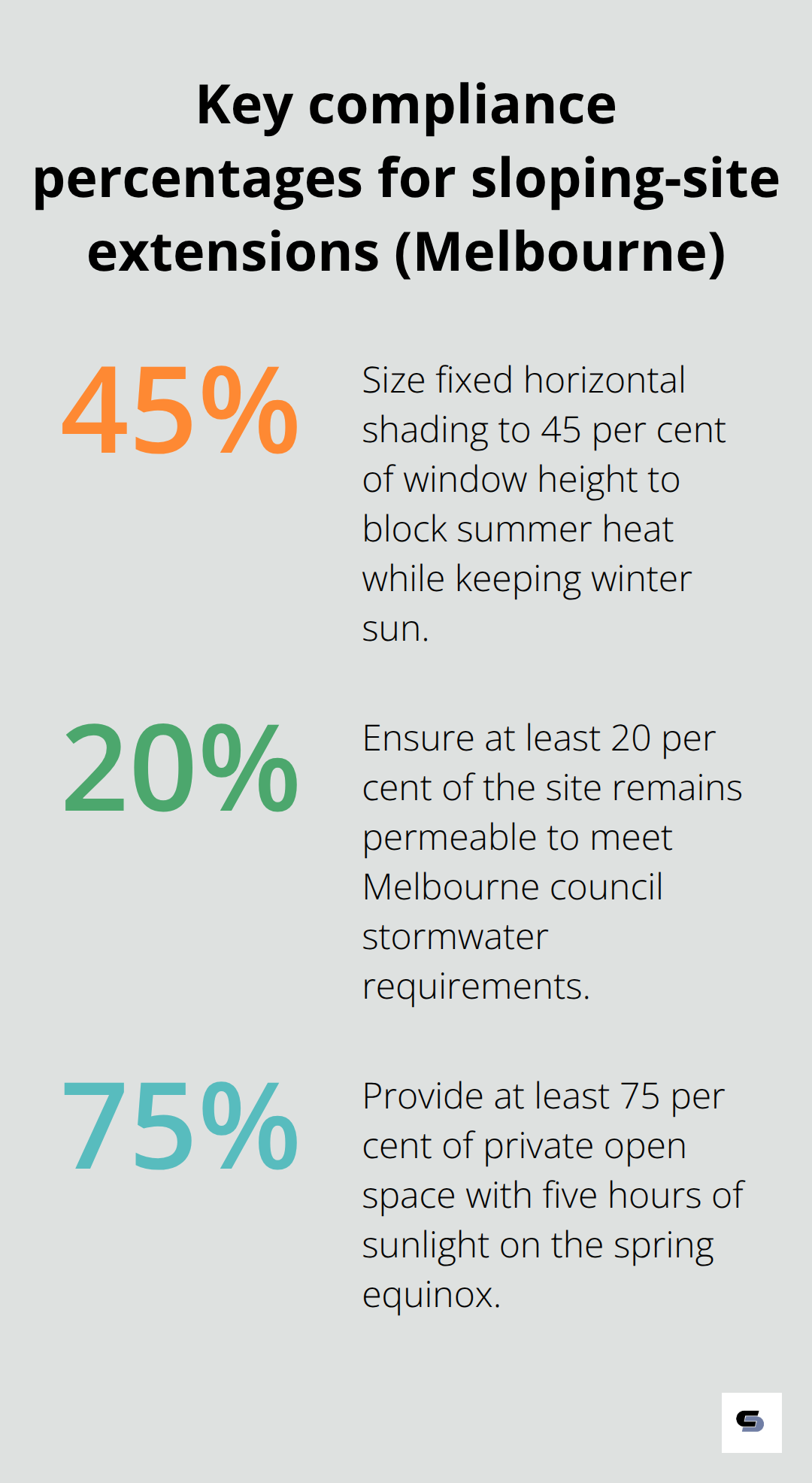
Sloping lots often allow you to position new living areas on upper levels facing north, capturing winter sun and distant views simultaneously. Double or triple-glazed north-facing windows on a slope extension reduce winter heating demand significantly because the angled terrain naturally shields lower levels from cold southerly winds. Fixed horizontal shading devices (eaves or pergolas) sized at 45 per cent of the window height block summer heat while preserving winter solar access-a calculation that matters in Melbourne’s cool temperate climate zone 7. Kitchens and primary living spaces positioned at the upper level maximise daylight penetration and sightlines, while bedrooms on lower levels benefit from cooler temperatures and privacy. This vertical separation of activities proves difficult to achieve on flat blocks without expensive basement excavation.
Retaining Walls Transform Into Landscape Elements
Slope extensions allow retaining walls to become integrated landscape features rather than eyesores. Terraced walls with plantings soften visual impact and reduce perceived mass when viewed from neighbouring properties. A properly engineered stepped wall sequence costs less than a single high wall because each stage is lower and requires lighter footings. The Victorian Building Authority mandates engineering and drainage behind all retaining walls to prevent long-term movement, but this investment pays dividends in stability and resale confidence. Planted terraces also manage stormwater naturally, reducing the burden on Melbourne’s drainage systems and improving your site’s permeability rating under council requirements.
Foundation Design Responds to Terrain
Stepped or split-level floor plans that follow the terrain minimise excavation and massing on slopes. Foundations on sloped terrain typically require stepped footings or grade-beam solutions, which a structural engineer must design early in the planning phase. This approach reduces the overall load on the slope and prevents differential settlement between old and new structures. Lightweight framing and durable cladding further reduce load on existing structures and improve construction efficiency on sloped terrain. The right foundation strategy transforms what appears to be a constraint into a cost-saving opportunity when you work with experienced builders who understand slope-specific engineering.
Engineering and Planning for Sloping Sites
Stepped Footings and Foundation Strategy
Sloping terrain demands foundation decisions that flat blocks simply don’t require. On slopes, stepped footings or grade-beam solutions become necessary because a single continuous foundation won’t work across varying ground levels. A structural engineer must assess your site’s soil type, slope angle, and existing building loads before any design reaches finalisation. The Victorian Building Authority requires this assessment early, not after construction begins. Engaging an engineer at the design phase costs between $2,000 and $5,000 but prevents far costlier problems later. Lightweight framing reduces loads on sloped ground, which is why timber or steel-frame construction often outperforms heavy concrete on difficult terrain. The foundation choice directly affects your project timeline and budget, so this decision shapes everything that follows.
Drainage and Retaining Wall Design
Retaining walls on slopes must be engineered and drained, not simply built. The VBA mandates that all retaining walls include proper drainage behind the wall to prevent water pressure buildup that causes movement and failure. A single high wall often costs more than a terraced walls on slopes because each stage requires lighter footings and less excavation. Terraced walls also reduce visual impact on neighbouring properties and create opportunities for planting that stabilises the slope naturally. Drainage design is critical-surface water must flow away from your foundations, and subsoil drainage must prevent saturation. Many slope extensions fail not because of poor structure but because drainage was neglected. Your builder must coordinate drainage with council stormwater requirements, which in Melbourne mandate that at least 20 per cent of your site remain permeable.
Height Limits and Setback Requirements
Planning approval for slope extensions involves multiple checks. The City of Melbourne planning portal requires verification that your proposal meets height limits, setbacks, and overshadowing rules specific to sloped terrain. The 10-metre height allowance on qualifying slopes applies only where the slope exceeds 2.5 degrees across an 8-metre cross-section, as detailed in Planning Practice Note 27. Front setbacks can be based on the average of abutting dwellings’ setbacks, which gives flexibility for angled additions. North-facing habitable windows within 3 metres of a boundary trigger additional setback formulas to protect neighbours’ solar access.
Private Open Space and Sunlight Access
Private open space must total at least 40 square metres with a 3-metre minimum dimension, and at least 75 per cent of this space should receive five hours of sunlight between 9 am and 3 pm on the spring equinox. These rules exist to maintain neighbourhood amenity, and compliance from the outset prevents costly redesigns after council feedback. Once you understand these planning requirements and foundation principles, the real cost picture emerges-and it differs significantly from standard flat-block extensions.
Cost Factors and Budget Planning for Sloping Block Extensions
Sloping block extensions cost more than flat-site additions, and understanding where that money flows prevents shock when quotes arrive. Engineering and design complexity drive the first cost increase. A structural engineer assessment for slope-specific foundations runs between $2,000 and $5,000, but skipping this step invites foundation failure that costs $50,000 or more to repair. Geotechnical investigation to determine soil type and stability adds another $1,500 to $3,000, yet this data shapes every foundation decision that follows.
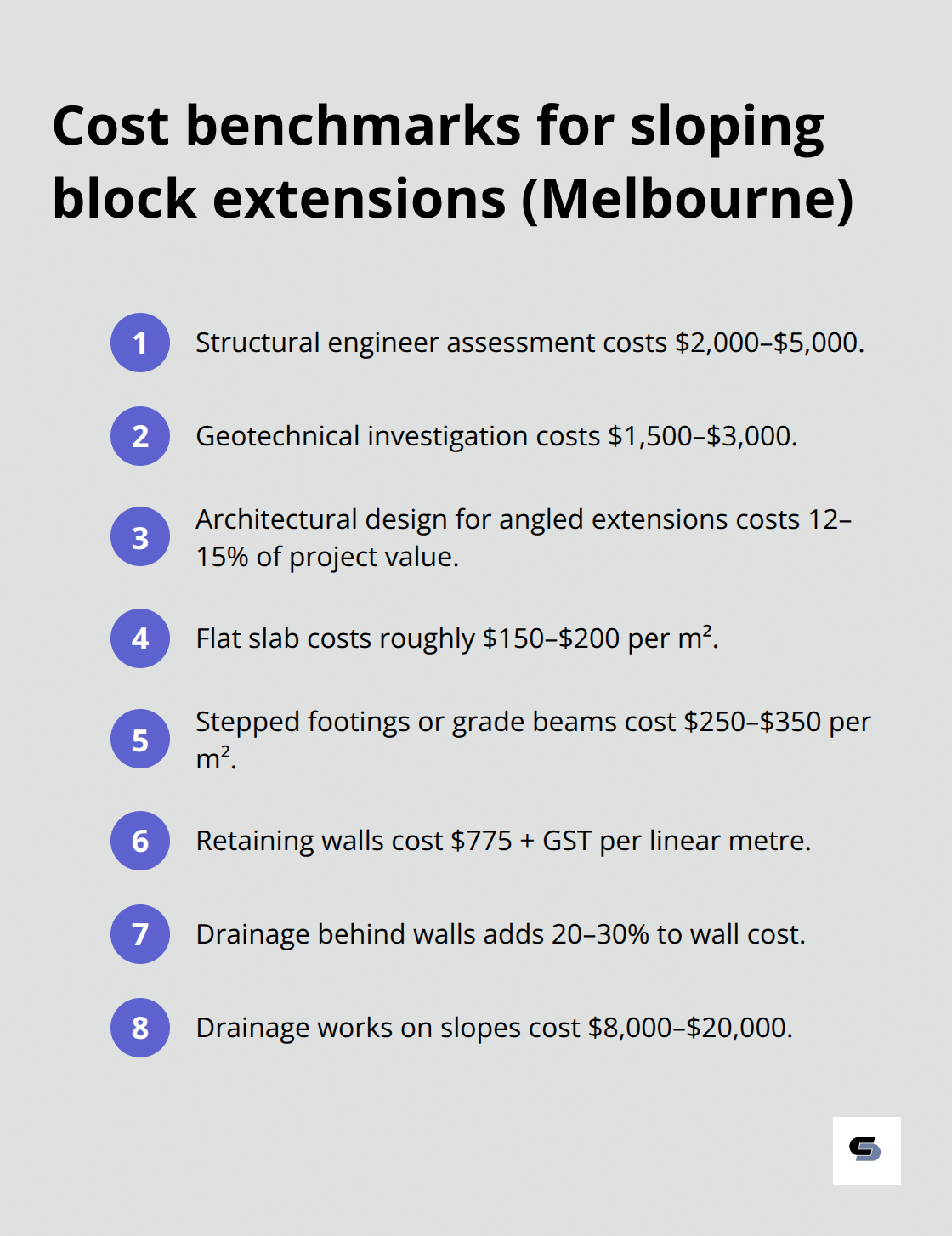
Architectural design for angled extensions typically costs 12 to 15 per cent of total project value compared to 8 to 10 per cent for flat blocks, because the designer must coordinate stepped layouts, multiple roof forms, and drainage integration simultaneously. These upfront costs are non-negotiable if you want a stable, council-approved extension that performs well for decades.
Excavation and Foundation Expenses
Excavation and foundation expenses form the largest budget variable on slopes. Standard flat-block extensions use a single continuous concrete slab costing roughly $150 to $200 per square metre. Stepped footings or grade-beam foundations on slopes cost $250 to $350 per square metre because each stage requires separate excavation, engineering coordination, and careful load distribution. Retaining walls typically cost $775 minimum plus GST per linear metre, with drainage infrastructure behind the wall adding another 20 to 30 per cent to that cost. A modest slope extension with 2 metres of retaining wall can easily add $8,000 to $15,000 to your budget before building starts.
Drainage and Site Works
Drainage design and installation-surface grading, subsoil drainage, and stormwater connection-typically costs $8,000 to $20,000 on slopes, whereas a flat block might need only $2,000 to $4,000. These expenses are not optional; councils require them, and skipping them guarantees problems. Proper drainage prevents water pressure buildup behind retaining walls and protects your foundations from saturation, making this investment essential for long-term stability.
Value Addition Through Strategic Design
The payoff comes from strategic placement and multi-level design that maximises value. Upper-level living spaces command premium pricing because they capture views and natural light, and stepped floor plans allow you to stage construction-building the primary living areas first and adding bedrooms or a study later as budget allows. A well-designed slope extension typically adds 8 to 12 per cent more to your property value than a flat-block addition of equivalent size, according to Melbourne real estate data, because the three-dimensional design and improved daylight are difficult to replicate on flat terrain. This value uplift justifies the engineering investment and foundation complexity, making slope extensions a sound long-term decision when designed with professional guidance from experienced builders who understand how to integrate terrain into the design rather than fight it.
Final Thoughts
Sloping lot extensions in Melbourne demand upfront investment in engineering and design, but the payoff extends far beyond the construction phase. The terrain that initially appears problematic becomes your greatest asset when you work with professionals who understand how to integrate slope into the design rather than eliminate it. Stepped foundations, terraced retaining walls, and multi-level floor plans transform grade changes into opportunities for superior natural light, views, and usable living space that flat blocks cannot match.
The engineering complexity is real, but it is manageable when you engage a structural engineer early and select a builder experienced with slope-specific construction. The $2,000 to $5,000 structural engineer fee and additional geotechnical investigation are not expenses to avoid-they are investments that protect your foundation and your budget. Melbourne real estate data shows that well-designed slope extensions add 8 to 12 per cent more value than flat-block additions of equivalent size, because the three-dimensional design and superior daylight are difficult to replicate elsewhere.
Staged construction allows you to build primary living areas first and add bedrooms or study spaces later, spreading costs across time while capturing immediate benefit from improved kitchen, dining, and living spaces. If you are considering a sloping lot extensions Melbourne project, contact Cameron Construction for a consultation to understand how your terrain can become your competitive advantage.