Second Storey Additions Melbourne: Expanding Height, Expanding Possibilities
Melbourne’s inner and middle suburbs face a real challenge: blocks are small, but families need more space. Second storey additions Melbourne offer a practical solution that doesn’t require uprooting your life.
At Cameron Construction, we’ve helped hundreds of homeowners add a second level and transform their properties. This guide walks you through the design, permits, costs and timelines involved in building upwards.
Why Adding Height Works for Melbourne Homes
The Geography Problem Second Storeys Solve
Melbourne’s inner and middle suburbs face a real constraint: blocks are small, but families need more space. Suburbs like Fitzroy, Brunswick, Hawthorn and Camberwell have blocks averaging 400–600 square metres, yet expanding outwards simply isn’t possible. Adding upwards becomes the only realistic option when you cannot expand across your land. A second storey on a 200-square-metre ground floor doubles your usable floor space without consuming your backyard or forcing a property move. This approach suits growing families who want to stay in their suburb, keep their social networks intact, and avoid the $800,000+ cost of buying a larger house elsewhere in Melbourne.
Market Demand Reflects Strong Interest
The market tells a clear story about second storey demand. According to the Australian Bureau of Statistics, alterations and additions to residential building rose to $3.7 billion in the September 2025 quarter, with second storey extensions driving much of this activity. Homeowners across Melbourne recognise that building upwards solves their space problem without the disruption of relocation.
The Financial Case for Building Upwards
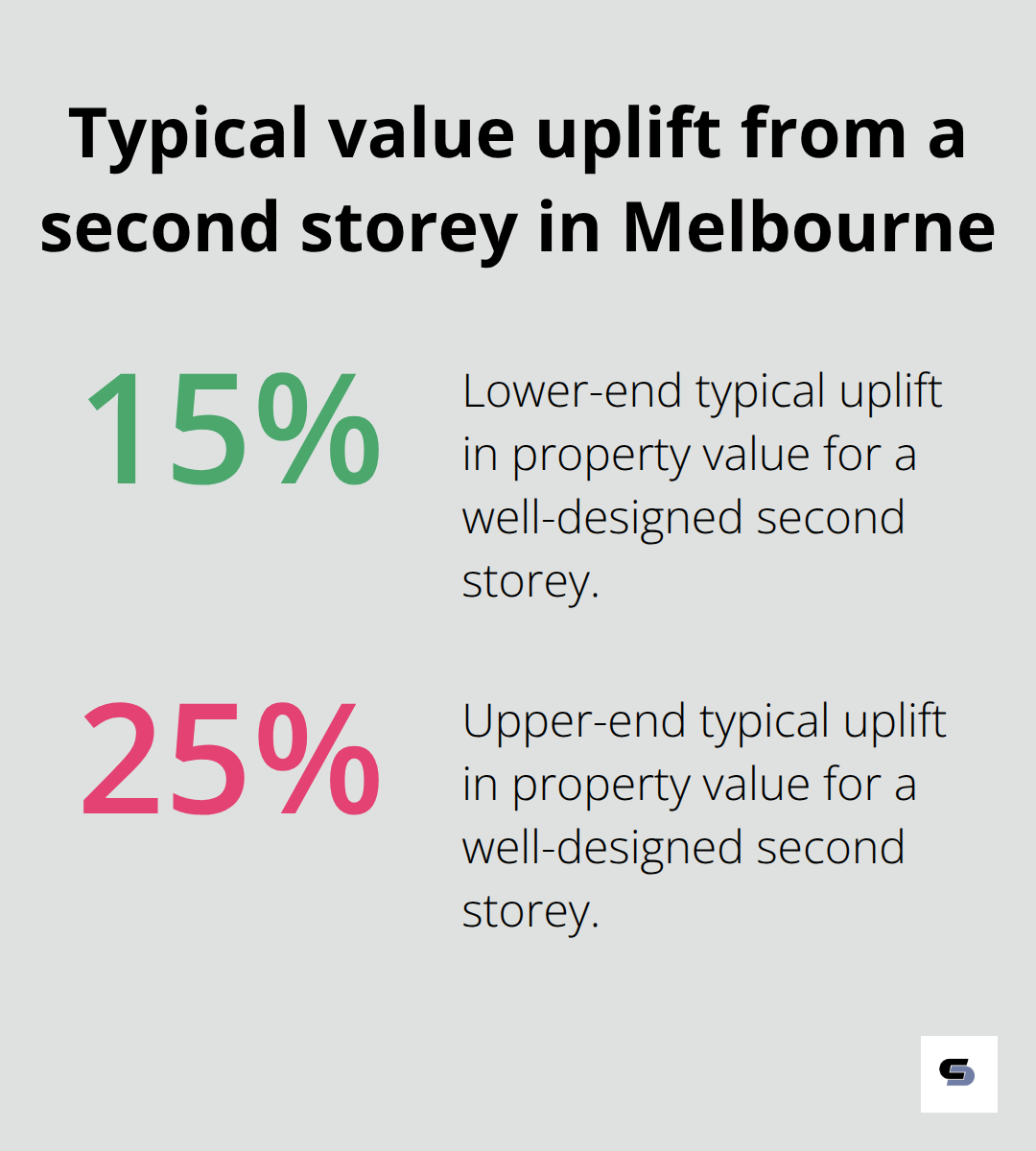
A well-designed second storey typically adds 15–25% to your property value depending on suburb, existing condition, and execution quality. Inner Melbourne properties with second storeys sell faster and command premiums because buyers recognise the space benefit and the construction risk has already been absorbed. You avoid moving costs, school disruption, and the emotional toll of leaving an established home. Construction timelines for a second storey range from 8–14 months from permit approval to completion, whereas selling, buying, and settling on a new property takes 4–6 months minimum plus months of searching. For families with young children or established routines, staying put and building upwards eliminates the friction of relocation.
Heritage Considerations Create Design Opportunities
Heritage considerations matter in many Melbourne precincts, but they create design opportunities rather than roadblocks. Additions that respect existing character, use sympathetic materials, and sit back from the street frontage integrate seamlessly with period homes and satisfy council requirements across suburbs like South Yarra, Toorak, and Carlton. The design process becomes more thoughtful when heritage guidelines apply, and the result often enhances both the home and the streetscape.
What Comes Next in Your Planning Journey
Understanding why second storeys make financial and practical sense is the first step. The real work begins when you assess your specific property, understand what your local council requires, and develop a design that works for your family and your home’s character. The next chapter walks you through the structural, design, and approval considerations that shape every second storey project in Melbourne.
Getting Your Second Storey Past Councils and Surveyors
Structural Assessment Comes First
Your property’s structural capacity determines whether a second storey is feasible, and this assessment happens before design work begins. A structural engineer must inspect your existing foundations, walls, and roof to confirm the building can support additional load. Most Victorian homes built after 1970 have adequate foundations for a second storey, but older weatherboard or brick veneer homes sometimes require underpinning or foundation reinforcement. This work adds $15,000–$40,000 to your budget depending on soil conditions and existing footings. The engineer’s report forms the basis of your building permit application, so obtaining this assessment early prevents costly design revisions later. Council won’t issue a building permit without confirmation that structural capacity exists, making this the non-negotiable first step.
Council Requirements Vary Across Melbourne Suburbs
Council requirements shift across Melbourne’s suburbs because planning controls differ between inner, middle, and outer areas. Inner Melbourne precincts like South Yarra, Carlton, and Toorak impose strict heritage overlays that mandate setbacks, material compatibility, and design restraint; your second storey must sit back at least 4–5 metres behind the front elevation to preserve streetscape character. Middle suburbs like Camberwell and Hawthorn have less restrictive controls but still require planning permits if your addition exceeds certain height thresholds or impacts neighbouring properties. Outer suburbs typically allow greater height flexibility but may impose floor space ratio limits that cap total building area. You’ll need a planning permit if your local council requires one, and a building permit is mandatory for all structural work regardless of cost.
Permits and Cost Declarations
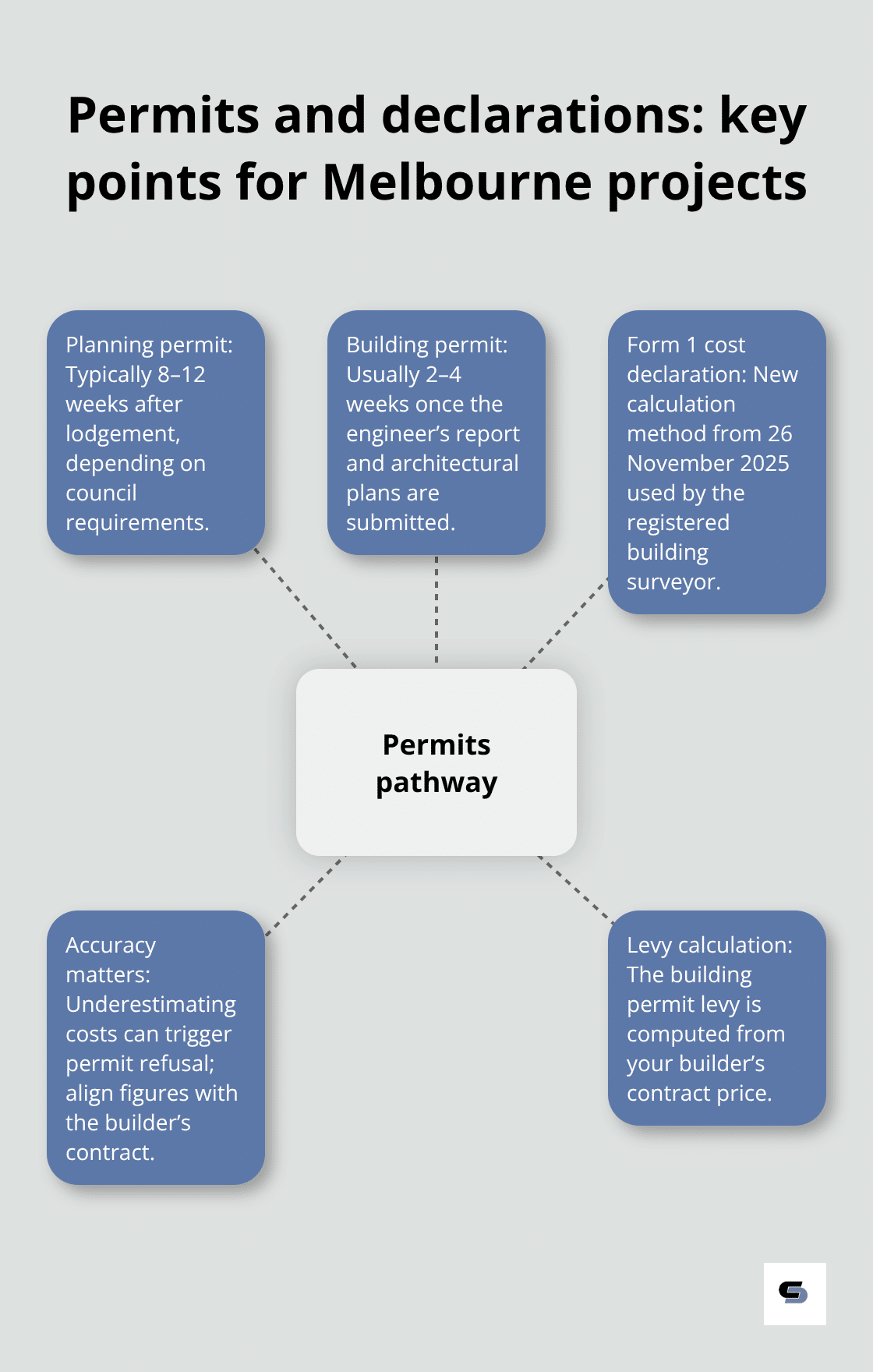
The planning permit process takes 8–12 weeks after lodgement, while building permits issue within 2–4 weeks once your structural engineer’s report and architectural plans are submitted. Form 1, the official cost declaration, must now be calculated using the new method introduced on 26 November 2025; the registered building surveyor computes cost of works from your builder’s contract price, and this determines the building permit levy. Underestimating costs on Form 1 risks permit refusal, so work with your builder to provide accurate figures before lodgement.
Design That Respects Existing Character
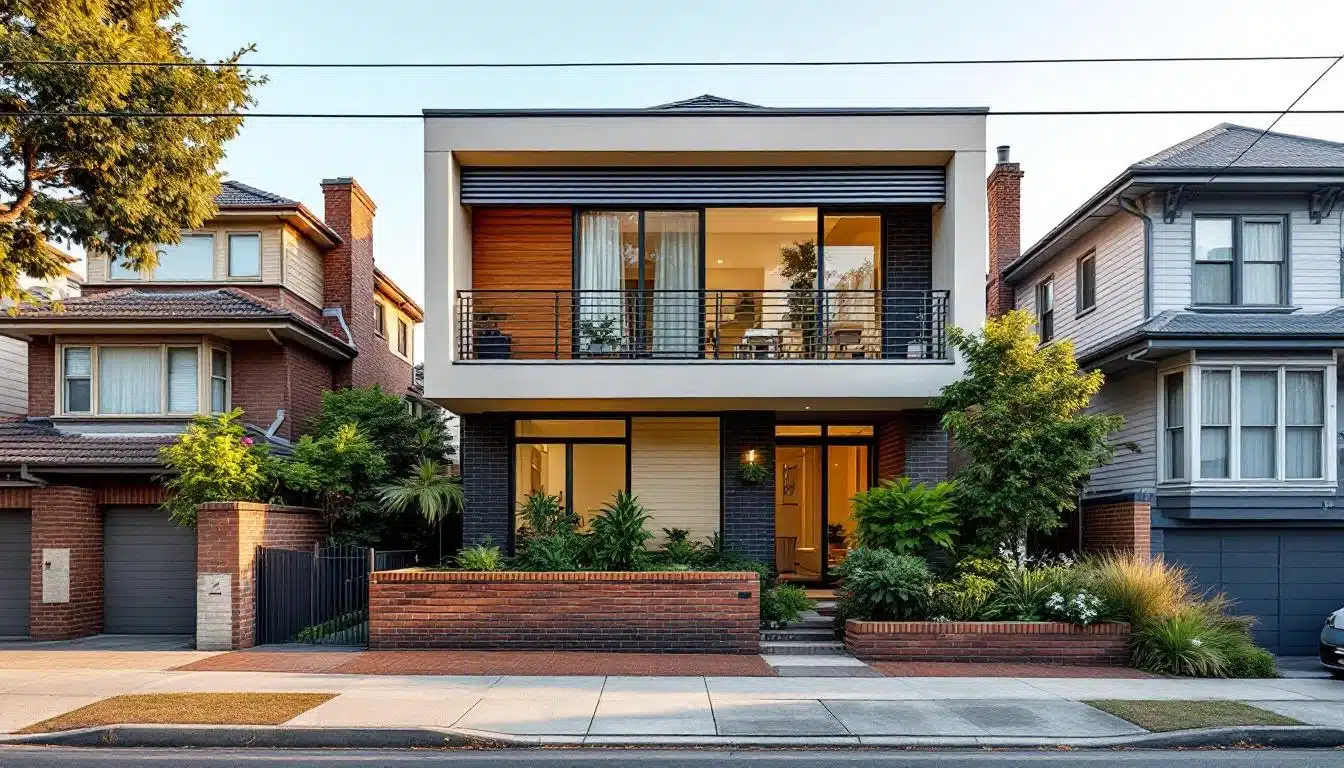
Architectural design that respects your home’s existing character matters enormously in Melbourne’s heritage-conscious suburbs. A second storey that echoes your home’s existing roof pitch, uses matching materials, and maintains the vertical rhythm of the original façade integrates naturally rather than appearing bolted on. Victorian terraces benefit from designs that sit the new storey behind the original roofline, keeping street views dominated by period architecture. Weatherboard homes work well with additions that maintain consistent detailing and cladding. The design phase typically takes 6–8 weeks once you’ve appointed an architect or designer, and this work must be completed before you can submit planning and building permit applications. Budget $8,000–$15,000 for architectural design depending on project complexity and heritage constraints.
Timeline From Approval to Completion
Your construction timeline runs from permit approval to practical completion: most second storey additions take 10–14 months on site, with 3–4 months for foundation or structural work, 4–5 months for frame and lock-up, and 3–4 months for fit-out and finishing. Weather delays, supply chain issues, and council inspection scheduling can extend timelines by 4–8 weeks, so add buffer time when planning family moves or major life changes around construction. Once you’ve secured permits and locked in your design, the next phase focuses on understanding the actual costs involved and how to manage your budget throughout the build.
What Second Storey Additions Actually Cost in Melbourne
Price Ranges Across Melbourne
Second storey additions in Melbourne range from $450,000 to $950,000 depending on finishes, structural work, and suburb location. A modest 60-square-metre addition with standard materials and minimal structural reinforcement costs around $500,000, while a 100-square-metre addition with high-end finishes and significant foundation work reaches $800,000 or beyond. Inner Melbourne suburbs command higher rates because labour costs are steeper and heritage compliance adds design complexity. Structural work forms your largest variable cost: if your existing foundations need underpinning, you’ll spend an additional $15,000 to $40,000 before the frame even goes up. Material costs have stabilised since mid-2025, so budget inflation has slowed compared to 2023 and 2024.
Controlling Costs Through Your Contract
Your builder’s contract must itemise fixed costs for materials, labour, preliminaries, and site management rather than using provisional sums or prime cost items that create budget blowouts. Insist on a detailed cost breakdown before signing anything, and obtain at least three written quotes from registered builders so you can compare specifications line by line. The differences between quotes should be clearly explained in writing-if one quote is significantly lower, ask why. This protects you from hidden costs later and ensures you understand exactly what each builder proposes to deliver.
Permits and Cost Declarations
Planning permits take 8 to 12 weeks after lodgement if your local council requires one, while building permits issue within 2 to 4 weeks once your structural engineer’s report and architectural plans are submitted. The cost of works calculation method introduced on 26 November 2025 requires your registered building surveyor to compute the building permit levy from your builder’s contract price, and this figure must be accurate or council will refuse your permit. Underestimating costs on Form 1 is a genuine risk: if the surveyor believes your declared cost is materially incorrect, the permit won’t issue until you provide supporting documentation.
Construction Timelines and Stage Payments
Once permits are granted, construction typically takes 10 to 14 months from commencement to practical completion. Foundation and structural work occupies the first 3 to 4 months, frame and lock-up takes another 4 to 5 months, and fit-out and finishing consumes the final 3 to 4 months.
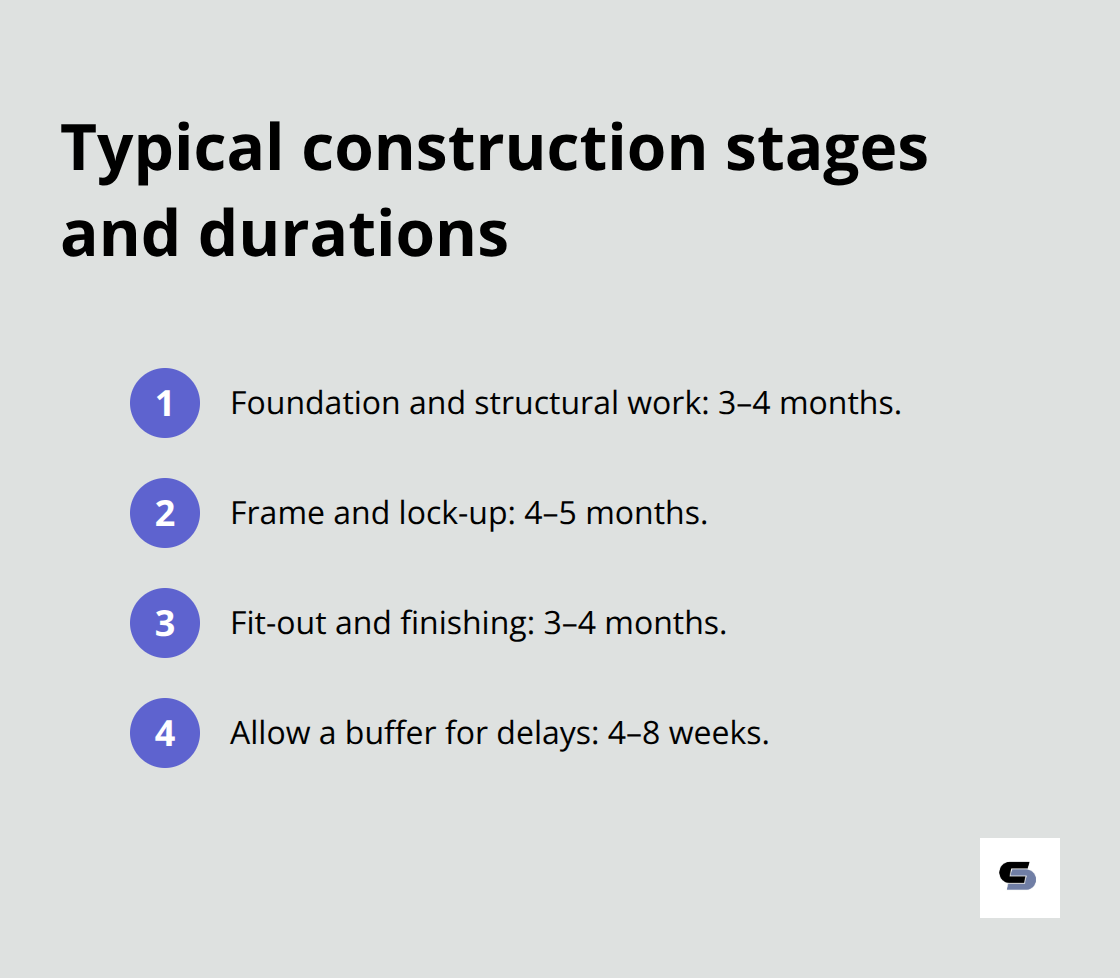
Weather delays, council inspection scheduling, and supply chain timing can extend this by 4 to 8 weeks, so add a buffer when planning around major family events or school terms. Working with your builder means establishing clear stage payments tied to completed work rather than calendar dates. Pay only when each stage passes your satisfaction and meets council inspection requirements-base stage, frame stage, lock-up stage, and fixing stage. This protects your money and keeps your builder accountable for quality and timeline adherence.
Final Thoughts
Second storey additions Melbourne offer a direct answer to the space constraints that define inner and middle suburbs. You gain usable floor area without relocating, preserve your established community and routines, and add genuine value to your property. The financial case stands strong: a well-executed second storey typically adds 15–25% to your property value, and construction timelines of 10–14 months beat the months-long process of selling and buying elsewhere.
The path forward starts with a structural assessment to confirm your property can support additional height. Once you know your building can handle a second storey, engage an architect or designer who understands Melbourne’s heritage precincts and council requirements across your suburb. Obtain at least three written quotes from registered builders, compare specifications carefully, and insist on fixed costs rather than provisional sums (this protects your budget from unexpected blowouts).
Professional design and planning matter because they prevent costly mistakes and ensure your addition enhances rather than detracts from your home. A thoughtfully designed second storey respects your home’s character, satisfies planning requirements, and delivers the space your family needs. Contact Cameron Construction to discuss your project and receive a detailed assessment of whether a second storey works for your property.