Renovation Case Studies Melbourne: Real-Life Transformations
Melbourne homeowners often wonder what’s possible when they renovate. We at Cameron Construction have seen firsthand how the right decisions transform homes and boost property value.
Our renovation case studies Melbourne showcase real projects with measurable results. These examples reveal what works, what costs more than expected, and how to avoid common pitfalls.
Kitchen Transformations That Add Real Value
Melbourne kitchens rarely fail because of aesthetics-they fail because they don’t work. The kitchens that deliver measurable returns share three traits: they solve genuine functional problems, they use materials that last, and they respect the home’s existing layout constraints. Open-plan kitchens dominate Melbourne’s renovation trend, but they only make sense when you’re not sacrificing storage, workflow, or structural integrity.
Most compact Melbourne homes-think weatherboard cottages in suburbs like Fitzroy or terraces in South Yarra-benefit more from strategic reconfiguration than full demolition. A kitchen that flows into a dining area without removing a load-bearing wall costs significantly less and avoids the engineering fees, structural reports, and building permits that push budgets beyond $80,000. The Australian Government’s Your Home case study on a Fitzroy North renovation demonstrates what targeted intervention achieves: reclaimed kitchen benchtops paired with Oregon timber shelving, combined with improved insulation and glazing, delivered a 6-star sustainability outcome on a $160,000 project that also added 15 square metres of usable space.
Budget Expectations for Melbourne Kitchens
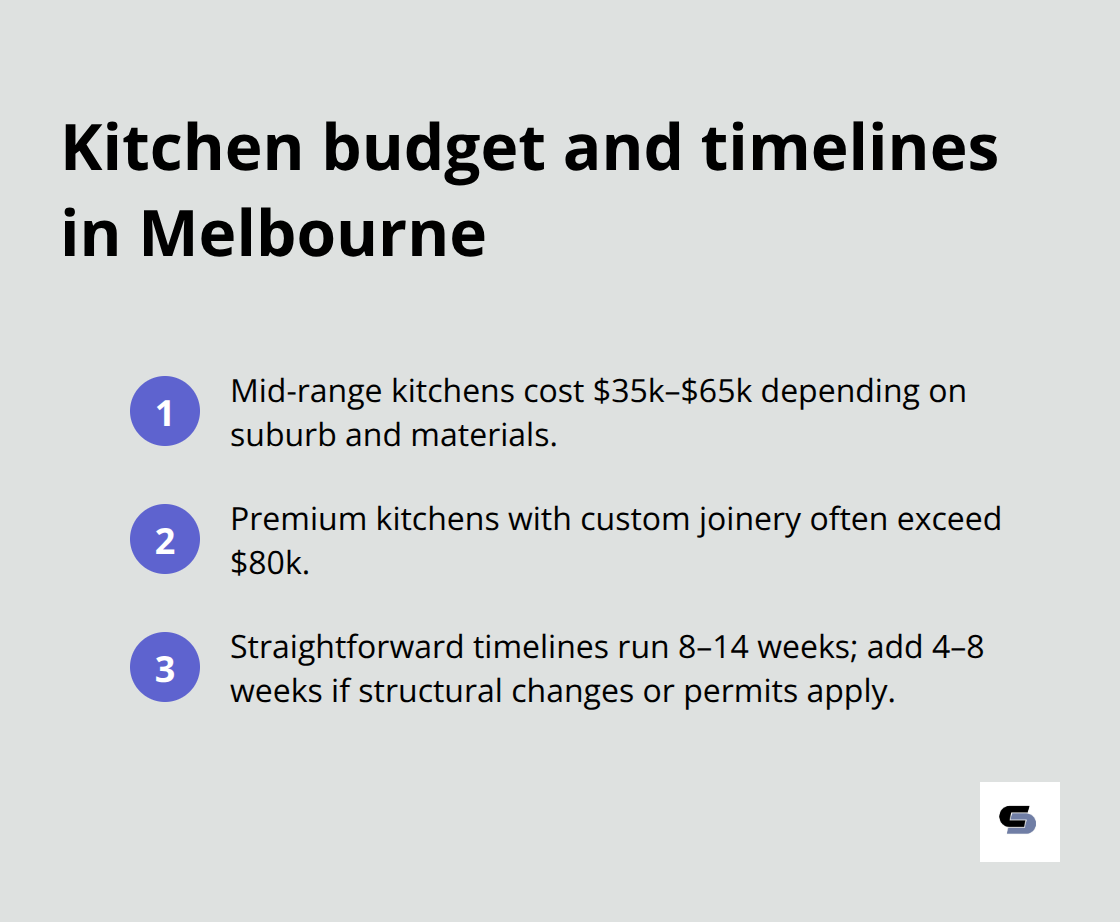
A mid-range kitchen renovation in Melbourne-new cabinetry, quality benchtops, updated appliances, and fresh plumbing-typically runs $35,000 to $65,000 depending on suburb and material choices. Premium kitchens with custom joinery and imported fixtures exceed $80,000. Timelines stretch between 8 to 14 weeks for straightforward renovations, but add 4 to 8 weeks if structural changes or permit approvals are needed.
Materials That Perform in Melbourne’s Climate
Benchtops take the most wear, so cheap laminate fails within five years in busy households. Stone, engineered quartz, and timber with proper sealing resist Melbourne’s temperature swings and humidity. Appliances matter too-induction cooktops and 4.5-star refrigerators cut energy costs and align with Victoria’s energy efficiency standards. Cabinetry should include soft-close mechanisms and pull-out organisers; these cost 15 to 20 percent more upfront but prevent damage and frustration over a 15-year lifespan. Flooring in kitchens should handle spills and traffic without warping, so avoid solid timber and opt for polished concrete, large-format tiles, or luxury vinyl plank rated for wet areas.
Permits and Hidden Costs
Most Melbourne councils process kitchen renovation permits within 10 working days if the work doesn’t involve structural changes, but delays spike when you alter walls, move plumbing stacks, or upgrade electrical circuits. Budget an extra 2 to 3 weeks for permits if you touch load-bearing elements. Unexpected costs-discovering outdated wiring that needs replacement, finding asbestos in old kitchens, or uncovering plumbing that doesn’t meet current standards-add $5,000 to $15,000. Working with experienced builders who understand Melbourne’s building codes prevents these surprises and keeps projects on track.
Kitchen renovations form the foundation of home value, but bathrooms demand equal attention. The fixtures you select and the accessibility features you install determine whether your home functions for your family today and appeals to buyers tomorrow.
Bathroom Upgrades That Work Harder Than You Expect
Melbourne bathrooms fail for predictable reasons: poor ventilation traps moisture, cramped layouts waste space, and fixtures chosen for price rather than durability create maintenance nightmares within five years. The bathrooms that deliver real returns share a deliberate approach to wet-room design, fixture selection, and storage. A functional bathroom in Melbourne costs between $18,000 and $45,000 depending on size and complexity, with timelines running 6 to 10 weeks for straightforward updates and 10 to 14 weeks when structural changes or accessibility features are involved.
Ventilation, Materials, and Fixture Quality Drive Performance
The difference between a bathroom that merely looks updated and one that actually functions comes down to three decisions: ventilation strategy, material durability, and fixture quality. Bathrooms endure temperature swings and humidity that destroy cheap materials within years. Tiles rated for wet areas-porcelain rather than ceramic, large-format to minimise grout lines-resist mould and moisture penetration far better than smaller tiles. Benchtops should be stone, engineered quartz, or moisture-resistant composite; laminate softens and delaminates when exposed to bathroom humidity. Cabinetry must use marine-grade plywood or solid timber with polyurethane sealing, never particleboard which swells when damp.
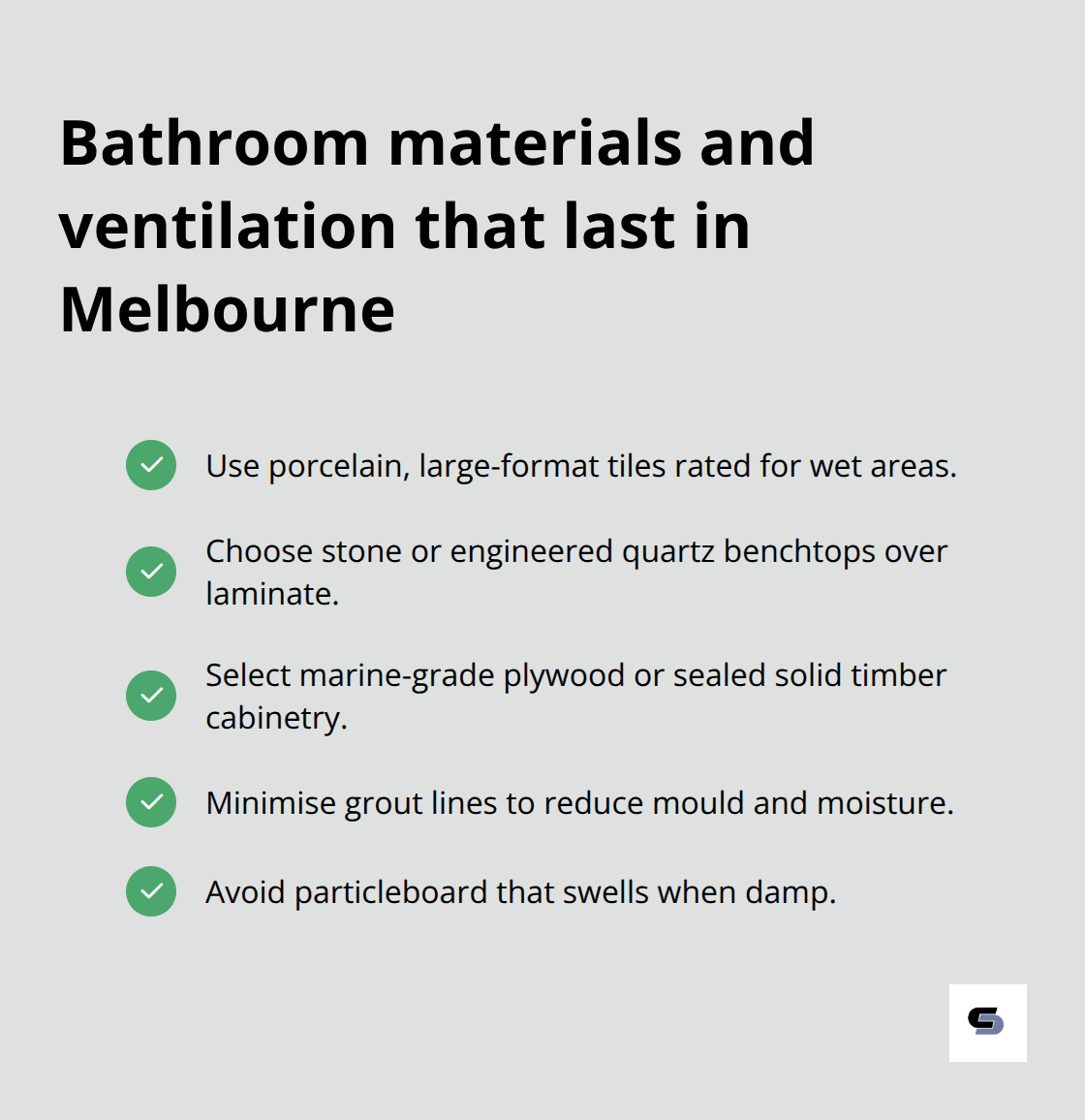
Exhaust fans should be ducted outside, not recirculated into roof spaces where moisture causes rot; install fans rated for continuous operation, not pull-cord models that occupants switch off. Fixtures matter enormously: 4-star water-efficient showerheads and taps reduce mains water consumption without sacrificing pressure, aligning with Victoria’s water efficiency standards and lowering utility bills by 30 to 40 percent over a decade.
Wet Rooms Solve Accessibility Challenges
Wet rooms gain popularity in Melbourne because they simplify cleaning and suit aging-in-place requirements, but they demand proper waterproofing and slope. A wet room requires a linear drain or recessed floor with a 1:50 gradient toward the drain point, reinforced waterproofing membranes rated for wet environments, and careful coordination with plumbing. Costs jump $8,000 to $15,000 above a standard bathroom because of these engineering requirements, but wet rooms solve accessibility challenges that conventional bathrooms cannot address. Grab rails, non-slip flooring, and open layouts benefit households with mobility concerns or ageing residents, making these features worth the investment even if they’re not immediately needed. Victorian Building Authority standards require accessible bathrooms in new work to include 1.5-metre clear floor space for wheelchair manoeuvrability, lever-style taps that don’t require grip strength, and showers without thresholds.
Storage Solutions Maximise Compact Spaces
Storage in compact Melbourne bathrooms demands built-in cabinetry with soft-close drawers and vertical shelving rather than freestanding vanities that waste space and collect water underneath. Recessed medicine cabinets and open shelving above toilets maximise usable storage without expanding the bathroom footprint.
Permits and Hidden Costs Shape Project Reality
Melbourne councils approve bathroom renovations without planning permits in most cases, but building permits apply if you alter plumbing, electrical circuits, or structural elements. Processing takes 10 working days for straightforward applications, but expect delays if you touch load-bearing walls or upgrade drainage. Unexpected costs surface frequently: discovering asbestos in old bathrooms, finding outdated plumbing that doesn’t meet current standards, or encountering inadequate ventilation that requires new ducting adds $4,000 to $12,000. Tiles and fixtures chosen mid-project because initial selections are discontinued cause schedule slippage; selecting all finishes before work begins prevents this.
Labour comprises 40 to 50 percent of bathroom renovation costs, so quality tradespeople who work methodically cost more upfront but avoid rework and defects. Budget an additional 2 to 3 weeks if you coordinate multiple trades-plumbers, electricians, tilers-because their scheduling directly impacts your timeline. Moisture-related failures after completion stem almost entirely from poor ventilation or inadequate waterproofing during installation, not from material choices, so contractor experience matters more than spending extra on premium fixtures.
Bathrooms form one piece of the renovation puzzle, but whole-house transformations demand a different strategy altogether. Structural changes, coordinated trades, and property value growth require planning that extends far beyond individual rooms.
Whole-House Transformations Demand Structural Strategy
Whole-house renovations that include structural changes operate under entirely different constraints than kitchen or bathroom work. The moment you propose removing a wall, relocating plumbing stacks, or altering the building envelope, you enter territory where engineering reports, building permits, and council approvals become non-negotiable. Structural realities must shape design decisions before they crystallise. A load-bearing wall costs $15,000 to $35,000 to remove properly because you need a structural engineer to design a beam, building permits to approve the work, and a licensed builder to install support during construction. Skip the engineer or try to work around council requirements, and you’ll face stop-work orders, forced remediation, or worse, a building that fails inspection.
The Fitzroy North case study from the Australian Government’s Your Home program illustrates this principle: the renovation retained the original second storey and integrated heritage brick with a cement-replaced slab, avoiding the complexity and cost of structural intervention while still achieving a 6-star sustainability outcome. This approach delivered meaningful livability gains on a tight $160,000 budget through careful planning rather than aggressive structural change.
Setbacks, Coverage, and Height Constraints Shape Design Reality
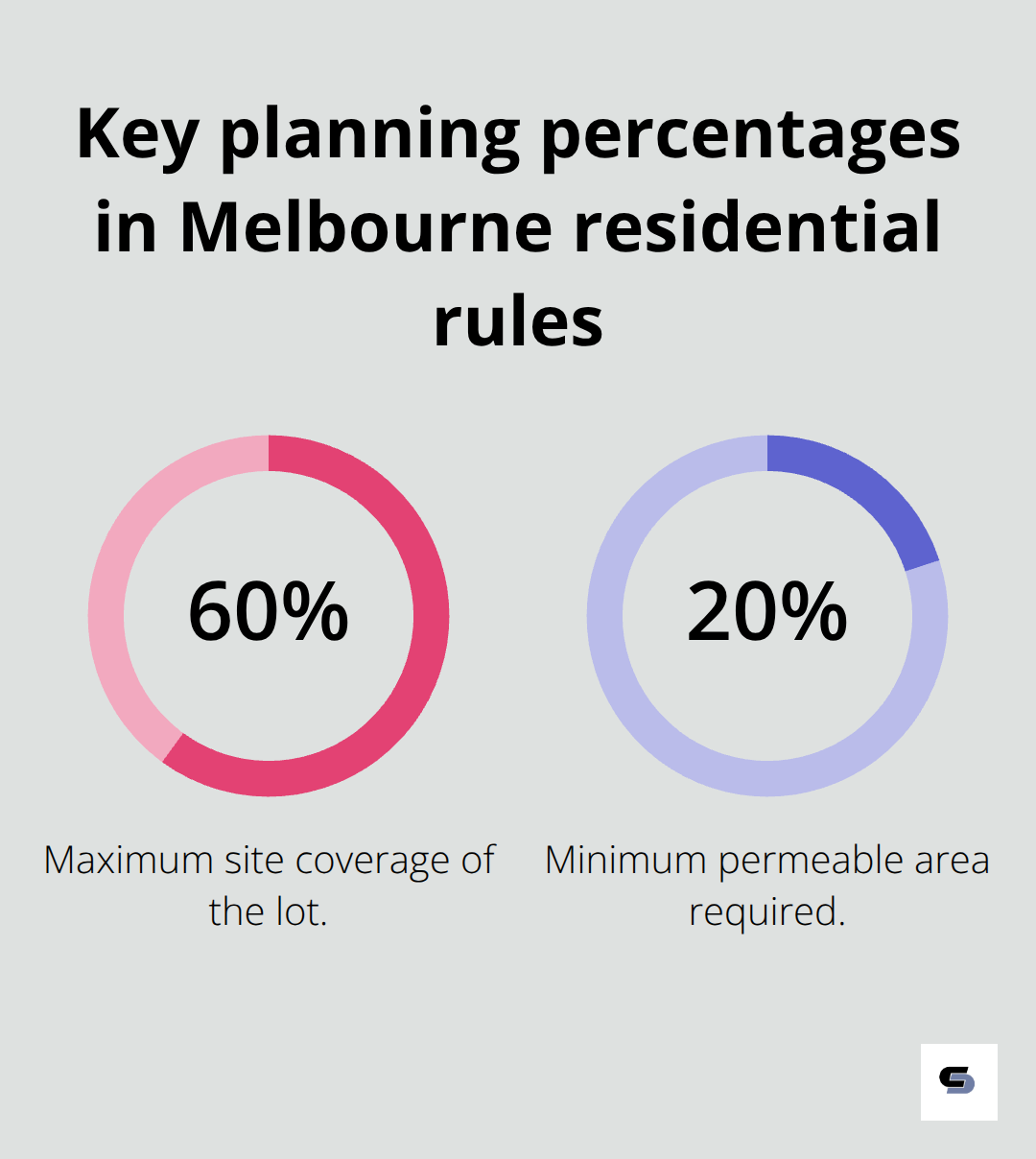
Planning Practice Note 27 governs setbacks, site coverage, and building height across Melbourne’s residential zones. Extensions must observe side and rear setback formulas based on wall height-for walls between 3.6 and 6.9 metres, you need at least 1 metre plus 0.3 metre for every metre of height above 3.6 metres. Site coverage cannot exceed 60 percent of the lot unless your zone specifies otherwise, and at least 20 percent of the site must remain permeable. These constraints determine whether your extension design works within council approval or requires variances that delay processing by 8 to 12 weeks.
North-facing habitable windows within 3 metres of a boundary trigger additional setback requirements, and overshadowing of existing private open space must be minimised-existing spaces need at least 5 hours of sunlight between 9 am and 3 pm on 22 September. Ignore these rules during design, and your application returns with requests for amendments, pushing timelines from 10 working days to 6 to 8 weeks.
Trade Sequencing and Material Lead Times Control Project Duration
Coordinating multiple trades across a whole-house project demands a schedule that accounts for dependencies, permit processing, and material lead times. Plumbers, electricians, carpenters, and tilers cannot work simultaneously on the same space without creating conflicts and rework. A typical sequence requires structural work and framing first (3 to 4 weeks), then rough plumbing and electrical (2 to 3 weeks), then insulation and waterproofing (1 to 2 weeks), then finishes including tiling, painting, and fixtures (3 to 4 weeks).
Building permits in Melbourne take 10 working days for straightforward applications but extend to 4 to 6 weeks when structural changes or heritage considerations apply. Material lead times compound delays-custom joinery, imported fixtures, and specialised windows now run 8 to 12 weeks from order to delivery, meaning you must commit to selections during permit processing, not after approval. Labour availability determines whether trades can mobilise when scheduled; experienced builders maintain relationships with reliable electricians, plumbers, and tilers and lock schedules months in advance.
Property Value Growth Justifies Investment in the Right Suburbs
A whole-house renovation typically costs $150,000 to $400,000 depending on scope, with labour comprising 35 to 45 percent of total project cost. Property value growth justifies this investment in Melbourne’s competitive market-a well-executed whole-house renovation adds 12 to 18 percent to property value according to CoreLogic data, translating to $80,000 to $150,000 on a $750,000 home. However, this return depends entirely on renovation scope aligning with neighbourhood expectations and market demand.
Renovating a $600,000 home to $1 million standard in a suburb where comparable homes sell for $800,000 destroys value, not creates it. Suburbs like Fitzroy, South Yarra, and Hawthorn see strong returns because renovation demand exceeds supply and buyers expect updated homes. Outer suburbs experience softer returns because comparable new homes often cost less than renovation premiums. The decision to undertake whole-house work should follow a valuation assessment of your specific property and suburb, not generic assumptions about renovation returns.
Final Thoughts
Melbourne’s renovation case studies show that projects succeed when structural realities shape design decisions from the start. Kitchens that deliver measurable returns solve genuine functional problems within existing layouts, bathrooms that perform well prioritise ventilation and material durability, and whole-house transformations that grow property value respect setback requirements and site coverage limits. Your own renovation succeeds by establishing what your home actually needs, understanding the structural and planning constraints that apply to your property, and obtaining accurate cost estimates from experienced builders who know Melbourne’s building codes.
Permit processing takes 10 working days for straightforward work but extends to 4 to 6 weeks when structural changes apply, so timeline expectations must account for this reality. Material lead times now stretch 8 to 12 weeks, meaning you cannot delay fixture selection until after approval without pushing completion dates backward. The suburbs where you live determine whether renovation returns justify the investment-Fitzroy, South Yarra, and Hawthorn see strong value growth because renovation demand exceeds supply, while outer suburbs experience softer returns because comparable new homes often cost less than renovation premiums.
A valuation assessment of your specific property should precede any commitment to major work. Contact Cameron Construction to discuss your renovation and receive guidance tailored to your property and suburb, whether your project involves kitchen work, bathroom upgrades, or structural extensions.