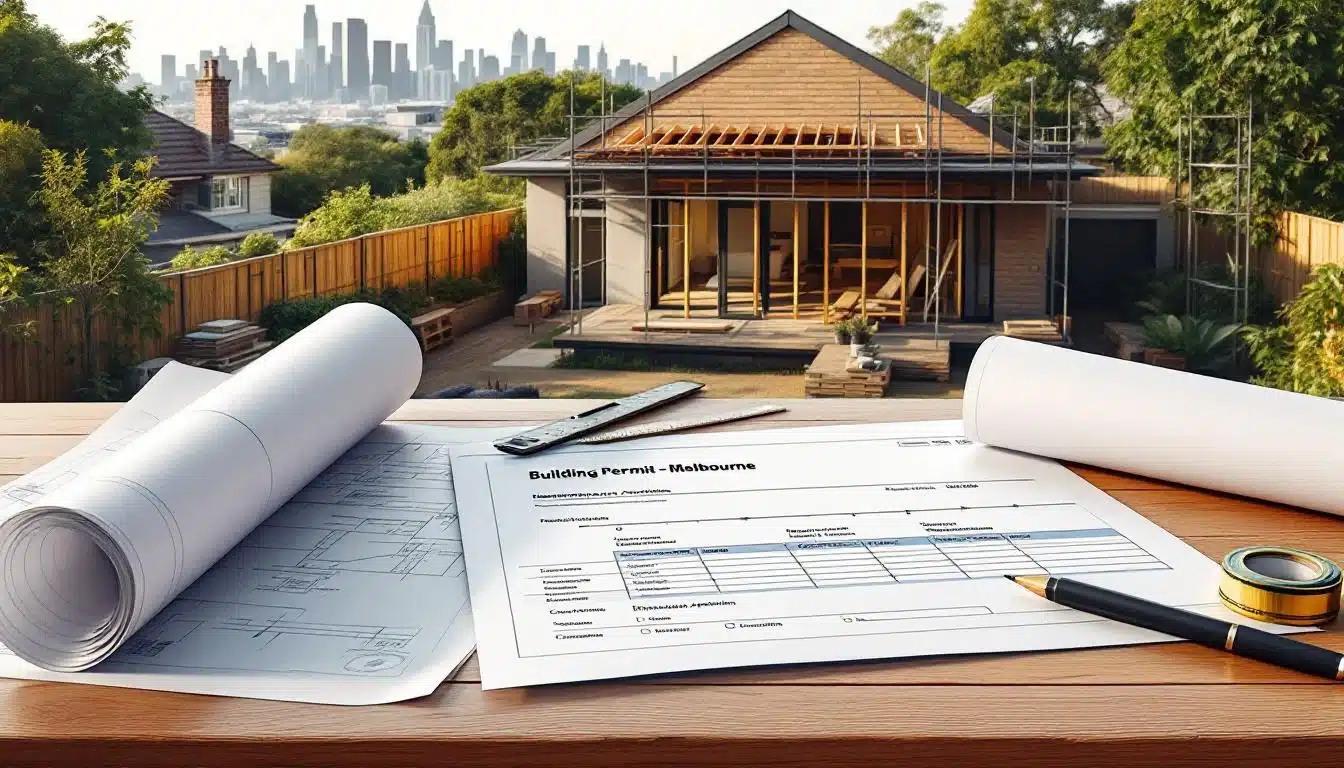
Permits for Extensions Melbourne: Step-By-Step Approvals and Timelines
Getting permits for extensions Melbourne can feel overwhelming, but it doesn’t have to be. We at Cameron Construction have guided hundreds of homeowners through the approval process, and we know exactly where delays happen and how to prevent them.
This guide walks you through each stage-from understanding which permits you need, to submitting your application, to handling common roadblocks. By the end, you’ll know what to expect and how to keep your project on track.
Understanding Melbourne’s Permit Requirements for Extensions
Melbourne requires two separate permits for most extensions, and understanding the difference between them prevents costly delays. The planning permit confirms your extension complies with the planning scheme-it addresses land use, building envelope, setbacks, and neighbourhood impact. The building permit, issued by a registered building surveyor, confirms your design meets the National Construction Code 2022 and structural standards. You cannot apply for a building permit until the planning permit is approved, which means the planning stage directly controls your project timeline.
In Melbourne, most extensions require both permits because they involve constructing new buildings or altering existing structures. The exceptions are narrow: minor alterations, pergolas, garden sheds under 10 square metres, and certain maintenance repairs may not require a building permit, but you must verify this with your local council.
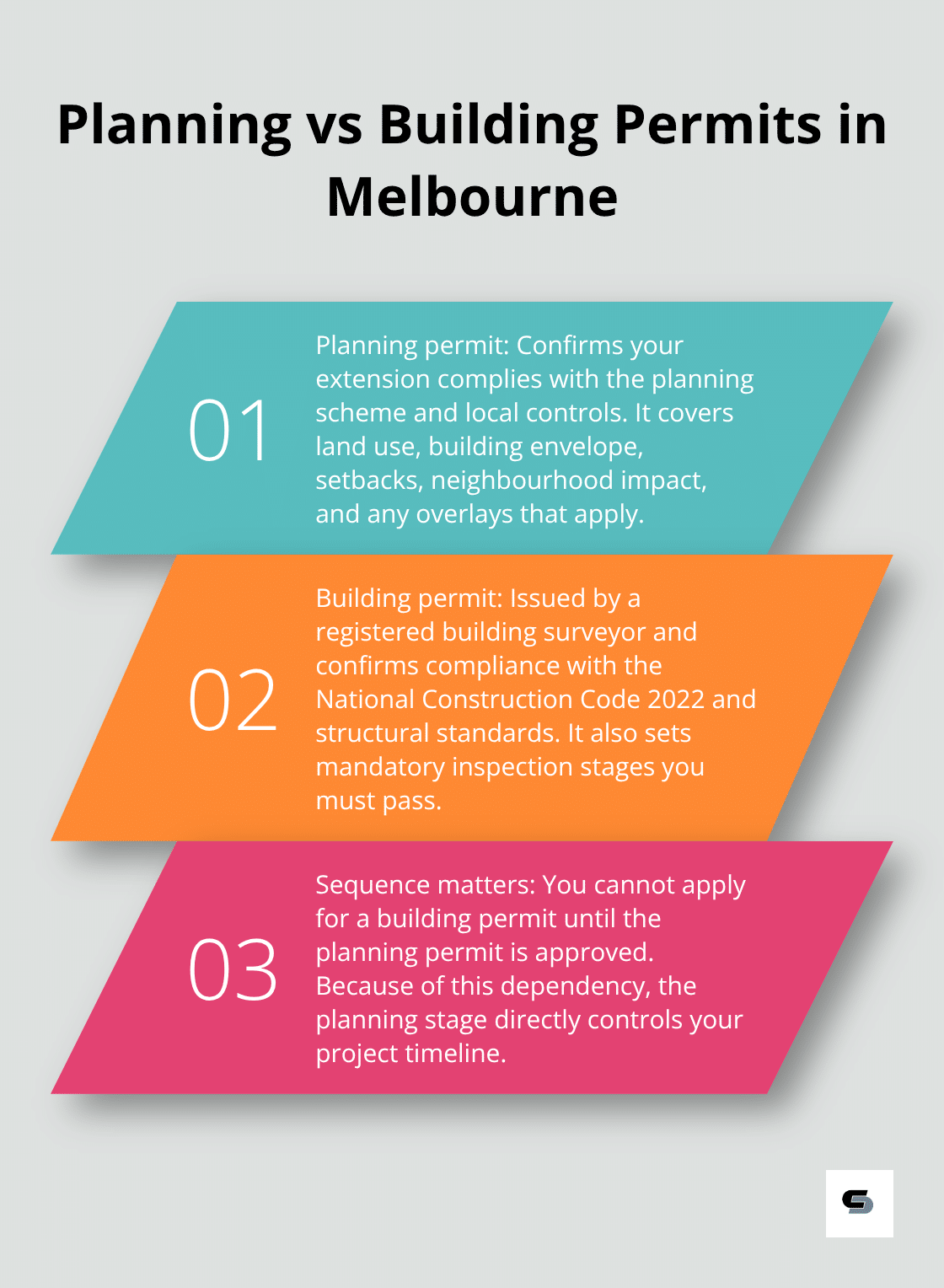
Some work-like repainting in the same colour or routine maintenance-genuinely doesn’t need a planning permit, but anything that changes your building’s footprint, adds storeys, or alters external appearance almost certainly does. Homeowners who verify permit requirements upfront avoid the frustration of starting work only to discover they needed approvals they hadn’t obtained.
Planning Permit Requirements Differ by Location
Your suburb determines which planning controls apply to your property, and this is where the process becomes specific. The City of Melbourne’s Capital City Zone, for example, requires a planning permit for any building construction or façade alteration, whereas residential zones have different triggers. Heritage Overlays, Design and Development Overlays, and Special Building Overlays all impose additional requirements that change what needs approval.
You can check your property’s overlays and planning controls using the Melbourne Planning Scheme online maps or by requesting a planning certificate from the Department of Transport and Planning. The planning fees vary significantly based on your suburb’s council and the estimated cost of the works-a small extension in one area might cost $1,500 in planning fees while a similar project elsewhere costs $3,000 or more. For 2025–26, one planning fee unit in Victoria is $16.81, and councils use these units to calculate permit costs based on the scale of development.
VicSmart offers a faster pathway for simple extensions that meet strict criteria, with lower fees and quicker approval, though not all projects qualify. Pre-application advice sessions, available through most Melbourne councils, cost around $25–$50 and help you understand exactly what your project needs before you lodge a formal application.
Building Permits and Hard Deadlines
Once your planning permit is approved, you have 12 months to commence the building work and 24 months to finish for houses and outbuildings. If you cannot meet these deadlines, you must request an extension from your building surveyor before the permit expires-extensions can be granted, but you need a written statement explaining the delay and why work hasn’t started.
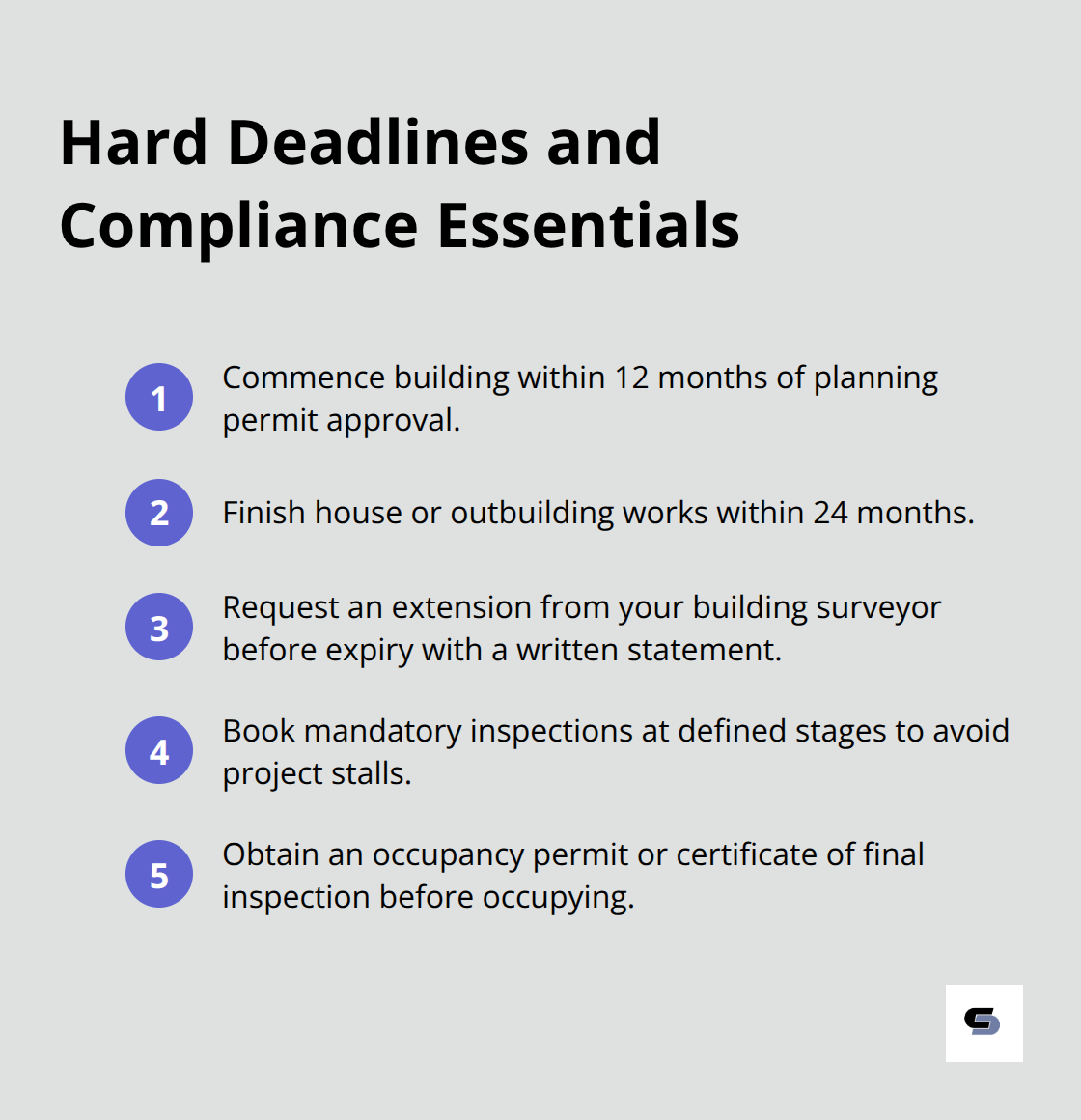
If your permit lapses and work continues, the work becomes illegal and a stop-work order can be issued, which creates significant compliance and inspection complications. A lapsed permit that hasn’t completed work requires a new building permit submitted to the same building surveyor, along with updated plans and additional fees. The building surveyor attaches a schedule of mandatory inspections to your permit, and these inspections must occur at defined stages-failing to book inspections on time can stall your project.
On completion, you need either an occupancy permit or a certificate of final inspection before you can legally occupy the building. This requirement is non-negotiable, and many homeowners discover too late that their builder hasn’t arranged the final inspection, leaving them unable to move in or sell the property. Understanding these timelines and inspection requirements upfront shapes how you plan your entire project schedule.
How to Prepare and Submit Your Extension Permit Application
Documentation Requirements That Councils Actually Check
Your documentation determines whether your application moves forward or stalls for months. The City of Melbourne and most councils require at least three copies of architectural drawings, specifications, an allotment plan, a completed application form, prescribed information, and proof of levy payment before they assess your application. Incomplete submissions return to you, costing 4–6 weeks while you gather missing information and resubmit. A single missing page or unsigned form triggers rejection.
Your drawings must show the extension’s footprint, floor plans, elevations, sections, and how it sits within your property boundaries and setbacks. Specifications detail materials, finishes, structural systems, and how the work complies with the National Construction Code 2022. If your property sits in a Heritage Overlay or Design and Development Overlay, you’ll need additional heritage impact assessments or design justification statements that explain how your extension respects neighbourhood character.
Homeowners in Melbourne’s inner suburbs like Fitzroy, Carlton, and South Yarra face higher rejection rates for incomplete documentation than for design non-compliance. Pre-application advice sessions, offered by most councils for around $25–$50, let you present your concept and receive feedback on what documentation you actually need before you spend thousands on full drawings. This step saves both money and time.
Assessing Adjoining Property Impacts Early
The building surveyor will assess whether Regulation 116 public precautions apply, meaning you may need to notify and protect adjoining properties during construction. This assessment shapes your documentation requirements and construction costs, so obtain it early. Your application must address how your extension affects neighbours-setbacks, overshadowing, privacy impacts, and construction access all matter to councils and to objection decisions.
If your works could disrupt access to properties, businesses, or services, identify affected stakeholders, map them, and notify them in writing before you lodge your application. This proactive step reduces the likelihood of formal objections later and demonstrates to the council that you’ve considered neighbourhood impact.
Lodging Your Application and Managing the Review Period
Lodge your application through your building surveyor or authorised agent-never sign blank authorisation forms, as this creates liability if errors occur. The building surveyor submits your documents to the relevant council and pays the levy directly to the council on your behalf; the levy is non-refundable and based on your estimated construction cost.
Standard planning permits in Melbourne take 60–90 days for straightforward extensions, but projects requiring public notification extend to 120+ days because councils must advertise and accept objections. If neighbours lodge objections, the council may request a meeting or further information from you to address their concerns-this is where clear communication and design justification matter. VicSmart applications, if your project qualifies, process in 10 business days with no public notification, making them significantly faster, though they’re limited to simple extensions that meet strict criteria.
Building Permit Issuance and Inspection Schedules
Once the planning permit is issued, you have 12 months to commence building work. Your building surveyor then issues the building permit, which includes a schedule of mandatory inspections at foundation, framing, and completion stages. Missing any inspection appointment delays your entire project because the surveyor cannot issue the final certificate without documented inspections.
The total timeline from application to occupancy typically runs 6–9 months for straightforward extensions, but heritage properties or complex designs stretch to 12+ months. On completion, you need either an occupancy permit or a certificate of final inspection before you can legally occupy the building. Many homeowners discover too late that their builder hasn’t arranged the final inspection, leaving them unable to move in or sell the property.
Understanding these timelines and inspection requirements shapes how you plan your entire project schedule-and reveals why common delays occur during the approval phase, which we address next.
What Actually Delays Your Permit Approval
Permit delays rarely stem from councils moving slowly-they stem from applications that councils cannot process because critical information is missing or incorrect. Documentation errors cause 40–50% of first-submission delays, non-compliance with planning scheme overlays causes another 30%, and neighbour objections account for the remaining 20%. The first two are entirely preventable.
Documentation Errors Stop Applications Cold
A single missing page, an unsigned form, or drawings that fail to show setback compliance triggers a full resubmission, costing 4–6 weeks and additional council fees. The City of Melbourne’s planning register shows that applications requiring one resubmission take an average of 120 days versus 70 days for complete first submissions. Your building surveyor or architect must verify every document against the council’s checklist before lodgement-this 2-hour verification step eliminates the most common rejection reason.
Ensure drawings clearly show how your extension meets setback requirements, how it relates to neighbouring properties, and how it complies with the National Construction Code 2022. If your property sits in a Heritage Overlay or Design and Development Overlay, your documentation must include heritage impact assessment or design justification-councils reject heritage applications at significantly higher rates when these statements lack detail or are absent entirely.
Overlay Compliance Determines Approval Speed
Non-compliance with planning scheme overlays causes the second major delay category. Inner Melbourne suburbs like Fitzroy, Carlton, and South Yarra have strict Heritage Overlays that control materials, proportions, and façade treatments, yet many applications arrive with designs that plainly contradict these controls. Council officers cannot approve non-compliant designs; they must either request design changes or recommend refusal. A design revision at this stage costs time and often requires new drawings and re-lodgement.
Pre-application advice sessions, offered by most councils for $25–$50, let you present your concept to a planning officer and receive direct feedback on overlay compliance before you commit to full documentation. This step is not optional for heritage properties-it is the most cost-effective insurance against rejection. You avoid expensive design rework and resubmission delays by addressing compliance concerns upfront.
Neighbour Objections Extend Timelines
Neighbour objections present a different challenge because they extend your timeline rather than blocking approval. When a council receives objections, it must notify you and may request a meeting or ask you to address specific concerns in writing. Some councils hold mediation sessions between applicants and objectors, which adds 2–4 weeks to the process. The key to managing objections is preventing them in the first place.
Notify affected neighbours before you lodge your application, especially those whose properties will be overshadowed or whose privacy may be affected. Walk neighbours through your design, explain how you have addressed setbacks and privacy, and listen to their concerns. Many neighbours who feel ignored lodge formal objections out of frustration rather than genuine planning disagreement. Proactive communication converts potential objectors into neutral parties.
Responding to Objections Effectively
If objections do arise, your response must address them specifically-generic responses that ignore neighbour concerns rarely persuade councils. If a neighbour objects to overshadowing, show shadow diagrams at winter solstice and explain how your design minimises impact. If privacy is the concern, describe screening, window placement, or design modifications you are willing to make. Councils assess objections seriously, and your willingness to address legitimate concerns demonstrates good faith and often resolves the dispute.
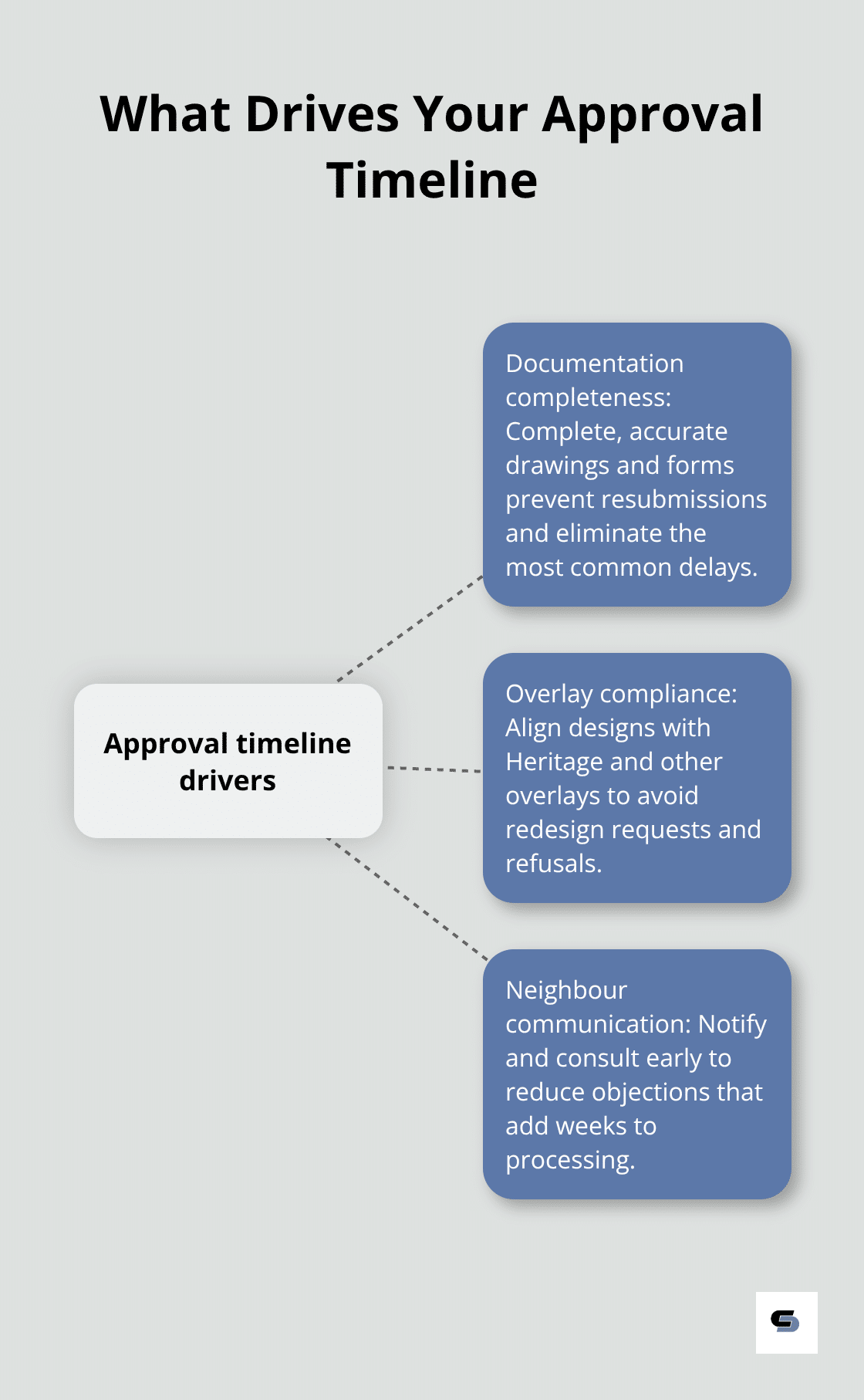
Documentation completeness, overlay compliance, and neighbour communication control your approval timeline. Homeowners who invest in these three areas upfront move from 120+ day timelines to 70–day timelines and avoid the frustration of rejection and resubmission.
Final Thoughts
Permits for extensions Melbourne follow a predictable sequence when you understand the requirements upfront. The planning permit confirms your design complies with the planning scheme, the building permit confirms structural compliance with the National Construction Code 2022, and the inspection schedule ensures quality at each construction stage. Your timeline depends entirely on documentation completeness, overlay compliance, and neighbour communication-three factors you control before you submit a single page to council.
Complete documentation eliminates 40–50% of approval delays, while Heritage Overlay compliance prevents rejection and costly design rework. Notifying neighbours before lodgement prevents objections that extend timelines by 4–8 weeks. Professional support matters because permit requirements vary significantly across Melbourne’s suburbs and overlays, and a building surveyor or architect familiar with your local council knows exactly what documentation that council actually checks and which heritage statements prevent rejection.
We at Cameron Construction have guided hundreds of Melbourne homeowners through permits and approvals for double storey extensions, ground floor additions, and full house renovations. Our in-house designers and engineers handle planning, permits, and BCA compliance across Melbourne’s councils, managing the entire process from concept to completion. Contact Cameron Construction to discuss your project and understand exactly what your approval timeline will be.

![Second Storey Additions For Growing Families [Guide]](https://www.cameronconstruction.com.au/wp-content/uploads/emplibot/second-storey-additions-hero-1772259809-150x150.webp)