Permits For Extensions Melbourne: A Clear Path to Approval
Getting permits for extensions Melbourne can feel overwhelming, but it doesn’t have to be. We at Cameron Construction have guided hundreds of homeowners through the approval process, and we know exactly what councils expect.
This guide cuts through the confusion. You’ll learn which permits you actually need, what causes rejections, and how to strengthen your application from the start.
What Permits You Actually Need
Melbourne’s permit system splits into two distinct pathways: planning permits issued by your local council, and building permits issued by a registered building surveyor. You need to understand which applies to your extension because they operate sequentially-you cannot obtain a building permit until any required planning permit receives approval. The Victorian Building Authority administers this framework under the Building Act 1993 and Building Regulations 2018, and the rules differ significantly depending on your site, extension type, and council area.
Most homeowners assume they need both permits, but that’s not always true. Single-storey extensions on residential lots under 300 square metres typically fall under Clause 54 (Single Home Code) and may qualify for expedited VicSmart planning approval or skip planning entirely if they meet setback and height rules. Double-storey additions almost always require a planning permit because they affect neighbourhood character and streetscape presentation. Ground floor extensions offer more flexibility-many avoid planning requirements altogether if they stay within prescribed limits for setbacks, site coverage, and building height.
The critical distinction is this: planning permits protect neighbourhood amenity and land use compliance, while building permits confirm structural safety and compliance with the National Construction Code 2022. You cannot legally commence work without both where required, and proceeding without them exposes you to enforcement action, fines, and the need to demolish non-compliant work.
Different requirements across Melbourne councils
Each Melbourne council interprets planning rules differently, and this variation directly affects your approval timeline and documentation needs. Darebin and Moreland councils apply stricter neighbourhood character overlays that demand more detailed design justification for double-storey extensions than outer suburbs like Hume or Whittlesea. Inner-city councils like Melbourne and Yarra often require heritage impact assessments even for minor additions if your property sits near heritage areas.
The Building and Plumbing Commission requires all structural work to have a building permit, but some councils mandate additional consents from water authorities or environmental services before the surveyor can issue approval. Sloping block extensions trigger soil reports and foundation assessments that councils scrutinise heavily, particularly in bushfire-prone areas like Whitehorse or Manningham.
You must contact your specific council’s planning department or engage a planning consultant to confirm which provisions apply to your address-this step eliminates months of false starts later. Councils publish planning scheme amendments and activity-centre updates regularly, so guidance from even two years ago may be outdated.
When you can skip the permits entirely
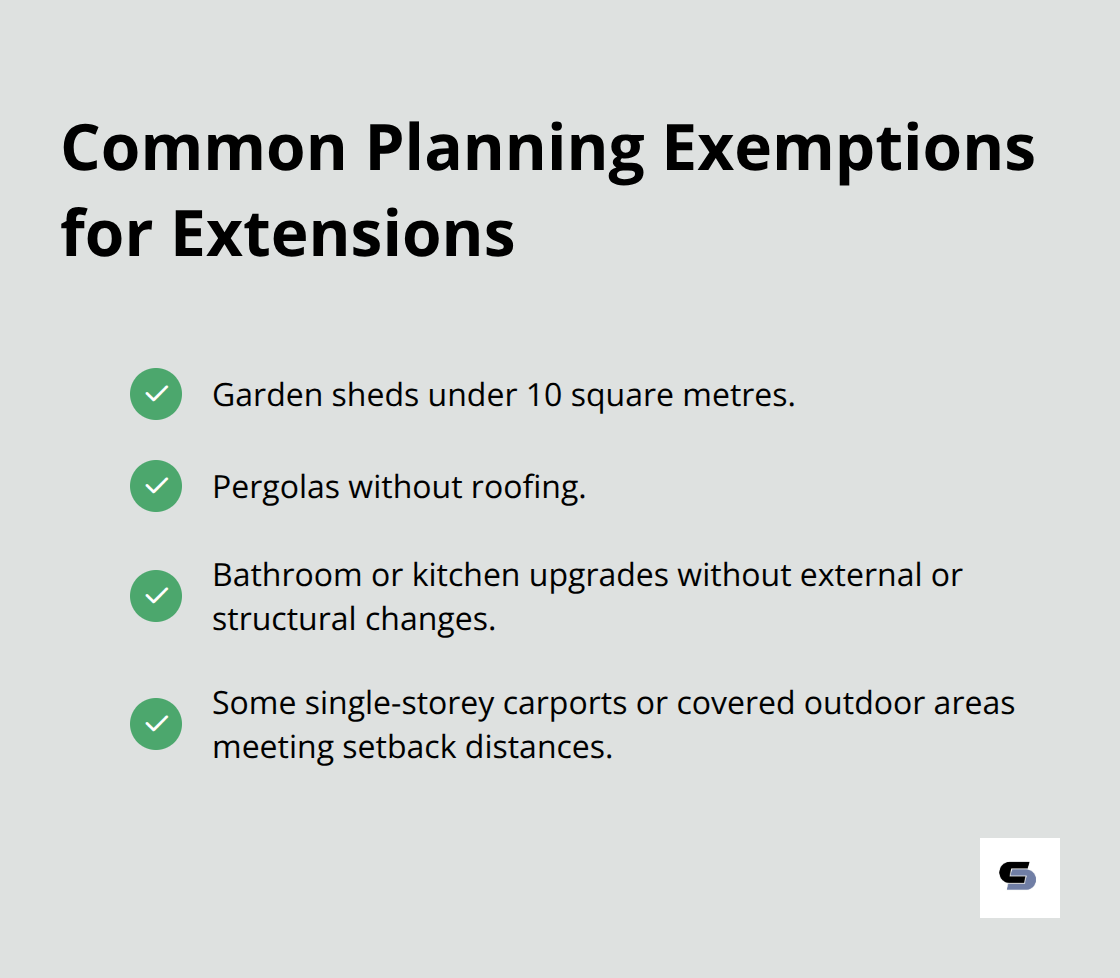
Exemptions exist, and knowing them saves thousands in fees and weeks in processing. Garden sheds under 10 square metres, pergolas without roofing, and minor alterations like bathroom or kitchen upgrades that don’t alter external walls or structural elements typically avoid planning requirements. Some councils permit single-storey carports or covered outdoor areas without planning approval if they meet setback distances.
However, building permits remain mandatory for any work affecting structural integrity, electrical systems, plumbing, or drainage-exemptions from planning do not exempt you from building approval. The moment your extension adds habitable floor area, changes roof pitch, or requires foundation work, a building permit becomes non-negotiable. Extensions costing more than $10,000 in Victoria must also comply with the Domestic Building Contracts Act 1995, which mandates written contracts and builder registration with the Building and Plumbing Commission.
You should never assume your extension qualifies for exemptions without written confirmation from your council and a building surveyor; the cost of obtaining formal approval upfront is negligible compared to the legal and financial exposure of illegal work. Once you understand which permits apply to your specific project, the next step involves preparing your application and gathering the documentation that councils actually scrutinise.
Moving From Concept to Submission
Establish Council Expectations Before You Design
You must contact council’s planning department or engage a planning consultant before you invest in detailed plans. This pre-application conversation clarifies whether your extension triggers planning requirements, which design standards apply to your site, and what documentation the council needs to assess your proposal. Most Melbourne councils now offer pre-lodgement meetings where planners identify potential obstacles before you commit to full design work, and this step costs nothing.
For double-storey additions in character-protected suburbs like Camberwell or Hawthorn, this conversation reveals whether neighbourhood character overlays will demand specific materials, setback distances, or architectural language that affects your design budget. Ground floor extensions in activity centres like Chadstone or Box Hill may qualify for streamlined assessment pathways that compress timelines significantly. Sloping block extensions require soil reports and foundation assessments, and your building surveyor will specify what geotechnical data your designer needs before finalising footings.
Prepare Your Documentation Package
Once you understand council expectations, your building designer or architect produces three sets of drawings and specifications that address setback compliance, site coverage limits, building height restrictions, and neighbourhood impact. The submission package includes the completed application form, the permit levy payment confirmation, and any required consents from water authorities or environmental services.
For extensions exceeding $10,000 in cost, the Domestic Building Contracts Act 1995 requires a written contract with your builder before any deposit changes hands. This contract must specify materials, appliances, and who obtains permits. Your designer and surveyor work together to ensure all documentation meets council standards before you lodge the application.
Understand Assessment Timelines for Your Extension Type
The assessment period varies dramatically depending on extension type and council workload. Single-storey extensions on small residential lots that qualify for VicSmart assessment typically receive approval within 10 business days if documentation is complete. Standard planning applications for double-storey additions typically take 30 to 60 calendar days for initial assessment, but complex proposals affecting heritage areas or requiring multiple consents frequently extend to 90 days or beyond.
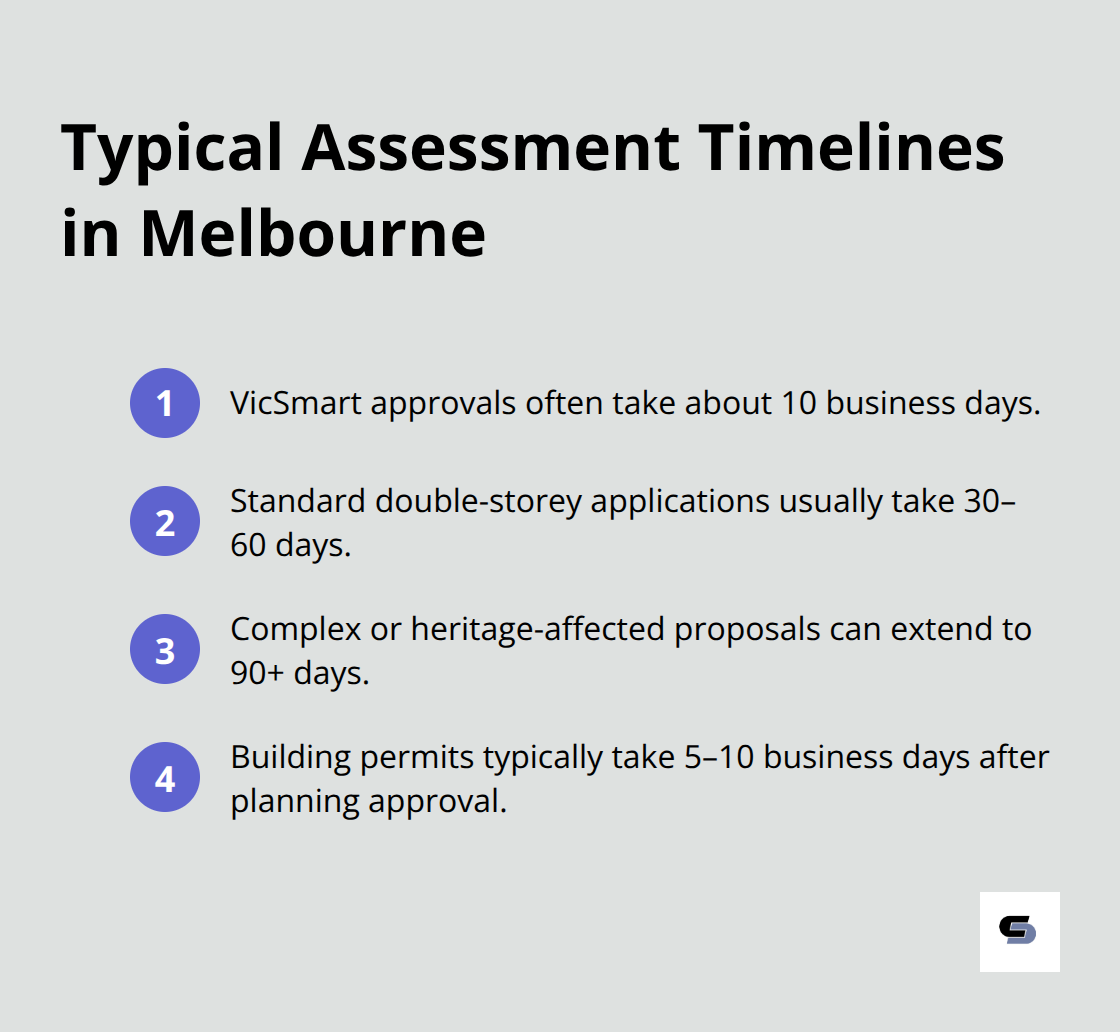
Building permit assessment happens sequentially after planning approval and takes 5 to 10 business days for straightforward extensions, though structural complexity or site constraints can trigger additional information requests that pause the clock.
Meet Permit Commencement and Completion Deadlines
The Building and Plumbing Commission specifies that extensions must commence within 12 months of permit issue and finish within 24 months for houses and outbuildings. You need to plan your construction schedule accordingly. If you cannot meet these timeframes, you must request an extension from your building surveyor before the deadline expires, as failure to obtain written extension approval can render your permit void and require a fresh application.
Mandatory inspections occur at foundation stage, frame stage, lock-up stage, and final completion, and your surveyor schedules these at least five working days in advance. The certificate of final inspection or occupancy permit only issues after all inspections pass and any defects are rectified, so delays in inspection scheduling directly extend your project timeline. Once you understand your council’s expectations and secure approval, the real challenge emerges: applications fail for specific, preventable reasons that you can address before submission.
Why Extensions Get Rejected
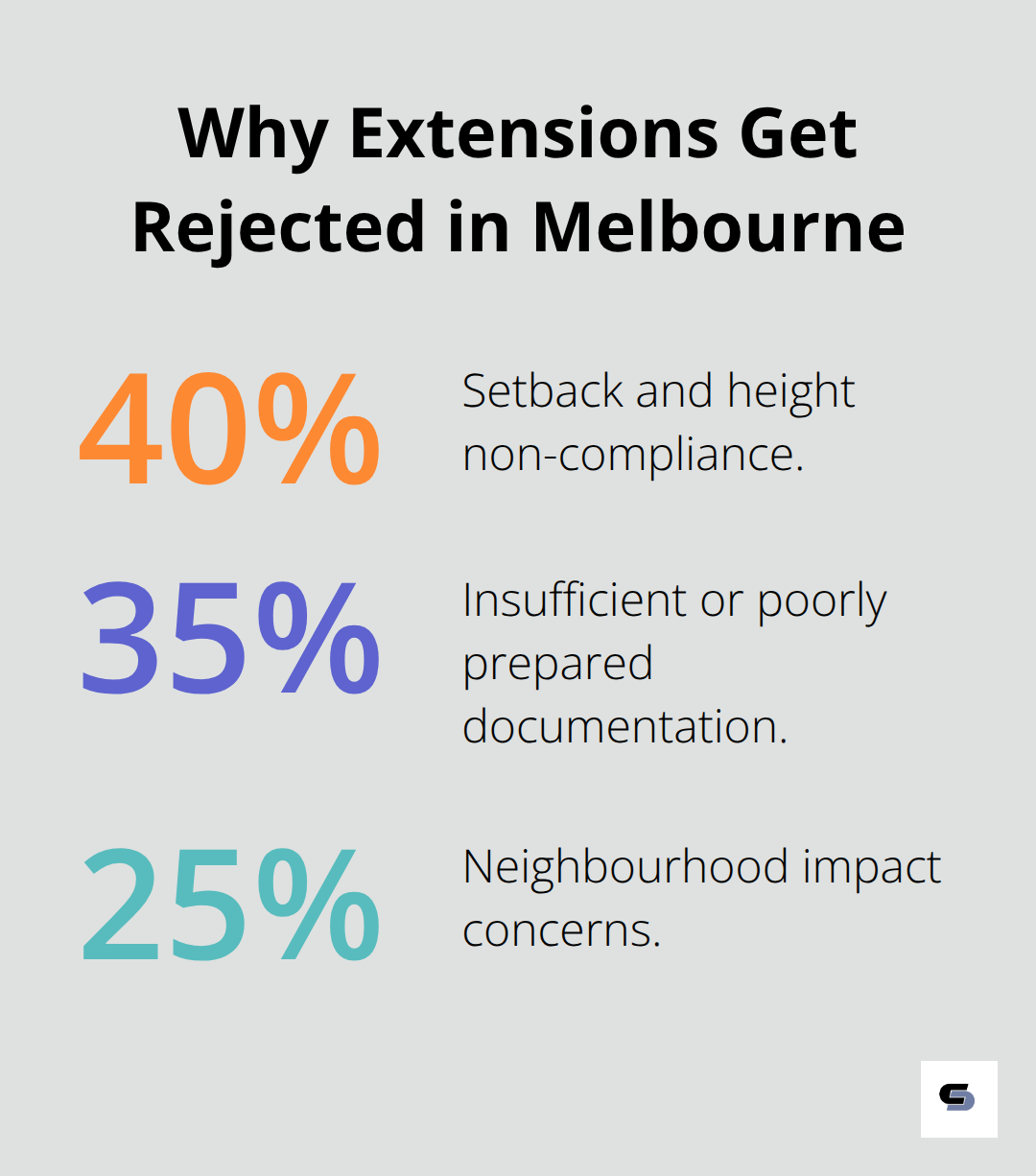
Applications fail for three preventable reasons that appear repeatedly across Melbourne councils. Setback and height non-compliance accounts for roughly 40% of rejections, insufficient or poorly prepared documentation accounts for another 35%, and neighbourhood impact concerns drive the remaining 25%. These aren’t mysterious council preferences-they’re measurable standards written into planning schemes and the National Construction Code 2022. Most rejections could be avoided entirely with proper pre-application consultation and competent design work before lodgement.
Setback and height violations stop most applications
Your extension must maintain minimum distances from property boundaries and respect maximum building heights specified in your council’s planning scheme. These distances vary dramatically across Melbourne. Inner suburbs like Fitzroy or Carlton often demand 1.5 to 2 metre setbacks from side boundaries for double-storey work, while outer suburbs like Werribee or Craigieburn may permit 1 metre or less. Building height limits typically cap residential extensions at 9 metres in established neighbourhoods but allow 10.5 metres in some activity centres.
Councils measure these strictly from finished ground level, and even minor miscalculations trigger rejection notices that force redesign and resubmission delays. Designers frequently measure setbacks from the wrong boundary line or fail to account for sloping ground conditions that affect how councils measure building height. Your designer must confirm exact setback distances and height limits from your specific council’s planning scheme before finalising plans. Request these measurements in writing from council planning departments or engage a planning consultant to extract them-this costs under $500 and prevents $5,000 redesign expenses later.
Incomplete documentation and poor design presentation guarantee rejection
Councils reject applications missing required drawings, specifications, or supporting statements regularly. The submission package must include site plans showing existing and proposed building footprints, setback distances, and boundary measurements; floor plans and elevations with dimensions and materials specified; and a design statement explaining how your extension responds to neighbourhood character and planning controls.
Many applications fail because designers omit roof pitch details, fail to specify window and door materials, or provide elevations that don’t clearly show how the extension relates to existing building form. For double-storey additions, neighbourhood character analysis is non-negotiable-councils in suburbs like Camberwell or Balwyn reject applications that don’t address existing streetscape patterns, material palettes, or architectural language. Your design statement must reference specific planning scheme requirements and explain how your extension complies with each one. Vague statements about respecting neighbourhood character fail immediately; councils need detailed analysis of setbacks, roof slopes, materials, and fenestration patterns compared to surrounding properties.
Extensions on sloping blocks demand soil reports and foundation specifications because councils need confidence that footings suit site conditions-missing geotechnical data stops assessment cold. Engage building designers experienced with your specific council area, not generic online services. The difference in approval likelihood between mediocre and competent documentation approaches 80%.
Neighbourhood objections and amenity impact create unexpected delays
Even technically compliant extensions face rejection when neighbours lodge formal objections about overlooking, overshadowing, or loss of street trees. Melbourne councils must assess these objections and can refuse permission if they determine neighbourhood impact outweighs development merit. Double-storey additions face higher objection risk than ground floor work-a second storey overlooking neighbouring properties or casting afternoon shadows on gardens generates predictable opposition.
Councils increasingly scrutinise neighbourhood character concerns, particularly in established suburbs where character protection overlays apply. Your application strengthens dramatically if you address potential objections proactively before lodgement. Modify window placement to minimise overlooking, orient building forms to reduce overshadowing, and preserve significant trees where possible.
Provide overshadowing diagrams showing shadow patterns at winter solstice-councils value this evidence. Engage neighbours early through informal consultation before formal submission; unexpected support from nearby properties neutralises objection risk substantially. If your extension includes demolition of trees, confirm whether canopy protection requirements apply in your council area. Missing tree information triggers automatic objections from environmental advocacy groups that councils must consider formally.
Final Thoughts
Approval for permits for extensions Melbourne depends entirely on preparation and professional execution. Your building designer must understand your specific council’s planning scheme, not generic Victorian standards, and they produce documentation that addresses each planning control explicitly rather than vaguely. Designers experienced with your suburb know which setback distances, height limits, and neighbourhood character requirements apply to your site, and this specificity separates approvals from rejections.
Strengthen your application by addressing potential objections before lodgement. Commission overshadowing diagrams showing winter solstice shadows on neighbouring properties, modify window placement to eliminate overlooking concerns, and preserve significant trees with arboricultural reports if canopy protection applies. Engage neighbours informally before formal submission-these steps cost little but dramatically reduce objection risk and improve your chances of first-time approval.
If your application receives a refusal notice, you can appeal to the Building Appeals Board, though this extends timelines significantly, or you can modify your proposal to address the council’s specific concerns and resubmit. Most refusals cite fixable issues like setback non-compliance or insufficient design justification, not fundamental planning conflicts, and a revised application addressing the stated reasons typically succeeds on second submission. We at Cameron Construction handle concept to completion, including planning, permits, and BCA compliance across Melbourne’s councils, so your extension navigates approvals smoothly and construction proceeds without delays.