Melbourne Eastern Suburbs Extensions: Expanding Homes in In-Demand Suburbs
Melbourne’s eastern suburbs are experiencing unprecedented demand for home extensions. Properties in areas like Boroondara, Monash, and Knox command premium prices, making strategic additions far more attractive than relocating.
At Cameron Construction, we’ve helped hundreds of homeowners expand their properties without the disruption and expense of moving. This guide covers everything you need to know about extending your eastern suburbs home.
Why Extend Rather Than Move
Eastern suburbs property prices have made relocation prohibitively expensive for most homeowners. Moving costs alone-including stamp duty, legal fees, and agent commissions-typically consume 8–10% of the purchase price. For a $1 million property, that’s $80,000 to $100,000 before you’ve even packed a box. An extension costs significantly less and keeps you in your established neighbourhood with your existing community connections and school proximity intact.
The Financial Case for Extending
A ground floor addition typically costs between $2,500 and $3,500 per square metre in Melbourne’s eastern suburbs, while a double storey extension ranges from $3,500 to $5,000 per square metre depending on complexity and finishes. A 50-square-metre ground floor extension therefore costs $125,000 to $175,000-a fraction of what you’d spend relocating and substantially less than the $400,000 to $600,000 premium you’d pay upgrading to a larger home in the same suburb.
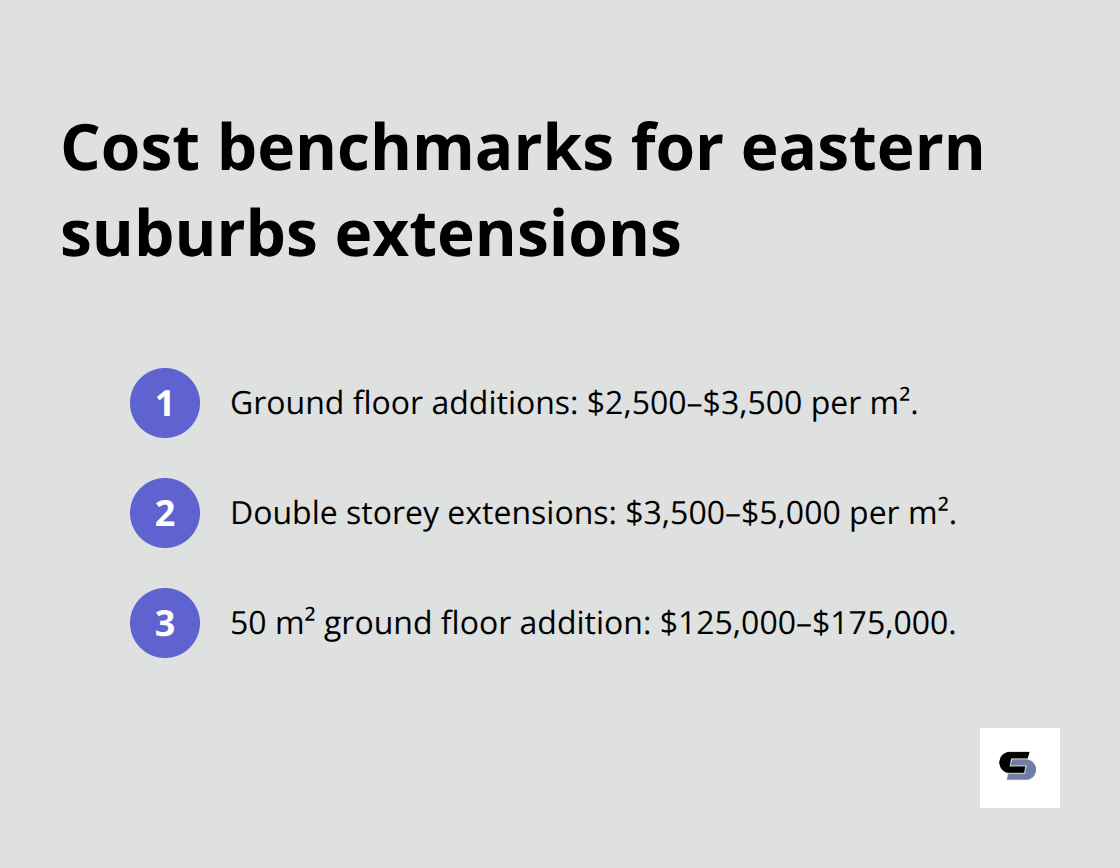
Well-executed extensions add between 5% and 10% to overall property value according to data from the Real Estate Institute of Victoria, meaning a quality extension often pays for itself through increased resale value.
Maximising Space Without Relocation Stress
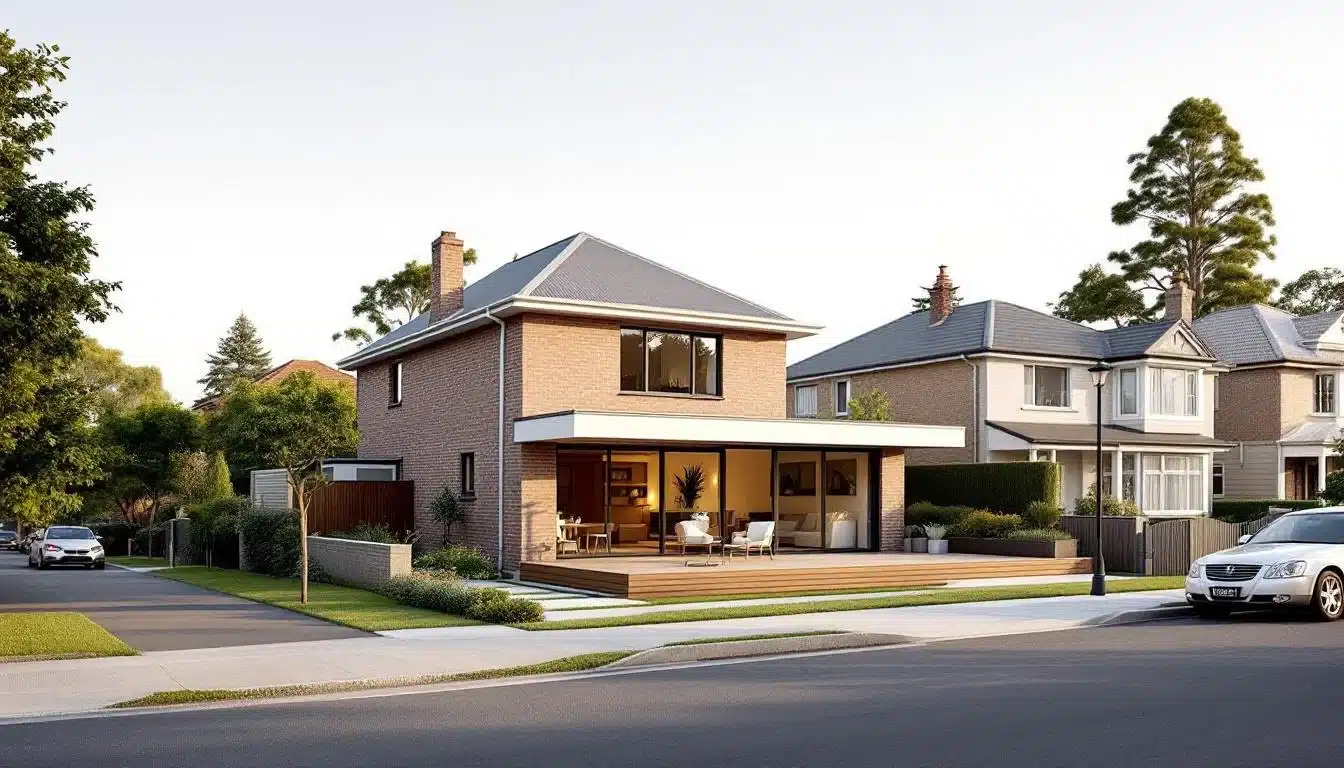
Extensions solve the core problem that drives relocation: lack of space. Rather than searching for a larger home in a saturated market, you expand where you are. A second storey conversion transforms a single-level home into a multi-storey residence, adding bedrooms or a dedicated home office without consuming additional land. Ground floor additions create the entertaining and living space that eastern suburbs families demand, particularly on narrow blocks where vertical expansion isn’t possible. Double storey extensions work on tight allotments by building upward, maximising usable floor area while respecting setback requirements across Boroondara, Monash, and Knox councils. You avoid the stress of selling your current home, purchasing another, and managing overlapping settlements-all while staying in a neighbourhood where your family is already established.
What Comes Next in Your Extension Journey
Understanding the financial and lifestyle benefits of extending sets the foundation for your project. The next step involves identifying which extension type suits your property and neighbourhood, then navigating the planning and approval requirements that vary across eastern suburbs councils.
Which Extension Type Works Best for Your Eastern Suburbs Block
Eastern suburbs blocks present distinct constraints that determine which extension approach delivers the most value. Narrow allotments common in suburbs like Camberwell and Balwyn rule out sprawling single-storey additions, making double storey extensions the practical choice. These vertical builds maximise usable floor area on tight footprints while respecting setback requirements across Boroondara, Monash, and Knox councils. A double storey extension on a 400-square-metre block adds 60–80 square metres of new space without consuming additional land, whereas a ground floor addition of equivalent size would dominate the remaining yard. Council setback rules in Boroondara typically require 3 metres from the rear boundary and 1 metre from side boundaries-constraints that naturally favour vertical expansion on narrow blocks.
Ground Floor Additions for Entertaining Spaces
Ground floor additions excel where entertaining and living space matters more than bedroom count. Eastern suburbs families consistently prioritise open-plan kitchens, dining areas, and outdoor entertaining zones, and a ground floor addition delivers this more efficiently than any alternative. If your block has reasonable depth and width, a 40–60 square-metre ground floor extension creates the seamless indoor-outdoor flow that eastern suburbs buyers expect. These additions cost between $2,500 and $3,500 per square metre, positioning them as the most affordable extension type. Ground floor work also avoids the structural complexity of double storey builds, reducing timeline and design iterations. However, ground floor additions demand careful site planning: they consume yard space, affect drainage patterns, and on sloping blocks can trigger expensive foundation work. A soil report and foundation assessment from a qualified engineer costs $1,500–$3,000 upfront but prevents costly surprises during construction.
Second Storey Conversions Transform Single-Level Homes
Single-level homes on wider blocks benefit most from second storey conversions, which transform existing floor plates into multi-storey residences. This approach adds bedrooms, bathrooms, or a dedicated home office without additional land consumption and typically costs $3,500–$4,500 per square metre. Conversions work best on homes with concrete slab foundations and straightforward roof structures; timber floor systems or complex roof geometries substantially increase costs and complexity. A structural engineer must assess load paths and foundation adequacy before design progresses-a step that cannot be skipped. Council approval timelines for conversions average 8–12 weeks in Monash and Knox, longer than ground floor work due to increased scrutiny of structural and amenity impacts. The Real Estate Institute of Victoria data shows second storey conversions return 6–9% of project cost in added property value, making them sound financial decisions on homes with development potential.
Matching Your Block to the Right Extension Type
Your block’s dimensions, orientation, and existing structure determine which extension type maximises both usable space and financial return. Narrow blocks favour double storey work; blocks with good depth and width suit ground floor additions; single-level homes on wider allotments benefit from second storey conversions.
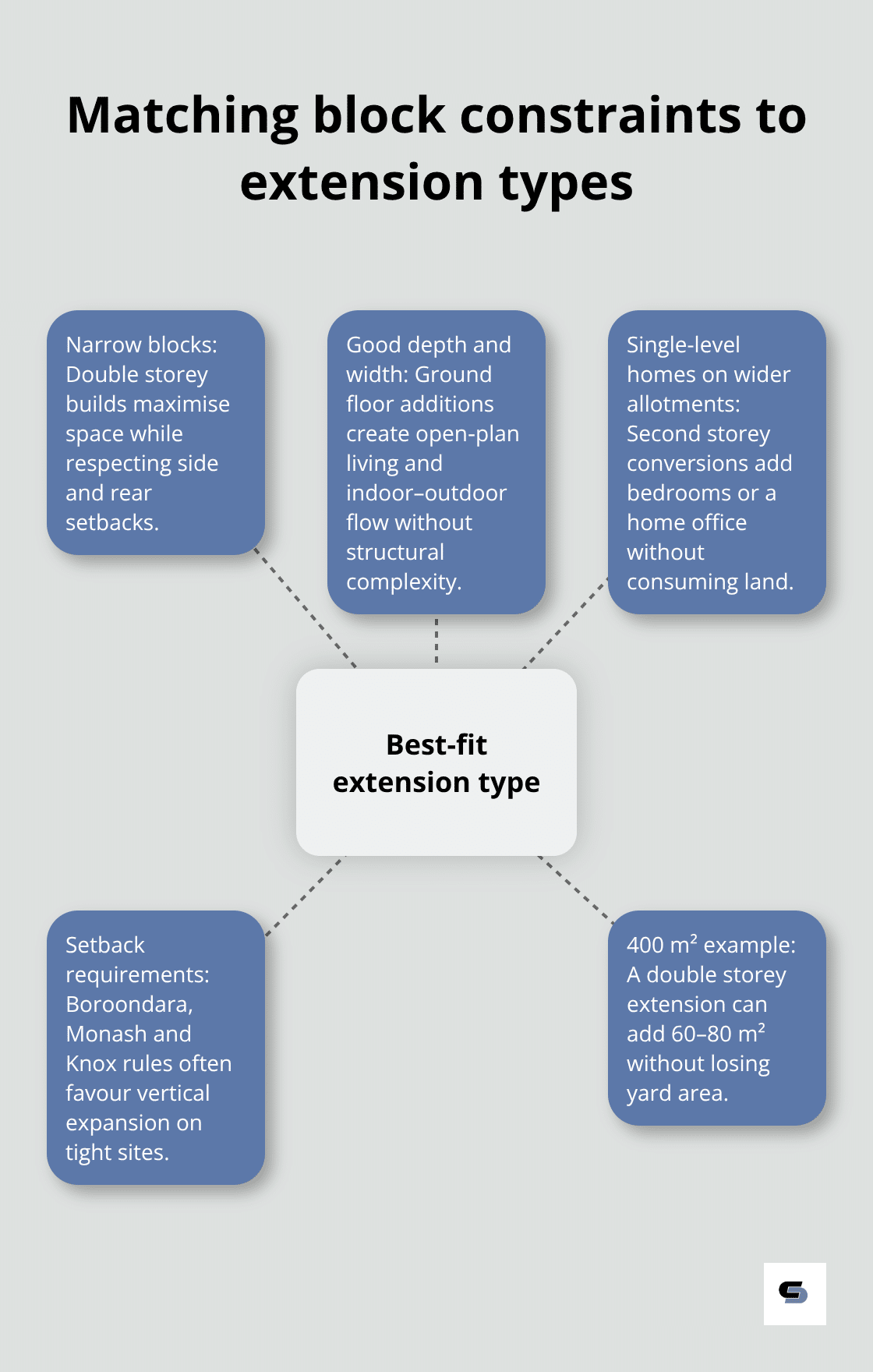
A qualified building designer or architect can assess your specific site constraints and recommend the approach that delivers the best outcome for your family’s needs and your property’s market position. Once you’ve identified the extension type that suits your block, the next phase involves understanding the planning and approval requirements that vary across eastern suburbs councils-a process that shapes your timeline and budget.
Planning and Approval Process for Eastern Suburbs Extensions
Planning permit requirements across Boroondara, Monash, and Knox councils vary significantly, making early engagement with your local council essential. Boroondara requires planning permits for most extensions exceeding 10% of the original building floor area or affecting setbacks, while Monash applies similar thresholds with stricter heritage overlays in suburbs like Glen Waverley and Oakleigh. Knox councils typically demand permits for double storey work and extensions within 4.5 metres of side boundaries. The real cost of missing these requirements is substantial: proceeding without a required permit can trigger building orders to stop work, forcing you to demolish completed sections and apply retrospectively-a process that costs $5,000–$15,000 in additional surveying, legal fees, and design modifications.
Checking Council Requirements Before Design
Check the Planning permit register and your local council’s website before commissioning designs; a 30-minute conversation with council planning staff costs nothing and clarifies exactly what you need. Heritage overlays complicate approvals in established neighbourhoods across all three councils. Suburbs like Camberwell, Balwyn, and Hawthorn contain significant heritage precincts where extensions must satisfy heritage design principles even on non-heritage-listed properties. The Heritage Design Guide requires extensions to respect existing streetscapes, maintain proportions, and use complementary materials-standards that often demand additional design iterations and cost 10–15% more than standard extensions.
Navigating Heritage Overlays in Established Areas
Heritage considerations affect your timeline and budget substantially. Extensions in heritage precincts require design documentation that demonstrates how your addition respects the character and scale of surrounding properties. Council heritage advisors assess submissions against established design principles, and approval timelines extend to 10–14 weeks in suburbs with significant overlays. Non-compliance with heritage requirements results in permit refusal, forcing redesign and resubmission. Engage a building designer or architect experienced in heritage work early; their familiarity with local council expectations accelerates approvals and prevents costly design revisions.
Building Permits and BCA Compliance
Structural work triggers mandatory BCA compliance assessments that cannot be avoided regardless of heritage status. The Building Act 1993 and Building Regulations 2018 require building permits for virtually all structural extensions; exemptions exist only for minor repairs and certain garden structures under 10 square metres. A registered building surveyor must issue your permit and conduct mandatory inspections at foundation, frame, lock-up, and completion stages-these inspections protect you by confirming work meets safety standards and prevents future liability issues.
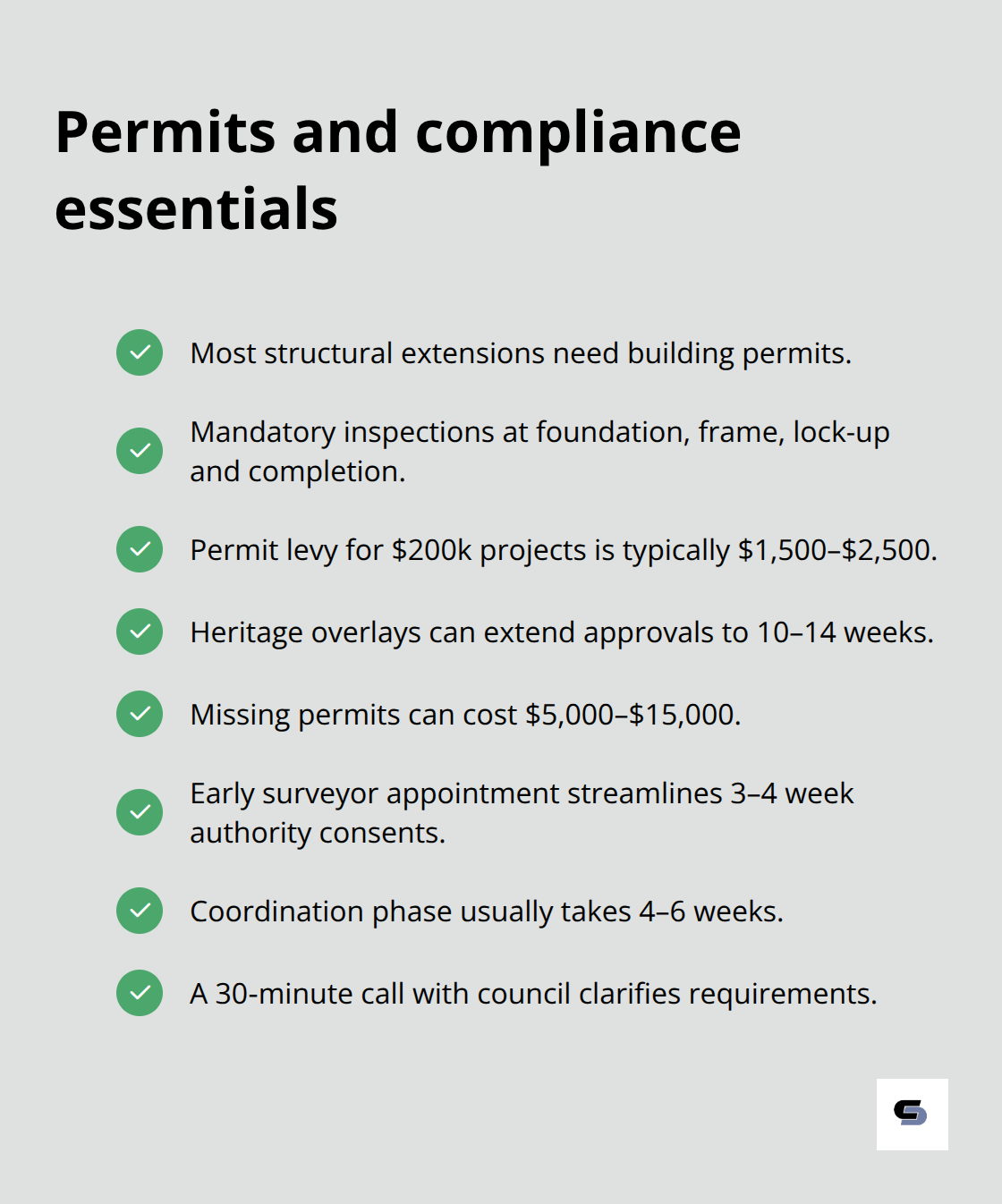
The building permit levy is calculated as a percentage of total project cost, paid to your building surveyor before the permit number is issued; for a $200,000 extension, expect levies between $1,500–$2,500 depending on complexity.
Appointing Your Building Surveyor Early
Appointment of a qualified building surveyor early in your project prevents costly delays; they assess whether your design complies with setback rules, can identify foundation requirements from soil reports, and guide you through council reporting authority approvals that often take 3–4 weeks. Your building surveyor coordinates with water authorities, council planning departments, and other agencies to obtain necessary consents before your permit number is issued. This coordination phase typically takes 4–6 weeks and cannot be accelerated, so starting early protects your construction timeline. A building surveyor also protects you by confirming that all practitioners (plumbers, electricians, structural engineers) hold current registrations and appropriate insurance before work commences.
Final Thoughts
Extending your home beats relocating in almost every measurable way. You avoid the $80,000–$100,000 in transaction costs, stay embedded in your established neighbourhood, and add genuine value to your property through a well-executed addition. Melbourne Eastern Suburbs extensions deliver between 5% and 10% of project cost back into your property value, meaning a quality build often funds itself at resale.
The planning and approval process across Boroondara, Monash, and Knox councils demands early engagement with council planning staff and a qualified building surveyor. Heritage overlays, setback requirements, and BCA compliance standards vary by suburb and extension type, but none of these obstacles are insurmountable when you plan properly. Starting with a soil report, appointing your building surveyor early, and checking council requirements before commissioning designs prevents costly delays and design revisions.
Contact a qualified building designer or architect to assess your block and recommend the extension type that maximises space and financial return. If you’re ready to explore your options with specialists who understand Melbourne Eastern Suburbs extensions, reach out to Cameron Construction to discuss your project. We’ll assess your site, clarify council requirements, and outline a realistic timeline and budget for your extension.