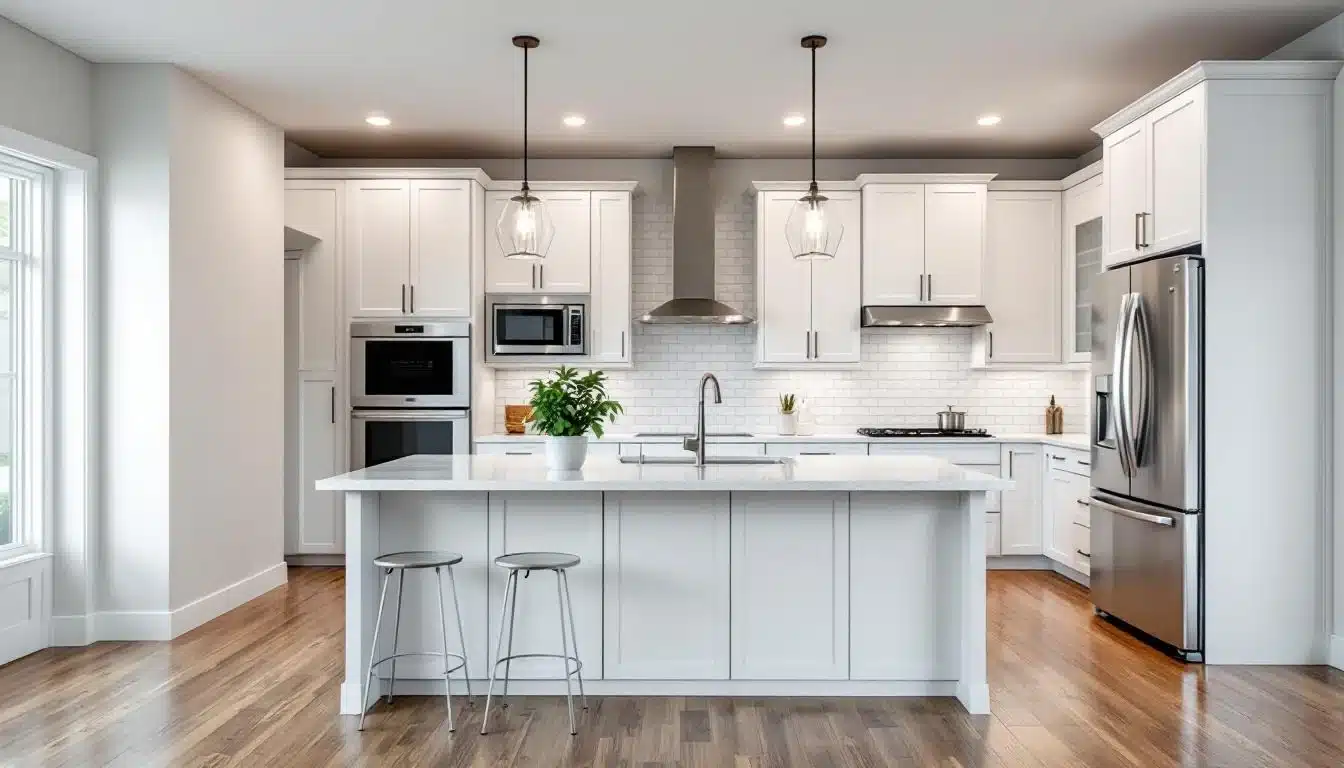
Kitchen Renovations That Pay For Themselves Through Increased Home Value
Kitchen renovations are one of the smartest investments Melbourne homeowners can make. A well-planned kitchen upgrade doesn’t just improve how you cook and entertain-it directly increases your home’s market value.
At Cameron Construction, we’ve seen firsthand how strategic kitchen improvements attract buyers and justify their cost. This guide shows you which upgrades deliver the strongest returns and how to plan a renovation that pays dividends.
What Makes a Kitchen Renovation Worth the Investment
Kitchen renovations rank among the highest-returning home improvements available to Melbourne homeowners, but not all upgrades deliver equal value. Research from the ABS Producer Price Index shows construction costs have risen significantly due to labour shortages and material price increases, which means timing and strategic choices matter more than ever. The real question isn’t whether a kitchen renovation pays for itself-it’s which elements deliver the strongest returns and how to avoid spending money on features that won’t move the needle when you sell.
The Numbers Behind Kitchen Value
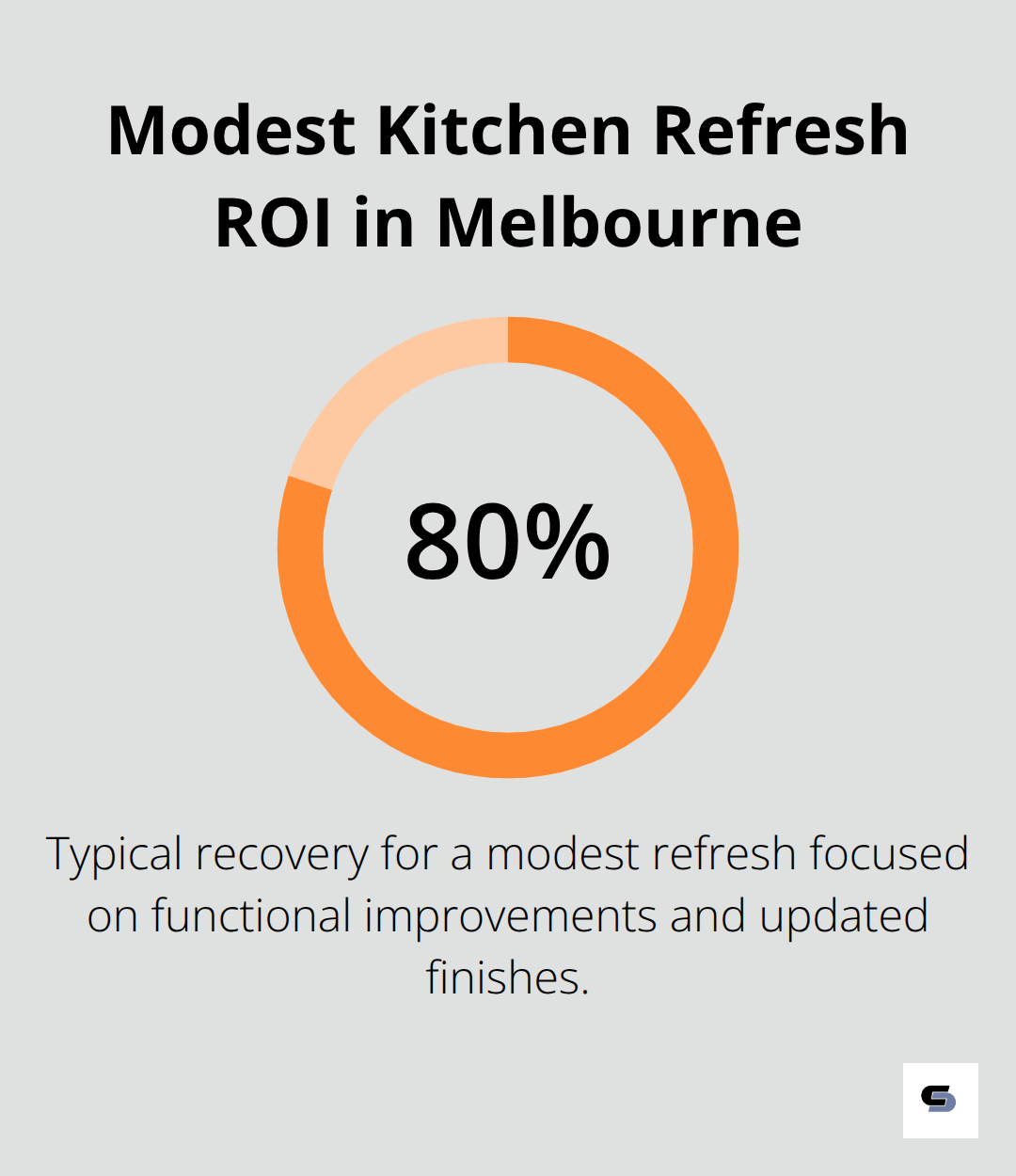
Studies consistently show that kitchen renovations deliver value, depending on scope and quality. A modest kitchen refresh targeting functional improvements and updated finishes typically recovers closer to 80 per cent, while high-end luxury kitchens tend toward the lower end because buyers won’t always pay premium prices for premium finishes they didn’t choose themselves. In Melbourne’s market, buyers prioritise kitchens that work well over kitchens that look impressive but require future updates.
This means investing in durable cabinetry, quality benchtops, and efficient appliances delivers better returns than spending heavily on trendy finishes that may feel dated within five years. The cost breakdown from public procurement tenders shows that kitchen and bathroom remodelling typically accounts for 40 per cent of renovation budgets, with the remaining 60 per cent split between plastering, electrical, flooring, and other trades. This distribution reflects where buyers actually notice improvements-visible, functional elements that impact daily use.
Which Elements Drive Real Value
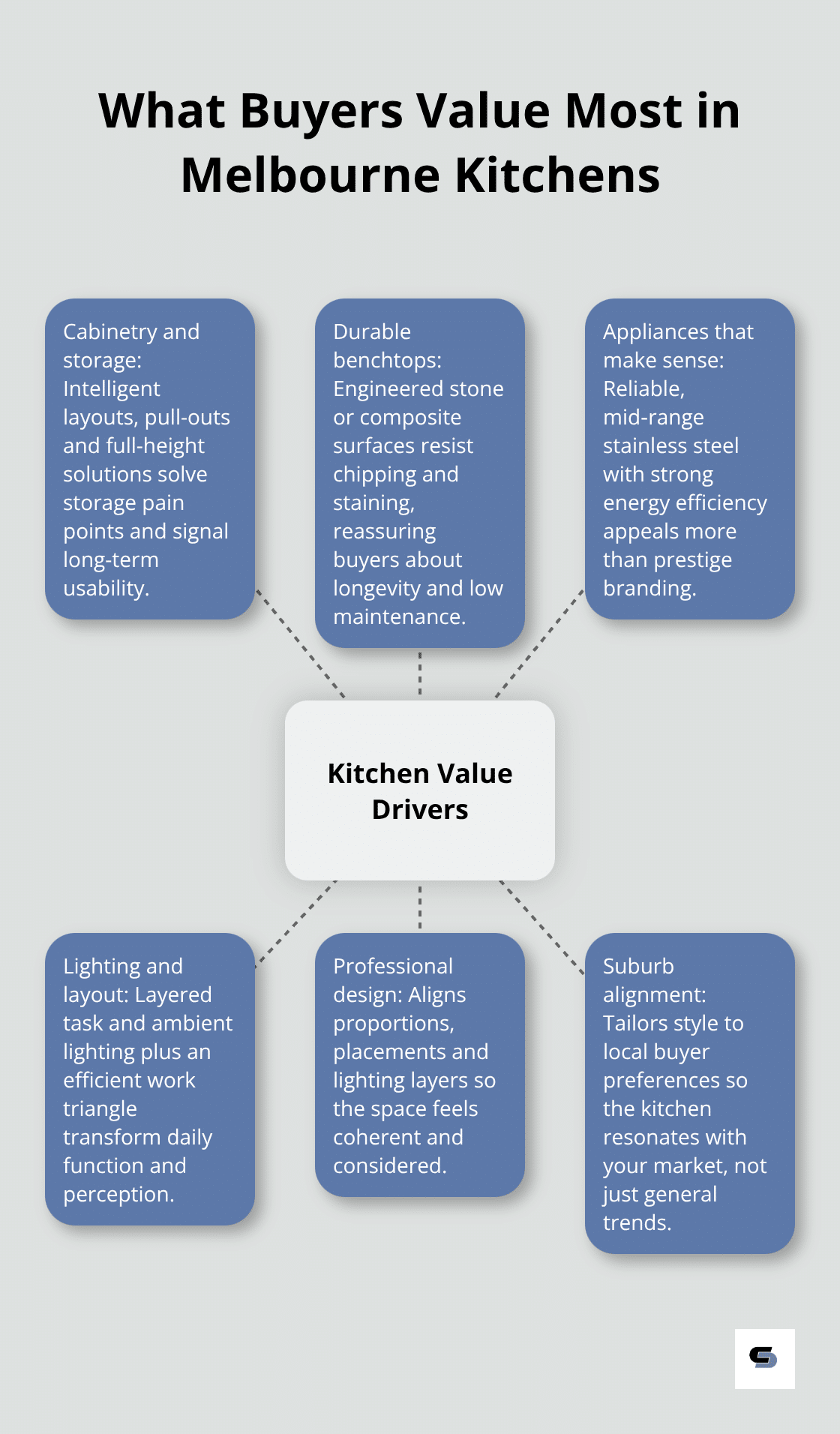
Modern cabinetry with smart storage solutions consistently ranks as a top value driver because it addresses a universal buyer concern: storage and organisation. Buyers walk into a kitchen and immediately assess whether it meets their needs, and poor storage kills deals faster than outdated finishes do. Quality benchtops matter, but not because of material prestige; they matter because they signal durability and low maintenance. Laminate benchtops that chip easily or stain quickly create buyer hesitation, while stone or engineered surfaces reassure purchasers about longevity. Appliances present a different challenge-mid-range stainless steel appliances appeal to most buyers, but premium branded appliances rarely add dollar-for-dollar value. Lighting and layout improvements often deliver outsized returns because they cost less than cabinetry or benchtops yet dramatically transform how a space feels and functions. A poorly lit kitchen with a cramped workflow immediately reads as a problem space; adding task lighting, ambient lighting, and improving the work triangle between sink, stove, and refrigerator makes the kitchen feel intentional and desirable.
Regional Variations That Shape Kitchen Value
Regional variations matter significantly in Melbourne-inner suburbs like Fitzroy and South Yarra see stronger returns on contemporary, minimalist kitchens with integrated appliances, while outer suburbs respond better to traditional layouts with generous benchtop space and family-friendly functionality. Waterfront suburbs and heritage areas demand kitchens that respect period character while delivering modern convenience, which requires careful design to avoid clashing with the home’s existing architecture. Understanding your suburb’s buyer preferences helps you allocate your renovation budget toward elements that resonate with your specific market rather than chasing universal trends that may not apply to your location.
What Buyers Actually Want in a Modern Kitchen
Cabinetry: The Foundation of Kitchen Value
Cabinetry sits at the heart of kitchen value because it’s the first thing buyers assess and the hardest element to change without major expense. Modern cabinetry with intelligent storage solutions addresses the storage crisis that plagues most older Melbourne homes, where kitchens were designed when households owned far fewer appliances and ingredients. Buyers walk into a kitchen and mentally calculate whether they can fit their life into the space, and poor storage instantly signals a problem. Integrated pantries, pull-out drawers that maximise deep cabinet space, and vertical storage that reaches ceiling height demonstrate thoughtful design rather than cramped compromises.
The cost breakdown from public procurement data shows kitchen remodelling accounts for 40 per cent of renovation budgets, with cabinetry representing the largest portion of that investment. This concentration matters because cabinetry is visible, functional, and durable-when done well, it justifies its cost through years of reliable use.
Benchtops and Appliances: Durability Over Prestige
Benchtops deserve careful selection but not premium obsession; quality engineered stone or composite surfaces outperform laminate because they resist staining and chipping, which are the visible wear patterns that kill buyer confidence. Mid-range stainless steel appliances appeal to most Melbourne buyers far more effectively than premium brands, because buyers worry about repair costs and parts availability for luxury appliances they didn’t choose. The real value driver in appliance selection is reliability and energy efficiency, not brand prestige.
Lighting and Layout: Maximum Impact for Modest Cost
Lighting transforms kitchen perception more dramatically than any other element relative to its cost, yet many homeowners underinvest here. Task lighting over benchtops and islands prevents shadowed work areas that feel cramped and dated, while ambient lighting and a statement fixture create the polished atmosphere buyers associate with quality homes. Layout improvements-specifically fixing the work triangle between sink, stove, and refrigerator-matter profoundly because inefficient workflows create immediate buyer resistance. A kitchen where you must walk five steps between key stations reads as poorly designed, regardless of how new the finishes look. These functional improvements cost less than upgrading cabinetry or benchtops yet deliver disproportionate value because they solve problems buyers experience every time they cook.
Professional Design Ensures Coherent Execution
Professional design becomes essential when coordinating these elements because amateur choices often create visual discord or functional compromise. A designer ensures cabinetry proportions suit your kitchen’s dimensions, appliance placement optimises workflow, and lighting layers work together rather than competing. Kitchens where trendy finishes fail to compensate for poor spatial planning or misaligned elements rarely attract strong buyer interest, while thoughtfully designed kitchens with modest finishes command premium attention. The investment in professional design-typically 5 to 10 per cent of renovation cost-pays dividends through coherent execution and buyer perception of quality.
Matching Your Suburb’s Buyer Preferences
Melbourne’s regional variations mean your suburb’s buyer profile should guide your upgrade priorities; a Fitzroy renovation demands contemporary minimalism with integrated appliances, while a Toorak kitchen might prioritise generous benchtop space and traditional proportions. Understanding these preferences before you commit budget prevents spending on elements that won’t resonate with your specific market. This strategic alignment between your kitchen design and your suburb’s expectations determines whether your renovation recovers its investment or leaves money on the table-which is why the next step involves planning your budget with precision and avoiding the costly mistakes that undermine kitchen renovation returns.
Setting Your Kitchen Budget Without Overpaying
Kitchen renovation costs in Melbourne range dramatically based on scope and material choices, but understanding where your money actually goes prevents the common mistake of spending heavily on elements that won’t return their investment. The labour costs and material price increases confirmed by the ABS Producer Price Index mean construction costs have risen significantly, which means a kitchen renovation that cost $45,000 three years ago now costs considerably more for identical work. This cost reality demands precision in your budget planning.
Where Your Budget Actually Goes
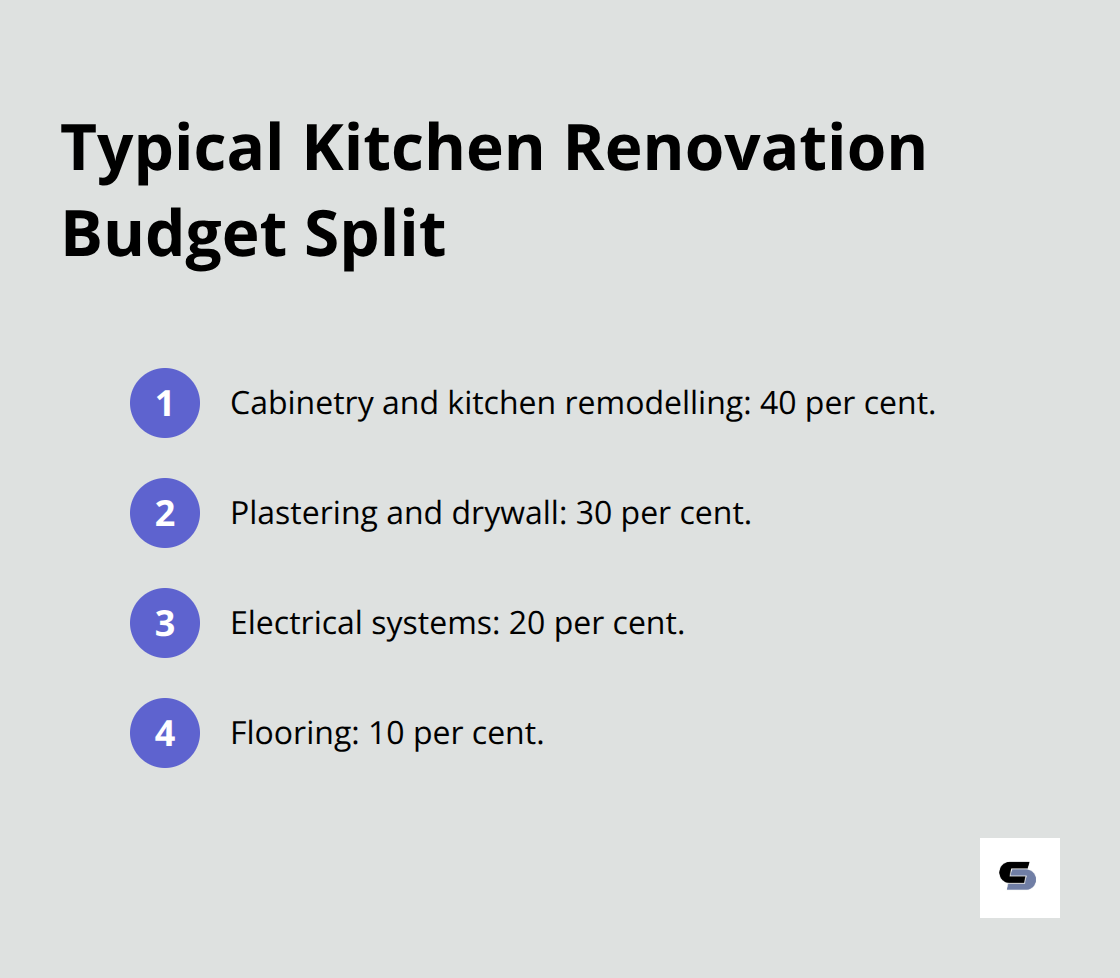
Public procurement data from kitchen and bathroom remodelling tenders shows the typical cost distribution: cabinetry and kitchen remodelling accounts for 40 per cent of your budget, with the remaining 60 per cent split between plastering and drywall at 30 per cent, electrical systems at 20 per cent, and flooring at 10 per cent. This breakdown matters because it reveals where contractors allocate resources and helps you understand whether a quote deviates significantly from market norms. A quote that allocates only 25 per cent to cabinetry while requesting 45 per cent for electrical work suggests either scope creep or inefficient planning.
When you request quotes from licensed contractors, insist on itemised breakdowns that match this distribution so you can compare apples to apples and identify where individual contractors differ in their approach.
Avoiding Trendy Features That Don’t Pay Back
Trending kitchen styles like ultra-minimalist handleless cabinetry or statement tile backsplashes appeal to design-conscious homeowners but rarely justify their premium cost when buyers evaluate your home. A premium for handleless cabinetry that impresses your designer won’t recover that investment when your buyer prioritises storage functionality over aesthetic trends. Instead, allocate your budget toward elements that solve problems and improve daily function: quality cabinetry with accessible storage, durable benchtops that resist staining, and layered lighting that transforms how the space feels.
Mid-range stainless steel appliances consistently outperform premium brands in buyer appeal because purchasers worry about repair costs for luxury equipment they didn’t choose, making premium-branded options poor value.
Protecting Your Budget Through Contracts and Communication
The Queensland Building and Construction Commission recommends starting with a detailed written contract that defines scope, materials, timeframes, and payment schedules before you commit funds, which protects you from the variations that typically blow kitchen budgets. Communicate early and often with your contractor about potential cost drivers like structural changes, plumbing relocation, or electrical upgrades that weren’t apparent during initial assessment. These variations should be documented in writing with clearly defined scope and price rather than handled verbally, because undocumented changes are the primary reason kitchen renovations exceed budget.
Final Thoughts
Kitchen renovations deliver measurable returns when you prioritise function over trends and align your choices with what Melbourne buyers actually value. Cabinetry that solves storage problems, durable benchtops that resist wear, and thoughtful lighting that transforms the space consistently outperform premium finishes that impress designers but don’t move buyer sentiment. Your renovation succeeds when every dollar spent addresses a problem or improves daily function rather than chasing aesthetic trends that fade within years.
Obtain itemised quotes from licensed contractors that break down costs across cabinetry, electrical, plastering, and flooring so you can compare proposals accurately and identify where contractors differ in their approach. Insist on a detailed written contract before work starts, specifying scope, materials, timeframes, and payment schedules to protect yourself from variations that typically blow budgets. Professional design coordinates these elements coherently because amateur choices often create visual discord or functional compromise that undermines your entire investment.
We at Cameron Construction guide Melbourne homeowners through kitchen renovations as part of larger home extensions and premium renovations that transform both function and value. Our in-house designers understand how kitchen improvements integrate with extensions and whole-home projects, ensuring your renovation aligns with your home’s architecture and your suburb’s buyer expectations. Your kitchen renovation pays for itself when it reflects strategic thinking rather than wishful spending.


![Second Storey Additions For Growing Families [Guide]](https://www.cameronconstruction.com.au/wp-content/uploads/emplibot/second-storey-additions-hero-1772259809-150x150.webp)