Inner North Extensions Melbourne: Space-First Design for Growing Families
Inner North Melbourne families face a real problem: growing households in suburbs where land is scarce and property prices keep climbing. Extensions offer a practical solution that costs far less than relocating to outer areas while adding genuine value to your home.
At Cameron Construction, we’ve helped dozens of families in suburbs like Fitzroy, Carlton, and Brunswick transform cramped homes into spaces that actually work for their lives. This guide walks you through everything from design strategies for narrow blocks to navigating council approvals and timelines.
Why Extensions Beat Relocating for Inner North Families
Population Growth Creates Space Pressure
Inner North Melbourne suburbs have experienced significant population density increases over the past decade. Suburbs like Fitzroy, Carlton, and Brunswick saw population growth between 8–12% from 2016 to 2021, yet available land hasn’t expanded. This creates a genuine squeeze: families outgrow their homes while finding suitable larger properties in these sought-after areas becomes nearly impossible. Extensions solve this problem directly without forcing families to abandon the neighbourhoods they’ve chosen.
The Hidden Costs of Relocation
The alternative-relocating to outer suburbs-carries hidden costs that most families don’t calculate properly. Moving from Inner North to areas like Craigieburn or Sunbury means longer commutes, often adding 45 minutes to an hour each way. That’s roughly 10 hours per week spent driving, which translates to time away from family and increased fuel costs. Property prices in outer suburbs might appear cheaper initially, but you’re trading proximity to schools, employment, and established community networks.
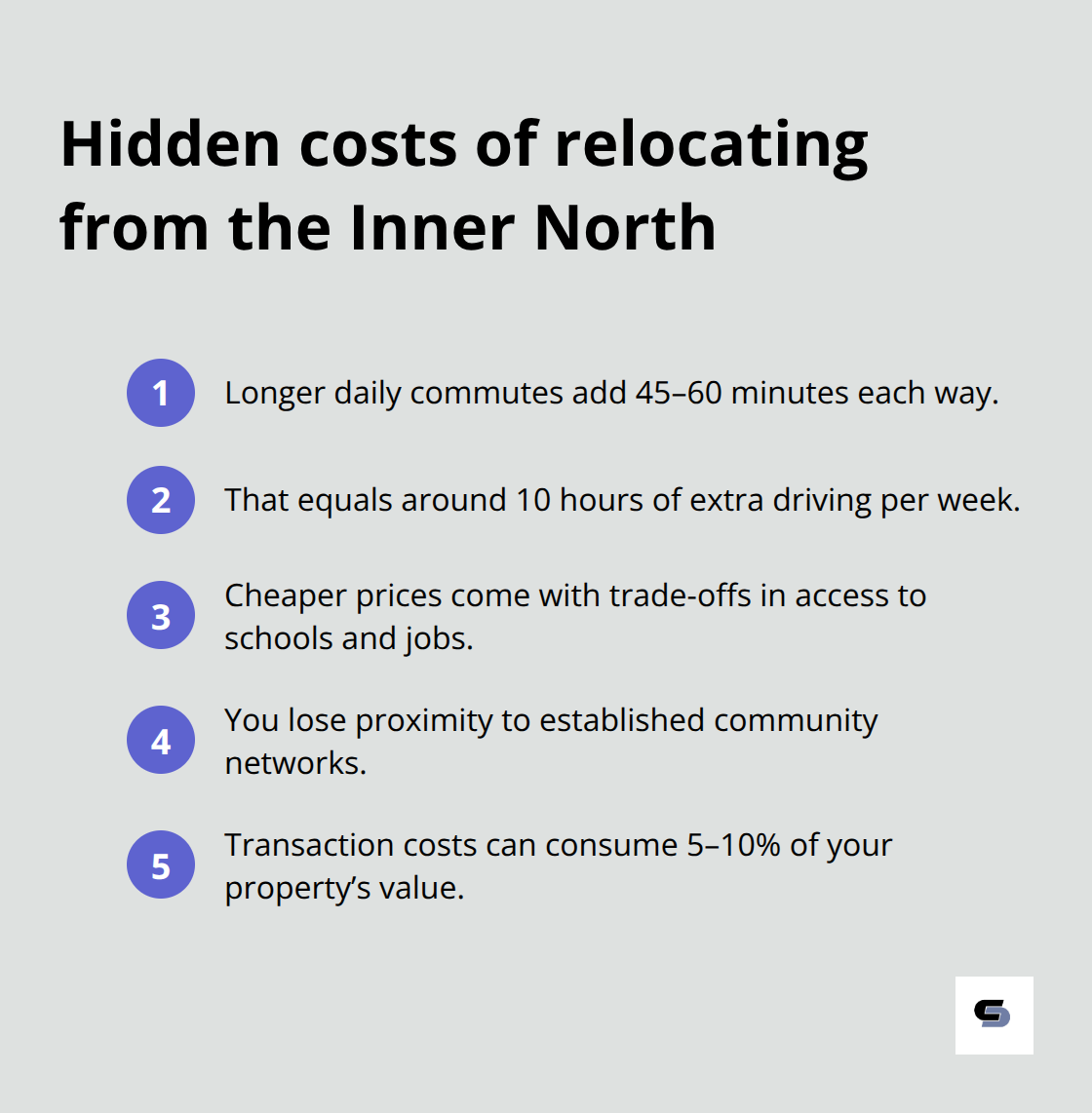
Families who initially considered relocation often discover that a thoughtfully designed extension costs considerably less than the combined expense of selling, relocating, and purchasing elsewhere. Transaction costs alone-agent fees, stamp duty, legal fees-typically consume 5–10% of property value in Victoria.
The Real Financial Advantage of Extending
An extension to a modest Inner North home typically costs between $150,000 and $350,000 depending on size and complexity, whereas purchasing an equivalent larger property in the same suburb costs significantly more. A two-bedroom home in Fitzroy currently averages around $900,000, while a comparable three-bedroom property commands approximately $1.2 million or higher. Adding a bedroom and expanded living space through extension costs roughly one-quarter to one-third of that price difference.
Extensions add genuine value to properties in competitive markets. Well-executed extensions typically return 80–90% of their cost in increased property value, particularly in Inner North suburbs where space commands premium pricing. Your home becomes more marketable when the time comes to sell, and you’ve essentially built equity while improving your family’s daily living experience.
Why Inner North Properties Justify Extension Investment
Inner North suburbs attract families specifically for their walkability, cultural amenities, and established infrastructure. Properties here appreciate faster than outer suburbs because demand consistently outpaces supply. This means extending your existing Inner North home preserves your access to quality schools, local businesses, and community, while simultaneously building equity.
The decision isn’t really about choosing between extension and relocation-it’s about recognising that Inner North families who extend stay in the neighbourhoods they value while solving their space problems affordably. Understanding these financial realities shapes how you approach the design phase, where working with narrow blocks and heritage considerations becomes not just a constraint but an opportunity.
Designing Extensions for Narrow Blocks and Heritage Constraints
Vertical Expansion on Narrow Blocks
Inner North blocks demand a completely different design philosophy than suburban lots. Most Inner North properties sit on blocks narrower than 10 metres, often with heritage overlays or significant setback requirements that eliminate obvious expansion options. The solution isn’t fighting these constraints-it’s designing around them strategically.
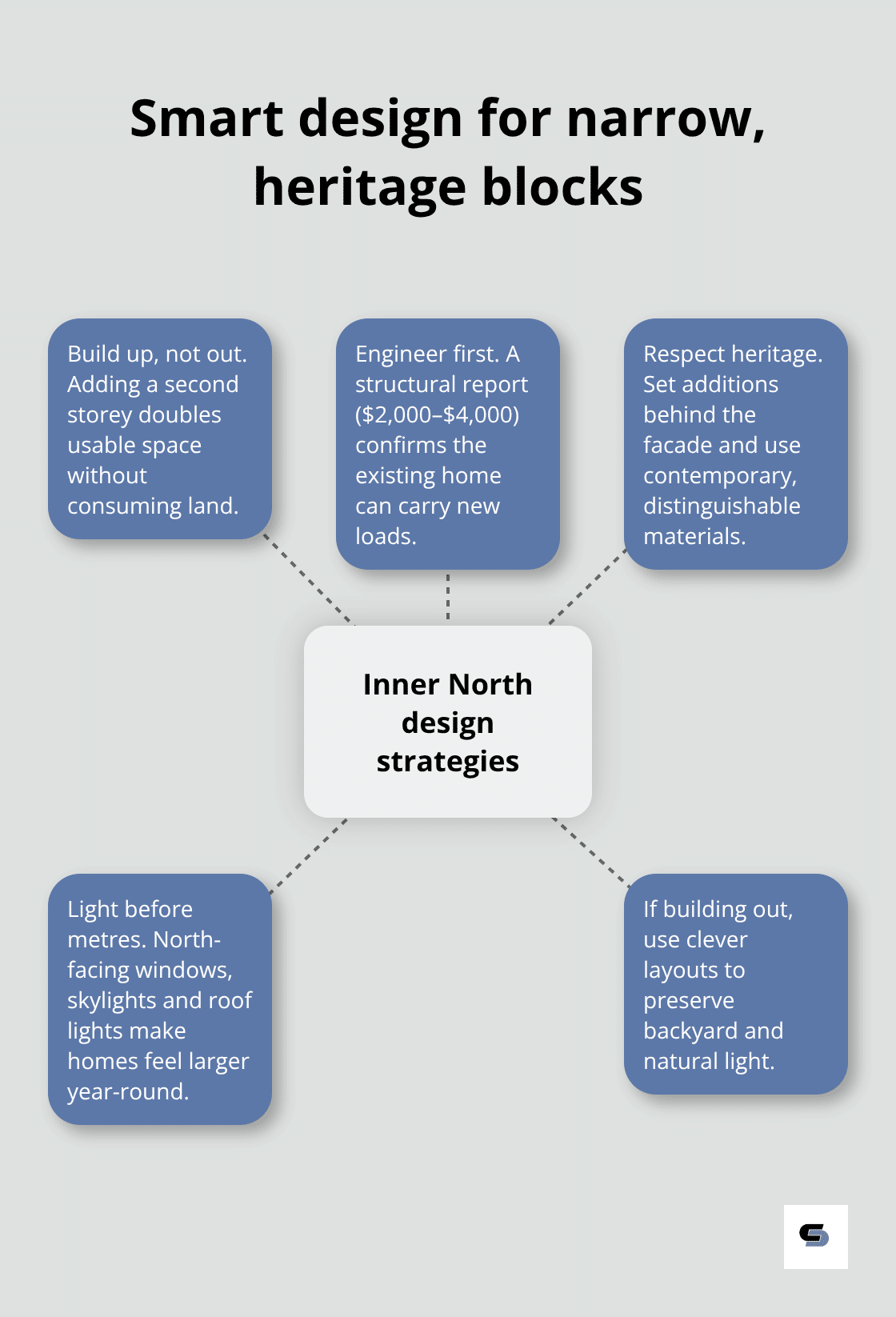
Vertical expansion works far better than horizontal on narrow blocks. Adding a second storey to an existing ground floor gives you double the usable space without consuming more land, which means you avoid fighting council setback rules as aggressively. However, this approach requires careful structural assessment because older Inner North homes weren’t designed for additional load. A structural engineer will evaluate whether the existing foundation and walls can support an upper level, which typically costs $2,000–$4,000 for a thorough report.
If the existing structure cannot handle vertical expansion, building out at ground level becomes your strategy, but this needs clever design to preserve outdoor space and natural light. Many families maximise internal space at the expense of their backyard, then discover they’ve created a darker, more cramped home overall.
Heritage Overlays and Council Approval
Heritage considerations aren’t obstacles-they’re part of what makes Inner North properties valuable. Suburbs like Brunswick and Fitzroy have significant heritage overlays, meaning council approval requires designs that respect the original building’s character. This doesn’t mean you can’t add modern extensions; it means the new work must be clearly distinguishable from the original while maintaining compatible proportions and materials.
Councils typically want new additions to sit slightly behind the original facade or use contemporary materials that contrast rather than mimic heritage features. Understanding these requirements early in your design process prevents costly revisions later. Properties with heritage protection often see stronger value appreciation because the overlay itself signals quality and character to future buyers.
Maximising Natural Light on Dense Blocks
Natural light becomes your most powerful design tool on dense blocks. North-facing windows capture winter sun without overheating in summer, while skylights and roof lights cost far less than expanding walls outward. A well-positioned skylight in a central hallway or kitchen transforms how a home feels without eating into your limited outdoor space.
Orienting living areas to capture northern light and positioning bedrooms to the south creates homes that feel larger and more comfortable year-round. This strategic approach to light often solves perceived space problems better than adding square metres. When you work with a designer experienced in Inner North constraints, they’ll identify opportunities for light that you might otherwise miss-opportunities that fundamentally change how your family experiences the home.
These design principles shape what’s actually possible on your block, but they also determine what happens next: navigating the formal approval process that turns design concepts into permitted projects.
Getting Your Extension Approved and Built
Understanding Council Requirements and Planning Permits
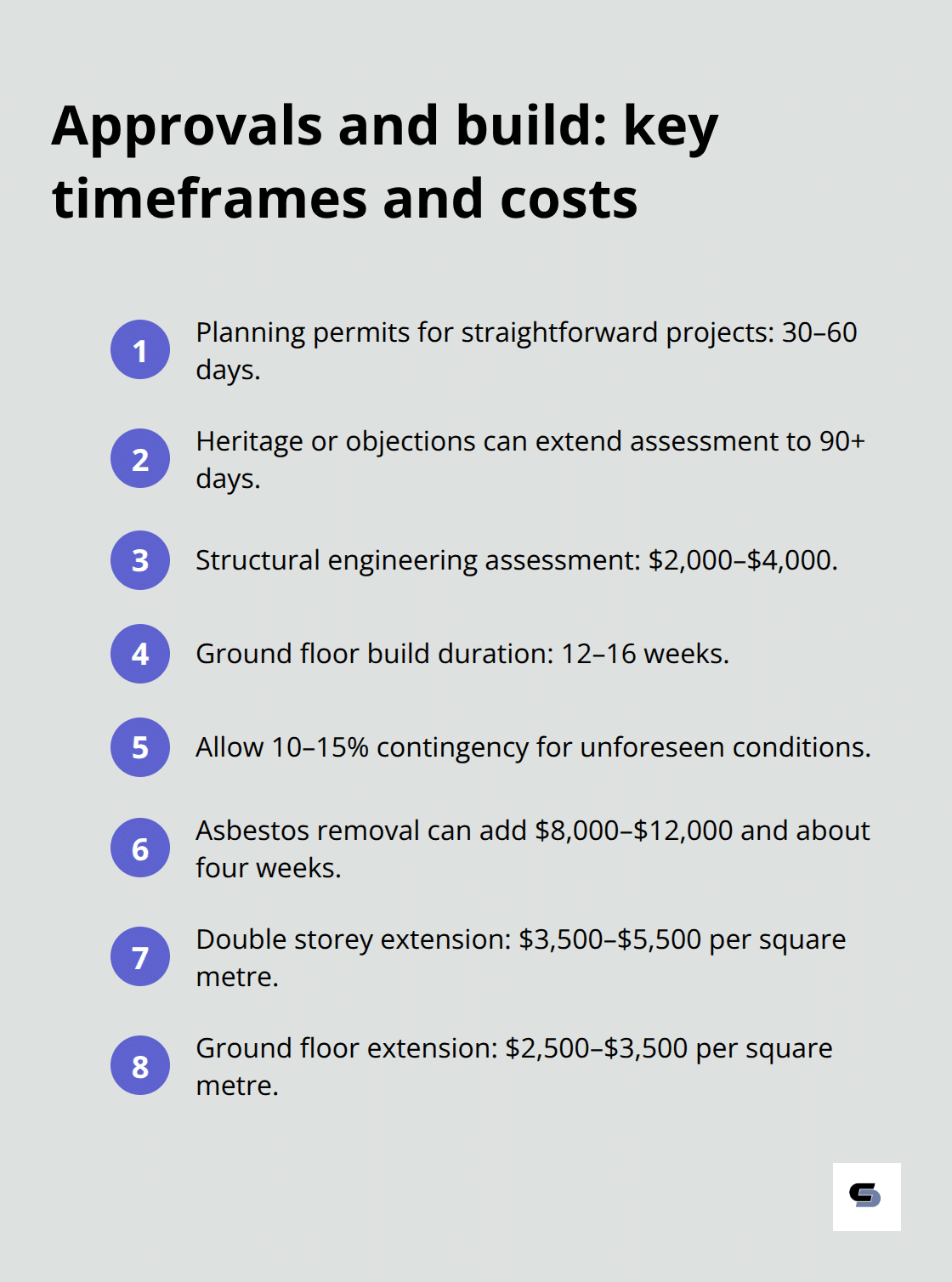
Council approvals represent the first genuine hurdle most Inner North families face, and understanding what councils actually want separates projects that sail through from those that stall for months. Melbourne’s Inner North councils-particularly in suburbs like Fitzroy, Carlton, and Brunswick-have detailed planning schemes that govern everything from how far your extension sits from the street to what materials you can use on a heritage property. The Victorian Planning Provisions require you to lodge a planning permit application before construction starts, and councils typically assess straightforward applications within 30–60 days, though complex projects involving heritage overlays or neighbour objections can stretch to 90+ days.
Submitting a design that anticipates council concerns from the outset costs nothing extra but saves months of revision cycles. Your building designer must understand each council’s specific character statement and planning requirements-generic designs fail in Inner North suburbs because councils reject proposals that don’t respect local character.
BCA Compliance and Structural Assessment
BCA compliance runs parallel to council approval, not after it. The Building Code of Australia governs structural integrity, fire safety, accessibility, and energy efficiency, and your design must satisfy BCA standards before council will approve it. Structural engineers assess whether your extension can safely support itself and connect to your existing home, and this assessment costs $2,000–$4,000 but prevents costly rework later.
Energy efficiency standards require adequate insulation, glazing performance, and ventilation, which means a kitchen extension isn’t simply a larger kitchen-it’s a thermally efficient space that meets current building standards. Many families assume they can add a room cheaply and upgrade later; this approach fails because councils won’t issue a building permit for non-compliant work, and retrofitting compliance costs far more than getting it right initially.
Hidden Structural Issues and Contingency Planning
Timeline and budget management for Inner North projects demands brutal honesty about what actually happens on site. A modest ground floor extension typically takes 12–16 weeks from permit approval to practical completion, but this assumes no hidden structural issues, no council requests for design changes, and no supply delays. Inner North homes built before 1970 frequently hide problems-inadequate footings, asbestos materials, or rotted timber-that only become visible once demolition starts.
Projects slip four weeks when discovered asbestos requires certified removal, adding $8,000–$12,000 to the budget. Budget conservatively and assume your existing structure will demand surprises; add 10–15% contingency to your initial estimate specifically for unforeseen conditions.
Decision-Making and Council Conditions
Managing costs means making decisions early rather than mid-construction. Changing your mind about tile selections or kitchen layouts during building costs exponentially more than choosing them before work starts. Inner North councils also impose conditions that affect budget-some require arborist reports if trees sit within your extension zone, others demand acoustic testing if you’re building near a busy street. These conditions emerge during council assessment, not after you’ve signed a contract, so work with a designer and builder who flag these requirements before you commit financially.
Double Storey Extensions and Structural Complexity
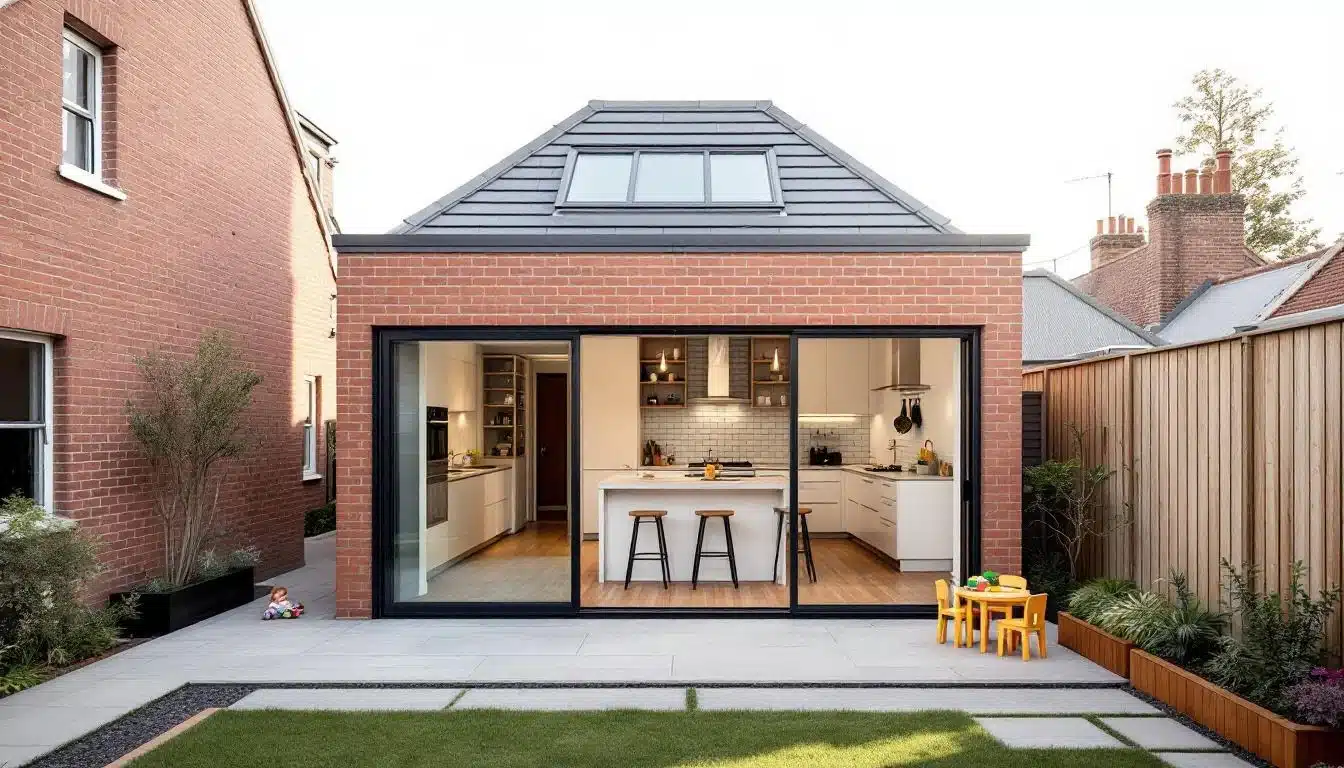
Double storey extensions in Inner North suburbs cost significantly more than ground floor additions because they involve complex structural work, often require temporary bracing, and demand careful engineering to avoid impacting neighbouring properties. Expect $3,500–$5,500 per square metre for a quality double storey extension in Inner North suburbs, compared to $2,500–$3,500 for ground floor work. This higher cost reflects genuine complexity, not premium pricing-the structural engineering alone for a second storey costs two to three times more than ground floor extension engineering.
Final Thoughts
Inner North extensions Melbourne transform how families actually live in their homes. You stop compromising on space, you preserve your connection to the neighbourhoods you’ve chosen, and you build genuine equity without the financial devastation of relocating. Successful projects separate from frustrating ones because professional design and build expertise guides the work from start to finish, not because of luck or budget size.
When your designer understands council character statements, when your engineer catches structural issues before they become expensive surprises, and when your builder manages timelines with brutal honesty about what actually happens on site, everything changes. You avoid the costly revision cycles, the permit delays, and the mid-construction budget blowouts that plague amateur approaches. Inner North properties demand specialists who understand the specific constraints of narrow blocks, heritage overlays, and dense urban settings.
Cameron Construction handles everything from concept through to completion, including planning permits and BCA compliance, so you don’t juggle multiple contractors or discover halfway through that your design won’t get council approval. Contact us to discuss your extension and start building the space your family actually needs.