How to Find the Best Sloping Block Builders in Melbourne
Building on Melbourne’s sloping terrain requires specialised expertise that standard builders often lack. The wrong choice can lead to costly engineering problems and project delays.
At Cameron Construction, we understand the complexities of selecting qualified sloping block builders Melbourne homeowners can trust. This guide reveals the essential criteria for choosing builders who excel on challenging sites.
What Makes Sloping Block Construction Challenging
Engineering Requirements Drive Project Complexity
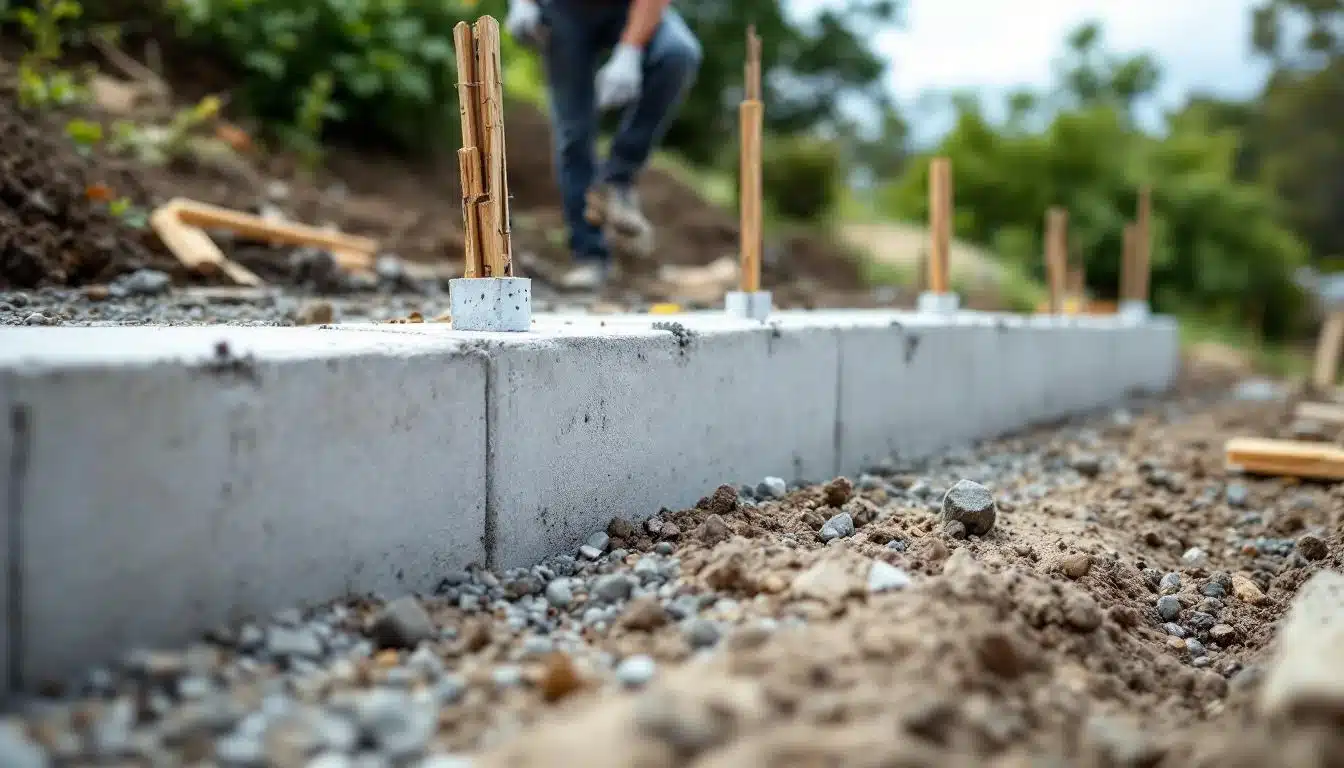
Sloping block construction requires sophisticated engineering solutions that flat-site builders rarely encounter. The National Construction Code mandates detailed soil classification tests, with Melbourne’s clay soils often rating between Class M (moderately reactive) to Class H (highly reactive). This classification directly impacts foundation design costs and complexity.
Retaining wall calculations must account for lateral earth pressure, with engineers typically specifying reinforced concrete walls that cost $800-$1,500 per linear metre (depending on height and soil conditions). Foundation systems require specialised footings, often involving pier and beam construction that costs 30-50% more than standard slab foundations. These engineering requirements aren’t optional extras – they’re mandatory safety measures that inexperienced builders frequently underestimate.
Council Approval Complexities Create Extended Timelines
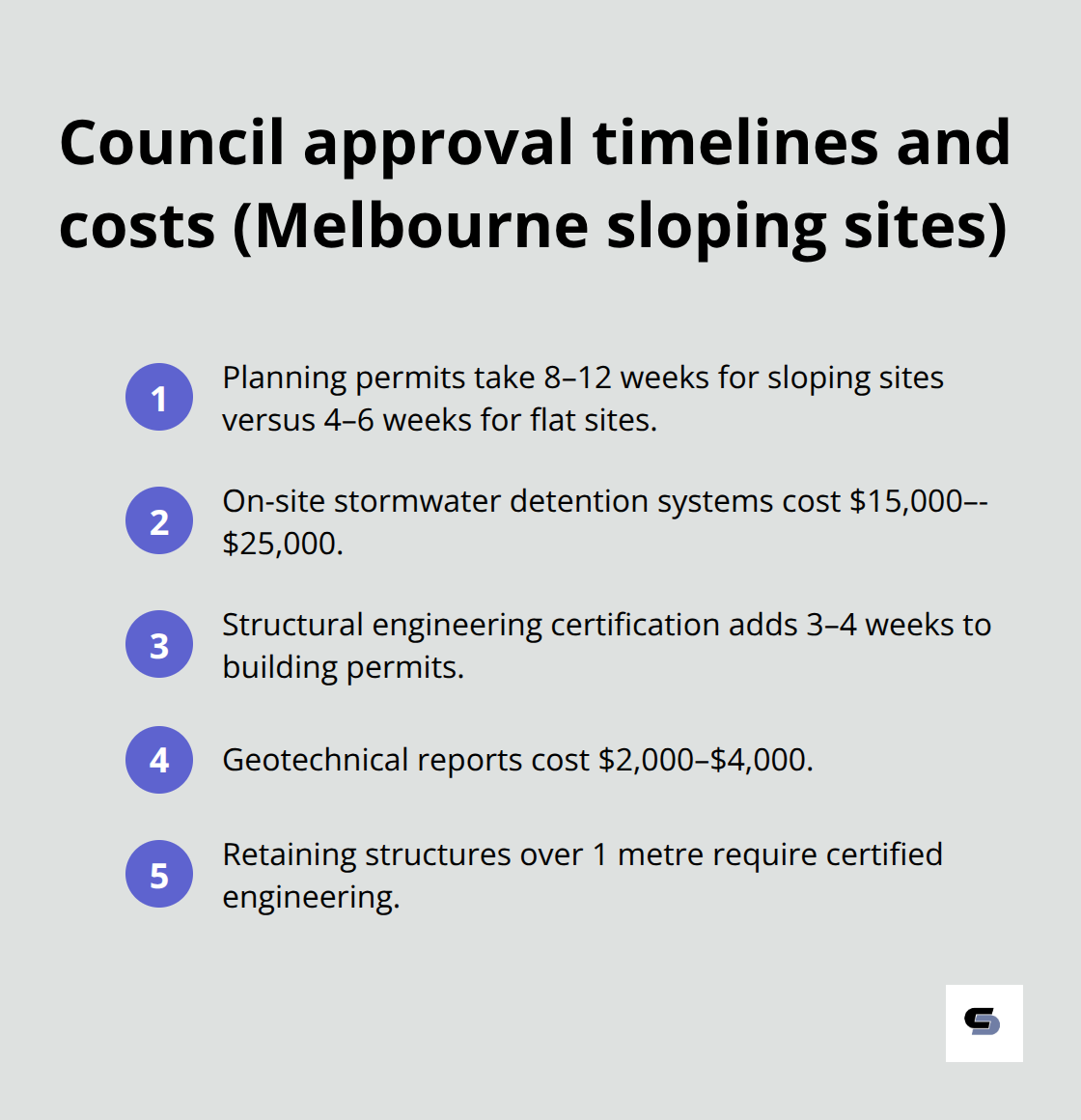
Melbourne councils impose strict requirements for sloping site developments that significantly extend approval timeframes. Planning permits for sloping blocks typically take 8-12 weeks compared to 4-6 weeks for flat sites, with additional engineering reports and drainage assessments required.
Councils demand comprehensive stormwater management plans, often requiring on-site detention systems that cost $15,000-$25,000 for typical residential projects. Building permits require structural engineering certification for all retaining structures over 1 metre height, which adds 3-4 weeks to approval processes. Many councils also mandate geotechnical reports from qualified engineers, costing $2,000-$4,000, before they consider permit applications.
Higher Construction Costs and Timeline Considerations
These regulatory hurdles mean construction start dates often shift by 2-3 months beyond initial estimates. The combination of specialised engineering requirements and extended approval processes creates cost pressures that standard builders struggle to manage effectively.
Sloping blocks increase foundation costs by 25-40% compared to flat sites due to retaining wall requirements and complex footings. Successful sloping block projects require builders who understand these complexities from the outset and can navigate them efficiently. This expertise becomes the foundation for evaluating potential builders and their qualifications.
Key Qualifications to Look for in Sloping Block Builders
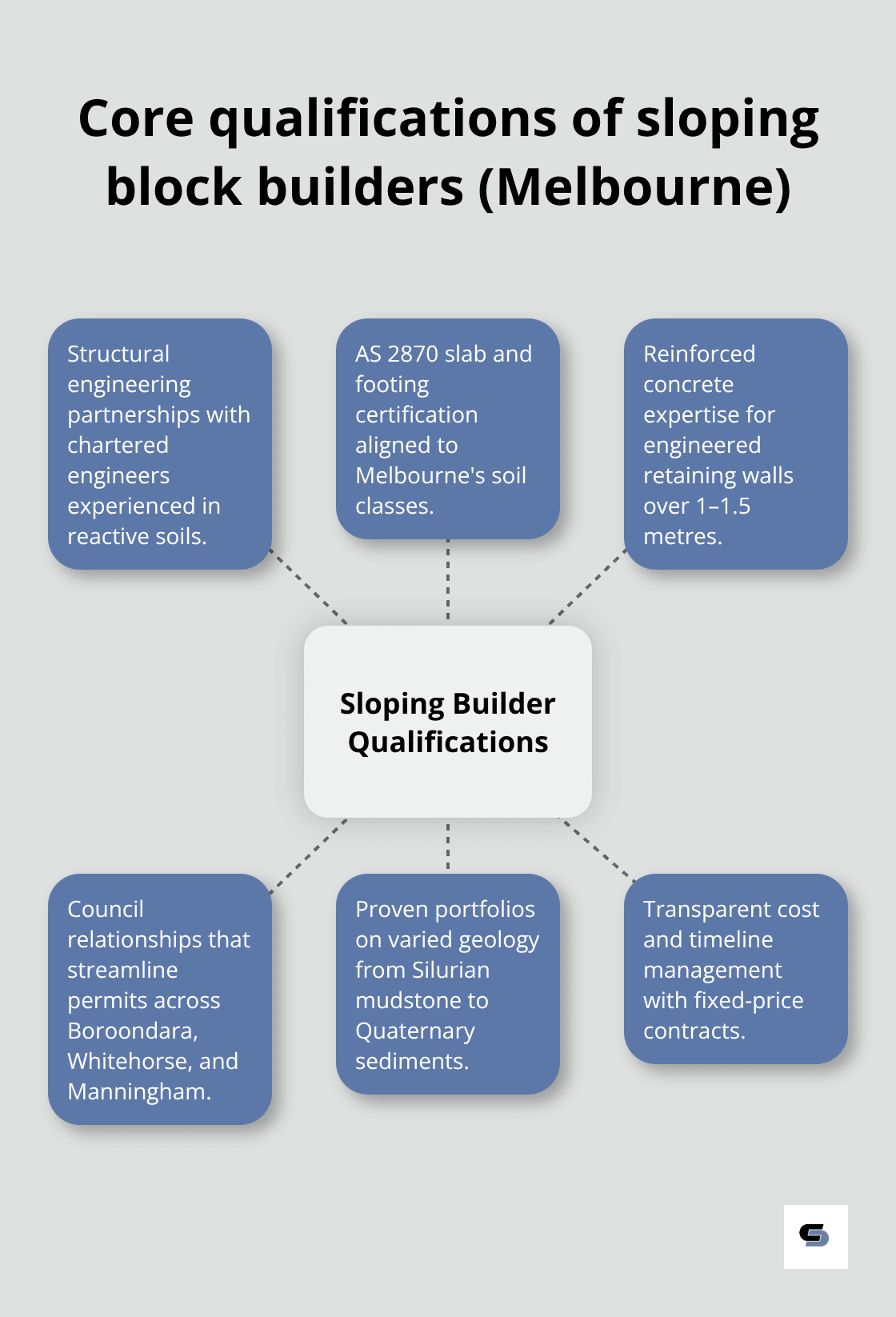
Structural engineering partnerships separate competent sloping block builders from those who struggle with Melbourne’s challenging terrain. Builders must demonstrate active relationships with chartered structural engineers who hold current Engineers Australia registration and specific geotechnical experience. The Master Builders Association Victoria requires member builders on sloping sites to maintain partnerships with engineers certified in AS 2870-2011 residential slab and footing design. This certification becomes non-negotiable when soil classifications exceed Class M reactivity (which applies to 60% of Melbourne’s eastern and southeastern suburbs).
Engineering Certifications That Actually Matter
Licensed builders must hold current registration with the Victorian Building Authority, but sloping block specialists need additional qualifications. Look for builders certified in reinforced concrete construction through the Concrete Institute of Australia, as retaining wall failures account for 23% of disputes in sloping site projects according to Victorian Civil and Administrative Tribunal data. Builders should provide evidence of completed projects that required engineer-certified retaining structures over 1.5 metres height. Verify these qualifications through direct contact with structural partners and request project documentation that shows successful completion of complex foundation systems.
Council Relationships That Accelerate Approvals
Experienced sloping block builders maintain established relationships with planning departments across Melbourne councils, particularly in areas like Boroondara, Whitehorse, and Manningham where sloping sites dominate residential development. These relationships translate into faster permit approvals and reduced revision cycles. Builders should demonstrate familiarity with specific council requirements for stormwater management and provide examples of recent projects approved within standard timeframes.
Proven Track Record on Melbourne’s Challenging Terrain
Successful sloping block builders showcase portfolios with documented projects across Melbourne’s diverse geological conditions. They understand the difference between building on Silurian mudstone in the eastern suburbs versus Quaternary sediments in the west. Ask builders to specify which councils they work with regularly and request contact details for recent projects in your target council area. This proven experience becomes the foundation for the specific questions you should ask potential builders about their approach to your unique site challenges.
Questions to Ask Potential Builders
Portfolio Documentation That Reveals True Expertise
Demand builders provide documented evidence of at least five completed sloping block projects within the past two years, including council permit numbers and structural engineer certifications. Qualified builders maintain detailed project portfolios that show before-and-after photos, engineering drawings, and client contact details for verification. Ask specifically about projects with soil classifications that match your site conditions – builders experienced with Class H reactive soils in Boroondara cannot automatically handle Class A non-reactive conditions in Melbourne’s west. Request access to completed project sites for physical inspection, as competent builders proudly showcase their retaining wall construction and drainage solutions.
Site-Specific Engineering Problem-Solving Approaches
Question builders about their process for managing specific engineering challenges your site presents. Experienced builders immediately discuss geotechnical soil testing requirements and explain how they coordinate with structural engineers during design phases. They specify which structural engineering firms they partner with and provide direct contact details for verification. Ask how they handle unexpected soil conditions during excavation – qualified builders maintain contingency budgets of 10-15% for unforeseen engineering requirements and have established relationships with geotechnical consultants for rapid problem resolution.
Timeline and Cost Management That Actually Works
Competent builders provide fixed-price contracts that include detailed allowances for council permit delays and engineering revisions. They specify milestone payment schedules tied to actual construction progress, not calendar dates. Question their approach to cost variations (experienced builders provide detailed breakdowns that show foundation costs, retaining wall specifications, and drainage system requirements before contract signing). Verify their claims by contacting previous clients about actual completion timeframes versus initial estimates.
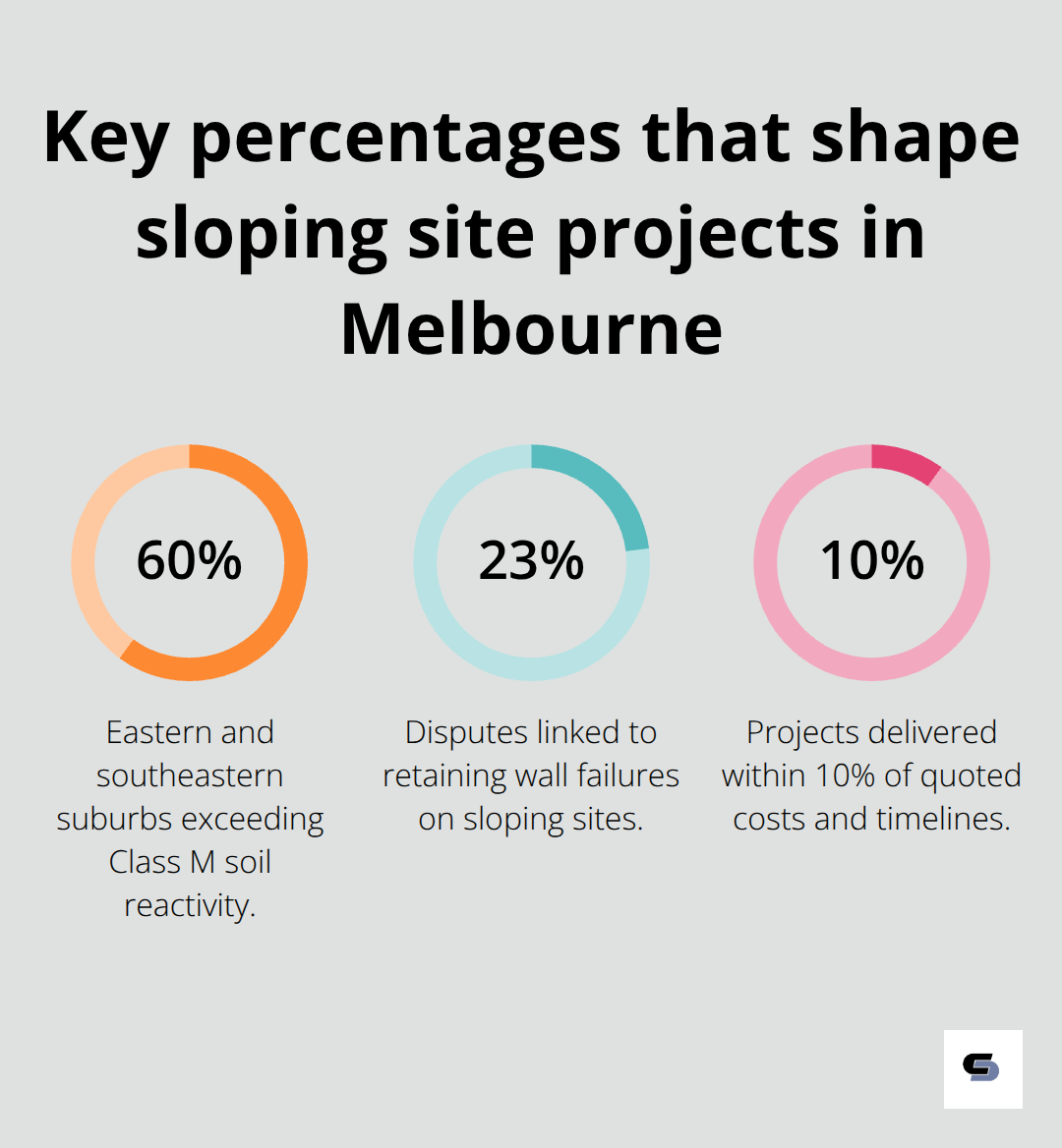
Builders who consistently deliver sloping block projects within 10% of quoted costs and timelines demonstrate the project management expertise your challenging site demands.
Council Permit Experience and Relationships
Ask builders to specify which Melbourne councils they work with regularly and request examples of recent permit approvals within standard timeframes. Experienced builders understand the specific requirements for stormwater management across different council areas and can navigate complex approval processes efficiently. They provide detailed permit timelines that account for engineering report requirements and council review cycles (typically 8-12 weeks for sloping sites versus 4-6 weeks for flat sites). Verify their council relationships by requesting contact details for recent projects in your target council area.
Final Thoughts
Qualified sloping block builders Melbourne homeowners select must demonstrate specific technical competencies that standard builders lack. Structural engineers partnerships, council permit experience, and documented project portfolios on challenging terrain separate competent specialists from builders who struggle with Melbourne’s complex geological conditions. The investment in experienced specialists protects against costly problems, project delays, and budget overruns that inexperienced builders frequently encounter.
Engineering requirements, extended approval timelines, and specialised construction techniques make sloping block projects 25-40% more complex than flat-site builds. Builders must demonstrate active relationships with chartered structural engineers, proven experience with reactive soil classifications, and established council relationships that accelerate permit approvals. These qualifications become non-negotiable when Melbourne’s clay soils require sophisticated foundation solutions and retaining wall systems.
Melbourne homeowners who plan extensions or renovations on sloping sites benefit from partners who understand these complexities from project inception. Cameron Construction handles concept to completion projects on challenging terrain, with experienced teams who manage planning permits and council compliance (including all engineering requirements). We specialise in sloping block extensions and premium renovations across Melbourne’s diverse geological conditions.