How to Find Home Extension Builders in Melbourne
Choosing the right home extension builders Melbourne can make or break your renovation project. At Cameron Construction, we’ve seen homeowners waste thousands by picking builders based on price alone, only to face delays and poor workmanship.
The difference between a successful extension and a costly nightmare comes down to knowing what to look for. This guide walks you through the essential steps to find a builder who understands Melbourne’s building codes, delivers quality work, and communicates clearly throughout your project.
What Makes a Builder Qualified for Melbourne Extensions
Registration Status is Non-Negotiable
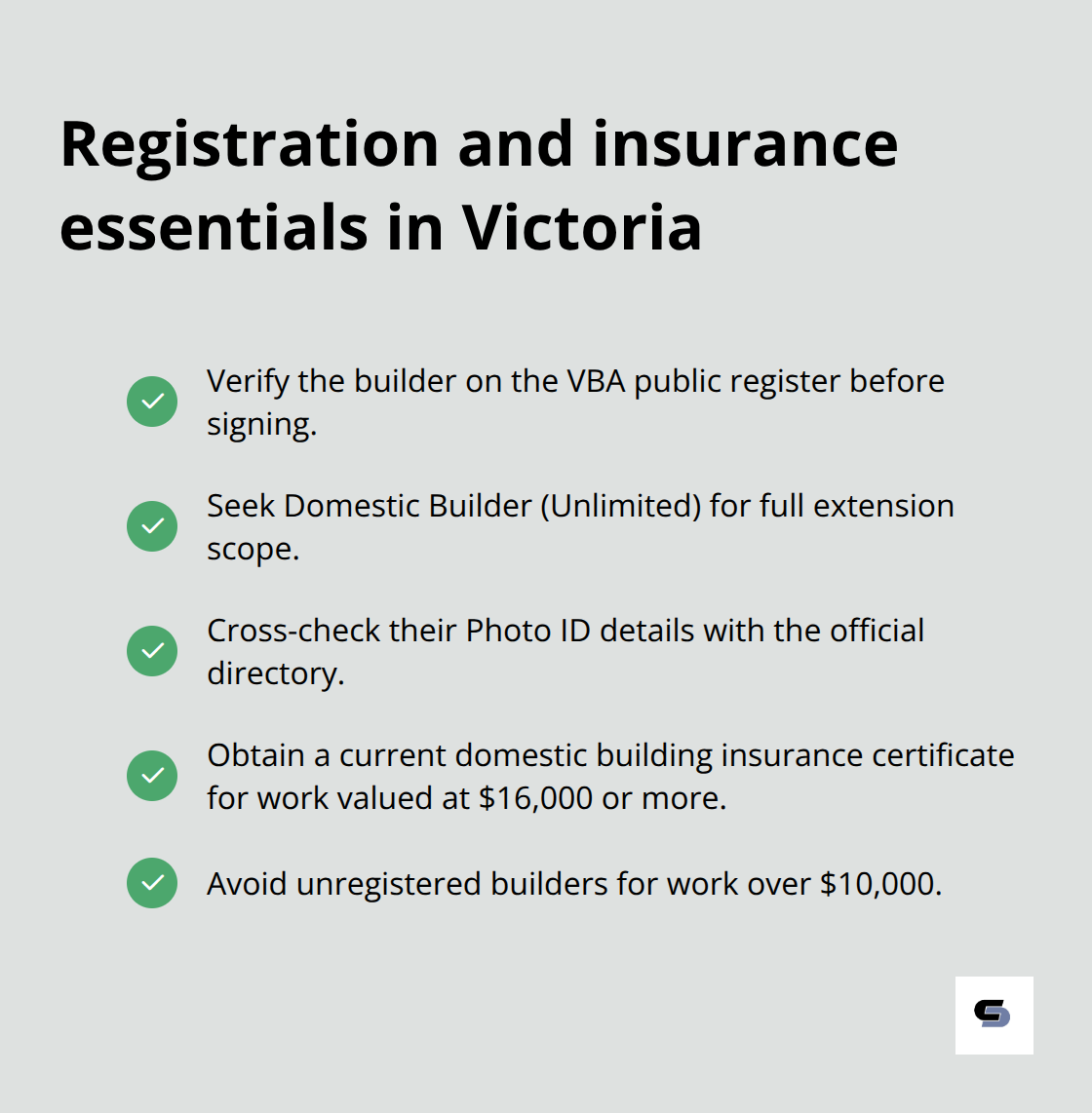
A builder’s registration status determines whether your project has legal protection. In Victoria, domestic building work valued over $10,000 requires a registered building practitioner, and the total project value includes labour, materials, and GST. You must verify registration directly on the Victorian Building Authority’s public register before signing any contract. Look for Domestic Builder (unlimited) registration, which allows the builder to manage full home extensions without scope restrictions. If a builder holds Limited Domestic Builder registration, confirm the scope matches your project-limited classes typically cover bathrooms, kitchens, or laundry only, not double storey or ground floor additions.
The builder’s Photo ID card lists their registration category and serves as portable proof, but always cross-check it against the official directory. For work valued at $16,000 or more, the builder must provide a current certificate of domestic building insurance before you pay any deposit. This insurance protects you if the builder defaults or goes insolvent mid-project. Unregistered builders for work over $10,000 means you lose all domestic building insurance and consumer protections under the Domestic Building Contracts Act 1995.
Local Knowledge and Planning Expertise
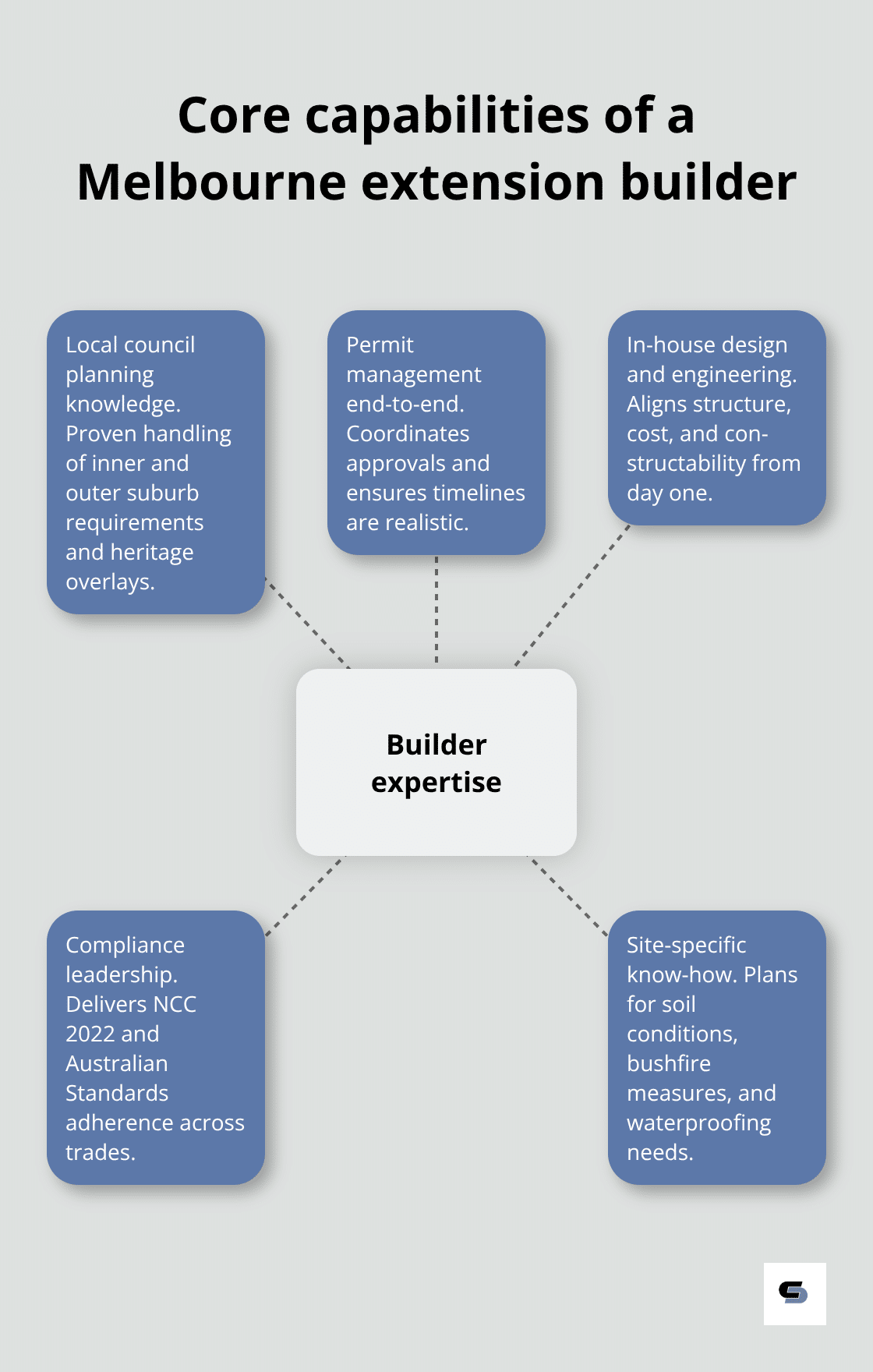
Melbourne extensions demand builders who understand local planning and building codes. Ask prospective builders about their experience with specific council areas-planning requirements differ significantly between inner suburbs and outer regions, and heritage overlays add complexity. A capable builder interprets plans, obtains permits, produces detailed cost estimates, and coordinates trades effectively.
Request references from completed extensions in your suburb, not just generic testimonials. Contact at least three past clients directly and ask about adherence to timelines, site management, and how the builder handled variations or issues. Check the Disciplinary Register for any actions against the builder, though don’t rely on it alone. A builder with genuine Melbourne experience will reference specific projects, council interactions, and how they’ve managed Melbourne’s variable soil conditions and building regulations. If the builder seems vague about local requirements or cannot name recent projects in your area, that’s a red flag.
What to Verify Before Committing
The builder’s ability to manage design, permits, and BCA compliance in-house eliminates surprises and finger-pointing between contractors. Confirm the builder can coordinate or carry out related work (plumbing, waterproofing) and ensure compliance with NCC 2022 and relevant Australian Standards. Ask about their approach to heritage overlays, bushfire protection requirements, and soil conditions specific to your site. A builder who addresses these details upfront demonstrates the expertise your extension project requires. With this foundation in place, you’re ready to evaluate how builders present their proposals and manage communication throughout the project.
Evaluating Builders Through Research and Quotes
Request Multiple Written Quotes with Identical Specifications
You must obtain at least three written proposals from registered builders, and each quote must reflect identical plans and specifications to allow meaningful comparison. Differences in scope, materials, or allowances between quotes should be clearly documented so you understand what drives price variations. A quote significantly lower than others often signals missing scope, inferior materials, or inexperience with Melbourne’s complex approval processes. Consumer Affairs Victoria emphasises that transparent pricing broken down by trade, materials, and labour helps you identify genuine value rather than hidden costs that emerge mid-project.
When you compare proposals, examine whether the builder includes design development, permit preparation, council liaison, and BCA compliance verification in their price. Some builders charge separately for these services, which can add $5,000–$15,000 depending on project complexity. Ask each builder to outline their design and planning approach explicitly: do they employ in-house designers and engineers, or do they subcontract this work? For double storey additions and ground floor extensions, in-house design expertise matters significantly because the builder understands structural requirements, soil conditions, and Melbourne’s specific building code interpretations from the outset.
Verify Registration and Insurance Before You Commit
The builder’s registration status determines whether your project has legal protection. You must verify registration directly on the Victorian Building Authority’s public register before signing any contract. Look for Domestic Builder (unlimited) registration, which allows the builder to manage full home extensions without scope restrictions. For work valued at $16,000 or more, the builder must provide a current certificate of domestic building insurance before you pay any deposit. This insurance protects you if the builder defaults or goes insolvent mid-project.
Check the builder’s business history through ASIC to identify legal actions or insolvency. The Disciplinary Register shows if the builder or company has faced regulatory action, and you can contact Consumer Affairs Victoria if you discover concerns. Unregistered builders for work over $10,000 means you lose all domestic building insurance and consumer protections under the Domestic Building Contracts Act 1995.
Evaluate Online Reviews and Local References
Reviews on Google, Houzz, and local directories provide insight into client satisfaction, but focus on comments about communication, timeline adherence, and how the builder handled issues rather than vague praise. Ask prospective builders directly about their experience managing planning permits in your specific council area, because inner Melbourne councils like the City of Melbourne have stricter heritage overlay rules and different approval timelines than outer suburbs.
Request references from homeowners with extensions similar in scope to yours-double storey additions or complex ground floor renovations-completed within the last two years. Contact these references and ask whether the builder communicated regularly, managed variations in writing, and delivered on the agreed completion date. A builder who avoids providing recent local references or becomes evasive about past projects is a significant warning sign. When you speak with past clients, ask specifically about how the builder managed Melbourne’s variable soil conditions and whether they coordinated with council inspectors effectively throughout the build.
Assess Design and Project Management Capabilities
A capable builder interprets plans, obtains permits, produces detailed cost estimates, and coordinates trades effectively. Confirm the builder can coordinate or carry out related work (plumbing, waterproofing) and ensure compliance with NCC 2022 and relevant Australian Standards. Ask about their approach to heritage overlays, bushfire protection requirements, and soil conditions specific to your site. A builder who addresses these details upfront demonstrates the expertise your extension project requires.
The builder’s ability to manage design, permits, and BCA compliance in-house eliminates surprises and finger-pointing between contractors. This integrated approach proves especially valuable for double storey and ground floor additions, where structural design, council approvals, and site logistics demand coordinated expertise. With these evaluation steps complete, you can now assess how builders present their proposals and manage communication throughout the project lifecycle.
Three Critical Errors That Derail Extension Projects
Price-Focused Selection Ignores Hidden Costs
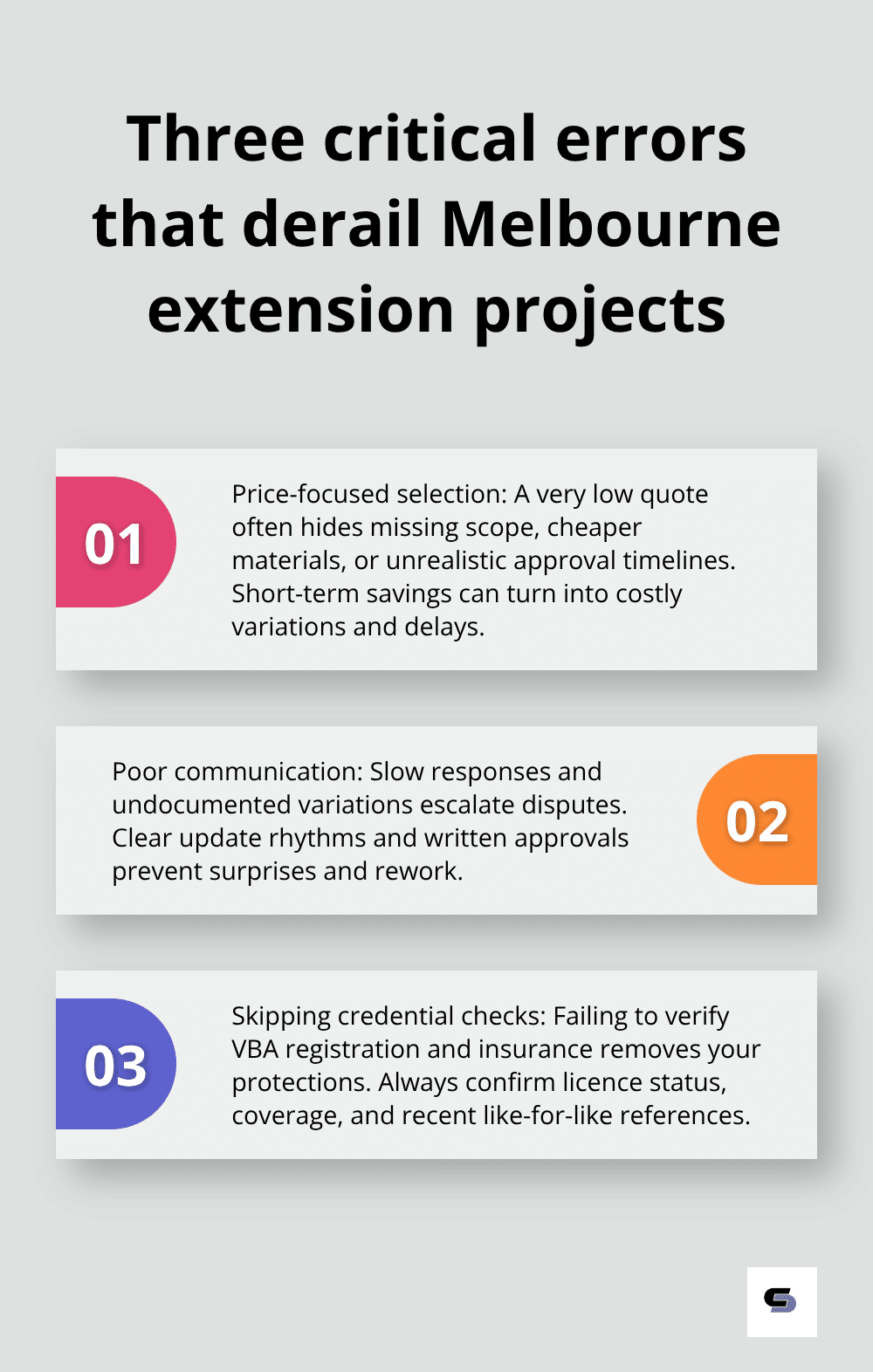
The biggest mistake Melbourne homeowners make is treating a home extension like a commodity purchase. Price becomes the only comparison metric, and builders who quote significantly lower than competitors win the job despite red flags. Homeowners who saved $15,000 on the initial quote often spent $40,000 extra on variations, delays, and rectification work because the builder lacked Melbourne experience or cut corners on design and permits. A low quote frequently signals that the builder has underestimated complexity, plans to use cheaper materials than specified, or hasn’t factored in council-specific approval timelines.
Consumer Affairs Victoria reports that disputes arising from price-focused selections represent a substantial portion of building complaints, particularly when builders fail to disclose that design, permits, or structural engineering aren’t included in their base price.
For double storey additions and ground floor extensions, structural design costs typically range from $3,000 to $8,000, and permit preparation adds another $2,000 to $5,000 depending on council requirements. A builder quoting $5,000 less than three other registered builders warrants direct questioning about what’s excluded, not assumptions about greater efficiency. When you compare proposals, examine whether the builder includes design development, permit preparation, council liaison, and BCA compliance verification in their price. Some builders charge separately for these services, which can add $5,000–$15,000 depending on project complexity.
Poor Communication Escalates Disputes and Costs
Communication breakdowns destroy trust and inflate costs faster than almost any other factor. Builders who respond slowly to emails, avoid discussing variations in writing, or become defensive when asked for progress updates create an environment where small issues escalate into major disputes. Ask prospective builders how they handle site communication-do they use project management software, provide weekly updates, or require you to chase them for information? Request the contact details of a recent client and specifically ask whether the builder kept them informed during the project and how quickly they addressed concerns.
Many Melbourne homeowners discover mid-project that their builder hasn’t obtained required council inspections, hasn’t coordinated trades, or has proceeded without written approval for variations-all preventable with clear communication protocols established upfront. The builder’s responsiveness to your questions before you sign the contract predicts how they’ll communicate once work starts. If the builder avoids answering questions about their design process, permit timeline, or how they’ll manage variations, that pattern will continue throughout your project.
Skipping Credential Verification Removes Your Protections
Skipping credential verification is inexcusable given how straightforward it is to check. The Victorian Building Authority’s public register takes two minutes to access, yet homeowners routinely proceed without confirming the builder holds current Domestic Builder (unlimited) registration or verifying their insurance certificate covers the project value and address. If the builder hesitates to provide their registration number or insurance details, that alone disqualifies them.
Checking references from past clients with similar-scope projects-double storey additions or complex ground floor work completed within the last two years-reveals whether the builder actually delivered on time and managed Melbourne’s variable site conditions competently. Contact at least three past clients directly and ask about adherence to timelines, site management, and how the builder handled variations or issues. Check the Disciplinary Register for any actions against the builder, though don’t rely on it alone. A builder with genuine Melbourne experience will reference specific projects, council interactions, and how they’ve managed Melbourne’s variable soil conditions and building regulations. If the builder seems vague about local requirements or cannot name recent projects in your area, that’s a red flag.
Final Thoughts
Selecting the right home extension builders Melbourne requires verification of registration, assessment of local expertise, and honest evaluation of communication style. The three critical errors-choosing based on price alone, ignoring communication patterns, and skipping credential checks-account for most project failures and cost overruns. A registered Domestic Builder (unlimited) with proven experience in your council area, current insurance, and transparent pricing will protect your investment and deliver the extension you envisioned.
Your next step involves contacting three registered builders, requesting written quotes with identical specifications, and verifying their registration on the Victorian Building Authority’s public register. Ask each builder about their experience with double storey additions or ground floor extensions similar to your project scope, request references from completed projects in your suburb within the last two years, and contact those clients directly to confirm the builder delivered on time and managed variations professionally. Check whether the builder includes design, permits, and BCA compliance in their quoted price, because hidden costs for these services frequently emerge mid-project.
Local expertise matters profoundly in Melbourne because planning requirements, heritage overlays, soil conditions, and council approval timelines vary significantly between suburbs (a builder unfamiliar with your specific council area will underestimate permit timelines, miss heritage compliance requirements, or fail to account for site-specific challenges that experienced local builders anticipate). This local knowledge translates directly into fewer delays, fewer variations, and fewer disputes. If you’re ready to discuss your extension project with builders who understand Melbourne’s specific requirements, visit Cameron Construction to explore how we approach your project.