How to Find Energy Efficient Home Builders in Melbourne
Energy bills are climbing across Melbourne, and the builder you choose makes a real difference to your home’s running costs. We at Cameron Construction know that finding energy efficient home builders in Melbourne requires understanding what actually matters-from ratings systems to real-world performance data.
This guide walks you through exactly what to look for, how to compare builders properly, and the questions that separate genuinely efficient builders from those just using the term as marketing.
What Separates Energy Efficient Builders from the Rest
An energy efficient builder doesn’t just talk about lower energy bills-they design and construct homes that measurably deliver them. Since 1 May 2024, all new Victorian homes must achieve a 7-star NatHERS rating and a whole-of-home score of at least 60 under the National Construction Code 2022. This isn’t optional, and a genuine energy efficient builder treats these standards as the foundation, not the finish line. The NatHERS rating system measures predicted annual energy use across heating, cooling, hot water, lighting, cooking, and energy supplied by on-site solar or batteries. When you ask a Melbourne builder about their approach to energy efficiency, they should immediately reference their NatHERS targets and explain how they’ll achieve them through design choices, not marketing claims.
Understanding the Real Cost of Energy Efficiency
Reaching 7 stars for a typical single-storey four-bedroom home costs roughly $3,310 upfront-about $150 per year added to a 30-year mortgage. That investment delivers at least $300 annually in energy savings, yielding a net gain of around $150 per year. An all-electric home running on solar can save approximately $1,920 yearly on energy bills compared to homes using gas, according to the Victorian Gas Substitution Roadmap.
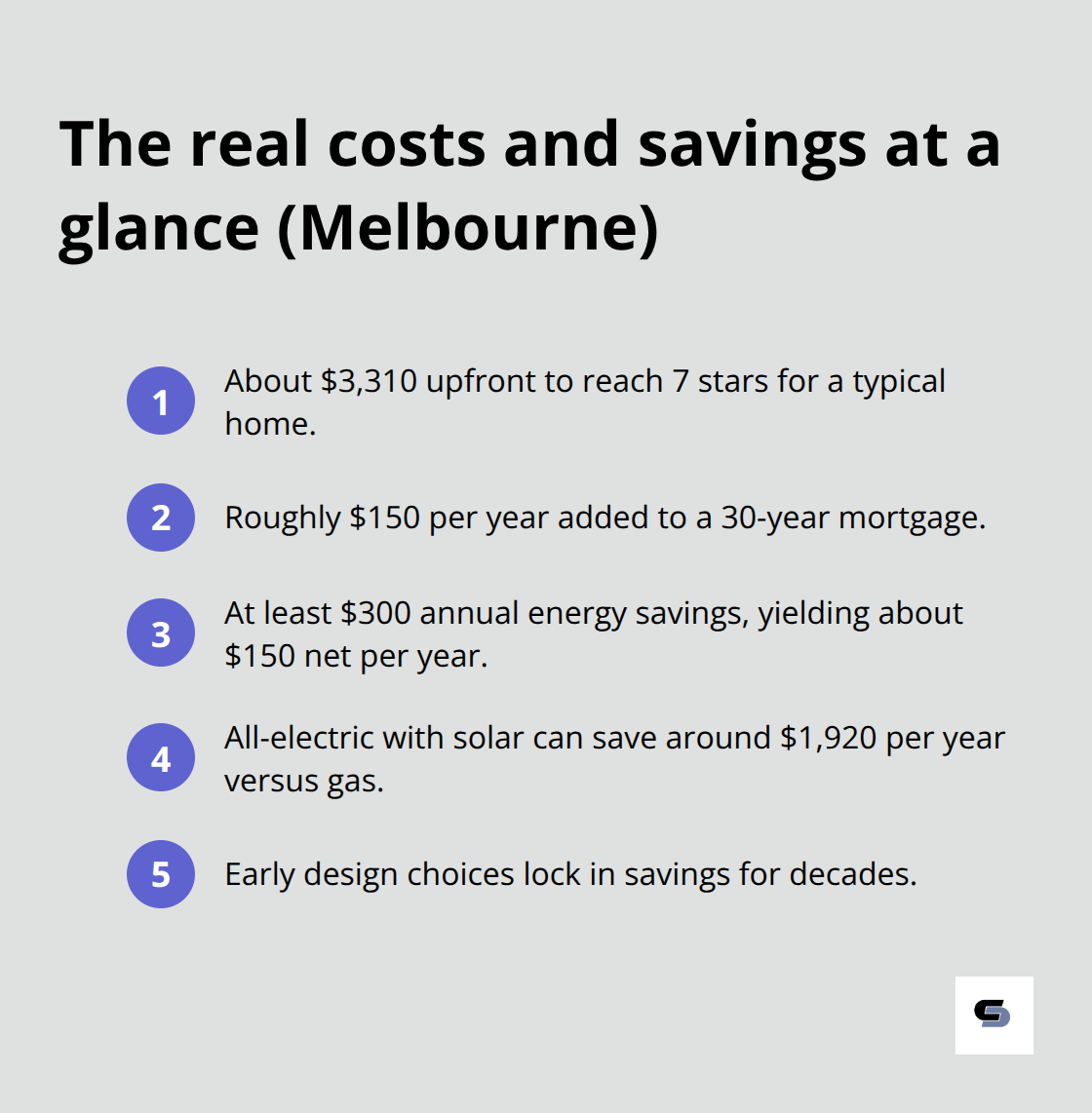
This means the builder’s decisions about heating systems, hot water, insulation, and glazing directly impact your wallet for decades.
Design Elements That Matter Most
Real energy efficiency starts with orientation, insulation, and high-performance glazing-not retrofit upgrades applied later. North-facing living areas maximise winter solar gains, while appropriate external shading reduces summer heat. Double or triple glazing with low-emissivity glass and thermally broken frames reduces heat loss in winter and heat gain in summer.
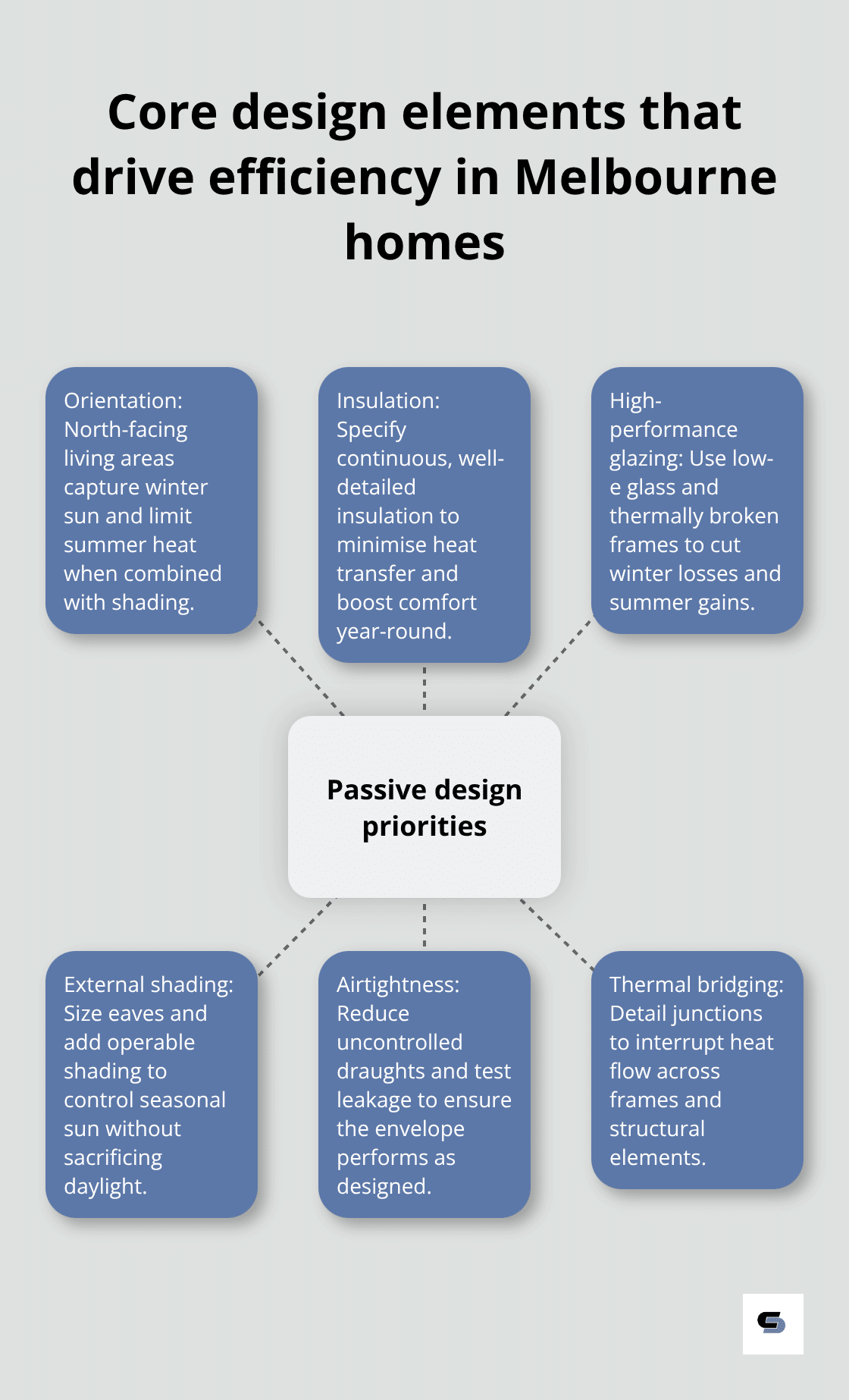
A competent energy efficient builder integrates these decisions into the initial design phase, not as afterthoughts.
Sustainability Victoria’s retrofit trials on existing Melbourne homes show that upgrading a gas water heater delivers about 18.8% average energy savings with a payback of roughly 10.3 years. Draught sealing and cavity wall insulation further reduce heating demand cost-effectively. However, an energy efficient builder avoids these expensive retrofits entirely by building them in from the start. When evaluating builders, ask them to explain how they optimise envelope quality-the insulation, airtightness, and window performance that form the home’s thermal barrier. A builder who can’t articulate this strategy treats energy efficiency as a compliance checkbox rather than a design principle.
Demanding Transparent Performance Data
An energy efficient builder provides transparent energy performance data and references their actual projects’ NatHERS ratings and whole-of-home scores. Request examples of completed homes with documented ratings, not hypothetical projections. The builder should understand Design For Place, the Australian Government’s five energy-efficient home designs tailored to Australian climates, and discuss how those designs or comparable approaches apply to your project. Whole of Home ratings for Design For Place plans range from 60 to 100 or higher, demonstrating the performance span possible with proper design.
A builder who engages a NatHERS-accredited assessor early in the process-not just before final sign-off-shows genuine commitment to hitting targets. Ask whether they’ve worked with architects or designers experienced in meeting NatHERS and whole-of-home budgets, and whether they coordinate staged renovations that balance upfront costs with long-term savings. Government rebates through the Solar Homes Program and Victorian Energy Upgrades Program offset upfront costs, and a knowledgeable builder guides you toward these opportunities rather than treating them as your problem to solve. This approach to transparency and early engagement separates builders who genuinely understand energy efficiency from those simply meeting minimum compliance requirements.
What to Verify Before Hiring a Builder
Check Accreditation and Legal Standing
Accreditation means nothing if the builder cannot demonstrate real results. Start by confirming your shortlisted builders hold NatHERS accreditation or work directly with NatHERS-accredited assessors, which you can verify through the NatHERS website. However, accreditation alone does not guarantee competence-many builders hold credentials but treat energy efficiency as compliance theatre rather than genuine design practice. The Victorian Building Authority oversees builder registration and energy efficiency adherence under NCC 2022, so cross-reference your builder’s VBA standing before proceeding. This verification takes 10 minutes online and eliminates builders who are not legally registered to operate in Victoria.
Request Documented Performance Data
Demand documented energy performance data from completed projects. Request NatHERS ratings and whole-of-home scores from at least three finished homes the builder has constructed, not projections or theoretical models. If a builder refuses or offers only estimates, walk away immediately-genuine energy efficient builders track actual performance because it reflects their design and construction quality. Ask specifically whether they engaged NatHERS assessors during the design phase, not just before handover.
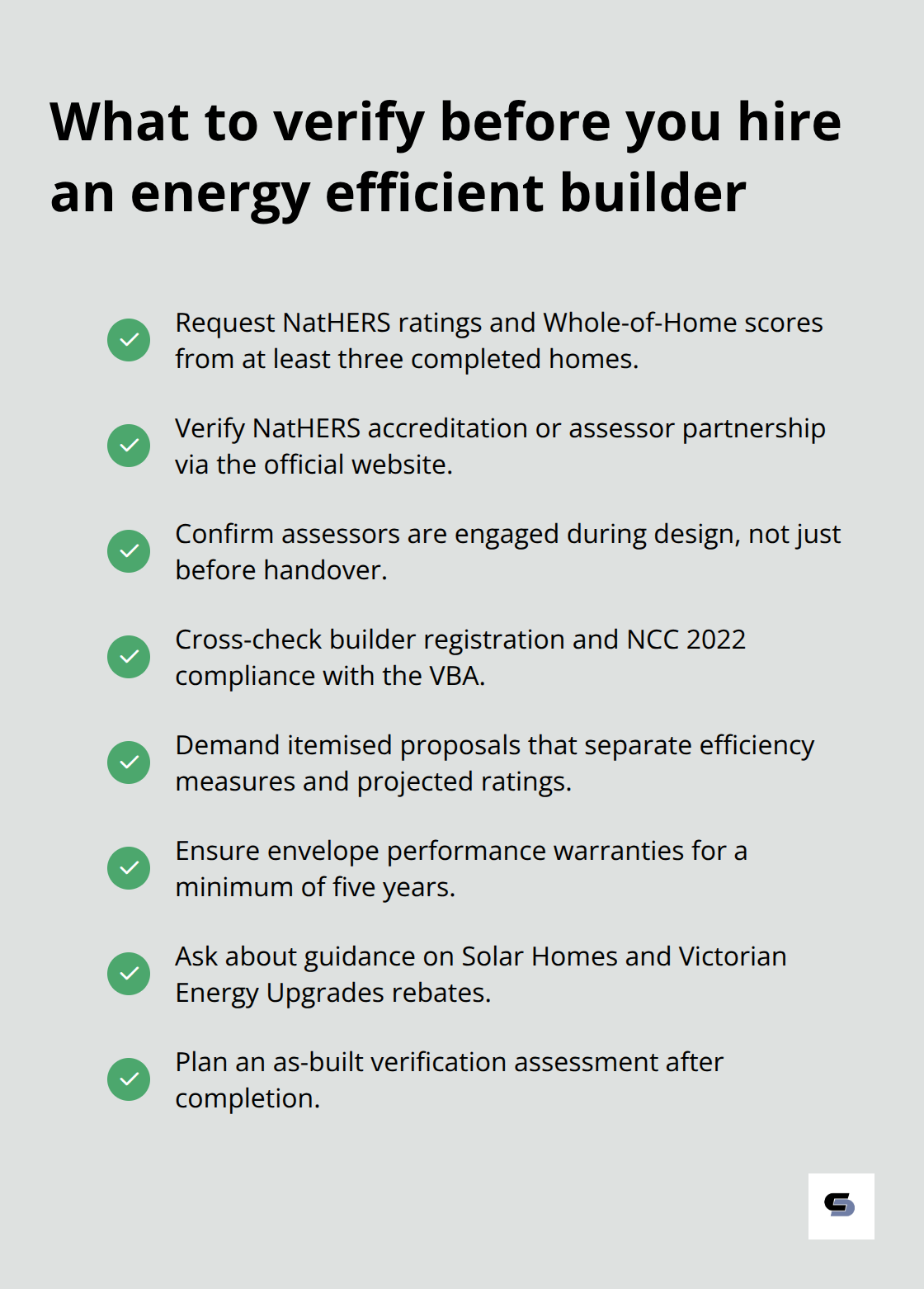
Builders who involve assessors early catch energy efficiency problems before they become expensive fixes.
According to Sustainability Victoria’s comprehensive retrofit trials on Melbourne homes, retrofitting measures like cavity wall insulation, draught sealing, and gas water heater upgrades cost substantially more than building them correctly from the start. A builder who cannot articulate their design strategy for envelope quality, orientation, and glazing choices has likely not invested the upfront thinking required to deliver genuine efficiency.
Assess Design Customisation and Climate Awareness
When you ask about their approach to high-performance glazing, insulation thickness, thermal bridging, and airtightness, the answer should be specific to your project’s climate zone and orientation-not generic statements about using quality materials. Request examples of how they have tailored Design For Place principles or comparable energy-efficient designs to individual sites, demonstrating that they customise rather than replicate. This reveals whether the builder treats energy efficiency as a one-size-fits-all compliance exercise or as a design discipline that responds to your home’s specific conditions.
Verify Access to Government Rebates
Ask whether they have guided previous clients through government rebates like the Solar Homes Program or Victorian Energy Upgrades Program. A builder who actively connects you with these funding sources shows they understand the total cost picture and genuinely want to reduce your out-of-pocket expenses. Builders who treat rebates as your responsibility to research reveal they view energy efficiency as an add-on, not a core service. This distinction matters enormously when you move forward to comparing multiple proposals and evaluating which builder truly prioritises long-term performance over short-term compliance.
Finding the Right Energy Efficient Builder for Melbourne
Start with a focused search of Melbourne builders who regularly deliver 7-star NatHERS ratings and whole-of-home scores above 60. Search for builders with documented experience in your suburb and similar project types-extensions, renovations, or new builds-rather than casting a wide net across all Victorian builders. Check their websites and case studies for explicit mention of NatHERS targets, energy performance data, and Design For Place familiarity. Builders who prominently feature energy efficiency metrics in their portfolios treat it as a core competency, not an afterthought.
Assess Site-Specific Design Capability
Once you’ve shortlisted three to five candidates, request their approach to orientation, glazing specifications, insulation standards, and airtightness testing for your specific project. A builder who asks detailed questions about your block’s aspect, shading, and climate zone before sketching a design shows they understand that energy efficiency starts with site analysis. Builders who immediately quote a price without discussing these fundamentals are unlikely to deliver measurable performance.
Compare Itemised Proposals and Performance Targets
When comparing quotes from multiple builders, demand itemised proposals that separately list energy efficiency measures alongside standard construction costs. This reveals which builders have genuinely invested in design thinking versus those padding proposals with generic upgrades. Request that each quote includes a projected NatHERS rating and whole-of-home score calculated by a NatHERS-accredited assessor, not the builder’s own estimates. According to the National Construction Code 2022, these ratings are the measurable standard, so any builder unwilling to provide them in writing avoids accountability.
Verify Assessor Engagement and Timing
Ask each builder to name the NatHERS assessor they will engage and at what design stage. Early involvement prevents costly rework. Compare warranties carefully: energy efficiency warranties should cover envelope performance (insulation, airtightness, glazing) for at least five years, not just structural defects. A builder offering only standard structural warranties while claiming energy efficiency expertise creates a mismatch between promise and protection.
Confirm Performance Through Post-Completion Verification
After handover, request an as-built verification assessment to confirm the constructed home meets its predicted NatHERS rating. This verification costs around $800–$1,200 but provides definitive proof that your investment delivered the promised running cost savings. The assessment ensures the design intent translates to actual performance, not merely theoretical compliance.
Final Thoughts
Finding energy efficient home builders Melbourne requires three non-negotiable criteria: documented NatHERS ratings from completed projects, transparent engagement with accredited assessors during design, and itemised proposals that separate energy efficiency measures from standard construction costs. A builder who cannot provide these three elements treats compliance as a box to tick, not a design principle to deliver. The 7-star standard and whole-of-home score of 60 are now mandatory, but the builders worth hiring exceed these minimums because they understand that energy efficiency directly reduces your running costs for decades.
The financial case is straightforward. Reaching 7 stars costs roughly $3,310 upfront but delivers at least $300 annually in energy savings, creating a net gain of around $150 per year. An all-electric home running on solar saves approximately $1,920 yearly compared to homes using gas. These savings compound over time, and the builder’s early decisions about orientation, insulation, glazing, and heating systems determine whether you realise them or spend years retrofitting at far greater expense.
Your next step involves shortlisting three to five energy efficient home builders in Melbourne, requesting their approach to your specific site’s orientation and climate zone, and demanding NatHERS ratings and whole-of-home scores in writing before you sign any contract. Verify each builder’s NatHERS accreditation through the official website, confirm they engage assessors during design (not just before handover), and request an as-built verification assessment after completion to prove the constructed home meets its predicted performance. If you are planning an extension or renovation, Cameron Construction specialises in delivering energy-efficient additions across Melbourne, with in-house designers and engineers who integrate NatHERS targets into every project from concept through completion.