How to Choose the Best Bathroom Builders in Melbourne
A bathroom renovation is one of the most impactful investments you can make in your Melbourne home. The difference between a successful project and a costly mistake often comes down to selecting the right bathroom builders Melbourne.
At Cameron Construction, we’ve seen firsthand how the right builder transforms spaces while the wrong choice creates headaches. This guide walks you through what matters when choosing your builder.
What Makes a Builder Right for Your Bathroom
The builder you choose determines whether your bathroom renovation stays on budget and on schedule or becomes a source of frustration. Melbourne homeowners often treat bathroom builders as interchangeable, but they’re not. A builder with genuine experience in Melbourne bathrooms understands local building codes, council approval processes, and the specific moisture challenges our climate creates.
Verify Registration and Insurance
Start by verifying the builder holds current registration with the Victorian Building Authority. For bathroom work exceeding $10,000, you must engage a registered building practitioner-this is not optional. Check their registration number in the Find a Practitioner directory and confirm they hold valid public liability insurance and domestic building insurance. Check ASIC records to see how long they’ve operated under the same business name; builders trading for 5+ years under one name typically have established systems and reputation to protect. Request proof of their workers compensation insurance as well.
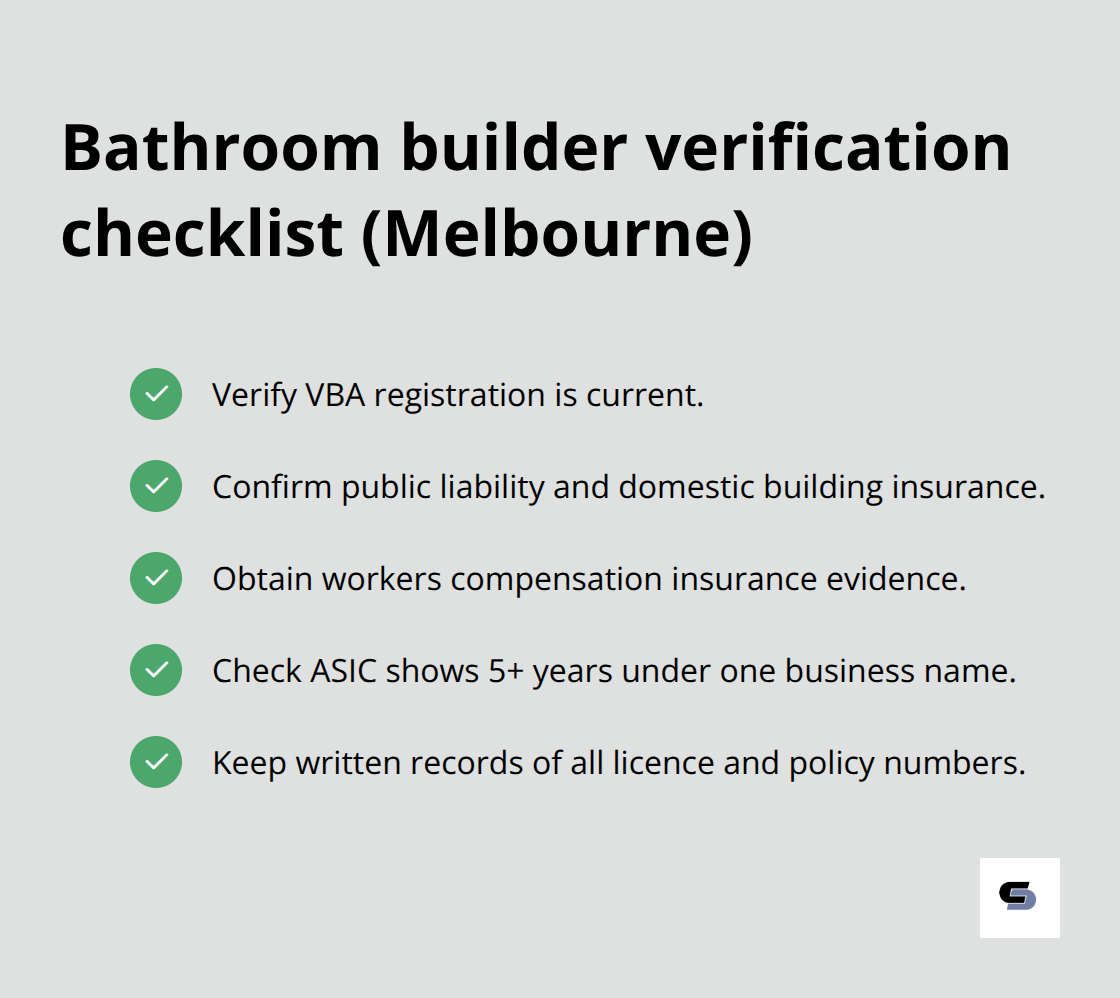
Many Melbourne homeowners skip this step and later discover the builder operated without proper coverage, leaving them exposed if something goes wrong on site.
Assess Local Experience and Track Record
Ask specifically about their experience managing moisture and waterproofing failures in Melbourne bathrooms. Waterproofing represents a critical area where inexperienced builders struggle with this work. Request at least three completed Melbourne projects from the past two years-not generic bathroom work, but projects similar in scope and complexity to yours. Contact those homeowners directly and ask whether the builder finished on time, stayed within budget, and how they handled unexpected issues. A builder worth hiring welcomes this scrutiny and provides references without hesitation.
Verify Subcontractor Licensing
Ask whether they’ve worked in your suburb before; builders familiar with local council requirements and typical block constraints anticipate problems others miss. Confirm they use licensed plumbers, electricians, and tilers for all subcontracted work. The Victorian Building Authority requires plumbers and electricians to hold current licences, yet some builders cut corners by using unlicensed tradespersons. Insist on seeing evidence of their subcontractors’ current licences before work begins. This step separates builders who maintain professional standards from those who prioritise cost over compliance.
How the Bathroom Renovation Process Works
Initial Consultation and Design Planning
The renovation process starts with a detailed conversation between you and your builder about what you want to achieve. This initial consultation covers your budget, timeline, and specific needs-whether that’s improved storage, better lighting, or addressing moisture problems in your existing bathroom. A professional builder asks probing questions about how you use the space, any pain points with your current setup, and whether you’re planning to stay in the home long-term. This conversation shapes everything that follows.
Once you’ve decided to proceed, the designer develops detailed plans and specifications. The Australian Consumer Law requires that plans and specifications be comprehensive, including material lists, appliance selections, colour schemes, and fixture details. You should insist that all design decisions appear in writing within the contract itself; vague specifications lead to disputes later when you and the builder interpret finishes differently.
A soil report and foundation assessment provide critical information about how your existing structure will support the renovation, particularly if plumbing and electrical work or structural changes are involved. Your builder must obtain this data and factor it into the pricing-you shouldn’t pay extra later for issues they should have identified upfront.
Material Selection and Budget Control
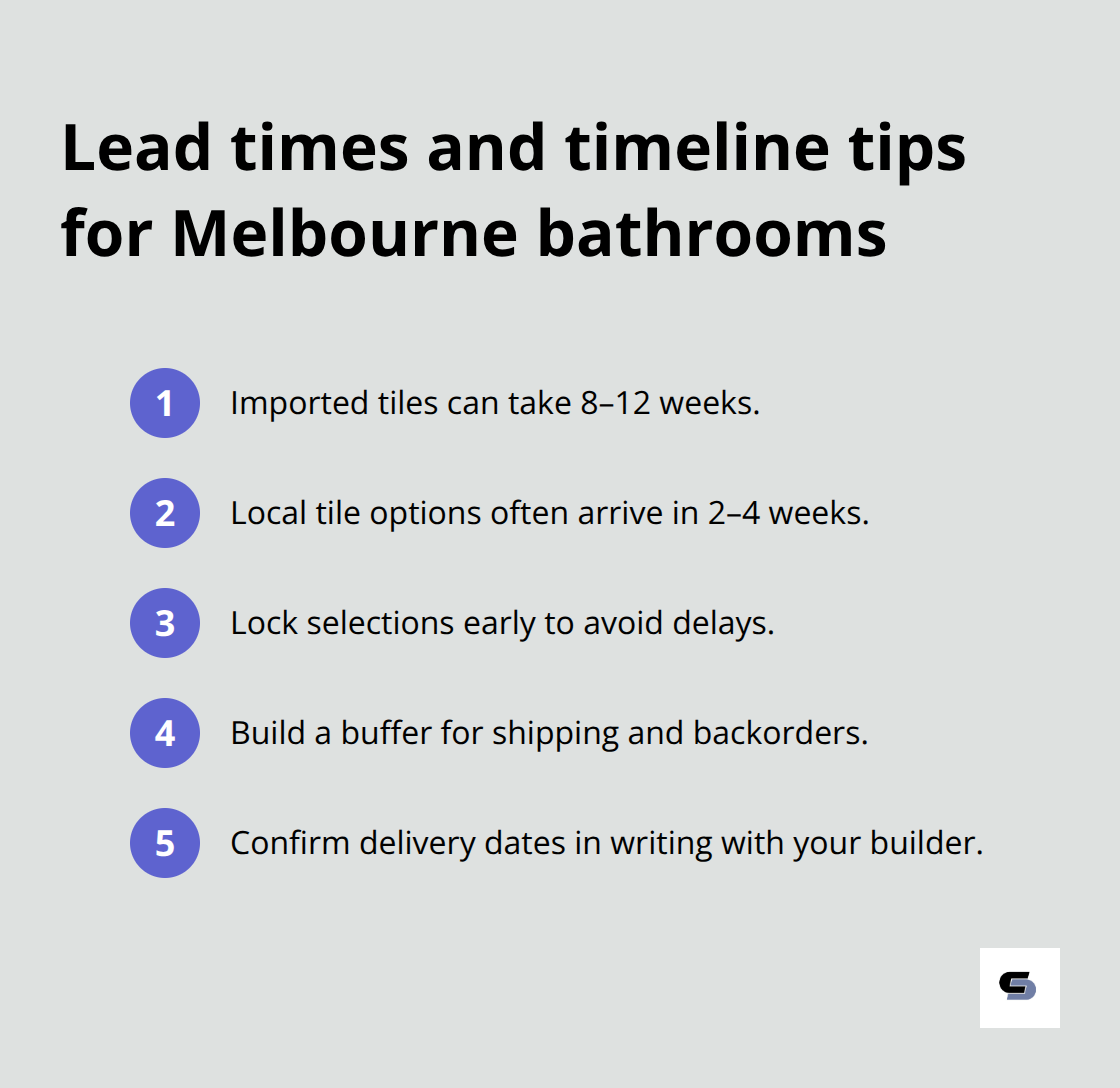
Material selection happens in parallel with design refinement, and this is where many Melbourne homeowners make costly mistakes. You should select fixtures and fittings early and lock them into the contract rather than leaving them as provisional sums or prime cost items. Provisional sums and prime cost items create budget uncertainty; a builder might quote $5,000 for bathroom tiles but the final cost could easily reach $8,000 if you haven’t specified exactly which tiles you want.
Lead times matter significantly in Melbourne’s market. Imported tiles take 8–12 weeks to arrive, while locally available options typically arrive within 2–4 weeks. You should discuss lead times with your builder and agree on a realistic timeline that accounts for material delivery.
Payment Structure and Installation Quality
A transparent payment schedule protects both you and the builder. You should avoid paying large upfront deposits or paying in full before work starts. Instead, structure payments around completed stages-base works, frame, lock-up, and fixing-and pay only when each stage is finished to your satisfaction.
The installation phase is where quality separates professional builders from mediocre ones. A licensed tradesperson must handle waterproofing in wet areas, and you should receive a waterproofing certificate upon completion. This certificate protects your investment and demonstrates compliance with the Building Code of Australia.
Your builder should schedule council inspections at mandatory stages and provide you with copies of inspection reports. These inspections verify that work meets code requirements and create an audit trail if issues arise later. Quality assurance doesn’t end when the final tile is laid; your builder should provide a post-completion maintenance plan and schedule a follow-up visit within the first month to address minor defects before they become problems.
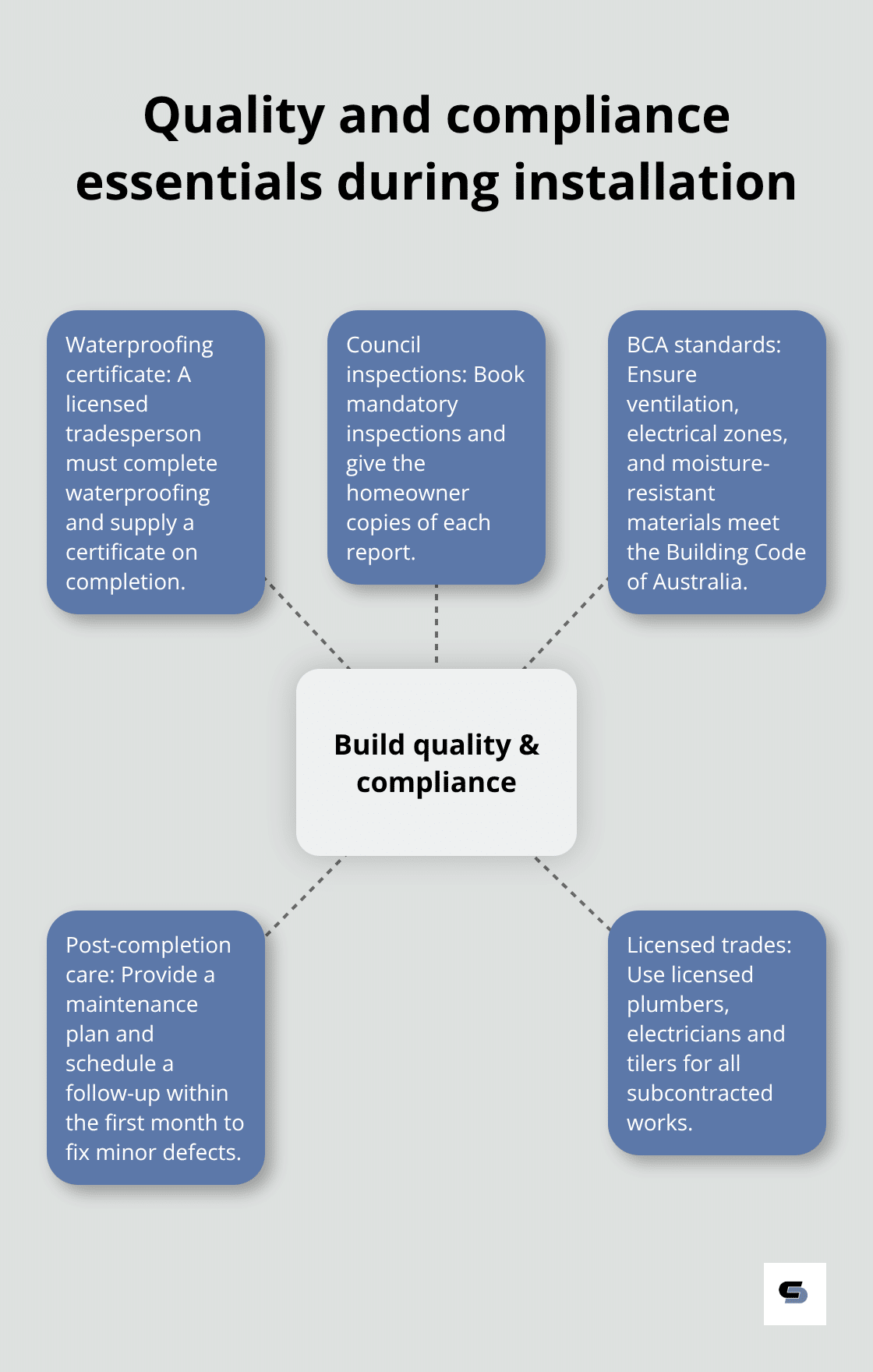
This attention to detail during and after installation determines whether your bathroom functions flawlessly for years to come or develops costly issues down the track.
Common Bathroom Renovation Mistakes to Avoid
Most bathroom renovation disasters occur months before installation starts, during planning and builder selection. Melbourne homeowners consistently make three critical errors that lead to budget blowouts, timeline delays, and poor workmanship.
Underestimating Project Costs
The first mistake is underestimating project costs by 20–30% because homeowners skip the soil report, ignore council permit fees, or treat material selection as flexible. A soil report costs $400–800 but prevents discovering structural issues mid-project that could add $5,000–15,000 to your bill. Council permits for bathroom work in Melbourne typically cost $800–2,500 depending on your council area, yet many homeowners don’t budget for this until the builder mentions it.
When you lock fixture selections early-specifying exact tile brands, tapware finishes, and vanity models in your contract-you control costs. Leaving these as provisional sums means your builder estimates $6,000 for tiles but the final cost reaches $9,000 because you selected premium imported options during construction.
Selecting Builders Based on Price Alone
The second critical error is selecting builders purely on price. A builder quoting 15–20% below market rates isn’t offering a bargain; they cut corners on subcontractor quality, material grades, or waterproofing standards. Waterproofing failures represent a key cause of water damage in bathrooms, with lack of understanding of waterproofing requirements among builders contributing to the problem.
A builder charging less than competitors likely doesn’t use licensed waterproofing specialists or obtain proper waterproofing certificates. You should compare three written quotes but focus on what’s included, not just the total price. One quote at $35,000 might include premium tiles and a licensed waterproofer; another at $28,000 might use budget materials and a builder’s assistant for waterproofing.
Ignoring Building Codes and Compliance Requirements
The third mistake is assuming your builder will handle building code compliance automatically. The Building Code of Australia requires specific standards for bathroom ventilation, electrical safety zones, and moisture-resistant materials, yet some builders treat these as optional extras. Your builder must obtain council inspections at mandatory stages and provide you with signed inspection reports.
If your builder avoids mentioning inspections or suggests they’ll handle compliance informally, that’s a red flag. Insist on a written compliance checklist in your contract that references the Building Code of Australia and confirms each stage passes council inspection. Melbourne council requirements vary by suburb-Boroondara councils have different planning overlays than Darebin councils-so your builder must understand local variations specific to your area.
Protecting Yourself Through Documentation
Document all decisions, changes, and approvals in writing through emails or contract addenda. This audit trail protects you if disputes arise and proves you approved decisions rather than accepting poor workmanship as standard. A builder who resists written documentation or prefers verbal agreements signals they won’t stand behind their work when problems surface.
Final Thoughts
Selecting the right bathroom builders Melbourne requires you to prioritise registration, insurance, and proven local experience over price alone. The builders worth hiring welcome scrutiny, provide references without hesitation, and document every decision in writing. They understand Melbourne’s moisture challenges, comply with council requirements specific to your suburb, and use licensed sub-contractors for critical work like waterproofing.
Working with experienced bathroom builders protects your investment and prevents costly mistakes that emerge months after completion. A builder with a genuine track record manages timelines realistically, controls budget through early material selection, and schedules council inspections at mandatory stages. They provide waterproofing certificates, post-completion maintenance plans, and follow-up visits to address minor defects before they become problems.
Your next step involves contacting at least three bathroom builders, requesting itemised quotes that specify fixtures and materials, and verifying their registration with the Victorian Building Authority. Ask for completed Melbourne projects from the past two years and contact those homeowners directly. We at Cameron Construction have spent 40+ years delivering premium renovations across Melbourne, and we’re ready to discuss your bathroom project whenever you’re prepared to move forward.