How to Build Home Extension on a Budget
Building a home extension doesn’t have to drain your savings account. Smart planning and strategic choices can help you build home extension projects that deliver maximum value without breaking the bank.
We at Cameron Construction have seen Melbourne homeowners achieve impressive results through careful material selection, efficient design approaches, and thorough planning processes.
What Design Choices Reduce Extension Costs
Choose Simple Rectangular Floor Plans
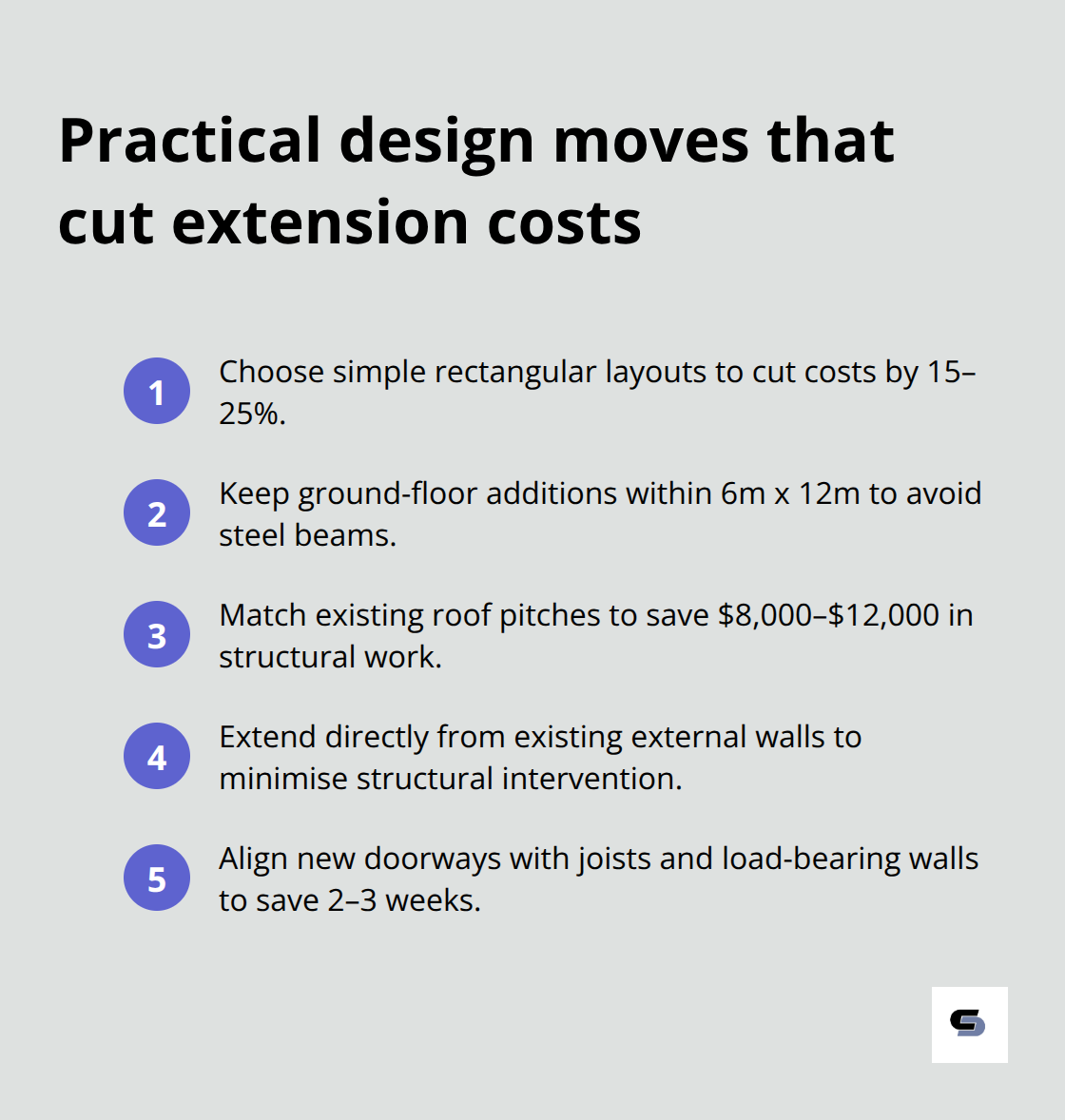
Rectangular floor plans deliver the lowest construction costs per square metre. Complex shapes with multiple angles, curves, or projections require additional structural engineering, custom materials, and increased labour hours. The Master Builders Association reports that simple rectangular designs can reduce construction costs by 15-25% compared to complex layouts. Maximum dimensions of 6 metres by 12 metres for ground floor additions work within standard timber spans and avoid expensive steel beams.
Focus on High-Impact Rooms Only
Kitchen and bathroom extensions provide the strongest return on investment. Kitchen renovations deliver value for homeowners planning strategic improvements. Skip walk-in wardrobes, powder rooms, and butler’s pantries in budget projects. A well-designed kitchen extension of 20-25 square metres delivers more value than the same budget spread across multiple smaller spaces. Second bedrooms and living areas should only be included if they solve specific functional problems rather than add luxury.
Align With Existing Structural Elements
Extensions that follow existing roof pitches and structural lines eliminate expensive modifications to the main house. Matching the existing roof angle saves approximately $8,000-$12,000 in structural work and weatherproofing (compared to new roof intersections). Single-storey extensions that extend directly from existing external walls require minimal structural intervention. Position new doorways to align with existing floor joists and load-bearing walls wherever possible-this reduces both engineering costs and construction time by 2-3 weeks.
Work Within Standard Material Dimensions
Standard material sizes keep costs down significantly. Timber frames work most efficiently with 2.4-metre ceiling heights and 600mm stud centres. Windows and doors in standard sizes (such as 2100mm high doors) cost 30-40% less than custom options. Floor joists span most effectively at 450mm centres with standard lengths up to 4.8 metres without additional support.
Smart material choices and efficient construction methods can further reduce your extension budget while maintaining quality results.
Which Materials Keep Extension Costs Low
Smart Finishing Material Selection
Laminate flooring costs $25-45 per square metre compared to $80-150 for engineered timber, yet quality laminate options like those from Quickstep deliver 15-year warranties and realistic wood appearances. Polyurethane kitchen benchtops at $200-400 per linear metre provide excellent durability compared to stone at $800-1200 per linear metre. The Housing Industry Association found that strategic material choices on non-visible elements can reduce construction costs without affecting functionality. Premium materials work best for high-touch surfaces like kitchen benchtops and bathroom vanities while quality budget alternatives suit bedrooms and hallways perfectly.
Prefabricated Components Speed Construction
Prefabricated wall frames reduce on-site construction time by 40-50% according to the Prefabricated Building Association of Australia. Standard wall panels arrive ready for installation, which eliminates weather delays and reduces labour costs by approximately $15-25 per square metre. Engineered roof trusses cost $8-12 per square metre but save 3-5 days of construction time compared to traditional stick framing methods. Lightweight timber framing offers consistent quality and faster assembly than steel alternatives.
Standard Sizes Reduce Custom Costs
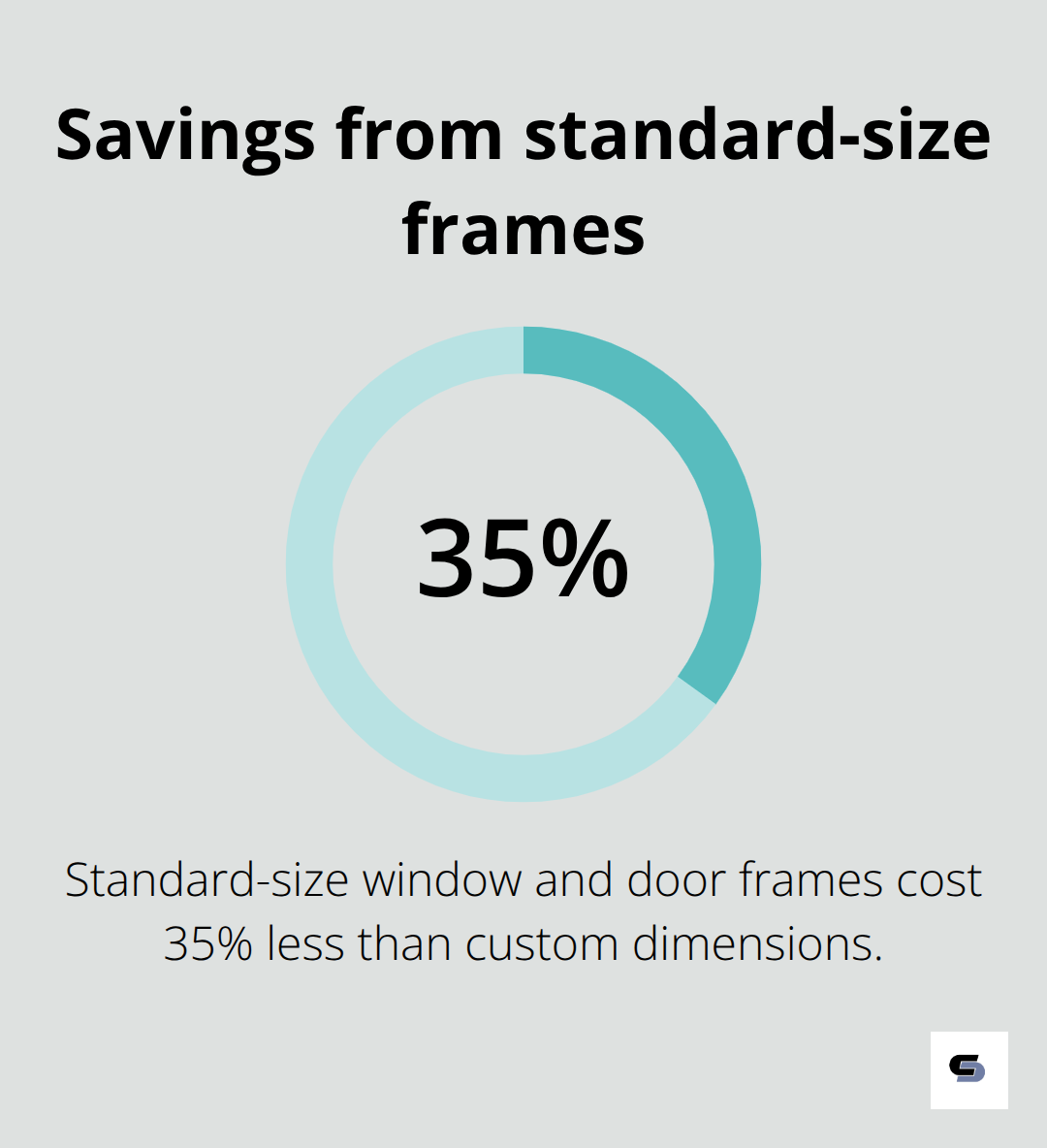
Window and door frames in standard sizes (1200mm, 1500mm, and 1800mm widths) cost 35% less than custom dimensions and integrate seamlessly with prefabricated wall systems. Standard bathroom fixtures like 1500mm vanities and 900mm shower bases eliminate expensive custom fabrication. Ceiling heights of 2.4 metres work with standard door heights and reduce material waste significantly.
Standard electrical and plumbing rough-in dimensions streamline installation and reduce trade coordination time.
Proper planning and permit management form the foundation that makes these material strategies work effectively within council requirements.
How Do Planning Requirements Affect Extension Budgets
Melbourne councils impose specific requirements that directly impact extension costs. Early research becomes essential for budget control. The City of Melbourne requires planning permits for extensions exceeding 60 square metres or those affecting heritage overlays, with application fees ranging from $1,847 to $3,695 depending on project value. Bayside Council charges $2,156 for residential planning permits while Boroondara adds $450 for heritage assessments. Extensions in heritage areas face additional constraints including matching brick types, window styles, and roof materials that can increase costs by 20-30%.
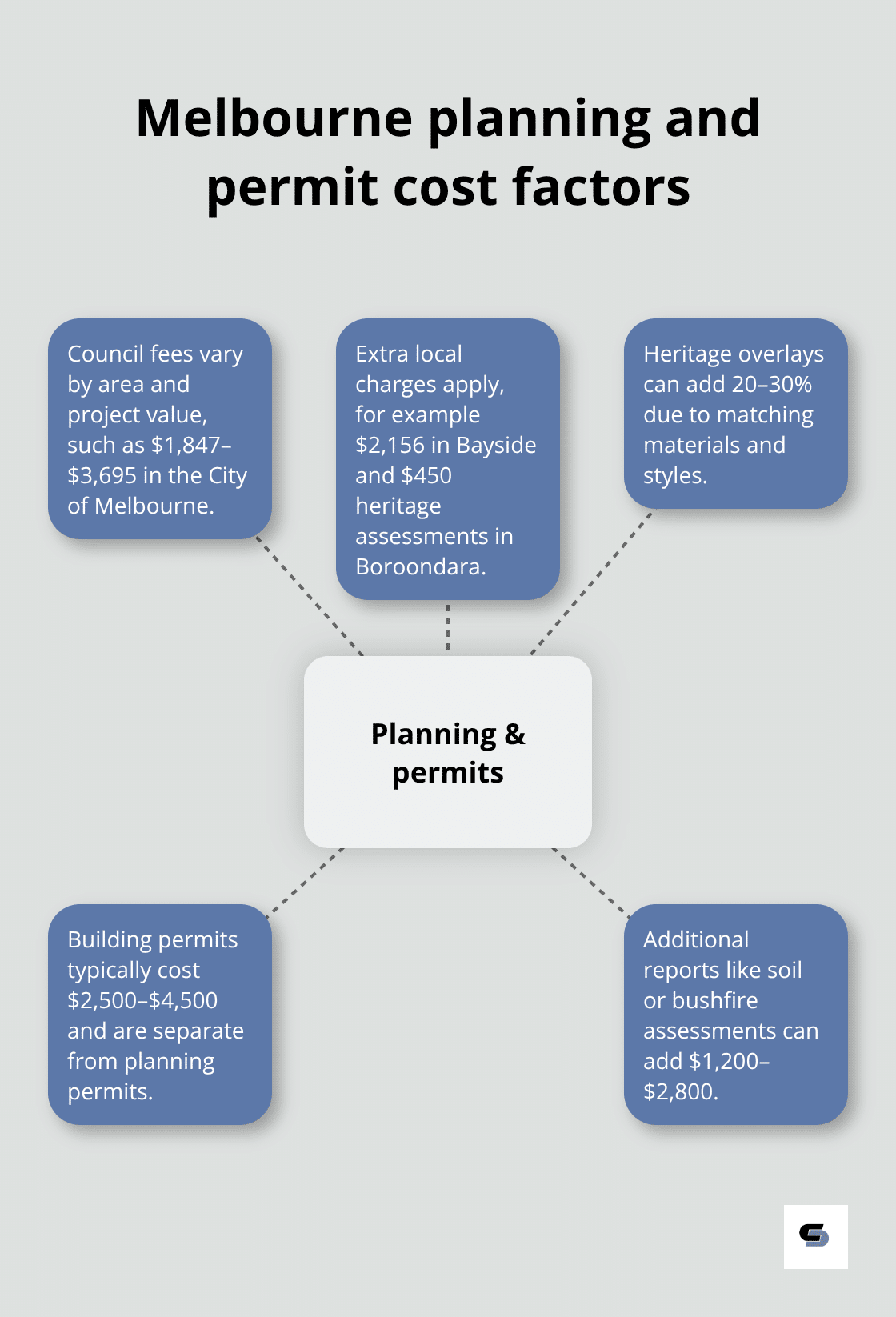
Building permits cost $2,500-4,500 for typical extensions, but council-specific requirements like mandatory soil reports in Glen Eira or bushfire assessments in Yarra Ranges add $1,200-2,800 to budgets.
Licensed Builder Selection Determines Project Success
Three detailed quotes from registered builders reveal significant cost variations and construction approaches. The Victorian Building Authority database shows over 15,000 registered domestic builders, but only builders with unlimited licences can handle projects exceeding $16,000. Licensed builders provide mandatory domestic building insurance coverage, which protects homeowners from incomplete work or defects up to $300,000. Quote variations of 25-40% between builders reflect different construction methods, material specifications, and project timelines. Builders experienced in your council area understand local requirements better, which reduces permit delays and variation costs. Fixed-price contracts with detailed specifications protect against cost overruns, while cost-plus arrangements suit complex heritage projects where unknowns exist.
Hidden Costs Add 15-25% to Base Construction Budgets
Soil reports cost $800-1,500 but prevent expensive foundation surprises during construction. Engineering fees range from $2,500-5,500 for structural calculations and certification. Building surveyor inspections add $1,800-3,200 for mandatory stage approvals throughout construction. Temporary accommodation costs during major extensions can reach $400-600 weekly for rental properties (particularly during kitchen and bathroom renovations). Utility connections for new electrical meters or gas supplies cost $1,200-2,800 depending on existing infrastructure. Site preparation including demolition, excavation, and waste removal typically adds $8,000-15,000 to extension budgets that many homeowners underestimate.
Final Thoughts
Smart extension projects require strategic decisions, quality materials, and professional expertise. Rectangular floor plans, standard dimensions, and affordable materials reduce costs by 15-25% while maintaining functionality. Understanding council requirements early prevents expensive variations, while licensed builders provide essential insurance protection and local knowledge.
Professional guidance proves invaluable when you navigate Melbourne’s complex planning requirements and manage the 15-25% hidden costs that catch many homeowners unprepared. The right builder helps you build home extension projects that maximise value through efficient construction methods and strategic material selection. Licensed professionals understand local council variations and can prevent costly delays during the approval process.
We at Cameron Construction help Melbourne homeowners achieve their extension goals within budget. Our concept to completion renovations include planning, permits, and BCA compliance across Melbourne’s councils. Contact us to discuss how strategic planning and professional delivery can make your extension project both affordable and successful.