How Much Does a Home Extension Cost in Melbourne?
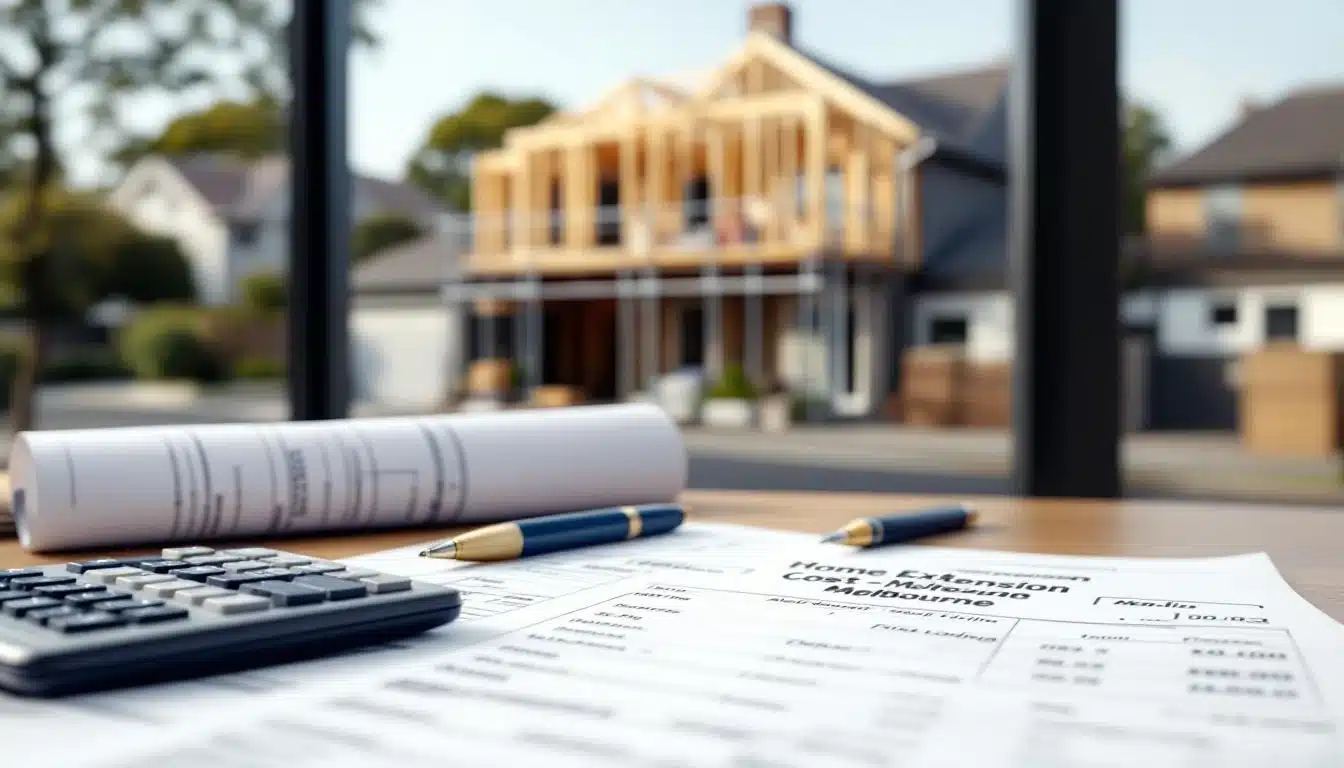
A home extension cost in Melbourne varies significantly depending on what you’re building and where you’re located. Labour, materials, site conditions, and council requirements all play a role in determining your final budget.
At Cameron Construction, we’ve helped hundreds of Melbourne homeowners understand their extension costs before breaking ground. This guide walks you through the real figures, hidden expenses, and strategies to keep your project on track financially.
What Makes Up Your Extension Budget
Labour and Professional Fees
Labour represents 35 to 45 per cent of your total extension cost in Melbourne, making it the largest expense after materials. A qualified builder, structural engineer, and site supervisor command premium rates because they carry liability insurance, manage council compliance, and guarantee workmanship. Professional fees add another layer: architects charge between 8 and 12 per cent of construction value, whilst structural engineers cost $2,500 to $5,000 for design and certification. Building surveyors, essential for inspections at key stages, charge $1,500 to $3,000 per project.
Consumer Affairs Victoria recommends obtaining three written quotes to compare labour pricing, and you should verify each builder’s registration with the Building and Plumbing Commission before signing. For extensions over $10,000, Victorian law requires a written major domestic building contract, which protects you but also locks in labour costs upfront.
Materials and Supply Costs
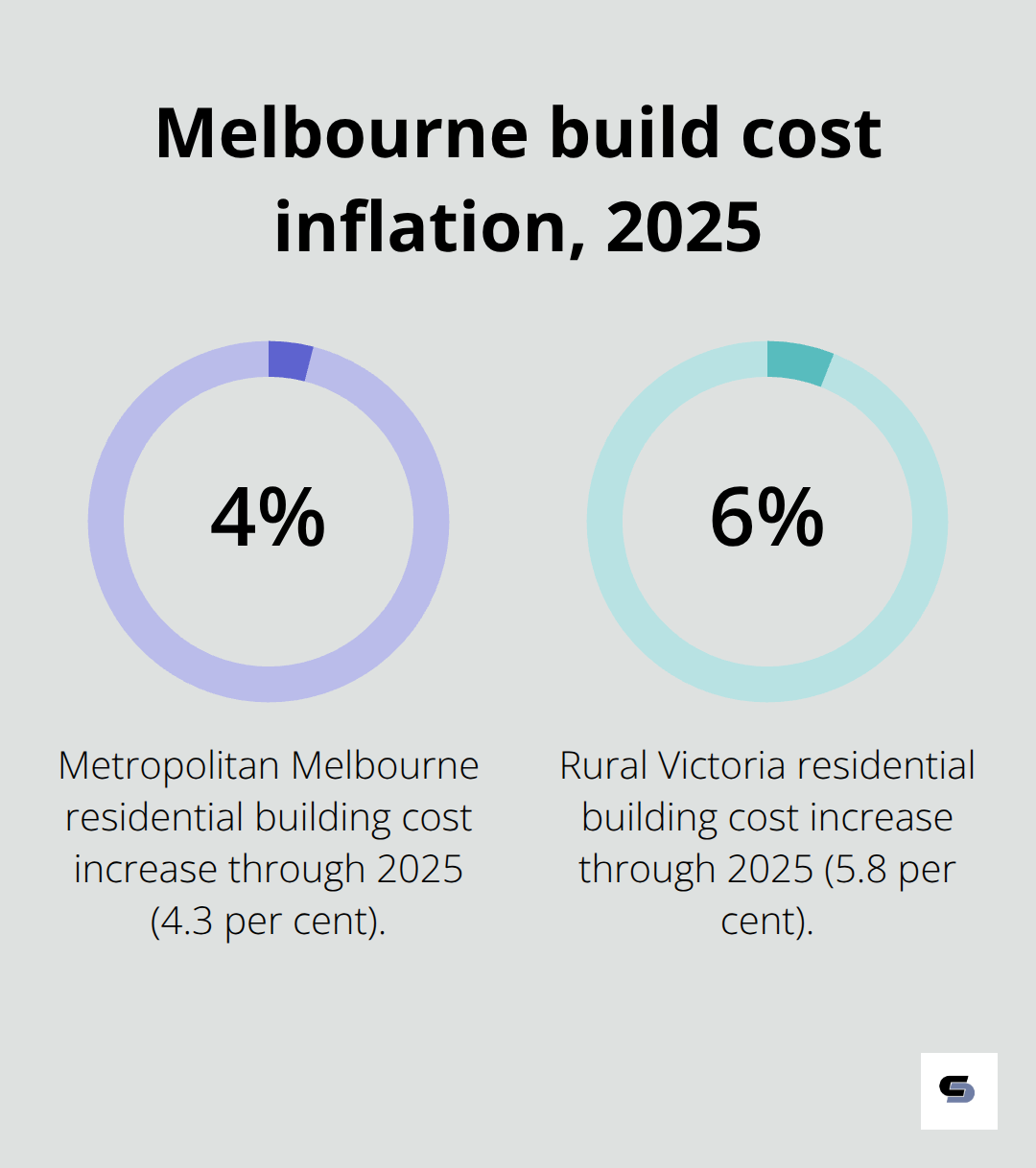
Materials and supply costs fluctuate based on your finishes and local availability. According to Valuer-General Victoria, residential building costs in metropolitan Melbourne rose 4.3 per cent through 2025, with rural Victoria experiencing 5.8 per cent increases. Steel, concrete, and brickwork form the structural base, whilst plumbing, electrical work, and HVAC systems add substantial costs depending on complexity.
Premium finishes like European joinery, stone benchtops, or high-end bathroom fittings inflate material budgets by 20 to 40 per cent compared to standard specifications. Your choice of finishes directly impacts your overall project cost, so you should lock in selections early to avoid scope creep and budget surprises.
Site-Specific Expenses
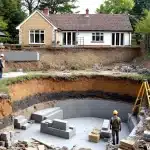
Site-specific expenses often surprise homeowners because they remain invisible until excavation begins. Soil reports and foundation assessments cost $800 to $1,500 but reveal whether your existing footings can support additional levels or if expensive underpinning becomes necessary. Sloping blocks, poor drainage, or proximity to trees demand specialist solutions that can add $15,000 to $50,000 to your project.
Council planning permit fees in Victoria depend on your extension’s estimated construction cost, ranging from $226.90 for work under $10,000 to $1,697.80 for projects between $1,000,000 and $2,000,000 in the 2025-26 financial year. Temporary site facilities, waste removal, and traffic management add 5 to 8 per cent to labour costs, particularly for double storey additions requiring scaffolding and crane access in established suburbs. Hidden costs accumulate quickly, which is why understanding your site conditions before you commit to a budget proves essential.
What Changes Your Extension Price
Extension complexity separates a $150,000 project from a $400,000 one, even when both add the same floor area. A single storey ground floor addition on a level block with straightforward access costs significantly less than a double storey extension on a sloping site that requires underpinning, retaining walls, or tree removal. Double storey additions demand structural engineering for load transfers, deeper foundations, and often necessitate temporary support systems during construction, adding $25,000 to $60,000 depending on your existing structure’s condition. If your block slopes more than one metre across its length, specialist foundation work and possible geotechnical reports cost $1,200 to $3,000. Second storey conversions prove cheaper than full double storey builds because you work within existing footprints, but they still require structural assessment to verify your current slab and frame can carry additional weight.
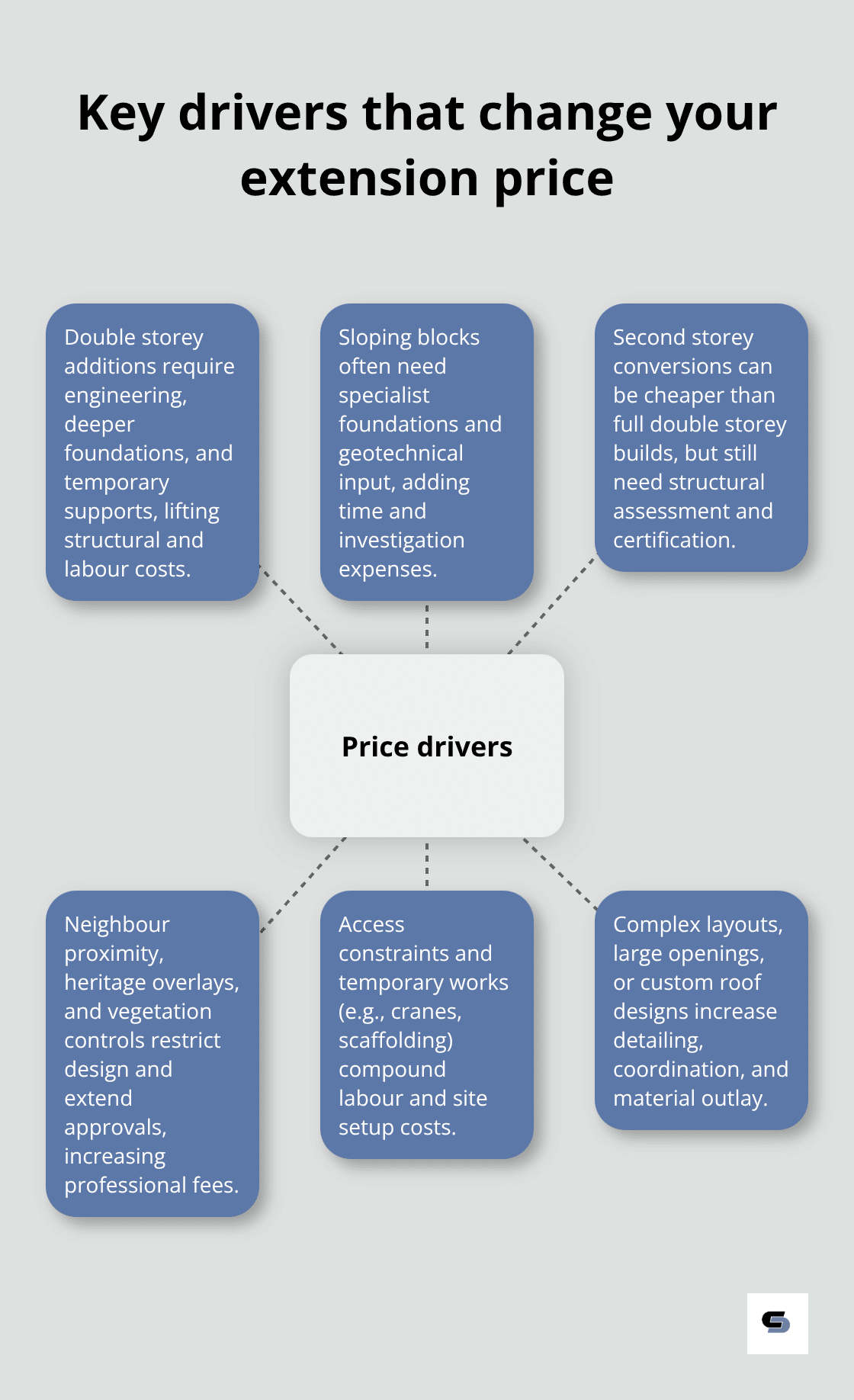
Proximity to neighbours, heritage overlays, or vegetation protection orders restrict your design options and extend planning timelines by four to eight weeks, which compounds labour costs.
Where You Build Matters as Much as What You Build
Your suburb’s council and planning zone directly control costs through permit requirements and approval speed. Inner Melbourne suburbs like Fitzroy, Carlton, and South Yarra impose stricter design guidelines and heritage considerations that require specialist architects and longer consultation periods, pushing professional fees up 15 to 25 per cent. Outer suburbs have faster approval processes but may demand traffic management plans or construction management plans if works exceed four weeks, costing $800 to $2,500. Council planning permit fees in 2025-26 range from $226.90 for extensions under $10,000 to $1,580.10 for projects between $500,000 and $1,000,000, according to Victoria’s Planning and Environment Regulations. Some councils charge additional fees for planning certificates or building surveyor coordination, adding $400 to $800 to your upfront costs. Sloping blocks in suburbs like Doncaster, Camberwell, or Belgrave trigger mandatory soil reports and specialist engineering, increasing your pre-construction investigation costs by $1,500 to $4,000. Established suburbs with mature trees demand arborist reports if branches overhang your extension, and tree protection orders force design compromises that inflate construction costs by 10 to 20 per cent.
Your Finish Choices Drive the Final Bill
Standard finishes mean painted plasterboard, basic kitchen cabinetry, and vinyl flooring; premium finishes mean stone benchtops, engineered hardwood, high-end tapware, and custom joinery. The difference between a basic bathroom renovation and a luxury one runs $15,000 to $35,000 on the same footprint. Material costs rise annually for metropolitan Melbourne extensions, so locking in finishes early protects your budget from mid-project price increases. European cabinetry, marble or granite surfaces, and designer fittings inflate material costs by 30 to 50 per cent compared to standard options. Electrical and plumbing complexity also varies: a simple ground floor addition with standard outlets and one bathroom costs far less than a second storey with multiple bathrooms, underfloor heating, or integrated smart home systems. Specify finishes in your building contract before work starts; undefined prime cost sums or provisional amounts create scope creep and budget blowouts. High-quality thermal performance, large glazing areas, or custom architectural details require specialist trades and coordination, adding 12 to 18 per cent to labour and material costs combined.
How Design Specifications Affect Your Budget
Architectural complexity transforms your extension cost more than square meterage alone. A straightforward rectangular addition costs less than an L-shaped or wraparound design that demands additional structural connections and longer building lines. Custom roof pitches, vaulted ceilings, or integrated outdoor living spaces require specialist detailing and coordination between trades, inflating costs by 8 to 15 per cent. Large window and door openings (particularly in double storey additions) necessitate structural beams and engineering certification, adding $3,000 to $8,000 to your project. Thermal performance specifications, such as double glazing, insulation ratings, or passive solar design, increase material and labour costs by 5 to 12 per cent but deliver long-term energy savings. Accessibility features like level entries, wider doorways, or accessible bathrooms add $2,000 to $6,000 depending on scope. Your design choices lock in costs early, so working with a building designer or architect during the concept phase helps you understand which features deliver value and which inflate your budget unnecessarily.
Understanding these cost drivers positions you to make informed decisions about your extension scope and finishes. The next step involves obtaining accurate quotes from builders who can assess your specific site conditions and design requirements.
How to Budget and Manage Extension Costs
Request Detailed Quotes from Multiple Builders
Three written quotes from registered builders form the foundation of accurate budgeting, yet most Melbourne homeowners stop there. Consumer Affairs Victoria recommends this practice specifically because it reveals how builders price labour, materials, and site-specific work differently. When you request quotes, provide each builder with identical specifications: your soil report findings, council planning requirements, design drawings, and a detailed finish schedule. A builder quoting $280,000 for a double storey addition might include structural engineering in their price whilst another at $320,000 excludes it entirely. Verify what each quote covers before comparing figures.
Check that the builder holds current registration with the Building and Plumbing Commission and confirm their insurance details independently through ASIC. Ask each builder to itemise labour separately from materials, site costs, and professional fees so you understand where your money goes. The cheapest quote rarely delivers the best outcome; instead, compare builders who understand your specific site conditions and can explain cost differences clearly.
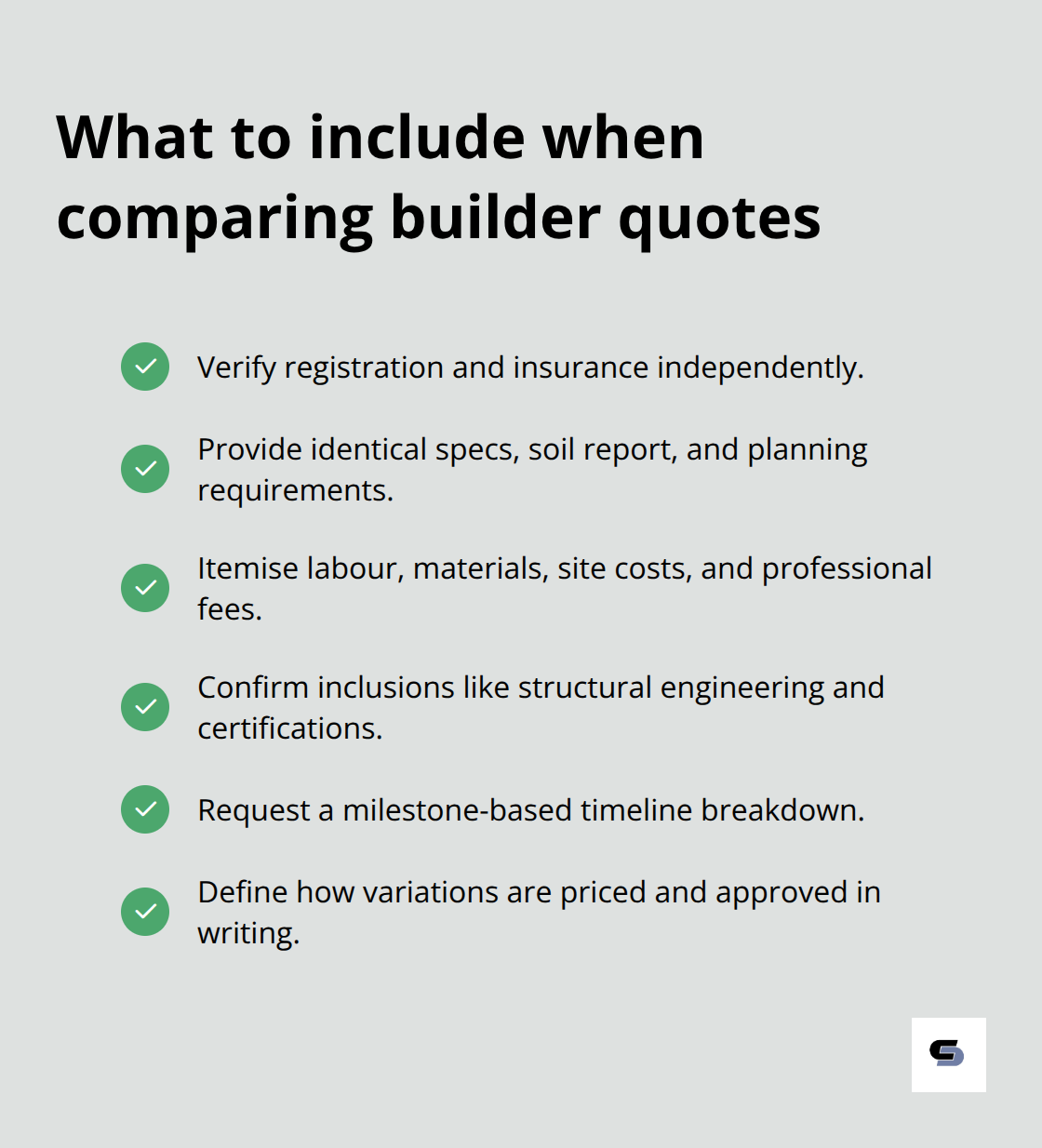
Request a timeline breakdown as well, because labour costs compound when projects extend beyond schedule due to poor planning or underestimated complexity.
Understand Cost Estimates and Payment Structures
Cost estimates from builders should include a detailed breakdown of stages and payment schedules tied to completion milestones rather than calendar dates. Victorian building law requires stage payments to follow completion of specific phases such as foundation, frame, lock-up, and fixing, which protects you from overpaying for incomplete work. Many builders quote a fixed price but fail to specify what happens when unforeseen conditions emerge, leaving you vulnerable to variation claims. Insist your contract defines how variations are priced before work starts, and request that all changes receive documentation in writing and signatures from both parties.
Always set some budget aside for opportunities or contingencies. For a $300,000 extension, this means setting aside $30,000 to $45,000 for foundation surprises, supply delays, or design refinements. Soil conditions discovered during excavation, asbestos in existing structures, or structural repairs needed to support additional levels frequently consume contingency reserves entirely. Sloping blocks in suburbs like Doncaster or Belgrave carry higher contingency risk because underpinning or retaining wall costs escalate rapidly once work commences. Building in this buffer prevents you from abandoning quality finishes or stretching payment schedules when costs exceed initial estimates.
Final Thoughts
Your home extension cost in Melbourne hinges on labour (35–45% of total spend), materials that rise 4.3% annually in metropolitan areas, and site-specific factors like soil conditions or underpinning that can shift your budget by tens of thousands. Professional planning identifies cost drivers early when you still control design and scope, and a structural engineer’s $2,500–$5,000 investment reveals whether your foundation supports additional levels before excavation begins. Consumer Affairs Victoria recommends three written quotes from registered builders, which expose how different teams price identical work and protect you from unregistered operators.
An accurate quote requires you to provide builders with identical information: soil reports, council planning requirements, design drawings, and finish specifications separated into labour, materials, site costs, and professional fees. Set aside 10–15% contingency for unforeseen conditions, particularly on sloping blocks where foundation surprises occur frequently and compound costs rapidly. We at Cameron Construction handle concept to completion across Melbourne’s councils, managing planning permits, BCA compliance, and structural engineering so you receive one transparent price covering your entire project.
Contact us for a detailed assessment of your site and design requirements, and we’ll provide the accurate quote you need to move forward with confidence about your home extension cost in Melbourne.