How Much Does a Home Extension Cost in Melbourne?
Melbourne homeowners considering extensions face costs ranging from $50,000 for basic ground floor additions to $300,000+ for premium double storey projects. We at Cameron Construction see significant price variations based on design complexity, site conditions, and material choices.
Understanding home extension cost Melbourne factors helps you budget accurately and avoid expensive surprises during construction.
Factors That Influence Home Extension Costs in Melbourne
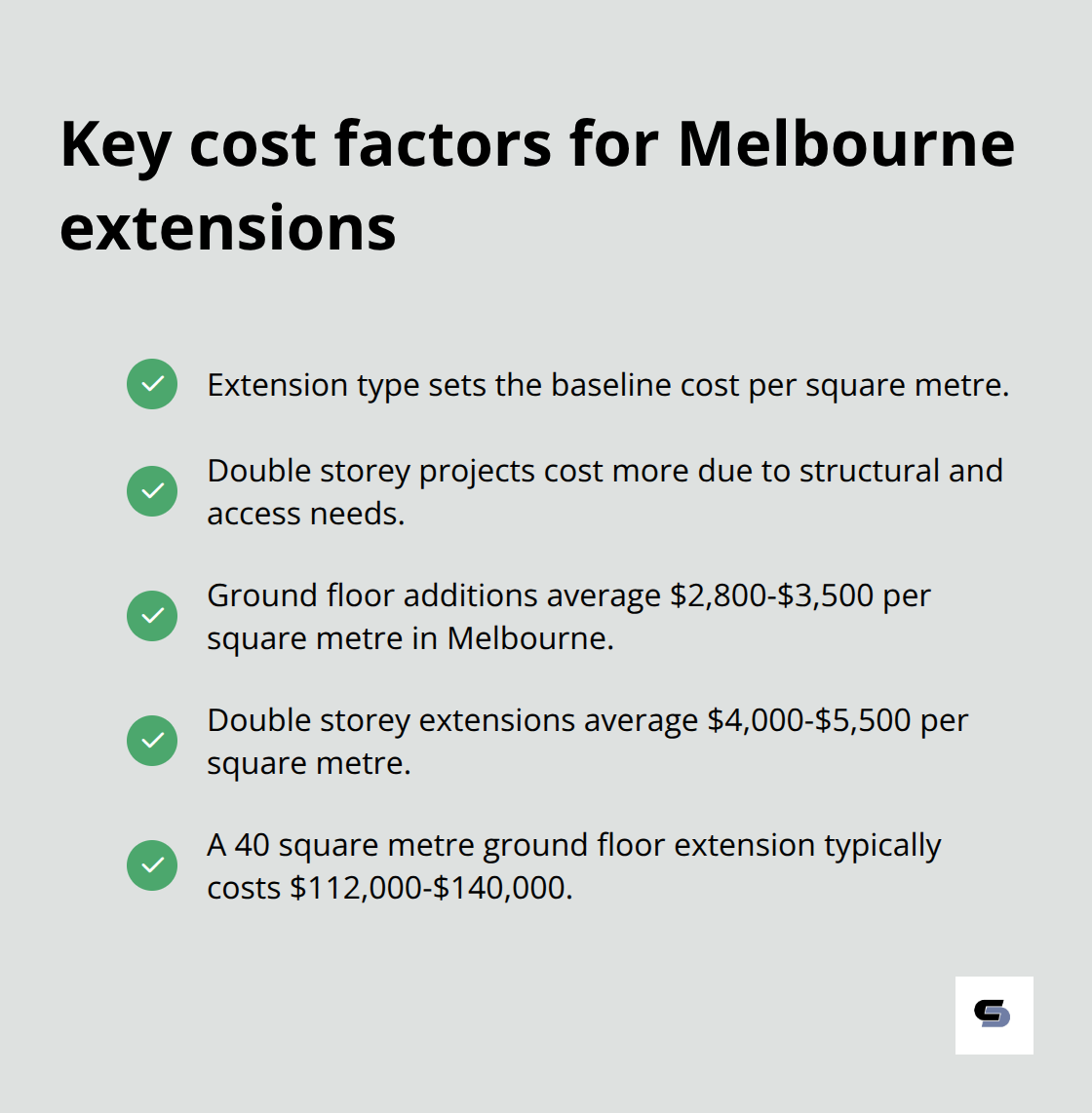
Extension type and square metreage determine your project budget foundation. Ground floor additions average $2,800-$3,500 per square metre, while double storey extensions cost $4,000-$5,500 per square metre due to structural complexities and access requirements. A 40 square metre ground floor extension typically costs $112,000-$140,000, whereas the same area as a second storey reaches $160,000-$220,000.
Site Conditions Determine Your Budget
Slopes increase costs by 15-25% compared to level sites due to additional excavation, retaining walls, and complex footings. Poor soil conditions that require pier foundations can add $15,000-$30,000 to your project. Limited site access that forces hand-carry of materials instead of crane delivery inflates labour costs by $8,000-$15,000 for typical extensions.
Material Choices Control Final Costs
Brick veneer extensions cost $300-$400 per square metre less than full brick construction. Timber floors average $80-$120 per square metre versus $40-$60 for hybrid alternatives. Premium kitchen inclusions add $25,000-$45,000 beyond standard specifications, while high-end bathroom fixtures increase costs by $8,000-$15,000 per room.
Council Requirements Add Significant Expenses
Planning permits vary based on project complexity and council requirements. Building permits cost $2,500-$5,000 for typical extensions. Heritage overlays require specialist reports that cost $3,000-$8,000, while bushfire-prone areas demand additional compliance measures that add $5,000-$12,000. Soil reports cost $1,500-$2,500 but prevent costly foundation redesigns during construction.
These cost factors combine differently for each extension type, which creates distinct price ranges across Melbourne’s most popular renovation options.
Breaking Down Extension Costs by Type
Double Storey Extensions Command Premium Pricing
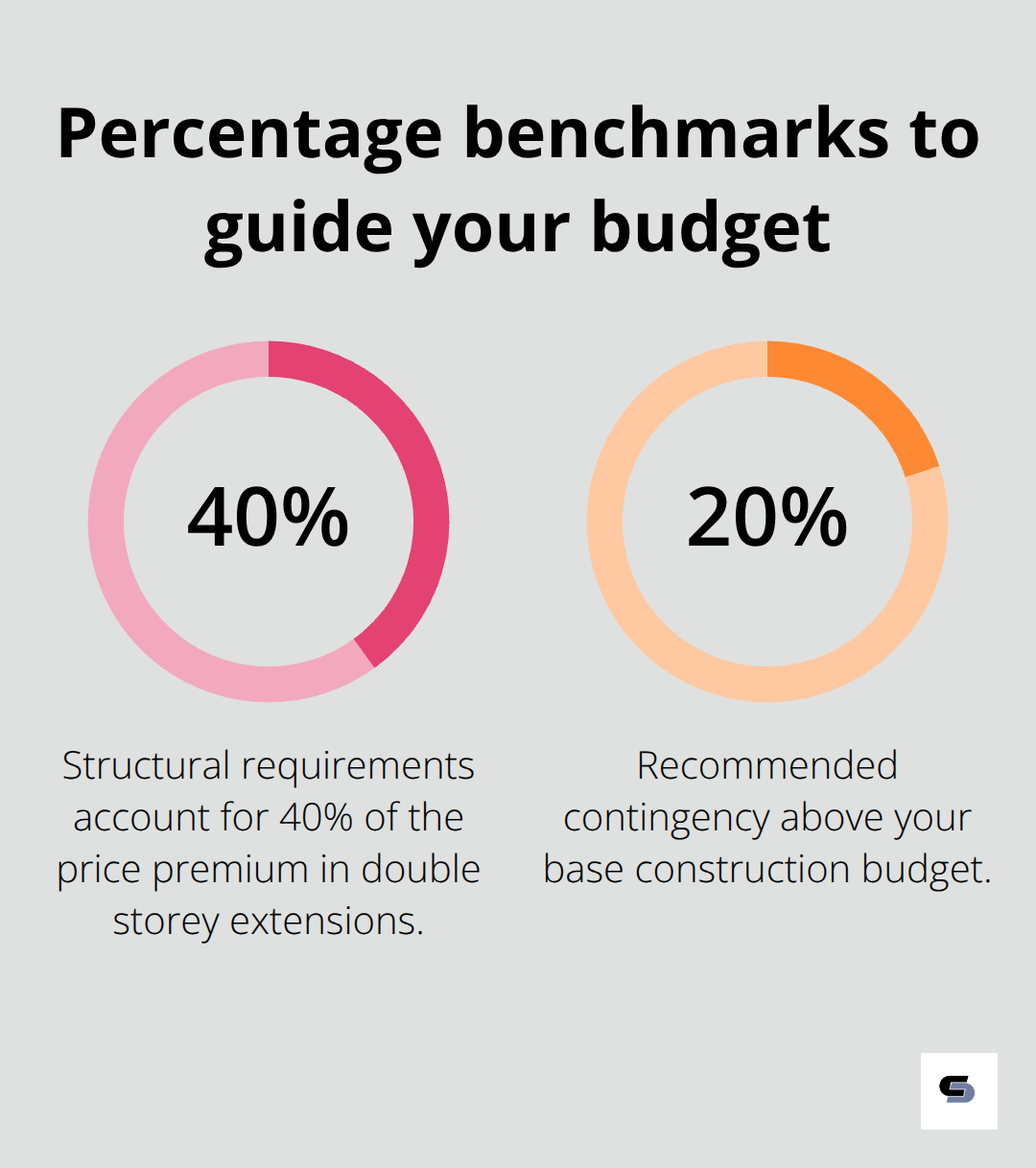
Double storey extensions represent Melbourne’s most expensive renovation option. A typical 60 square metre double storey addition costs $240,000-$330,000, with structural requirements that drive 40% of the price premium over ground floor alternatives. Steel beam installations for load-bearing support add $8,000-$15,000, while scaffolding and elevated construction access increase labour costs by $12,000-$20,000.
Premium finishes push luxury double storey projects beyond $400,000 for comprehensive family room and bedroom additions. Planning permits may be required for these extensions, with local councils responsible for issuing approvals.
Ground Floor Additions Offer Value and Accessibility
Ground floor extensions deliver Melbourne’s most cost-effective space solutions at $2,800-$3,500 per square metre. A standard 40 square metre addition that incorporates living areas and powder room costs $112,000-$140,000. Concrete slab foundations cost $180-$220 per square metre compared to $300-$400 for suspended floors that elevated construction requires. Kitchen extensions with premium appliances reach $180,000-$220,000 for 50 square metres, while basic family room additions start from $85,000 for 30 square metres.
Second Storey Conversions Transform Existing Space
Converting existing roof space into habitable rooms costs $3,200-$4,200 per square metre (including structural modifications and stair installation). These conversions maximise your property’s footprint without expanding the building envelope. Dormer windows add $8,000-$15,000 per window, while skylights provide natural light for $2,500-$4,500 each.
Full House Renovations Combine Multiple Elements
Full house renovations that combine extensions with existing area upgrades range from $350,000-$650,000 for typical Melbourne homes. Heritage properties require specialist restoration that adds 25-35% to standard renovation costs due to materials matching and council compliance requirements. These comprehensive projects often deliver the highest return on investment through complete property transformation.
These cost variations highlight why professional assessment becomes essential before you commit to any extension budget, particularly when unexpected site conditions can dramatically impact your final investment.
Hidden Costs and Budget Planning Tips
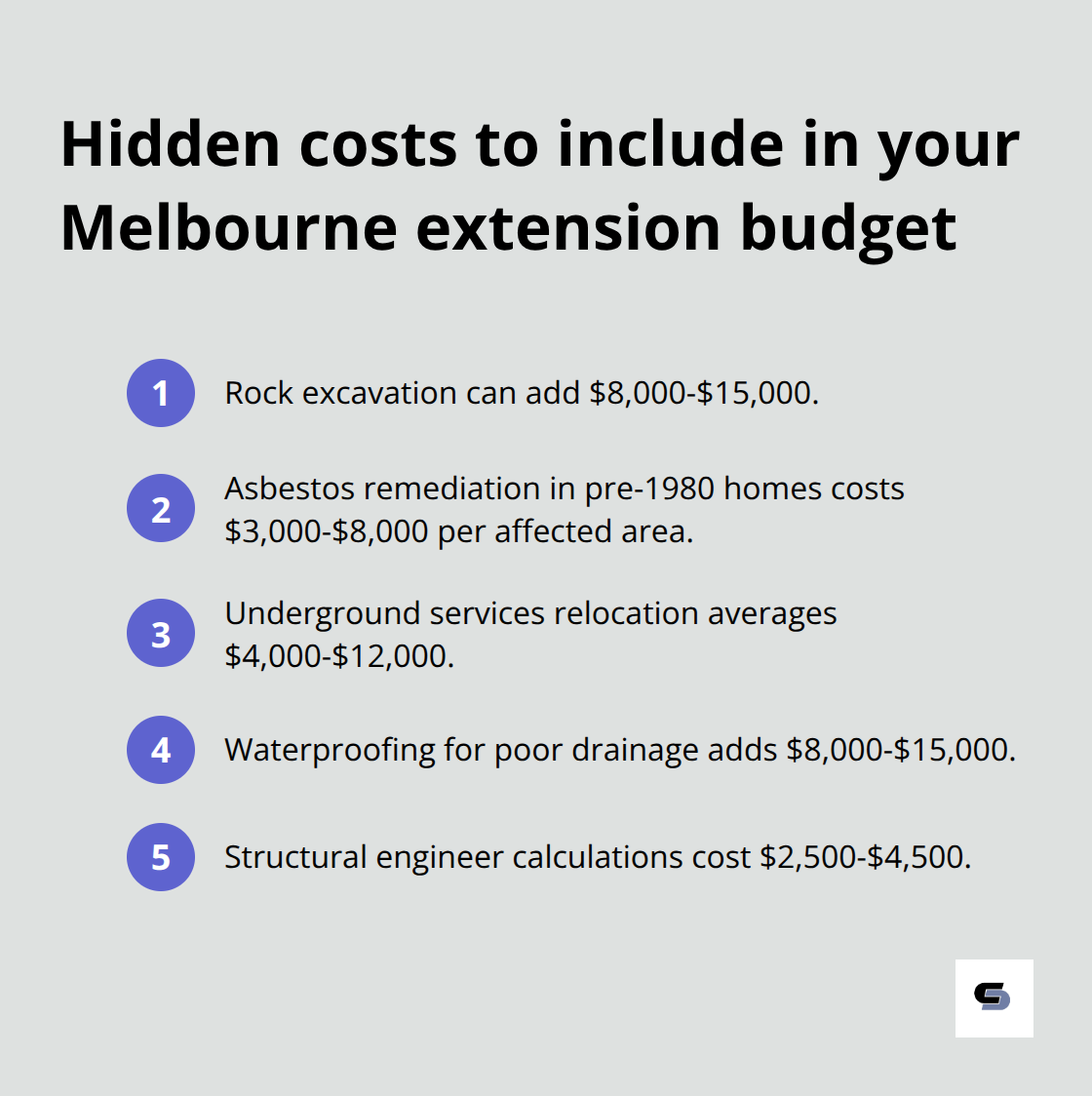
Melbourne extension projects consistently exceed initial budgets by 15-25% due to hidden costs that emerge during construction. Rock excavation adds $8,000-$15,000 when builders encounter bluestone beneath topsoil, while asbestos remediation in pre-1980 homes costs $3,000-$8,000 per affected area. Underground services relocation averages $4,000-$12,000 when water, gas, or electrical lines conflict with new foundations.
Unexpected Site Conditions Drive Cost Escalations
Structural engineers charge $2,500-$4,500 for beam calculations when existing foundations prove inadequate for extension loads. Soil testing costs $1,500-$2,500 but prevents foundation redesigns that cost $15,000-$30,000 to rectify. Poor drainage conditions require waterproofing systems that add $8,000-$15,000 to basement or below-ground extensions. Heritage properties often reveal structural issues that demand specialist restoration techniques, increasing costs by 25-35% above standard construction rates.
Professional Fees Add Substantial Project Costs
Building surveyors charge $3,500-$6,500 for typical extensions, while private certifiers cost $2,800-$4,200 for faster approvals. Architects fee 8-12% of construction value for custom designs, though design-and-build services reduce this to 3-5%. Council development contributions apply to larger extensions under interim Development Contributions Plan Overlay controls. Energy assessors charge $800-$1,500 for mandatory compliance reports, while bushfire consultants add $2,500-$4,500 in fire-prone zones.
Temporary Accommodation and Disruption Expenses
Temporary accommodation during major renovations costs $180-$320 per night for nearby rentals, with 8-12 week displacement periods common for second storey additions. Storage facilities charge $200-$400 monthly for furniture and belongings during construction. Utility disconnections and re-connections cost $500-$1,200 per service (gas, electricity, water), while temporary power supplies add $150-$300 weekly to project expenses.
Contingency Planning Recommendations
Set aside 20% contingency funds above your base construction budget to handle these inevitable cost escalations without compromising project quality or timeline. Document all variations in writing before work commences to avoid disputes over additional charges. Request detailed quotes that specify inclusions and exclusions to identify potential cost gaps before construction begins.
Final Thoughts
Home extension cost Melbourne varies dramatically based on project type, site conditions, and material selections. Ground floor additions start from $112,000 for basic 40 square metre projects, while double storey extensions reach $240,000-$330,000 for similar space. Hidden costs (including site remediation, professional fees, and temporary accommodation) add 15-25% to initial budgets.
Melbourne extensions typically deliver strong returns on investment when you plan and execute them properly. Double storey additions often provide the highest value increase, particularly in established suburbs where land values support premium construction costs. Ground floor extensions offer excellent cost-per-square-metre value for families who need immediate space solutions.
Professional site assessment and detailed cost analysis form the foundation of successful extension projects. Cameron Construction provides comprehensive design-and-build services for Melbourne extensions, handling projects from concept to completion. Request detailed quotes from multiple builders, allocate 20% contingency funds, and document all project specifications before construction begins to control costs and achieve your renovation goals.