How Much Do House Builders in Melbourne Charge?
Building costs in Melbourne vary significantly depending on your project scope and choices. At Cameron Construction, we’ve guided hundreds of homeowners through understanding house builders Melbourne prices and what drives those figures.
This guide breaks down the real costs behind extensions and renovations so you can budget accurately and compare quotes with confidence.
What Drives House Builder Costs in Melbourne
Project Size and Structural Complexity
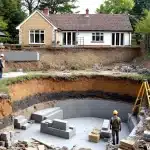
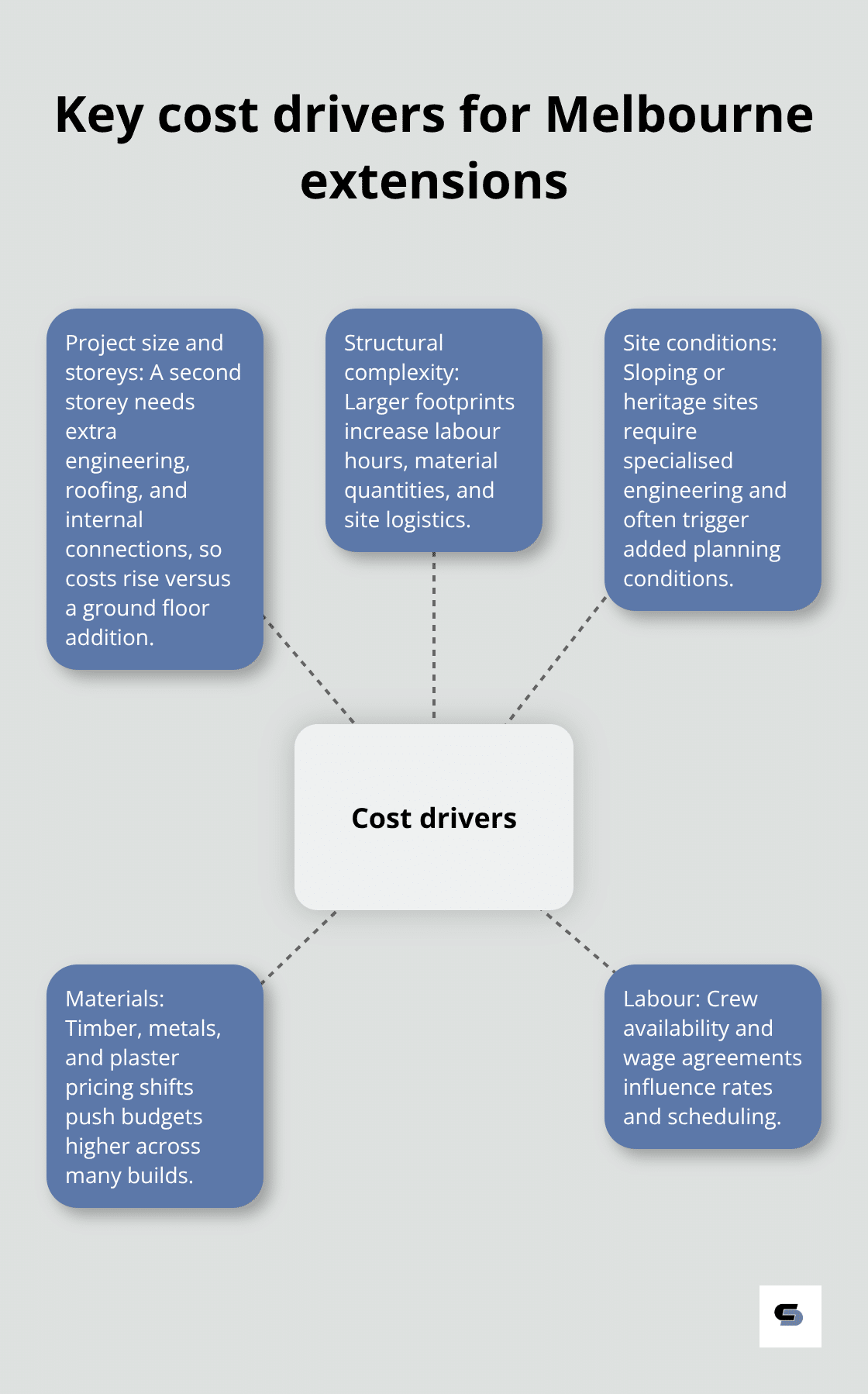
Project size shapes your budget more directly than most homeowners expect. A ground floor addition of 40 square metres costs substantially less than a double storey extension covering the same footprint, because the second storey requires additional structural engineering, roofing, and internal connections. The scale of your addition determines labour hours, material quantities, and the complexity of structural work-a 60-square-metre extension demands different site logistics and crew scheduling than a 25-square-metre kitchen renovation. Sloping blocks and heritage properties add further cost because they need specialised engineering solutions and often trigger additional planning conditions.
Material Cost Pressures
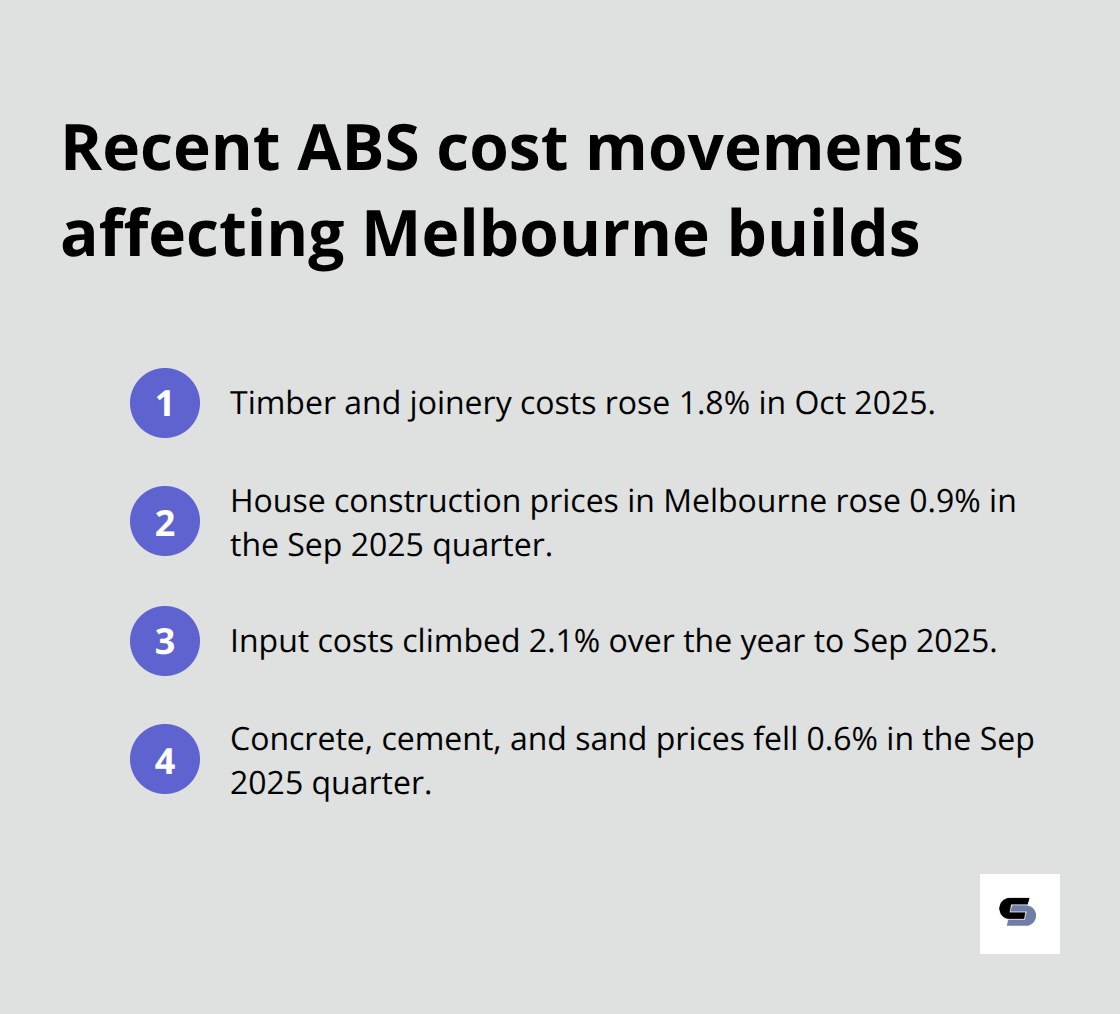
Materials and labour represent the two largest cost drivers right now. Timber and joinery costs rose 1.8% as of October 2025, directly affecting window frames, doors, and structural elements in any extension. Other metals and plaster products also climbed, pushing material budgets higher across most Melbourne builds. According to the Australian Bureau of Statistics, house construction prices in Melbourne rose 0.9% in the September 2025 quarter, with input costs climbing 2.1% over the year. Specify materials and finishes in writing before signing your contract-vague provisional sum items for fixtures or fittings are where cost blowouts happen.
Labour Costs and Quarterly Price Movement
Labour shortages persist despite market softening, and enterprise agreement wage increases mean your builder’s crew costs continue climbing quarterly. The ABS data shows that builders charge around 0.8–0.9% more per quarter in Melbourne due to these pressures, so a quote locked in December differs from one obtained in March. Timber and labour volatility will affect your final invoice if your project spans more than three months. Request itemised quotes that separate labour, materials, and site costs so you can see exactly where your money goes. A price escalation clause protects both you and your builder when projects extend beyond the initial timeline.
What Melbourne Homeowners Actually Pay for Extensions
Ground floor additions in Melbourne typically cost between $2,500 and $4,500 per square metre, while double storey extensions run $3,500 to $6,000 per square metre depending on finishes and structural complexity. A 40-square-metre ground floor kitchen and living area renovation falls into the $100,000 to $180,000 range, whereas a double storey addition of the same footprint costs $140,000 to $240,000 when you factor in roofing, internal stairs, and additional engineering. These figures shift based on material selections, site conditions, and whether your property sits on a sloping block or requires heritage-compliant work. If you add a second storey to an existing single-storey home, foundation reinforcement costs push your per-square-metre rate higher than a straightforward ground floor extension. Concrete, cement, and sand prices fell 0.6% in the September 2025 quarter according to the Australian Bureau of Statistics, offering a brief reprieve, but timber and joinery remain elevated at 1.8% quarterly growth. When comparing quotes, reject any that list large provisional sum amounts for materials or finishes-that’s how you end up paying $15,000 more than expected when your builder substitutes items mid-project.
Structural Engineering and Site Investigation Costs
Structural engineering for double storey work typically adds $3,000 to $8,000 depending on soil conditions and whether your block requires geotechnical investigation. Sloping block extensions demand additional costs for retaining walls, drainage, and foundation design that flat-block builds avoid entirely. These costs appear separately on professional quotes because engineers must assess your site before construction can proceed. Soil tests and foundation data determine how deep your footings need to go, which directly affects material quantities and labour hours. Your builder may require sign-off to obtain these documents, so factor in the time and cost of site investigation before work starts.
Building Permits and Insurance Requirements
Building permit levies in Melbourne vary by council area, ranging from $500 to $2,500 for typical extensions. The Victorian Building Authority’s online calculator helps you estimate the levy based on your estimated cost of works and your specific council area. If your project exceeds $16,000, you’ll need domestic building insurance, which costs roughly $800 to $2,000 depending on the contract value and insurer. This insurance protects you from financial loss if your builder becomes insolvent or fails to complete the work. Permit costs and insurance premiums must appear as separate line items in your quote so you understand the full financial picture before you commit.
Site Access and Ancillary Costs
Site access restrictions, temporary fencing, and crane hire for multi-storey work can add another $5,000 to $15,000 if your block is tight or tree-lined. These ancillary costs vary dramatically depending on your property’s location and existing features. A builder working on a narrow inner-city block faces different logistics than one working on a spacious outer-suburban property. Request that your builder itemise these costs upfront rather than bundling them into a single labour figure-this transparency prevents disputes later and lets you understand where each dollar goes.
Comparing Quotes Across Multiple Builders
Ask three builders for quotes on identical scope, then compare not just the total but the breakdown of labour hours, material specifications, and contingency allowances. Most Melbourne builders quote labour, materials, and site costs separately, but many homeowners miss line items that silently inflate the final bill. Structural engineering, permits, insurance, site access, and material specifications all shift the final price significantly. When you place quotes side by side with identical scope documents, you spot which builders account for hidden costs upfront and which ones bury them in vague provisional sums. This comparison reveals which builders operate transparently and which ones leave room for disputes down the track.
Getting Quotes That Actually Reveal Your True Costs
Request Detailed Quotes with Identical Scope
Obtain quotes from at least three builders using an identical scope document that specifies materials, finishes, and site conditions. Most Melbourne builders quote labour, materials, and site costs separately, but transparency varies dramatically-some itemise structural engineering, permits, and insurance upfront whilst others bury these costs in vague provisional sums or contingency allowances. When you compare three quotes side by side, you spot which builders account for hidden costs and which ones leave room for disputes.
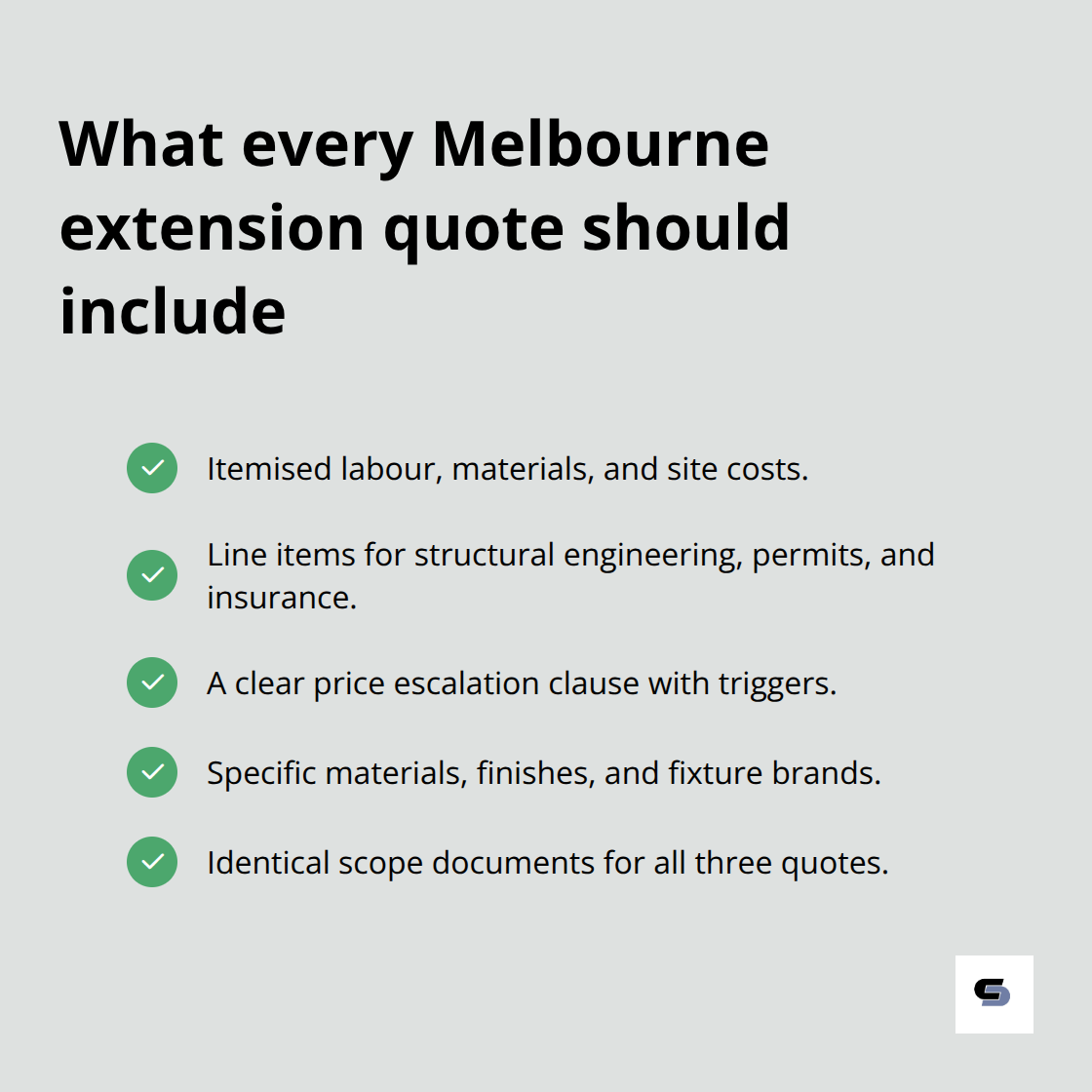
Ask each builder to specify timber grades, joinery details, paint finishes, and fixture brands rather than accepting generic descriptions like kitchen cabinetry or bathroom tiles. A vague quote that lists a 15% contingency without explaining what it covers signals a builder who hasn’t fully scoped your project.
Insist on Line-Item Breakdowns for All Hidden Costs
Insist on line-item breakdowns for structural engineering, building permits (usually $500–$2,500 depending on your council area), domestic building insurance if your contract exceeds $16,000 (roughly $800–$2,000), and site access costs if your block is tight or requires temporary fencing. Input costs climb annually, so a quote locked in now differs from one obtained in three months-ask your builder whether the quote includes a price escalation clause and what triggers it. Most importantly, reject any quote that lists large provisional sum amounts for materials or finishes because that’s precisely where cost blowouts occur when builders substitute items mid-project without your written approval.
Compare Site Assumptions, Not Just Total Price
Compare quotes by examining what each builder assumes about your site conditions, not just the total figure. One builder might account for soil testing and geotechnical investigation whilst another assumes a straightforward foundation, creating a $5,000–$10,000 difference before work even starts. A sloping block or heritage property requires specialist engineering that flat-block builds avoid entirely, so verify that each quote reflects your actual site constraints. Specifications matter more than price alone-a lower quote using budget-grade materials and standard finishes delivers a fundamentally different outcome than a higher quote specifying premium joinery and custom fixtures.
Evaluate Labour Hours and Project Duration
Ask your builder to justify labour hours by explaining crew size and project duration rather than accepting a single labour line item. A builder quoting 800 labour hours for a 40-square-metre extension is either underestimating scope or planning inefficient scheduling, so ask how they’ve calculated those hours. When you place quotes side by side with identical scope, you reveal which builders operate transparently and which ones leave room for disputes. Structural complexity, material volatility, and labour cost pressures mean your final invoice will shift if your project extends beyond the initial timeline, so prioritise builders who explain how they’ll manage these risks rather than those who pretend they don’t exist.
Final Thoughts
House builders Melbourne prices reflect genuine cost pressures that affect every extension and renovation across the city. Material volatility, labour shortages, and quarterly price movements mean your budget must account for structural engineering, permits, insurance, and site-specific costs that many homeowners overlook. Ground floor additions typically run $2,500 to $4,500 per square metre, whilst double storey extensions cost $3,500 to $6,000 per square metre depending on finishes and your site conditions.
A transparent quote separates structural engineering, permits, insurance, and site access costs upfront, whilst a vague one buries these expenses in provisional sums. Your choice of builder directly affects whether your extension stays on budget and timeline or becomes a source of frustration and financial stress. Start by obtaining detailed quotes from at least three builders using identical scope documents that specify materials, finishes, and site conditions.
Compare their breakdowns rather than their totals, and reject any quote that lacks clarity on labour hours, material specifications, or hidden costs. We at Cameron Construction handle concept to completion for double storey extensions, ground floor additions, and full house renovations across Melbourne, managing planning, permits, and BCA compliance so you don’t have to navigate those complexities alone. Contact us to discuss your project and receive a transparent quote that reflects your actual costs and site conditions.