![Heritage Extensions That Respect Original Character [Guide]](https://www.cameronconstruction.com.au/wp-content/uploads/emplibot/heritage-extensions-hero-1772691912.webp)
Heritage Extensions That Respect Original Character [Guide]
Adding a heritage extension to your Melbourne home is exciting, but it comes with strict planning rules. At Cameron Construction, we’ve guided countless homeowners through the heritage approval process, and we know exactly what councils expect.
This guide walks you through every step-from understanding overlay requirements to working with specialists who know heritage compliance inside out.
What Melbourne Councils Actually Check When Assessing Heritage Extensions
Heritage Overlay Coverage and Permit Requirements
Melbourne’s heritage overlay system protects over 65,000 properties across the city, and City of Melbourne planners assess every extension application against specific heritage significance criteria. Your property falls under one of these overlays if it appears on the Victorian Heritage Register, the Heritage Inventory, or under a local Heritage Overlay in Clause 43.01. Check CoMMaps or contact City of Melbourne on 9658 9658 to confirm whether your property has heritage controls. If it does, you need a planning permit for external alterations, extensions, or demolition work-this requirement is non-negotiable.
The Three Core Assessment Questions
The assessment process focuses on three core questions that planners apply consistently. First, does your proposal preserve the original building’s heritage significance? Second, does it maintain or enhance local streetscape character? Third, will the extension be clearly identifiable as contemporary work rather than a replica of historic forms?
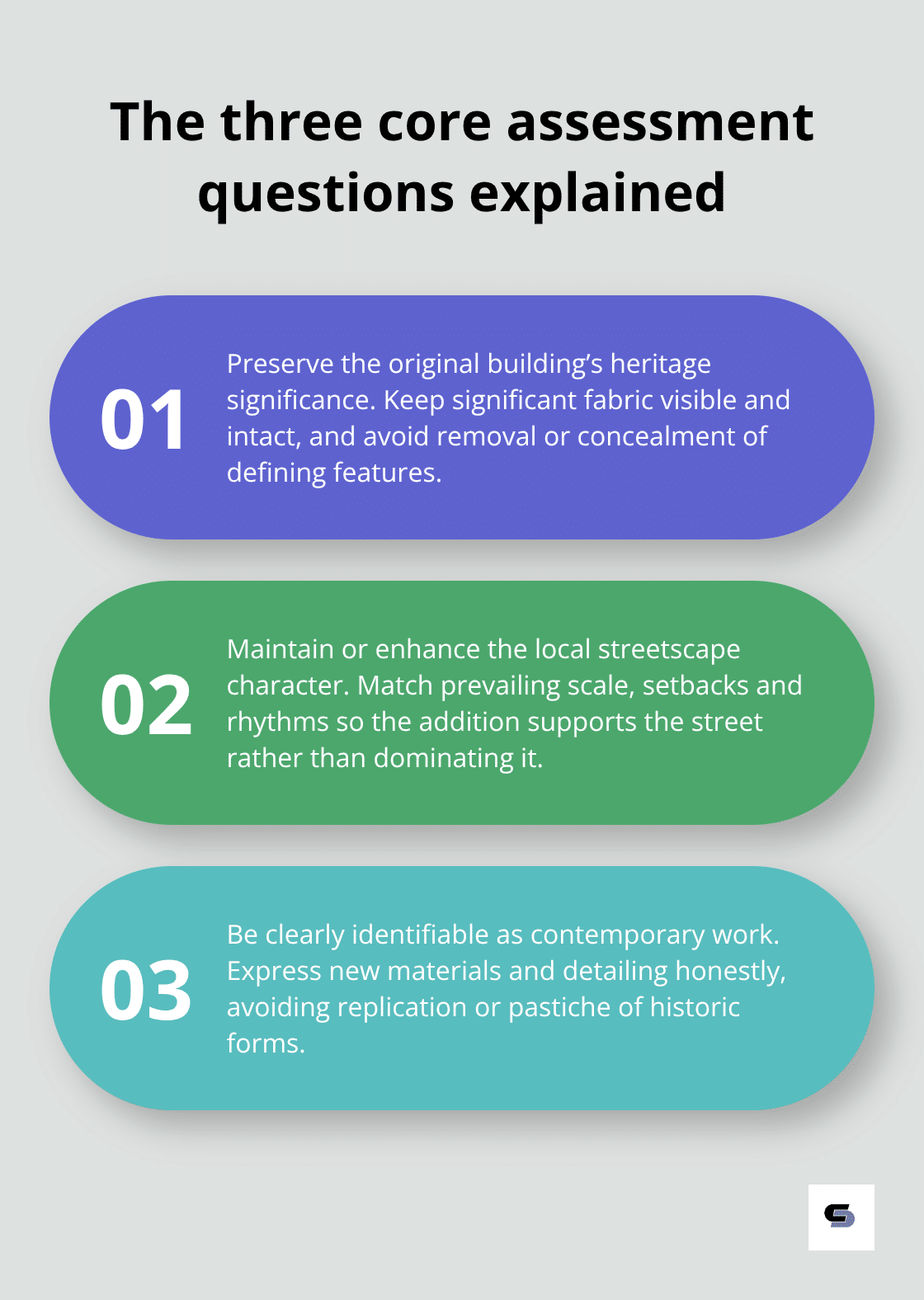
Planners examine site plans, elevations, materials schedules, and photographic documentation against your property’s Statement of Significance. This document outlines exactly what makes your building historically important, and any proposal that removes or conceals significant original features will face rejection.
Timeline and Assessment Framework
Council assessment typically takes 60 to 90 days, though complex applications involving heritage consultants’ reports can extend to 120 days. The Heritage Design Guide provides the assessment framework, emphasising that extensions must respect scale, proportion, setbacks, and material compatibility with the original structure. This means planners evaluate how your addition sits within the broader context of your street and neighbourhood.
Common Rejection Patterns and What Works
Most rejections stem from three mistakes: proposing additions that replicate historic architectural details instead of presenting contemporary design, positioning extensions where they dominate the street frontage or original facade, or selecting materials that clash with the building’s historic fabric. Extensions that step back from the original roofline, use complementary rather than matching materials, and maintain appropriate setbacks from boundaries tend to succeed. If your property has internal heritage controls listed in the Heritage Overlay schedule, even interior changes may require approval. Solar panels visible from the street also trigger permit requirements under heritage overlays, so visibility assessment matters before installation.
Preparing Your Application for Success
Understanding what planners actually look for transforms your approach to the application itself. Your Statement of Significance and design guidelines shape council expectations from the outset, and alignment with these documents significantly reduces approval timelines and the risk of costly redesigns. The next section explores how to translate these council requirements into design principles that work for your home.
How to Design Extensions That Honour Heritage Without Looking Pastiche
Material Selection and Visual Compatibility
Material selection separates successful heritage extensions from those that draw council objections. The Heritage Design Guide emphasises compatibility rather than replication, meaning your extension materials should complement the original building without attempting to match them exactly. If your 1920s brick home features rendered masonry, adding a contemporary extension in the same brick creates visual confusion about what’s original and what’s new. Instead, select high-quality materials that sit harmoniously alongside the existing fabric-rendered blockwork, timber cladding, or glazing all read clearly as contemporary work. City of Melbourne planners specifically check whether materials create visual discord, and they reject proposals where new work blends too closely with historic elements.
Proportions and Roofline Strategy
Proportions matter equally in heritage assessment. Your extension should maintain similar window-to-wall ratios and setback distances as the original building, but the roofline typically needs to step back or sit lower than the primary structure. Most approvals involve ground floor additions and second storey extensions positioned behind the existing roofline, creating clear visual separation. This approach keeps the original building’s silhouette intact from public viewpoints, which is what council assessment actually prioritises.
Positioning Away From Street Frontage
Positioning your extension away from the street frontage and primary facade is non-negotiable. Extensions that sit prominently on the street elevation face near-certain rejection because they dominate the heritage character that council controls are designed to protect. Ground floor additions work best when positioned to the rear or side, maintaining the original building’s visual presence from the street. Second storey work should sit entirely behind the front facade plane, with stepped setbacks that increase as you move toward the street.
Integrating Original Features Into Your Design
Preserving original features requires more than avoiding demolition-it demands thoughtful integration of existing elements into your extension design. Heritage Overlay schedules sometimes specify which features are protected, including external paint controls, tree protections, or internal details, so your Statement of Significance and schedule must guide every design decision. Original windows, doors, cornicing, and decorative brickwork should remain untouched and visible; if your extension requires structural work near these features, engage a heritage consultant early to develop protection strategies and document the work photographically.
Council assessors examine whether your design conceals significant original elements or forces their removal, and such proposals consistently fail approval. The practical approach involves designing your extension to sit independently of protected features rather than incorporating them into new spaces. If your heritage home has a significant front porch, rear garden fence, or decorative chimneystack, your extension footprint should avoid these elements entirely. This separation demonstrates respect for heritage significance and removes a major approval barrier. Extensions designed around original features rather than against them move through council assessment faster and face fewer redesign requests, ultimately reducing approval timelines and construction costs.
With your design principles established, the next step involves selecting the right specialists to translate these concepts into council-approved plans and construction documentation.
Selecting Builders and Consultants Who Understand Heritage Compliance
Heritage extensions demand specialists who understand both design principles and council assessment criteria, not general builders accustomed to standard residential work. The difference between approval success and costly redesigns comes down to team experience. A builder unfamiliar with heritage overlays may construct to standard specifications, only to discover mid-project that materials, proportions, or positioning violate council requirements. Heritage experience means understanding why planners reject certain approaches before drawings are submitted, avoiding expensive rework. When selecting your team, ask specifically about heritage projects completed in your council area and request references from recent clients whose homes sit within Heritage Overlays. Builders with genuine heritage experience can articulate exactly how they’ve navigated council assessment criteria and adapted designs based on planner feedback. This expertise typically costs more upfront but eliminates the far greater expense of design modifications after permit rejection or construction delays caused by compliance issues.
Coordinating Consultants, Planners, and Your Builder
Heritage consultants from the National Trust of Australia (Victoria) directory bring specialisation in conservation strategy and council liaison, while building designers translate design principles into technical documentation that councils actually assess. Your builder, heritage consultant, and planner must communicate throughout planning and construction to maintain alignment with council expectations. Many projects stall because consultants and builders work independently rather than collaboratively, creating inconsistencies between approved plans and site execution. Establish a single point of contact who coordinates all parties, typically your builder or project manager, and schedule regular meetings during permit preparation and construction phases.
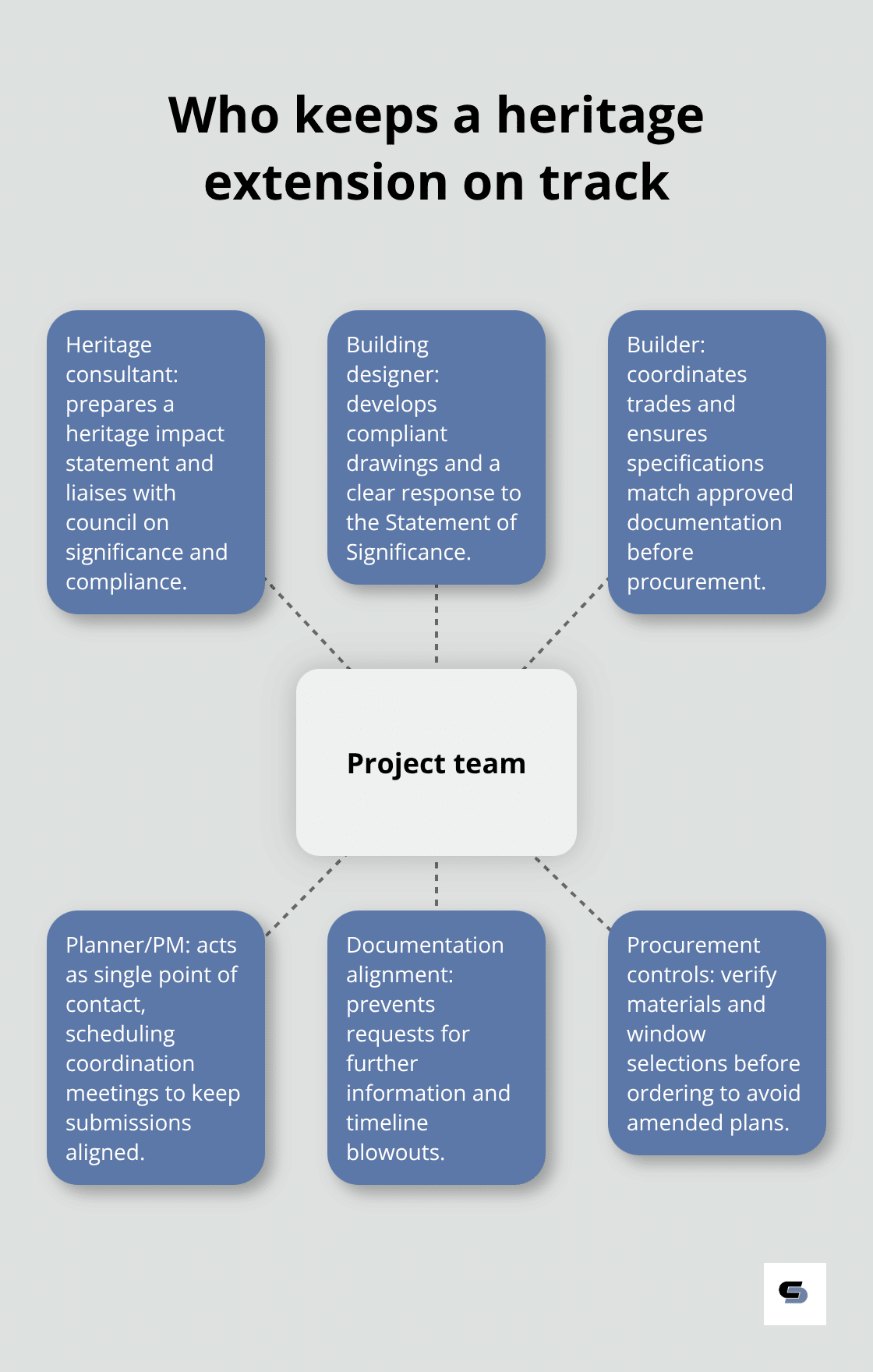
Council assessment timelines typically run 60 to 90 days, but this extends significantly if your consultant and designer produce documentation that lacks clarity about how your design addresses heritage significance or if your builder’s specifications differ from approved plans. Request your heritage consultant to prepare a heritage impact statement that explicitly references your property’s Statement of Significance and demonstrates how your extension preserves or responds appropriately to that significance. This document becomes essential during council assessment and prevents planners from requesting clarifications that delay approval. Your builder should confirm all material selections, window specifications, and cladding details against approved documentation before ordering supplies, as mid-construction changes often trigger council requests for amended plans.
Documentation Standards That Councils Require
Council assessment relies entirely on documentation quality, and incomplete or vague submissions extend approval timelines unnecessarily. Your application must include site plans showing setbacks and boundary distances, elevations demonstrating how your extension sits relative to the original building’s roofline and facade, materials schedules with product specifications and colour samples, and photographic documentation showing existing conditions and streetscape context. Heritage Overlay assessments specifically require clarity about what remains preserved, what changes, and what is new, so your drawings must distinguish between original and proposed elements through clear notation or colour coding.
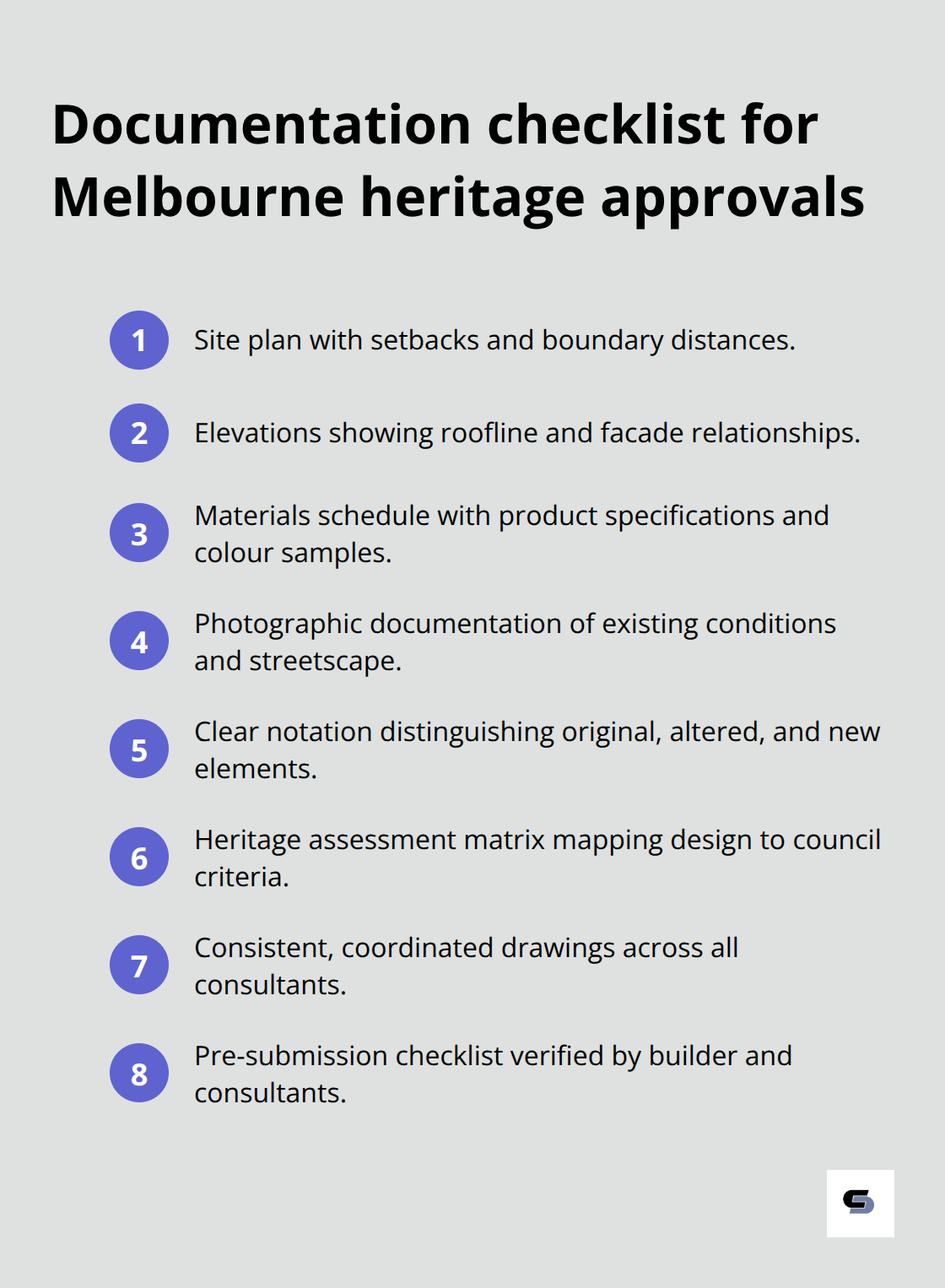
Many applications fail initial assessment because planners cannot determine from the submitted plans whether significant original features remain untouched or whether the design truly steps back from the primary facade. Request your building designer to include a heritage assessment matrix that maps each design decision directly to council assessment criteria outlined in the Heritage Design Guide. This approach demonstrates that your proposal actively addresses planner concerns rather than hoping they overlook potential conflicts. Councils in Melbourne assess heritage applications within 60 to 90 days when documentation is complete and clearly addresses heritage significance, but submissions lacking this clarity routinely trigger requests for additional information that extend timelines to 120 days or beyond. Your builder and consultants should establish a document checklist before submission and verify that every required element is present and clearly communicated in your application package.
Final Thoughts
Heritage extensions succeed when you align design decisions with council assessment criteria from the outset, rather than hoping planners overlook potential conflicts. The three core principles-preserving heritage significance, maintaining streetscape character, and presenting clearly identifiable contemporary work-shape every decision from material selection through construction. Your Statement of Significance and Heritage Design Guide provide the roadmap; treating them as constraints rather than guidelines transforms your approval prospects.
Confirm your heritage overlay status through CoMMaps or by contacting City of Melbourne on 9658 9658, then obtain your Statement of Significance to understand exactly what makes your building historically important. Engage a heritage consultant and building designer experienced in Melbourne council assessments before committing to design direction; this upfront investment prevents costly redesigns after permit rejection. Establish clear communication between your consultant, designer, and builder so that approved plans translate directly into site execution without mid-construction surprises that trigger council requests for amended documentation.
We at Cameron Construction guide Melbourne homeowners through heritage extensions across double storey additions, ground floor extensions, and second storey conversions. Our in-house designers and project managers understand how each Melbourne council assesses heritage applications, and we coordinate with heritage consultants to deliver approvals efficiently. Contact Cameron Construction to discuss how we translate council requirements into designs that respect your home’s character while creating the space you need.

![Second Storey Additions For Growing Families [Guide]](https://www.cameronconstruction.com.au/wp-content/uploads/emplibot/second-storey-additions-hero-1772259809-150x150.webp)