Heritage Extensions Melbourne: Balancing Preservation With Modern Living
Heritage extensions Melbourne require a different approach than standard renovations. Your property’s historical significance brings both opportunities and constraints that demand careful planning.
At Cameron Construction, we’ve guided countless Melbourne homeowners through heritage extension projects. The key is understanding your restrictions early so you can design additions that honour the past while meeting your modern lifestyle needs.
Understanding Heritage Restrictions in Melbourne
Planning Permits for Heritage Properties
Heritage properties in Melbourne fall under the Heritage Overlay, which means most external changes require a planning permit from the City of Melbourne. If your property is listed on the Victorian Heritage Register, you’ll need approval from Heritage Victoria before you commence any works. The City of Melbourne’s interactive maps (CoMMaps) show which properties have Heritage Overlay protection, so check this first before you plan your extension. Most external alterations, extensions, demolition of any part of the building, fence construction, and even repainting a surface a different colour require a permit. Internal changes typically don’t need permission unless your property has internal heritage controls (which are rare). Routine maintenance that replaces components like-for-like doesn’t need a permit if it doesn’t alter appearance or heritage significance. However, solar panels require a permit if visible from the street, so you should position them carefully during the design phase to save time and money.
What Council Planners Actually Assess
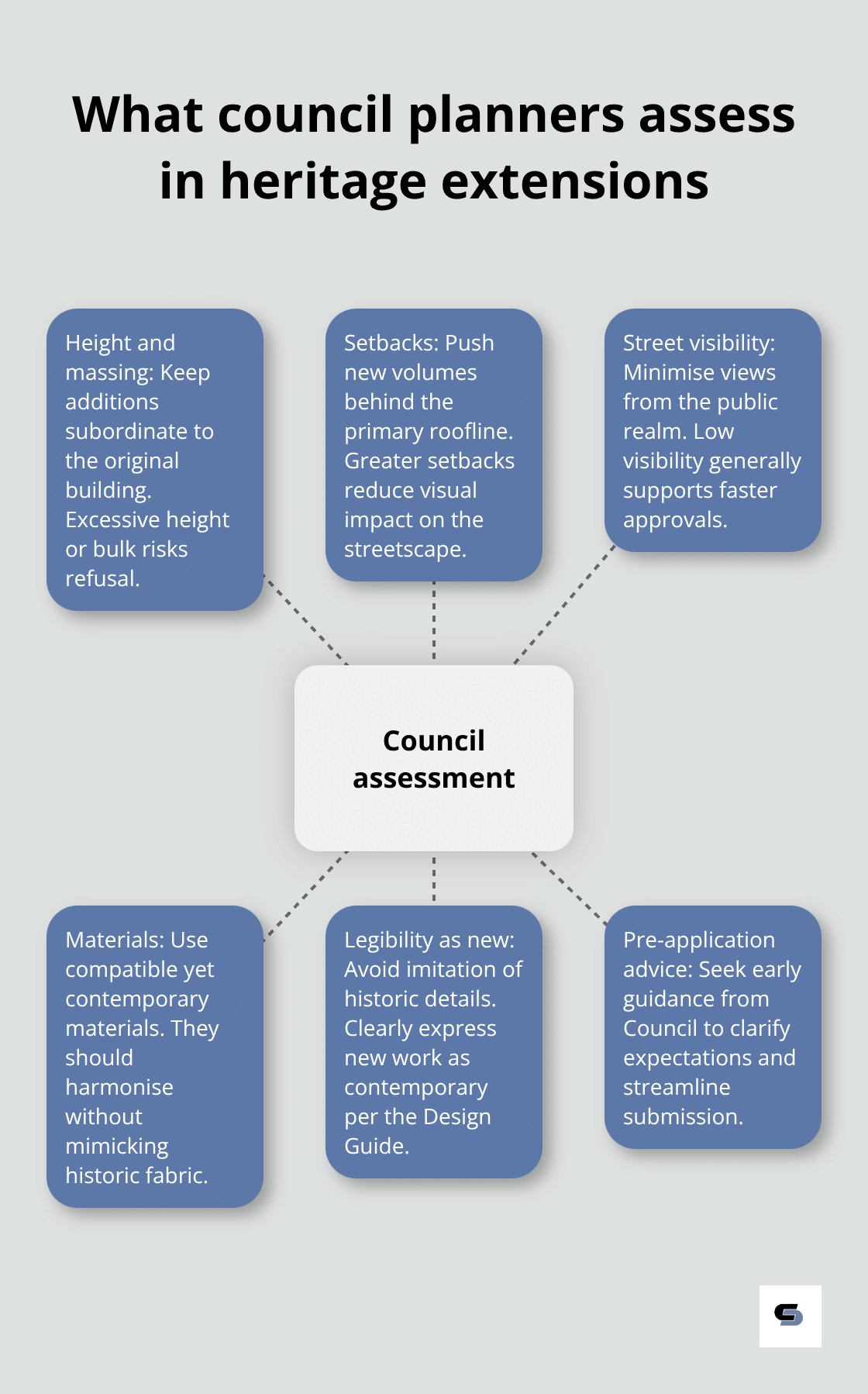
The planning assessment focuses on how your extension impacts the property’s heritage significance and the surrounding streetscape character. City of Melbourne planners evaluate height, setbacks, visibility from the street, and material choices to confirm new work respects the building’s original character. Extensions should be identifiable as new work rather than attempting to replicate historic forms and details-the Heritage Design Guide actually encourages this approach. A heritage consultant understands these nuances and can guide your architect or designer toward solutions that satisfy council requirements. You can obtain pre-application planning advice from the City of Melbourne at 9658 9658 before you lodge a formal application, which clarifies exactly what your project needs. The approval process typically takes 60 to 90 days for straightforward applications, though complex projects may extend beyond this timeframe.
Why Heritage Specialists Matter
You should engage a heritage consultant early in your project because they translate council requirements into practical design decisions. These specialists prevent costly redesigns later by identifying potential conflicts between your vision and heritage controls before you submit formal plans. Understanding these requirements upfront also means your extension adds genuine value to your home rather than creating compliance problems down the track. The next step involves working with architects and designers who can translate heritage constraints into compelling modern spaces that work for your family.
Design Approaches for Heritage Extensions
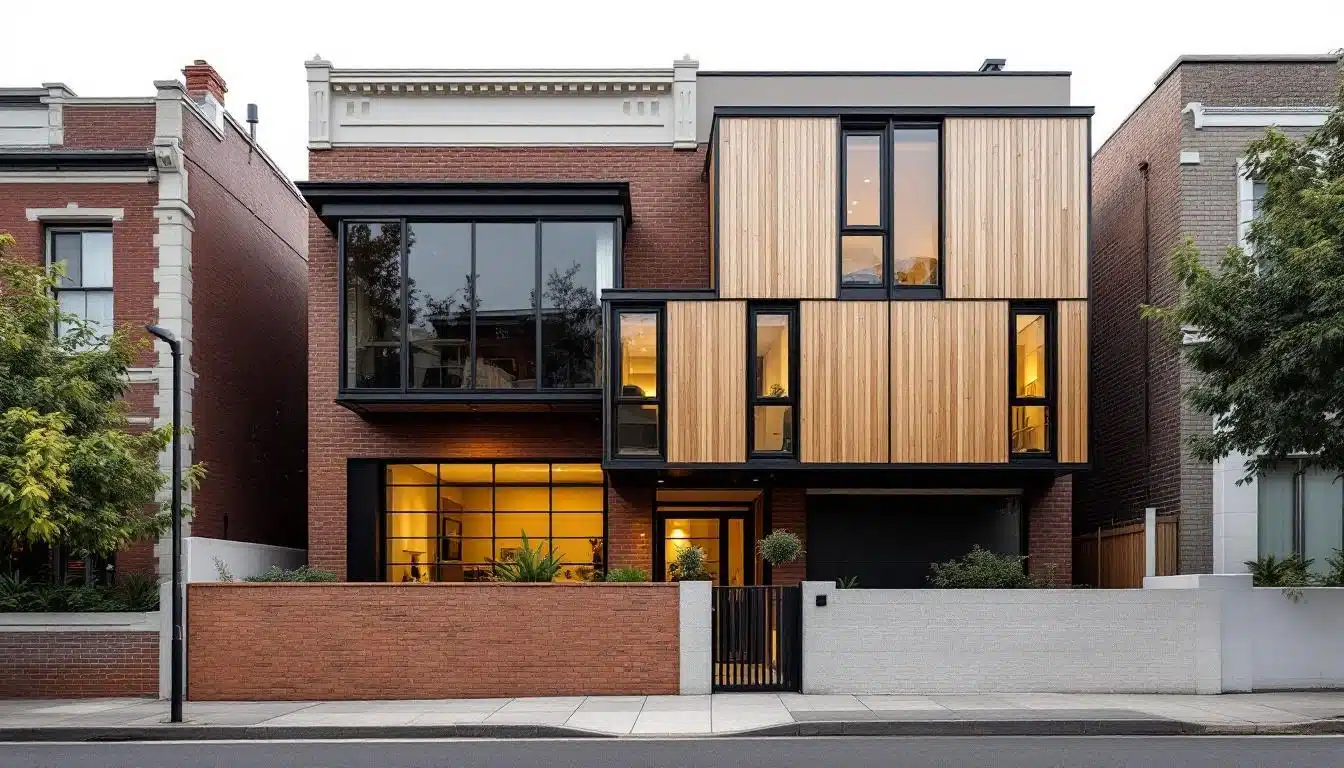
Heritage extensions succeed when they respect the original building’s character while creating genuinely livable modern spaces. The Heritage Design Guide emphasises that new work should be identifiable as new rather than attempting to replicate historic forms and details. This approach actually makes council assessment easier because planners can clearly distinguish between what’s original and what’s contemporary. Material compatibility matters significantly-using lime mortar in masonry repairs protects historic brickwork from damage that cement-based mortars cause. When you plan extensions, the original building’s scale, proportions, and material palette form your foundation, then you introduce new elements that complement rather than compete with these features. Extensions work best when they sit quietly alongside the heritage structure, allowing the original architecture to remain the visual focus from the street.
Material Choices That Satisfy Heritage Requirements
Selecting appropriate materials requires understanding what makes the original building significant. If your property features distinctive timber joinery, brickwork, or decorative metalwork, these elements guide material selection for new areas. Modern materials like large-format glazing or standing-seam metal cladding work beautifully in heritage extensions when you position them thoughtfully-typically on rear or side elevations rather than street-facing facades. The key distinction is setbacks and visibility: extensions set back from the street frontage or positioned behind existing rooflines face fewer restrictions than those directly visible from the street. You can make changes to your property to improve, update or renovate it through Heritage Victoria’s guidance on roofing, metalwork, and timber repairs, which provides specific technical standards that prevent costly rework during council assessment.
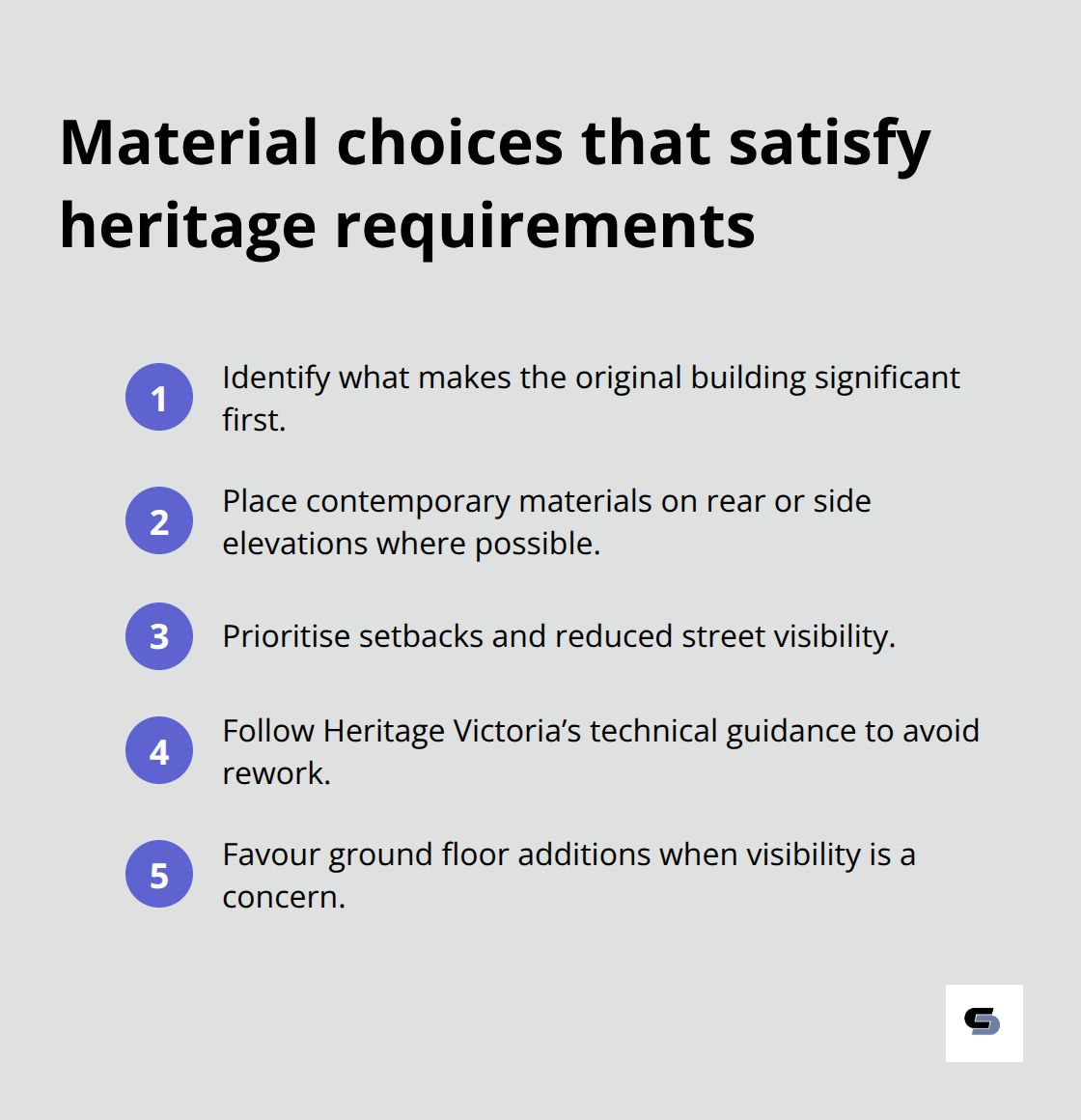
Ground floor additions typically offer more flexibility than second storey extensions because they’re often less visible from the street, making them an effective strategy for increasing living space without major visual impact.
Working With Heritage Consultants and Architects
A heritage consultant bridges the gap between your architect’s vision and council requirements, preventing the redesigns that extend timelines and budgets. These specialists know exactly which material choices, setbacks, and design moves satisfy City of Melbourne planners, meaning your project moves through approvals faster. They also identify opportunities you might miss-for example, internal reconfiguration that doesn’t require permits, or strategic placement of solar panels on non-street-facing roof areas. The pre-application advice service at City of Melbourne (9658 9658) gives you clarity before formal submission, but a heritage consultant interprets those conversations into practical design decisions. Projects with experienced heritage guidance typically avoid applications that require significant amendments before approval, saving months and substantial costs on your extension timeline. Once you’ve locked in your design approach and material strategy, the financial realities of heritage extensions become your next consideration.
The Cost and Timeline of Heritage Extensions
Budget Realities for Heritage Compliance
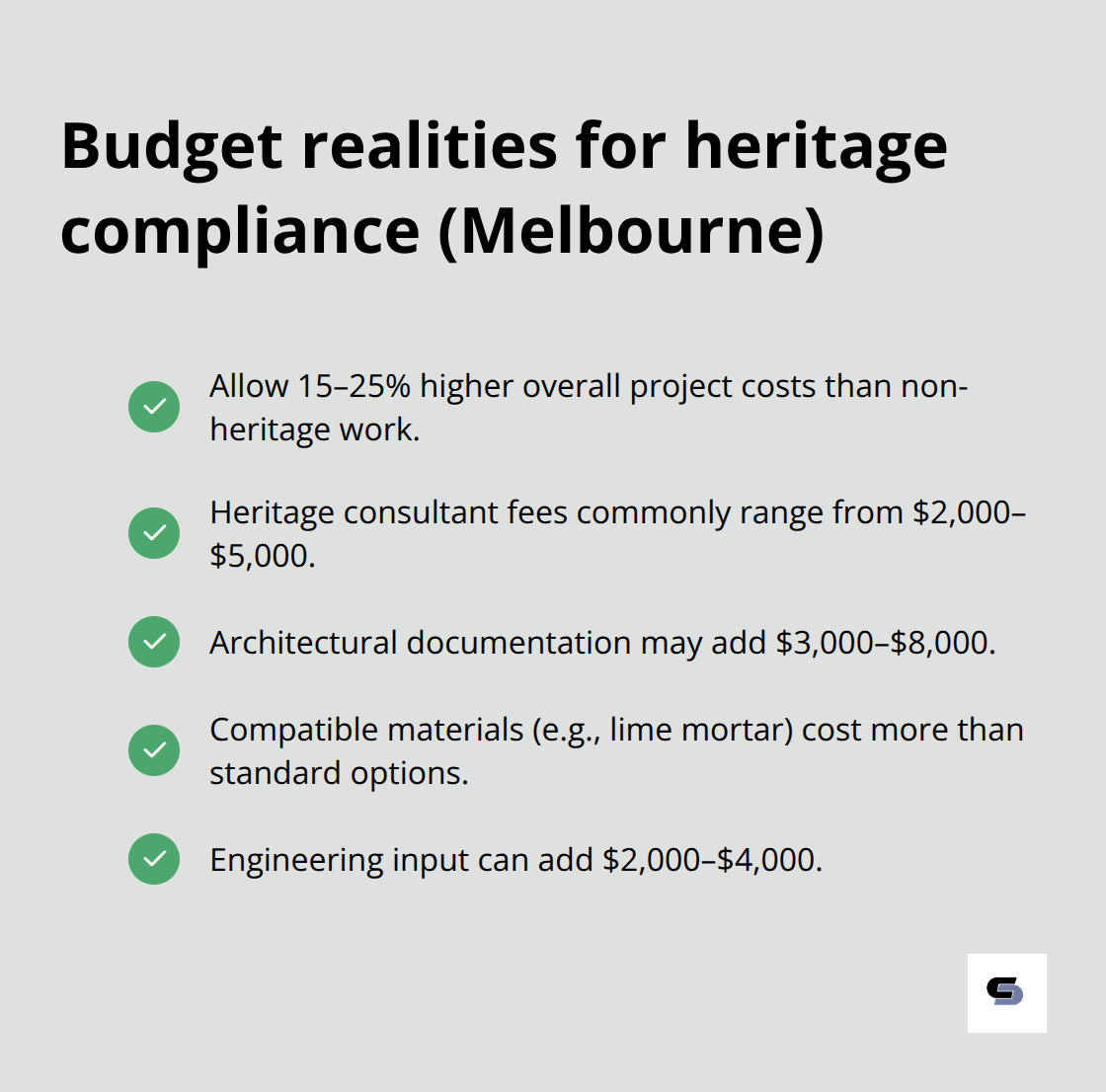
Heritage extensions demand a financial commitment beyond standard renovations because compliance work adds measurable expense. Heritage projects typically cost 15–25% more than comparable non-heritage additions due to heritage consultant fees, more rigorous material specifications, and extended approval timelines. A heritage consultant charges between $2,000 and $5,000 depending on project complexity, and this investment prevents far costlier mistakes later. Your architect must spend additional time on documentation and design iterations to satisfy council requirements, adding $3,000 to $8,000 to design fees. Material costs increase because compatible lime mortars for masonry repairs cost more than standard cement alternatives, and sourcing period-appropriate materials for visible elements often requires specialist suppliers. If your extension requires structural engineers to assess heritage fabric compatibility, add another $2,000 to $4,000.
Approval Timelines and Construction Delays
The approval process itself extends timelines significantly-straightforward heritage applications take 60 to 90 days, but projects requiring amendments or additional heritage documentation can stretch to 120–150 days. A planning permit is a legal document that allows a certain use or development to proceed on a specified parcel of land, and heritage overlays or neighbourhood character studies can extend approval periods. Ground floor additions typically progress faster through approvals than second storey extensions because they’re less visible from the street, potentially saving 2–4 weeks and associated holding costs. Planning ahead with a heritage consultant reduces the likelihood of amendments, keeping your project on track and protecting your budget from unexpected delays.
Long-Term Property Value and Investment Recovery
The financial reality improves substantially when you consider long-term property value. Heritage properties in established Melbourne suburbs command premium resale prices, and sympathetic extensions that respect heritage character typically add 8–12% to property value according to sales data from heritage-listed suburbs in inner Melbourne. A $500,000 heritage home with a $150,000 extension that gains 10% value uplift generates $65,000 in additional equity, offsetting the heritage compliance premium you paid upfront. Heritage Victoria’s guides on maintenance planning help you establish routine upkeep schedules that prevent expensive emergency repairs, protecting your investment over decades. Properties with formal maintenance plans documented through Heritage Victoria’s framework demonstrate better condition to future buyers, supporting stronger resale outcomes.
Why Thorough Planning Protects Your Budget
The approval delay actually works in your favour financially because it forces thorough planning that prevents costly construction problems-projects that rush through approvals without heritage consultant input frequently encounter site conditions requiring expensive mid-project redesigns. Melbourne’s heritage suburbs continue appreciating faster than non-heritage areas, making the initial compliance investment recoverable within 5–7 years for most properties. Your upfront investment in proper heritage guidance translates directly into faster approvals, fewer design iterations, and stronger long-term financial outcomes.
Final Thoughts
Heritage extensions Melbourne succeed when you respect the original building’s character while creating genuinely livable modern spaces for your family. Professional guidance transforms heritage compliance from a burden into an opportunity-a heritage consultant identifies design solutions you wouldn’t discover alone, your architect translates those solutions into compelling spaces, and council planners assess applications that clearly respect heritage significance. This collaboration costs money upfront but recovers that investment through faster approvals, fewer design iterations, and stronger long-term property appreciation.
Your heritage restrictions exist because these buildings matter to Melbourne’s character and history, and working within those constraints actually simplifies decision-making because your architect and heritage consultant have clear parameters rather than unlimited options. The approval process feels lengthy until you realise it prevents costly mistakes that would emerge during construction or compromise your property’s future value. Properties with thoughtful heritage extensions outperform standard renovations in resale value because they demonstrate genuine understanding of what makes a place significant.
Contact the City of Melbourne planning department at 9658 9658 to confirm your property’s heritage status, then engage a heritage consultant to guide your design direction. Cameron Construction helps you develop a concept that respects your home’s heritage character while creating the additional space your family needs.