
Full House Renovations Melbourne: Transform Every Room With Confidence
Full house renovations in Melbourne require careful planning across multiple rooms and systems. At Cameron Construction, we’ve guided hundreds of homeowners through this complex process, and we know the decisions that matter most.
This guide covers everything from design and permits through to budget management and financing. You’ll learn how to prioritise rooms, anticipate costs, and work with professionals who understand Melbourne’s specific requirements.
What Happens Before Construction Starts
A full house renovation in Melbourne demands upfront work that many homeowners underestimate. The planning and design phase sets the foundation for everything that follows-mistakes here create delays, cost blowouts, and regulatory headaches later. Start by documenting what you want to achieve in each room. Don’t settle for vague ideas like “open plan kitchen.” Instead, specify dimensions, material preferences, appliance brands, colour schemes, and fixture details. This clarity prevents misunderstandings with your builder and locks in costs. A qualified designer or architect must prepare detailed plans and specifications before you approach builders for quotes. The Victorian Building Authority requires that plans clearly identify who obtains planning and building permits, so your contract must settle this upfront. When sourcing quotes, compare at least three written proposals based on identical plans and specifications from each contractor. This removes variables and gives you genuine price comparison.
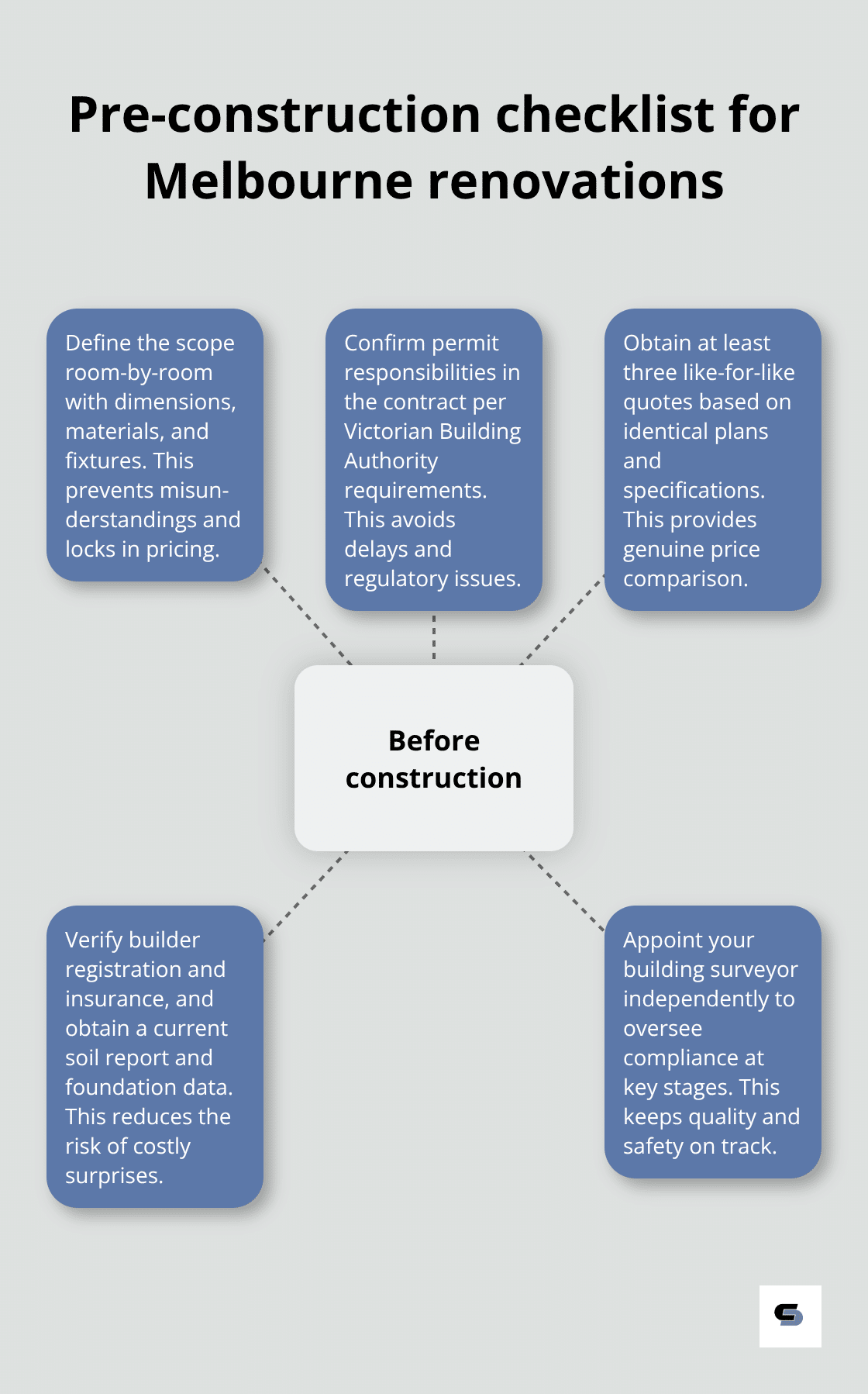
Confirm Your Permit Requirements Early
Melbourne’s permit requirements vary significantly by location and project scope. If your property sits in a heritage overlay, planning permission applies to nearly all works-including painting and fencing. Properties in the Central City Zone face different rules than suburban areas, so confirm your specific zone requirements before finalising designs. The City of Melbourne planning scheme outlines whether you need planning permits, building permits, parking permits, construction management permits, or fencing permits. Renovation waste cannot go in standard household bins; you’ll need a separate waste management plan and bins or skips permits if containers sit on public land. Noise regulations apply to construction sites, so plan work schedules that minimise neighbour disruption.
Verify Your Builder’s Credentials and Insurance
Your builder must hold registration with the Building and Plumbing Commission for major work. For projects over $10,000, a written major domestic building contract is mandatory; for work exceeding $16,000, the builder must provide a current certificate of domestic building insurance before accepting any deposit and hold public liability cover. Obtain a current soil report and foundation data before finalising designs and cost estimates-this information shapes footings and prevents costly surprises.
Understand the Construction Timeline
Full house renovations typically span six to twelve months depending on scope and complexity. The longest delays occur during the planning and permit phase, which can take two to four months in Melbourne depending on heritage status and zone complexity. Once permits are issued, construction progresses through defined stages: site preparation, structural frame, lock-up (weatherproof shell), and internal fixing. Payment must follow these stages-never pay for incomplete work. Coordinate with council inspectors, building surveyors, and trades throughout. Your surveyor cannot be appointed by the builder; you appoint them independently to verify compliance at each stage. Factor in weather delays, material lead times for appliances and fixtures, and potential discovery of building defects once walls open up. Your building surveyor must conduct inspections at foundation, frame, lock-up, and final stages to catch issues early. Obtain a Certificate of Final Inspection or Occupancy Permit at project completion before occupying renovated spaces.
With permits secured and timelines understood, the next critical decision involves prioritising which rooms deliver the greatest impact on your home’s function and value.
Room-by-Room Renovation Priorities
Kitchen and Bathroom Upgrades Lead the Investment
Kitchen and bathroom renovations command the highest priority in full house projects because they directly influence daily function and resale value. A kitchen renovation typically costs between $15,000 and $50,000 depending on cabinetry, appliances, and layout changes, while bathrooms range from $8,000 to $25,000. These rooms justify premium spending because they wear heavily and buyers scrutinise them closely.
Specify appliance brands, bench materials, and fixture finishes in your contract to lock costs and prevent substitutions that compromise quality. Bathrooms require particular attention to waterproofing, drainage, and ventilation compliance with the Victorian Building Code; poor execution here leads to hidden water damage that surfaces years later.
Living Spaces and Flooring Transform Daily Function
Living spaces and flooring deserve the next priority tier because they affect how you inhabit the home daily. Flooring choices-whether timber, polished concrete, or quality tiles-set the aesthetic tone across the entire property. Most Melbourne homes benefit from opening kitchen-living connections and improving natural light through strategic window placement and removal of non-load-bearing walls. This work requires structural engineering sign-off and building permits, so factor in design costs before commencing construction.
Bedrooms and Storage Solutions Complete the Picture
Bedrooms and storage solutions rank lower in priority because they contribute less to perceived value, yet poorly planned bedrooms waste space and reduce functionality. Built-in wardrobes and under-stair storage transform cramped layouts without requiring extensive structural work. Prioritise rooms based on use frequency, condition, and impact on your home’s resale appeal rather than spreading budget evenly across all spaces.
Sequencing Determines Construction Efficiency
The sequencing of room renovations matters as much as which rooms you prioritise. Structural work-removing walls, adding load-bearing beams, or extending the footprint-must occur first because it affects all downstream trades and creates site disruption. Kitchens and bathrooms follow structural work once the building envelope is secure and weatherproof. This staging prevents damage to newly installed finishes and allows trades to work efficiently.
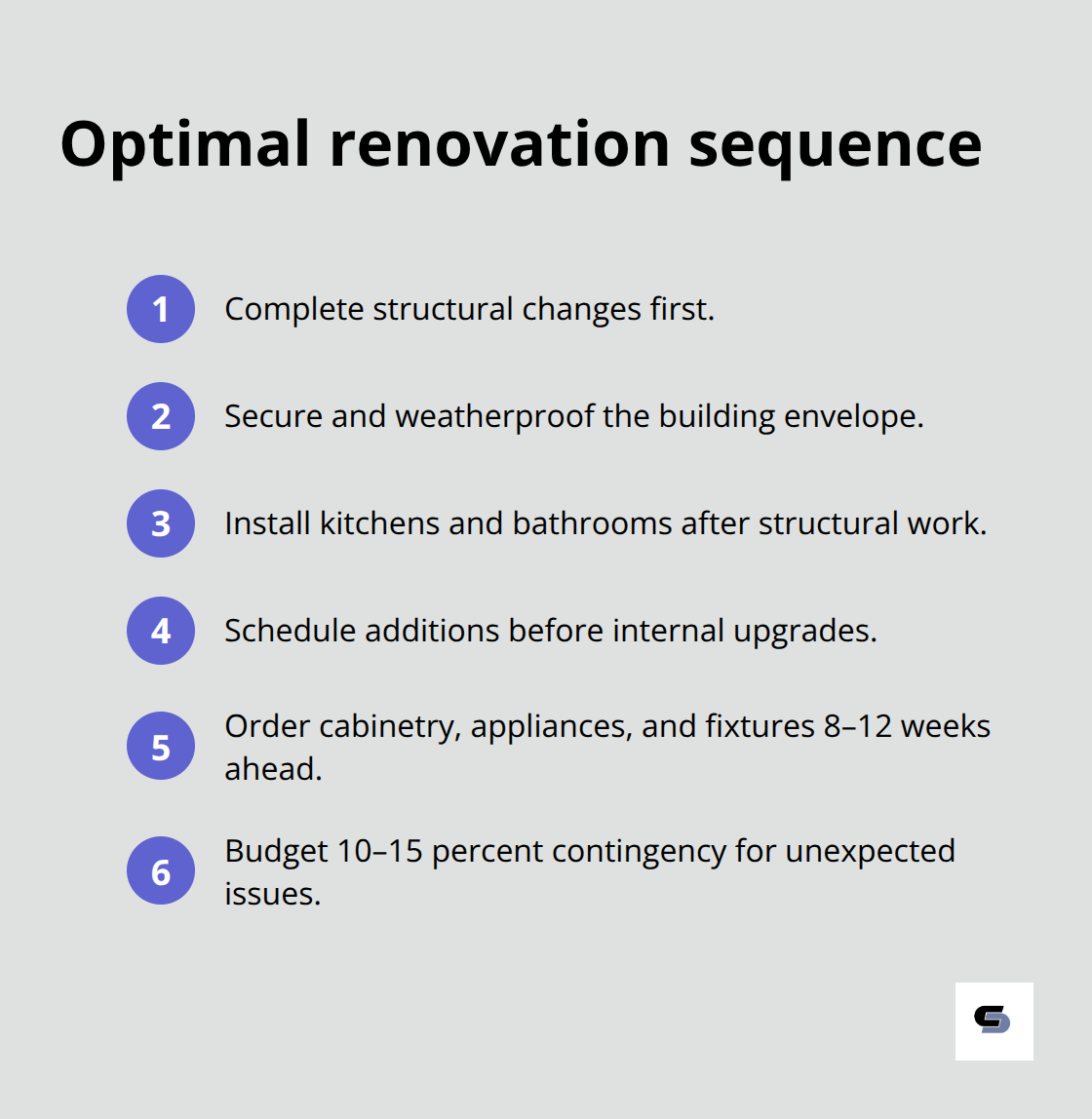
If your renovation includes a second storey or ground floor addition, these works consume the bulk of your timeline and budget before internal room upgrades begin. Material lead times for custom cabinetry, appliances, and fixtures now stretch eight to twelve weeks in many cases, so order these items early once your plans are locked. Unexpected structural issues-asbestos discovery, termite damage, or inadequate foundations-surface during demolition and can derail timelines if not budgeted for in your contingency allowance. Allocate 10–15 percent of your total budget as a contingency reserve specifically for these discoveries rather than treating contingency as discretionary spending.
Understanding which rooms matter most and how to sequence them sets the stage for the financial planning that follows. Your budget decisions in these priority areas directly shape the overall project cost and timeline.
What Full House Renovations Actually Cost
Full house renovations in Melbourne range from $200,000 to $800,000+ depending on scope, with labour typically consuming 35–45 percent of total project cost and materials the remainder. The Australian Bureau of Statistics reported alterations and additions to residential buildings contributed significant value to the market, reflecting sustained investment in home upgrades across Australia. For context, a kitchen renovation alone costs $15,000 to $50,000, bathrooms $8,000 to $25,000, and structural additions or second storey work $150,000 to $400,000+. Labour rates for licensed trades-plumbers, electricians, and gas fitters registered with the Building and Plumbing Commission-now range from $60 to $120 per hour depending on specialisation and experience. Material costs have stabilised after pandemic volatility, but custom cabinetry and imported appliances still carry eight to twelve week lead times, so ordering these items immediately after permit approval prevents timeline blowouts.
Breaking Down Labour and Material Expenses
A poorly estimated project costs you tens of thousands in overruns, but a properly scoped budget with accurate quotes prevents this. Obtain three written quotes based on identical plans and specifications from each contractor-this removes pricing variables and reveals genuine cost differences. Specify every fixture, appliance brand, bench material, and colour scheme in your contract to lock costs and prevent substitutions that inflate final invoices. Material lead times now stretch beyond what many homeowners anticipate; ordering kitchen cabinetry and appliances twelve weeks before installation prevents site delays and storage complications.
Contingencies Separate Realistic Budgets from Wishful Thinking
Allocate 10–15 percent of your total budget as contingency reserve specifically for structural discoveries that emerge during demolition. Asbestos removal, termite damage, inadequate foundations, rotted timber, or plumbing defects surface once walls open, and treating contingency as discretionary spending leaves you exposed to financing gaps. A $400,000 project with a $40,000 contingency buffer absorbs most unexpected costs without derailing your timeline. Your building surveyor identifies foundation and structural issues during site inspections, so obtain a current soil report and foundation data before finalising designs-this information shapes footing costs and prevents costly surprises. Payment must follow construction stages: site preparation, structural frame, lock-up, and internal fixing. Never pay for incomplete work, and ensure amounts paid at each stage comply with Victorian domestic building contract law. Weather delays, inspector availability, and trade scheduling gaps add two to four weeks to typical six to twelve month timelines, so build this into your expectations rather than treating it as failure.
Financing Options Require Early Conversation with Lenders
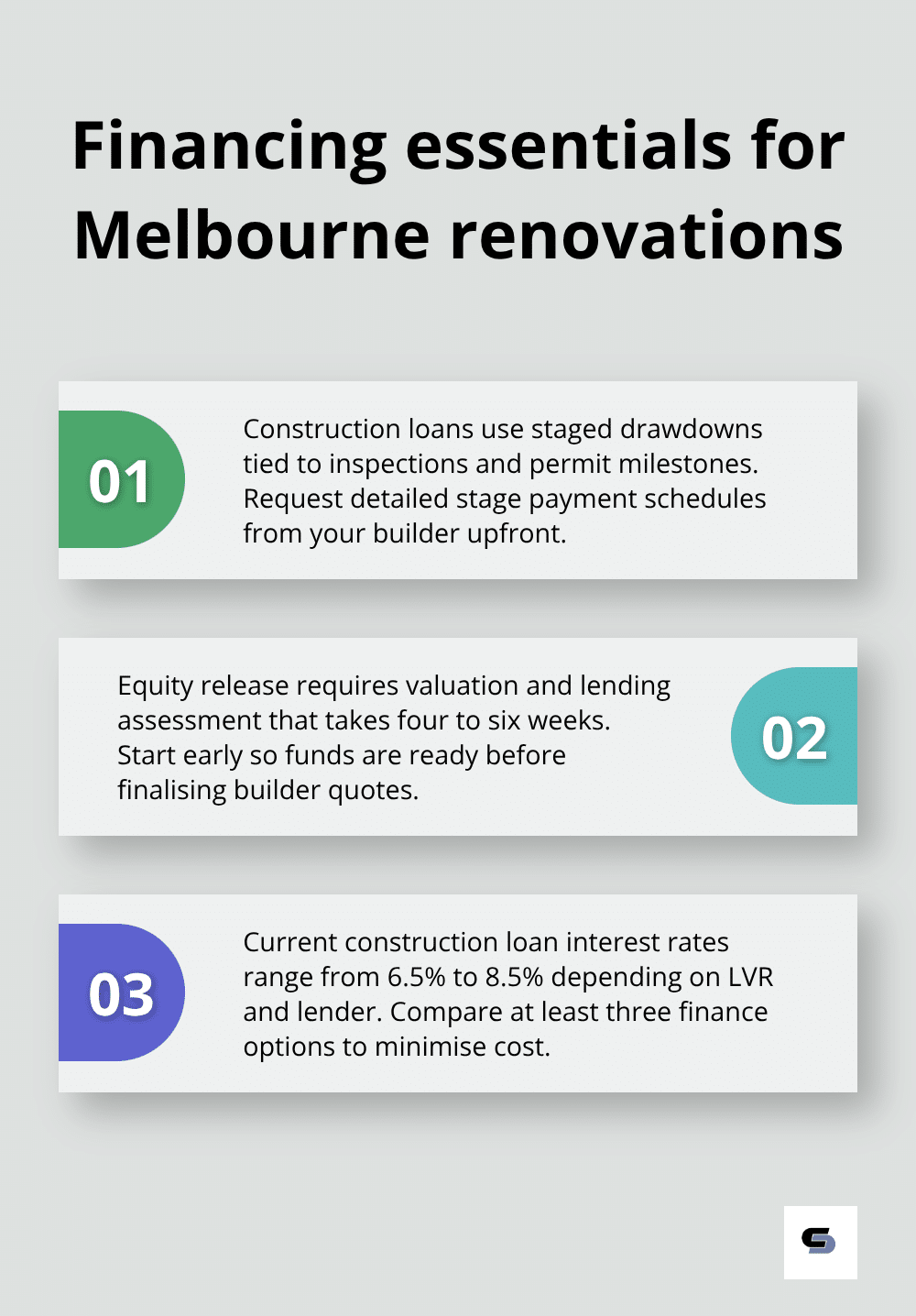
Home loan refinancing, construction loans, and equity release each carry different approval timelines and cost structures that demand early discussion with your bank or broker. Construction loans typically require staged drawdowns tied to inspections and permit milestones, so your builder must provide detailed stage payment schedules upfront. Equity release against your existing home value requires property valuation and lending assessment that takes four to six weeks, so initiate this conversation before finalising builder quotes. Interest rates on construction loans currently range from 6.5 to 8.5 percent depending on loan-to-value ratio and lender, so comparing three finance options prevents unnecessary cost.
Legal Review Protects Your Investment
A building lawyer should review your contract before you sign-cooling-off rights may not apply to major contracts, and legal review costs $1,500 to $3,000 but prevents costly disputes later. The Domestic Building Contracts Act 1995 and Australian Consumer Law protect you, but understanding your rights requires professional guidance before commitment. Never accept a contract with prime cost or provisional sum items that shift cost risk to you; instead, specify all items and lock prices. Variations to the contract must be in writing with agreed price adjustments, so resist pressure to approve changes verbally-this discipline prevents budget creep and disputes.
Final Thoughts
Full house renovations Melbourne demand coordination across planning, permits, construction, and financing that overwhelms homeowners attempting to manage alone. The decisions you make during the design phase directly determine whether your project finishes on time and within budget, or spirals into costly delays and disputes. Locking specifications, obtaining three written quotes based on identical plans, and allocating 10–15 percent contingency reserve separate successful projects from problematic ones.
Your builder’s credentials matter enormously; verify Building and Plumbing Commission registration, obtain current insurance certificates, and engage a building lawyer to review contracts before signing. These steps cost money upfront but prevent tens of thousands in overruns and legal disputes later. Professional project management transforms full house renovations from stressful chaos into structured progression through defined stages, with your building surveyor conducting inspections at foundation, frame, lock-up, and final stages to catch compliance issues early.
We at Cameron Construction have guided hundreds of Melbourne homeowners through full house renovations spanning double storey extensions, ground floor additions, and complete interior transformations. Contact Cameron Construction to discuss your renovation vision and receive a detailed scope and timeline based on your specific property and goals.