Double Storey Extensions That Maximise Natural Light
Double storey extensions transform how light moves through your home, but only when designed with precision. Poor planning leaves upper levels dark and disconnected from the rest of your living space.
At Cameron Construction, we’ve seen how strategic window placement, glazing choices, and material selection make the difference between a bright, welcoming addition and a shadowy mistake. This guide shows Melbourne homeowners exactly how to maximise natural light while meeting building codes and respecting neighbour amenity.
How Window Position and Staircase Layout Control Light Flow in Double Storey Extensions
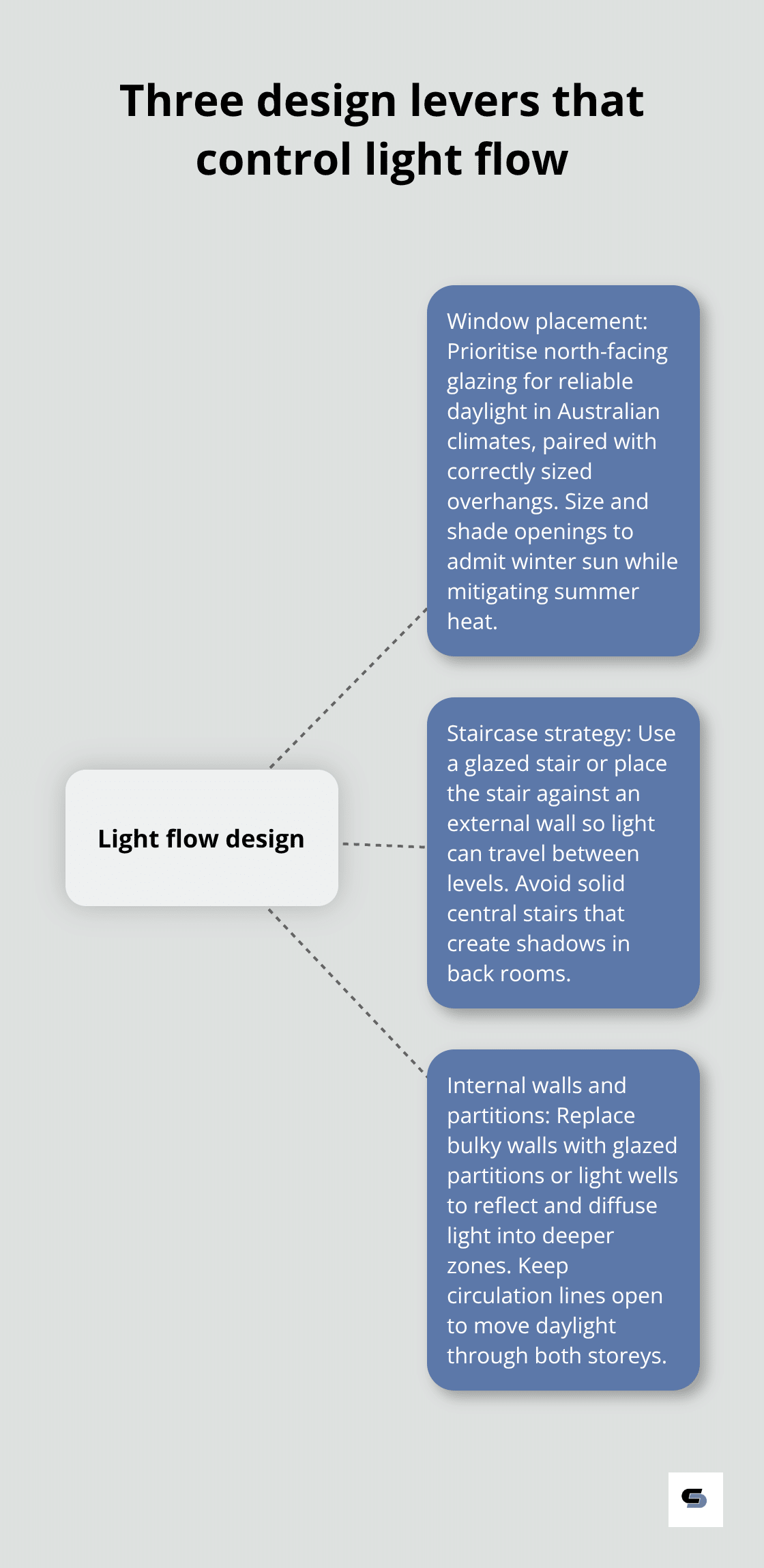
The difference between a bright double storey extension and a dark one often comes down to three decisions you make early in design: where windows sit, how your staircase functions, and whether internal walls block or distribute light. North-facing glazing delivers daylight in most Australian climates, but it requires correct shading to prevent summer overheating while admitting winter sun. According to Your Home shading guidelines, the distance between the top of glazing and underside of eaves should be 50% of overhang or 30% of window height to manage summer heat while allowing winter sun penetration. For a window that measures 1,350 to 2,100 millimetres tall, you need an eave of around 900 millimetres.
This isn’t decoration; it’s the difference between usable daylight and glare that forces you to close blinds.
Skylights and roof glazing demand different thinking
Skylights bring daylight deep into upper floors and corridors, but oversized skylights create excessive heat gain. Keep skylights conservative in size and apply external shading to manage summer performance. North-facing clerestory windows with overhangs deliver daylight to upper levels while shading roof-level heat, and double glazing helps in cooler Melbourne climates. Calculate sun angles for your latitude using apps or drafting software-at the equinox, the sun angle equals 90 degrees minus your latitude, and at summer solstice it rises 23.5 degrees higher. This calculation tells you exactly how deep your overhang needs to be to shade summer sun while allowing winter sun to penetrate. East and west elevations in Melbourne’s climate require vertical shading like louvres or blades rather than horizontal overhangs, because low-angle sun hits those walls hard in early morning and late afternoon.
Staircases become light barriers when positioned poorly
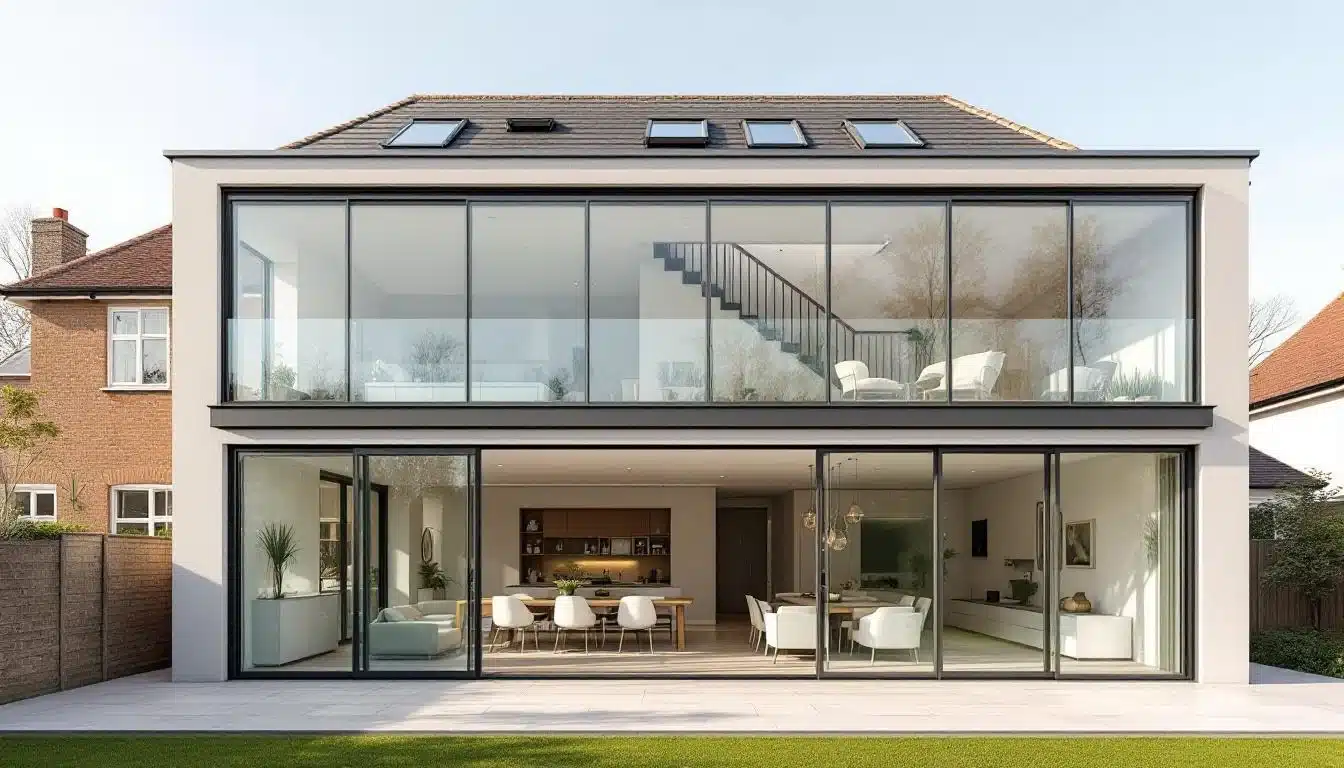
A solid staircase in the centre of your upper floor cuts light from reaching back rooms, while a glazed staircase or one positioned against an external wall lets light travel between levels. Open-plan ground floors with minimal internal walls or glazed partitions carry daylight further into the home than compartmentalised layouts. Light wells between storeys and glazed internal partitions reflect and diffuse light from bright spaces into darker areas. When planning your extension layout, orient main living zones to face north (in the southern hemisphere) and position service rooms at the rear to reduce shading of living spaces. This strategy works across both storeys-avoid creating dark pockets behind bulky walls on either level.
Glazing and layout work together to maximise brightness
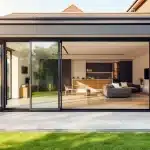
Floor-to-ceiling windows and wide sliding doors on key facades maximise daylight penetration, while upper-storey rooms benefit from dormers or enlarged glazing to improve daytime brightness in bedrooms and bathrooms. The investment in larger glazing areas pays back through reduced artificial lighting and a stronger connection between your new extension and the rest of your home. Consistent daylighting strategies on both floors create a cohesive sense of brightness rather than isolated bright and dark zones. These design choices set the foundation for the next critical step: ensuring your extension meets building code requirements while respecting neighbour amenity and privacy.
Permits and Compliance for Bright Double Storey Extensions
Building regulations protect your investment and your neighbours’ amenity. The National Construction Code 2022 sets energy efficiency standards that directly influence window positioning and glazing selection, while Melbourne councils require planning permits for upper storeys that assess shadow impact on adjoining properties. Before you start detailed design work, confirm with your local council whether you need both a planning permit and a building permit-the Building Act 1993 and Building Regulations 2018 govern this requirement.
What Planning Permits Demand from Your Design
Planning permits typically require design plans, a planning report, and shadow diagrams showing how your extension affects daylight and sun access to neighbouring properties. This is where your natural light strategy intersects with compliance: oversized north-facing windows that flood your extension with daylight may cast shadows across a neighbour’s garden at certain times of year, and the council will scrutinise this trade-off. Your designer should conduct a daylight analysis during the design phase using 3D modelling and digital daylight studies to optimise window sizes and positions before you submit planning documents.
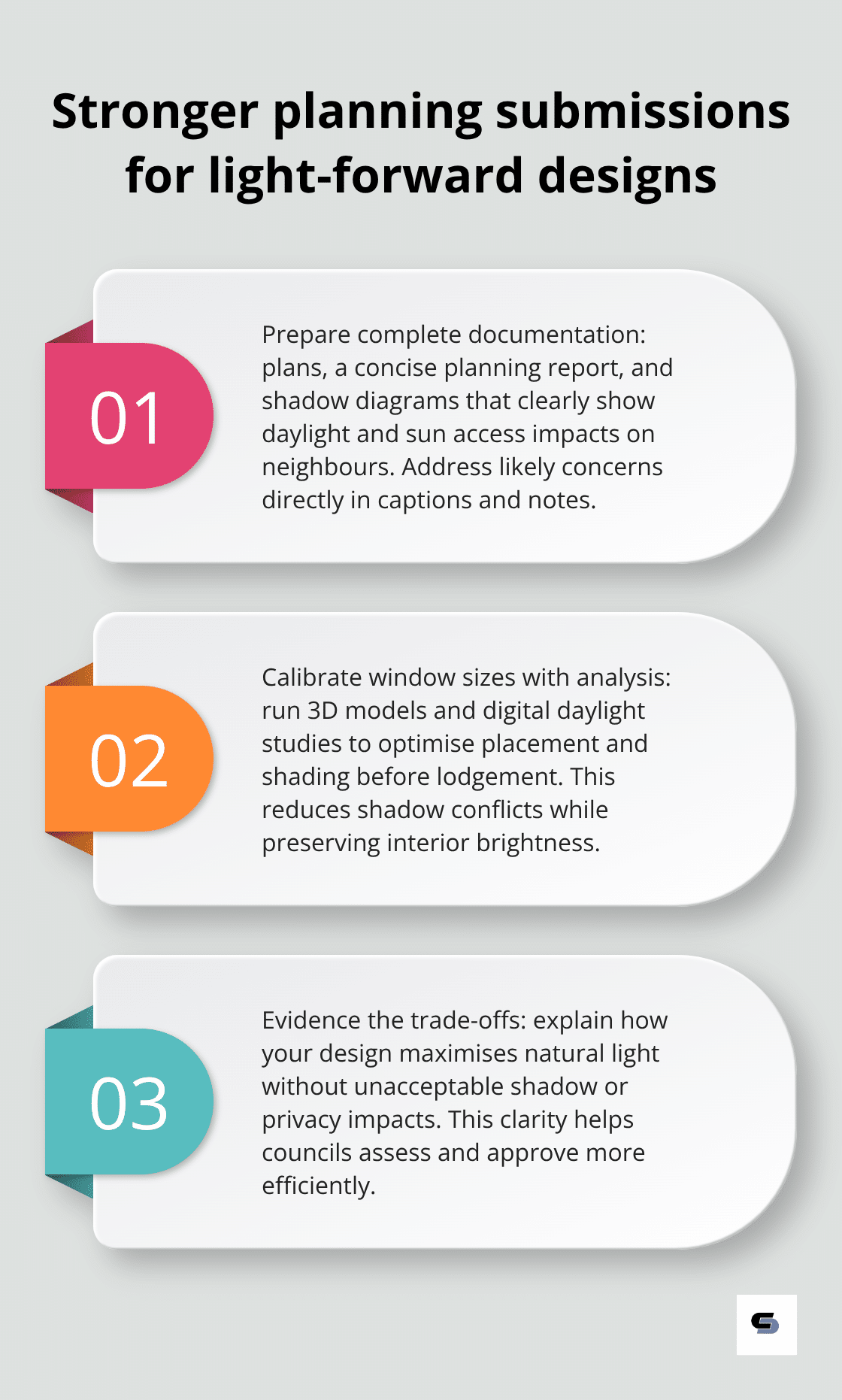
This upfront investment in design rigour means your permit application includes evidence that your extension maximises natural light without creating unacceptable shadow impacts or privacy breaches, significantly improving approval chances and eliminating post-approval redesigns.
Building Permits and Mandatory Inspections
A registered building surveyor applies for the building permit on your behalf, and the permit levy is calculated based on the cost of building work and must be paid before the permit is issued. The surveyor can issue a permit with conditions-ensure any daylighting-related conditions are clear and workable for your design before you commit to construction. Your permit will specify mandatory inspections at defined stages, so align your construction schedule with these checkpoints from the outset. Permits have commencement and completion dates; if you cannot start or finish on time, request extensions before deadlines to avoid lapse. If a permit lapses mid-project, work becomes illegal and the council can issue a building order to stop it, requiring a new permit with updated plans and additional fees.
Energy Efficiency Standards Shape Your Glazing Choices
The NCC 2022 energy efficiency provisions influence window placement, insulation, and glazing choices-high-performance double or triple glazing with low-emissivity coatings balances daylight transmission with thermal performance, meeting energy targets while maintaining brightness. Privacy and neighbour amenity require strategic thinking, not compromise. Obscure or frosted glass on certain elevations permits daylight entry while protecting sightlines into neighbouring properties, and clerestory windows positioned high on walls deliver light to circulation spaces without creating privacy concerns. Vertical shading devices like louvres or adjustable screens on east and west elevations manage low-angle sun exposure while preserving your neighbours’ amenity during early morning and late afternoon hours.
Working with Designers Who Understand Code Requirements
A designer who understands both natural light principles and building code requirements prevents costly delays and redesigns. Your designer handles the shadow diagrams and energy efficiency modelling that councils now expect, translating your vision for a bright extension into a compliant, approvable design. This technical expertise transforms what could be a frustrating permitting process into a straightforward path from concept to approval. With permits secured and compliance confirmed, the next phase focuses on the materials and finishes that amplify the natural light your design strategy has captured.
Materials and Finishes That Amplify Natural Light
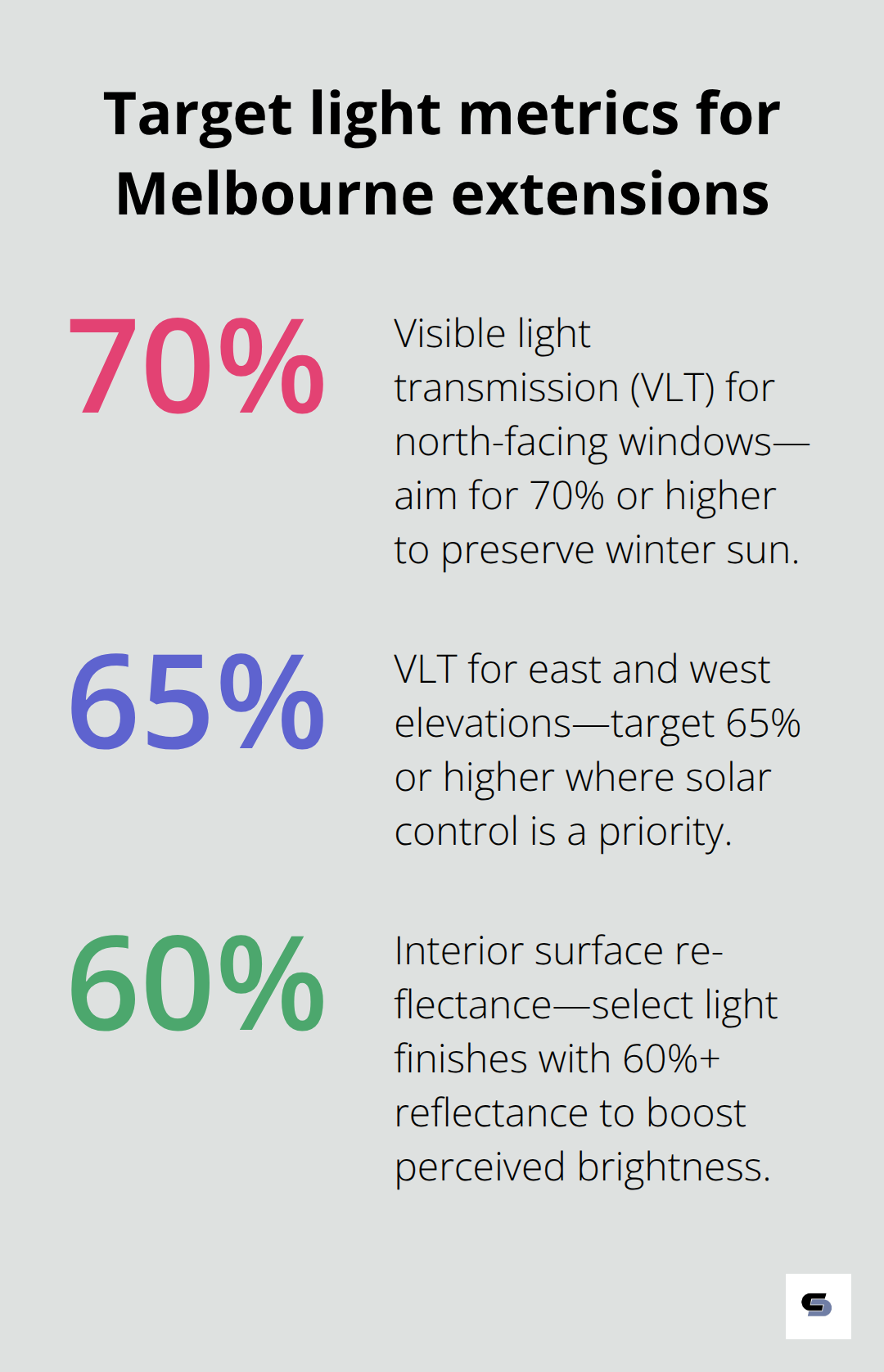
The glazing you select determines how much daylight actually enters your extension, and this decision matters more than window size alone. High-performance double glazing with low-emissivity coatings transmits daylight effectively while meeting NCC 2022 energy efficiency targets, but standard double glazing reduces light transmission by approximately 10–12% compared to single glazing due to reflection at glass surfaces. Triple glazing, common in cooler climates, reduces transmission further to around 15–20%, so in Melbourne’s temperate conditions, double glazing with a low-emissivity coating on the inner pane offers the best balance between thermal performance and daylight. Clear or low-tint glass preserves light transmission and colour accuracy inside rooms, whereas heavily tinted or reflective panes cut daylight penetration significantly and create a disconnected feel between your extension and the garden. Specify glass with a light transmission value above 70% for north-facing windows and above 65% for east and west elevations where solar control matters more.
Interior Finishes That Reflect and Distribute Light
Interior finishes amplify or diminish the light your glazing captures. Soft whites, pale woods, and polished concrete floors bounce daylight around rooms more effectively than dark finishes, and light-coloured surfaces with reflectance values above 60% increase perceived brightness compared to darker alternatives. Your choice of paint colour, flooring material, and ceiling finish directly impacts how bright your extension feels at different times of day, independent of window area. Matte finishes scatter light diffusely and reduce glare, while glossy or semi-gloss finishes on ceilings and upper walls reflect light more efficiently into deeper interior spaces. Pale timber species like ash, oak, or blonde-toned engineered timber maintain warmth while reflecting light, whereas darker timbers like walnut or blackbutt absorb light and work best on accent walls or in spaces already receiving strong daylight.
External Surfaces and Landscaping Control Light Entry
Light-coloured external paving and rendered surfaces reflect daylight back toward glazing and reduce harsh contrasts between bright exterior and darker interior spaces, improving visual comfort and reducing the perceived brightness difference that forces you to close blinds. Native deciduous plants on east and west elevations allow winter sun to penetrate while blocking high summer angles, and evergreen species in hot climates provide year-round shading without sacrificing winter daylight on north-facing windows. Airtight, high-performance windows paired with external shading prevent condensation and maintain warm internal surface temperatures, eliminating the cold glass effect that makes spaces feel darker and less comfortable. Maintain a gap between the top of glazing and eaves of around 30% of window height to preserve winter sun penetration and reduce nighttime heat loss through glass.
Internal Glazing and Vertical Light Transfer
Internal glazing and partitions deserve equal attention to external glazing. Frameless glass partitions between living spaces carry daylight further than solid walls, and mirrors positioned opposite windows amplify light and create perceived depth. Polished concrete or light-coloured tile flooring on ground floors reflects light upward into upper levels more effectively than carpeting, and this choice compounds across both storeys of your extension. The investment in high-performance glazing, reflective finishes, and strategic material selection transforms your natural light design from concept into lived experience, delivering the brightness and connection you planned without compromise.
Final Thoughts
Natural light transforms double storey extensions from functional additions into spaces that feel connected to your home and garden. The strategies we’ve covered-from north-facing window positioning and strategic shading to high-performance glazing and reflective interior finishes-work together to deliver brightness without compromise. Strategy alone doesn’t guarantee results; the difference between a well-lit extension and one that disappoints comes down to execution: precise calculations of sun angles, compliance with council shadow diagrams, material selections that balance thermal performance with light transmission, and construction that maintains airtightness and performance.
Melbourne homeowners planning extensions face competing demands (maximum daylight, NCC 2022 energy efficiency standards, council planning requirements, and neighbour amenity). These aren’t obstacles to work around-they’re guardrails that protect your investment and your relationship with your community. A designer who understands both natural light principles and building code requirements prevents costly redesigns and delays by conducting daylight analysis during the design phase, preparing shadow diagrams that demonstrate compliance, and specifying glazing and materials that deliver brightness while meeting every regulatory requirement.
The path from concept to a bright, compliant double storey extension requires coordination across design, planning, and construction. We at Cameron Construction handle this complexity as standard practice, with in-house designers and engineers who work through the technical requirements while our project managers navigate permits and inspections across Melbourne’s councils. Contact us to discuss how we can deliver a design that maximises brightness while meeting every requirement your council demands.