Contemporary extension design Melbourne: Fresh Aesthetics, Practical Function
Contemporary extension design in Melbourne demands more than just good looks-it requires a thoughtful balance between visual appeal and everyday practicality.
At Cameron Construction, we’ve seen too many homeowners choose aesthetics over function, only to regret it later. The best extensions work hard for you, offering both the modern style you want and the liveable spaces your family actually needs.
This guide walks you through the principles, planning steps, and professional support that turn a beautiful extension concept into a home that truly works.
What makes contemporary design work in Melbourne homes
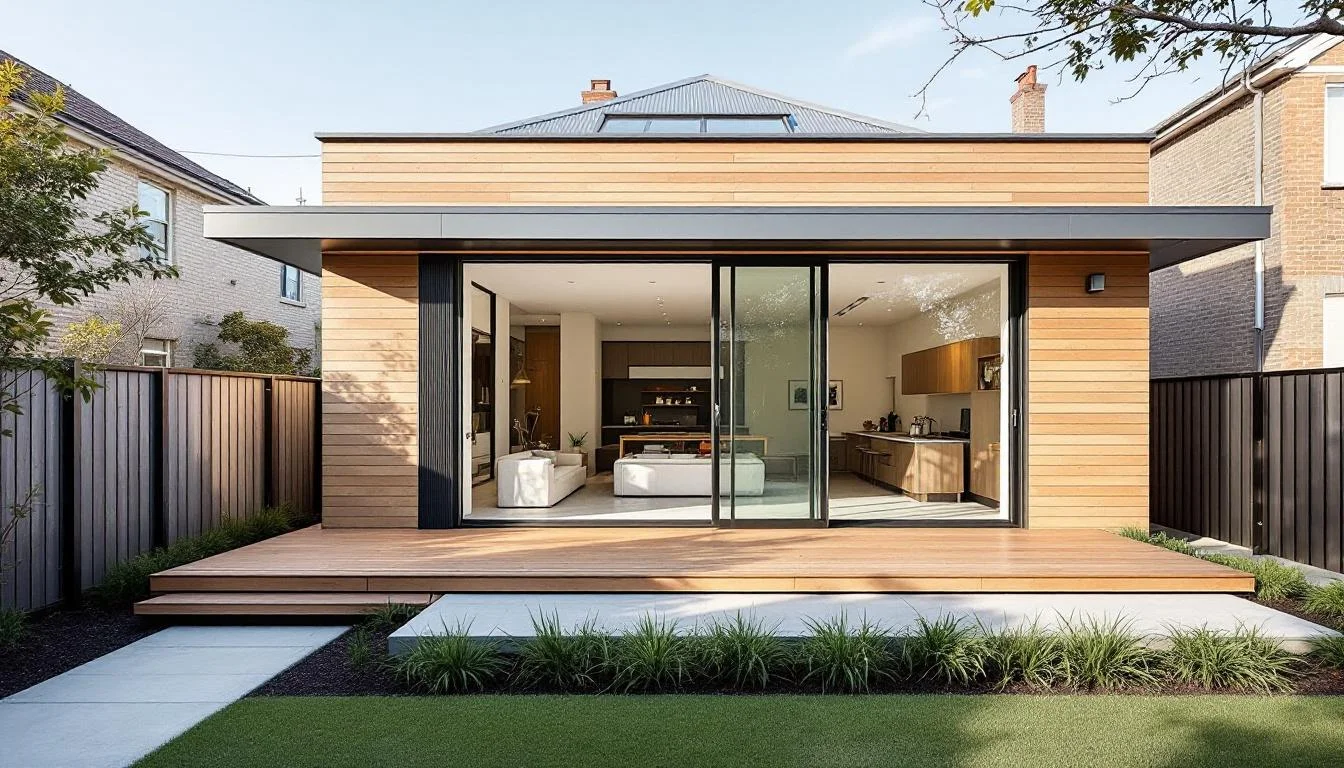
Contemporary design in Melbourne extensions succeeds when it strips away unnecessary detail and focuses on what your home actually needs. Clean lines matter, but not because they look trendy-they work because they reduce visual clutter, make spaces feel larger, and simplify construction. Homeowners who embrace restraint in their design choices end up with extensions that feel timeless rather than dated within five years. The key is rejecting the impulse to add decorative elements just for impact. Instead, every material choice, every surface finish, and every structural element should serve a purpose. This approach also reduces costs during construction because fewer complex details mean faster building schedules and fewer opportunities for costly mistakes.
Respecting existing character without copying it
Your extension must respect the existing character of your home without copying it slavishly. Melbourne’s residential areas contain everything from Victorian terraces to 1970s brick veneer to contemporary infill, and a successful addition acknowledges what came before while clearly stating it’s new. The Good Design + Heritage guidelines emphasise that new work should be distinguishable from heritage fabric while remaining respectful-avoid imitating the original style, and instead use legible modern language that complements the existing building. If your home has bluestone, rendered brick, or timber weatherboards, your extension can echo these material choices without replicating the original details. Exposed concrete, Corten steel, or large-format timber cladding sit comfortably alongside older fabric when the proportions and detailing feel contemporary. This strategy prevents your extension from looking like a pastiche while maintaining visual coherence across the whole property.
Material selection shapes durability and maintenance
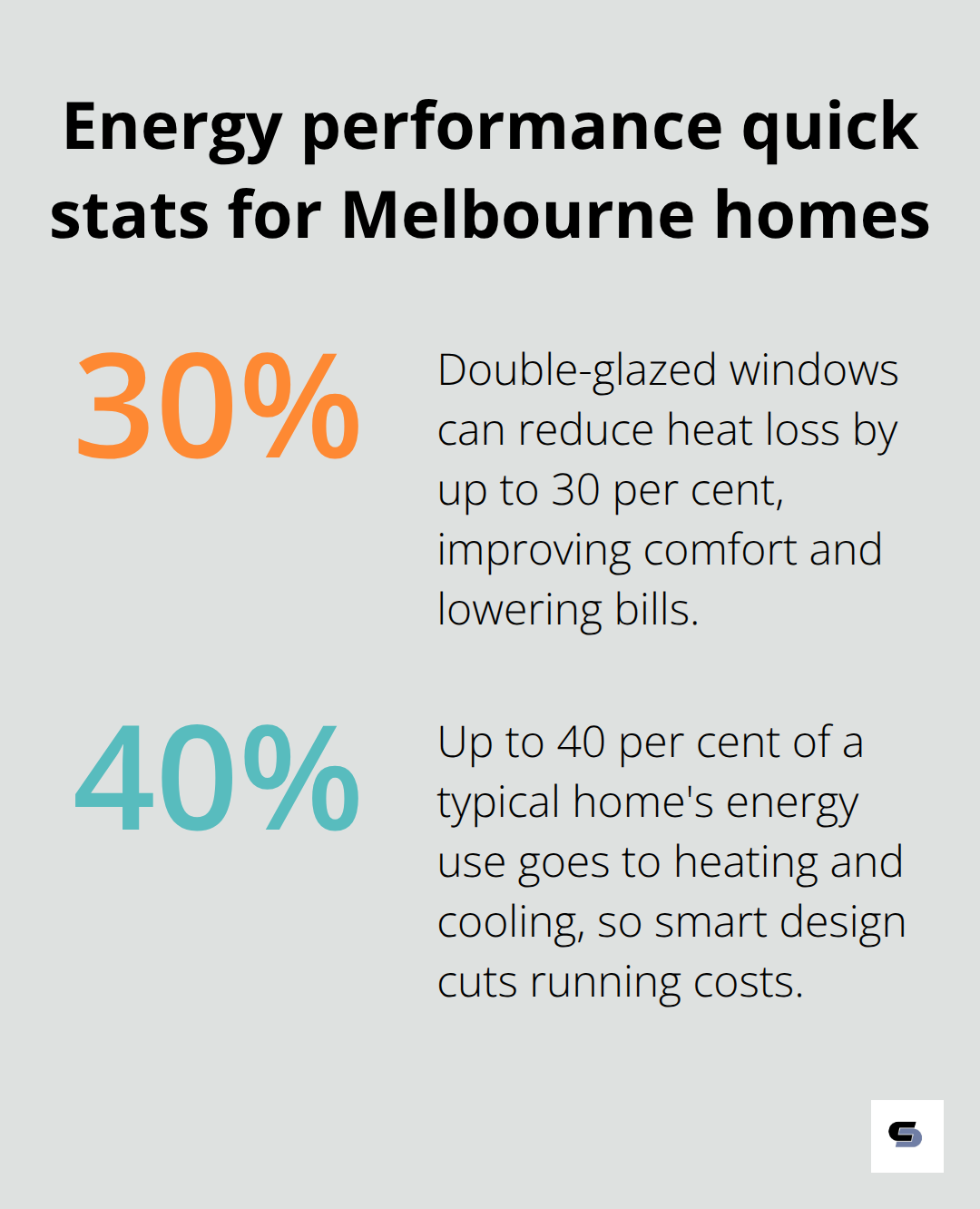
Modern materials for Melbourne extensions should prioritise performance over novelty. High-performance glazing reduces your heating and cooling load-double-glazed windows can reduce heat loss by up to 30 per cent, directly cutting running costs and improving comfort year-round. Composite cladding, rendered blockwork, and powder-coated steel require far less maintenance than timber and won’t deteriorate from Melbourne’s variable moisture.
Polished concrete floors or large-format porcelain tiles provide thermal mass, which helps regulate temperature without active heating or cooling. The choice between materials should factor in embodied energy-reusing existing materials or selecting locally sourced options reduces the environmental impact of your extension and aligns with long-term performance goals.
With material and aesthetic foundations in place, the next step involves translating these principles into spaces that actually function for your family’s daily life.
How to make your extension work for the way you actually live
Open plan spaces need proper ventilation and zoning
Open plan living has become standard in contemporary extensions, but too many homeowners treat it as a one-size-fits-all solution rather than a design choice that must match their lifestyle. The Australian Government’s Your Home guidance emphasises that open plan spaces work best when they’re designed for natural cross-ventilation, which means positioning windows and doors to create breeze pathways that reduce cooling loads during Melbourne’s warm months. If your family cooks regularly, an open kitchen that directly adjoins a living area without proper ventilation design will fill your entire extension with cooking odours and heat. Instead, position your kitchen to one side with a door you can close, or design the space so your cooktop sits near an operable window.
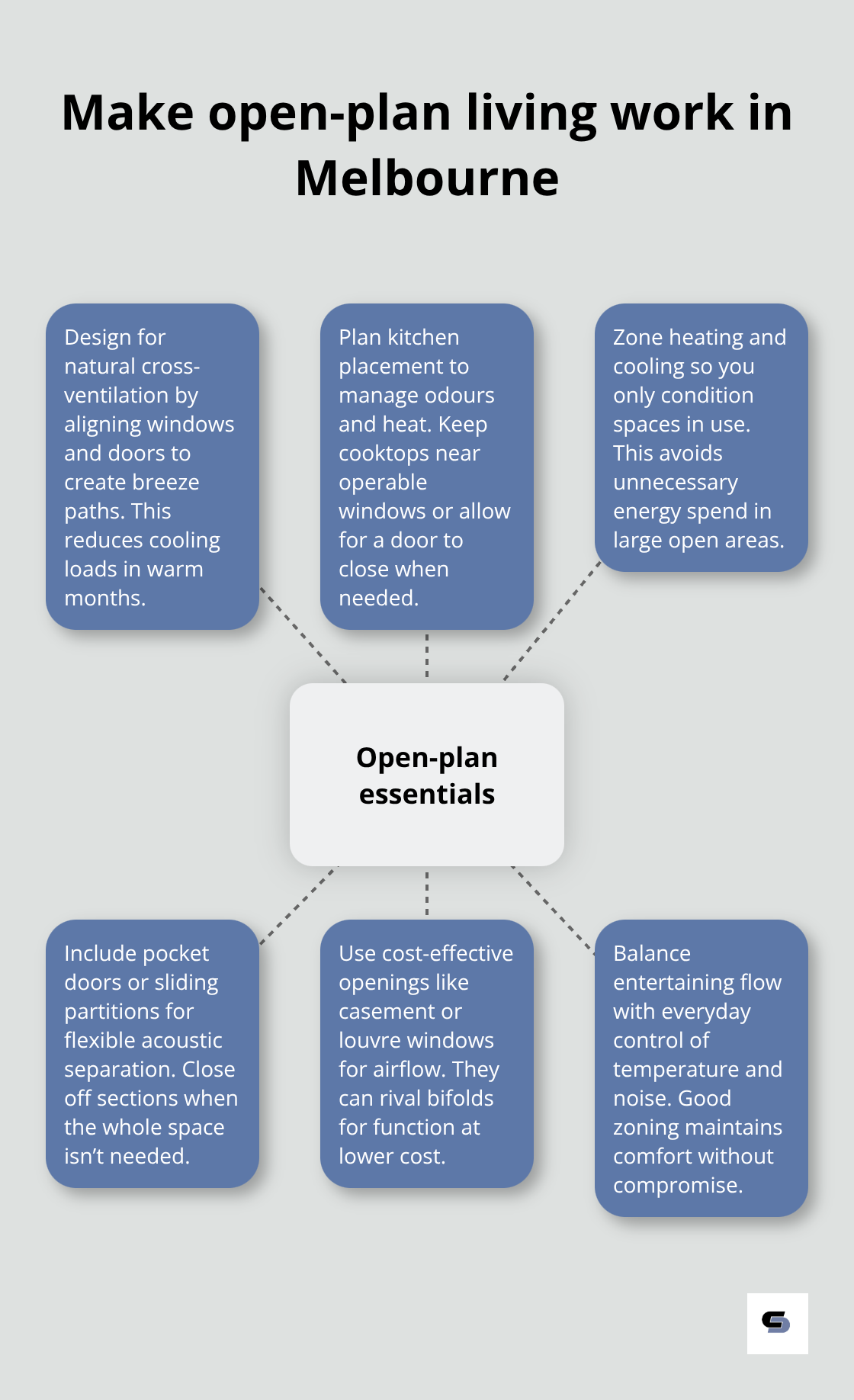
Up to 40 per cent of a typical home’s energy use goes to heating and cooling, so if your open plan extension lacks the ability to zone heating and cooling separately, you’ll pay a significant penalty on running costs. This is why contemporary extensions that succeed in Melbourne include pocket doors or sliding partitions that allow you to close off sections when you’re only using part of the space. Open plan works brilliantly for entertaining and daily movement through your home, but it only functions properly when you can control temperature, ventilation, and acoustic separation.
Position windows to capture winter sun and block summer heat
Natural light matters far more than you might think for both comfort and energy performance. North-facing glazing in Melbourne captures winter sun without summer overheating if you include adequate shading, which is why contemporary extensions almost always prioritise large windows on the north elevation and limit glazing on the east and west where afternoon sun creates unwanted heat gain. The Heritage Design Guide notes that new extensions should maintain legibility by considering setting and views, and this principle applies equally to residential design-your extension should frame views worth looking at and position windows to draw light deep into the space. Casement and louvre windows deliver superior cross-ventilation compared to fixed glazing, and they cost significantly less than bifold doors while achieving similar functionality. If your extension includes a courtyard or outdoor room, position it to the north or east so morning and winter sun penetrate your living spaces.
Thermal mass and exposed surfaces reduce heating demand
Thermal mass-exposed concrete floors, tiled surfaces, or brick-absorbs winter heat and releases it slowly overnight, reducing your heating demand. Removing carpet and exposing concrete or tile can raise your home’s energy rating by approximately one star in many Melbourne climates. This simple material choice delivers measurable performance gains without additional cost.
Built-in storage eliminates clutter and maximises floor space
Storage solutions must be designed into the space from the outset rather than added afterwards with freestanding furniture that consumes floor area and creates visual clutter. Contemporary design demands built-in cabinetry that sits flush to walls, maximises vertical space, and integrates seamlessly with your chosen material palette. Specify low-VOC finishes and sustainably sourced timber from FSC or PEFC certified suppliers to ensure your extension performs well and aligns with long-term durability goals.
With your extension’s internal spaces now functioning for your family’s actual needs, the next critical step involves navigating the planning and approval process that turns your design into reality.
Planning and approvals: Getting your extension built legally and on time
Verify your permit requirements before committing to design
Melbourne’s planning system requires clarity about what you actually need to do before breaking ground. The City of Melbourne Planning Permit Register and related forms outline exactly which projects need permits and which don’t, so your first step is to verify your extension’s status rather than assuming you need approval.
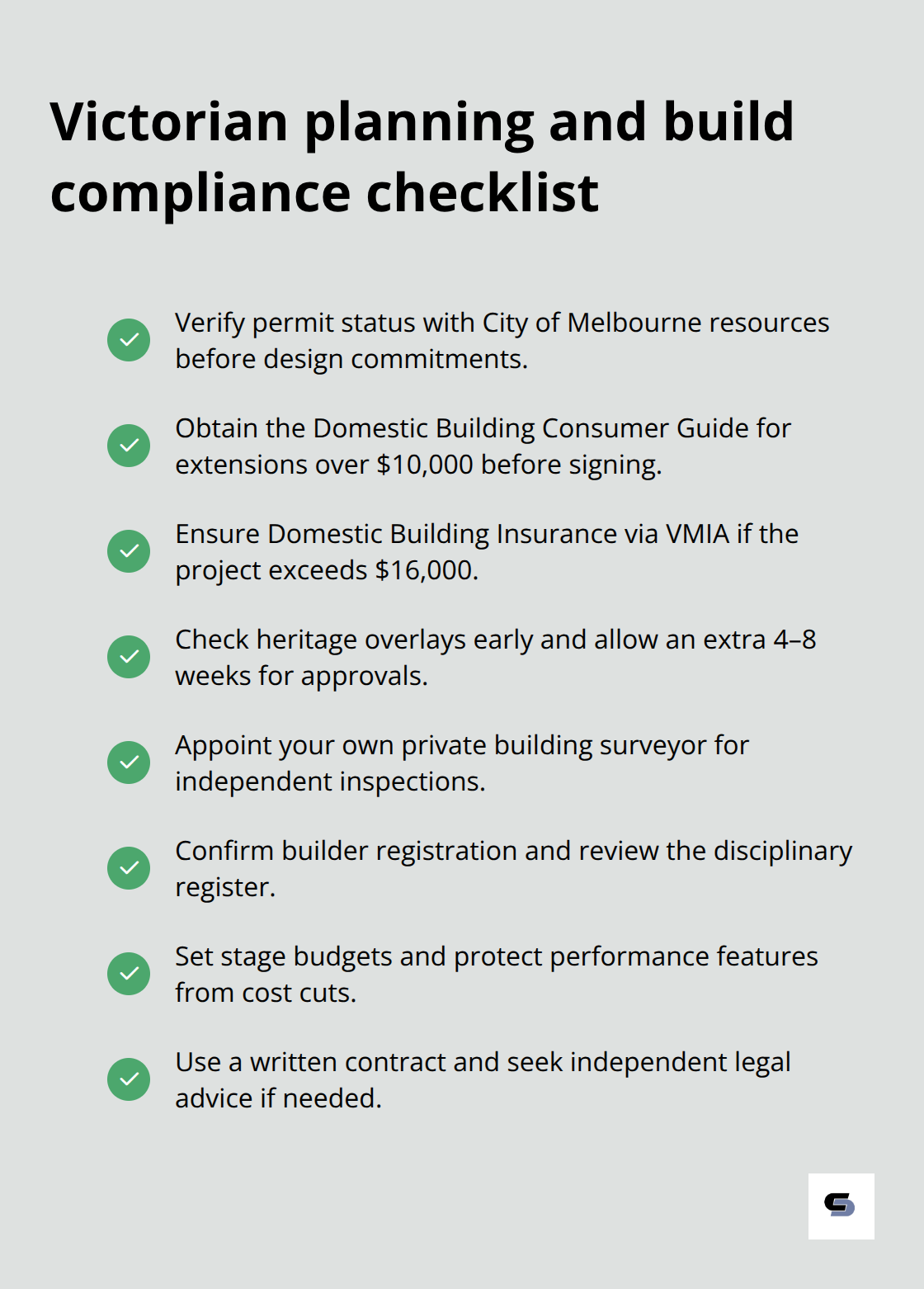
Extensions over $10,000 fall under the Domestic Building Contracts Act 1995, which means your builder must provide you with the Domestic Building Consumer Guide before you sign anything. If your project exceeds $16,000, your builder must hold Domestic Building Insurance through the Victorian Managed Insurance Authority. These aren’t optional formalities-they’re legal requirements that protect you if defects emerge after completion.
Understand heritage requirements and timelines
The City of Melbourne’s Heritage Design Guide and planning maps reveal whether your property sits in a heritage area or requires special consideration, which fundamentally changes your design and approval timeline. Heritage properties typically need a Conservation Management Plan that identifies the building’s significance and outlines policies for new work, adding 4–8 weeks to your approval process. Working with an architect or building designer who understands Melbourne’s specific council requirements saves months of back-and-forth with planners. Your designer should review the Planning and Environment Act 1987 and Victorian Heritage Act 2017 to determine whether your extension needs a permit, and early engagement with Heritage Victoria or your local council prevents costly redesigns after submission. The Office of the Victorian Government Architect supports design review and collaborative workshops, which means your designer can workshop concepts with council staff before lodging formal applications. This collaborative approach delivers better outcomes because planners provide feedback while changes remain inexpensive.
Budget for contingencies and manage costs across stages
Your budget must account for contingencies at each stage because renovations rarely unfold exactly as planned. Set budget caps per stage and protect sustainable features from cost overruns rather than cutting performance corners when unexpected costs emerge. Costs vary significantly by location, site conditions, and builder complexity, with affordability aided by planning early, using standard materials, and minimising your footprint. Work worth more than $10,000 requires a relevant checklist to plan, budget, and manage variations-obtain this from your local council or building authority.
Manage timelines and appoint independent professionals
Timeline management means understanding that approvals and construction duration vary depending on heritage status and complexity, and final certification requires a building surveyor’s inspection confirming compliance with building regulations and standards. Your role includes monitoring progress, paying for work at agreed stages, and communicating instructions and concerns to your builder. Verify your builder’s registration status through the Building and Plumbing Commission practitioner search and check the disciplinary register-registered building practitioners are legally accountable for their work. Appoint your own private building surveyor rather than accepting one recommended by your builder, because independence matters when inspecting the builder’s own work. A written contract is essential for dispute resolution, and obtaining independent legal advice costs far less than resolving disputes later.
Final Thoughts
Contemporary extension design Melbourne works best when you start with honest conversations about what your family actually needs, then translate those needs into spaces that perform as hard as they look. Verify your permit requirements early, understand whether heritage considerations apply to your property, and budget for contingencies at each stage rather than cutting corners when unexpected costs emerge. Your timeline depends heavily on council approval complexity and whether your extension requires heritage assessment, so planning these factors upfront prevents frustration later.
Appointing independent professionals-a building surveyor, architect, or building designer-costs far less than resolving disputes after construction begins. A written contract protects both you and your builder, and verifying your builder’s registration through the Building and Plumbing Commission ensures you’re working with someone legally accountable for their work. Professional guidance matters because contemporary extension design involves navigating multiple approval pathways, material performance standards, and building regulations that change across different council areas.
We at Cameron Construction transform your extension from a design concept into a home that genuinely improves how you live, handling everything from concept through to completion including planning, permits, and BCA compliance. Whether you’re planning a double storey extension, ground floor addition, or full house renovation, our experienced team understands how to balance contemporary aesthetics with practical function.