Building Designer Melbourne Extensions: From Concept to Construction
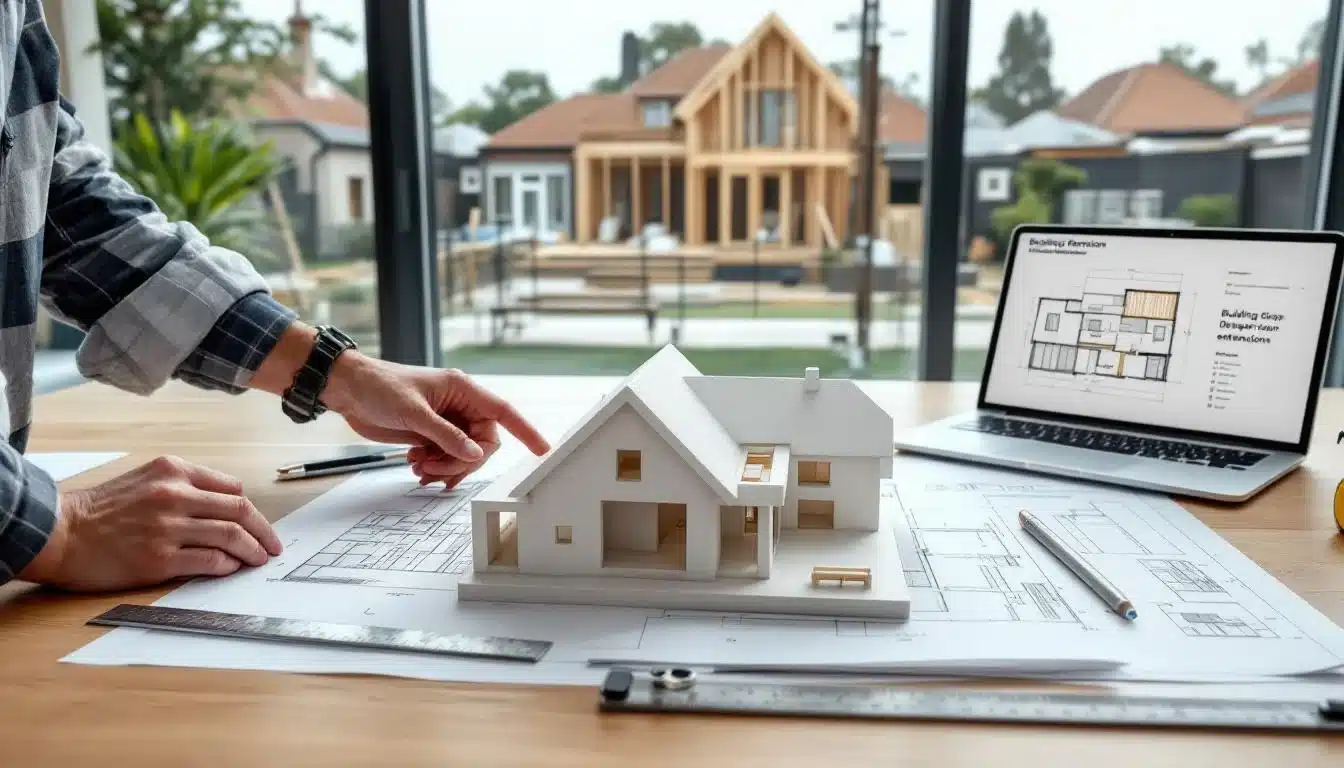
A building designer Melbourne extensions project is the difference between a renovation that works and one that creates headaches. Melbourne’s planning requirements and Building Code of Australia standards are strict, and getting them wrong costs time and money.
At Cameron Construction, we’ve seen homeowners skip professional design and face costly delays or even demolition orders. The right designer translates your vision into compliant plans that councils approve and builders can execute without surprises.
Why Professional Design Saves Time and Money
The Deemed-to-Comply Advantage
Melbourne’s planning framework changed significantly when the Townhouse and Low-Rise Code commenced on 31 March 2025. Extensions that meet all applicable Clause 55 standards now qualify for a deemed-to-comply pathway, which means faster council approvals and no third-party right of appeal for those aspects. However, this only works if your design actually meets every standard-street setback, building height, side and rear setbacks, daylighting to existing windows, site coverage, and tree canopy requirements. A designer who understands these specific thresholds positions your extension to tick every box, potentially cutting months off the approval timeline.
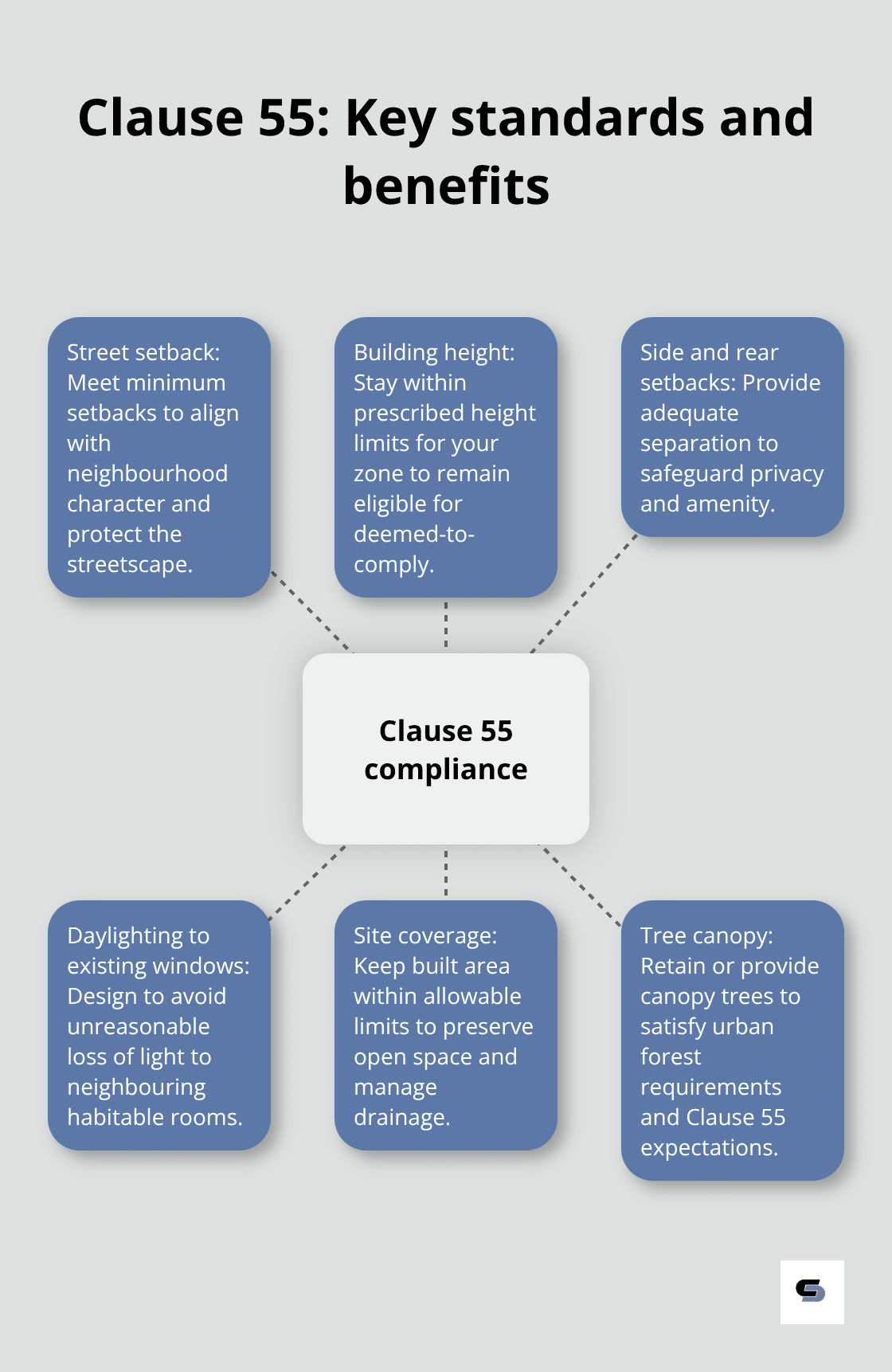
A design that misses even one standard triggers full assessment against neighbourhood character objectives, which means longer delays and higher risk of refusal. A registered building designer knows exactly which setbacks, heights, and overshadowing limits apply in your suburb and can design accordingly from day one.
Structural Compliance and Construction Certainty
The National Construction Code 2022 sets strict requirements for structural safety, energy efficiency, and water efficiency that must appear in construction plans. Your builder cannot obtain a building permit without plans that demonstrate compliance. If your designer misses something-say, undersized footings for your soil type or inadequate insulation values-the surveyor will stop the work and demand redesign. This costs thousands in delays and rework. A designer who obtains a soil report and understands your block’s constraints prices the work accurately and avoids surprises during construction.
Energy Efficiency and Long-Term Savings
Energy efficiency has real financial impact. Designs that maximise passive solar gain and cross-ventilation reduce your heating and cooling loads. Professional design that prioritises these principles pays dividends throughout your home’s life, translating to lower energy bills year after year.
The True Cost of Skipping Design
Professional design upfront prevents far greater expenses later. Skipping professional design to save a few thousand dollars often costs substantially more in council delays, construction rework, and higher running costs over the life of your home. The right designer transforms your vision into plans that councils approve quickly and builders execute without complications-setting the stage for smooth construction and a successful project outcome.
How Your Designer Transforms Your Block Into a Practical Plan
Understanding Your Site’s Real Constraints
Your block’s reality shapes everything. A designer’s first step is understanding what your land actually allows, not what you hope it allows. Soil type, slope, orientation, setback requirements, tree canopy coverage, and existing structures all constrain what you can build. A soil report obtained before design begins prevents undersized footings discovered mid-construction, which costs thousands in rework and delays. Your designer reviews council overlays for your suburb, measures existing trees that must be retained under Clause 55, and identifies which boundaries allow building under setback rules. This assessment determines whether your extension sits on footings or a slab, how deep foundations need to go, and whether your design qualifies for the deemed-to-comply pathway that cuts approval time.
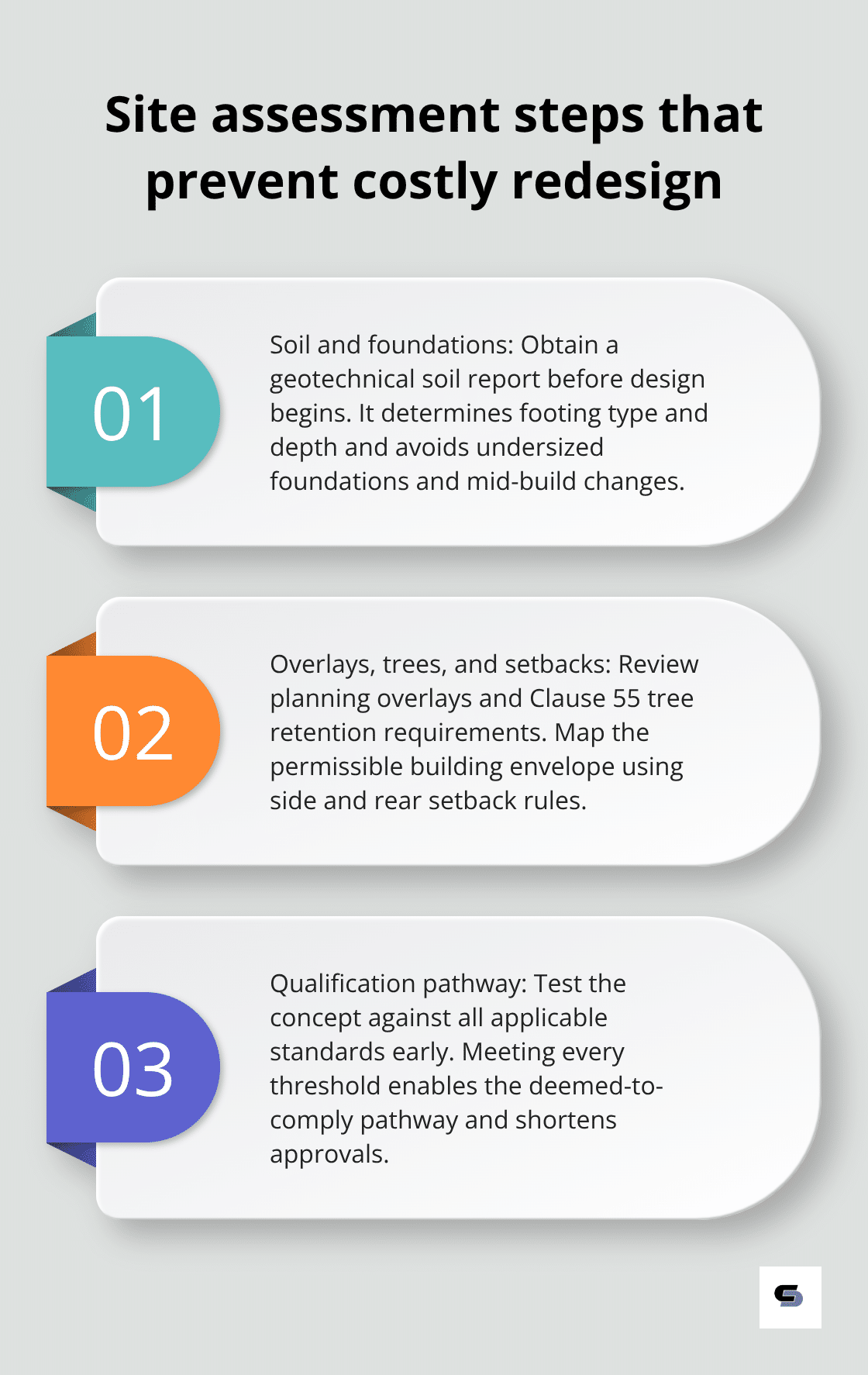
A designer who skips this step produces plans that look good on paper but fail at the surveyor’s inspection. The assessment phase typically takes two to four weeks depending on site complexity and soil report turnaround.
Creating Layouts That Maximise Space and Light
Layout decisions come next, and here your designer’s experience with Melbourne’s high-density suburbs becomes critical. Maximising space means understanding which walls can move, where structural beams must run, and how to position windows for daylight without triggering overshadowing penalties under Clause 55. A poor layout wastes square metres on corridors or creates dark rooms that reduce your home’s liveability. Your designer produces multiple layout options showing furniture placement, traffic flow, and natural light patterns so you see exactly how the space functions before construction starts. Design changes cost far less at this stage than during building when walls are already framed.
Managing Fees, Timelines, and Deliverables
Budget and timeline management happen in parallel with design development. A registered building designer provides a fixed fee or hourly rate upfront, and professional designers typically charge between $4,000 and $12,000 for a double storey extension depending on complexity and your suburb. This investment covers concept sketches, detailed construction drawings, energy modelling to demonstrate NCC 2022 compliance, and liaison with council during the planning phase. Construction drawings must show every detail the builder needs-material specifications, window and door schedules, electrical layouts, plumbing runs, and structural calculations-so the builder quotes accurately and avoids scope creep. A complete design package typically takes eight to twelve weeks from your initial brief to council-ready plans, though deemed-to-comply designs often move faster through approval because they meet all applicable standards.
Staying Informed Throughout the Design Journey
Your designer’s communication throughout this period keeps you informed of decisions, cost implications, and timeline risks so you make choices with full information rather than discovering problems after construction begins. Once your designer completes the plans and council approves them, the next critical step is selecting a builder who understands your vision and can execute those plans without cutting corners or introducing hidden costs.
How to Find a Designer Who Delivers
Choosing a building designer shapes your entire project. The wrong designer produces plans that councils reject, misses cost-saving opportunities, or fails to capture your vision. The right designer understands Melbourne’s specific planning rules, has executed similar projects in your suburb, and communicates clearly so you know exactly what you’re getting.
Verify Registration and Track Record
Start with the Victorian Building Authority. A registered building designer must hold current Photo ID listing their registration category and validity date. Verify their status through the Find a practitioner directory on the Victorian Building Authority website. This matters because only a registered designer can sign off on plans for building permits, and unregistered designers create liability gaps if problems emerge later. Request their registration number and confirm it before any contract is signed.
Experience with double storey extensions and ground floor additions in Melbourne matters far more than general design experience. A designer who has built double storey extensions in your suburb understands the specific setback rules, heritage overlays if they apply, and which designs qualify for the deemed-to-comply pathway under Clause 55. Ask potential designers how many double storey projects they completed in the past three years and request references from homeowners in suburbs similar to yours. When you contact references, ask specifically whether the designer obtained a soil report before design began, whether the final cost matched the initial estimate, and whether council approval happened within the projected timeline. A designer who skips soil reports creates cost surprises mid-construction. A designer who consistently delivers within budget and timeline has systems in place to manage scope and communicate changes.
Request their portfolio of completed extensions, but critically, ask to see both the original concept sketches and the final council-approved plans. This shows whether their vision translates into compliant designs that councils actually approve. If a designer cannot show you council approval letters or final construction photos from recent projects, that signals a red flag.
Demand Fixed Fees and Clear Deliverables
Fees for double storey extensions typically range from $8,000 to $15,000 depending on complexity and your location within Melbourne. Demand a written quote that specifies exactly what is included: concept sketches, detailed construction drawings, energy modelling for NCC 2022 compliance, council liaison, and site visits during design development. Some designers charge hourly rates (typically $150 to $250 per hour), which creates budget uncertainty. Fixed fees are preferable because they prevent cost blowouts and give you certainty.
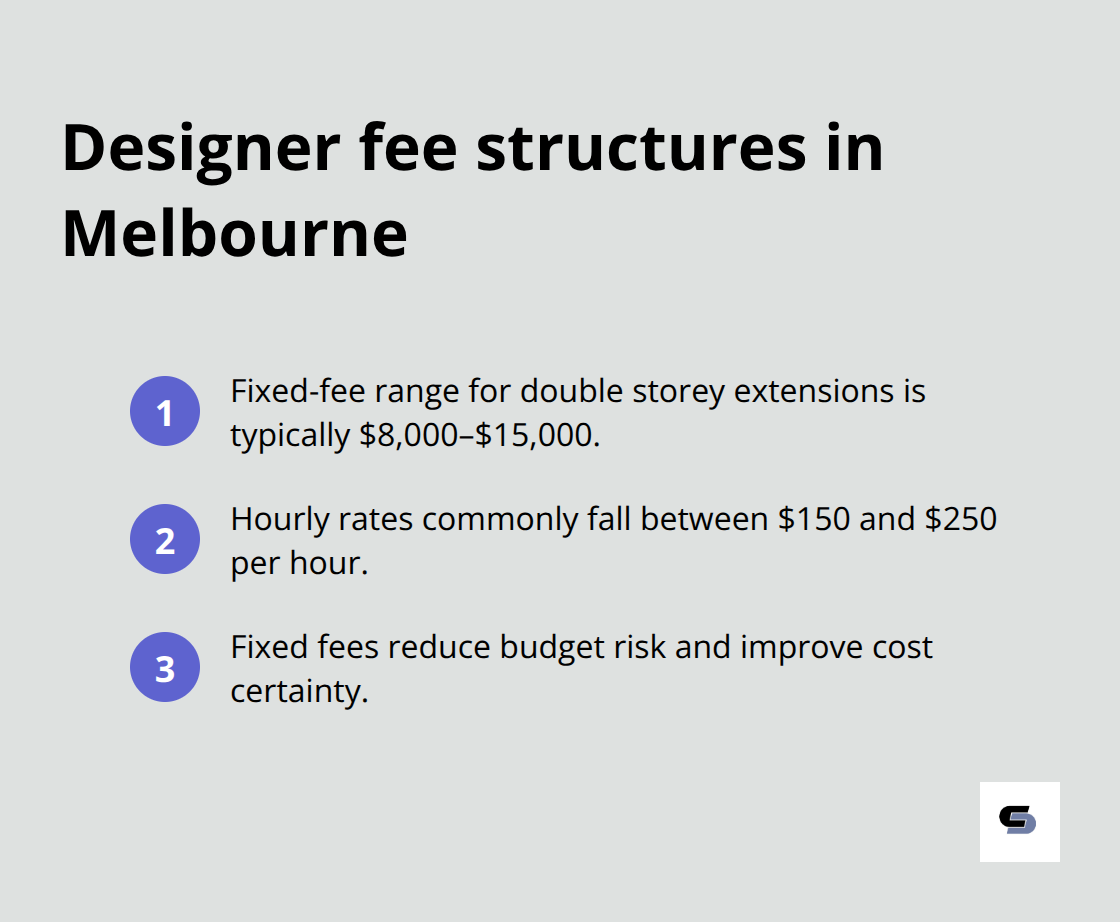
Ask whether the fee covers council amendments if the planning authority requests changes, or whether amendments are billed separately. A designer who includes one round of council amendments in their fee but charges extra for subsequent rounds creates financial pressure to accept poor outcomes rather than pursuing necessary refinements. The best designers build amendment rounds into their process because they understand that getting plans right the first time saves money overall.
Assess Communication and Problem-Solving Approach
Request a sample design report or brief to see how the designer communicates decisions and constraints to clients. A designer who sends weekly updates, explains why certain design options work or don’t work, and shows you cost and timeline implications for each decision keeps you informed so you make choices with full information. A designer who disappears for weeks or provides minimal feedback creates anxiety and prevents you from catching problems early.
Schedule a phone call with any designer you are seriously considering and discuss your specific brief. Their response reveals whether they listen carefully or push a standard solution. A designer who asks detailed questions about your daily routines, how you use different spaces, and what matters most to you will produce a layout that actually works. A designer who offers one standard layout option without exploring alternatives is unlikely to maximise your investment. The design phase sets the entire tone for construction success, so selecting a designer who communicates clearly and has specific experience with your project type is non-negotiable.
Final Thoughts
Professional design protects your investment by preventing costly mistakes before construction begins. A building designer for Melbourne extensions transforms your vision into compliant plans that councils approve quickly and builders execute without surprises. The deemed-to-comply pathway under Clause 55 rewards designs that meet every standard, cutting approval time and eliminating third-party appeal risk.
Selecting a registered designer with proven experience in double storey and ground floor additions within your suburb matters more than saving a few thousand dollars on design fees. Request their registration number, review their portfolio of completed extensions, and contact references to verify they deliver within budget and timeline. Demand fixed fees that specify exactly what is included, and assess their communication approach during initial conversations to confirm they ask detailed questions about how you use your spaces.
We at Cameron Construction handle the entire journey from concept to completion, including design, planning, permits, and BCA compliance across Melbourne’s councils. Our in-house designers and engineers understand Melbourne’s specific planning rules and have executed double storey extensions and ground floor additions throughout your suburb. Contact us to discuss your project and see how professional design and construction delivery transform your extension from concept into reality.