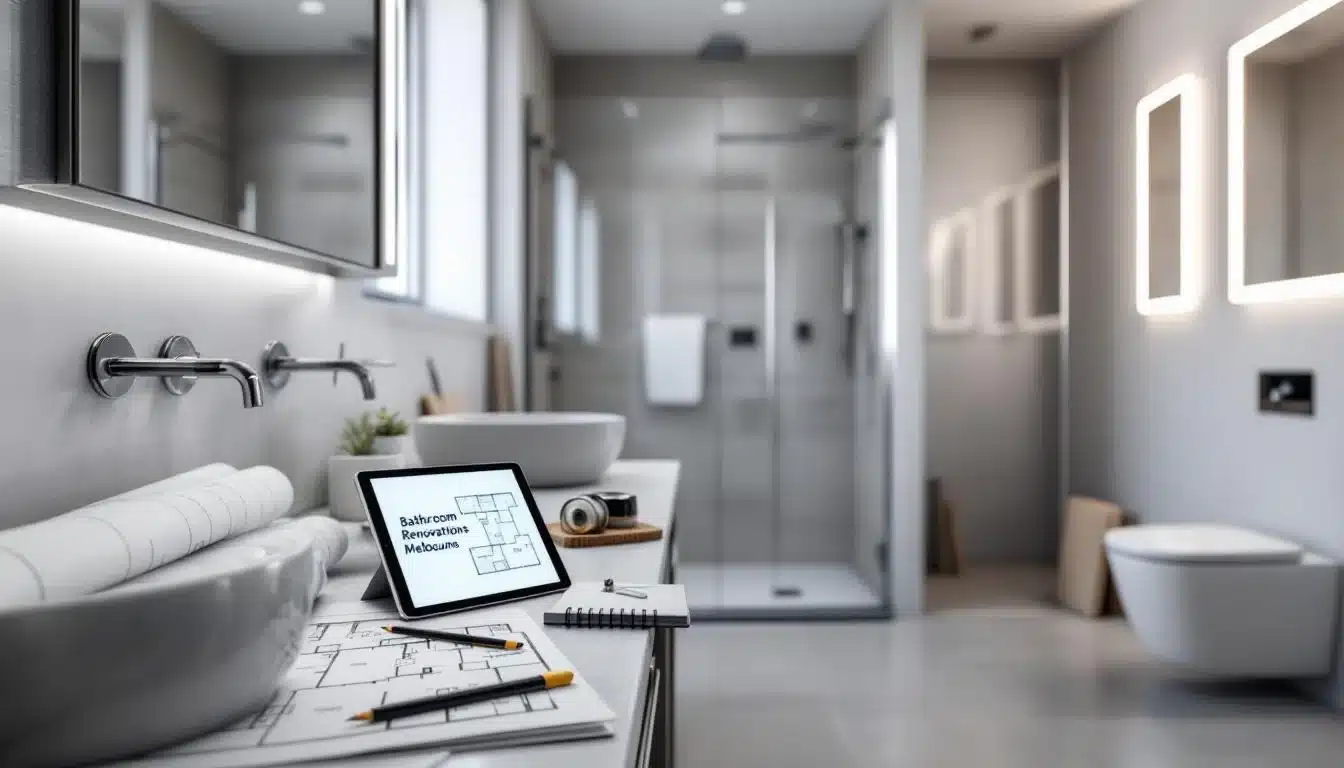
Bathroom Renovations Melbourne: From Concept to Comfort
Bathroom renovations Melbourne homeowners undertake often become the centrepiece of larger extension projects. Whether you’re adding a second storey or expanding your ground floor, the bathroom deserves careful planning and expert execution.
At Cameron Construction, we’ve guided hundreds of Melbourne homeowners through this process. This guide walks you through every stage, from initial assessment to final installation.
Planning Your Bathroom Renovation
Your bathroom renovation starts with understanding what you actually need versus what you want. Most Melbourne homeowners find their current bathroom fails them in one or two specific ways-inadequate storage, poor water pressure, outdated plumbing, or lack of natural light. Spend a week using your bathroom as it exists and note what frustrates you daily. Does the vanity lack bench space? Is the shower too cramped? Does moisture linger for hours? These observations shape a realistic scope that avoids paying for unnecessary work. The Victorian Building Authority’s Protect Your Build resources outline what compliance requires, which helps separate genuine code-driven changes from optional upgrades. A bathroom renovation under $10,000 avoids the major domestic building contract threshold, though anything over $16,000 requires domestic building insurance, so your budget directly influences contract complexity and cost.
Determining Your Real Budget and Timeline
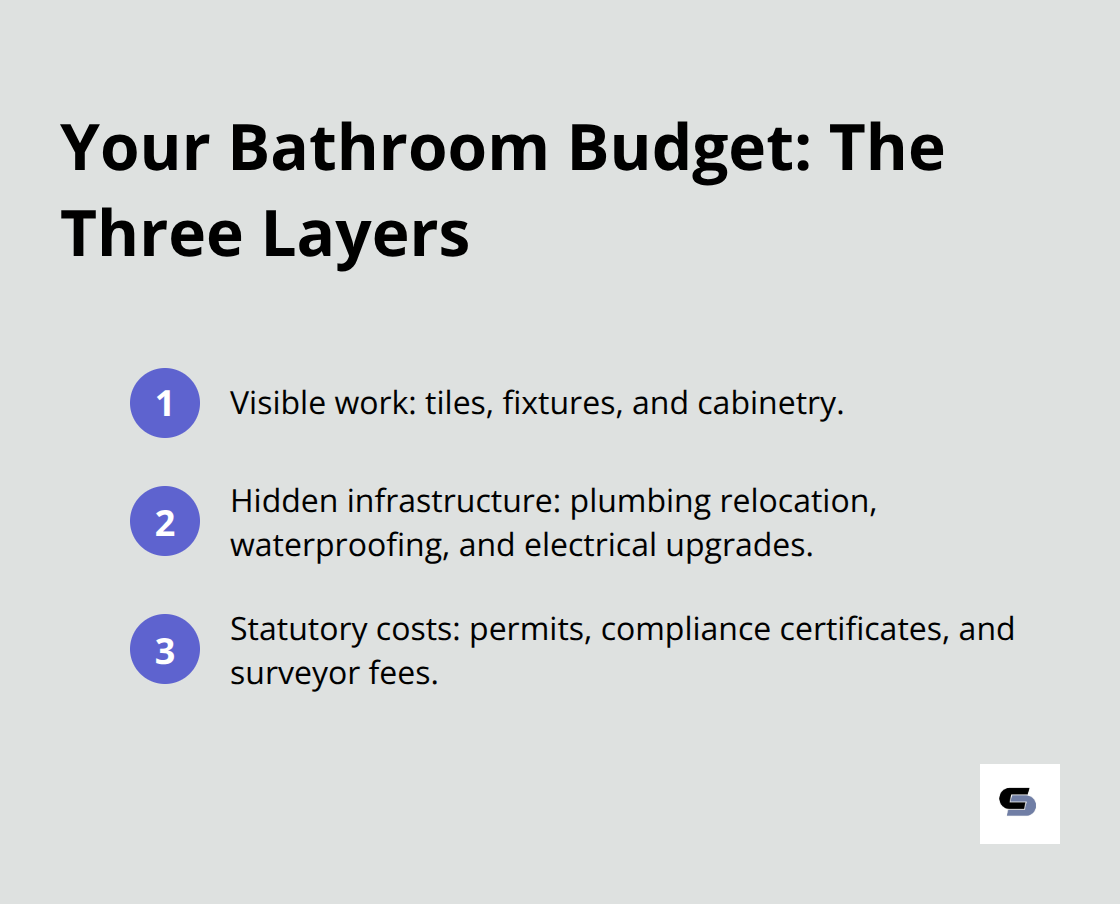
Your budget must account for three layers: the visible work (tiles, fixtures, cabinetry), hidden infrastructure (plumbing relocation, waterproofing, electrical upgrades), and statutory costs (building permits, compliance certificates, building surveyor fees). Most Melbourne homeowners underestimate the second layer.
Moving a toilet outlet costs $1,500–$3,000 alone; upgrading drainage to meet the Plumbing Code of Australia adds another $2,000–$4,000. Waterproofing to AS/NZS 3500 standards is non-negotiable in wet areas and typically costs $80–$150 per square metre. Add 15–20% contingency for unforeseen issues like asbestos (common in pre-1990 homes) or structural repairs.
Timeline matters equally. A straightforward bathroom renovation takes 8–12 weeks from permit approval to completion. If your project sits within a larger extension, bathroom work often runs parallel to framing, delaying final completion. Building permits require commencement within 12 months and completion within 24 months for residential work, so plan accordingly. Delays in sourcing WELS-compliant fixtures or tiles can extend timelines by 4–6 weeks, particularly for imported items.
Full Renovation Versus Targeted Upgrades
A full bathroom renovation touches every surface and system. You gut the space, upgrade plumbing and electrical, install new waterproofing, and fit out with new fixtures and finishes. This approach suits homes where the existing layout is inefficient, plumbing is corroded, or you’re adding ensuite bathrooms to an extension. Targeted upgrades replace specific elements-new vanity, shower enclosure, or tiling-while keeping existing plumbing and layout. Targeted work costs less upfront but often costs more per item because you’re not achieving economies of scale. A targeted shower upgrade might cost $8,000–$12,000; the same shower in a full renovation might cost $6,000–$9,000 as part of coordinated trades.
The real decision hinges on whether your existing infrastructure supports your goals. If you want a walk-in shower but current drainage is undersized, you must upgrade drainage-which forces a fuller scope. A building surveyor can review your current plumbing, electrical, and structural capacity within a day or two, costing $300–$600, and that assessment prevents costly mid-project discoveries. This infrastructure assessment becomes even more important when your bathroom renovation forms part of a larger extension project, where plumbing and electrical systems must integrate with new work across multiple areas of your home.
Design for Australian Conditions and Daily Living
Selecting Materials That Perform in Melbourne’s Climate
Melbourne bathrooms face moisture, harsh UV exposure through windows, and temperature swings between 35°C summer days and cold winters. This reality shapes every design decision. Aesthetic choices that ignore these conditions fail within years. Matte black tapware looks contemporary but shows water spots constantly unless you dry it after each use. Natural stone tiles look premium but require sealing every 12–18 months in wet areas. These aren’t theoretical problems-they’re maintenance burdens Melbourne homeowners discover too late.
Porcelain tiles outperform natural stone for bathrooms because porcelain withstands moisture and temperature fluctuations without degradation. Choose tiles with a slip resistance rating of at least R11 for wet areas, which Australian Standards AS 4586 specifies. Light-coloured tiles reflect heat and make smaller bathrooms feel larger, but darker grout hides soap scum and mould better than white grout in high-humidity climates. Matte finishes on tapware and fittings reduce visual clutter and perform better than polished chrome, which requires constant wiping to prevent watermarks.
Water Efficiency and Long-Term Savings
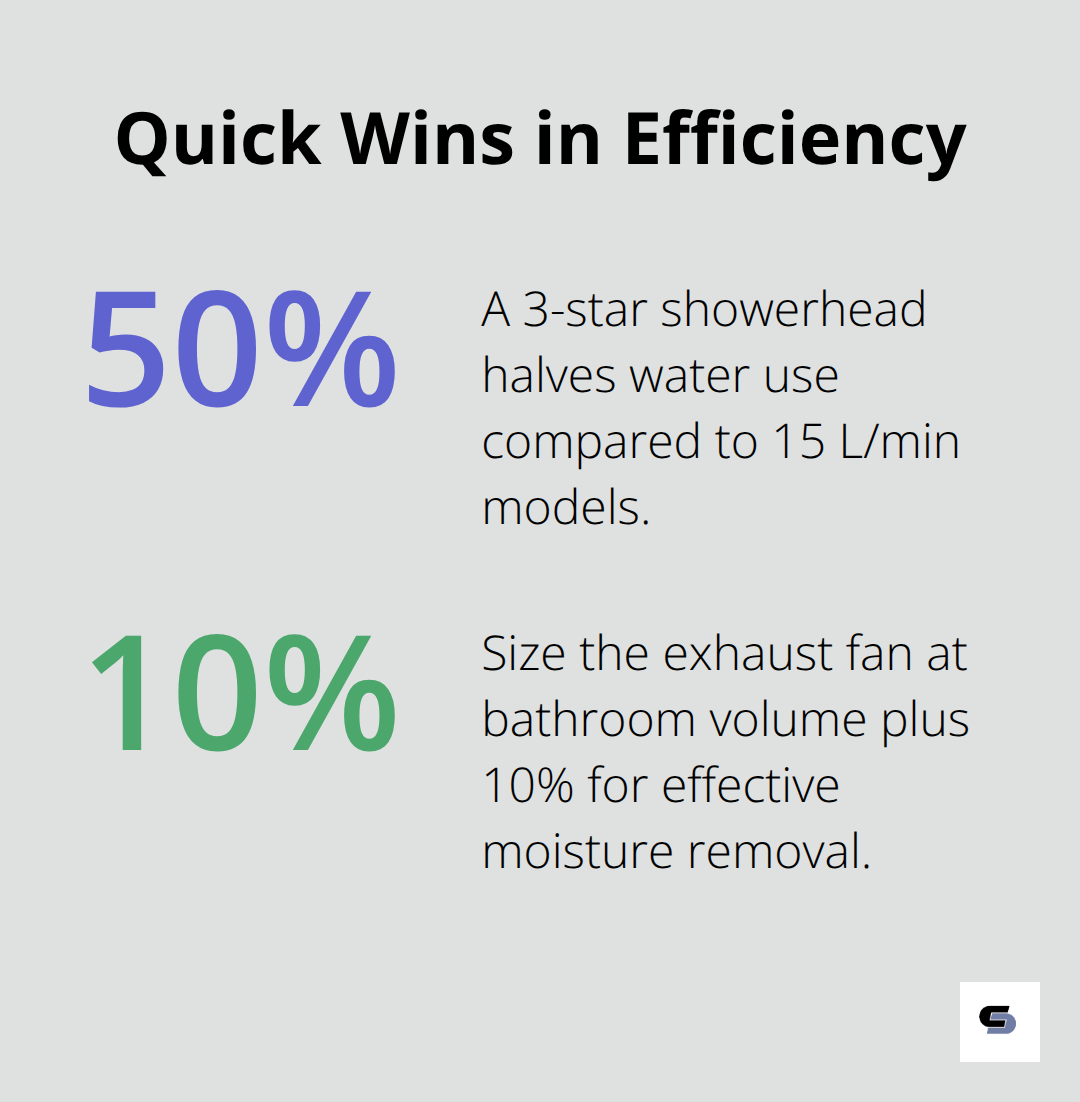
Water efficiency isn’t optional in Melbourne-it’s mandatory and sensible. The Water Efficiency Labelling and Standards Scheme requires all new bathroom fixtures to carry a WELS rating. A 4-star toilet uses 4.5 litres per flush versus 11 litres for older models, saving a household 54,000 litres annually. A 3-star showerhead delivers 7.5 litres per minute instead of 15 litres, cutting water use by half without noticeably reducing pressure.
Over a 20-year bathroom lifespan, high-WELS fixtures save $2,000–$4,000 in water bills for an average Melbourne household.
Install a thermostatic mixing valve to prevent scalding and reduce water waste from temperature adjustment. This single addition protects your family and cuts unnecessary water consumption during the temperature-balancing phase of each shower.
Maximising Storage and Layout in Compact Spaces
Storage and layout optimisation directly impact daily function. Bathrooms smaller than 4 square metres benefit from vertical storage-floor-to-ceiling cabinetry, wall-mounted shelving, and recessed niches behind mirrors. A 600 mm wide vanity wastes space; try specifying 900 mm or wider if your bathroom dimensions allow it. Position the toilet away from the entry door and keep the shower or bath visually separate from the toilet area-this psychological separation makes compact bathrooms feel less cramped.
Ensure the vanity mirror extends at least 150 mm beyond the vanity width on each side so two people can use the space simultaneously. This detail transforms a cramped bathroom into one that functions for shared routines.
Ventilation That Prevents Moisture Damage
Adequate ventilation prevents moisture damage and mould. Install an exhaust fan rated for your bathroom’s cubic volume plus 10%; a 5 square metre bathroom needs at least 50 litres per second extraction capacity. Run the fan for 20 minutes after showers to remove moisture before it condenses on walls and cabinetry. If your extension includes a new ensuite or second bathroom, these ventilation and storage principles apply identically, ensuring consistent performance across all wet areas in your home.
These design decisions-material selection, water efficiency, storage strategy, and ventilation-form the foundation for a bathroom that performs reliably in Melbourne’s climate. The next step involves understanding how building codes and compliance requirements shape what you can actually build.
Permits and Compliance: What Actually Stops Your Project
Building permits exist for one reason: to verify that your bathroom renovation meets safety standards and won’t damage your home or your neighbours’ homes. In Melbourne, a bathroom renovation requires a building permit unless the work qualifies as pure maintenance (replacing a broken tap, regrouting existing tiles). Most renovations do not qualify as maintenance. The moment you move plumbing, alter walls, upgrade electrical, or install new waterproofing, you need a permit. The Victorian Building Authority sets the rules, and your local council administers them.
Understanding Permit Costs and Timelines
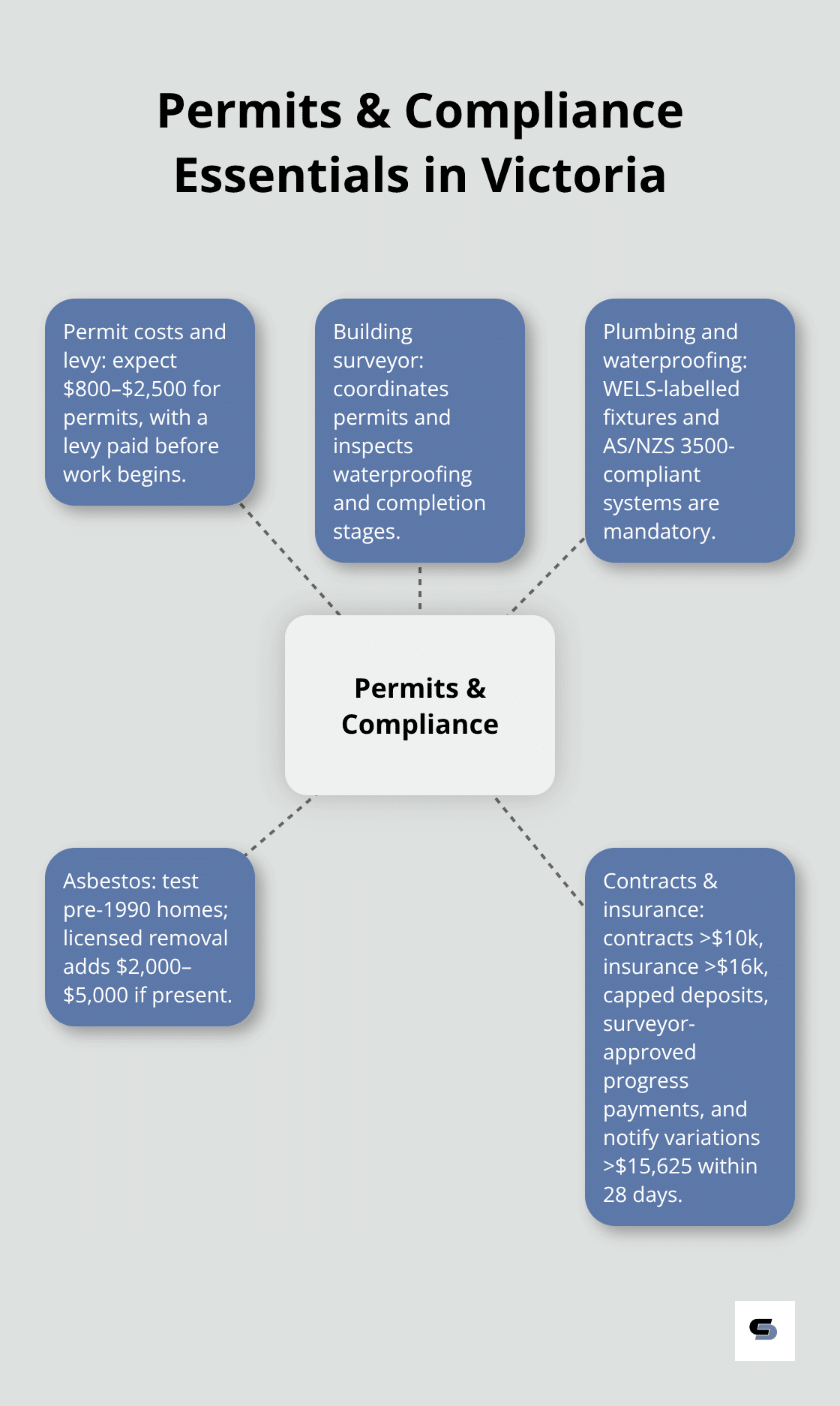
A building permit costs between $800 and $2,500 depending on your renovation’s scope and the estimated cost of work. The levy is calculated as a percentage of the total project cost and must be paid before work begins. Expect a 3 to 6 week approval timeline after submission if your application is complete.
Incomplete applications delay permits by weeks, so hire a registered building surveyor from the start to prepare your submission correctly. This surveyor becomes your compliance partner throughout the project and approves work at mandatory inspection points.
The Role of Your Building Surveyor
Your building surveyor coordinates permits for the entire project, ensuring bathroom systems integrate properly with new plumbing, electrical, and drainage across any addition. The surveyor inspects waterproofing before tiling proceeds and again after completion. This oversight prevents costly mid-project discoveries and ensures compliance at every stage.
Plumbing Standards and Waterproofing Requirements
The Plumbing Code of Australia governs every pipe, drain, and fitting in your bathroom. All new fixtures must carry a WELS rating label, and your plumber must hold a current plumbing licence and provide a plumbing compliance certificate upon completion. This certificate proves your work meets AS/NZS 3500 standards for drains, water services, and gas fittings. Waterproofing in wet areas must comply with AS/NZS 3500.12, which specifies membrane installation, substrate preparation, and testing protocols. Non-compliant waterproofing causes leaks, structural damage, and insurance disputes years later, so this is not an area to cut corners.
Asbestos Testing and Removal
Asbestos testing is mandatory if your home was built before 1990; this costs $300 to $600 and takes one week. If asbestos is present, licensed removal contractors must handle it, adding $2,000 to $5,000 to your budget. This assessment prevents health risks and ensures your project complies with Victorian asbestos regulations.
Contracts, Insurance, and Payment Protection
The Domestic Building Contracts Act 1995 governs the contract between you and your builder. From 1 July 2025, if your project costs more than $10,000, you must receive a domestic building contract with defined scope, price, payment stages, and dispute resolution terms. Projects exceeding $16,000 require domestic building insurance, which protects you if your builder becomes insolvent or abandons the work. Deposits cannot exceed 10% of the contract price if the total is under $20,000, or 5% if $20,000 or more. Never pay a deposit until you hold the insurance certificate and building permit. Progress payments follow completion of defined stages: base preparation, frame and lock-up, fixing, and final completion. Your building surveyor must approve each stage before you pay. Variations to your contract must be agreed in writing before work proceeds. If a variation increases the final cost by $15,625 or more, you must notify the Building and Plumbing Commission within 28 days or face penalties. Track all costs meticulously and request invoices for prime cost items (fixtures where the exact model isn’t specified upfront) to avoid disputes about what constitutes a legitimate variation.
Final Thoughts
Your bathroom renovation succeeds when budget, scope, and professional execution align properly. The budget must account for visible work, hidden infrastructure, and statutory costs-underestimating the second layer causes most overruns. Scope depends on whether your existing plumbing and electrical systems support your goals; a building surveyor’s infrastructure assessment prevents costly mid-project surprises.
Bathroom renovations Melbourne homeowners undertake as part of larger extensions require additional coordination across multiple trades and systems. Your bathroom’s plumbing, electrical, and drainage must integrate with new work throughout your addition, and ensuite bathrooms in new bedrooms follow identical compliance requirements as main bathrooms. Your building surveyor oversees this integration, ensuring every bathroom meets code regardless of whether it’s existing or new.
Start with three immediate actions: assess your current bathroom and note what genuinely frustrates you daily, obtain a building surveyor’s infrastructure assessment to understand your existing systems’ capacity, and contact Cameron Construction to discuss how your bathroom renovation fits into your larger extension vision. We’ve guided hundreds of Melbourne homeowners through this process, from concept to completion, ensuring bathrooms perform reliably and comply fully.