Bathroom Renovation Design Melbourne: Styling With Practicality
Your bathroom renovation design in Melbourne needs to balance aesthetics with everyday practicality. A well-planned renovation transforms how your home functions whilst adding genuine value to your property.
At Cameron Construction, we’ve guided hundreds of Melbourne homeowners through bathroom projects that work beautifully and perform reliably. This guide walks you through layout planning, current design trends, material selection, and budgeting so you can make confident decisions for your space.
Understanding Your Bathroom Space and Layout
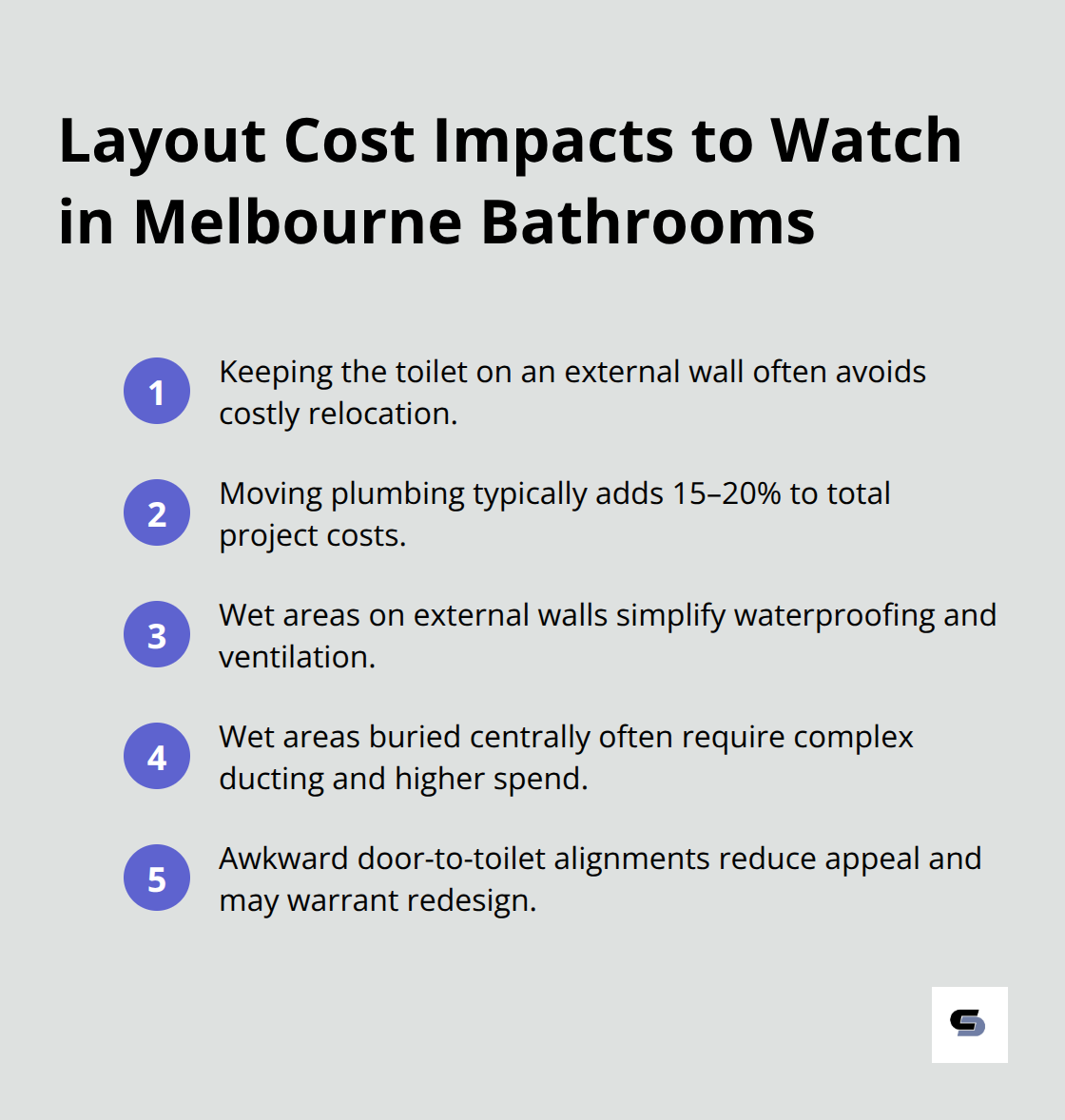
Your existing bathroom layout dictates what’s possible and what costs money to change. The plumbing location, wall positions, and ceiling height form hard constraints that reshape your budget and timeline. Every bathroom project starts with identifying which elements can stay and which must move. If your toilet sits against an external wall, relocating it inland costs significantly more than keeping it in place. Moving plumbing typically adds 15–20% to project costs because new pipes, vents, and connections require careful routing through walls and floors.
Wet Areas and Ventilation Strategy
The wet area location matters most. Bathrooms with showers or baths positioned against external walls allow for simpler waterproofing and ventilation, whereas wet areas buried in the middle of your home demand more complex ducting and moisture management. Assess whether your current layout forces awkward traffic patterns or wastes space. Many Melbourne homes have bathrooms where the door opens directly onto the toilet or where the shower dominates the room, leaving minimal storage or movement space. These layouts reduce property appeal and signal poor design. Identify what actually works in your current setup so the renovation preserves functional elements rather than starting from scratch.
Moisture Control in Melbourne’s Climate
Melbourne’s humidity and temperature fluctuations create unique challenges for bathroom design. High moisture without proper ventilation leads to mould, which appears within weeks of a poorly ventilated renovation. The National Construction Code and AS 3740 waterproofing guidelines set the standard for Australian bathrooms, requiring mechanical ventilation that removes moisture consistently. A humidity-sensing exhaust fan outperforms standard fans because it activates automatically when moisture reaches dangerous levels, rather than relying on manual operation.
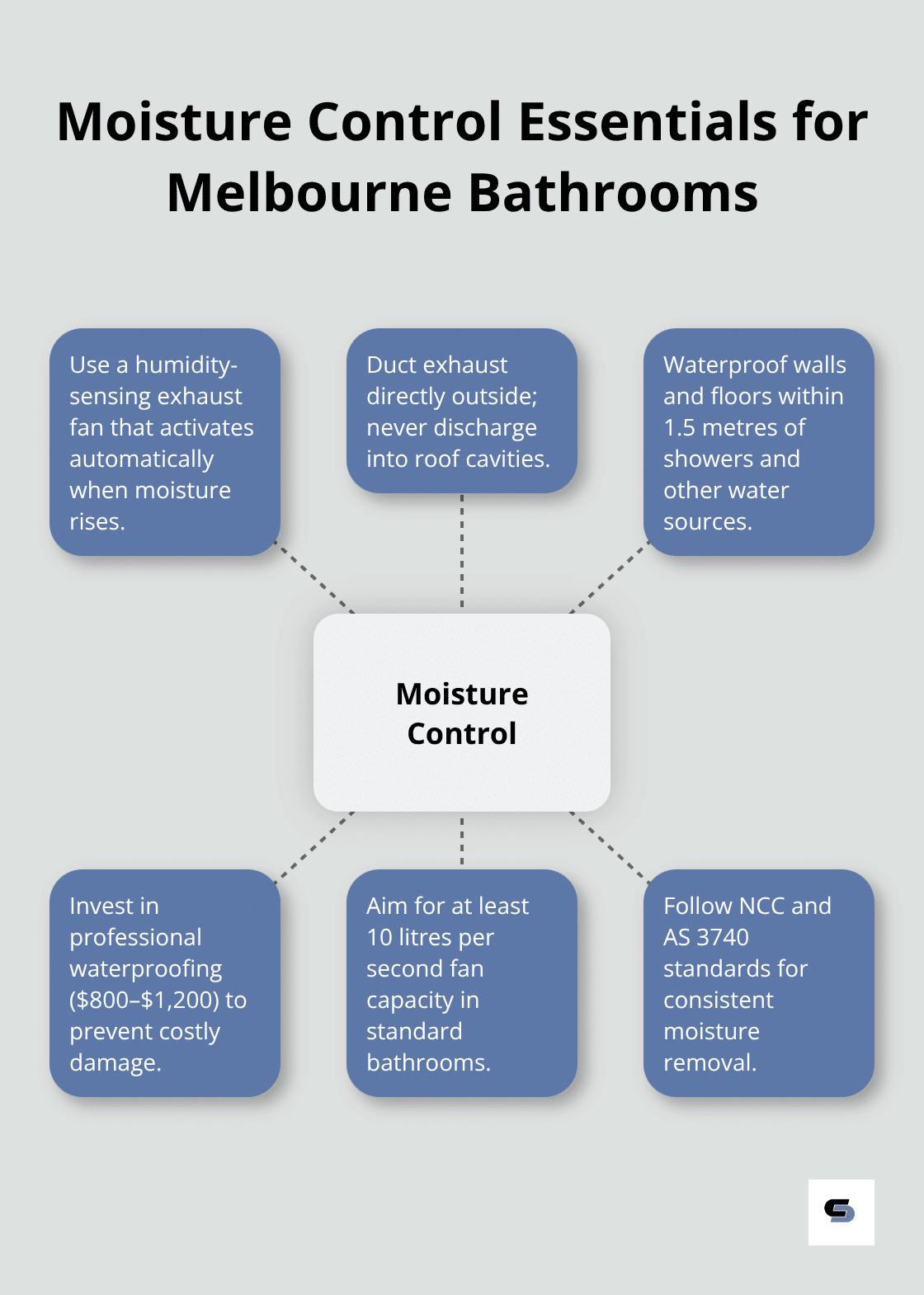
Try a fan capacity of at least 10 litres per second for standard bathrooms; larger spaces or those with heated floors need higher capacity. Position exhaust ducting to exit directly outside rather than into roof cavities, which traps moisture and damages insulation. Waterproofing extends beyond visible wet areas. Splashing from showers travels further than most homeowners realise, so walls and floors within 1.5 metres of water sources need moisture-resistant treatment. Professional waterproofing using certified membranes costs between $800 and $1,200 but prevents thousands in repair costs later.
Maximising Compact Bathroom Spaces
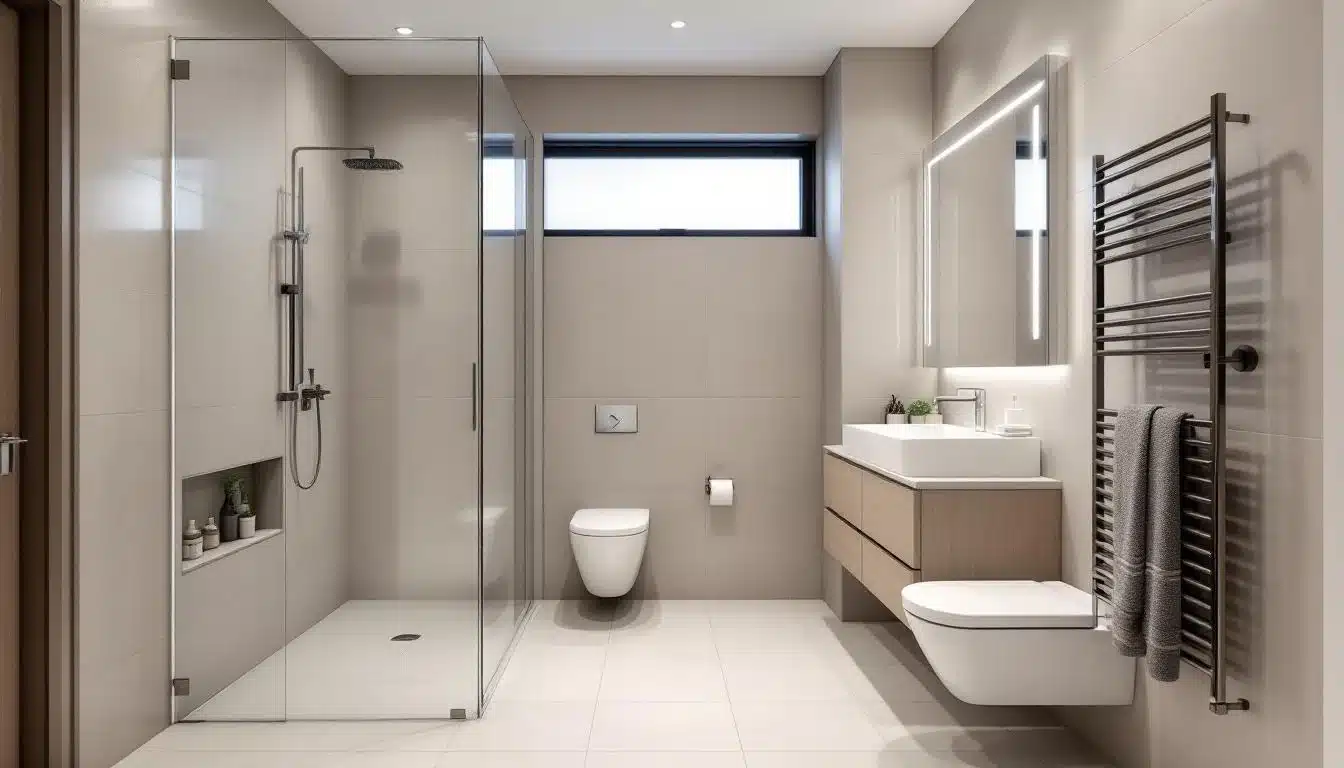
Melbourne homes frequently feature compact bathrooms, especially in period properties and apartments. Strategic layout changes make genuine differences rather than accepting cramped conditions. Wall-hung vanities lift fixtures off the floor, creating visual space and making cleaning easier whilst keeping plumbing accessible underneath. Corner showers with frameless glass doors occupy less visual space than framed enclosures and prevent the bathroom feeling boxed in. Large-format tiles measuring 600 by 600 millimetres or larger minimise grout lines, which visually enlarges the room compared to smaller tiles that fragment the space. Recessed niches in shower walls eliminate the need for external shelving that clutters the room. Built-in storage behind mirrors and integrated cabinetry above the toilet maximise functionality without occupying floor area. Lighting placement affects perceived space dramatically-task lighting at the mirror provides practical illumination, whilst ambient lighting from ceiling or wall sources prevents harsh shadows that make spaces feel smaller.
These foundational decisions about your layout, moisture control, and space optimisation shape every choice that follows in your renovation project.
Design Trends That Work in Melbourne Bathrooms
Modern minimalist bathrooms dominate Melbourne renovations because they solve real problems rather than chase fleeting aesthetics. Minimalism means eliminating visual clutter and unnecessary fixtures, which directly improves how bathrooms function in tight spaces. Melbourne homes rarely feature sprawling bathrooms, so every centimetre counts. Built-in storage integrated into walls and vanities outperforms freestanding cabinets that consume floor area. Recessed niches behind mirrors, integrated shelving above toilets, and tall linen cabinets positioned vertically maximise storage without creating visual chaos. Light, cohesive finishes make compact spaces feel larger, whilst dark or heavily patterned surfaces fragment the room visually. Neutral tones paired with natural textures like stone or timber-look surfaces create bathrooms that feel intentional rather than sterile. Texture prevents minimalist bathrooms from feeling cold or hospital-like-matte finish porcelain tiles, textured wall treatments, and subtle variations in grout colour add visual interest without introducing pattern overload.
Tile and Waterproofing for Melbourne’s Climate
Tile selection determines both aesthetics and performance in Melbourne’s humid environment. Large-format tiles measuring 600 by 600 millimetres or larger minimise grout lines, which reduces moisture penetration and makes cleaning easier. Smaller tiles fragment the visual space and create more grout joints where water sits and encourages mould growth. Matte finish surfaces outperform high-gloss tiles in bathrooms because they reduce slip risk significantly, particularly on shower floors where wet surfaces create hazards. Porcelain tiles resist moisture better than ceramic because they’re denser and absorb less water. Professional waterproofing using certified membranes beneath tiles prevents leaks and mould, which appear within weeks if waterproofing fails. The AS 3740 standard requires moisture-resistant membranes in wet areas, and proper tile substrate installation prevents future failures. Waterproofing costs between $800 and $1,200 but prevents thousands in repair costs when moisture breaches the building envelope.
Lighting and Mirrors Transform Function and Perception
Bathroom lighting requires layering rather than relying on a single overhead fixture. Task lighting at the mirror provides practical illumination for grooming and prevents harsh shadows that make spaces feel smaller. Ambient ceiling light should be dimmable so you can adjust mood and brightness depending on time of day. Accent lighting adds visual interest and can highlight architectural features or create a sense of openness. Mirrors amplify light and create perceived depth, making compact bathrooms feel more spacious. Large mirrors positioned opposite windows bounce natural light throughout the space. Wall-hung mirrors with integrated lighting eliminate the need for separate light fixtures and reduce visual clutter. Humidity-sensing exhaust fans automatically activate when moisture rises, maintaining air quality without relying on manual switches that occupants often forget to use. Thermostatic valves add practical comfort by stabilising water temperature and preventing scalding.
Material Durability Beyond Aesthetics
Durable, moisture-resistant materials for wet areas protect your investment long-term. Quartz or solid-surface benchtops resist staining and moisture better than natural stone, which requires ongoing sealing. Non-slip, moisture-resistant flooring such as matte finish porcelain or ceramic tiles reduces slip risk substantially compared to natural stone or timber alternatives. Water- and energy-efficient fixtures-low-flow taps and dual-flush toilets-save water and lower utility bills whilst meeting modern performance expectations. These material choices work together to create bathrooms that maintain their appearance and function for decades rather than deteriorating within years.
Your material selections and lighting design establish the visual foundation for your renovation. The next phase involves translating these design decisions into a realistic budget and sourcing the right trades to execute your vision.
Budget Planning and Material Selection
Bathroom renovation budgets in Melbourne typically range from $15,000 to $50,000 depending on scope, with average mid-range projects landing between $25,000 and $35,000. These figures reflect real Melbourne market conditions where labour costs, material availability, and local building compliance add genuine expense. A basic refresh involving new fixtures, paint, and minor tile work sits at the lower end, whilst full gutting with structural changes, extensive waterproofing, and premium finishes reaches the upper range. The single largest cost driver is plumbing relocation, which adds 15 to 20 percent to your total budget because moving water and waste lines requires careful routing through walls and floors. Waterproofing represents your second major expense at $800 to $1,200 for professional membrane installation, but this investment prevents thousands in damage claims when moisture breaches the building envelope.
Cost Breakdown for Bathroom Renovations
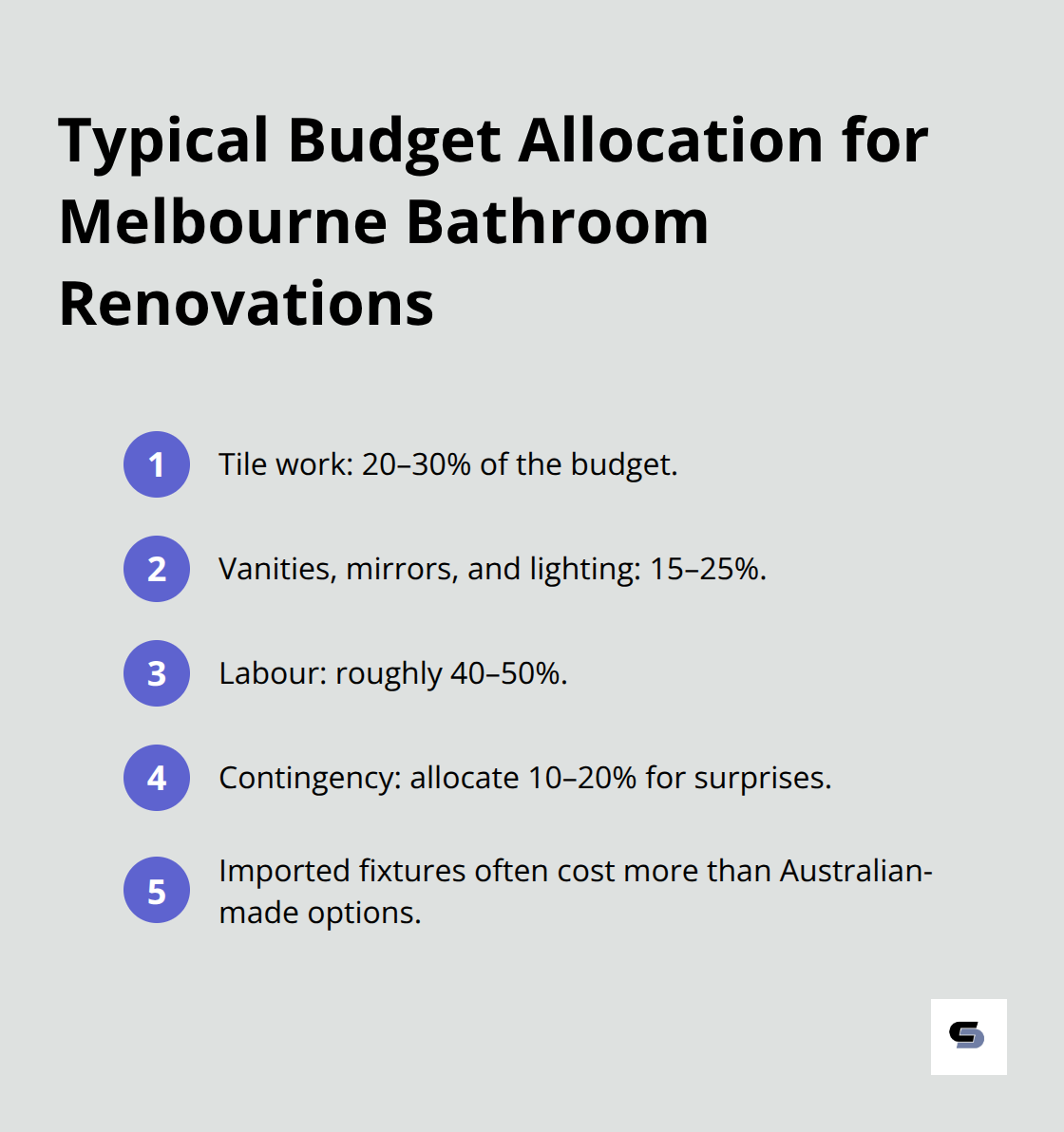
Tile work typically consumes 20 to 30 percent of your renovation budget, especially when using large-format porcelain tiles that minimise grout lines but require precise substrate preparation. Vanities, mirrors, and lighting fixtures account for another 15 to 25 percent, whilst labour comprises roughly 40 to 50 percent of total costs. Most Melbourne homeowners underestimate contingency needs and experience budget blowouts, so allocate 10 to 20 percent of your total budget as a safety buffer for unexpected structural issues, code compliance requirements, or supply delays. Material costs in Melbourne have stabilised after recent volatility, but imported fixtures still carry price premiums compared to Australian-manufactured alternatives.
Material Quality and Long-Term Value
Your material selections directly impact both upfront costs and long-term maintenance expenses, making the quality versus cost calculation more nuanced than simply choosing cheaper options. Porcelain tiles cost roughly 20 to 40 percent more than ceramic alternatives but resist moisture absorption far better, reducing mould risk and extending tile life to 20 years or beyond. Quartz benchtops run $150 to $300 per linear metre installed, significantly higher than laminate at $50 to $100, yet quartz requires no sealing and resists staining indefinitely where natural stone demands ongoing maintenance. Wall-hung vanities with soft-close drawers cost 30 to 50 percent more than traditional pedestal sinks but create perceived space in compact bathrooms and simplify cleaning underneath.
Humidity-sensing exhaust fans add roughly $400 to $600 compared to standard fans but automatically manage moisture without relying on occupant behaviour, preventing mould growth that destroys bathrooms within months of poor ventilation. Water-efficient fixtures including low-flow taps and dual-flush toilets reduce utility bills by approximately 20 to 30 percent annually according to water authority data, recouping their higher initial cost within five to seven years. The material philosophy that works in Melbourne prioritises durability over trendy finishes because bathroom moisture conditions accelerate deterioration of poor-quality products. Matte finish porcelain tiles, solid-surface benchtops, and stainless steel hardware outlast cheaper alternatives by years, maintaining appearance and function through Melbourne’s humidity and temperature cycles. Choosing materials rated for wet area use under the National Construction Code prevents costly rework when building inspectors reject non-compliant finishes.
Working With Builders on Material Specifications
Working effectively with builders and designers requires clear material specifications documented before work starts, preventing disputes about quality standards and cost variations mid-project. Provide material selections in writing rather than verbally, specifying tile brand and product code, benchtop colour and finish, tap manufacturer and model, and lighting fixture details. Request that your builder or designer source samples of all visible materials so you approve colours and textures in your actual bathroom lighting before ordering full quantities.
Establish whether your builder sources materials or whether you purchase directly, as this affects warranty coverage and responsibility if products arrive damaged. The Law Reform Commission of Victoria emphasises formal contracts for renovations, so insist on a detailed contract specifying material grades, installation standards, and what happens if substitutions become necessary due to supply issues. Ask your builder whether they recommend upgrading waterproofing membranes beyond minimum code requirements, as many experienced contractors suggest premium membranes in high-moisture situations rather than accepting minimum compliance. Schedule material delivery to coincide with installation readiness rather than storing materials in your home for weeks, which exposes products to moisture damage and creates safety hazards. Melbourne builders familiar with period homes often recommend materials that respect heritage character whilst meeting modern performance standards, particularly when renovating inter-war properties where original bathroom finishes inform appropriate replacement options.
Final Thoughts
Successful bathroom renovation design Melbourne rests on three interconnected principles: understanding your physical constraints, selecting materials that perform in humid climates, and budgeting realistically for quality execution. Your layout dictates what’s possible, moisture control determines longevity, and durable finishes protect your investment through Melbourne’s temperature and humidity cycles. These decisions compound-a poorly ventilated bathroom with cheap tiles fails within years, whilst thoughtful design using appropriate materials functions reliably for decades.
Document your current bathroom conditions and identify which elements must change versus which can remain. Photograph existing layouts, note plumbing locations, and assess whether your current design creates traffic problems or wastes space. This foundation informs conversations with builders and designers about realistic timelines and costs, and allocate 10 to 20 percent of your budget as contingency for unexpected structural issues or code compliance requirements that emerge during renovation.
Professional design translates practical requirements into spaces that work beautifully and experienced designers identify opportunities you might miss-repositioning a vanity to capture natural light, selecting tile sizes that visually enlarge compact spaces, or specifying waterproofing standards that exceed minimum code requirements. We at Cameron Construction have completed hundreds of bathroom renovations across Melbourne, and our in-house designers and project managers handle projects from concept through completion, managing permits, material specifications, and BCA compliance so you focus on the design outcome rather than construction logistics. Contact us to discuss how your bathroom renovation project transforms your vision into a functional, durable space that adds genuine value to your property.

![Second Storey Additions For Growing Families [Guide]](https://www.cameronconstruction.com.au/wp-content/uploads/emplibot/second-storey-additions-hero-1772259809-150x150.webp)