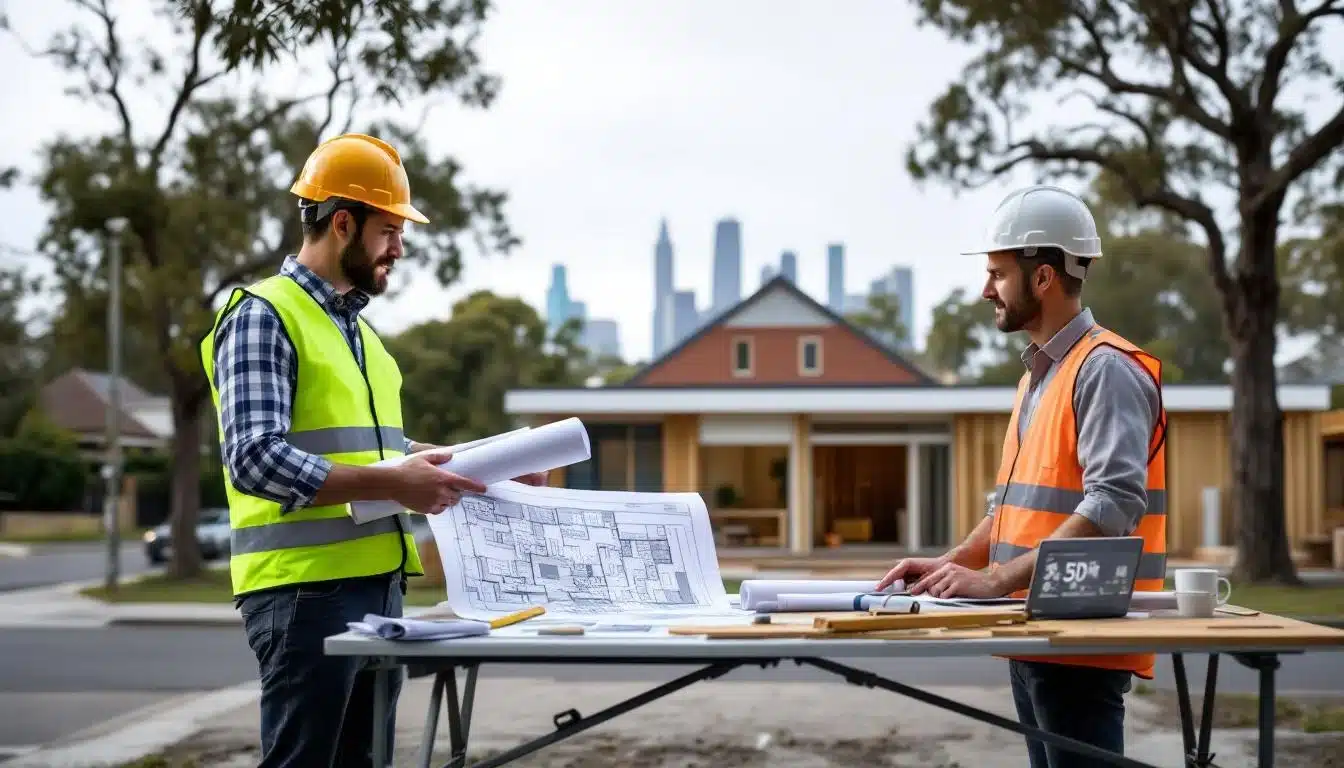
Architect Led Extensions Melbourne: Integrating Design Leadership with Buildability
Architect-led extensions Melbourne deliver something builder-led projects often miss: design excellence built into every construction decision from day one. At Cameron Construction, we’ve seen how strong architectural leadership transforms extensions into spaces that work beautifully and add genuine value to your home.
The difference shows up in the details-from how light moves through a new room to how a double storey addition sits on your block. When design and buildability work together from the start, you get extensions that Melbourne councils approve faster and contractors build more efficiently.
What Makes Architect-Led Extensions Different
Architect-led extensions stand apart because design and construction feasibility solve simultaneously, not sequentially. When an architect leads from concept, they don’t design in isolation and hand plans to a builder to figure out. Instead, they make decisions that account for how Melbourne councils review applications, how your block’s slope affects foundations, and how materials and sequencing affect your budget. Builder-led approaches typically start with construction logic-what’s easiest to build-and design follows.
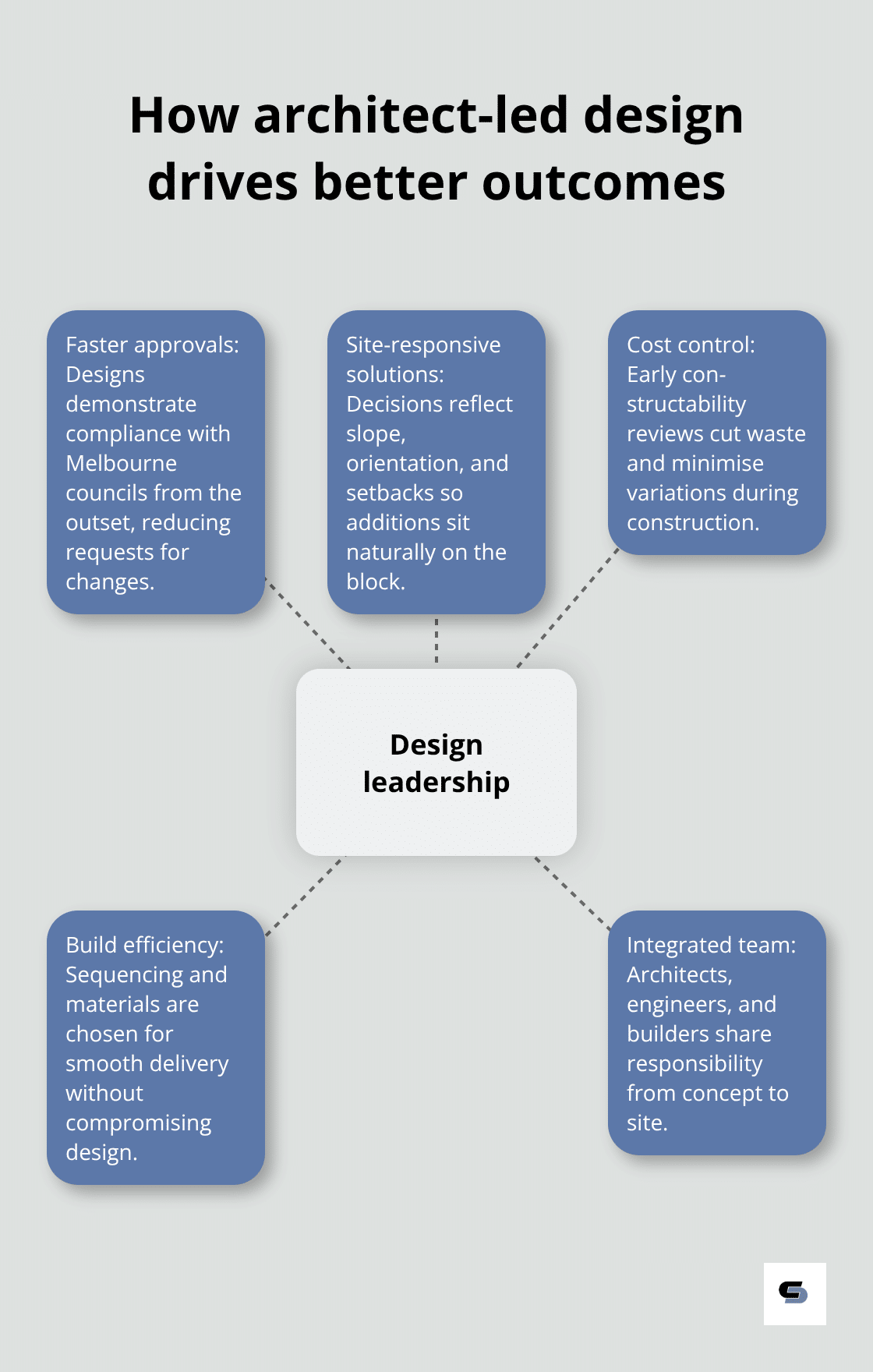
Architect-led projects reverse this: design vision drives the solution, and buildability is engineered to match it.
Research into constructability integration shows projects with early contractor and builder input reduce costs by avoiding late redesigns and unnecessary material waste. For Melbourne homeowners, this means extensions that councils approve faster because the design already accounts for setback rules, site coverage limits, and daylight protections outlined in Victoria’s planning guidelines.
In-House Design Teams Understand Your Site From Day One
In-house designers and engineers work directly on your extension from the first conversation. They walk your block, measure existing structures, and understand how north-facing windows affect your living spaces before sketching anything. This embedded knowledge shapes every decision-from where a double storey addition sits to how a ground floor extension connects to your existing home.
External designers often work from photos and measurements; in-house teams see the real constraints. They know which Melbourne councils move faster on certain designs, how your street’s setback rules work, and whether your soil type supports the foundation you want. This continuity prevents surprises during construction and avoids costly variations. When design, engineering, and project management sit in one team, information flows without translation errors. A contractor working from plans prepared by someone who’s never visited your site often finds problems during construction. In-house teams prevent this by designing for the site they’ve actually assessed.
Making Your Vision Buildable Without Compromise
The real skill in architect-led extensions lies in making your design vision buildable without compromising it. This isn’t about choosing between aesthetics and practicality; it’s about understanding that great design must be constructible. Victoria’s residential design standards-covering setbacks, height limits, site coverage, and overshadowing rules-aren’t obstacles; they’re parameters that shape intelligent design. A skilled architect designs within these constraints so naturally that the extension feels inevitable, not restricted.
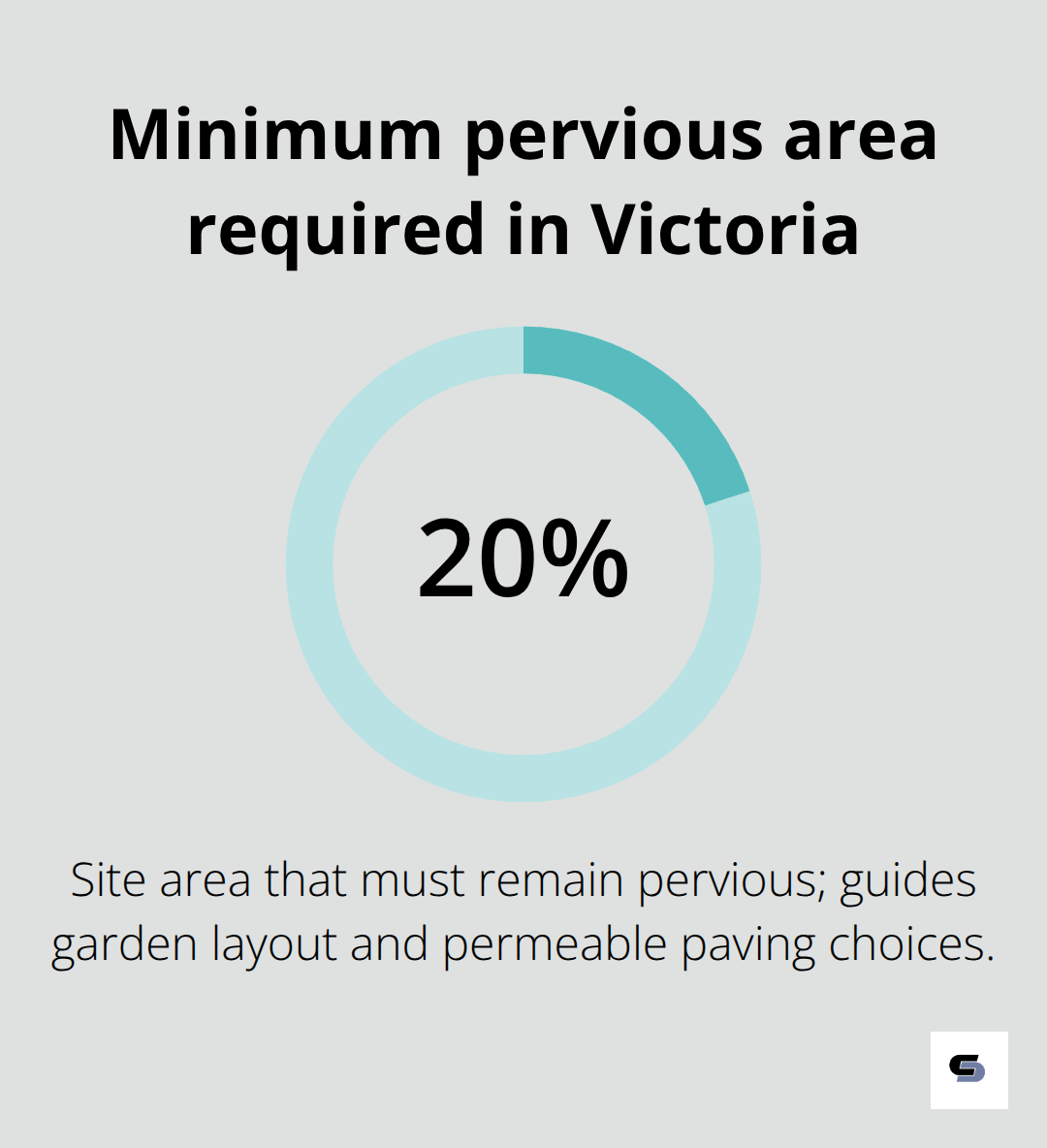
A good architect uses planning rules to inform design, not fight it. Similarly, the requirement that at least 20% of your site remain pervious guides garden placement and permeable paving decisions that improve both drainage and visual quality. These technical requirements, when integrated early, become design opportunities rather than late-stage complications. Extensions that ignore buildability until detailed design typically face council requests for modifications, builder redesigns during construction, and cost blowouts.
Extensions designed with buildability embedded avoid these problems entirely.
How Design Leadership Translates to Construction Reality
The transition from architectural vision to construction-ready plans requires more than technical competence. It demands that architects and builders speak the same language from day one, sharing responsibility for both the design outcome and the construction process. This integration determines whether your extension moves smoothly through council approval and onto site without delays or unexpected costs.
Buildability and Technical Execution
Architectural vision becomes construction reality through detailed planning that accounts for Melbourne’s specific building standards, council requirements, and site conditions. The transition from concept drawings to construction-ready documents demands more than technical skill-it requires understanding how Melbourne councils review applications, how builders price work, and where hidden costs emerge. Most architect-led extensions succeed because the design process includes constructability reviews that test every decision against real-world building constraints before finalisation. Research shows that early contractor involvement during design reduces project costs by identifying material inefficiencies and sequencing problems that would otherwise surface on site.
Translating Design Into Construction-Ready Plans
When architects embed buildability checks into design development, they catch structural and logistical issues before permits are submitted. A double storey addition designed without consultation about foundation requirements or construction sequencing often triggers builder variations during construction-costly changes that could have been prevented. Architects familiar with your specific Melbourne area understand soil types, setback rules, and heritage overlay requirements that affect your extension. This knowledge prevents the scenario where council requests modifications after you’ve paid for detailed design and obtained a building permit.
The difference between smooth extensions and problematic ones often hinges on whether the architect has actually worked with builders on similar sites in your suburb. An architect who knows your council’s expectations presents applications that demonstrate compliance with residential design standards covering setbacks, site coverage, daylight protections, and overshadowing rules. They show setback measurements, shadow diagrams, and permeability calculations rather than simply stating compliance. Councils like Boroondara, Stonnington, and Bayside each have specific expectations about application presentation and supporting documentation. Some councils move faster on extensions that include sustainability commitments like improved insulation or water efficiency, making design decisions that align with council priorities genuinely valuable.
Managing Council Approvals and Permits
Council coordination and permit management determine whether your extension timeline slips by months or stays on schedule. Melbourne’s planning system requires applications to demonstrate compliance with each residential design standard through detailed documentation. The Building and Plumbing Commission requires extensions over $10,000 to have a written major domestic building contract registered before work begins, and projects exceeding $16,000 demand proof of domestic building insurance before the builder takes a deposit. Missing this requirement delays your project start and creates legal exposure.
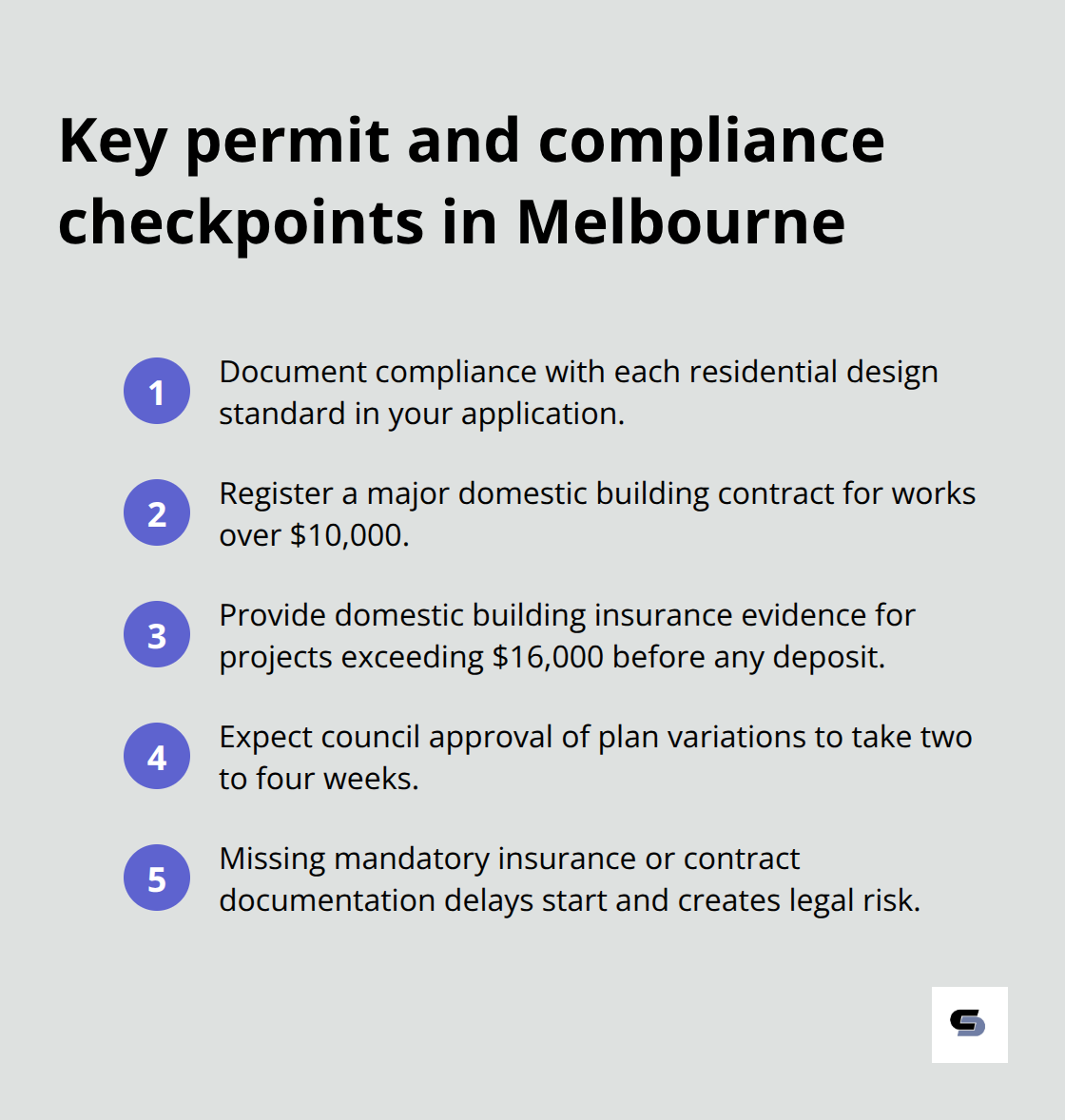
Once permits are issued, variations to approved plans require council approval, which typically takes two to four weeks. This is why design and buildability integration matters so much-fewer redesigns during construction means fewer variations, fewer council submissions, and faster completion. Extensions that skip constructability reviews during design often face site problems that require variations, turning what should be straightforward construction into protracted negotiation with council. A competent architect anticipates problems and designs solutions before construction begins, keeping your project moving forward without the delays that plague builder-led approaches where design and construction remain separated.
How Site Conditions Shape Construction Strategy
Your block’s characteristics-slope, soil type, existing structures, and orientation-directly influence how an architect designs your extension and how a builder prices the work. An architect who visits your site and understands these conditions makes decisions that prevent costly surprises. A sloping block may require deeper footings or retaining walls that a designer working from photos would miss entirely. Soil reports and foundation data must be obtained before accurate pricing and footing design occur. These technical assessments, conducted early in the process, inform both the architectural design and the construction budget.
Extensions that account for site conditions from the start avoid the expensive scenario where construction reveals problems that force redesigns and variations. The practical advantage of architect-led extensions lies in anticipating these challenges and designing solutions before construction begins, keeping your project moving forward efficiently.
Real-World Results of Architect-Led Extensions
Double Storey and Ground Floor Additions That Maximise Space and Value
Double storey additions and ground floor extensions built through architect-led design deliver measurable improvements in both space efficiency and property value. When design drives construction rather than the reverse, these projects consistently outperform builder-led alternatives in three critical ways: they occupy less of your site while delivering more usable area, they move through council approval faster because they demonstrate compliance upfront, and they avoid the costly variations that plague extensions designed without buildability input.
A double storey addition on a standard Melbourne block typically adds 40–60 square metres of new living space while maintaining the 20% minimum pervious site requirement that Victoria’s residential design standards mandate. This precision comes from architects who understand how setback rules, height limits, and site coverage caps actually constrain your block, then design within those constraints so intelligently that the extension feels spacious rather than squeezed. Ground floor extensions benefit equally from this approach; an architect who walks your site identifies opportunities to connect indoor and outdoor living that a builder working from floor plans would miss entirely. The difference shows in how extensions sit on their blocks-architect-led projects integrate with existing structures and landscaping rather than appearing added on top.
Heritage Extensions That Respect Existing Character
Heritage extensions demand architectural expertise that goes beyond technical compliance. Melbourne’s heritage overlays cover roughly 8,000 properties across inner suburbs including Bayside, Boroondara, and Stonnington, and each council interprets heritage protection differently. An architect experienced in your specific council knows whether a double storey addition must match existing materials exactly, whether contemporary contrast is acceptable, or whether setback requirements are more stringent than standard residential zones.
This knowledge prevents costly redesigns after council rejection. Heritage applications that fail typically require substantial rework before resubmission, adding months to your timeline. An architect familiar with your council’s heritage expectations presents applications that demonstrate genuine understanding of your property’s significance and how the extension respects that character. This expertise separates successful heritage extensions from rejected applications that waste time and design fees.
Complex Projects on Sloping Blocks and Challenging Sites
Extensions on sloping blocks present similar complexity; soil conditions vary dramatically across Melbourne, and foundation strategies that work in Hawthorn may prove inadequate in Doncaster or Glen Waverley. An architect specifies soil reports and foundation design before construction begins, preventing the scenario where builders discover unsuitable conditions and demand variations mid-project.
These challenging sites-whether constrained by slope, heritage status, or difficult soil-separate competent architect-led delivery from builder-led approaches that lack site-specific expertise. The cost of getting foundation strategy wrong on a sloping block can reach $30,000–$50,000 in unexpected works; architect-led projects avoid this by identifying requirements during design rather than during construction. Soil reports and foundation assessments conducted early in the process inform both the architectural design and the construction budget, eliminating surprises that would otherwise force expensive variations and delays.
Final Thoughts
Architect-led extensions Melbourne succeed because design leadership and construction expertise operate as one system, not competing priorities. When architects shape your extension from concept through completion, they make decisions that satisfy both your vision and Melbourne’s building standards simultaneously. This integration prevents the costly delays, council rejections, and budget blowouts that plague projects where design and buildability remain separated.
For Melbourne homeowners, the practical advantage is straightforward: extensions that move through council approval faster, cost less to build, and deliver more value because every decision accounts for how your site actually works. Double storey additions on standard blocks, ground floor extensions that connect seamlessly to existing homes, heritage projects that respect character overlays, and complex additions on sloping sites all benefit from this approach. The difference shows in completed projects that feel inevitable rather than compromised, that sit naturally on their blocks, and that avoid the variations and delays that derail builder-led work.
A conversation with someone who understands both architectural vision and construction reality marks the first step toward your extension. Contact Cameron Construction to discuss how architect-led design can transform your home and deliver genuine value.