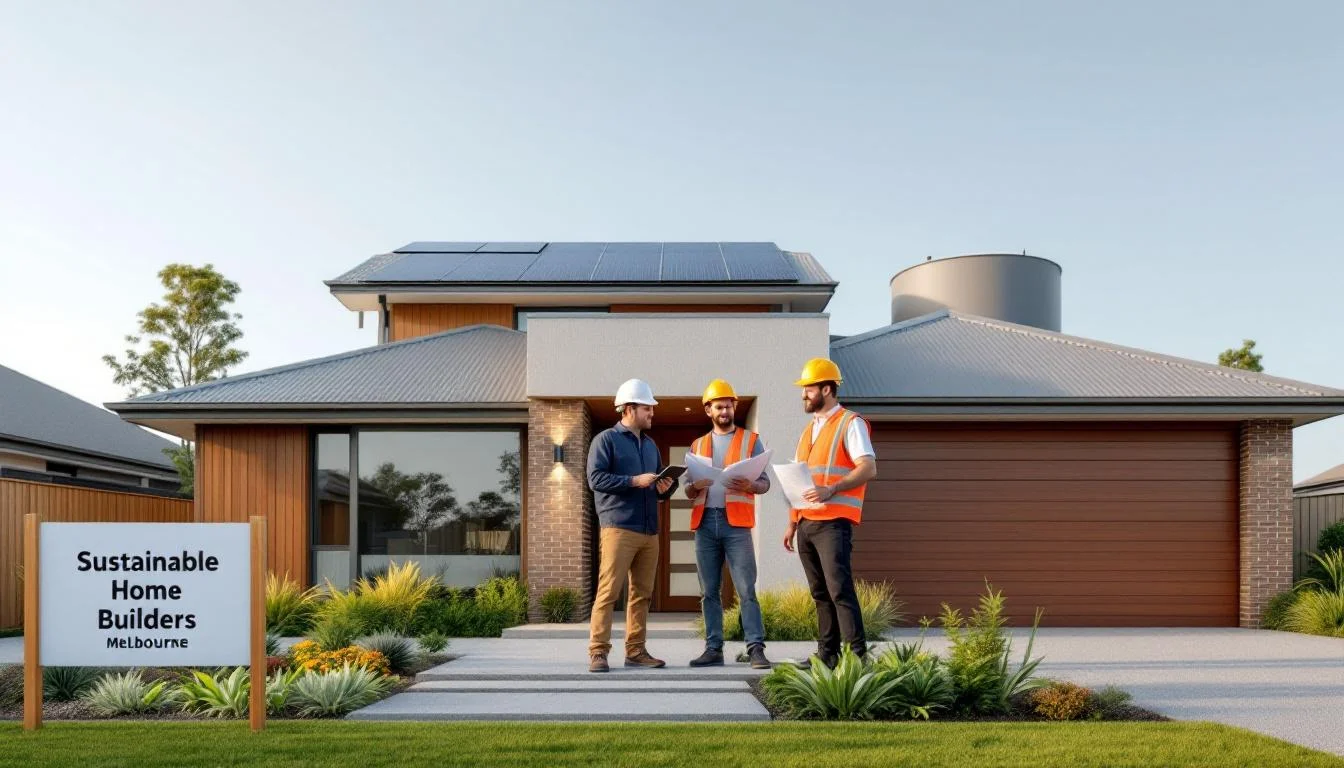
Sustainable Home Builders Melbourne: Your Green Future
Melbourne homeowners are increasingly choosing sustainable home builders Melbourne to reduce energy bills and environmental impact. At Cameron Construction, we’ve seen demand for eco-friendly extensions and renovations grow significantly over the past few years.
Building green isn’t just about feeling good-it’s about making smart financial decisions that pay off for decades. This guide shows you exactly how to plan and execute a sustainable home project in Melbourne.
Why Sustainable Building Matters Now
Melbourne homeowners face a straightforward choice: invest in sustainable building now or pay higher energy bills for decades. The numbers tell the story. Homes built to zero net carbon standards require less energy to heat and cool, enhance occupant comfort and are more resilient to climate and weather extremes. A family living in a standard new Melbourne home spends significantly more on heating and cooling than residents in energy-efficient homes. These aren’t theoretical savings either-homeowners in high-performance homes with proper insulation, double-glazed windows and correctly sized solar systems experience measurable reductions in their quarterly power bills.
The Environmental Cost of Building the Old Way
Traditional construction methods continue to dominate Melbourne’s residential sector, and the environmental consequences are substantial. A standard new home generates roughly 5 to 8.5 tonnes of greenhouse gas emissions annually, compared to near-zero emissions for properly designed sustainable homes. Conventional building practices consume far more materials and energy during construction itself. Low-embodied-energy materials like concrete slab floors, brickwork, and lightweight framing exist as proven alternatives, yet many builders default to conventional approaches simply because the supply chains are established. The Australian Bureau of Statistics data reveals that new Australian residential dwellings average among the largest floor areas globally, with modern homes increasingly including features like cinema rooms, walk-in wardrobes, and multiple bathrooms.
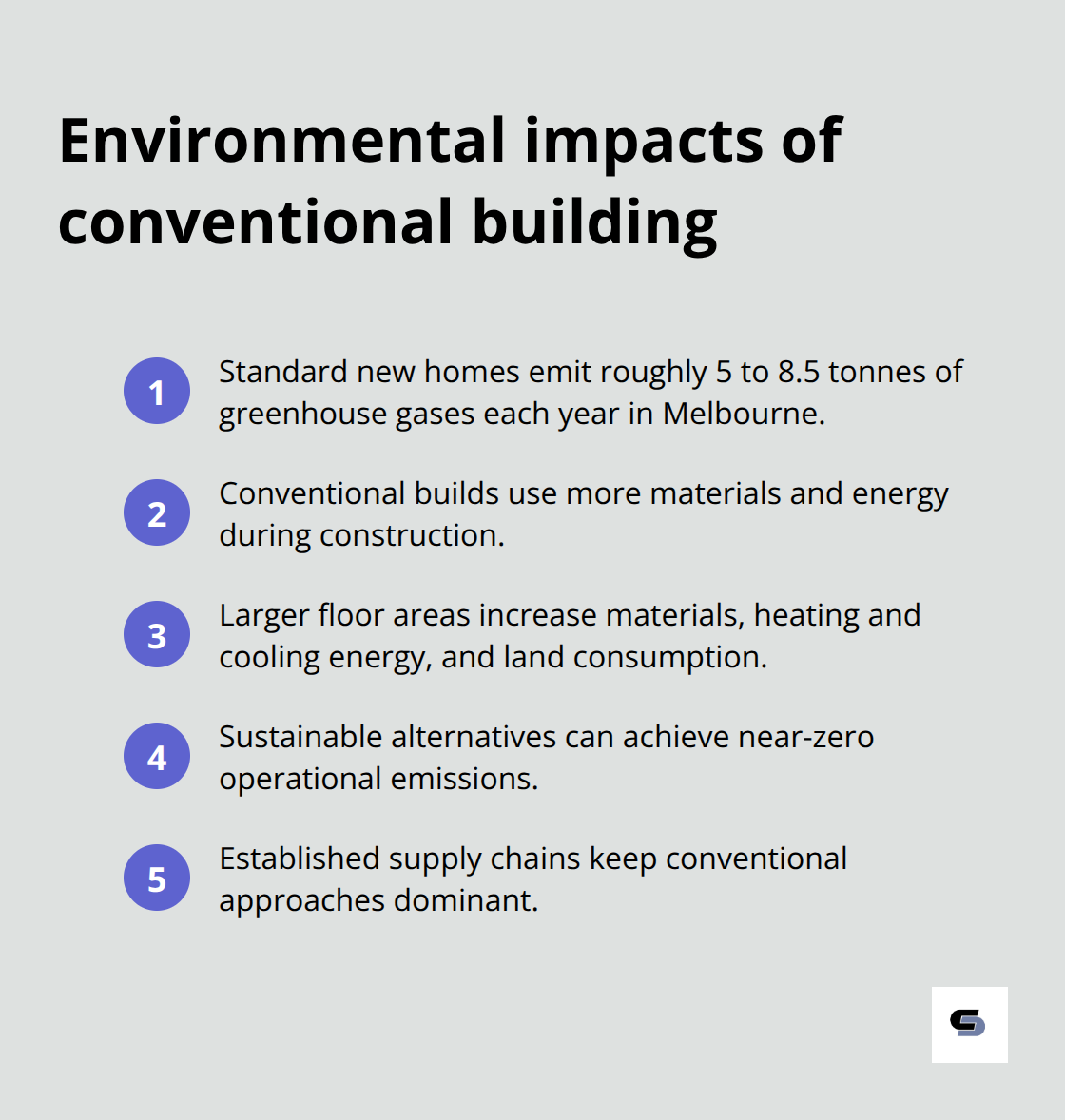
Larger homes require more materials, more heating and cooling energy, and consume more land-reducing green space for every additional square metre built. This pattern directly contradicts Melbourne’s push toward sustainable, compact housing models demonstrated by projects like The Commons, which achieved a 7.5-star energy rating with an energy footprint approximately one quarter that of a typical two-bedroom suburban house.
Why Energy Efficiency Returns Money, Not Just Promises
The financial case for sustainable building extends far beyond energy bill reductions. A home built to NatHERS 7-star standards and designed for zero net carbon operation-using high-quality insulation, strategic building orientation to maximise winter solar heat gain, and appropriately sized solar PV systems-holds its value better and appeals to increasingly discerning Melbourne buyers. Double-storey extensions and ground floor additions that incorporate these principles command premium prices because future owners understand the operational cost advantages. The design process itself matters: zero net carbon homes require NatHERS ratings of at least 6.5 stars, even though the National Construction Code minimum sits at 6 stars. This small gap represents hundreds of dollars in annual energy savings. Independent as-built verification using blower door tests and thermal imaging confirms that insulation and airtightness actually perform as designed-a step that separates genuine sustainable homes from poorly executed projects. Melbourne’s building codes continue tightening, with the 2022 National Construction Code update introducing stronger energy efficiency and liveable housing provisions. Homes built to these emerging standards today won’t require costly retrofits when regulations tighten further, protecting your investment against future compliance costs.
What Sustainable Extensions Demand From Builders
Sustainable extensions and renovations demand more from builders than conventional work. Designers and builders must understand passive design principles, thermal performance modelling, and how to integrate renewable energy systems from the outset. They need to specify materials with low embodied energy, plan for waste minimisation during construction, and execute airtightness and insulation work to exacting standards. Not all builders possess this expertise. The difference between a competent sustainable project and a mediocre one often comes down to whether the team understands how building orientation, window placement, insulation thickness, and solar sizing work together as an integrated system. Your extension or renovation will perform only as well as the weakest link in this chain. This is why selecting the right builder matters more for sustainable projects than for conventional work-and why understanding what to look for in a sustainable builder becomes your next critical step.
How to Design and Build Energy-Efficient Extensions That Lower Running Costs
Start With a Performance Baseline
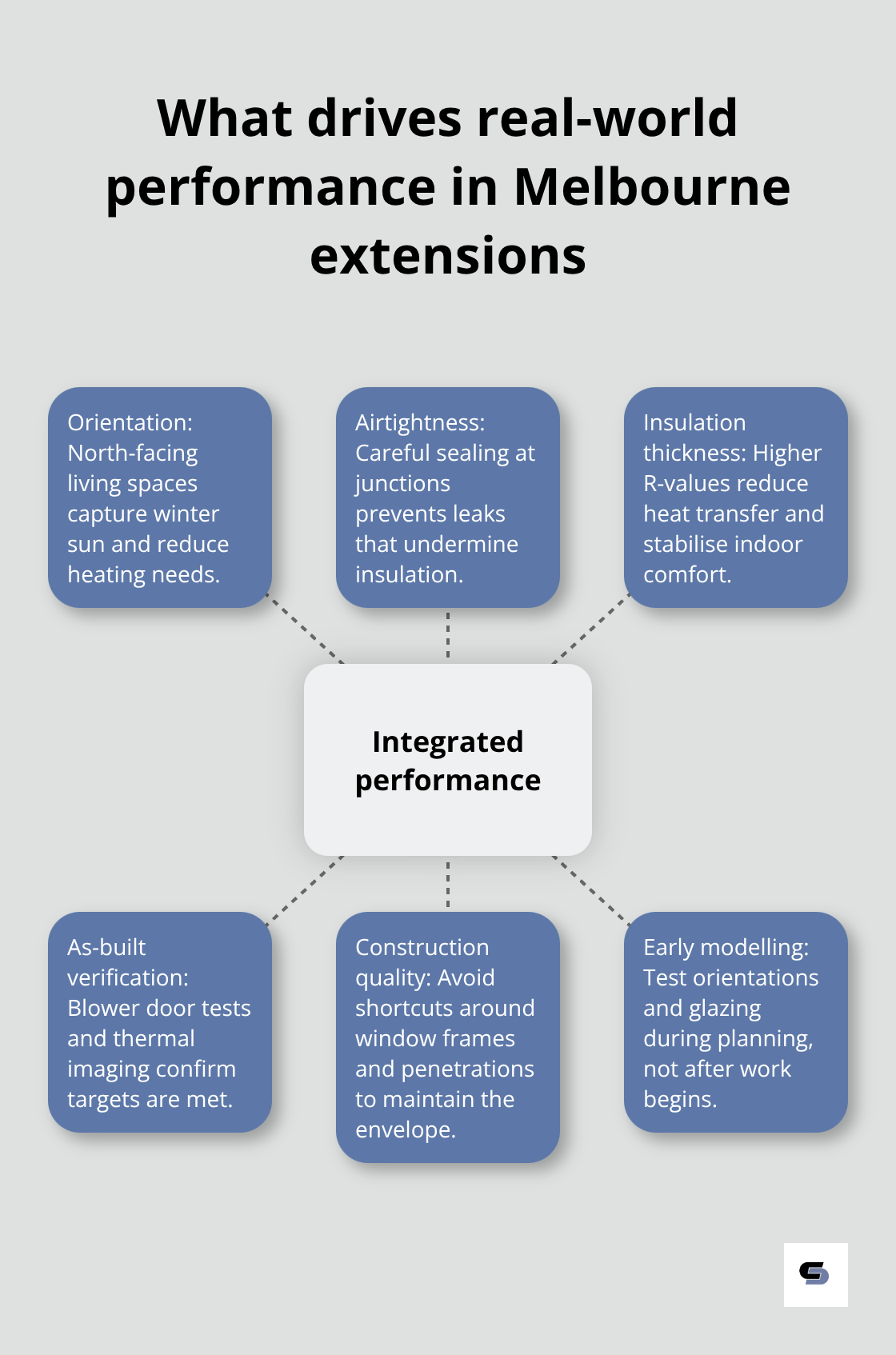
Energy efficiency in extensions and renovations starts with understanding how your addition will connect to existing thermal performance. A NatHERS assessment of your current home reveals where heat loss occurs and how your extension should perform. We recommend designing the extension to meet at least 6.5-star standards rather than the baseline 6-star National Construction Code requirement. Insulation thickness directly drives this performance: high-quality insulation with appropriate R-values, combined with double-glazed windows, forms the foundation of any credible sustainable extension.
Orientation and Airtightness Shape Real Performance
Strategic building orientation makes a measurable difference in Melbourne’s temperate climate. North-facing living areas in extensions capture winter solar heat naturally, reducing reliance on mechanical heating and cooling during the coldest months. Your designer should model these orientations during the planning phase, not retrofit them after construction begins. Airtightness matters as much as insulation thickness. An independent as-built verification using blower door tests and thermal imaging confirms that your extension actually performs as designed. Many extensions perform poorly not because materials failed, but because construction shortcuts compromised proper sealing at junctions, window frames, and service penetrations.
Right-Sized Solar Systems Deliver Zero Net Carbon Results
Solar PV systems sized specifically for your extension’s energy use create true zero net carbon performance. The design process calculates fixed appliance energy consumption-induction cooktops, solar hot water systems, and efficient refrigeration-then sizes a solar array to offset annual energy production. LED lighting throughout the extension reduces artificial lighting energy to negligible levels. This integrated approach (solar sizing, appliance selection, and lighting design) ensures your extension operates at near-zero net carbon rather than simply meeting minimum code requirements.
Water and Materials Complete the Sustainability Picture
Water efficiency in extensions deserves equal attention to energy performance. Rainwater harvesting systems capture roof runoff for garden irrigation and outdoor use, reducing mains water consumption significantly. Greywater systems from showers and baths can irrigate landscaping if designed properly during the construction phase. Sustainable material selection focuses on low embodied energy: concrete slab floors, quality brickwork, lightweight timber framing, and precast concrete elements all perform well in Melbourne conditions. Waste minimisation during construction protects waterways and reduces landfill impact-a requirement under Melbourne planning guidelines. Native landscaping around your extension supports local biodiversity while reducing irrigation demands compared to exotic plantings.
What Separates Competent Sustainable Builders From the Rest
Sustainable extensions and renovations demand more from builders than conventional work. Designers and builders must understand passive design principles, thermal performance modelling, and how to incorporate energy-efficient features from the outset. They need to specify materials with low embodied energy, plan for waste minimisation during construction, and execute airtightness and insulation work to exacting standards. Not all builders possess this expertise. The difference between a competent sustainable project and a mediocre one often comes down to whether the team understands how building orientation, window placement, insulation thickness, and solar sizing work together as an integrated system. Your extension will perform only as well as the weakest link in this chain.
Retrofitting Existing Homes for Energy Performance
Retrofitting an existing Melbourne home demands a different approach than building new. Your extension or renovation connects to walls, roofs, and foundations already in place, which means understanding thermal bridging and continuity becomes non-negotiable. We at Cameron Construction start every retrofit project with a thermal audit that identifies where your existing home loses energy, then designs the addition to address those weak points systematically.
Thermal Continuity From Old to New Construction
Double-storey extensions across Melbourne perform best when they incorporate continuous insulation that wraps from the new structure into existing walls, eliminating thermal bridges at connection points. Ground floor additions present similar challenges: if your existing slab lacks insulation underneath, the new addition’s performance suffers regardless of how well the new section is built. The solution involves insulating the slab edge during construction and maintaining that thermal continuity in the new floor system. Independent as-built verification using blower door tests confirms airtightness at junctions between old and new construction-this testing catches construction shortcuts that compromise performance. Many retrofits fail not because the new materials are poor, but because air leakage paths remain open where the extension meets existing walls. A properly executed retrofit treats the connection between old and new as a critical performance zone requiring meticulous attention to detail.
Sizing Solar Systems for Whole-Home Performance
Solar systems integrated into existing homes require different sizing calculations than new builds. Your existing home’s appliances-the old refrigerator, electric oven, and inefficient hot water system-consume far more energy than a new extension with modern appliances. A competent designer calculates solar capacity based on your total household energy use, not just the new addition’s consumption, because your solar system serves the entire home. If your existing home lacks south-facing roof space, north-facing installation still works in Melbourne’s temperate climate, though output differs seasonally.
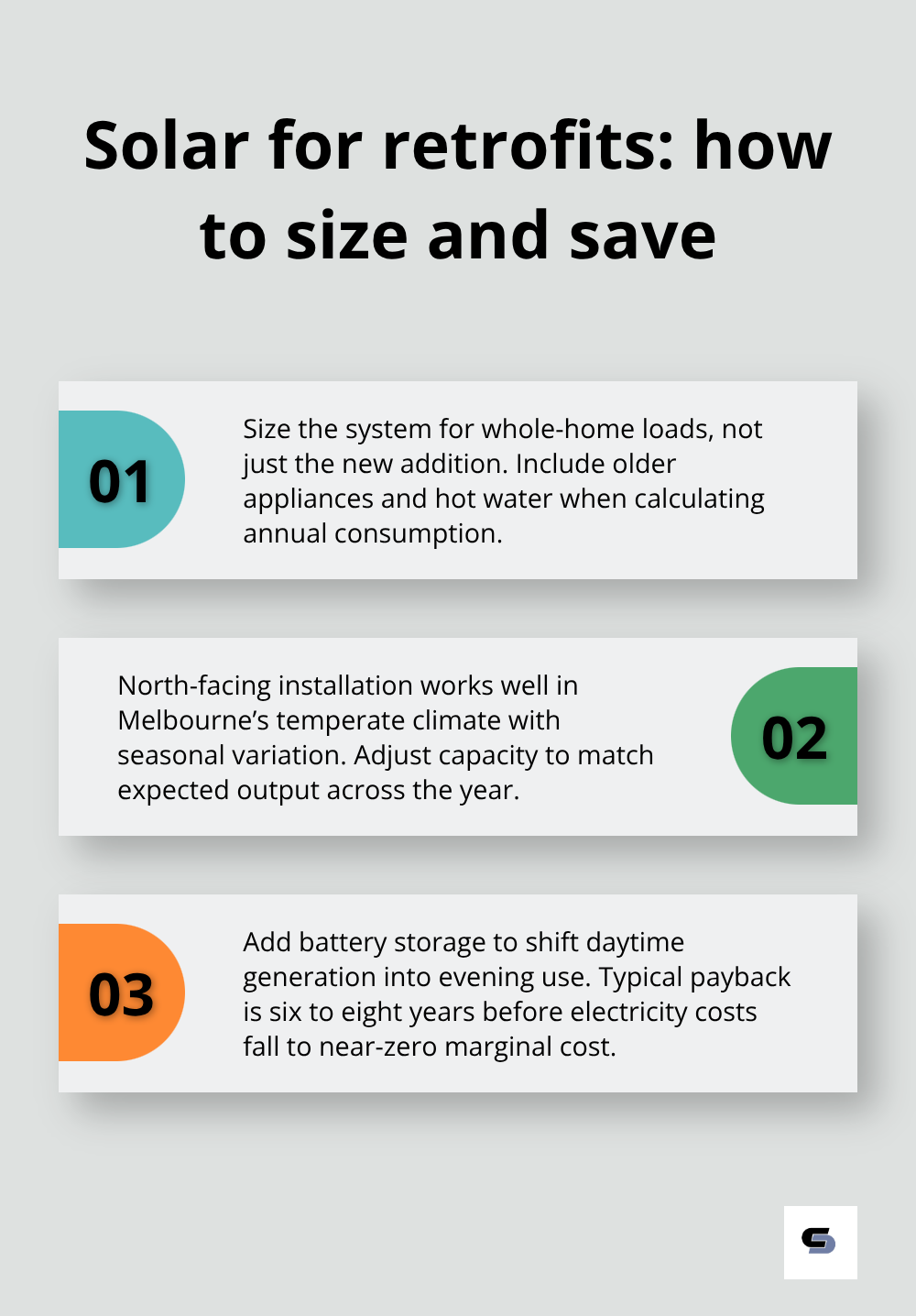
Battery storage becomes increasingly valuable in retrofits, allowing you to store daytime solar production for evening use rather than exporting excess energy to the grid and purchasing it back at night. The payback period for a retrofit solar system typically ranges from six to eight years, after which you generate electricity at virtually zero marginal cost.
Native Landscaping and Existing Garden Integration
Native landscaping around your addition should connect to your existing garden, creating a cohesive outdoor environment that reduces irrigation demands. Established native plants require less water than exotic species, and their root systems support local soil health rather than competing with turf for resources. If your existing garden contains mature trees, preserve them during construction-they provide natural shading that reduces cooling loads and support biodiversity that exotic plantings cannot match.
Final Thoughts
Sustainable home builders Melbourne understand that energy-efficient extensions and renovations require more than good intentions-they demand builders who grasp how building orientation, insulation thickness, solar sizing, and airtightness work together as an integrated system. Melbourne’s building codes continue tightening, and homes built to emerging standards today won’t face costly retrofits when regulations shift further. This forward-thinking approach protects your investment while delivering measurable savings on energy bills from day one.
Look for teams with demonstrated experience in NatHERS assessments, thermal modelling, and independent as-built verification using blower door tests. Your designer should understand passive design principles and how to specify materials with low embodied energy. Ask potential builders about their approach to airtightness at junctions between old and new construction, their waste minimisation strategies, and how they size solar systems for whole-home performance rather than just the addition.
We at Cameron Construction handle sustainable extensions and renovations from concept to completion, including planning, permits, and BCA compliance across Melbourne’s councils. Our in-house designers and engineers understand how to integrate energy-efficient features, renewable energy systems, and water conservation into double-storey extensions and ground floor additions that perform as designed. Contact us to discuss how your sustainable home project can deliver decades of lower running costs and genuine environmental benefit.