Sloping Block Builders Melbourne: Expert Solutions
Building on a sloping block in Melbourne presents genuine challenges that most standard construction approaches simply can’t handle. Uneven terrain demands specialised engineering, careful drainage planning, and a deep understanding of local council requirements.
We at Cameron Construction have spent years working with sloping block builders across Melbourne suburbs, and we’ve learned that the right solutions transform these tricky sites into valuable properties. This guide walks you through the complexities and shows you exactly how to navigate them.
Structural Complexities and Foundation Requirements
Why Slopes Demand Specialised Engineering
Sloping blocks demand foundation systems that standard Melbourne homes simply don’t need. The soil beneath your property won’t behave uniformly across a slope, which means footings must account for varying ground conditions and movement. Geotechnical testing under Australian Standard AS 2870 is not optional-it’s the foundation of any credible design. This testing identifies soil type, bearing capacity, and susceptibility to movement, which directly determines whether you need shallow footings, deep footings, or piled systems.
A geotechnical engineer analyses this data and recommends the appropriate footing type. A structural engineer then designs the retaining walls and load paths needed to keep your extension stable. This two-stage process protects your investment and prevents costly failures later.
Retaining Walls: The Cost Driver on Slopes
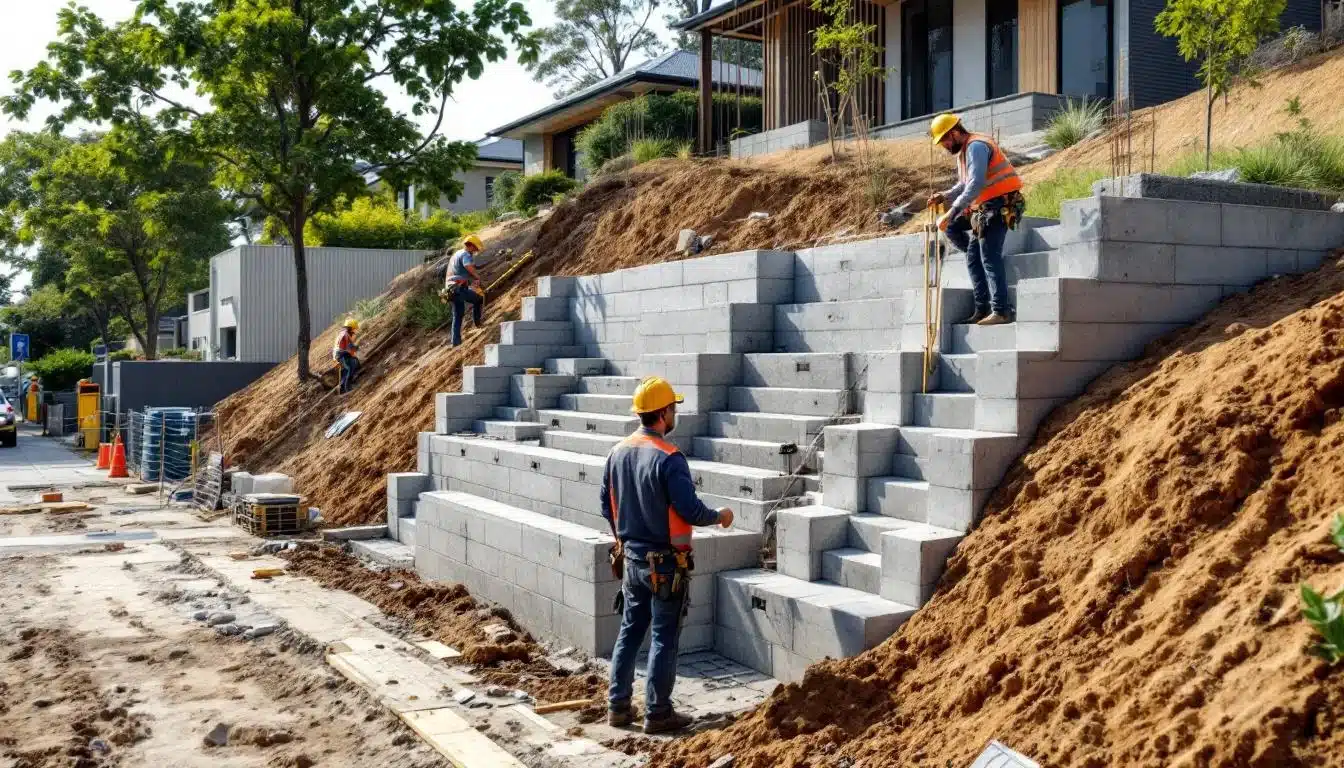
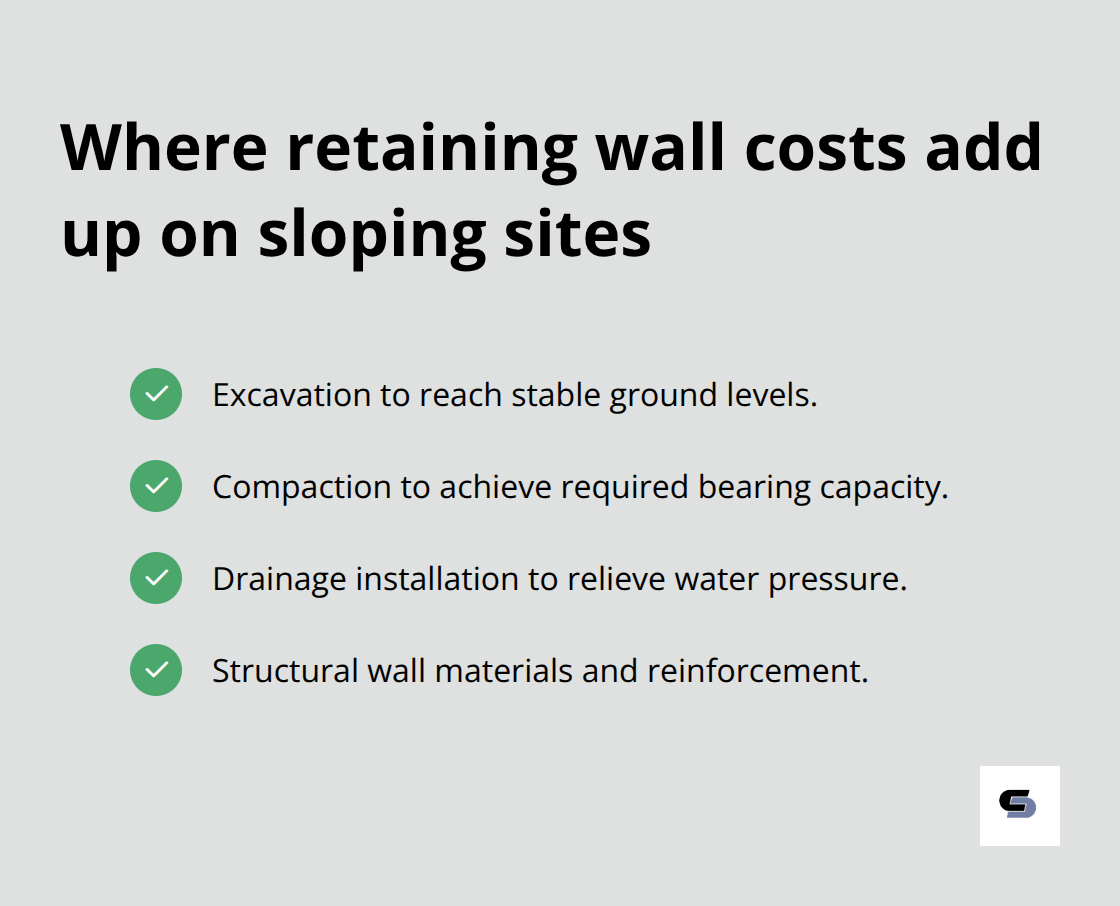
Retaining walls are where costs escalate quickly on slopes. A single metre-high wall with proper drainage and structural reinforcement costs significantly more than most homeowners anticipate, and walls taller than 1.5 metres typically require engineering certification and council approval. The real expense comes from below-ground work: excavation, compaction, drainage installation, and the wall structure itself.
Projects frequently reveal that retaining wall costs exceed initial budgets by 30–40% because geotechnical assessments uncover worse soil conditions than expected or drainage requirements prove more complex than anticipated. Planning for this reality upfront prevents budget shock during construction.
Water Management: The Foundation of Slope Stability
Water management on slopes is where most problems begin. Melbourne’s rainfall, combined with slope gradients, means water moves downhill rapidly and can concentrate around your building if drainage is poorly planned. Subsoil drains must sit at the base of retaining walls to prevent water pressure building up behind them, and weep holes allow trapped water to escape before it causes structural failure.
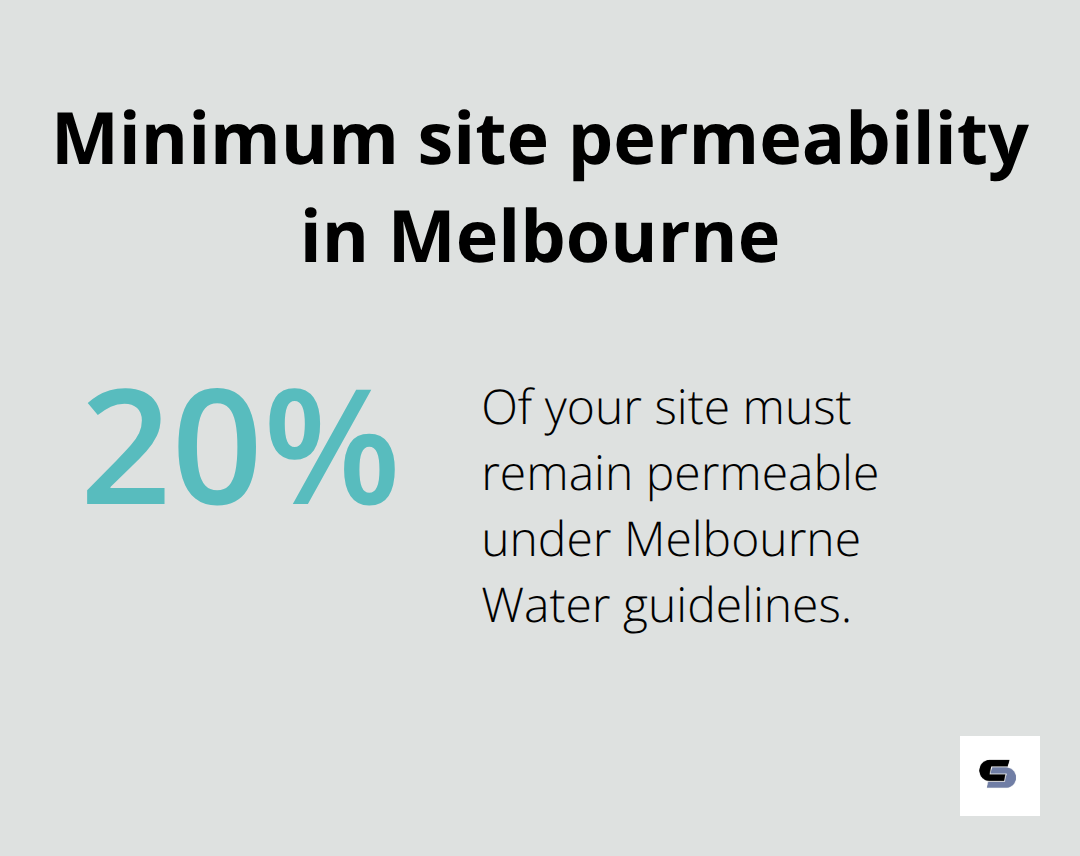
Melbourne Water guidelines specify that at least 20% of your site must remain permeable to reduce stormwater runoff. On slopes this becomes harder to achieve when you’re adding structures and retaining walls. Surface water management is equally critical-gutters, downpipes, and grading must direct water away from foundations and lower-level areas.
If your extension includes a lower level or basement, damp-proofing and waterproofing become essential, not optional. Poor drainage on slopes doesn’t just create damp interiors; it leads to foundation movement, cracking, and structural failure that costs far more to repair than proper drainage cost upfront.
Budget Reality for Slope Construction
The cost of building on slopes reflects this complexity. In Melbourne, building-up costs around 491,000 per apartment according to Reserve Bank of Australia data, but this figure masks the additional expenses on slopes. Earthworks, drainage systems, retaining walls, and engineering fees can add 15–25% to overall construction costs on a steep site compared to a flat block.
A sloping block extension that might cost 150,000 on level ground could cost 180,000–190,000 once you factor in slope-specific engineering and construction. Budget contingencies of 10–15% are standard for slope projects because soil conditions, drainage complexity, and unforeseen ground issues frequently emerge during construction. Council requirements also add cost-erosion management overlays and landslip risk assessments mean additional reports and specialist input before a permit is issued.
These structural and financial realities make professional engineering and experienced builders essential. The next section shows how expert design transforms these challenges into solutions that maximise your usable space and long-term property value.
Expert Solutions for Sloping Block Extensions
Stepped Layouts Transform Slope Constraints into Advantages
Designing extensions on slopes requires moving beyond standard approaches. The most effective solutions integrate engineered foundations, smart spatial design, and drainage systems that work together rather than separately. Stepped or terraced layouts are the practical answer to maximising floor area without excessive excavation. Instead of levelling the entire site, which costs a fortune, a split-level design follows the natural slope and reduces earthworks significantly.
Each level connects to the slope at different points, meaning lower levels sit partially into the ground without requiring deep basements. This approach lets you add a ground floor addition that feels integrated rather than cut off from the main house. A two-storey extension on a slope often costs less than flattening the block and building conventionally, because you use the terrain instead of removing it. Structural engineers design load paths that account for the slope itself-walls, beams, and footings work with gravity and ground conditions rather than fighting them.
Retaining Walls: Integration Over Afterthought
Retaining walls must be integrated into the design from the start, not treated as an afterthought. A 1.2-metre wall with proper drainage, compacted backfill, and weep holes costs around 800–1200 per linear metre in Melbourne, depending on soil type and access. Rather than one large wall, multiple smaller walls stepped down the slope reduce individual wall heights, lower costs, and create usable terraced outdoor spaces.
Drainage design sits at the core of this integration. Subsoil drains run behind each wall, surface water directs away from foundations, and permeable paving in outdoor areas ensures water moves off your property safely. Melbourne Water requirements demand at least 20% site permeability, which terraced designs actually achieve better than flat-site alternatives because stepped layouts preserve more surface area for gardens and outdoor living.
Geotechnical reports identify soil type and bearing capacity, which determines wall depth, reinforcement, and drainage specifications. A structural engineer then certifies that each wall can handle soil pressure and water load over decades without movement. This engineering input costs 2000–3500 per site but prevents catastrophic failures that cost 50,000 or more to repair after construction.
Foundation Systems That Respond to Ground Conditions
Foundation systems on slopes must vary across the site based on ground conditions. Shallow footings work on stable, well-compacted soil near the top of a slope, but lower areas often need deeper footings or even piled systems if soil movement risk is high. AS 2870 testing reveals these variations-a geotechnical engineer reads the results and recommends footing depths ranging from 600 millimetres to 1.5 metres or deeper depending on location.
Rather than over-designing the entire site to the worst-case scenario, targeted engineering allows different footing types in different zones, which saves money without compromising safety. Damp-proofing and waterproofing become essential for any extension with a lower level. Bituminous membranes, cavity trays, and internal drainage systems protect concrete from moisture damage. On slopes, this investment prevents the damp, cracking, and structural deterioration that plague poorly protected lower levels within five to ten years of completion.
Why Professional Engineering Drives Project Success
These design and engineering decisions determine whether your sloping block extension becomes a valuable addition or a source of ongoing problems. Soil conditions, drainage complexity, and unforeseen ground issues frequently emerge during construction, which is why council requirements add cost through erosion management overlays and landslip risk assessments before a permit is issued. A sloping block extension that might cost 150,000 on level ground could cost 180,000–190,000 once you factor in slope-specific engineering and construction. Budget contingencies of 10–15% are standard for slope projects because these variables shift costs unpredictably.
Professional builders and engineers handle these complexities as standard practice. They read geotechnical reports, design retaining walls that last decades, and integrate drainage systems that protect your investment. The next section addresses the permits and planning requirements that govern these projects across Melbourne suburbs-understanding these rules upfront prevents delays and ensures your design meets council expectations before construction begins.
Permits and Planning on Sloping Blocks
Sloping blocks trigger specific planning and building requirements that differ significantly from flat-site extensions. Understanding these rules before design begins saves months of delays and rework. Slopes activate overlays and assessments that flat blocks simply don’t need.
Overlays That Control Your Sloping Block Project
An Erosion Management Overlay assessment is mandatory if your site sits in an EMO zone, which covers much of Melbourne’s hilly suburbs including the Dandenong Ranges and Yarra Ranges. This assessment identifies erosion risk and dictates how you can excavate, drain water, and stabilise slopes. Landslip risk mapping from your council shows whether your site has potential for ground movement, which triggers additional engineering requirements and may restrict building placement entirely.
A Bushfire Attack Level assessment becomes compulsory on slopes in bushfire-prone areas, which affects material choices, roof design, and external finishes. These overlays are not negotiable-they’re council requirements that must be addressed before a planning permit is issued. Your first step involves checking your property against the council’s online mapping portal to identify which overlays apply. Yarra Ranges Council, Monash Council, and Maroondah Council all maintain accessible mapping that shows EMO zones, bushfire overlays, and landslip risk areas.
Once you know which overlays affect your site, you can budget for the specialist reports needed. An erosion management report costs 1500–2500, a geotechnical assessment runs 2000–3500, and a bushfire consultant’s report adds another 1500–2500 if required.
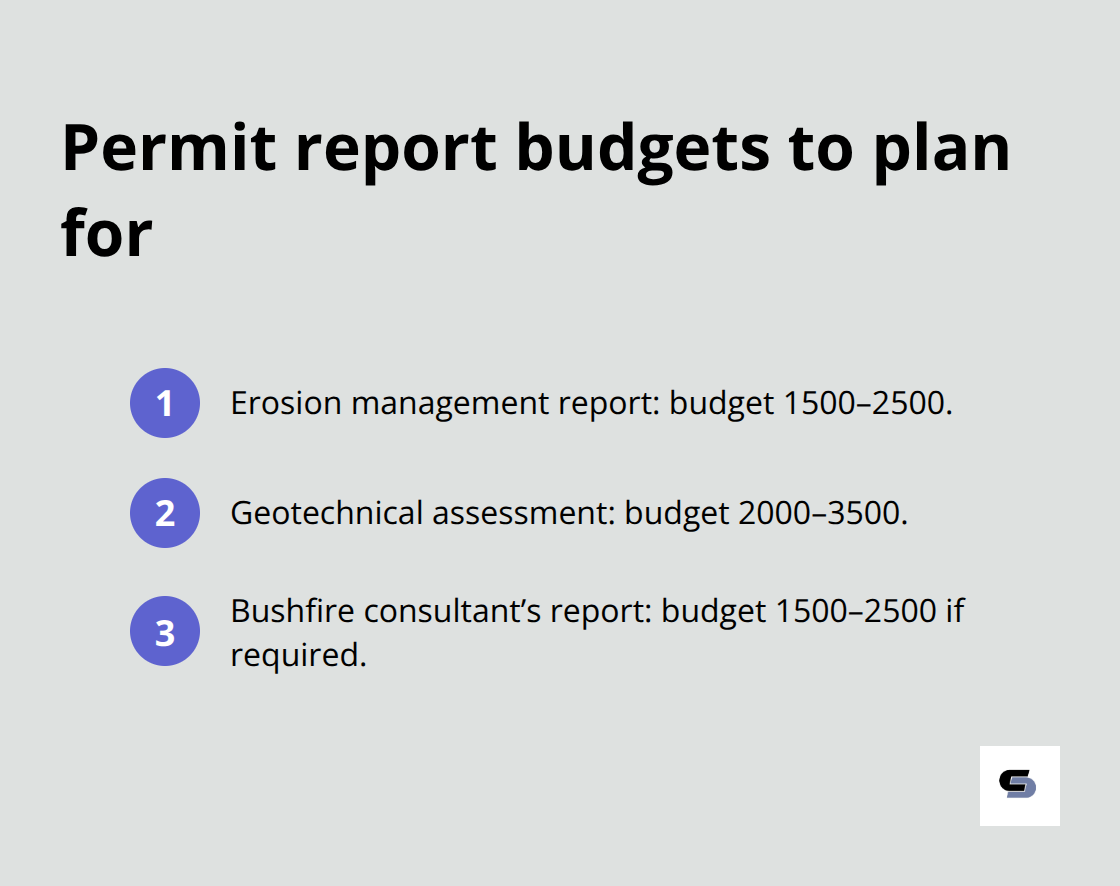
These are not optional expenses-councils will not issue planning permits without them.
Height Limits and Natural Ground Level
Height limits on slopes differ from standard zoning rules, which catches many homeowners off guard. Victorian planning guidelines allow 10 metres of building height on slopes steeper than 2.5 degrees across an 8-metre width, compared to the standard 9-metre limit on flat sites. However, height is measured from natural ground level, not finished or existing grade, which means a sloping site’s natural contours determine your maximum height, not your excavation depth.
This distinction matters significantly for double-storey extensions because it can make the difference between approval and rejection. A slope that appears steep enough to qualify for the 10-metre allowance may not meet the 2.5-degree threshold when measured precisely, which reduces your available height and constrains design options. Council assessments verify this measurement before permit approval, so accurate site surveys become essential early in the design process.
Building Code Compliance and Accessibility Requirements
Building Code compliance on slopes requires AS 2870 testing to determine footing types, and the National Construction Code demands that accessible entry paths comply with the Livable Housing Design Standard unless slope gradients make this impractical. On slopes steeper than 1 in 14, an accessible path from the boundary to your dwelling entrance is not required, which removes a major cost constraint on steep sites.
A registered building surveyor must be appointed before construction starts-councils will not issue building permits without this appointment. The surveyor conducts mandatory inspections at key stages and issues the final occupancy certificate, and critically, you cannot appoint the surveyor yourself if you’re using a registered builder. For projects exceeding 10,000 in value, a registered building practitioner is legally required, and their VBA registration must be verified on the Victorian Building Authority website.
Owner-Builder Thresholds and Professional Coordination
If you’re an owner-builder managing the project yourself, the threshold jumps to 16,000 before you need VBA consent, but this route introduces significant liability and is rarely appropriate for complex slope projects where engineering and drainage failures carry serious consequences. Professional coordination prevents costly design changes mid-project and ensures permits are issued without unexpected conditions. An architect or building designer streamlines this entire process because they coordinate with council, manage the planning application, arrange required specialist reports, and ensure your design meets all overlays and code requirements before construction begins.
Final Thoughts
Sloping block builders Melbourne understand what flat-site construction cannot address: soil movement, water pressure, foundation failure, and the cascading costs that follow poor engineering decisions. Professional expertise on slopes delivers three tangible outcomes-it protects your safety by ensuring foundations remain stable and water stays away from living areas, it saves money by preventing costly rework and catastrophic repairs that follow drainage or foundation failures, and it maximises your property value by creating usable extensions that integrate with the natural terrain rather than fighting it. A properly engineered slope project costs 15–25% more than flat-site construction, but a failed slope project costs multiples of that to repair.
The permits and planning requirements you’ve read about are not obstacles; they’re safeguards that force proper engineering upfront. Councils require erosion assessments, geotechnical reports, and bushfire evaluations because slopes have failed before, and these requirements exist to prevent that happening to your property. Working with professionals who understand these overlays, height limits, and building code requirements means your design gets approved without unexpected conditions or delays.
We at Cameron Construction have spent over 40 years designing and building extensions across Melbourne’s sloping blocks, from the Dandenong Ranges to Yarra Ranges and beyond. Our in-house engineers, designers, and project managers handle the entire process from initial site assessment through permits, engineering, and construction to final occupancy. If your sloping block project needs professional guidance, contact Cameron Construction to discuss how we can transform your site into a valuable, safe, and functional home extension.