
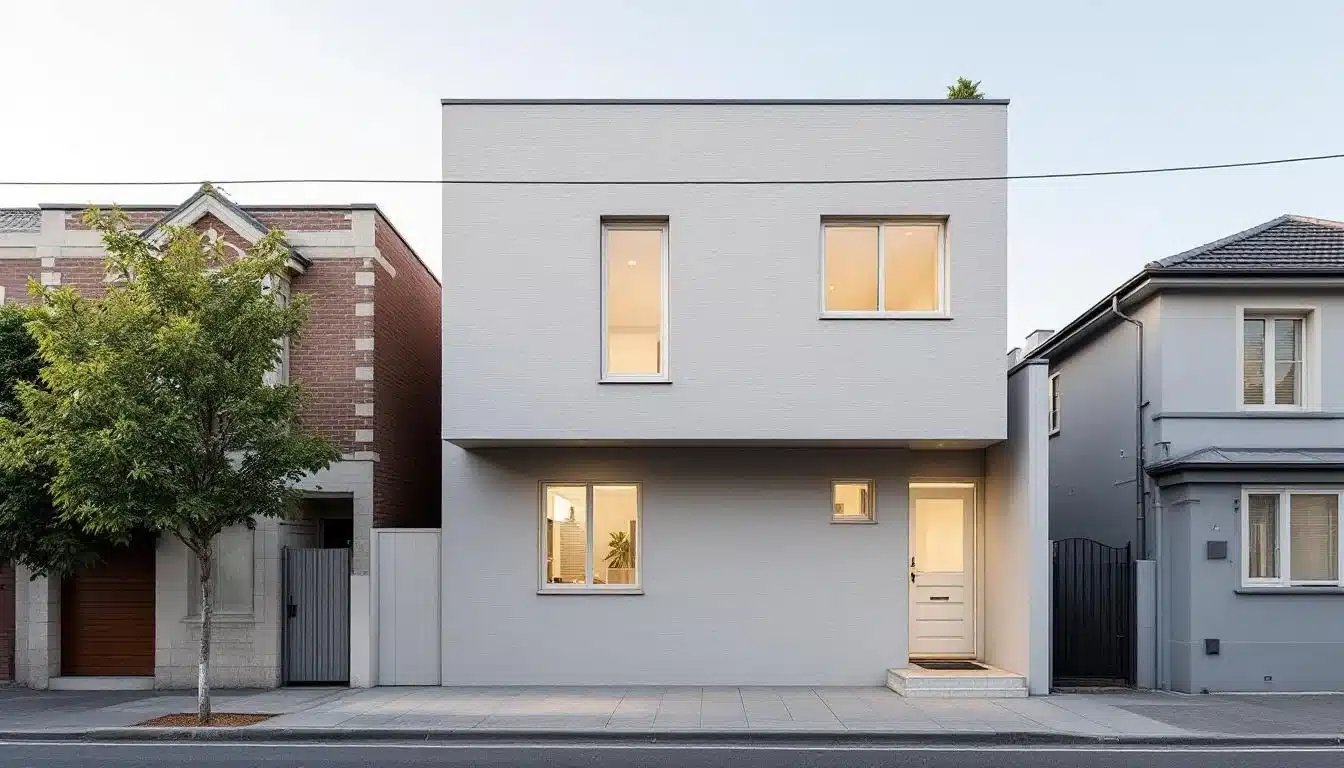
Second Storey Additions For Inner Melbourne Homes
Inner Melbourne’s tight land availability makes second storey additions the smart choice for homeowners wanting more space without leaving their established suburbs. We at Cameron Construction have guided hundreds of families through this process, and we know the challenges-from heritage overlays to council requirements-can feel overwhelming.
This guide walks you through everything you need to know, from design and planning through to construction completion.
Why Second Storey Additions Make Sense for Inner Melbourne
Inner Melbourne’s property landscape has fundamentally shifted. Land availability in suburbs like Fitzroy, Carlton, South Yarra, and Hawthorn is scarce, and what’s available carries premium prices that make horizontal expansion impractical for most homeowners. According to the Australian Bureau of Statistics, private sector houses approved in January 2026 totalled 9,753 nationally, yet Victoria’s seasonally adjusted approvals fell 3.8% that month, signalling tighter market conditions. For inner Melbourne residents, this reality means vertical growth through second storey additions has become the pragmatic path forward. You stay in your established suburb with its schools, transport links, and community networks. Instead, you add to the unused airspace above your existing home. A second storey addition typically adds between 60 and 80 square metres of usable floor area, equivalent to a substantial extension without consuming your backyard or competing with neighbouring properties for space.
The Financial Case for Going Vertical
Property values in inner Melbourne suburbs have climbed steadily, making land acquisition prohibitively expensive. Adding a second storey increases your home’s market value significantly more than ground floor extensions alone, because you create additional bedrooms and living areas that buyers actively seek. Alterations and additions to residential buildings demonstrate sustained demand for this upgrade type. A second storey addition also avoids the disruption of relocating during a volatile market and allows you to remain in place while your property investment grows. The cost-per-square-metre for vertical additions typically sits lower than purchasing additional land or moving to a larger property in a comparable suburb. Homeowners recoup 70–85% of their investment through increased property value, particularly in heritage-protected inner suburbs where character homes command premium prices.
Heritage Overlays and Planning Realities
Inner Melbourne’s heritage character is both an asset and a constraint. Properties in heritage overlays-which cover substantial portions of Fitzroy, Carlton, Collingwood, and surrounding areas-require planning permits for all works, including second storey additions. This framework actually protects your investment and neighbourhood character. The City of Melbourne’s Heritage Design Guide sets clear expectations: additions must be visually subordinate to the original building, set back behind the front elevation, and distinguishable from historic fabric. These requirements ensure your addition won’t clash with the streetscape or face neighbour objections. Planning applications must include a signed form and current Certificate of Title. The planning process typically takes 10 working days for VicSmart applications on eligible properties, or 60+ days for standard applications depending on complexity and completeness.
What Comes Next in Your Planning Journey
Your design and planning phase determines whether your second storey addition gains approval smoothly or encounters delays. Structural assessment, engineering requirements, and council-specific variations across inner Melbourne suburbs all shape your timeline and costs. Understanding these elements before you engage professionals helps you ask the right questions and set realistic expectations for your project.
Design and Planning Considerations for Second Storey Builds
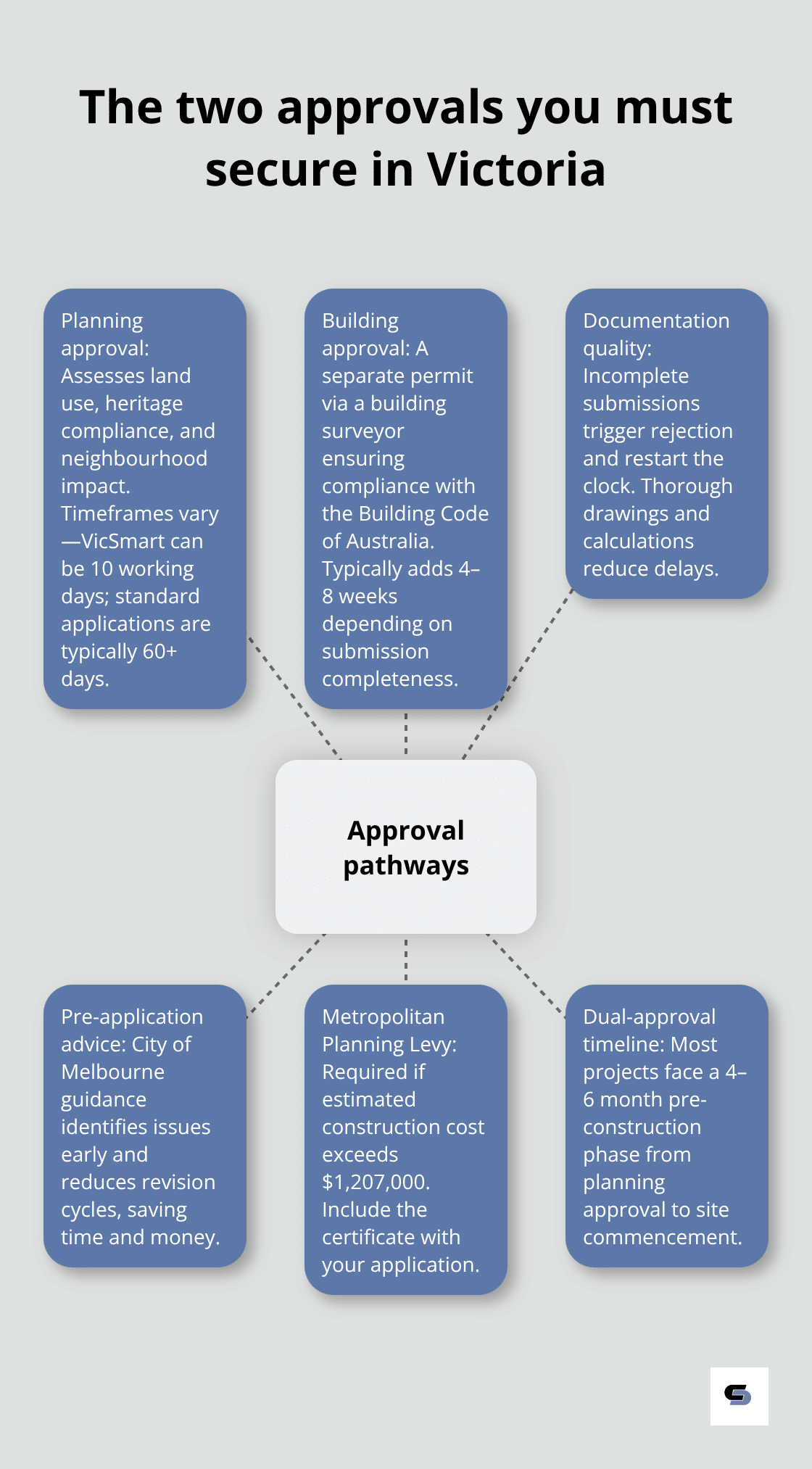
Your second storey addition must satisfy two separate approval pathways before construction begins. The City of Melbourne assesses land use, heritage compliance, and neighbourhood impact through planning approval. The Victorian Building Authority verifies construction methods and safety standards through building approval. These are not the same process, and completing one does not guarantee the other.
Heritage Requirements Shape Your Design
Properties in heritage overlays-which cover Fitzroy, Carlton, Collingwood, and surrounding inner suburbs-require planning permits for all works. The City of Melbourne’s Heritage Design Guide demands that additions remain visually subordinate to the original building, set back behind the front elevation by at least 8–10 metres, and distinguishable from historic fabric through material and design choices. Your architect cannot simply stack a replica of the ground floor above it. Instead, your design must interpret heritage principles through contemporary materials and proportions.
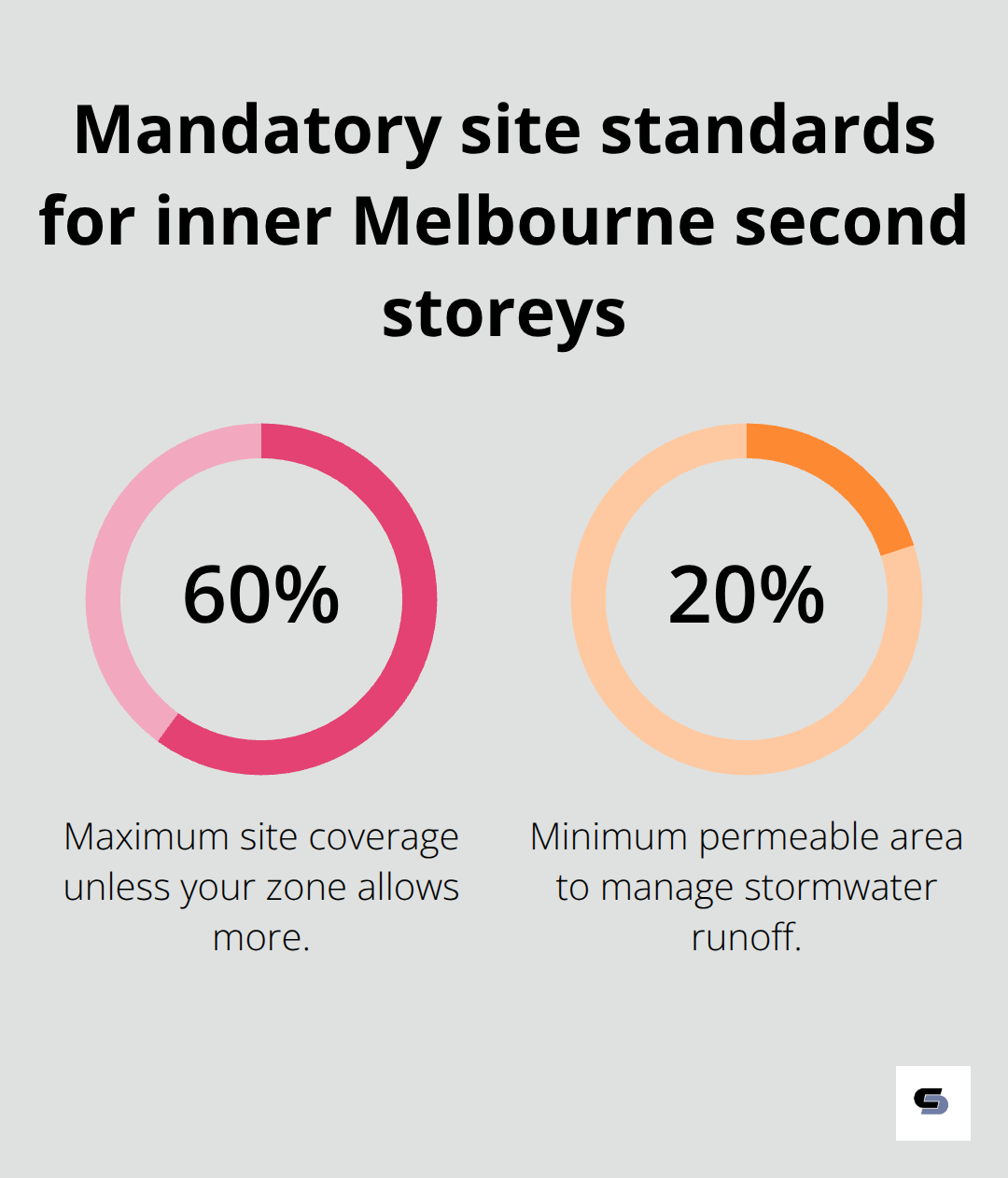
Height limits typically cap at 9 metres, or 10 metres on sloping sites, per Victoria’s planning framework. Front setbacks must match the average of adjoining dwellings unless your zone schedule specifies otherwise. Side and rear setbacks scale with height: you need a minimum 1 metre setback plus 0.3 metres for every metre of height over 3.6 metres. Site coverage cannot exceed 60% unless your zone allows more, and at least 20% of your site must remain permeable to manage stormwater runoff. These are not guidelines-they are mandatory standards that your design must meet before lodgement.
Planning Applications and Approval Pathways
Planning applications must include a signed permit form, a current Certificate of Title with plan of subdivision, and the application fee. If your estimated construction cost exceeds $1,207,000, you must also provide a Metropolitan Planning Levy certificate. Eligible properties may qualify for VicSmart, a streamlined pathway that delivers decisions within 10 working days if your application is complete. However, VicSmart is unavailable if heritage overlays, design overlays, or other restrictions apply to your site. Standard applications typically take 60+ days depending on complexity and how thoroughly you address council concerns upfront.
Pre-application advice from the City of Melbourne identifies potential issues before formal lodgement and reduces revision cycles. This step genuinely saves time and money by clarifying expectations early.
Structural Assessment and Engineering
Structural engineers must assess your existing foundations, walls, and roof to confirm they can support a second storey. This assessment determines whether you need underpinning, additional bracing, or reinforcement-costs that can range from minimal to substantial depending on your home’s age and construction method. A building surveyor reviews the engineer’s findings and verifies your design complies with the Building Code of Australia.
Waste Management and Site Compliance
You must submit a Waste Management Plan that addresses construction waste, recycling, and disposal of chemicals or leftover materials. Non-compliant disposal can trigger enforcement action, so this is not optional administrative paperwork. Inner Melbourne councils enforce construction noise regulations strictly, so your project plan must specify reasonable working hours and site management practices that minimise disruption to neighbours.
Your structural assessment and engineering requirements determine whether your project proceeds smoothly or encounters unexpected costs and delays. Understanding these technical demands before you engage professionals helps you set realistic budgets and timelines for your build.
The Build Process and Timeline
Your planning approval opens the door to construction, but it is not the finish line. Once the City of Melbourne issues your Notice of Decision, you have a defined timeframe to commence construction-typically 12 months, though you can apply for an Extension of Time if needed. Before a single brick is laid, your builder must obtain a building approval from the Victorian Building Authority, a separate approval that verifies construction methods meet the Building Code of Australia. This dual-approval structure means most projects face a 4–6 month pre-construction phase from planning approval to site commencement.
Your architect and engineer produce detailed construction drawings, specification schedules, and engineering calculations that the building surveyor reviews for BCA compliance. This documentation must be thorough-incomplete submissions trigger rejection and restart the clock. The City of Melbourne’s planning process typically resolves in 60+ days for standard applications, while VicSmart decisions arrive within 10 working days on eligible properties, but building approval adds another 4–8 weeks depending on submission completeness and whether the surveyor requests revisions.
Preparation and Pre-Construction Approvals
Your builder coordinates with the Victorian Building Authority to secure the building permit while your planning application moves through council review. This parallel approach compresses timelines by preparing building documentation before planning approval arrives. The building surveyor reviews all construction drawings for compliance with the Building Code of Australia and flags any deficiencies that require correction. Incomplete submissions restart the approval process, so your architect and engineer must anticipate surveyor questions and address them upfront. Parking during construction requires residential parking permits from the City of Melbourne if your site lacks adequate off-street parking; obtain these 2–3 weeks before work begins. If your project requires occupying public space for materials storage or site access, you need an occupancy permit or road-works permit, another administrative layer that adds 1–2 weeks to pre-construction planning.
Construction Phases and Site Disruption
Construction unfolds in distinct phases that directly affect your household disruption. The demolition and site preparation phase takes 2–4 weeks and generates the most waste and noise; you need separate waste permits and bins for construction materials since standard hard-waste collections reject renovation debris. The structural phase-underpinning, new walls, roof framing-typically spans 6–10 weeks and involves heavy machinery, concrete pours, and continuous activity that neighbours will notice. The fit-out phase, including electrical, plumbing, and internal finishes, extends 8–12 weeks with lighter disruption but sustained site presence.
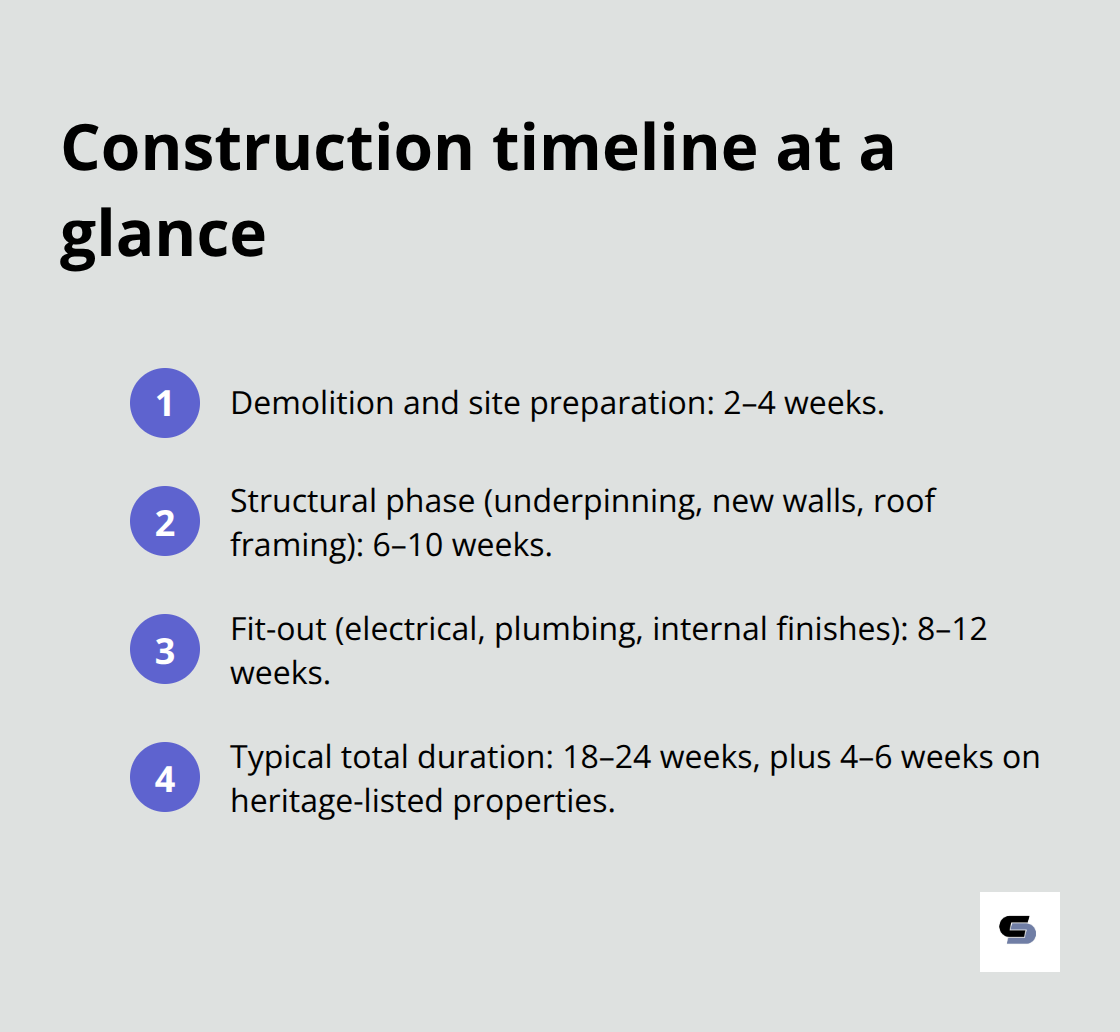
Total construction duration for a typical second storey addition ranges from 18–24 weeks, though heritage-listed properties often require additional inspections and approvals that extend timelines by 4–6 weeks.
Inspections and Regulatory Compliance
The Victorian Building Authority mandates inspections at key stages: before concrete is poured, after framing is complete, and at final handover. These inspections are non-negotiable quality checkpoints, not administrative delays. Your builder must comply with the Code of Practice for Building, Construction and Works, which sets strict noise limits, site safety standards, and neighbour communication protocols. Inner Melbourne councils enforce these regulations actively-construction noise is restricted to 7am–6pm weekdays and 9am–1pm Saturdays, with absolute silence on Sundays and public holidays. Violations attract fines and work stoppages.
Quality Standards and Final Handover
Quality standards under the Building Code of Australia are non-negotiable, not optional enhancements. Your builder must achieve waterproofing compliance, structural adequacy verified by independent inspection, electrical safety certification, and plumbing compliance-all documented and signed off by the building surveyor before your occupancy permit is issued. Any defect discovered during inspections must be rectified before work proceeds to the next phase. This staged inspection regime protects your investment by catching problems early when corrections are straightforward rather than expensive.
Final Thoughts
Second storey additions solve the core problem facing inner Melbourne homeowners: you need more space, but land is scarce and relocating disrupts your life. Vertical growth lets you stay in your established suburb, preserve your community connections, and add substantial value to your property. The planning and building approval process is rigorous, but it protects your investment and your neighbourhood’s character.
Your next step is straightforward: engage an architect or building designer to assess your site against planning controls specific to your suburb. This initial consultation clarifies whether your addition qualifies for VicSmart or requires standard approval, identifies heritage constraints, and confirms structural feasibility. A structural engineer then assesses your existing home’s capacity to support additional weight, and these early conversations cost far less than discovering problems during formal lodgement.
We at Cameron Construction have guided hundreds of Melbourne families through second storey additions across inner suburbs including Fitzroy, Carlton, South Yarra, and Hawthorn. Contact us for a no-obligation consultation, and we’ll walk you through the process, answer your specific questions, and help you understand what your project will cost and how long it will take.


![Heritage Extensions That Respect Original Character [Guide]](https://www.cameronconstruction.com.au/wp-content/uploads/emplibot/heritage-extensions-hero-1772691912-150x150.webp)