Melbourne Open Plan Extensions: Create Seamless Indoor-Outdoor Living
Melbourne open plan extensions have become the standard for homeowners wanting to modernise their living spaces. At Cameron Construction, we’ve seen firsthand how removing walls between kitchens, dining areas, and living rooms transforms how families use their homes.
The challenge isn’t deciding whether to go open plan-it’s executing the design correctly. Poor planning leads to thermal inefficiency, structural problems, and council rejections that cost time and money.
Why Open Plan Transforms Melbourne Homes
Open plan extensions work in Melbourne because our climate demands it. North-facing orientation maximises daylight and passive solar warmth, which reduces heating needs in winter and, when paired with proper shading, keeps summer heat manageable. The Design For Place research shows that Melbourne homes designed with open-plan layouts and north-facing orientation achieve NatHERS Whole of Home ratings based on hundreds of factors such as construction, local climate and orientation. A home with a higher WoH rating uses significantly less energy for heating, cooling, and hot water than one with a lower rating-the difference translates to hundreds of dollars annually. Families moving from compartmentalised layouts to open plan spaces report immediate changes in how they use their homes, particularly the ability to supervise children across larger areas while cooking or working.
Natural light creates functional living, not just aesthetics
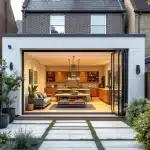
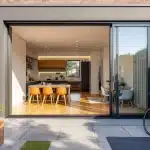
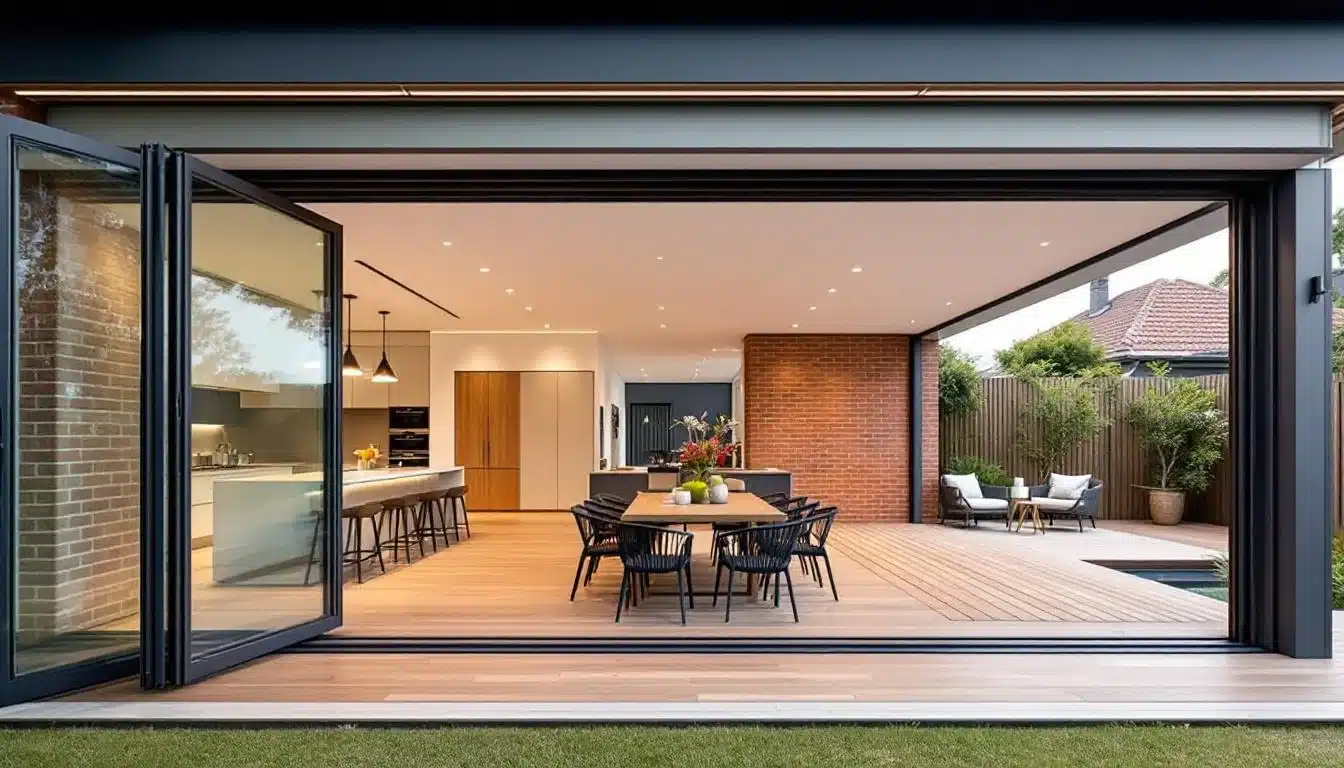
Removing walls between kitchens, dining areas, and living rooms allows daylight to penetrate deeper into the home. Large doors opening to decks and courtyards extend usable floor space without adding square metres. The Victorian School Design Awards demonstrate this principle repeatedly-projects like Fern Street Children’s Centre (2024) and Dandenong High School’s design hub use operable walls and outdoor decks to create seamless indoor-outdoor connections.
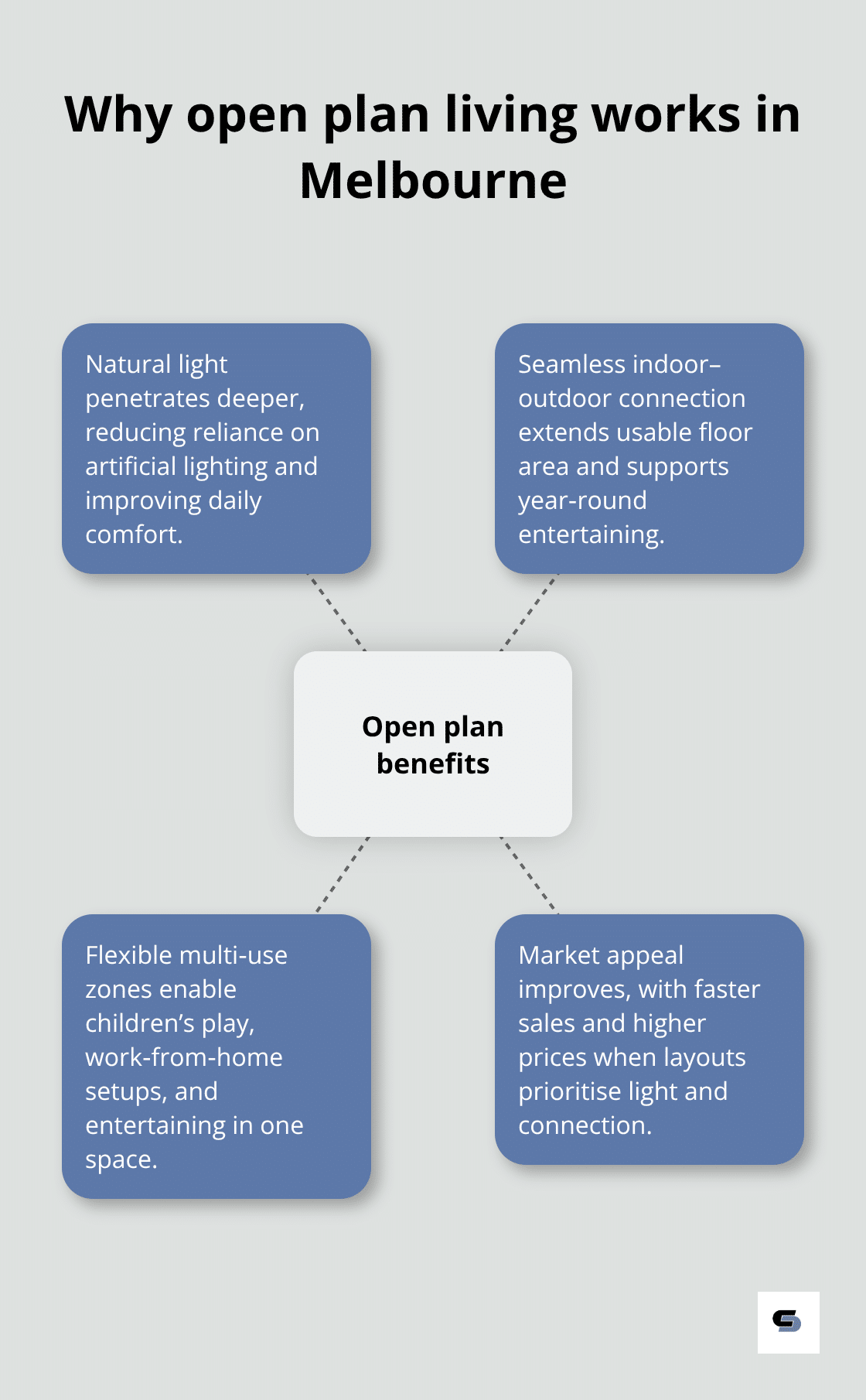
For residential extensions, this means fewer artificial lights during daylight hours and spaces that feel larger than they actually are.
Flexible zones accommodate modern family life
Flexible living zones emerge naturally when walls disappear. Families no longer need separate formal and informal living areas. A single open space accommodates children’s play, adult work-from-home setups, and entertaining simultaneously. Storage solutions must integrate into the design from the start, not retrofit later, because open plan spaces demand visual discipline. Built-in cabinetry, integrated shelving, and dedicated storage zones prevent clutter from dominating sightlines.
Market value follows practical function
Properties with open plan extensions sell faster and at higher prices in Melbourne’s competitive market. Real estate agents consistently report that buyers prioritise the ability to see through spaces and connect indoors with outdoors. Double storey extensions with open plan ground floors command premiums because they deliver what modern families actually want: flexibility, light, and connection. The investment pays when you eventually sell, but the daily benefit comes immediately. Ground floor additions that remove the barrier between kitchen and outdoor entertaining space eliminate the friction that makes families retreat to separate rooms.
This shift in how homes function-becoming more connected rather than compartmentalised-shapes what happens next. The design decisions that unlock these benefits require careful planning around your specific site conditions and structural requirements.
How Site Conditions Shape Your Open Plan Design
Sloping blocks demand soil investigation before design
Melbourne’s topography forces open plan extensions to adapt to the land, not fight it. Sloping blocks present the most common challenge we encounter. A 1-in-10 slope across your site fundamentally changes how you position the extension, where you locate the deck, and whether you need retaining walls or stepped foundations. The Building Regulations 2018 require that design documentation for extensions on sloping blocks be complete at building permit application stage and clearly demonstrate compliance with requirements. This isn’t optional paperwork-it determines footing depth, structural requirements, and often adds $3,000 to $8,000 to project costs depending on soil type and slope severity.
Homeowners who skip this step often discover mid-construction that their chosen deck height conflicts with neighbouring property drainage or that the foundation design needs revision. Getting the soil report upfront means your architect and structural engineer can design open plan layouts that work with your actual site rather than around it. The builder you select should coordinate this investigation early, as delays here cascade through the entire project timeline.
Orientation and climate shape your layout options
North-facing orientation maximises the passive solar benefits discussed earlier, but east-west sloping blocks make this harder to achieve. Your designer must then compensate with larger windows on secondary facades, deeper eaves for summer shading, or strategic placement of outdoor decks to capture winter sun where it’s available. This isn’t compromise-it’s informed design that respects both your site and your climate. The final layout reflects your specific block orientation, not a generic template applied to every Melbourne home.
Structural solutions balance openness with integrity
Structural integrity and visual openness sit in tension on every project. Removing a load-bearing wall to create that seamless kitchen-dining-living space requires a beam-usually steel, sometimes reinforced concrete-that must span the full opening width. A 5-metre opening needs a deeper beam than a 3-metre one, and deeper beams consume ceiling height. Many homeowners don’t realise this until plans arrive showing a beam that drops 400mm into the open space they imagined.
The solution isn’t aesthetic compromise but rather early conversation with your structural engineer about beam options: hidden beams within floor systems, beams that sit at soffit level to define zones without blocking sightlines, or sometimes modest steel posts that become design features rather than visual obstacles. Building permits under the Building Act 1993 require that all structural work carries certification from a registered building surveyor, and that surveyor must approve the beam design before construction starts. The building surveyor also specifies mandatory inspections at framing stage, waterproofing stage, and occupancy-three points where your extension is assessed for compliance with the National Construction Code 2022.
Energy efficiency and accessibility standards apply to most extensions
Energy efficiency provisions in the NCC 2022 now mandate that your extension meets minimum thermal performance standards, which means your window selection, insulation, and orientation all factor into whether you pass final inspection. Getting these details right during design costs nothing; fixing them during construction or after occupancy is expensive.
If your extension adds more than 25 per cent to your home’s floor area or more than 50 per cent to its volume, livable housing provisions under the NCC 2022 apply, meaning internal spaces must meet accessibility performance requirements even if you’re not explicitly designing for accessibility. This became mandatory on 1 May 2024 across Victoria. Partial compliance can be approved where full compliance proves impractical, but this requires documented justification from your building surveyor on Form 18.
Council permits and planning timelines shape your project schedule
Your council’s planning requirements add another layer to the approval process. Most open plan extensions in Melbourne require both a planning permit from your local council and a building permit from a registered building surveyor. The planning permit addresses land use and neighbourhood impact-setbacks from boundaries, building height relative to neighbours, whether the extension respects the character of your street. The practical reality is that open plan extensions almost always trigger these requirements because removing walls and opening to outdoors fundamentally changes how your home functions.
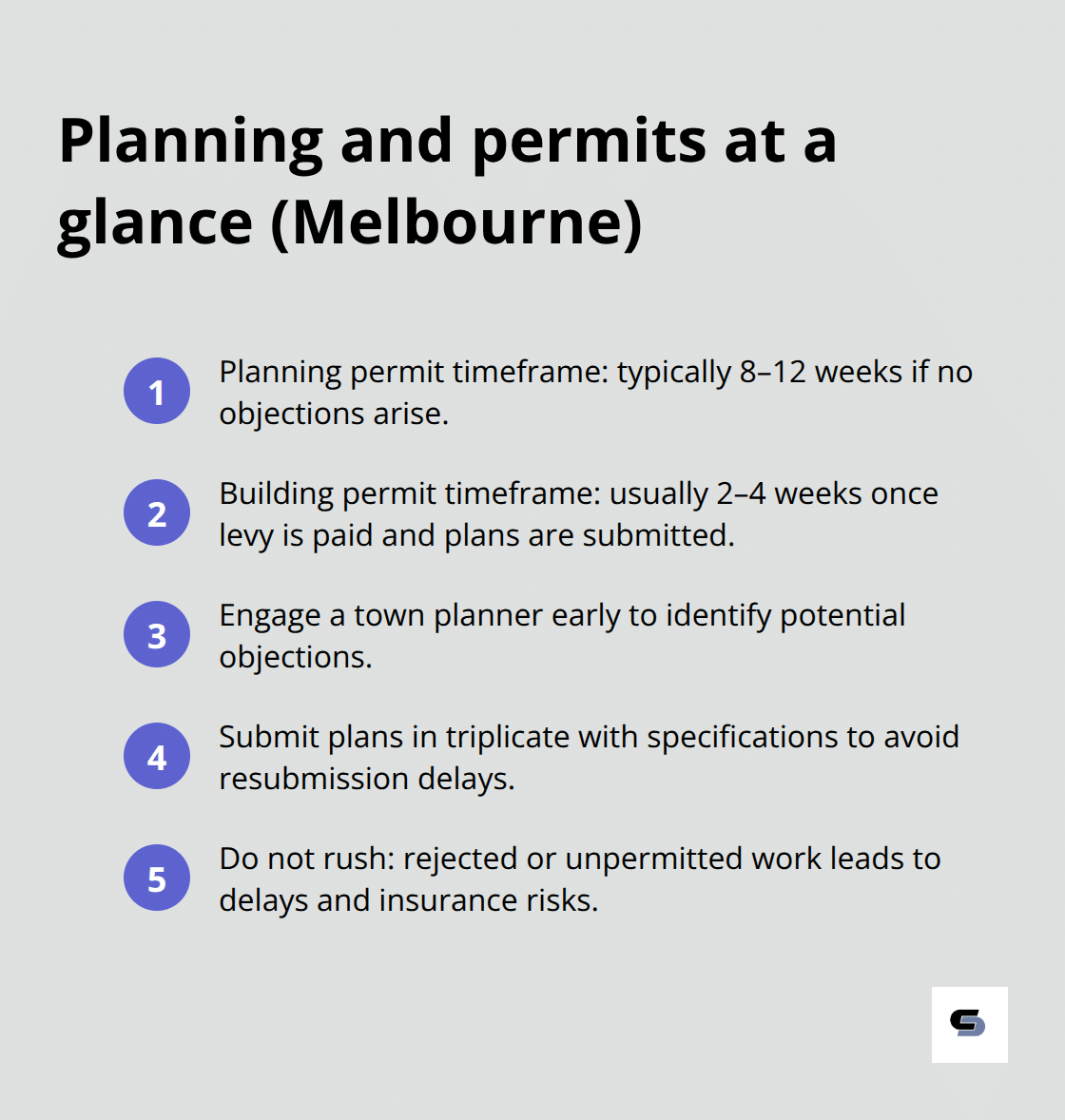
Planning typically takes 8 to 12 weeks if no objections arise; building permits issue within 2 to 4 weeks once the levy is paid and plans are submitted in triplicate with specifications. Rushing either process creates risk-rejected plans mean resubmission delays, and proceeding without permits makes work illegal and potentially uninsurable. Projects stall for months when homeowners don’t allocate time for council consultation or don’t engage a town planner early enough to flag potential objections. These timelines and regulatory requirements shape what happens during construction itself, where inspections and compliance checkpoints determine whether your extension meets code and can legally function as part of your home.
Where Homeowners Go Wrong with Open Plan Extensions
Thermal performance failures cost thousands in wasted energy
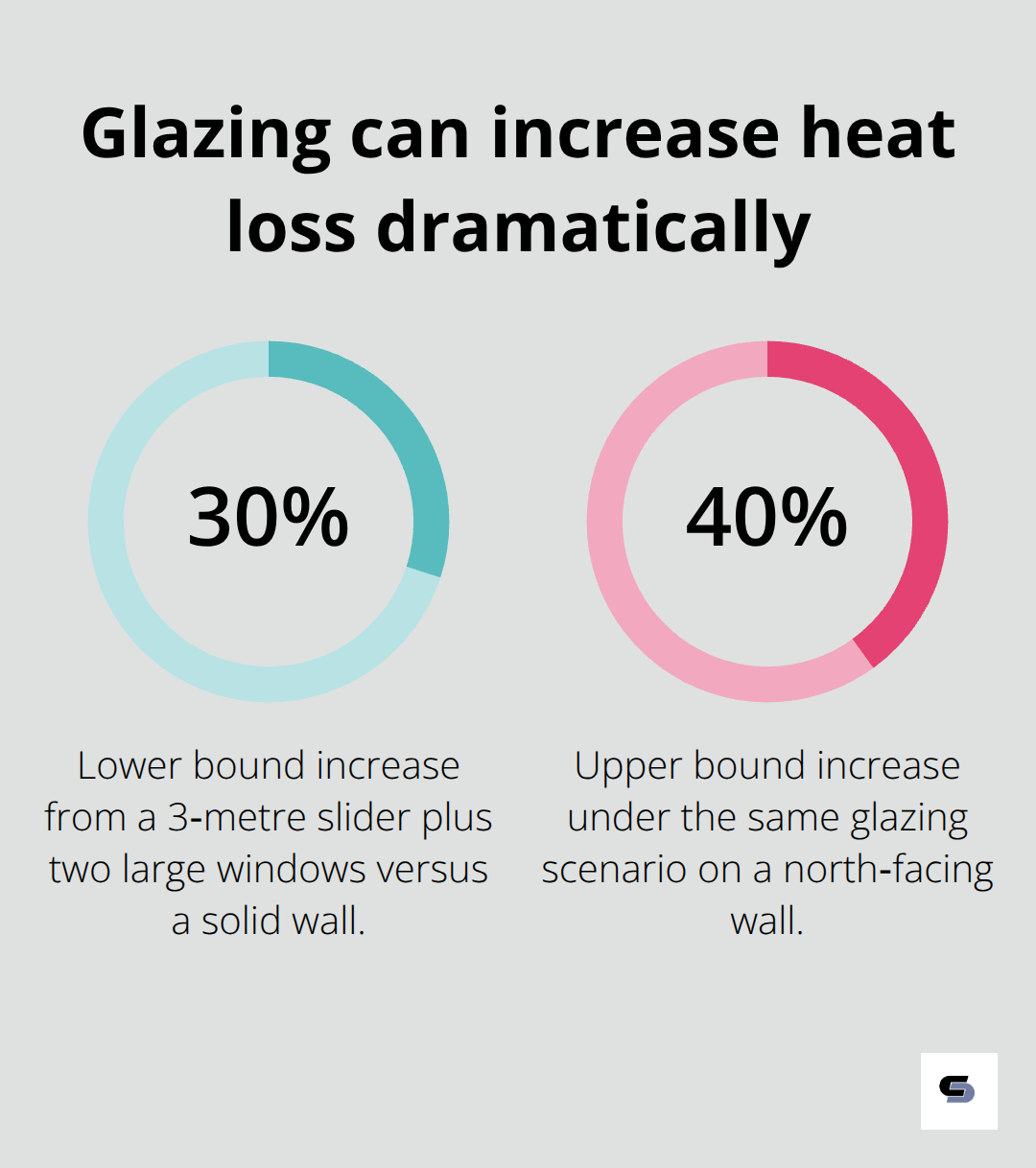
Thermal performance failures dominate the problems we address in existing open plan extensions across Melbourne. Homeowners often underestimate how much larger glazed areas increase heating and cooling demand, then face energy bills that shock them mid-winter or mid-summer. A single 3-metre sliding door and two large windows on a north-facing wall can increase heat loss by 30 to 40 per cent compared to a solid wall, according to NatHERS modelling data.
The National Construction Code 2022 now mandates thermal performance standards for extensions, meaning window selection, insulation values, and thermal mass all factor into whether your design passes final inspection. Many homeowners discover this requirement during building permit review, forcing expensive redesigns that delay construction.
Engage your designer and building surveyor together during concept phase, not separately. Request a preliminary NatHERS assessment before final designs lock in, showing predicted Whole of Home ratings under different window and insulation scenarios. This costs $1,500 to $2,500 upfront but prevents costly rework and confirms your extension will be comfortable and affordable to run. Winter solar gain on north-facing glazing becomes your heating system if designed correctly; summer shading through eaves, external blinds, or vegetation prevents overheating without blocking the light that makes open plan extensions valuable.
Storage integration prevents clutter from dominating sightlines
Storage integration separates successful open plan extensions from cluttered ones that feel smaller than they are. Homeowners often leave storage planning to the final design phase, then retrofit cabinetry into spaces that were never designed to accommodate it. Open plan spaces demand visual discipline because sightlines extend unbroken across the entire footprint, making clutter immediately visible. Built-in cabinetry integrated into walls during construction costs 15 to 25 per cent less than retrofit solutions and performs better functionally.
Plan storage locations during the initial design phase, not after framing is complete. Specify exactly where cabinetry will sit, what it will contain, and how it will integrate with your colour scheme and material palette. This approach prevents the visual chaos that undermines open plan living and ensures your extension functions as intended rather than becoming a storage problem disguised as a modern home.
Acoustic design transforms how your space functions daily
Acoustic performance is equally overlooked, yet it determines whether your open plan extension feels peaceful or chaotic. Hard surfaces in open plan kitchens and dining areas reflect sound, causing conversations to overlap and kitchen noise to dominate living zones. A family entertaining in the living area cannot hear television or conversation when someone uses the kitchen extractor fan in an an acoustically naive open plan layout. Acoustic treatment during construction-ceiling absorption materials, soft furnishings integrated into design, strategic placement of solid zones or partial screens-costs $3,000 to $8,000 but transforms how the space functions daily.
Specify acoustic performance targets during design, not after construction starts. This ensures your builder selects materials and construction methods that deliver quiet, usable open plan living rather than expensive regret. Many Melbourne extensions incorporate these elements too late or not at all, creating spaces that look beautiful on completion day but frustrate users within months.
Final Thoughts
Melbourne open plan extensions deliver measurable benefits that extend beyond aesthetics. The energy savings from optimised orientation and thermal performance reduce running costs by hundreds of dollars annually, while the flexibility to supervise children across larger spaces, work from home, and entertain without retreating to separate rooms transforms daily life. Market data confirms that properties with well-executed open plan extensions sell faster and command higher prices, making the investment financially sound alongside the immediate functional gains.
Achieving these benefits requires professional design and engineering from the outset, as thermal performance, structural integrity, acoustic function, and storage integration cannot be retrofitted effectively once construction begins. Building surveyors, structural engineers, and acoustic specialists must collaborate during concept phase, not react to problems mid-project. Council planning requirements and BCA compliance add complexity that demands expertise, not guesswork.
We at Cameron Construction understand how Melbourne’s climate, topography, and regulatory environment shape what works and what fails in open plan extensions. Contact our team to discuss how we can transform your vision into an extension that functions beautifully, performs efficiently, and complies fully with current standards.
![Second Storey Additions For Growing Families [Guide]](https://www.cameronconstruction.com.au/wp-content/uploads/emplibot/second-storey-additions-hero-1772259809-150x150.webp)