Melbourne Councils Extensions Permits: A Clear Path to Building Approvals
Getting Melbourne council extension permits approved doesn’t have to be complicated. At Cameron Construction, we’ve guided hundreds of homeowners through the process and know exactly what councils expect.
The right preparation makes all the difference between a smooth approval and months of delays. This guide walks you through permit requirements, application steps, and how to avoid common mistakes that slow down your project.
What Permits Do You Actually Need for Your Extension?
Planning Permits vs Building Permits
Melbourne councils require two separate approvals for most extensions, and understanding which one applies to your project saves months of wasted effort. A planning permit gives permission to develop or use land in a particular way, while a building permit verifies that your design meets the National Construction Code and structural standards. Both are mandatory for double storey additions, second storey conversions, and most ground floor extensions, though some smaller projects qualify for exemptions. The Victorian Building Authority manages building permits through registered surveyors, while your local council handles planning permits under the Planning and Environment Act.
Many homeowners assume one permit covers everything, then discover halfway through that they need a second approval, which restarts the entire timeline. The cost of identifying this mistake early far exceeds the cost of assessing permit requirements upfront.
When Planning Permission Applies
Planning permits apply when your extension changes the building envelope, footprint, or height, or when it triggers overlays such as Heritage or Design and Neighbourhood controls. City of Melbourne planning guidelines confirm that most extensions within 3 metres of a street or affecting setbacks require planning approval. Ground floor additions in established suburbs often face planning scrutiny because they affect street presentation and neighbouring properties, particularly around setbacks and site coverage limits.
Second storey additions trigger closer assessment of overshadowing and overlooking impacts on adjacent homes, which is why detailed shadow diagrams and privacy analysis become critical at application stage. Double storey extensions face the highest scrutiny because they affect multiple standards simultaneously: height limits, daylight access to neighbour windows, solar access, and site coverage restrictions all apply.
When Building Permits Apply
Building permits are always needed for structural work regardless of project cost, as the Victorian Building Authority mandates them under the Building Act 1993. If your extension involves new walls, altered foundations, or changes to the roof structure, a building permit is non-negotiable. Some councils allow small permitted extensions under local envelope provisions, but you still typically need a building permit for construction.
The processing timeline differs significantly: planning permits can take several weeks to months depending on whether neighbours object or council requests changes, while building permits may take just a few weeks once planning is cleared.
Council-Specific Variations
Boroondara, Stonnington, and Moonee Valley each have different height limits, setback requirements, and design expectations that directly influence whether your concept receives approval or rejection at first submission. These variations matter because a design that passes in one council may fail in another, even for identical extensions on similar blocks.
Understanding your specific council’s standards before you invest in detailed plans prevents costly redesigns later.
How to Navigate Your Council’s Application Process
Start with Pre-Application Consultation
Contact your council’s planning department before you prepare detailed drawings. A pre-application meeting clarifies which standards apply to your specific site and identifies potential obstacles early. The City of Melbourne and most outer councils offer formal pre-application services where planners review your concept against local controls and flag issues before you commit to expensive architectural plans.
This step typically costs nothing and prevents the scenario where you submit detailed designs only to discover that your setback, height, or site coverage breaches local requirements. During this conversation, ask specifically about overlays affecting your property, whether planning permission applies, and what documentation the council expects. Write down the planner’s name and reference number so you can cite their guidance if clarifications emerge later.
Prepare Your Submission Package with Precision
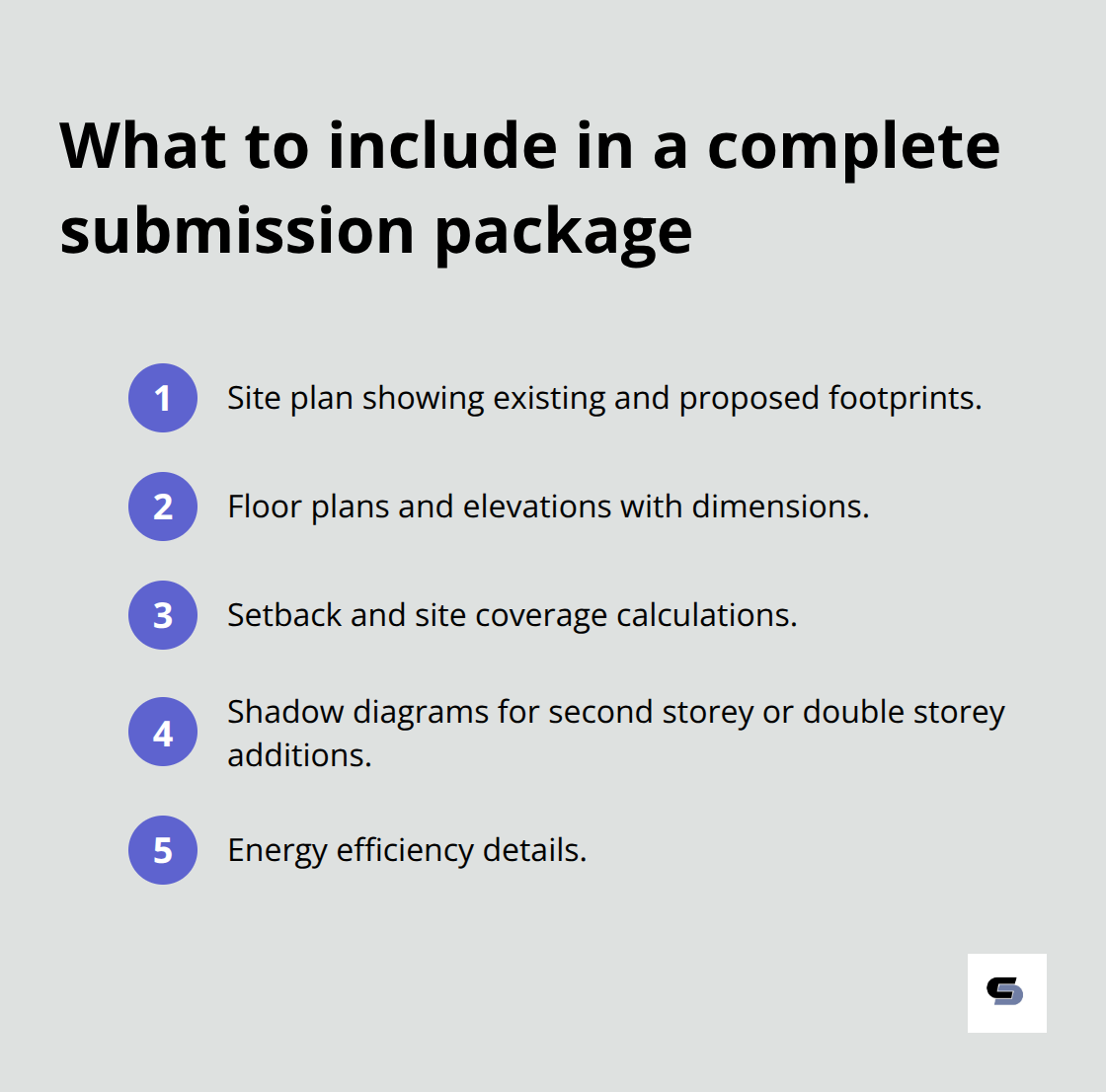
Incomplete applications trigger automatic rejection and restart the clock. The Planning Portal Victoria and your council’s website list exact requirements, but most extensions need a site plan showing existing and proposed footprints, floor plans and elevations with dimensions, setback and site coverage calculations, shadow diagrams for second storey or double storey additions, and energy efficiency details.
Melbourne councils process applications faster when documents are clear, to scale, and properly labelled. Poor PDF quality or missing sections guarantee requests for resubmission. Include a concise design summary and call-out sections on plans to help assessors navigate your proposal quickly.
Understand Council Review Timelines
The council’s review typically takes 10 business days for straightforward applications, though extensions affecting neighbours or triggering overlays can extend to 30 days or longer if objections arise. Your building surveyor handles the building permit separately and usually waits for planning clearance before submitting structural plans, which means the total timeline from application to both permits ranges from 6 to 12 weeks depending on complexity.
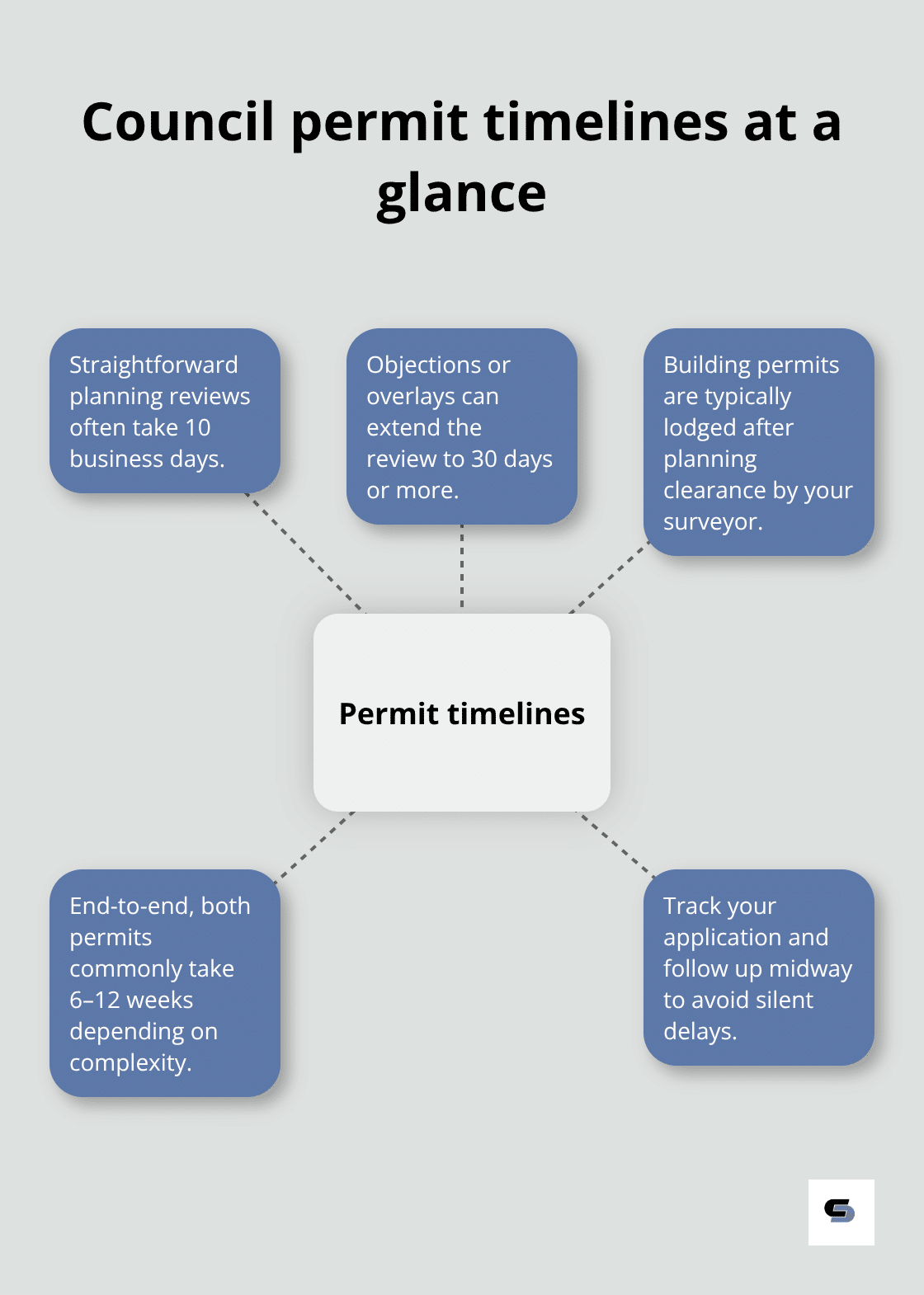
Track your application number from submission and follow up at the halfway point if you haven’t received a decision. Councils sometimes request minor clarifications that delay processing without notifying you proactively. A simple email inquiry can prevent weeks of unnecessary waiting.
Navigate Council-Specific Requirements
Boroondara, Stonnington, and Moonee Valley each enforce different height limits, setback requirements, and design expectations that directly influence whether your concept receives approval or rejection at first submission. These variations matter because a design that passes in one council may fail in another, even for identical extensions on similar blocks.
Understanding your specific council’s standards before you invest in detailed plans prevents costly redesigns later. Your pre-application conversation should clarify these local controls so your architect or designer can align the concept accordingly.
Manage Documentation and Compliance
Keep all correspondence with the council and maintain copies of every submission. Councils sometimes reference earlier conversations or request additional information based on their internal notes, so a clear record protects you if disputes arise about what was discussed or promised. Store your application number, permit reference, and key contact details in one accessible location throughout the project.
Once planning approval arrives, your building surveyor can proceed with the building permit application. This sequential process means planning delays directly impact your construction start date, which is why getting the planning application right the first time matters far more than rushing to submit incomplete documentation.
Common Permit Delays and How to Avoid Them
Documentation Errors Trigger Automatic Rejection
Missing documentation remains the single largest cause of permit rejection across Melbourne councils. The Victorian Building Authority and planning departments process hundreds of applications weekly, and incomplete submissions trigger automatic requests for resubmission that add 2–4 weeks to your timeline. Councils specifically flag applications lacking shadow diagrams for second storey additions, setback calculations that don’t match site plans, or energy efficiency schedules that fail to reference the National Construction Code.
Your submission package must match your council’s exact checklist-not what you assume they need, but what their website explicitly demands. Boroondara requires shadow diagrams showing overshadowing impact at the spring equinox, while Stonnington emphasises design compatibility with the neighbourhood character statement. Moonee Valley mandates detailed privacy analysis for extensions within 9 metres of neighbouring windows. These aren’t suggestions; they’re gatekeeping requirements that trigger rejection if absent.
The cost of submitting incomplete documentation once means you wait 3–4 weeks for council feedback, then another 2–3 weeks after resubmission for assessment to resume. Spending two hours reading your council’s requirements online saves 10 weeks of permit delays later.
Non-Compliance with Local Planning Controls Kills Applications
Non-compliance with local planning controls kills more applications than documentation errors. Many homeowners design extensions that breach height limits, setback requirements, or site coverage thresholds specific to their zone, then submit hoping the council will approve anyway. This doesn’t happen. Councils reject applications that exceed these standards unless you apply for a planning permit variation, which adds 8–12 weeks and introduces public objection risk.
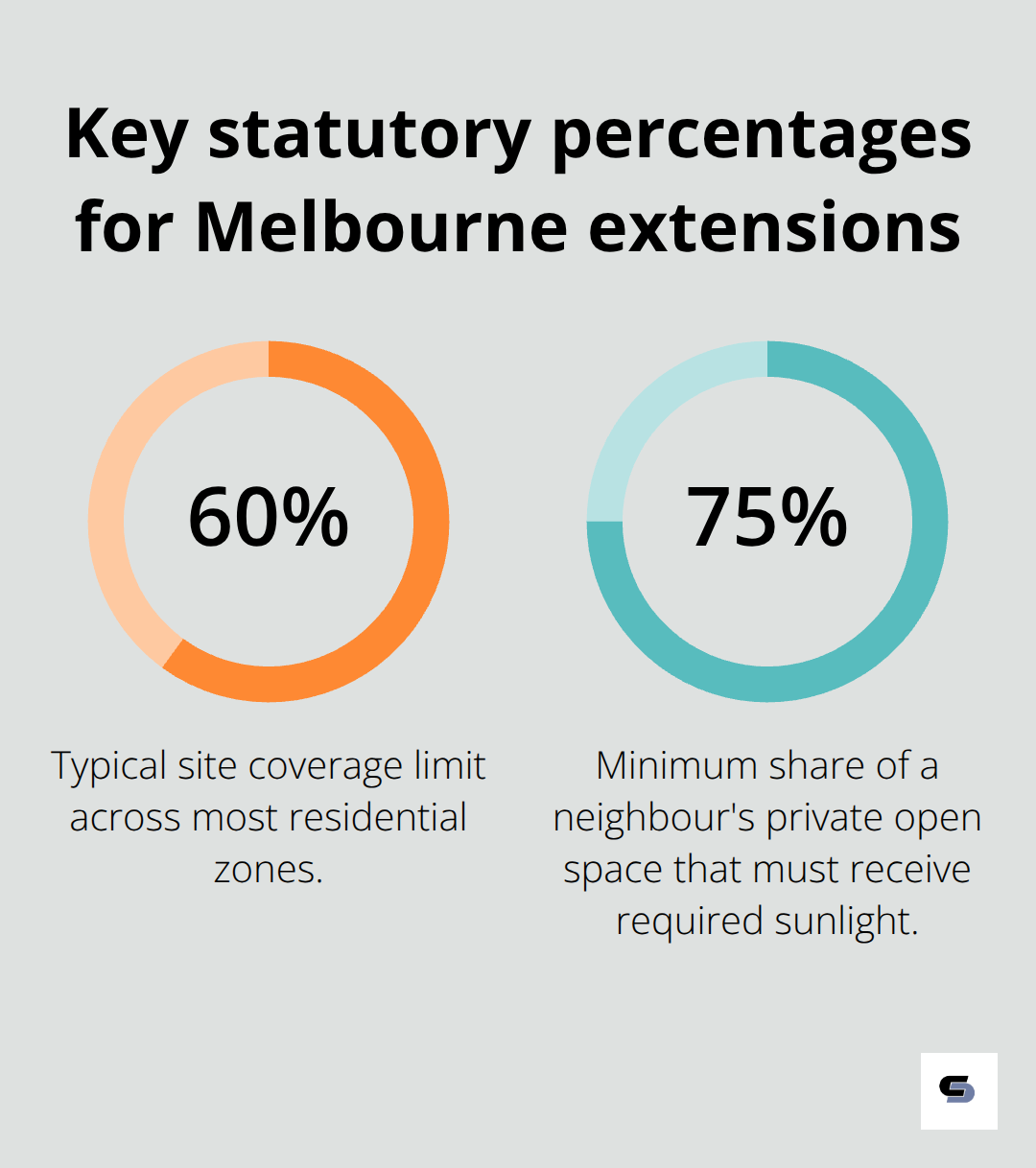
Your pre-application consultation should confirm exact height limits for your address-some Melbourne suburbs enforce 9-metre maximums while others allow 10 metres on sloping blocks. Setback requirements vary dramatically: City of Melbourne enforces different front setbacks by zone, while outer suburbs like Moonee Valley calculate setbacks based on neighbouring dwelling alignment. Site coverage limits sit at 60 per cent across most zones, but calculating what counts toward coverage trips up many applicants (upper-floor areas count, but some outdoor spaces don’t).
Overshadowing rules demand that north-facing windows on neighbouring properties receive five hours of sunlight between 9 am and 3 pm on 22 September, with at least 75 per cent of the neighbour’s private open space meeting this standard. These aren’t flexible guidelines; they’re statutory requirements under Clauses 54 and 55 of the Planning and Environment Act.
Design Alignment Prevents Rejection and Delays
Getting your design right before submission-through early consultation with your building designer and council planner-prevents rejection and the cascade of delays that follow. Your designer must understand the specific height, setback, and coverage limits that apply to your property before they produce detailed plans. A pre-application meeting with council planners clarifies these thresholds and identifies potential obstacles before you invest in architectural drawings.
This conversation costs nothing and prevents the scenario where you submit detailed designs only to discover that your setback, height, or site coverage breaches local requirements. Ask specifically about overlays affecting your property, whether planning permission applies, and what documentation the council expects. Write down the planner’s name and reference number so you can cite their guidance if clarifications emerge later.
Final Thoughts
Getting Melbourne councils extensions permits approved requires preparation, precision, and professional guidance. The steps outlined in this guide-pre-application consultation, complete documentation, compliance with local standards, and early design alignment-form the foundation of smooth approvals. Homeowners who invest time understanding their specific council’s requirements and engage qualified professionals before submitting applications consistently avoid the delays and rejections that plague rushed submissions.
Your extension timeline depends entirely on permit decisions, which means the effort you invest now directly determines when construction starts. A planning permit rejection or building permit request for resubmission adds 4–12 weeks to your project, while a well-prepared first submission moves through council assessment without interruption. The difference between these outcomes comes down to whether you clarify requirements upfront or discover them through rejection.
Start by contacting your council’s planning department for a pre-application meeting, then engage a qualified building designer and surveyor who understands your specific council’s standards. Cameron Construction guides homeowners through the entire process, from initial concept to final inspection, ensuring your extension receives approval and gets built to the highest standard.