Local Builder Melbourne Extensions: Trusted Craftsmanship Close to Home
Choosing a local builder Melbourne extensions is one of the most important decisions you’ll make for your home project. At Cameron Construction, we’ve seen firsthand how the right builder transforms extension plans into reality.
Local builders understand Melbourne’s specific building codes, council requirements, and neighbourhood conditions in ways that outsiders simply cannot. This knowledge saves you time, money, and stress throughout your project.
Why Local Builders Understand Melbourne’s Building Rules
Council Rules Shift Across Melbourne’s Suburbs
Melbourne’s building landscape shifts across councils, suburbs, and even individual streets. What councils accept in Hawthorn differs from Footscray. A setback requirement in Camberwell won’t match Glen Waverley. This variation means extension projects succeed or fail based on how well your builder navigates these hyper-local rules.
A builder unfamiliar with your specific council will cost you time during the planning phase, often requiring design revisions after submission. The Victorian Building Authority sets the baseline standards, but councils add their own overlays. Boroondara City Council, for example, applies stricter heritage overlays in certain pockets, while Maribyrnong prioritises water-sensitive design. Front setbacks, building heights, site coverage limits, and shadow overlays all vary across jurisdictions.
Missing Local Knowledge Leads to Costly Redesigns
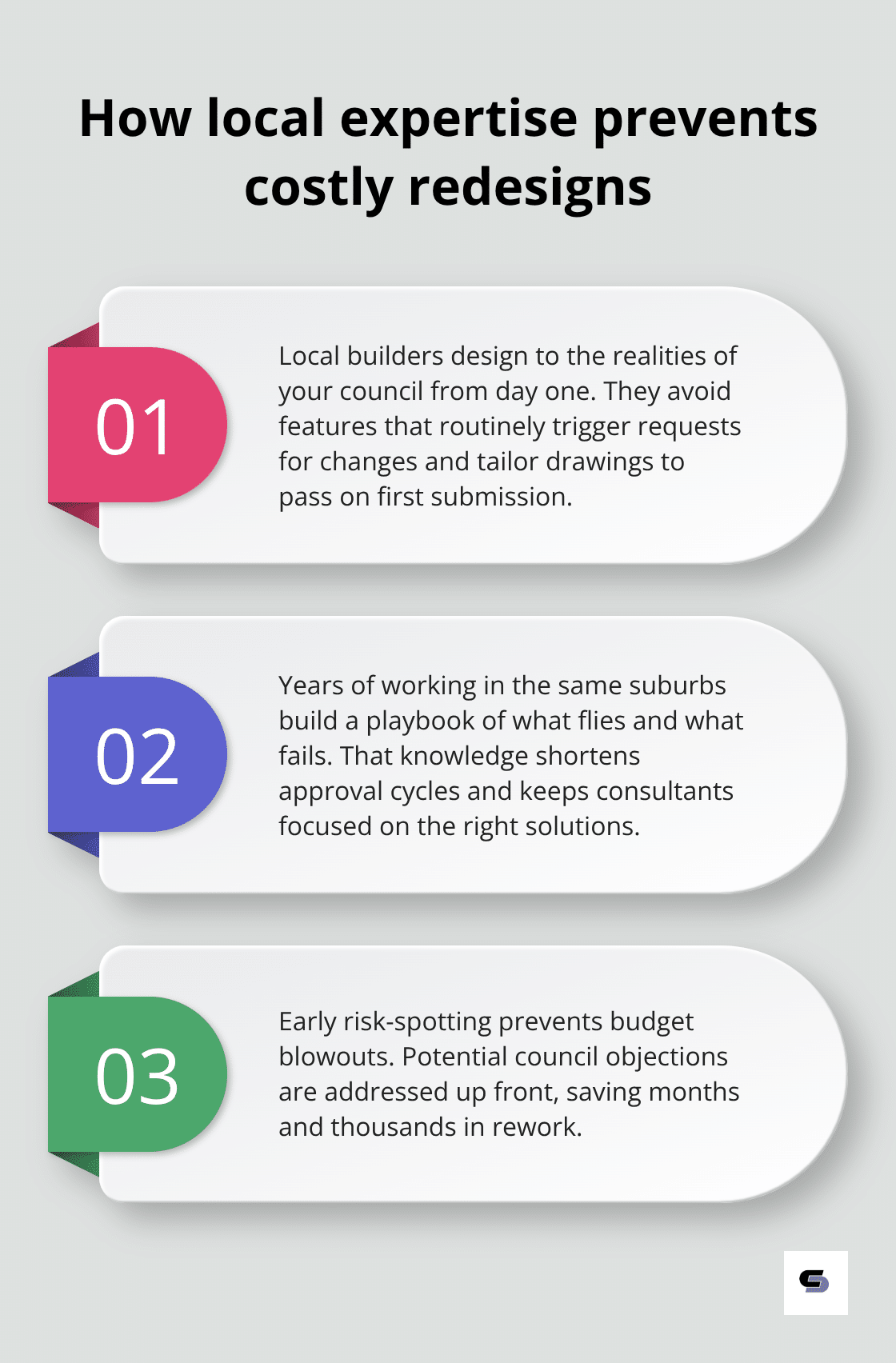
When builders miss these specifics, initial designs fail at council assessment, forcing expensive redesigns. Local builders know what councils will accept before drawings go in, saving months and thousands in rework. They understand which design approaches pass first time and which trigger requests for changes. This knowledge compounds over years of working within the same council areas.
Supplier Networks and Trade Relationships
Supplier relationships and trade networks matter equally to permit knowledge. A local builder has established connections with structural engineers who understand Melbourne clay soil conditions, demolition contractors familiar with asbestos protocols specific to older Victorian homes, and landscape designers who know what thrives in Melbourne’s climate. These relationships translate to faster approvals, better pricing, and genuine accountability.
When a subcontractor drops out mid-project, a local builder has backup options within their network. Material suppliers offer better terms to builders they’ve worked with for years, reducing costs that pass to you. Council inspectors know local builders by reputation, which can streamline the inspection process.
Why Outsider Builders Cost More Time and Money
A builder new to your area will spend time building relationships while your project sits idle. Local builders already have the trust and infrastructure in place, meaning your extension moves faster and costs less than it would with an outsider learning the landscape on your dime. This efficiency advantage compounds across every phase-from initial council consultation through final inspections.
Understanding these local advantages helps you recognise what separates a truly capable extension builder from one simply passing through your suburb.
What Sets Local Extension Builders Apart
Local builders manage extensions differently because they operate within their communities and answer to their reputations. A builder working across multiple suburbs over decades develops systems that work specifically for Melbourne’s conditions, council processes, and supply chains. This isn’t theoretical knowledge-hundreds of projects transform mistakes into lessons and successes into repeatable processes. Local builders know exactly how long council assessment takes in your area, which inspectors are thorough, and which design changes will trigger additional scrutiny. This precision cuts months from timelines. A builder unfamiliar with your council might assume a standard 8-week assessment period, but an experienced local builder knows Boroondara often takes 12 weeks for extensions with heritage overlays, or that Maribyrnong fast-tracks applications meeting water-sensitive design standards. These specifics matter enormously when you’re planning around school terms or managing rental situations during construction.
Site Conditions Shift Across Melbourne’s Suburbs
Melbourne’s geography isn’t uniform. Soil composition shifts from clay in the inner suburbs to sandy loam in outer areas, affecting foundation designs and excavation costs. A builder working regularly in Hawthorn understands how to manage clay heave in extensions, while a builder in Glen Waverley deals with different drainage challenges.
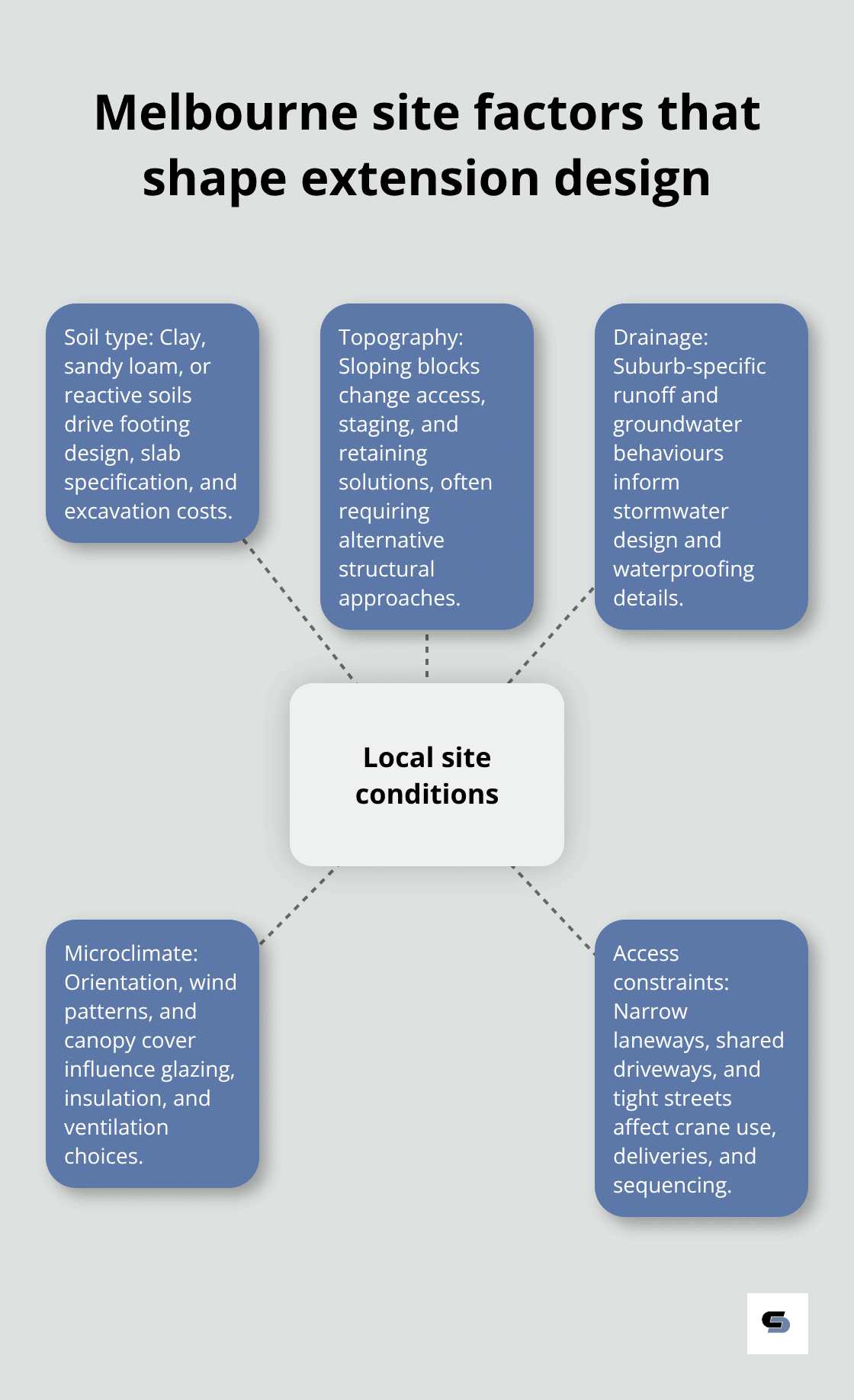
Sloping blocks present entirely different construction approaches depending on the slope direction and soil type. Local builders tackle these variations repeatedly and know which structural solutions cost less without compromising durability. They also understand microclimate differences-north-facing walls in Northcote experience different thermal loads than those in Footscray due to prevailing winds and tree canopy patterns. This knowledge translates to better design decisions around glazing, insulation, and ventilation without requiring expensive engineering consultations for every detail.
Neighbouring Properties and Site Access Require Local Insight
Site access and neighbouring properties vary significantly across Melbourne. A builder familiar with your suburb knows typical fence arrangements, shared driveways, and common boundary disputes before they become problems. They’ve managed similar logistics dozens of times and anticipate constraints that surprise outsiders. Asbestos protocols differ based on the age and construction type of surrounding homes. Local builders understand which Victorian-era properties commonly contain asbestos and which demolition contractors specialise in safe removal. They also know how to navigate tight street parking, narrow laneways, and heritage-listed neighbours-all factors that affect project scheduling and costs.
Direct Communication Prevents Costly Miscommunications
Local builders operate with transparency because their next job depends on your satisfaction. They’re not managing 20 concurrent projects across three states-they focus on delivering excellence in their immediate area. This means site visits happen regularly, not quarterly. You can walk the project with your builder mid-week, ask questions, and receive immediate answers rather than waiting for email responses. Direct communication prevents the miscommunications that derail timelines and budgets. When an issue arises (unexpected asbestos, a council requirement clarification, or a supplier delay), a local builder contacts you immediately with options, not excuses. They have skin in the game because future clients in your suburb will hear about your experience. This accountability creates genuine partnership rather than transactional relationships where the builder collects payment and disappears.
Established Supplier Networks Reduce Costs and Delays
Supplier relationships and trade networks matter equally to permit knowledge. A local builder has established connections with structural engineers who understand Melbourne clay soil conditions, demolition contractors familiar with asbestos protocols specific to older Victorian homes, and landscape designers who know what thrives in Melbourne’s climate. These relationships translate to faster approvals, better pricing, and genuine accountability. When a subcontractor drops out mid-project, a local builder has backup options within their network. Material suppliers offer better terms to builders they’ve worked with for years, reducing costs that pass to you. Council inspectors know local builders by reputation, which can streamline the inspection process. A builder new to your area spends time building relationships while your project sits idle. Local builders already have the trust and infrastructure in place, meaning your extension moves faster and costs less than it would with an outsider learning the landscape on your dime.
How to Choose the Right Local Builder for Your Extension
Track Record in Your Council Area
Track record matters more than marketing claims. A builder claiming expertise in extensions should have completed projects in your specific council area. Ask directly for references from homeowners whose projects finished on time and within budget, then contact them. Don’t accept a generic list-request projects matching your extension type (double storey, ground floor addition, or second storey conversion) completed in your suburb or neighbouring areas.
Ask references specific questions: Did the builder communicate regularly? Were there cost overruns, and if so, why? How did the builder handle unexpected issues like asbestos or structural surprises? Did site management minimise disruption to neighbours? A builder with strong local references has nothing to hide and welcomes detailed conversations about past work.
Licensing, Insurance and Compliance Verification
Check the Victorian Building Authority’s website for any complaints or disciplinary history against the builder’s licence. Master Builders Victoria maintains records of member builders, and membership indicates compliance with industry standards and dispute resolution processes.
Verify that the builder holds current public liability insurance (minimum $20 million recommended for extension work) and workers compensation insurance. Request a copy of their Building Practitioner’s Licence and confirm it’s current and unrestricted. Many builders operate under multiple entities or trading names-verify that the licensed entity matches the business you’re contracting with.

Don’t accept verbal assurances; documentation protects you legally and financially.
Design Capability and Project Management Systems
Design capability and project management approach separate competent builders from exceptional ones. During initial consultations, ask the builder to explain how they’d approach your specific extension-whether it’s managing a sloping block, navigating heritage overlays, or coordinating a double storey addition in a constrained suburban block. Their response reveals whether they think systematically about design, permits, and construction sequencing or simply follow a generic formula.
A builder unfamiliar with your council’s specific requirements will struggle to articulate how they’d navigate your local planning constraints. Ask about their design process: Do they work with in-house designers or external architects? How many design iterations do they include before submitting council applications? What’s their track record for first-time council approvals versus projects requiring revisions? Builders achieving strong approval rates demonstrate genuine local knowledge, while those requiring multiple revisions waste your time and money.
Change Orders and Contract Transparency
Discuss project management systems-how they track timelines, manage budgets, and communicate progress. A builder using digital project management tools (scheduling software, daily site logs, photo documentation) operates more transparently than one relying on phone calls and memory.
Ask how they handle change orders when costs shift mid-project. Clear written processes prevent disputes and demonstrate professionalism. Request a sample contract and timeline for a project similar to yours, then have a legal advisor review both before committing. A builder with transparent processes and documented systems protects both parties and sets realistic expectations from the start.
Final Thoughts
A local builder Melbourne extensions brings expertise that outsiders cannot replicate, transforming your project from a stressful undertaking into a managed process where timelines hold and budgets stay realistic. Your decision rests on three factors: verifying the builder’s track record through references in your exact council area, confirming their licensing and insurance compliance through official channels, and assessing whether their design approach and project management systems align with your extension’s complexity. A builder who articulates how they’d handle your specific constraints-whether heritage overlays, sloping blocks, or tight site access-demonstrates the local knowledge that prevents costly redesigns and delays.
The right local builder operates with transparency because their next job depends on your satisfaction and your neighbours’ recommendations. Direct communication flows naturally throughout your project, and you can walk the site mid-week to ask questions and receive immediate answers rather than waiting for email responses. This accountability creates genuine partnership where the builder has skin in the game and treats your extension as if it were their own home.
At Cameron Construction, we’ve spent decades building extensions across Melbourne’s councils and developing the systems and relationships that deliver results. Whether you’re planning a double storey addition, ground floor extension, or second storey conversion, our team handles everything from concept through completion, including permits and BCA compliance. Contact us to discuss how local expertise transforms your extension vision into reality.