
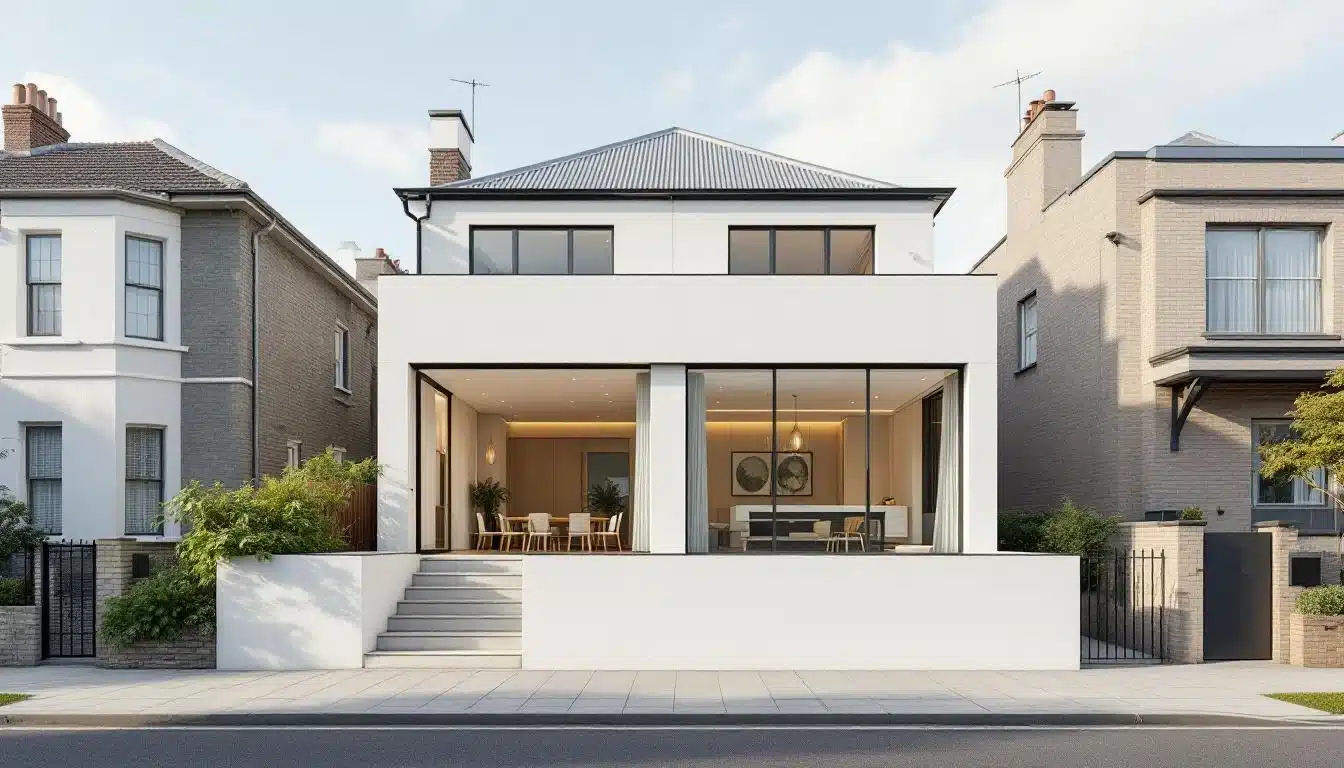
Inner North Extensions Melbourne: Space, Style, and Substance
Inner North Melbourne’s property market rewards smart investment decisions. Limited blocks and high values make extensions the logical choice for homeowners seeking more space without relocating.
At Cameron Construction, we’ve helped dozens of Inner North families transform their homes through thoughtfully designed additions. Whether you’re considering a double storey extension or ground floor renovation, understanding your options and local approval requirements makes the difference between a smooth project and costly delays.
Why Extensions Make Financial Sense in Inner North Melbourne
Property Values Reward Smart Investment Decisions
Property values have climbed consistently in Inner North Melbourne, with suburbs like Fitzroy, Carlton North, and Brunswick commanding median prices well above Melbourne’s broader averages. This appreciation means your existing home sits on increasingly valuable land, making extensions far more cost-effective than relocating.
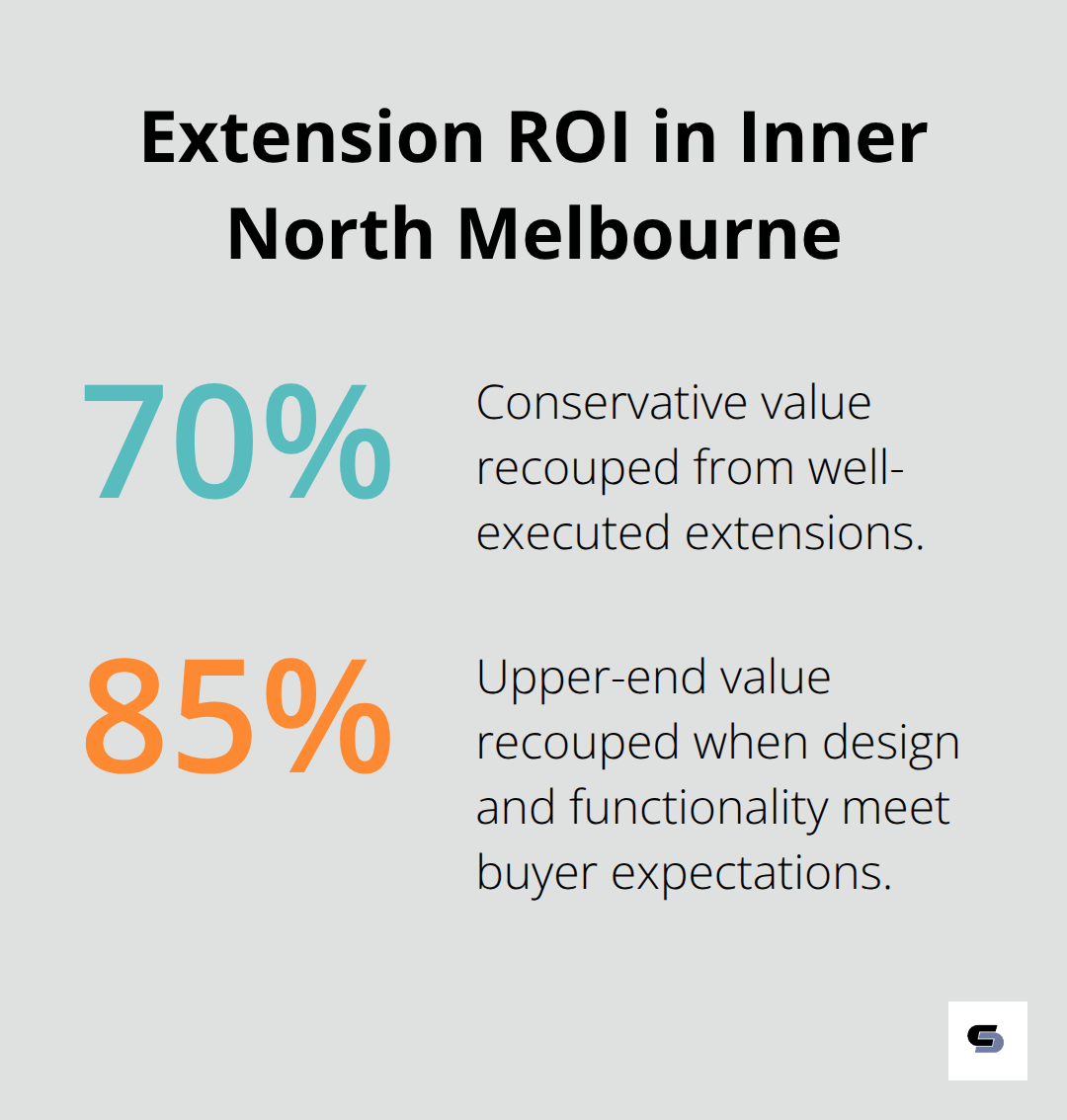
Adding a second storey or ground floor addition typically costs between 2,500 and 3,500 dollars per square metre, whereas purchasing a larger property in the same suburb would cost significantly more per square metre on the open market. Homeowners recoup 70 to 85 percent of extension costs through increased property value, particularly when the work improves functionality and meets contemporary design standards that Inner North buyers expect.
Compact Blocks Demand Vertical Solutions
Inner North blocks are notoriously compact, with many Victorian and Edwardian homes sitting on 300 to 500 square metre allotments. You cannot expand outward, so vertical growth becomes the only realistic option for families needing extra bedrooms, modern kitchens, or home offices. Double storey extensions stack new living space directly above existing ground floors, maximising usable area without consuming additional land. Ground floor additions work equally well on rear or side boundaries where setback requirements permit, converting underutilised gardens into functional living zones. Second storey conversions transform existing roofspace-common in older Inner North homes with high ceilings-into bedrooms or studios without adding to the building footprint at all. This constraint actually benefits homeowners because it forces considered, efficient design rather than sprawling, inefficient layouts that plague outer suburbs.
Architectural Coherence Protects Long-Term Value
Inner North suburbs attract professionals, families, and investors who expect architectural coherence and craftsmanship. A poorly detailed extension that clashes with a Victorian facade or fails to integrate with the streetscape will limit resale appeal, regardless of the additional square metres gained. Heritage overlays-common across Fitzroy, Carlton, and parts of Brunswick-demand specialist design expertise to satisfy council planning requirements while maintaining your home’s character. Even non-heritage properties benefit from thoughtful proportioning, material selection, and connection to existing structures. Poor execution costs more in the long run through council rejections, remedial work, or reduced resale value than investing properly from the outset.
Design Expertise Shapes Planning Outcomes
Council planning officers assess extensions against local planning schemes, heritage guidelines, and building codes specific to each Inner North suburb. A designer who understands these requirements-and how to present your extension in ways that satisfy planning criteria-accelerates approvals and prevents costly revisions. Heritage overlays require documentation that demonstrates how your extension respects the original building’s character, materials, and proportions. Non-heritage properties still benefit from design work that shows how the addition relates to the streetscape and neighbouring properties. The difference between a well-designed submission and a rushed one often determines whether council approves your plans on first submission or requests substantial changes that delay your project by months.
Which Extension Type Works Best for Your Inner North Home
Double Storey Extensions Maximise Compact Blocks
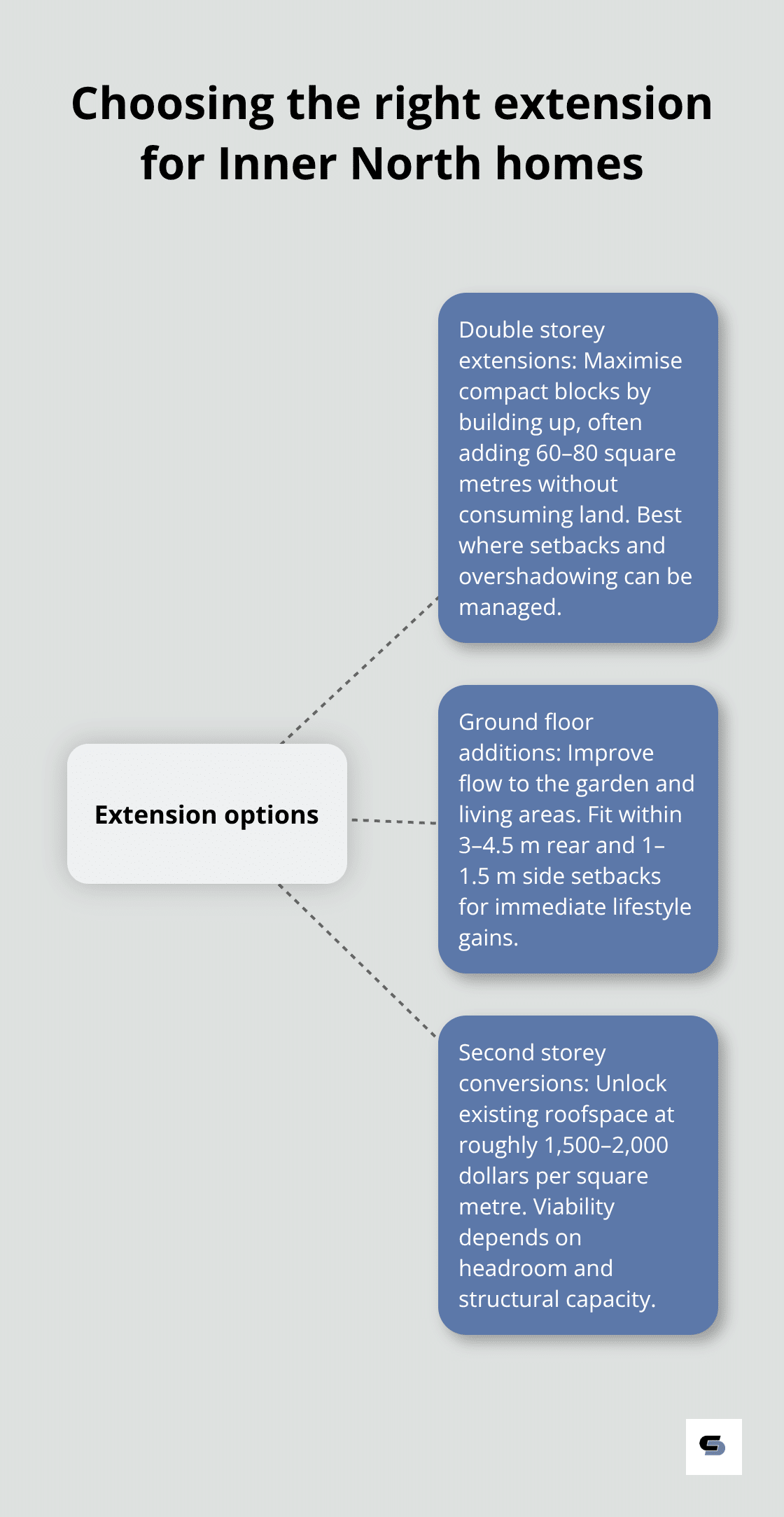
Double storey extensions dominate Inner North projects because they solve the fundamental constraint of compact blocks without sacrificing outdoor space. A typical Inner North property sits on 300 to 500 square metres with a footprint that occupies 40 to 50 percent of the allotment. Adding a second storey directly above your existing ground floor adds 60 to 80 square metres of usable space-equivalent to two or three additional bedrooms-without consuming any extra land. Inner North councils generally approve double storey extensions when they respect setback requirements, maintain proportions consistent with the original building, and don’t overshadow neighbouring properties excessively. The cost typically ranges from 2,500 to 3,500 dollars per square metre for quality construction, placing a 70-square-metre extension between 175,000 and 245,000 dollars. This approach works particularly well on Victorian and Edwardian homes where high ceilings and solid masonry walls provide excellent structural foundations for upward expansion.
Ground Floor Additions Transform Living Spaces
Ground floor additions solve different problems. If your kitchen and living areas feel cramped or disconnected from your garden, a rear or side addition transforms functionality without the structural complexity of stacking weight above existing walls. Inner North setback requirements typically permit ground floor extensions to sit 3 to 4.5 metres from rear boundaries and 1 to 1.5 metres from side boundaries, depending on your specific suburb and heritage status. A 30 to 40-square-metre ground floor addition costs 75,000 to 140,000 dollars and delivers immediate lifestyle improvements by opening living spaces to natural light and garden views.
Second Storey Conversions Unlock Existing Roofspace
Second storey conversions offer a middle path when roofspace permits. Many Inner North Victorian homes feature high ceilings and spacious roof voids that conversion work transforms into functional bedrooms or studios at 1,500 to 2,000 dollars per square metre, substantially cheaper than new double storey construction. The constraint with conversions lies in headroom requirements under building codes and whether your roof structure supports the necessary floor system. A structural engineer must assess these factors before you commit to this approach, as existing roof framing often requires reinforcement or replacement to meet current standards. This assessment determines whether conversion work remains cost-effective compared to a new double storey extension on your specific property.
Your choice between these three options depends on your block size, existing structure, budget, and lifestyle goals-factors that a building designer and structural engineer evaluate during the planning phase.
Planning and Approval for Inner North Extensions
Understanding Your Suburb’s Planning Requirements
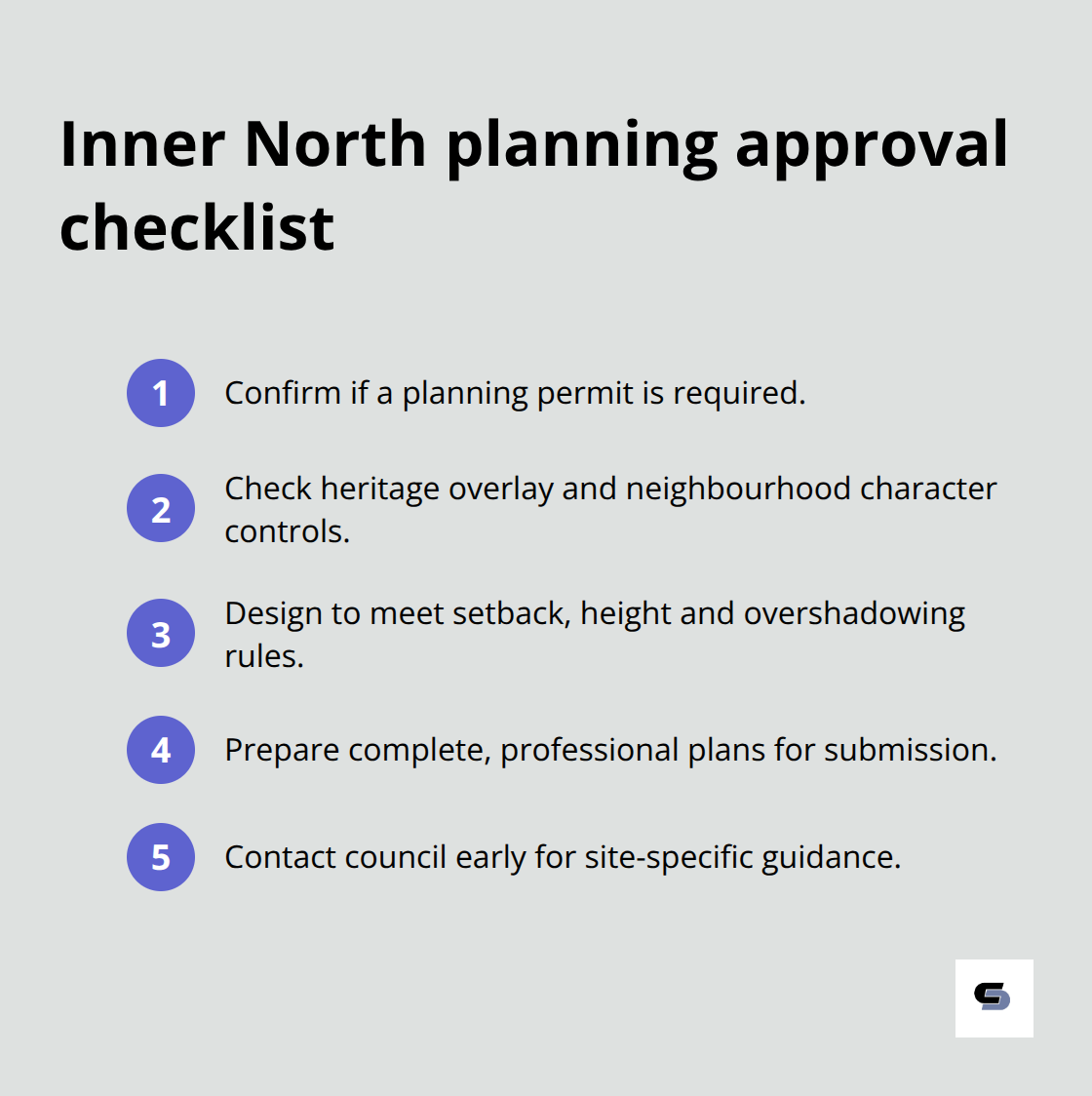
Planning approval in Inner North Melbourne hinges on understanding your specific suburb’s requirements and how heritage status affects your design. The Melbourne Planning Scheme sets the broad framework, but each Inner North suburb-Fitzroy, Carlton, Brunswick, North Melbourne, Collingwood-applies different controls based on local planning overlays and heritage designations. Properties with heritage overlays require substantially more detailed design work upfront, while non-heritage properties still demand careful attention to setbacks, overshadowing, and streetscape coherence to pass first-time approval. The City of Melbourne’s planning officers assess extensions against specific criteria including setback distances and building height limits relative to surrounding properties, and whether the addition respects neighbourhood character.
Heritage Overlays Demand Specialist Design Expertise
Heritage properties face stricter scrutiny-council requires documentation proving your extension uses materials, proportions, and design elements consistent with the original building’s era and style. Non-heritage properties still benefit from this approach because demonstrating sensitivity to existing architecture accelerates approval and protects resale value. A building designer experienced in Inner North requirements presents your extension in ways that satisfy these criteria visually and technically, transforming what might otherwise appear as an arbitrary list of rules into design decisions that strengthen your home.
Structural Assessment Informs Design and Costs
A structural engineer assesses whether your existing structure can support additional load, identifies foundation requirements, and confirms compliance with building codes-information that informs both design feasibility and accurate cost estimates. The engineer’s findings shape what your designer can propose, ensuring that plans reflect structural reality rather than aesthetic preference alone. This integrated approach prevents costly delays and revisions that occur when design and engineering work separately.
Professional Plans Accelerate Council Approval
A building designer translates structural realities into planning submissions that address heritage guidelines, council setback requirements, and neighbourhood context simultaneously. This integrated approach means your plans arrive at council complete and persuasive rather than requiring multiple rounds of revision. Contact the City of Melbourne’s planning officer line at 03 9658 9658 for site-specific guidance on your property’s requirements, heritage status, and approval pathway. This conversation clarifies whether your extension needs a planning permit (most Inner North additions do), what conditions council will impose, and realistic approval timeframes. Armed with this information and professionally prepared plans, you move forward with confidence rather than discovering mid-project that council requires substantial design changes.
Final Thoughts
Inner North extensions Melbourne deliver measurable returns that extend far beyond the immediate comfort of extra space. You gain usable square metres, modern functionality, and alignment with contemporary design standards that Inner North buyers expect. The financial case proves equally compelling: recouping 70 to 85 percent of extension costs through increased property value makes this investment substantially smarter than relocating to a larger property in the same suburb.
Success requires professional design and engineering from the outset, as heritage overlays, setback requirements, and council approval pathways vary across Fitzroy, Carlton, Brunswick, and surrounding suburbs. A building designer who understands these local requirements presents your extension in ways that satisfy planning criteria on first submission, avoiding costly delays and revisions. A structural engineer confirms that your existing structure supports the proposed addition and that costs reflect reality rather than optimistic assumptions.
Project management matters equally throughout construction, as coordinating planning approvals, building permits, trades, and inspections demands accountability for timeline and quality. We at Cameron Construction handle inner north extensions Melbourne from concept to completion, with in-house designers, engineers, and project managers who manage planning submissions, council approvals, building compliance, and construction delivery. Contact us to discuss your extension and understand what’s possible on your specific property.


![Heritage Extensions That Respect Original Character [Guide]](https://www.cameronconstruction.com.au/wp-content/uploads/emplibot/heritage-extensions-hero-1772691912-150x150.webp)