Inner East Extensions Melbourne: Architectural Solutions for Growing Families
Inner East Melbourne’s established suburbs offer character and location, but space constraints often force families to choose between moving or extending. We at Cameron Construction have helped hundreds of homeowners add second storeys, ground floor additions, and double storey extensions to their properties.
The good news is that inner east extensions Melbourne work exceptionally well for growing families. With the right design approach and local expertise, you can unlock significant space without losing the charm that makes these neighbourhoods special.
Why Inner East Extensions Make Financial and Practical Sense
Moving Costs Far Exceed Extension Budgets
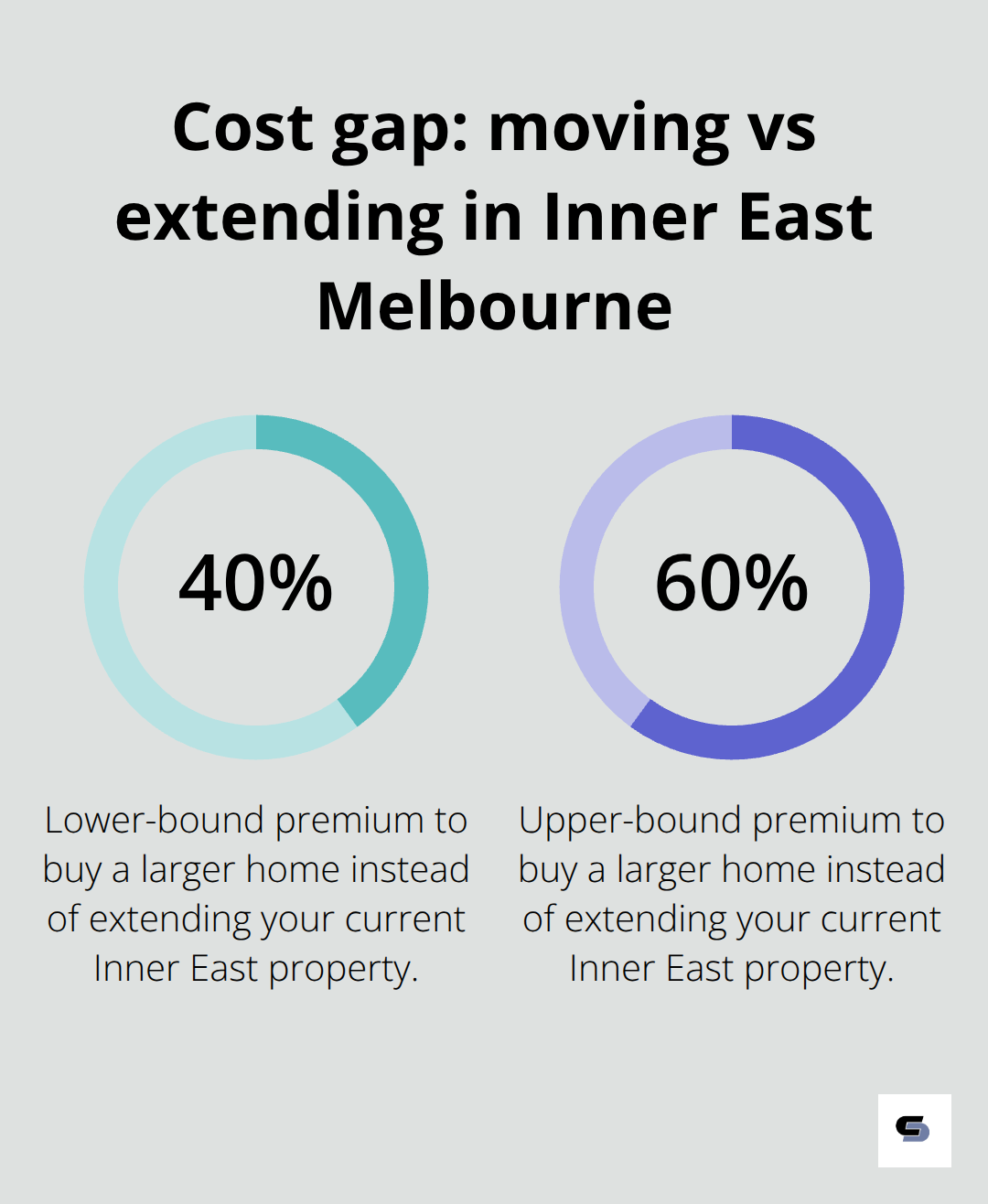
Inner East Melbourne property values have climbed significantly over the past decade, making the financial case for extensions compelling. A family purchasing a three-bedroom home in Camberwell, Hawthorn or Kew now pays substantially more than they would have ten years ago. Moving to a larger property in the same area costs 40–60% more than extending your current home, according to Real Estate Institute of Victoria data. Families regularly choose to add a second storey or ground floor addition instead of selling, because the extension cost sits well below the premium they would pay for a ready-made larger home in their preferred neighbourhood.
Heritage homes compound this advantage-many established Inner East properties offer character and location that cannot be replicated at any price, making them worth improving rather than abandoning.
Vertical Building Solves Lot Size Constraints
Established Inner East suburbs were built on smaller lot sizes than modern developments. A typical 1920s weatherboard home sits on a 600–800 square metre block, leaving little room for horizontal expansion. Young families quickly outgrow these homes once children arrive, yet finding a larger property in the same suburb becomes financially out of reach. Double storey extensions solve this constraint by building vertically rather than outward, adding 40–80 square metres of new living space without consuming valuable outdoor area. Second storey conversions work equally well for single-level homes, effectively doubling usable floor area without changing the footprint. Ground floor additions extend living zones backward, capturing space that many older homes waste. These solutions preserve the street appeal and garden space that attracted families to these suburbs in the first place.
Heritage Overlays Require Specialist Design Expertise
Inner East Melbourne contains numerous heritage overlays and conservation areas where planning authorities scrutinise every extension design. Properties in Camberwell’s heritage zones, Hawthorn’s character streets, and Kew’s conservation areas face strict requirements around roof pitch, materials, setbacks and external appearance. A poorly designed extension can trigger planning refusal or costly redesigns mid-project. Architects and designers unfamiliar with local heritage guidelines often produce plans that council rejects outright. Designers who understand these overlays routinely produce extensions that respect original roof lines, echo existing materials and maintain street proportion. For heritage homes, specialist local knowledge separates a smooth approval process from months of delays and rework. This expertise becomes your foundation for navigating the design and planning considerations that follow.
How Site Conditions and Council Rules Shape Your Extension Design
Sloping Blocks Demand Precise Surveys Before Design Work Starts
Sloping blocks and irregular lot shapes define many Inner East properties and fundamentally change how your extension must be designed. A block that slopes toward the rear creates opportunities for split-level extensions or ground floor additions that step down naturally, reducing excavation costs compared to flat blocks. Conversely, a block sloping toward the street complicates second storey additions because building height calculations shift-the maximum height of 10 metres is measured from any point of the dwelling to natural ground level, which means sloping sites require precise site surveys before design work begins. Council surveyors measure building height from the lowest natural ground level, not from your front door. Detailed contour surveys cost between $800 and $1,500 but prevent costly design revisions later. Irregular lot shapes-narrow frontages, odd angles, or properties wedged between neighbours-demand creative site planning. A north-facing triangular block in Hawthorn might suit a double storey extension positioned to maximise northern light without creating overshadowing issues. An L-shaped block in Camberwell opens opportunities for ground floor additions that wrap around the original home, creating courtyard-style living. The site itself dictates what works; ignoring these physical realities leads to designs that either fail council approval or waste money on unnecessary earthworks.
Multiple Councils Enforce Different Planning Rules Across Inner East Suburbs
Melbourne’s Inner East spans multiple councils-Boroondara, Monash, Stonnington, and Manningham each enforce different planning rules, heritage overlays, and building standards. Boroondara’s Camberwell and Hawthorn zones require heritage-sensitive designs with strict controls on roof pitch and external materials; Stonnington’s Malvern and Armadale areas apply different setback rules; Monash’s Glen Waverley and Oakleigh have their own lot size minimums and floor area ratios. Many families underestimate how significantly these differences impact extension feasibility. A second storey that passes easily in one municipality may trigger planning refusal in an adjacent suburb because setback requirements differ. Council planning officers at Boroondara (03 9278 4444) and Stonnington (03 9905 5555) can confirm specific requirements before you invest in design work, though responses often take two to three weeks.
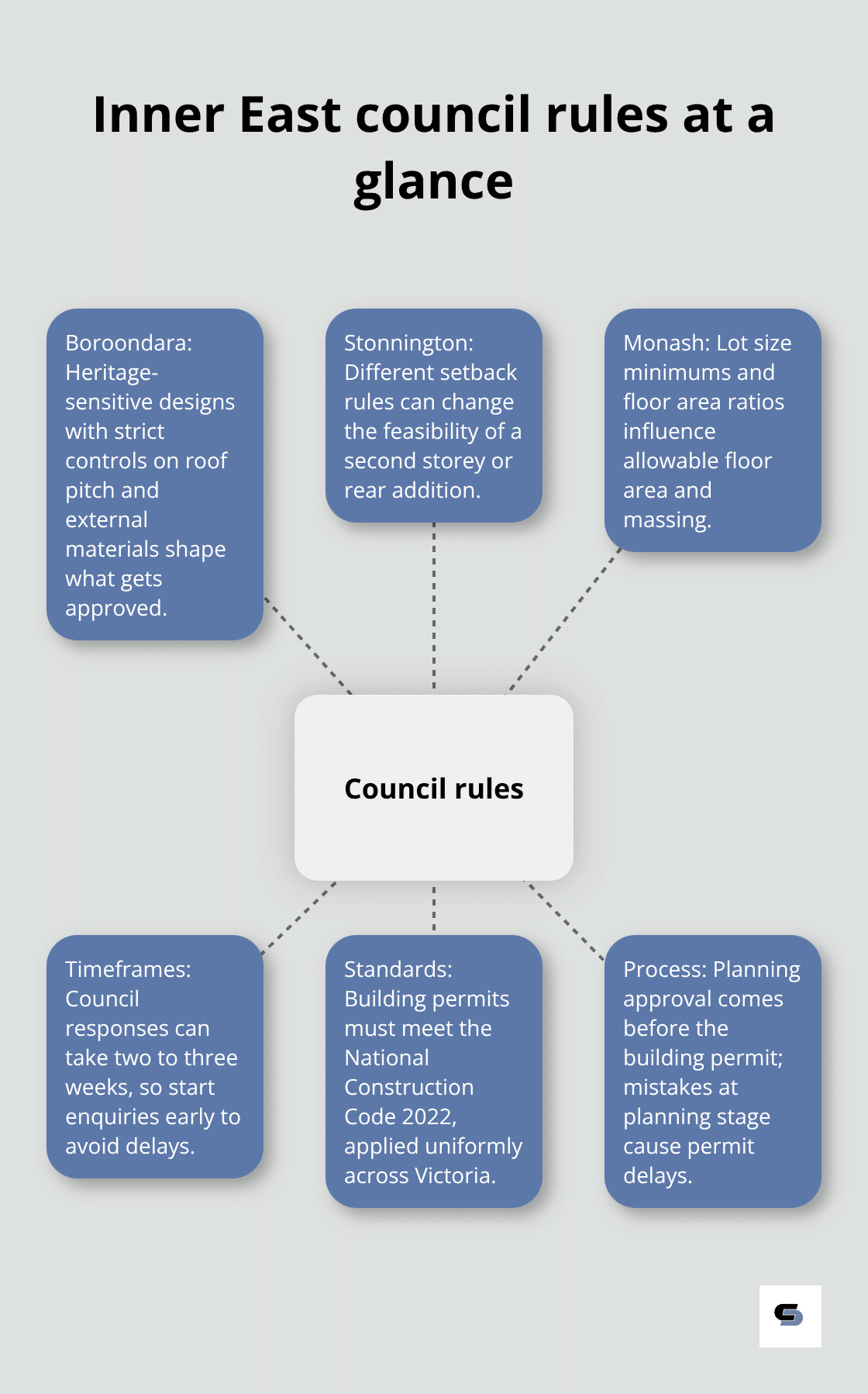
Early conversations with your local council-or with a designer familiar with your specific municipality-save months of delays. Building permits themselves follow the National Construction Code 2022, which applies uniformly across Victoria, but planning approval is where council-specific rules bite hardest. A registered building surveyor must apply for your building permit, and they will only issue the permit once council has granted planning approval. This sequential process means planning mistakes cascade into building permit delays. Ground floor additions in Boroondara typically require planning permits because they often exceed setback tolerances; the same addition in some Monash areas may be exempt.
Design Strategies Solve Planning Constraints and Livability Together
Maximising natural light and outdoor connection demands that you work within council constraints rather than against them. North-facing extensions capture winter sun and minimise summer heat; however, council setback rules might force your extension sideways or backward, reducing the angle of northern exposure. Skylights and high-level windows become essential tools when ground-level glazing cannot extend as far as you’d like. Sliding glass doors that open fully to outdoor decks create the illusion of extended living space even on tight blocks. A ground floor addition that steps back slightly at the upper level preserves sight lines from neighbouring windows, improving approval odds while allowing larger lower-level glazing. These design moves-stepping back upper storeys, using high-level glazing, integrating outdoor decks-solve both planning constraints and livability at once. The next section explores which extension types work best across Inner East suburbs and how to match your chosen design to your specific site and council requirements.
Extension Types That Work Best in Inner East Suburbs
Double Storey Extensions Maximise Space on Narrow Blocks
Double storey extensions dominate Inner East Melbourne because they deliver maximum space on minimal footprints. A double storey addition typically adds 60–100 square metres across two levels, roughly equivalent to a three-bedroom house extension on a standard 600–800 square metre block. These work exceptionally well on narrow frontages where horizontal expansion is impossible. Camberwell and Hawthorn properties with 12–15 metre frontages suit double storey designs because the extension rises vertically without consuming precious garden or outdoor space.
Cost runs between $450,000 and $750,000 depending on finishes and site complexity, making them substantially cheaper than purchasing a larger property nearby. Council approval hinges on setbacks and heritage sensitivity. Most Inner East councils require rear setbacks of 1–1.5 metres on upper levels to preserve neighbour amenity and sight lines. Your designer must confirm these setbacks early because they directly affect room sizes and internal layouts.
A 5-metre-wide extension with 1.5-metre setbacks leaves only 2 metres for bedrooms or bathrooms on upper levels, which forces compromises in functionality. Sloping blocks complicate double storey work because building height calculations shift. Natural ground level determines the maximum 10-metre height, meaning a block sloping toward the rear effectively reduces your available height allowance. Site surveys costing $800–$1,500 must confirm these measurements before design begins.
Second Storey Conversions Transform Single-Level Homes
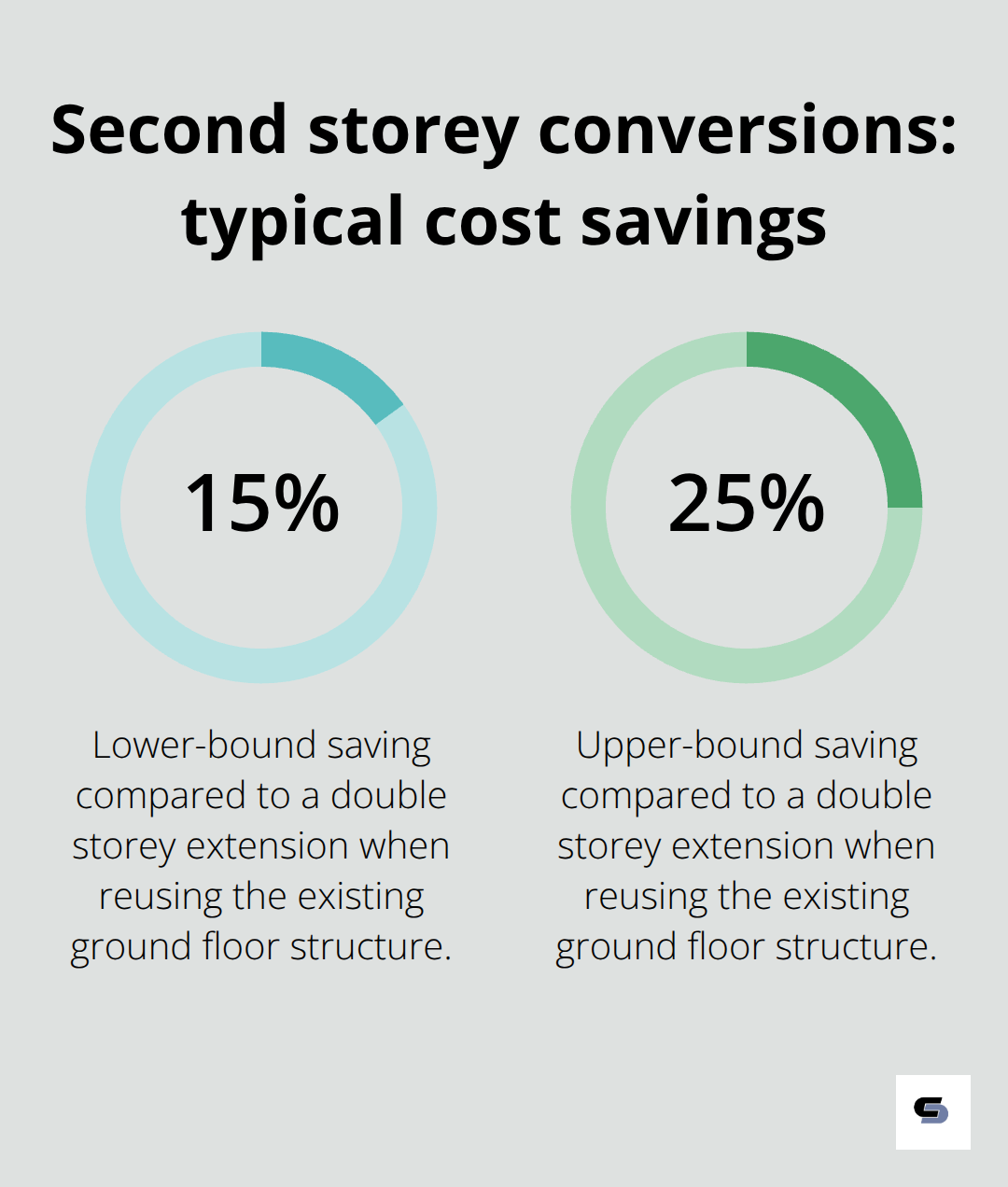
Second storey conversions transform single-level homes into two-storey properties and suit Edwardian and inter-war bungalows throughout the region. These additions typically cost 15–25% less than double storey extensions because they reuse the existing ground floor structure and foundation.
A second storey adds 50–80 square metres and effectively doubles usable floor area without changing the street footprint, preserving the character appeal that attracted families to these suburbs initially.
Heritage overlays present the biggest challenge for second storey conversions. Council requires new rooflines to respect existing pitch angles, typically between 30 and 45 degrees for Inner East heritage homes. Stepping the new storey back from the front elevation maintains sight lines and reduces visual bulk.
Ground Floor Additions Extend Living Zones Backward
Ground floor additions extend living zones backward and work best on properties with deep blocks and existing single-storey structures. These additions cost $300,000–$500,000 and suit families needing extra kitchen space, additional bedrooms, or enhanced outdoor connection without committing to full vertical expansion. A 4–6 metre backward extension on a standard block preserves garden space while creating open-plan living zones that modern families demand.
Council planning approval depends entirely on setback compliance and overshadowing. Most councils require 1–1.5 metre rear setbacks; additions exceeding these trigger planning permits and neighbour notification processes that add 8–12 weeks to timelines. Ground floor additions on sloping blocks offer natural advantages because split-level designs step down with the slope, reducing excavation costs and creating dynamic internal spaces.
Site Assessment Determines Extension Viability
Matching your extension type to your specific block shape, council requirements, and family needs requires expert site assessment before design work begins. A surveyor measures your block contours, identifies natural ground levels, and confirms setback tolerances specific to your council area. This assessment ($800–$1,500) prevents costly design revisions and planning refusals later. Your designer then works within these physical and regulatory constraints to propose the extension type that maximises space and minimises approval risk for your particular property.
Final Thoughts
Inner East extensions Melbourne solve the fundamental tension that growing families face in established suburbs: your family has outgrown your home, yet the neighbourhood itself remains irreplaceable. Moving to a larger property in Camberwell, Hawthorn, or Kew costs 40–60% more than extending your current home, and a double storey addition delivers 60–100 square metres for $450,000–$750,000 while preserving the character and location that attracted you initially. Second storey conversions cost 15–25% less and transform single-level homes into two-storey properties, while ground floor additions extend living zones backward for $300,000–$500,000 without consuming precious garden space.
Specialist local knowledge determines whether your extension project succeeds or stalls in planning delays. Inner East Melbourne spans multiple councils with different heritage overlays, setback requirements, and planning rules-Boroondara enforces strict heritage controls, Stonnington applies different setback tolerances, and Monash has its own floor area ratios. Sloping blocks demand precise surveys before design work begins because building height calculations shift based on natural ground level, and site conditions fundamentally determine which extension type works best for your property.
We at Cameron Construction have guided hundreds of Inner East families through this process, and our in-house designers, engineers, and project managers handle concept to completion across Melbourne’s councils. Your next step is a site assessment and initial consultation to confirm what your property can accommodate and what your council will approve. Contact us to discuss your extension project and explore how we can add the space your growing family needs.