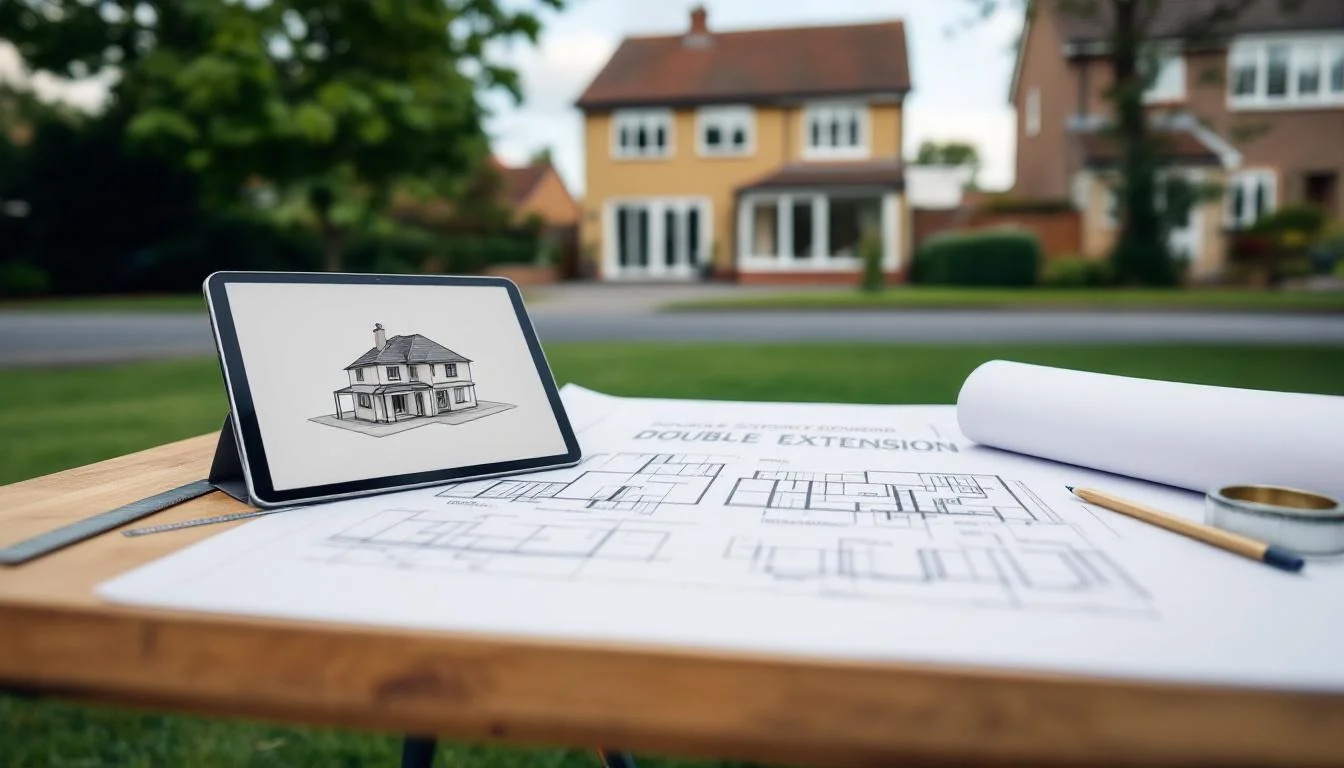
How to Plan Your Perfect Double Storey Extension
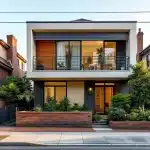
A double storey extension transforms your Melbourne home and maximises your block’s potential. The right planning approach separates successful projects from costly mistakes.
At Cameron Construction, we’ve guided hundreds of homeowners through this process. This guide walks you through every stage, from initial assessment to final inspection.
Understanding Your Block Size and Budget
Your block size dictates what’s physically possible, and your budget determines what’s financially sensible. Start by measuring your land. Most Melbourne residential blocks range from 400 to 800 square metres, but what matters is how much of that space you can actually build on. Council setback rules in Melbourne typically require you to stay at least 1 metre from side boundaries, plus an additional 0.3 metres for every metre of wall height above 3.6 metres. Front setbacks usually match the average of nearby houses, typically 6 to 9 metres. This means a 600-square-metre block might realistically allow only 180 to 240 square metres of extension footprint, not the full block width. Get a site plan from your local council or surveyor-this costs $200 to $400 and shows exactly what you’re working with.
Calculate Your Extension Costs
A double storey extension typically costs between $1,200 and $2,000 per square metre in Melbourne, depending on finishes and complexity. A modest 40-square-metre addition therefore ranges from $48,000 to $80,000 before permits and design fees. Larger extensions of 80 square metres run $96,000 to $160,000. Site-specific costs like sloping block works, heritage considerations, or challenging soil conditions add 15 to 30 per cent to these figures.
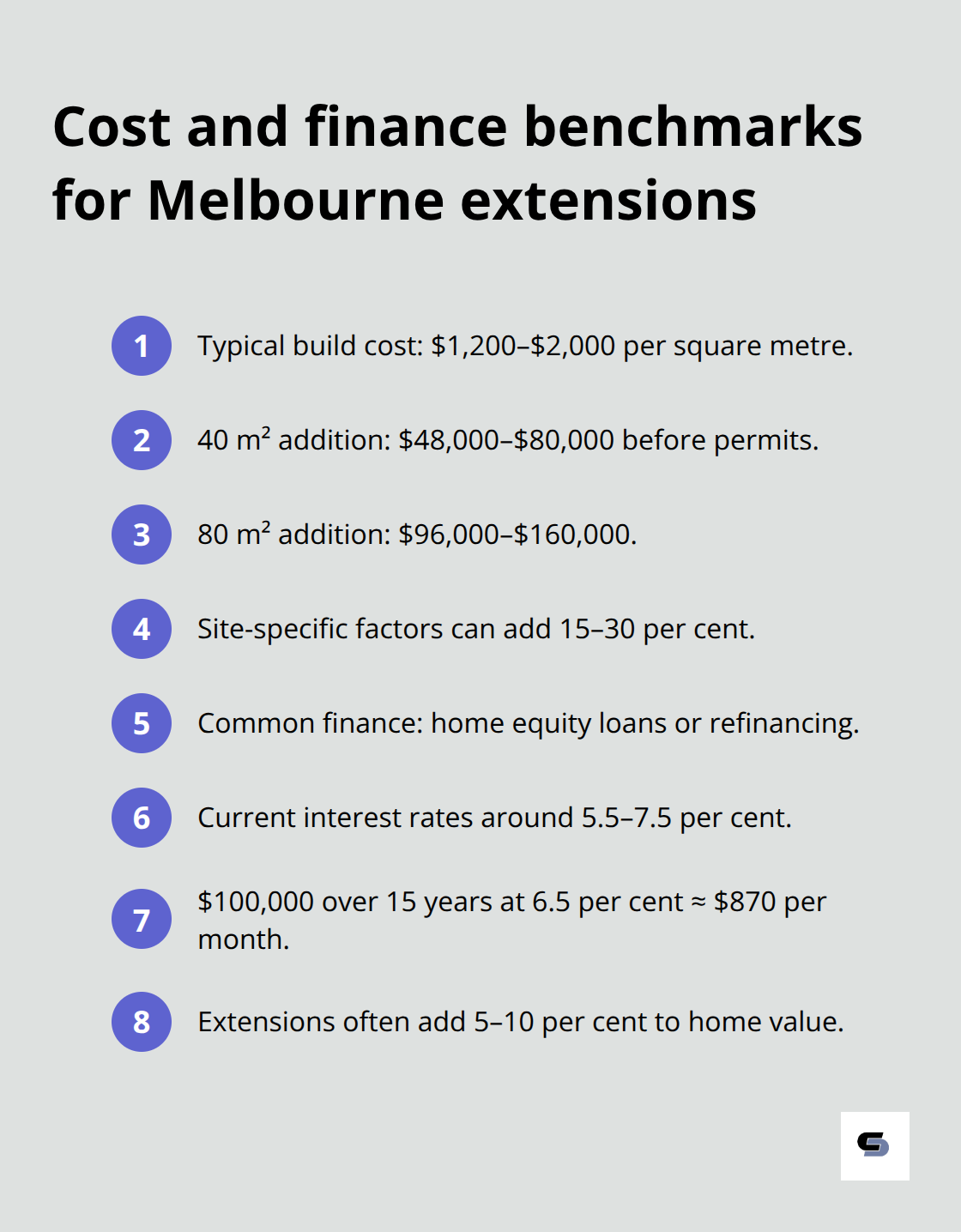
Most Melbourne homeowners finance extensions through home equity loans or refinancing, with interest rates currently between 5.5 and 7.5 per cent. A $100,000 extension financed over 15 years at 6.5 per cent costs roughly $870 monthly. Assess whether your property value will increase enough to justify the investment-extensions typically add 5 to 10 per cent to home value, though this varies by suburb and quality.
Define Your Actual Goals Before Design Starts
Many homeowners chase square metres when they actually need functionality. Ask yourself whether you need extra bedrooms, a larger living area, a modern kitchen, or better connection to outdoor space. These are different problems with different solutions. If you add a bedroom, you need a minimum 10-square-metre room plus ensuite and wardrobe space-roughly 25 to 30 square metres total. A family needing better entertaining space might prioritise an open-plan living and kitchen area instead. Secondary dwelling rules in some Melbourne suburbs allow a small granny flat (up to 60 square metres) on the same block, which solves multi-generational housing without a full double storey extension.
Write down what frustrates you most about your current home. Dark spaces, lack of storage, poor flow between indoor and outdoor areas, or ageing bathrooms point toward specific design priorities. This clarity prevents scope creep and keeps costs down. Extensions that solve real problems hold their value better than those built speculatively. Once you understand your block constraints and clarify what you actually want to achieve, you’re ready to work with a building designer who can translate those goals into a concept that works within your budget and council requirements.
From Concept to Council Approval
Your Building Designer Translates Goals Into Compliant Plans
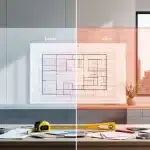
Your building designer transforms vague ideas into specific, measurable plans that council will accept and builders can construct. A good designer asks difficult questions: Does your extension respect neighbouring privacy? Will it block sunlight to adjacent properties? Does the roofline complement your existing home’s proportions? These aren’t aesthetic niceties-they’re planning requirements that determine whether council approves your project. Expect to pay $3,000 to $8,000 for concept and detailed design work depending on complexity. Heritage overlays, sloping blocks, or tight corner blocks cost more because the designer must solve additional constraints.
Understanding Mandatory Planning Standards
Once your designer completes drawings, they include a planning assessment noting which Victorian residential development standards apply to your site. This assessment identifies setbacks, maximum building height, site coverage limits, and overshadowing rules specific to your block. Melbourne’s planning regulations determine whether your extension maintains side setbacks of at least 1 metre plus 0.3 metres for every metre of wall height above 3.6 metres, and you must preserve at least 20 per cent of your site as permeable ground. Front setbacks typically match neighbouring properties or follow a 6 to 9 metre minimum.
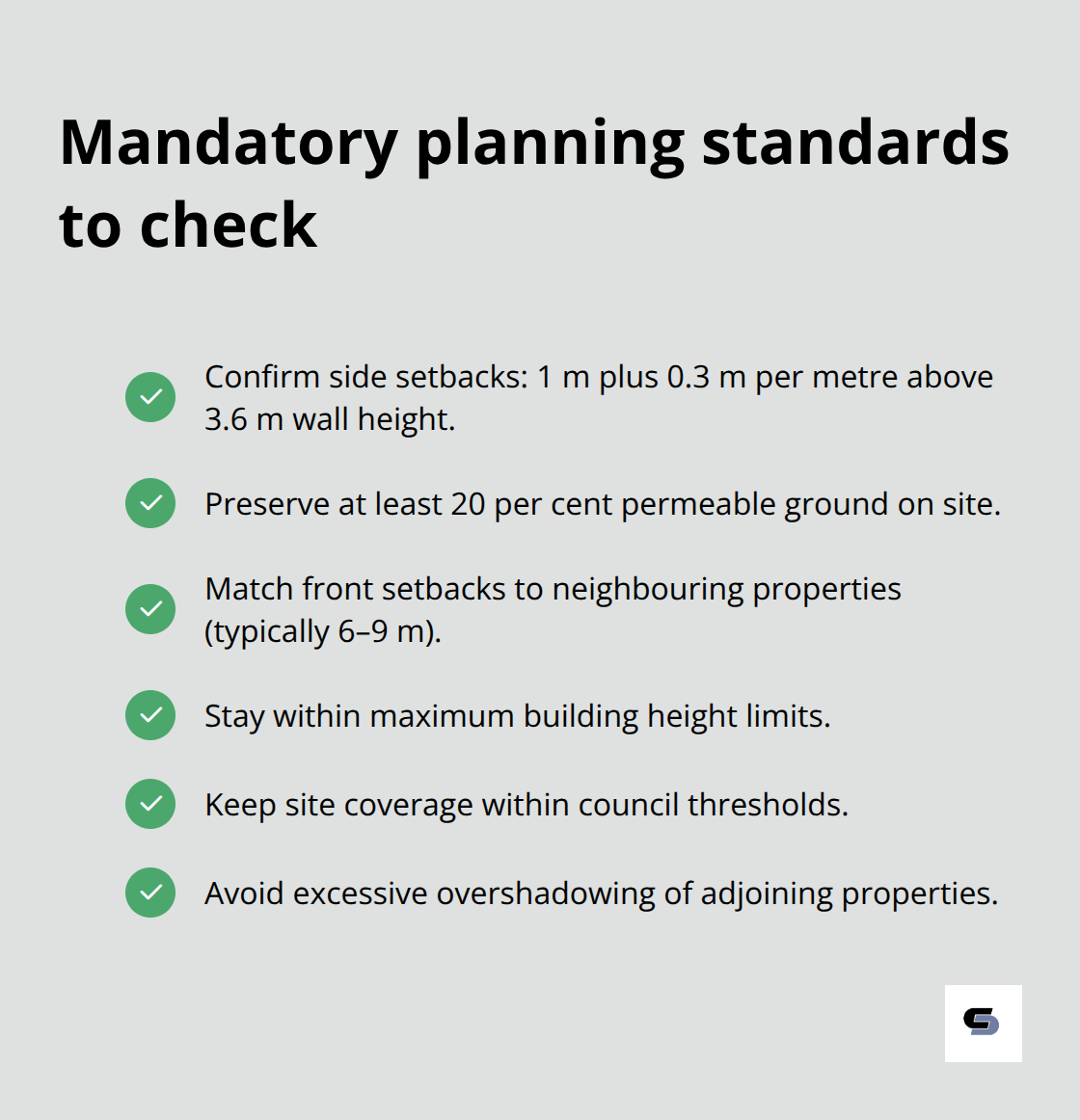
These aren’t suggestions-they’re mandatory, and council will reject drawings that breach them. Your designer should flag any non-compliant aspects early so you can adjust the concept rather than discover problems after spending on permits.
Navigating Planning and Building Approval Stages
Town planning approval happens before building approval. If your local council requires a planning permit for your extension-which most do for double storey additions-you must obtain it first. Planning permits typically take 30 to 45 days for straightforward applications but can extend to 90+ days if objections are lodged or if the application triggers referral to other authorities. The planning permit confirms your extension respects town planning scheme requirements around setbacks, height, site coverage, and neighbourhood character.
Building approval follows planning approval and verifies compliance with the Building Code of Australia and Victoria’s Building Regulations 2018. Building permits cost between $2,000 and $5,000 depending on your project’s estimated cost, and they require detailed specifications, structural plans, energy efficiency calculations, and evidence that your builder holds domestic building insurance. The building surveyor appointed to your project will specify mandatory inspection stages-typically at foundation, frame, lock-up, and pre-completion. These inspections confirm work meets code requirements as construction progresses.
Planning Timelines and Budget Reality
Most homeowners underestimate approval timelines and budgets. Plan for 12 to 16 weeks total from finalised drawings to construction commencement if no planning permit is required, and 16 to 24 weeks if one is needed. Include contingency time for council requests for additional information or conditions. Building Code compliance isn’t negotiable, and attempting to cut corners-using non-compliant materials, skipping inspections, or employing unregistered trades-creates legal liability and failed inspections that halt work.
Once your approvals are locked in and your builder holds all necessary certifications and insurance, construction can commence. The build process itself demands careful management to keep your project on schedule and within budget.
The Build Process and Timeline
Site Preparation Sets the Foundation for Success
Construction begins the moment your building permit is issued, but the real work starts weeks earlier with site preparation and contractor coordination. Your builder must obtain soil reports and foundation data before excavation starts-these reports cost $1,500 to $3,000 and determine footing design and construction method. Skipping this step invites foundation problems that cost $20,000 to $50,000 to fix later. Melbourne’s variable geology-from clay to sand to reactive soils-demands site-specific solutions. Once your surveyor marks the building line on site, your builder establishes site sheds, temporary fencing, and waste management areas. This preparation phase typically takes 1 to 2 weeks and sets the tone for the entire project.
Construction Stages and Weather Realities
Construction proceeds through five distinct stages: excavation and foundations (2 to 4 weeks), frame and roof (3 to 5 weeks), lock-up including windows and doors (1 to 2 weeks), internal fixing and services (4 to 6 weeks), and final finishes including painting and flooring (3 to 4 weeks). Weather delays Melbourne projects regularly-heavy rain halts concrete pours and slows frame work, adding 1 to 3 weeks to timelines.
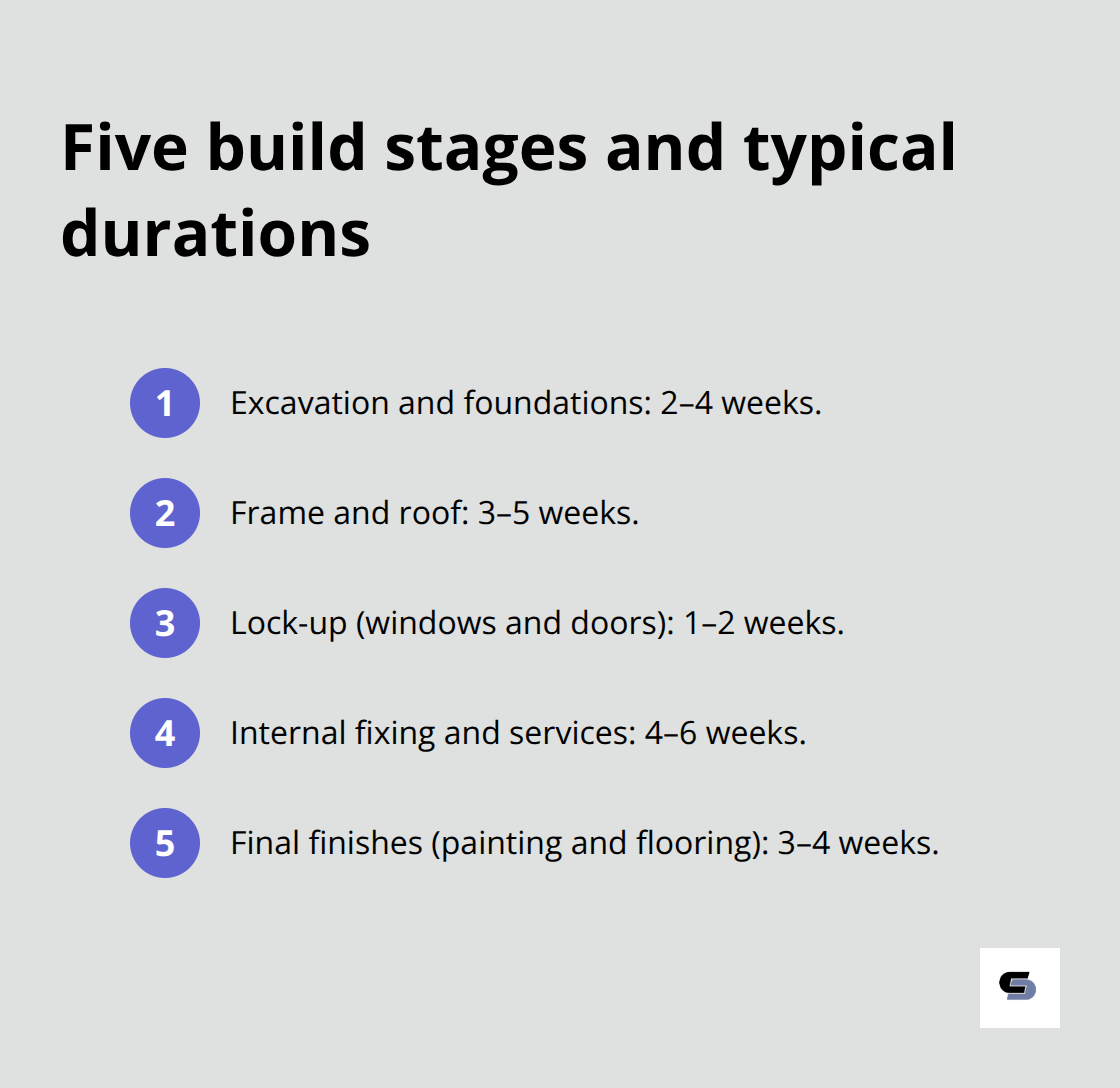
Plan for seasonal interruptions between June and August when wet conditions are common. Your building surveyor schedules mandatory inspections at foundation stage, frame stage, lock-up stage, and pre-completion. These inspections aren’t optional-failure to pass an inspection halts work until non-compliant elements are rectified. Foundation inspections verify footings reach correct depth and concrete strength meets specifications. Frame inspections check structural adequacy, tie-downs, and bracing. Lock-up inspections confirm windows seal properly and weather tightness is achieved. Pre-completion inspection verifies all work meets National Construction Code standards before you occupy the space.
Project Management Reduces Costs and Prevents Delays
Professional project managers reduce cost overruns by 15 to 25 per cent according to construction industry data because they coordinate trades, manage material delivery, and prevent scheduling conflicts that multiply costs. Your project manager should provide weekly progress reports showing percentage completion against timeline, budget spend against estimate, and any variations approved in writing. Variations-changes to scope, materials, or specifications after work starts-must be documented and priced before work resumes because verbal agreements create disputes. A common mistake occurs when homeowners approve variations verbally and discover inflated costs later. Insist that every change order includes the cost impact and timeline impact in writing before work resumes. Quality control happens continuously, not just at inspection stages. Your builder or project manager should photograph work at each stage, maintain a site diary documenting weather and workforce, and address defects immediately rather than deferring them to the end. Defects discovered during pre-completion inspection delay your occupancy by weeks while rectification work is completed and re-inspected. If your builder resists progress reporting or refuses to document variations in writing, that’s a warning sign-professional builders document everything because documentation protects both parties.
Final Thoughts
Planning a double storey extension demands clear thinking across five interconnected areas: understanding your block’s physical constraints, calculating realistic costs, defining what you actually want to achieve, working with a designer who creates council-compliant plans, and managing construction through documented variations and mandatory inspections. Professional guidance matters because extensions involve planning law, building codes, structural design, and project coordination-a single mistake like using unregistered trades or skipping soil reports creates costly delays or legal liability. Homeowners who attempt to manage these complexities alone typically experience budget overruns of 20 to 30 per cent and timeline delays of 8 to 12 weeks.
Your next step is to contact a builder who handles concept to completion, including design, approvals, and compliance. At Cameron Construction, we’ve delivered award-winning double storey extensions and ground floor additions across Melbourne for over 40 years. Our in-house designers, engineers, and project managers manage every stage from initial assessment through final inspection, removing the complexity from your project.
We understand Melbourne’s council requirements, building codes, and the practical realities of construction timelines and costs. Contact Cameron Construction to discuss your extension and receive a realistic assessment of what’s possible on your block and within your budget.