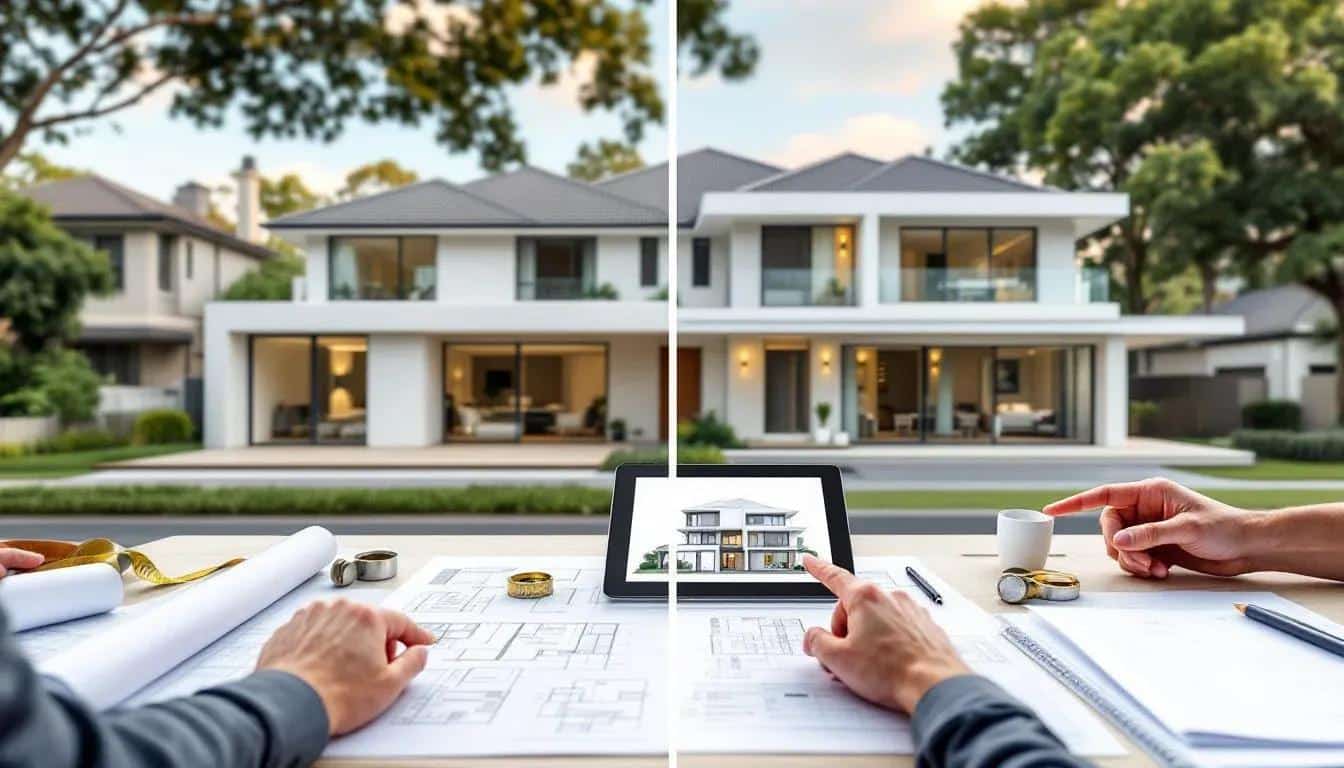
How To Choose Between Single And Double Storey Home Extensions
Choosing between a single and double storey extension is one of the biggest decisions you’ll make for your Melbourne home. The right choice depends on your budget, block size, and how your family will use the space over time.
At Cameron Construction, we’ve helped hundreds of homeowners navigate this decision. This guide walks you through the key differences and factors that matter most to your situation.
Key Differences Between Single and Double Storey Extensions
A single storey extension typically adds 40 to 60 square metres of living space, while a double storey delivers 80 to 120 square metres on the same footprint. This matters because Melbourne’s land costs mean maximising usable area on your existing block often proves smarter than purchasing more land. A double storey extension lets you add a bedroom and ensuite upstairs while creating an open-plan living area downstairs, without expanding your building’s footprint. Single storey suits you if you want a straightforward kitchen or living zone upgrade without the complexity of upper-level work.
Cost and Budget Implications
The cost difference between the two options is substantial. Single storey extensions in Melbourne typically range from $250,000 to $400,000 depending on finishes and site conditions, while double storey work sits between $450,000 and $700,000 or more. This isn’t simply double the price for double the height. Double storey requires stronger foundations, more complex engineering, and additional structural support, which adds cost.
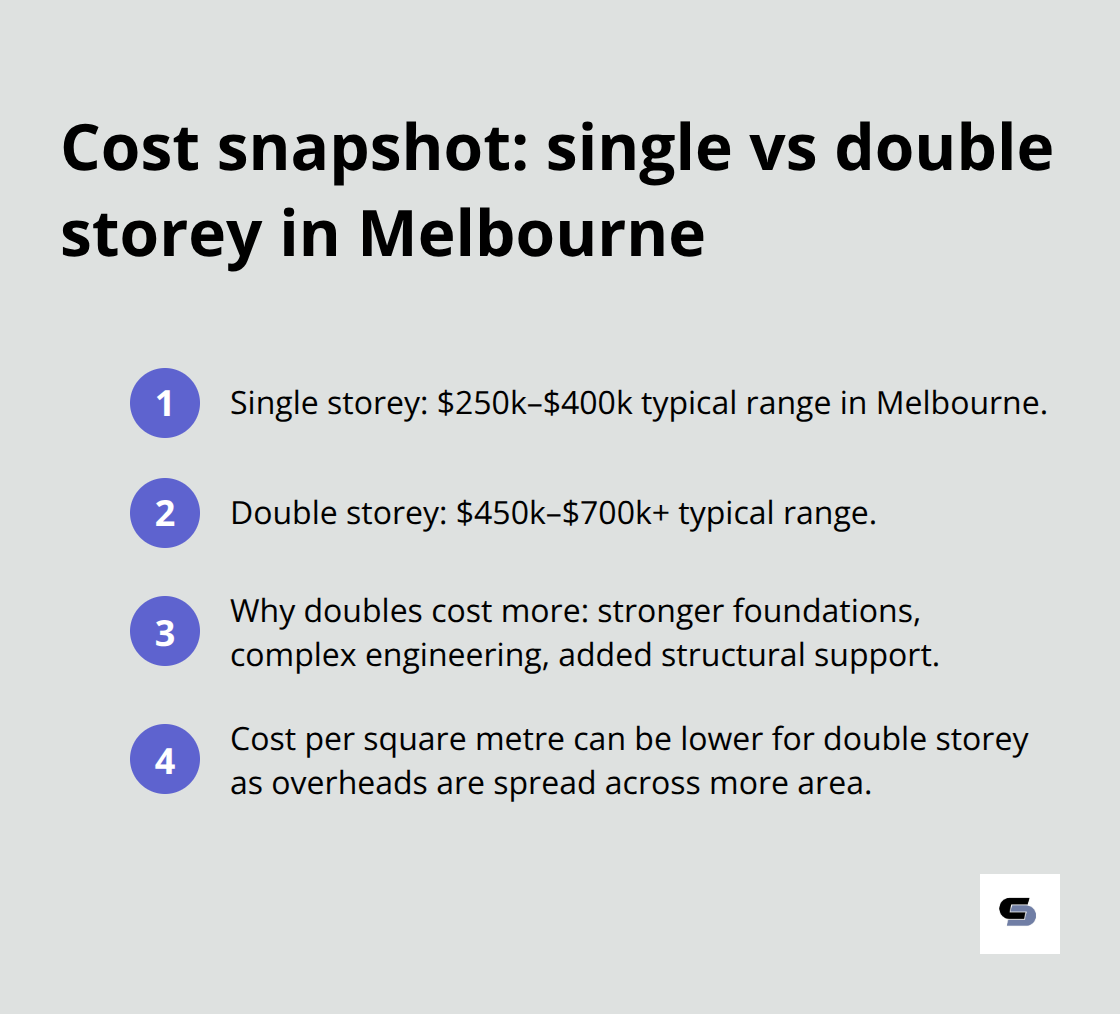
However, the cost per square metre often works out differently for double storey because you spread site setup, permits, and project management across more floor area.
Timeline and Construction Duration
Construction time shifts significantly with height. Single storey usually takes 6 to 9 months from start to completion, while double storey typically runs 10 to 14 months. This longer timeline affects your family’s disruption and your financing costs if you’re borrowing. Council approval timelines vary by municipality, but double storey extensions often take 2 to 3 months longer for planning because they trigger more scrutiny around shading, setbacks, and neighbourhood character.
Foundation and Structural Demands
Double storey work requires deeper foundations and reinforced footings because the upper level loads transfer through the entire structure. Consumer Affairs Victoria notes that a soil report and foundation data are necessary to design footings and provide an accurate price, so your builder will likely ask you to authorise a soil test before quoting. This test costs around $1,500 to $3,000 but prevents costly surprises during excavation. Single storey extensions are lighter, so they sometimes work with shallow footings or even slab-on-ground in suitable soil conditions.
Your block’s slope, soil type, and existing home’s construction all shape what’s feasible. A sloping block might make double storey more practical because you can step the foundation and use the slope naturally. Conversely, poor soil or high water tables can push costs up sharply for either option.
Planning and Council Constraints
Melbourne councils assess extensions against planning scheme rules for setbacks, site coverage, and building height. Double storey extensions often trigger stricter scrutiny because they affect neighbouring properties’ light and views. Plan Melbourne’s urban design guidelines emphasise respecting neighbourhood character and massing, so a two-storey extension on a street of single-storey homes may face objections or conditions. Single storey typically has fewer approval hurdles, though it depends entirely on your specific council and overlay zones.
Heritage overlays and character areas impose stricter controls on both, but double storey faces tighter restrictions on scale and appearance. Checking your property details through your local council’s planning portal before committing to a design direction saves months of rework later. Understanding these constraints early shapes whether your preferred option will actually work on your block, which brings us to the specific factors you need to evaluate for your own situation.
Your Block and Council Will Actually Allow
Understand Your Site’s Physical Constraints
Your block’s physical characteristics determine whether a double storey extension is viable. Start with your soil report and site survey, which reveal foundation capacity, slope, and building orientation. A sloping block often favours double storey because you can step foundations naturally and use the gradient for level changes, reducing excavation costs compared to a flat block where you’d need retaining walls or deep cuts.
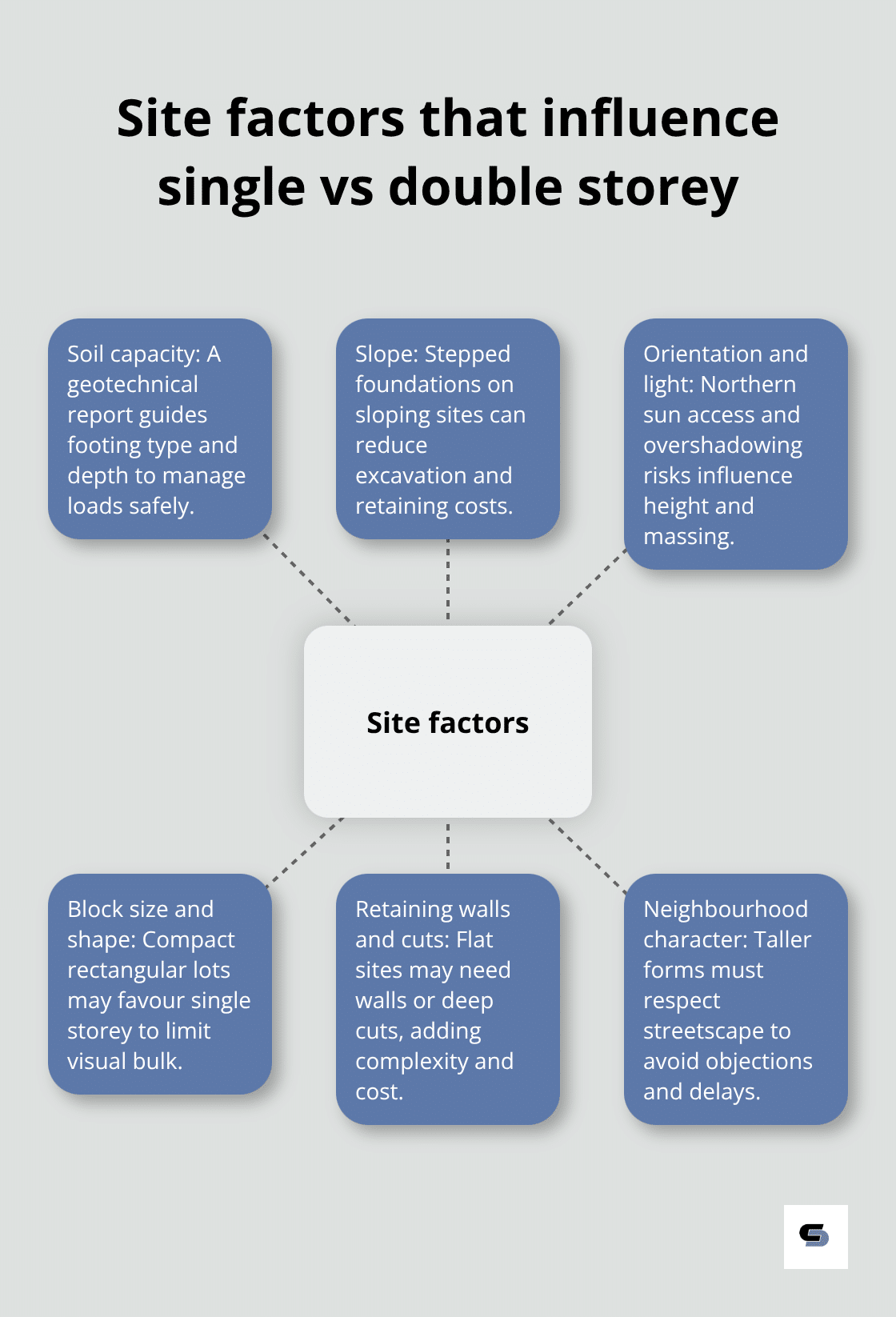
Conversely, a small rectangular block with northern exposure might suit single storey better because a double storey structure could overshadow your neighbour’s property and trigger objections under Plan Melbourne’s urban design guidelines, which specifically address massing and neighbourhood character.
Get your soil report done before finalising your design direction. Consumer Affairs Victoria confirms this is necessary to price foundations accurately, and the test typically costs $1,500 to $3,000 but prevents expensive surprises once excavation starts.
Navigate Council Planning Rules
Council planning rules vary significantly across Melbourne’s municipalities, so contact your local council’s planning department early to understand setback requirements, height limits, and whether your property sits in a heritage or character overlay. Some areas allow double storey as-of-right for residential extensions, while others require stricter design review or neighbour notification. VicSmart permits can fast-track straightforward single storey extensions in eligible areas, saving weeks of assessment time, but double storey work rarely qualifies for this streamlined pathway.
Your council’s planning portal provides property-specific data on overlays, setbacks, and controls. Checking these details before you commit to a design direction saves months of rework later.
Align Your Extension to Your Family’s Future
Your long-term housing needs shape the practical choice. If you plan to age in place and need an accessible ground-floor bedroom and bathroom, double storey adds upstairs bedrooms without losing downstairs flexibility. If you’re a young family expecting children within five years, double storey maximises bedroom count on your existing footprint without needing to move. However, if you’re renovating primarily for a new kitchen or entertaining space and your family size won’t change, single storey delivers what you need at lower cost and faster completion, freeing capital for quality finishes or other home improvements instead.
Once you’ve assessed your block constraints and council requirements, the structural and design implications of each option become clearer-and that’s where engineering and integration with your existing home shape the final decision.
Design and Construction Considerations
Double storey extensions demand significantly more engineering rigour than single storey work because the upper floor loads transfer through the entire structural system. Your existing home’s construction method-whether it’s brick veneer, timber frame, or concrete block-determines how the new structure connects and what reinforcement you need. Timber-framed homes often require additional bracing or steel posts to handle upper-level loads, while brick veneer homes may need internal steel beams. A structural engineer calculates these requirements based on your soil report, existing foundation capacity, and the extension’s weight. This engineering phase typically costs $2,000 to $4,000 but prevents catastrophic failures and ensures your extension meets Building Code of Australia standards. Single storey extensions avoid much of this complexity because they’re lighter and often sit on shallower foundations, though poor soil conditions can still demand substantial reinforcement for either option.
Natural Light and Ventilation Opportunities
Natural light transforms how a double storey extension feels, but it requires deliberate design from the outset. Ground-floor rooms in double storey extensions often suffer from reduced northern light if the upper floor overhangs too far, which is why the design phase must address glazing strategy, roof overhang depths, and window placement simultaneously. Plan Melbourne’s urban design guidelines require that extensions respect neighbourhood character and massing, which sometimes limits how much glazing you can add on north-facing elevations without creating visual bulk. Ventilation becomes critical in double storey work because warm air rises and can trap heat upstairs if cross-ventilation isn’t designed into the layout. Ground floor living areas in double storey extensions benefit from double-height spaces or clerestory windows that pull light down from the upper level, but these cost more to construct than standard ceilings. Single storey extensions typically have simpler light and air strategies because a single roof plane controls shade and ventilation is straightforward, though a north-facing single storey still needs careful window sizing to avoid summer heat gain.
Structural Connection and Integration
Your extension must integrate structurally, functionally, and aesthetically with your existing home. Structural connection points-where the new foundation meets the old-require careful detailing to prevent cracking as the two sections settle at different rates. This is particularly important in clay soil areas around Melbourne where differential movement occurs, and your engineer will specify control joints or flexible connections to accommodate this. Functionally, the extension should flow naturally from your existing spaces without awkward transitions or level changes that create tripping hazards or interrupt sightlines.
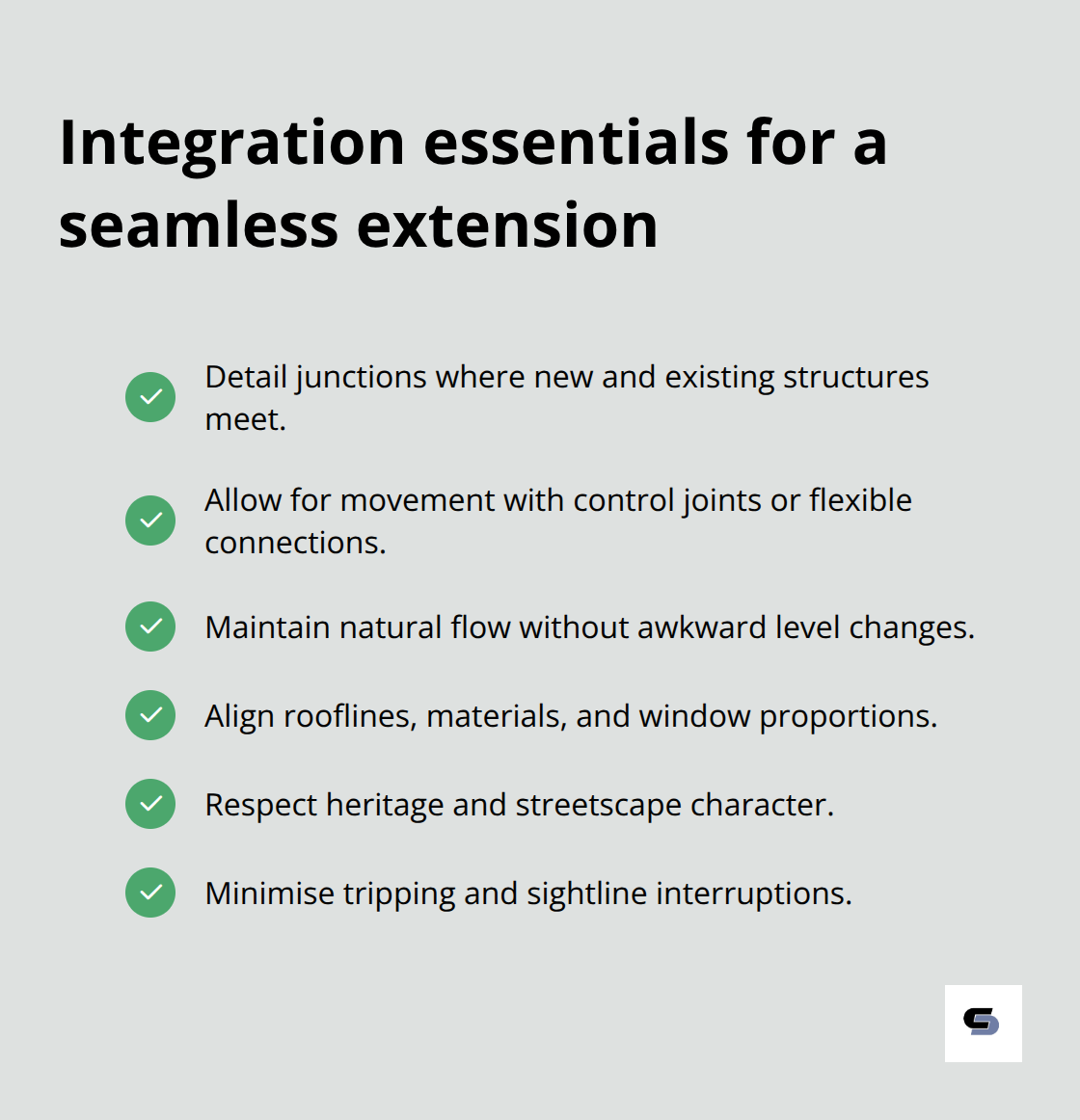
Aesthetically, the roofline, facade materials, and window proportions must relate to your existing home’s character, especially if you’re in a heritage area where the council will scrutinise how the extension affects streetscape appearance. Double storey extensions that clash with single-storey streetscapes often trigger neighbour objections and planning conditions that delay approval, so alignment with surrounding context matters from day one.
Final Thoughts
Choosing between single and double storey comes down to three realities: what your block physically allows, what your council will approve, and what your family actually needs over the next decade. A double storey extension maximises space on Melbourne’s expensive land, but it demands stronger foundations, longer timelines, and tighter planning scrutiny. Single storey delivers faster results and lower upfront costs, but it uses your block less efficiently if you need multiple bedrooms or long-term flexibility.
Start with a soil report and check your council’s planning portal for overlays, setbacks, and height limits-these two steps cost under $3,000 combined but reveal whether your preferred option is actually viable before you invest in design work. Talk to your family about your housing needs over the next ten years: will you need more bedrooms, do you plan to age in place, will you work from home? These questions shape whether you build for today or for your future.
Once you’ve clarified your constraints and needs, engage a designer and structural engineer who understand your council’s specific requirements. At Cameron Construction, we handle home extensions Melbourne from concept through to completion, including planning applications, permits, and BCA compliance across Melbourne’s councils. Your extension is one of the largest investments you’ll make in your home, and the right choice between single and double storey at the start prevents costly rework and ensures you end up with the space your family actually needs.

![Heritage Extensions That Respect Original Character [Guide]](https://www.cameronconstruction.com.au/wp-content/uploads/emplibot/heritage-extensions-hero-1772691912-150x150.webp)