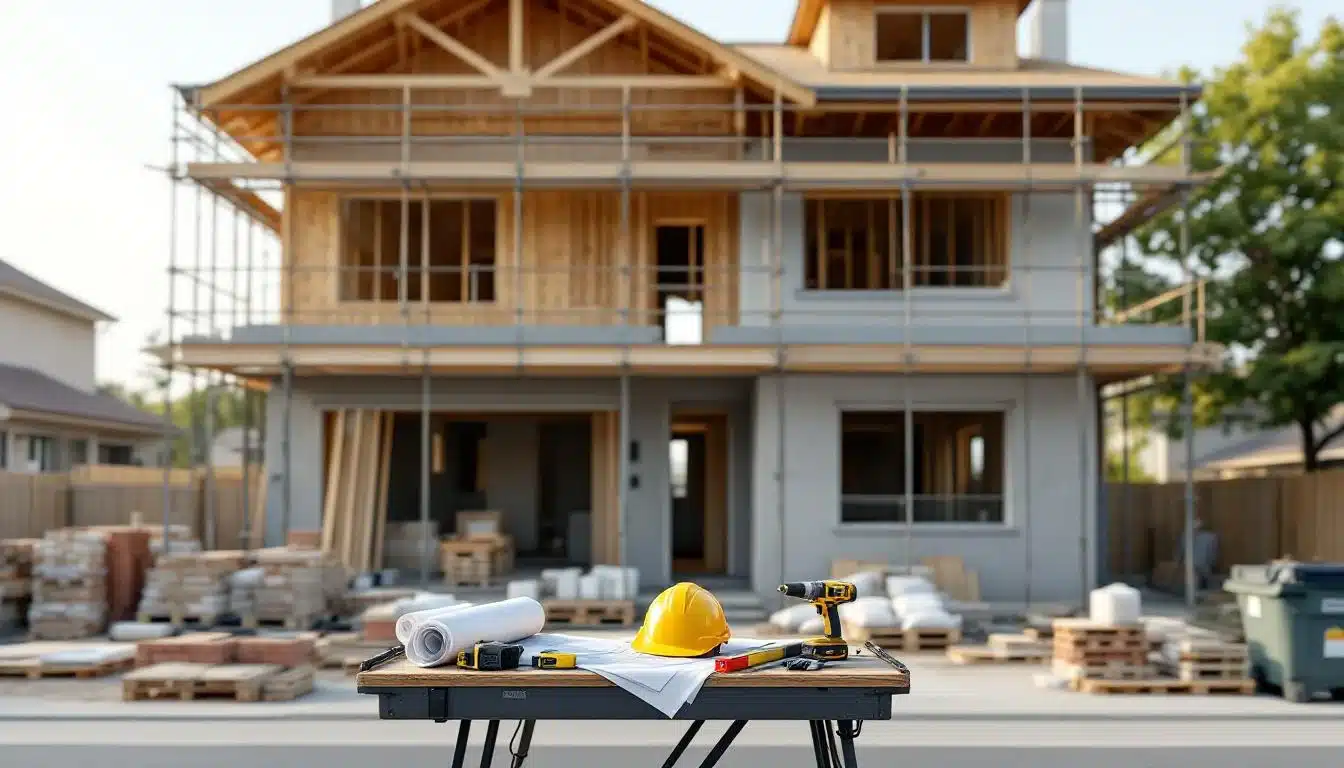
How to Build a Double Storey House Successfully
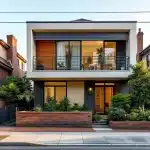
Building a double storey house requires careful planning, precise execution, and expert guidance at every stage. At Cameron Construction, we’ve guided Melbourne homeowners through hundreds of double storey projects, and we know the challenges you’ll face.
This guide walks you through the essential phases: from council approvals and design decisions, through construction logistics, to cost management strategies that protect your investment.
Getting Your Double Storey Design Past Council
Council approval determines whether your double storey project moves forward smoothly or stalls for months. The difference between a quick approval and a lengthy battle comes down to understanding your council’s specific requirements before you invest in design work. Melbourne’s councils operate under Victoria Planning Provisions Clauses 54 and 55, which set strict rules on height, setbacks, site coverage, and how your building affects neighbours. Bass Coast Shire, for example, requires most extensions that increase floor area to obtain a planning permit, with fees varying by project scope according to their Fee Schedule. The default maximum height for a double storey is 9 metres, though sites with slopes of 2.5 degrees or more across 8 metres can reach 10 metres. Confirm your land’s zoning and overlays using VicPlan, as Heritage or Environmental overlays can add permit requirements that change your entire design approach. Many homeowners waste thousands on preliminary designs only to discover their chosen style violates setback rules or overshadowing limits. A pre-application discussion with your council’s Statutory Planning Department costs nothing and clarifies exactly what’s possible on your block before you commit to a designer.
Setbacks and Neighbour Protection Shape Your Design
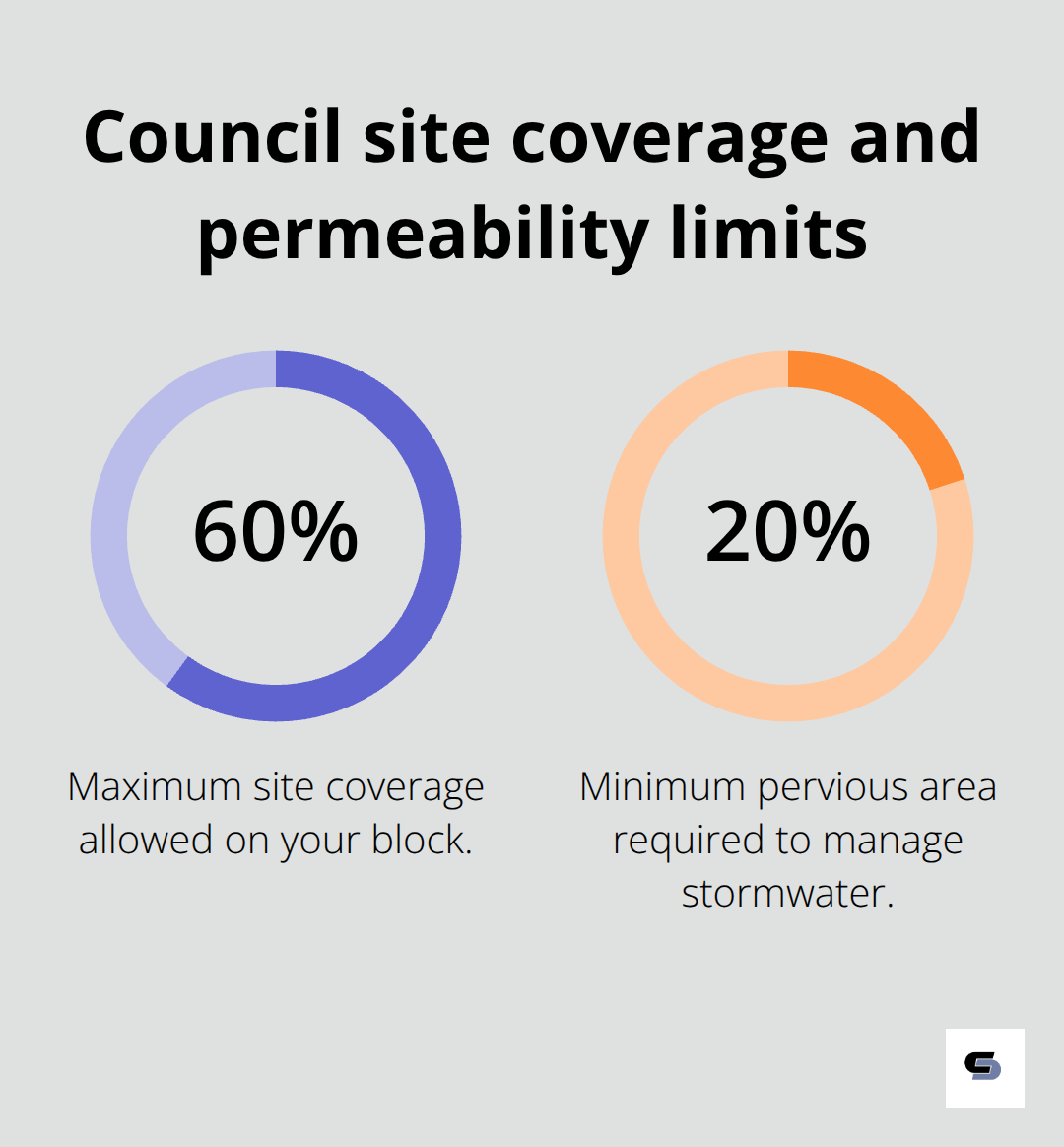
Front setbacks must match the street’s character by using the average setback of adjacent dwellings or the minimum in the zone schedule. Verandahs under 3.6 metres high can encroach up to 2.5 metres, giving you flexibility on narrow blocks. The real complexity sits in protecting your neighbours’ solar access and preventing overlooking. If a north-facing habitable window on an adjacent property sits within 3 metres of your boundary, you’ll need to apply a setback formula that increases with height: 1 metre plus 0.6 metre per metre of height above 3.6 metres, up to 6.9 metres, then an additional 1 metre for anything taller. Boundary walls cannot exceed 3.2 metres average height, with no part higher than 3.6 metres unless abutting an existing higher wall. The length of walls on lot boundaries is capped using the formula 10 metres plus 25 percent of the remainder. These constraints sound rigid, but they’re actually where a skilled building designer separates a mediocre design from one that maximises your space while respecting neighbours and gaining quick approval. Your site coverage cannot exceed 60 percent, and at least 20 percent must remain pervious to manage stormwater. A designer who understands these rules intimately will craft a layout that works within them rather than fighting them later.
Your Design Team Determines Success
A building designer or architect must develop your design for assessment; council cannot do this work for you. The difference between hiring a designer who knows these regulations and one who doesn’t often means the difference between approval in 10 days via VicSmart or a lengthy assessment requiring multiple revisions. VicSmart offers fast-track approval for eligible projects in around 10 days, but eligibility depends on strict compliance with planning standards. Your designer should verify this before committing to the design direction. Engineers then handle structural design, foundation calculations based on soil reports, and compliance with the National Construction Code 2022, which includes updates to structural design, fire safety, and energy efficiency standards. A complete planning submission requires correct forms, checklists, and supporting documents; incomplete submissions delay decisions significantly. Energy and water efficiency standards now apply to new homes through the Water Efficiency Labelling and Standards scheme, so these considerations must be built into the design from the start, not added later as an afterthought.
Layout Across Two Levels Affects Daily Living
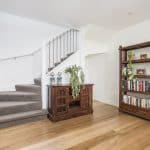
The layout across two levels determines whether your home functions well or feels awkward. Ground floor living spaces should connect to outdoor areas, bedrooms need natural light, and bathrooms and laundries require thoughtful placement near services. Staircase location affects traffic flow and usable floor space; poor placement wastes square metres and creates dead zones. Your design should integrate council requirements, structural logic, and daily living patterns into a single coherent approach rather than treating them as separate problems. A functional layout across two levels also considers future flexibility-spaces that adapt to changing family needs hold value longer than rigid, single-purpose rooms. Once your designer finalises the layout and your engineer confirms structural viability, you’ll move into the construction phase where permits, inspections, and trade coordination determine whether the project stays on schedule and within budget.
From Design Approval to Site Completion
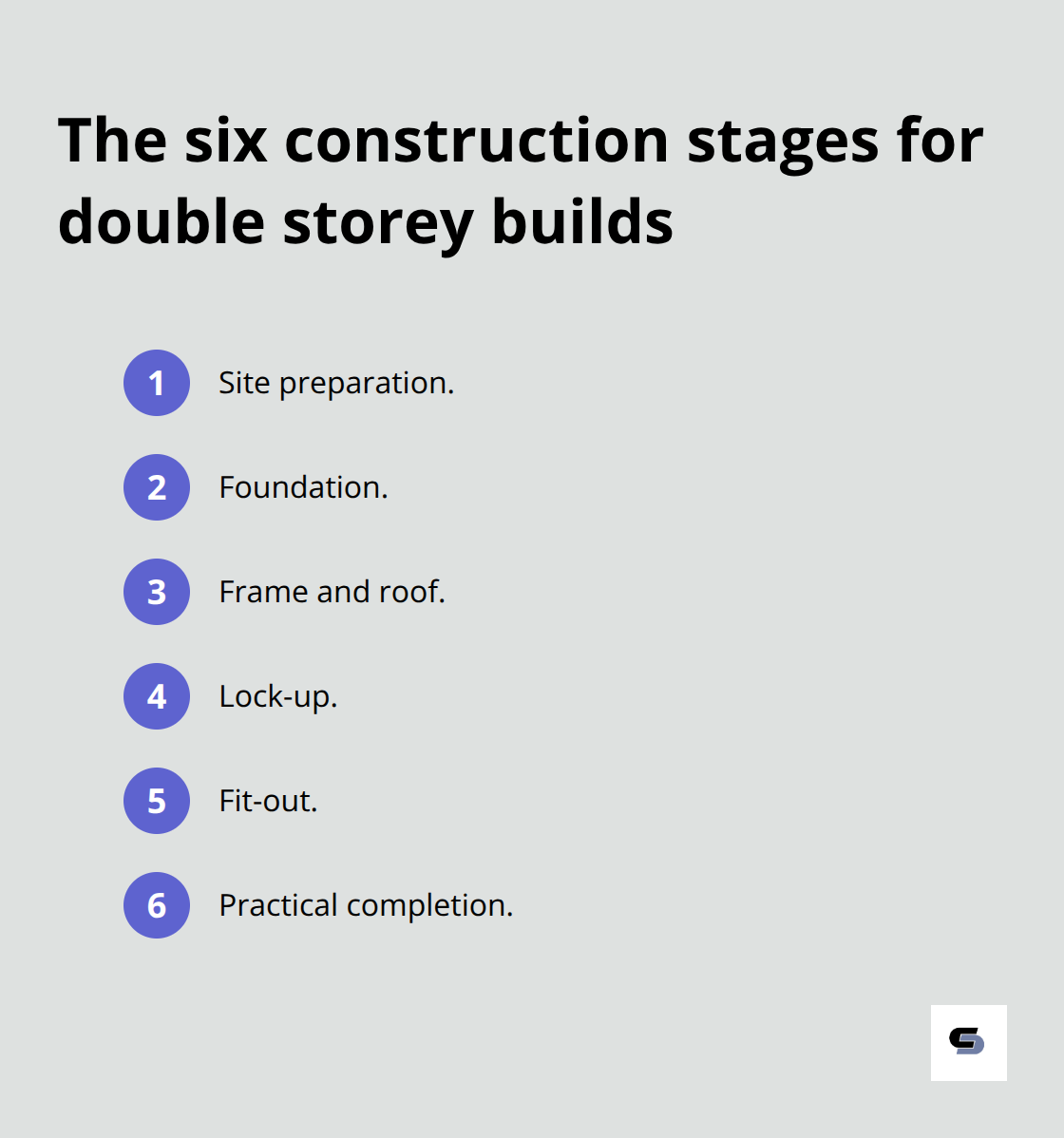
Once council approves your design and you’ve selected a builder, the construction phase unfolds across six distinct stages: site preparation, foundation, frame and roof, lock-up, fit-out, and practical completion. The timeline varies significantly depending on site conditions, builder capacity, and weather, but understanding each stage helps you anticipate delays and manage expectations.
Foundation Work Sets Your Project’s Trajectory
Foundation work begins immediately after site preparation and directly determines your project’s stability and final cost. Your builder must obtain a soil report and foundation data before pricing the work, as unexpected soil conditions-clay requiring deeper footings, rock requiring excavation, or poor drainage-can add weeks and tens of thousands of dollars. This is why the soil report happens early: it informs structural design, reveals hidden risks, and prevents nasty surprises mid-construction. Once foundations are complete, the frame and roof stage typically takes four to eight weeks depending on complexity and weather.
Inspections Protect Your Investment at Every Stage
Victoria’s Building and Plumbing Commission requires inspections at foundation stage, frame stage, lock-up stage, and final completion to confirm compliance with plans, the National Construction Code, and local requirements. Your builder coordinates these inspections with the certifier, but you should attend them to understand what’s being checked and why. If inspections reveal non-compliance, corrections cost far less at early stages than discovering problems during fit-out or after handover. Weather delays are unavoidable in Melbourne’s climate; heavy rain stops concrete pours, wind halts roof work, and frost affects material delivery.
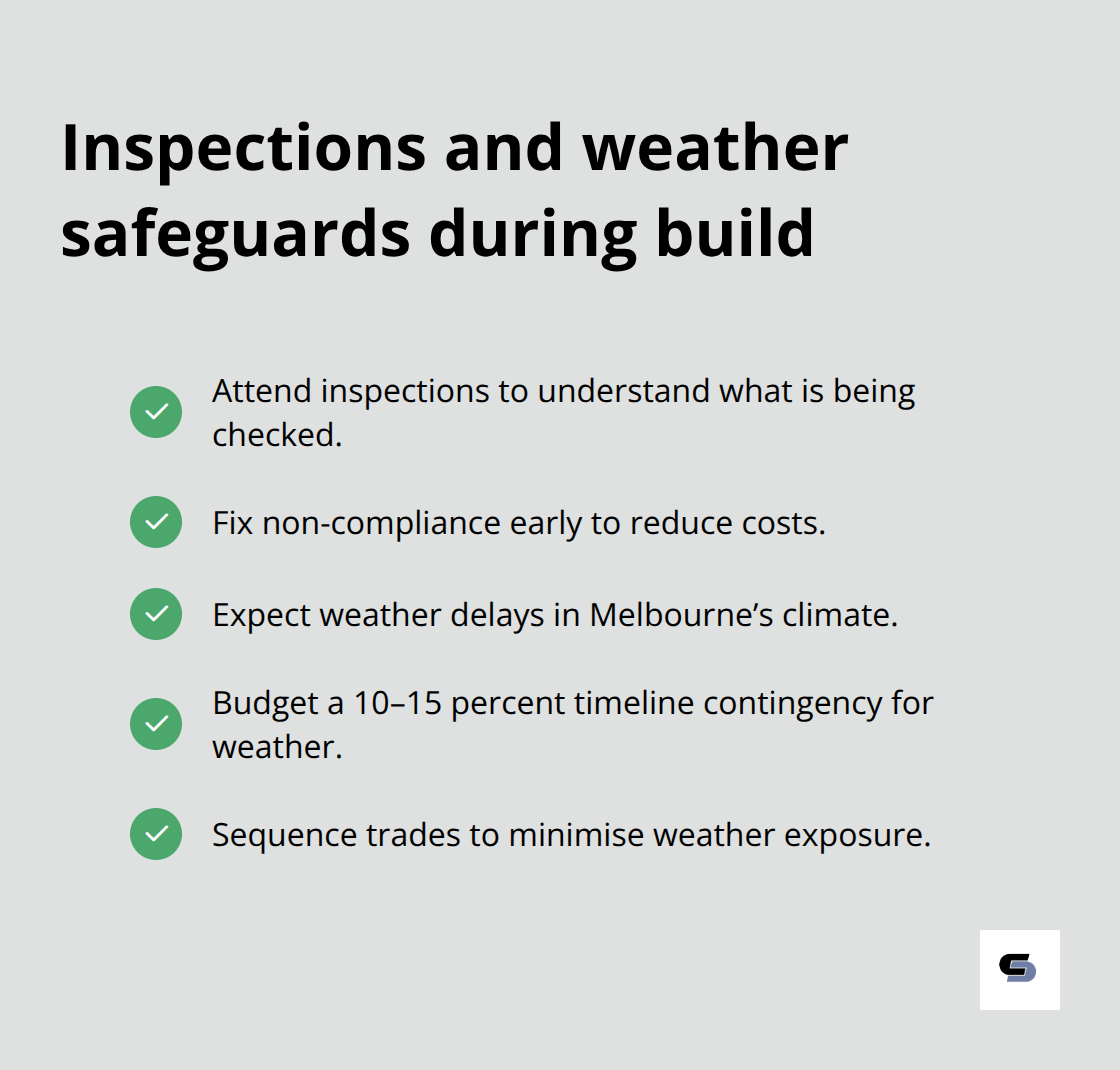
Professional builders budget 10–15 percent contingency into timelines specifically for weather, and they schedule trades strategically to minimise exposure-roofing before fit-out, for example, protects interior work from weather damage.
Permits and Insurance Create Your Legal Framework
Building permits cost between 0.11 percent and 0.25 percent of the project value according to the Building Permit Levy Calculator, and they’re non-negotiable for structural work or projects over $10,000 including labour, materials, and GST. Never sign a building permit at your builder’s request to avoid responsibility-this makes you the owner-builder and exposes you to liability if something goes wrong. Your builder holds the permit responsibility and must obtain a current certificate of domestic building insurance for projects over $16,000 before taking a deposit under the Domestic Building Contracts Act 1995. This insurance protects you if the builder defaults or fails to complete the work to standard.
Licensed Trades and Sequencing Drive Quality Outcomes
During construction, subcontractors-plumbers, electricians, gasfitters, drainers, and asbestos removalists-must be registered with the Building and Plumbing Commission, Energy Safe Victoria, or WorkSafe Victoria depending on their trade. Your builder verifies this licensing; never accept assurances without checking the Find a Practitioner directory yourself. Trade coordination directly affects your timeline and budget. A poor site manager means plumbers arrive before the frame is watertight, electricians install wiring before walls are plastered, and materials sit exposed to weather. Effective builders sequence trades precisely: frame and roof complete before fit-out trades start, lock-up stage finished before painting and flooring, and inspections scheduled before each trade moves to the next phase. This sequencing prevents rework, protects materials, and keeps the project moving.
Handover Documentation Supports Long-Term Ownership
At handover, request an owner’s manual detailing operation and maintenance for all systems, warranties for appliances and materials, and contact details for all subcontractors. This documentation proves invaluable when questions arise months or years later about how systems work or who to contact for repairs. With construction complete and inspections passed, your attention shifts to managing costs throughout the project-a phase where planning and discipline separate projects that stay on budget from those that spiral into unexpected expenses.
What Your Double Storey Budget Must Include
A double storey project’s true cost extends far beyond materials and labour on site. Homeowners often underestimate budgets by 20–30 percent because they overlook hidden expenses that emerge during construction. Your budget must account for soil reports, engineering fees (5–8 percent of construction cost), planning permit fees according to your council’s schedule, building permit levies calculated at 0.11–0.25 percent of total project value, and professional inspections at foundation, frame, lock-up, and completion stages. A registered building surveyor costs $2,000–$4,000 for a double storey project but prevents costly compliance failures. If your site has contamination issues, heritage overlays, or environmental constraints, specialist consultants add $1,500–$5,000.
Material and Labour Costs Shape Your Overall Spend
Material costs fluctuate with market conditions; steel framing rose 18 percent between 2021 and 2023 according to Master Builders Australia data, and concrete prices remain volatile. Labour represents 35–45 percent of total construction cost, varying by trade complexity and site access difficulty. Subcontractors-plumbers, electricians, gasfitters-must be licensed and verified through the Building and Plumbing Commission, and their rates reflect Melbourne’s competitive market. Contingency reserves should equal 10–15 percent of the construction budget specifically for unforeseen site conditions (unexpected soil composition, hidden asbestos, drainage complications) rather than poor planning. Projects without adequate contingency either stall mid-construction when unexpected costs arise or force cost-cutting that compromises quality and durability.
Fixed-Price Versus Cost-Plus Contracts Affect Your Risk
Protecting your investment means distinguishing between fixed-price contracts (which lock costs but risk builder corner-cutting if specifications aren’t detailed) and cost-plus arrangements (which offer flexibility but require rigorous oversight to prevent scope creep). Obtain at least three written quotes that specify exactly what’s included: materials, labour, site management, waste removal, and compliance costs. Prime-cost schedules for high-value items like windows, solar systems, and energy-control equipment prevent substitutions that undermine performance; nominating these upfront avoids pressure from trades to install inferior alternatives during construction.
Written Variations and Staged Payments Protect Both Parties
Variations must be written and signed before work proceeds; verbal approvals lead to disputes about cost and responsibility. The Domestic Building Contracts Act 1995 requires major contracts (over $10,000) to include detailed plans, specifications, and a clear payment schedule tied to construction stages: base, frame, lock-up, fixing, and practical completion. Never pay in full upfront or for work not yet completed. Staged payments protect both you and the builder by confirming work quality before funds release.
Specifications and Insurance Create Your Safety Net
A detailed specification listing materials, appliances, and fittings prevents disputes over quality grades and product choices; vague specifications invite substitutions that reduce value. Your builder’s insurance, licensing verification through the Find a Practitioner directory, and a written contract with clear dispute resolution mechanisms are non-negotiable protections that cost nothing but prevent tens of thousands in potential losses.
Final Thoughts
Each phase of your double storey project-from council approval through foundation work, inspections, and fit-out-depends on decisions made in the previous stage. Skip the soil report and you’ll face foundation surprises; rush the design phase and council will reject your plans; ignore trade sequencing and your timeline collapses. The projects that stay on budget and finish on time treat planning and professional guidance as investments, not expenses.
Your council’s requirements form the framework that determines whether your design receives approval in 10 days or stalls for months. Your builder’s licensing, insurance, and track record provide your legal protection under the Domestic Building Contracts Act, and your contingency reserve absorbs unexpected soil conditions rather than forcing mid-construction compromises. The specifications in your contract prevent substitutions that undermine the quality you’re paying for, while staged payments protect both you and your builder by confirming work quality before funds release.
Contact a builder with proven experience in double storey work, verified through the Find a Practitioner directory, and obtain at least three written quotes that specify exactly what’s included. Have a building lawyer review your contract before signing, then commit to the process and watch your double storey house move from plans to reality.