How Much Does a Second Storey Extension Cost in Melbourne?
Second storey extensions have become increasingly popular among Melbourne homeowners seeking to maximise their property’s potential without relocating. The second storey extension Melbourne cost typically ranges from $3,000 to $5,500 per square metre, depending on various factors.
At Cameron Construction, we understand that budget planning is the foundation of any successful extension project. This comprehensive guide breaks down all the cost components you need to consider for your Melbourne home.
What Drives Second Storey Extension Costs in Melbourne
Extension Size and Design Complexity
The floor area of your extension directly impacts total costs, with projects typically spanning 40 to 120 square metres. A basic 60 square metre addition with standard finishes costs approximately $180,000 to $330,000, while complex designs with custom windows, multiple bathrooms, or irregular shapes can push costs to $450,000 or more.
Open-plan layouts generally cost 15-20% less than compartmentalised designs due to reduced internal wall requirements and simpler structural solutions. Custom architectural features like vaulted ceilings or skylights add $8,000 to $25,000 to your budget but create distinctive living spaces that enhance property value.
Structural Requirements and Foundation Work
Most Melbourne homes built before 1990 require significant structural reinforcement to support a second storey. Foundation upgrades cost $15,000 to $35,000 depending on soil conditions and existing structural integrity.
Clay soil areas like Doncaster and Glen Waverley often need deeper footings and additional piers, which adds $8,000 to $15,000 to total costs. Steel frame construction costs approximately 10% more than timber but reduces structural modification requirements on older homes (particularly those with brick veneer construction).
A structural engineer’s assessment determines whether your existing foundation can support the additional load. This evaluation should occur early in your planning phase to avoid costly surprises during construction.
Council Permits and Approval Expenses
Planning permit applications range from $1,500 to $3,500 depending on project complexity and council requirements. Building permit fees add another $2,000 to $4,000 to your total budget.
Properties in heritage overlays face additional consultation costs of $3,000 to $8,000 and extended approval timeframes of 8 to 12 weeks. You’ll need to find out whether your project requires a planning permit, a building permit, or both for all second storey extensions, with fees calculated on total construction value at approximately 0.064% of project cost.
VicSmart applications can fast-track simple extensions within 10 business days, but most second storey projects require standard planning processes that take 6 to 8 weeks for approval.
Understanding these cost drivers helps you create realistic budgets and timelines. The next consideration involves breaking down actual construction expenses and how they vary across different Melbourne locations.
What Does a Second Storey Extension Actually Cost?
Melbourne’s second storey extension market shows significant price variations, with construction costs that range from $2,800 to $4,500 per square metre for standard builds. Premium projects with high-end finishes and complex designs reach $4,500 to $5,500 per square metre. These figures exclude permits, design fees, and site-specific challenges that add 25-35% to your base construction budget.
Construction Costs Across Melbourne Suburbs
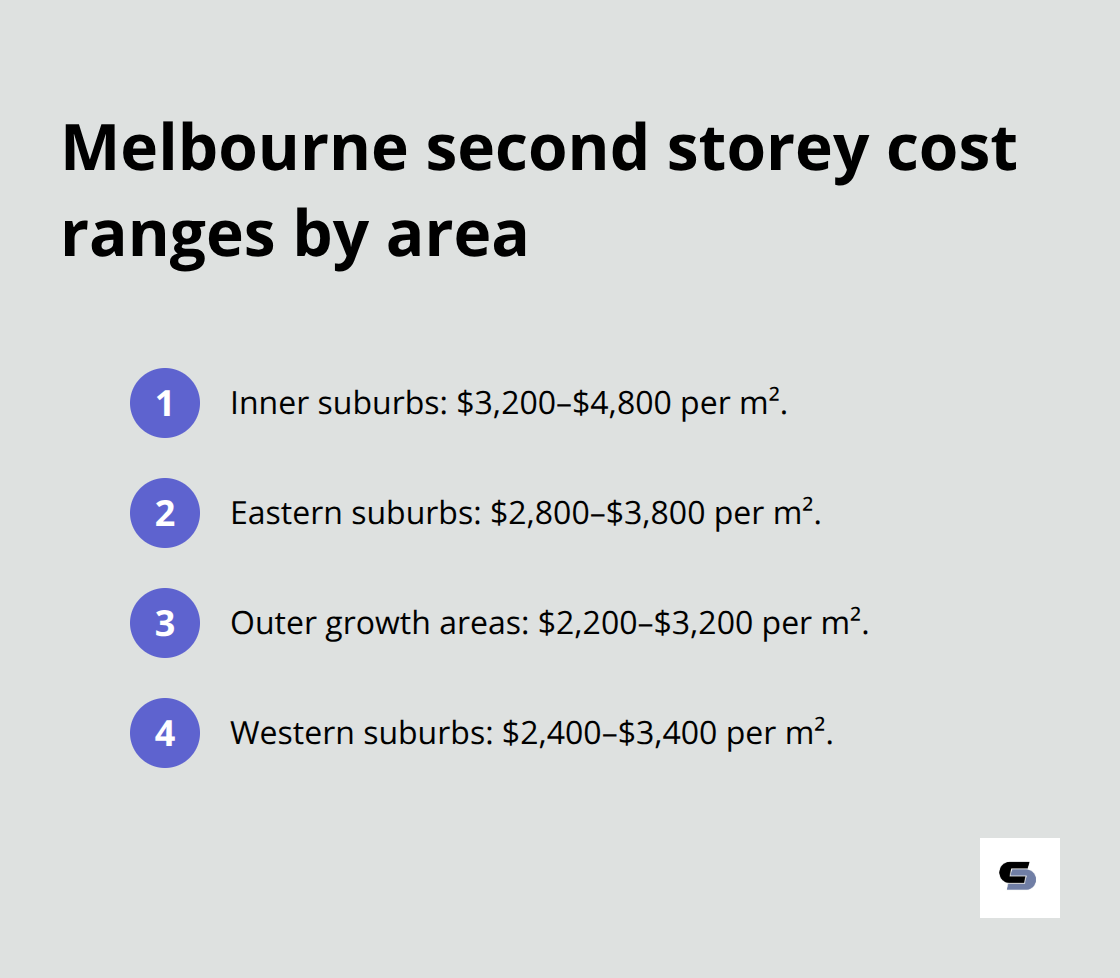
Inner Melbourne suburbs like Richmond and South Yarra command premium rates of $3,200 to $4,800 per square metre due to site access constraints and heritage requirements. Eastern suburbs (including Box Hill and Blackburn) typically cost $2,800 to $3,800 per square metre, while outer areas like Pakenham and Cranbourne range from $2,200 to $3,200 per square metre. Western suburbs such as Footscray and Werribee fall between $2,400 to $3,400 per square metre. These variations reflect local builder availability, material transport costs, and council approval complexity.
Design and Professional Service Fees
Architectural design fees consume 8-12% of total project costs, typically $15,000 to $45,000 for comprehensive plans and documentation. Structural engineers charge $3,500 to $8,000 for reports, while building surveyors charge $4,000 to $12,000 based on project complexity. Interior design consultation adds $8,000 to $25,000 for custom layouts and fixture selection. These professional services remain non-negotiable for quality outcomes and regulatory compliance.
Hidden Expenses That Impact Your Budget
Temporary accommodation costs during construction vary significantly based on location and duration. Site preparation (crane access, scaffolding, and material storage) adds $8,000 to $15,000 to most projects. Utility connections for electricity, plumbing, and gas modifications cost $4,000 to $12,000. Council infrastructure contributions can reach $15,000 in growth areas.
Smart budget management strategies help you control these costs and avoid financial surprises during construction.
How Can You Control Your Extension Budget
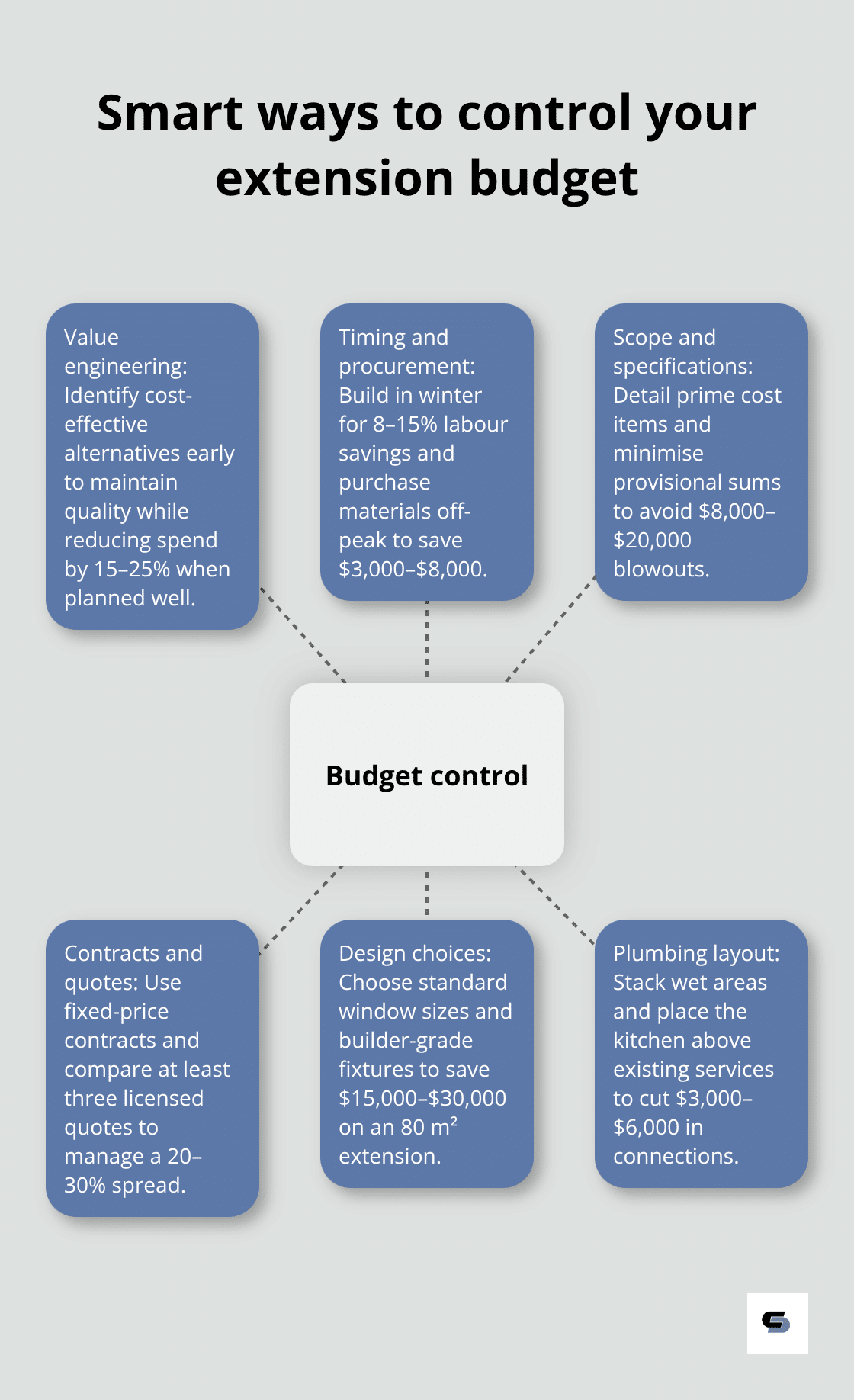
Strategic planning reduces second storey extension costs by 15-25% compared to rushed decisions. Value engineering during the design phase identifies cost-effective alternatives without compromising quality. Standard window sizes cost $800 to $1,200 each, while custom windows reach $2,500 to $4,500. You can select builder-grade fixtures over premium brands and save $15,000 to $30,000 on a typical 80 square metre extension.
Fixed-price contracts protect against cost overruns but require detailed specifications upfront. We recommend you obtain three detailed quotes from licensed builders, with price variations typically spanning 20-30% between lowest and highest bids.
Construction Timing and Market Conditions
Winter construction periods offer 8-15% savings on labour costs as demand decreases between May and August. Material procurement during off-peak months reduces timber costs by $3,000 to $8,000 on average projects. Construction schedules around school holidays minimise disruption but increase labour rates by 10-15%.
Builder availability directly impacts pricing, with premium contractors booking 6-12 months ahead. Market conditions in 2024 show stabilised material costs after the 35% increases experienced in 2021-2022. Concrete prices have stabilised at $180-220 per cubic metre, while steel frame costs remain 20% above pre-pandemic levels.

Contract Selection and Builder Evaluation
Major domestic building contracts become mandatory for projects exceeding $10,000 under Victorian law. Domestic building insurance certificates are required before deposit payments on projects over $16,000. Prime cost items should specify exact brands and models to prevent budget blowouts of $8,000 to $20,000.
Provisional sums create uncertainty and you should minimise them or detail them extensively. Payment schedules tied to construction milestones protect homeowners from cash flow issues. Builder registration verification through the Building and Plumbing Commission website confirms legitimate operations and insurance coverage.
Design Decisions That Impact Costs
Open-plan layouts cost 15-20% less than compartmentalised designs due to reduced internal wall requirements. Standard ceiling heights (2.4-2.7 metres) keep structural costs manageable, while cathedral ceilings add $12,000 to $25,000 to your budget. You can choose engineered timber flooring over solid hardwood and save $4,000 to $8,000 per room.
Bathroom configurations significantly affect plumbing costs. Single wet areas cost $18,000 to $28,000, while dual bathrooms with separate toilets reach $35,000 to $55,000. Kitchen placement above existing plumbing reduces connection costs by $3,000 to $6,000 compared to relocating services.
Final Thoughts
Second storey extension Melbourne cost varies between $2,800 and $5,500 per square metre based on design complexity, structural requirements, and location-specific challenges across Melbourne’s diverse suburbs. Professional planning prevents costly mistakes and budget overruns that affect rushed extension projects. Architectural design, structural engineering, and building surveyor services represent essential investments that protect your financial interests and compliance throughout construction.
Smart timing decisions, strategic material selection, and thorough builder evaluation reduce total project costs by 15-25% compared to reactive approaches. Fixed-price contracts with detailed specifications shield homeowners from unexpected expenses while maintaining quality standards. Market conditions in 2024 show stabilised material costs after significant increases in previous years (though steel frame costs remain elevated).
We at Cameron Construction handle concept to completion delivery for Melbourne homeowners seeking premium double storey extensions and ground floor additions. Our team manages planning, permits, and council compliance throughout your project. Your next step involves obtaining detailed quotes from licensed builders who understand Melbourne’s unique construction challenges and regulatory requirements.