How Much Does a Home Extension Cost in Melbourne?
Home extension costs in Melbourne vary significantly based on your project scope, materials, and local council requirements. At Cameron Construction, we’ve guided hundreds of Melbourne homeowners through this process and understand the financial questions that come first.
This guide breaks down real costs for double storey extensions, ground floor additions, and second storey conversions so you can plan your budget with confidence.
What Drives Your Extension Budget in Melbourne
Home extension costs in Melbourne depend on four interconnected factors that compound quickly. Project size matters most-a 20-square-metre ground floor addition costs substantially less than a 40-square-metre double storey extension, but the relationship isn’t linear because larger projects demand deeper foundations, more complex structural engineering, and longer timelines. Input prices to house construction recorded a rise of 0.4% for the quarter and 1.1% over the year to June quarter 2024. When you specify materials upfront, you control cost far better than leaving choices to later. Concrete, timber windows, and joinery products fluctuate in price, so locking these decisions early protects your budget from surprise escalations mid-project.
Timber and Material Costs Shape Your Timeline and Price
Material costs matter directly to your pocket and project timeline. If your extension includes timber flooring, joinery, or external cladding, expect these components to absorb a significant portion of your budget. You should specify your materials 6–8 weeks before construction starts, not during framing, because suppliers and builders will price based on current market rates. Council requirements also vary sharply across Melbourne suburbs-some areas demand heritage-compliant materials or bushfire-rated cladding that cost more than standard options. Verifying your specific council’s requirements early prevents costly design revisions later.
Labour Costs and Skilled Availability Compress Your Timeline
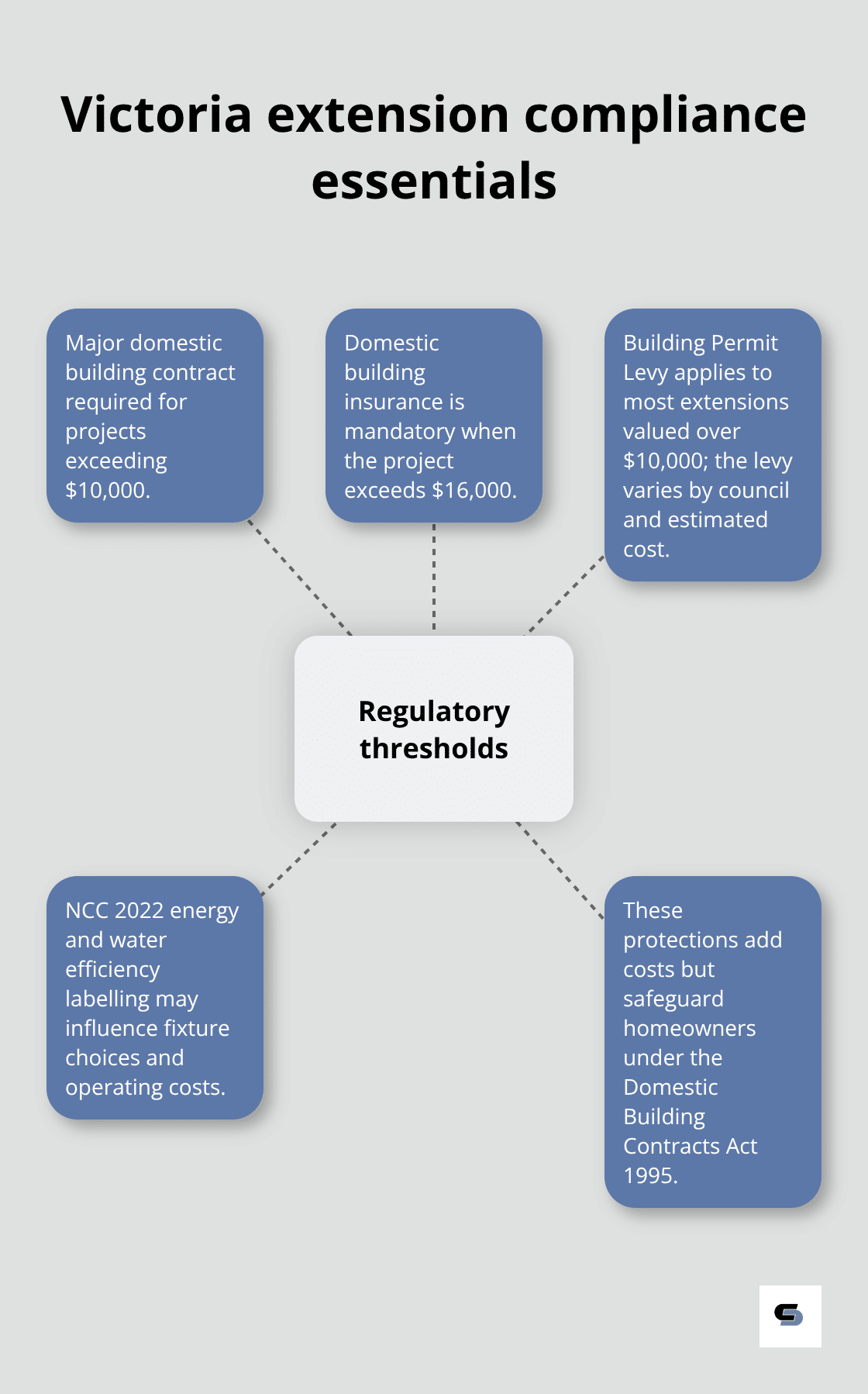
Skilled labour shortages and wage growth have pushed construction labour costs up consistently. A registered unlimited domestic builder, the most common choice for complex extensions, must hold qualifications like a Bachelor of Construction Management or Diploma of Building and Construction, plus annual practitioner fees and insurance. These costs flow into your quote. If your project exceeds $10,000-which applies to almost all double storey and ground floor extensions-you must enter a major domestic building contract under the Domestic Building Contracts Act 1995, and if it exceeds $16,000, domestic building insurance becomes mandatory. These legal requirements protect you but add regulatory costs that smaller projects avoid. Planning your extension during quieter seasons (autumn and early winter) sometimes reduces labour pressure, though Melbourne’s year-round construction activity limits this advantage.
Regulatory Costs and Permit Levies Add to Your Budget
Victoria’s building permit levy system adds another cost layer that many homeowners overlook. The Building Permit Levy Calculator helps you estimate these charges during early budgeting-the levy applies to most extensions valued over $10,000 and funds the state’s building control system, the Domestic Dispute Resolution System, and cladding rectification works. Your actual levy amount depends on your council area and the estimated cost of works, so two similar extensions in different suburbs may attract different levies. The National Construction Code 2022 also introduces energy efficiency and water efficiency labelling requirements that can affect your fixture choices and ongoing operating costs. These regulatory frameworks exist to protect you, but they require upfront planning to avoid budget surprises when your builder submits the permit application.
Council-Specific Requirements Vary Across Melbourne
Different Melbourne councils impose different material and design standards that directly affect your extension cost. Some areas require heritage-compliant finishes, while others in bushfire-prone zones demand fire-rated cladding and protective measures that standard extensions don’t need. Verifying your council’s specific overlays and requirements before you finalise your design prevents expensive revisions. Your builder should identify these requirements early, but you can also check your council’s planning scheme online or contact the planning department directly. Understanding these local variations upfront means your budget reflects your actual site conditions rather than generic assumptions. With these cost drivers mapped out, you can now examine what different extension types actually cost in Melbourne.
What Different Extension Types Cost in Melbourne
Double Storey Extensions Command Premium Pricing
Double storey extensions attract the highest price per square metre in Melbourne because they require deeper foundations, complex structural engineering, and longer construction timelines. A typical double storey extension of 40 square metres costs between $240,000 and $360,000 depending on material quality, council area, and site conditions. The per-square-metre rate ranges from $6,000 to $9,000 because structural work dominates the budget-you build upwards against gravity, which means reinforced concrete footings, steel beams, and engineering certifications that ground floor additions avoid entirely. Other residential building construction prices rose 1.3%, and this affects double storey projects because they consume more timber in framing, flooring, and joinery than single-level work. If your double storey extension includes a new bathroom or kitchen on the upper level, add another $15,000 to $25,000 for plumbing, electrical, and fixture installation. Most double storey projects take 4 to 6 months from permit approval to practical completion, so labour cost escalations during this window can compress your budget if you don’t lock material prices upfront.
Ground Floor Additions Offer Budget Efficiency
Ground floor additions cost substantially less per square metre because they sit on existing foundations and avoid the structural complexity of upper-level work. A 30-square-metre ground floor extension typically costs $120,000 to $180,000, translating to $4,000 to $6,000 per square metre. This lower cost-per-metre makes ground floor work attractive for homeowners who prioritise budget efficiency, but don’t assume it’s simple-soil conditions matter enormously. If your site requires deeper footings due to poor soil bearing capacity, costs rise sharply because you’ll need a soil and foundation data report (which your builder typically obtains) to design appropriate footings.
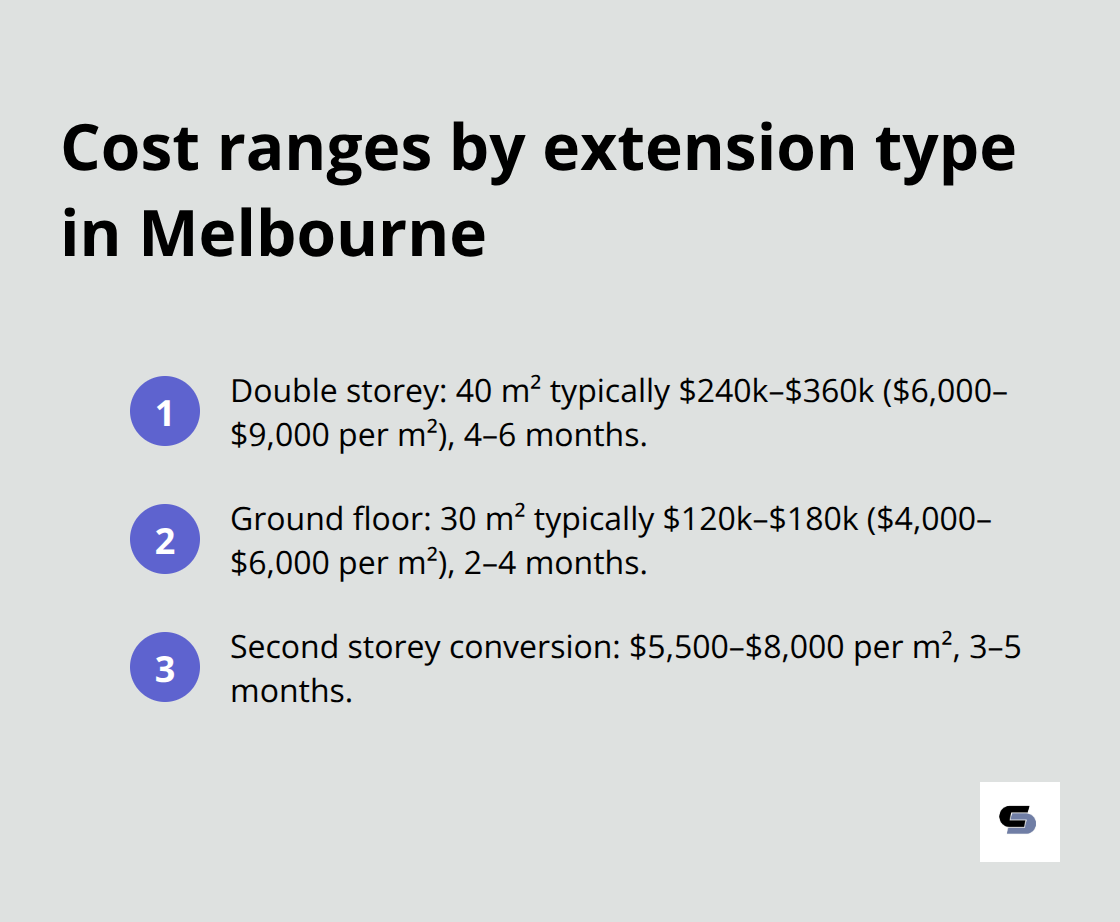
Ground floor additions finish faster than double storey work, typically 2 to 4 months, which reduces labour-cost exposure and allows you to occupy your extended space sooner.
Second Storey Conversions Maximise Existing Space
Second storey conversions occupy a middle ground-you convert existing roof space or add a second storey to a single-storey home, costing $5,500 to $8,000 per square metre. These projects demand careful structural assessment because you add significant weight to an existing structure, often requiring foundation reinforcement and extensive engineering. Second storey conversions take 3 to 5 months and suit homeowners with existing space constraints who want to maximise usable floor area without expanding the footprint. The structural complexity rivals double storey extensions, so expect similar timelines and labour-cost pressures.
Council Area and Heritage Overlays Reshape Your Budget
Councils in Melbourne’s inner suburbs often impose heritage or character overlays that increase material costs by 10 to 20% because you must match existing finishes or use specified materials. Outer suburban councils generally have fewer restrictions, making extensions there cheaper. Your specific council area matters as much as the extension type itself-a ground floor addition in a heritage zone might cost more than a standard double storey extension in an unrestricted area. Understanding these local variations before you finalise your design prevents expensive revisions and ensures your budget reflects your actual site conditions rather than generic assumptions. With these cost ranges and type-specific factors mapped out, you can now examine the practical strategies that help you manage and reduce your extension costs.
How to Control Your Extension Budget
Lock Material Prices Early to Protect Your Budget
Start your extension planning 12 to 16 weeks before you want construction to begin, not 4 weeks before. This timeline allows you to lock material prices with suppliers before your builder submits the permit application, which protects you from mid-project cost escalations. Residential building values fell 11.8% in the October 2025 reference period, reflecting market volatility that makes early price locking essential. Locking timber specifications 6 to 8 weeks before construction starts means you pay current market rates rather than absorbing future increases. Ask each builder to specify their materials in writing rather than leaving choices undefined, because prime cost items and provisional sums inflate final costs unpredictably. You should budget a contingency of 20% above your base construction budget for unforeseen site conditions-poor soil bearing capacity, hidden structural issues, or council requirement changes do occur and will cost extra if you haven’t reserved funds.
Compare Quotes and Understand What Differs
Get written quotes from at least three registered builders and compare what each includes in their scope. Material specifications, fixture brands, labour rates, and contingencies differ sharply between quotes, and these differences explain why one builder’s $280,000 quote differs from another’s $320,000 for the same extension. A soil and foundation data report costs $800 to $1,500 but reveals whether your site needs standard or reinforced footings, preventing expensive surprises when excavation begins. Verify your specific council’s requirements before finalising your design because heritage overlays, bushfire-protection zones, or character-preservation rules can add 10 to 20% to material costs if you discover them after design approval.
Select a Registered Builder and Verify Their Credentials
Choose a builder registered with the Building and Plumbing Commission and verify their registration number on the BPC website before signing any contract. Check their business history with the Australian Securities and Investments Commission and ask for references from recent extensions in your council area, not generic testimonials. For projects exceeding $10,000, a major domestic building contract under the Domestic Building Contracts Act 1995 is mandatory, and if your project exceeds $16,000, your builder must provide current domestic building insurance before taking a deposit. Never proceed without this documentation because it protects you if the builder defaults or performs substandard work.
Structure Payments by Stage and Monitor Progress
Structure your payment schedule by construction stage-base, frame, lock-up, and fixing-rather than paying large lump sums upfront, and only release payment when your builder completes each stage satisfactorily. This approach protects you from paying for incomplete work. Consider engaging an independent building surveyor to inspect progress at each stage, which costs $1,500 to $3,000 but catches defects early before they become expensive remediation problems. Any contract variations must be documented in writing and signed by both parties before work proceeds, because verbal agreements about scope or price changes create disputes later.
Account for Regulatory Costs in Your Total Budget
The Building Permit Levy Calculator helps you estimate council levies during early budgeting-levies apply to extensions over $10,000 and vary by council area and estimated project cost, so two similar extensions in different suburbs may attract different levy amounts. Factor these regulatory costs into your total budget upfront rather than discovering them when your builder submits the permit application.
Final Thoughts
Your home extension cost in Melbourne depends on decisions you make months before construction begins, not during framing or lock-up. Material specifications, council requirements, labour availability, and regulatory levies compound quickly, which is why early planning protects your finances far better than reactive decision-making. Locking material prices 6 to 8 weeks before construction, obtaining a soil and foundation data report, and comparing detailed quotes from three registered builders separate homeowners who stay on budget from those who face surprise costs mid-project.
Professional planning saves money because it identifies cost drivers early when you can still influence them. A building surveyor’s inspection at each construction stage costs $1,500 to $3,000 but catches defects before they become expensive remediation problems. Structuring your payment schedule by construction stage rather than paying lump sums upfront protects you from funding incomplete work, and understanding your council’s heritage overlays or bushfire-protection zones before finalising your design prevents expensive revisions that inflate your home extension cost in Melbourne unnecessarily.
Contact Cameron Construction to discuss your extension concept and timeline. We guide Melbourne homeowners through this process with in-house designers, engineers, and project managers who handle planning, permits, and BCA compliance across Melbourne’s councils. Request a consultation to map your budget realistically and understand what your specific site conditions and council requirements actually cost.