Home Extension Builders Melbourne: Find the Best Contractors
Selecting the right home extension builders Melbourne is one of the most important decisions you’ll make for your renovation project. At Cameron Construction, we’ve seen homeowners save thousands of dollars and avoid costly delays simply by knowing what to look for upfront.
This guide walks you through the essential steps to find a builder who delivers quality work on time and within budget.
What Makes a Builder Trustworthy
Registration with the Building and Plumbing Commission is non-negotiable for any extension work over $10,000 in Victoria. You can verify a builder’s status through the Building and Plumbing Commission registration verification, where you’ll see their Photo ID card listing eligible work categories. If a builder cannot produce current registration or tries to work around it, walk away-unregistered practitioners leave you without domestic building insurance and consumer protections under the Domestic Building Contracts Act 1995. Check the Disciplinary Register as well; it lists professionals with disciplinary actions on record. This single step eliminates massive risk. Insurance must be current and valid before any deposit changes hands. For projects exceeding $16,000, demand a Certificate of Domestic Building Insurance in writing before you pay anything. Keep a copy for your records. Consumer Affairs Victoria recommends verifying business history through VCAT records and checking for any legal actions via the BPC or Consumer Affairs Victoria itself.
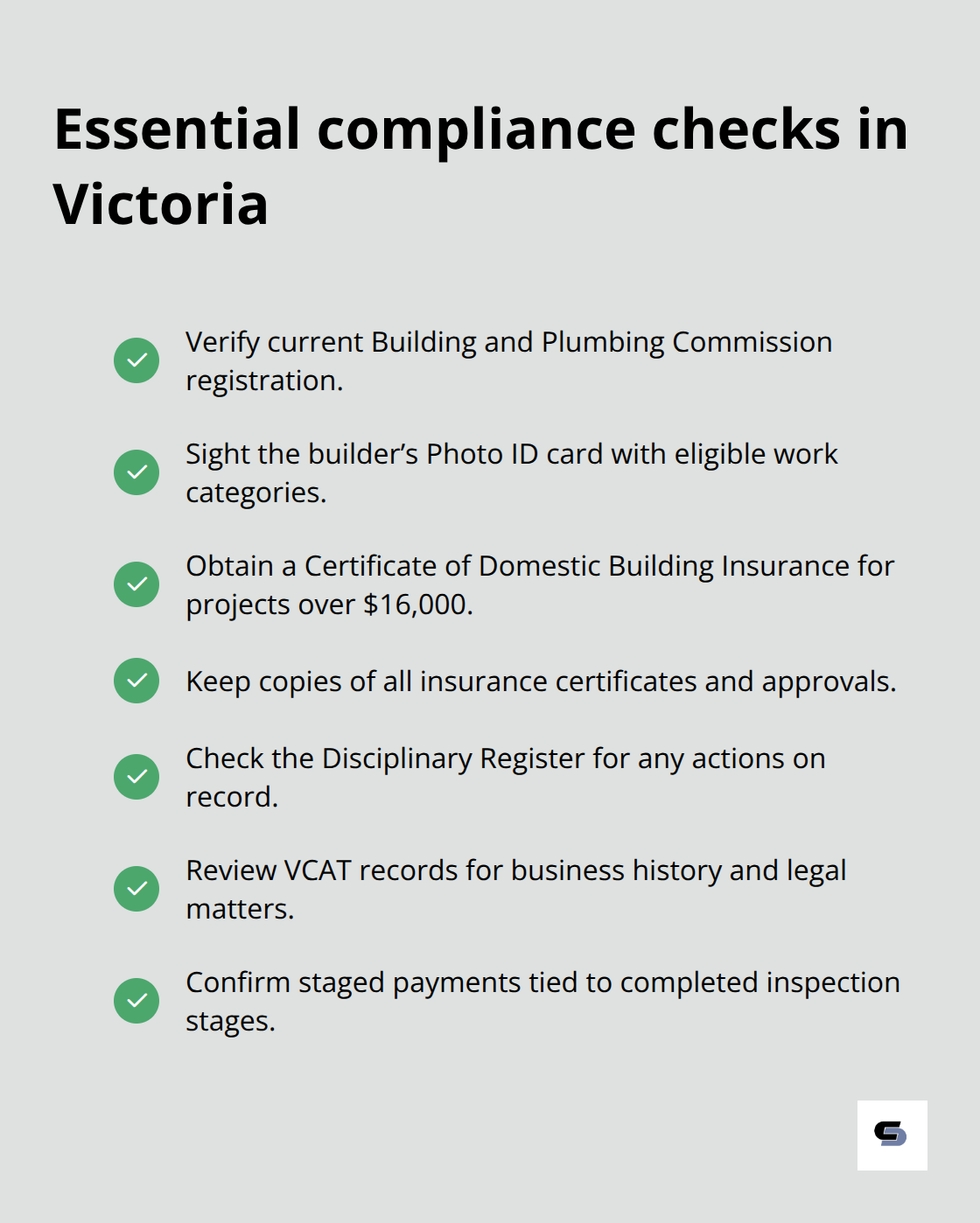
Do not just ask the builder if they’re insured-see the documentation.
Portfolio and Track Record Tell the Real Story
A builder’s past work reveals habits and standards far better than promises. Request a portfolio of completed extensions similar to yours in scope and style, then contact those homeowners directly. Ask specific questions: Did work start and finish on time? Did the builder use written change orders for variations, or did costs balloon unexpectedly? How did the builder handle subcontractors and site management? Did communication remain clear throughout? A builder who rushes through references or offers vague project examples hides something. Try obtaining at least three written quotes and compare what’s included, what’s excluded, and how specifications differ. This comparison exposes whether a low quote simply omits critical elements.
References Must Include Recent Projects
Speak to past clients within the last 12 months because memory fades and circumstances change. Ask whether the builder respected neighbours during construction, managed waste properly, and delivered promised warranties. Question whether provisional sums or prime cost items inflated the final bill-these are common cost blowouts if not tightly specified upfront. A builder who freely shares contact details and welcomes detailed questions has nothing to hide. Those who deflect or offer only testimonials from years ago show less confidence in current performance. On-time delivery and transparent communication during construction separate reliable builders from the rest.
What Separates Quality Builders from the Rest
The builders you select must demonstrate consistent performance across Melbourne’s diverse conditions (heritage overlays, sloping blocks, multiple councils). Verify that your chosen builder has completed similar projects-double storey additions, ground floor conversions, or second storey extensions-in your area. Ask for evidence of how they’ve navigated council approvals and building compliance on comparable work. A builder’s willingness to explain their approach to permits, inspections, and BCA compliance shows they understand the complexity of Melbourne extensions. This foundation of verified credentials, real portfolio evidence, and recent client feedback positions you to move forward with confidence into the design and planning phase.
How Melbourne’s Building Process Works From Start to Finish
Getting a home extension approved and built in Melbourne demands precision at every stage. The process moves through design, permits, construction, and final sign-off-each phase has hard deadlines and specific requirements that builders must follow. Understanding what happens at each step protects you from delays and surprises.
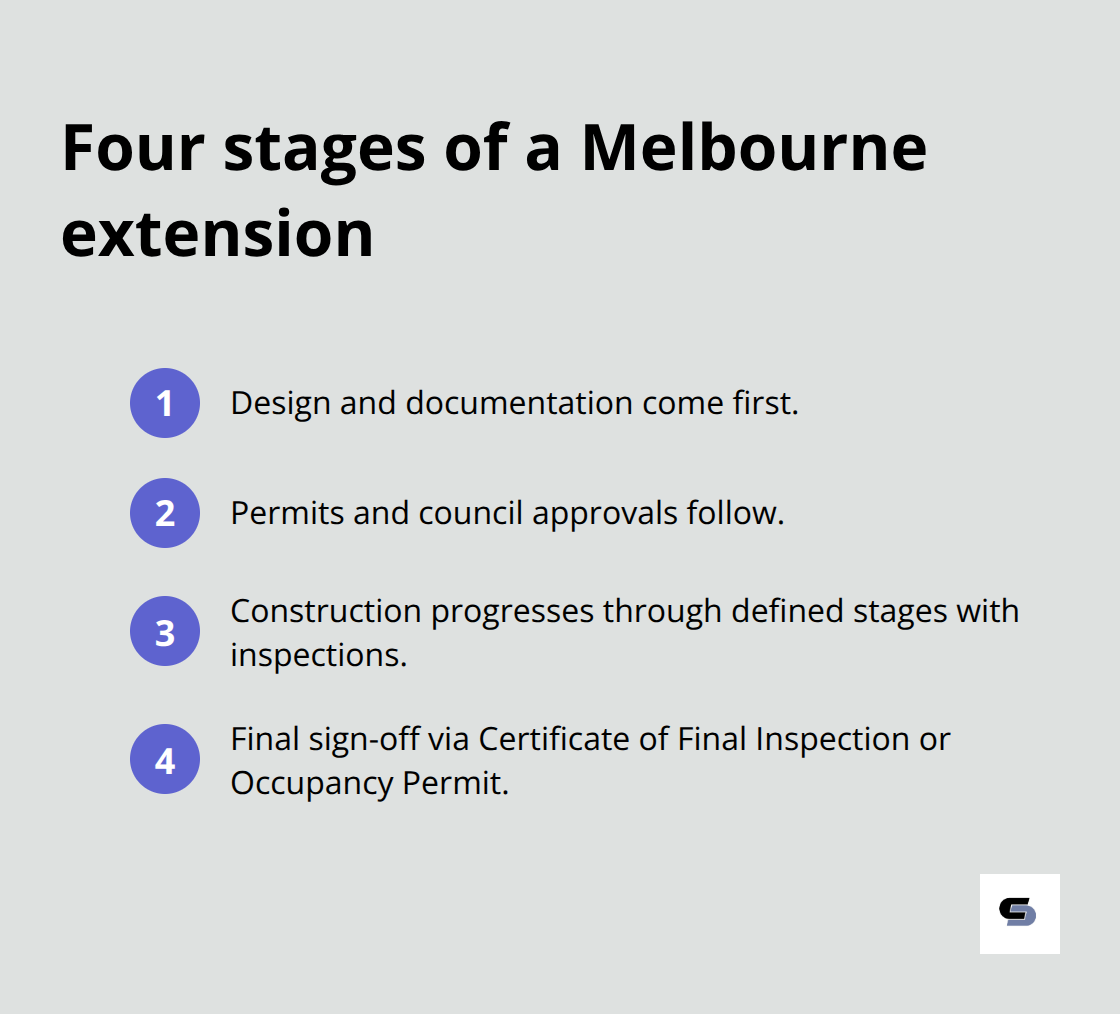
The Victorian Building Authority sets strict timeframes: houses and extensions must commence within 12 months of permit issue and finish within 24 months. If work stalls beyond these windows, your permit lapses and construction becomes illegal, requiring a new permit to continue. This reality alone shows why selecting a builder experienced in Melbourne’s approval process matters enormously.
Design and Permit Coordination
Your builder should explain upfront how they’ll handle design coordination with a registered building surveyor, secure all necessary council consents, and schedule mandatory inspections during construction. Many homeowners underestimate how long permits take-planning permits typically require three copies of detailed drawings, specifications, allotment plans, and completed forms submitted to your local council. The building permit levy is calculated based on project cost and must be paid before the permit number is issued. A builder who provides a realistic timeline accounts for these administrative steps rather than promising unrealistic start dates.
Construction Stages and Inspections
Once permits are in hand, construction moves through defined stages that align with inspection requirements and payment schedules. The Building Act 1993 and Building Regulations 2018 require inspections at base, frame, lock-up, and fixing stages before occupancy permits are issued. Your builder must coordinate these inspections with the appointed building surveyor and ensure all subcontractors-plumbers registered with the Building and Plumbing Commission, electricians licensed through Energy Safe Victoria, and any asbestos removalists licensed by WorkSafe Victoria-hold current credentials.
Payment and Variations
Pay only for completed stages when you’re satisfied with the work; this staged payment structure is required by law and protects you if quality issues emerge. Document all variations in writing and have them signed before work begins; foundation data from soil reports must inform any changes to prevent cost blowouts. Builders who allow variations without written sign-off create disputes that drain budgets and timelines.
Final Compliance and Handover
On completion, demand a Certificate of Final Inspection or Occupancy Permit before final payment. This document confirms the extension meets all building codes and is safe to occupy. Builders who rush through inspections or suggest shortcuts on compliance undermine the entire project’s integrity and your legal protections under the Domestic Building Contracts Act 1995. With permits secured and construction complete, the next critical step involves selecting the right builder to execute this complex process-a decision that determines whether your extension stays on track or becomes a costly nightmare.
Common Mistakes to Avoid When Hiring Extension Builders
Homeowners routinely make three costly errors when selecting extension builders, and each one compounds the damage. The first mistake is accepting a single quote or worse, comparing quotes without understanding what each builder includes or excludes. A low quote often hides missing elements-site management costs, council liaison fees, compliance documentation, or provisional sums that explode during construction. Homeowners face shock when a quote of $180,000 becomes $240,000 mid-project because the original figure omitted plumbing design, electrical compliance certification, or building surveyor fees. Obtain at least three written quotes from registered builders and demand itemised breakdowns covering labour, materials, permits, inspections, and contingencies. Compare not just price but scope: does one builder include the soil report cost while another passes it to you? Does the quote specify materials or leave them as prime cost items that spike the final bill? A builder who provides vague quotes or resists detailed comparisons signals they hide cost escalation tactics.
Why Vague Quotes Cost You Thousands
Low quotes that lack detail trap homeowners in cost blowouts. A builder quoting without itemisation forces you to absorb unexpected expenses mid-construction. Request written specifications that list every material, appliance, and fitting by brand and grade. Provisional sums and prime cost items create budget uncertainty; specify these items upfront instead. A builder who refuses to itemise or pressures you to sign before clarifying costs operates with tactics that protect their margin, not your budget.
Overlooking Compliance Creates Legal and Financial Exposure
The second mistake is overlooking compliance entirely or treating it as a builder’s responsibility when it’s partly yours. Many homeowners assume their builder will handle all building codes and council approvals, then discovey mid-construction that planning permits were never lodged or structural drawings lack an engineer’s certification. The Victorian Building Authority requires all domestic building work over $10,000 to comply with the Building Act 1993 and Building Regulations 2018, and non-compliance can force you to demolish completed work or face substantial fines. Your builder must demonstrate how they will coordinate with a registered building surveyor, schedule mandatory inspections at base, frame, lock-up, and fixing stages, and obtain a Certificate of Final Inspection before handover. Ask your builder to walk you through their compliance checklist before signing any contract. A builder who cannot articulate their compliance process or deflects responsibility signals they lack the systems to protect your project.
Price Alone Leads to Corners Cut and Delays Extended
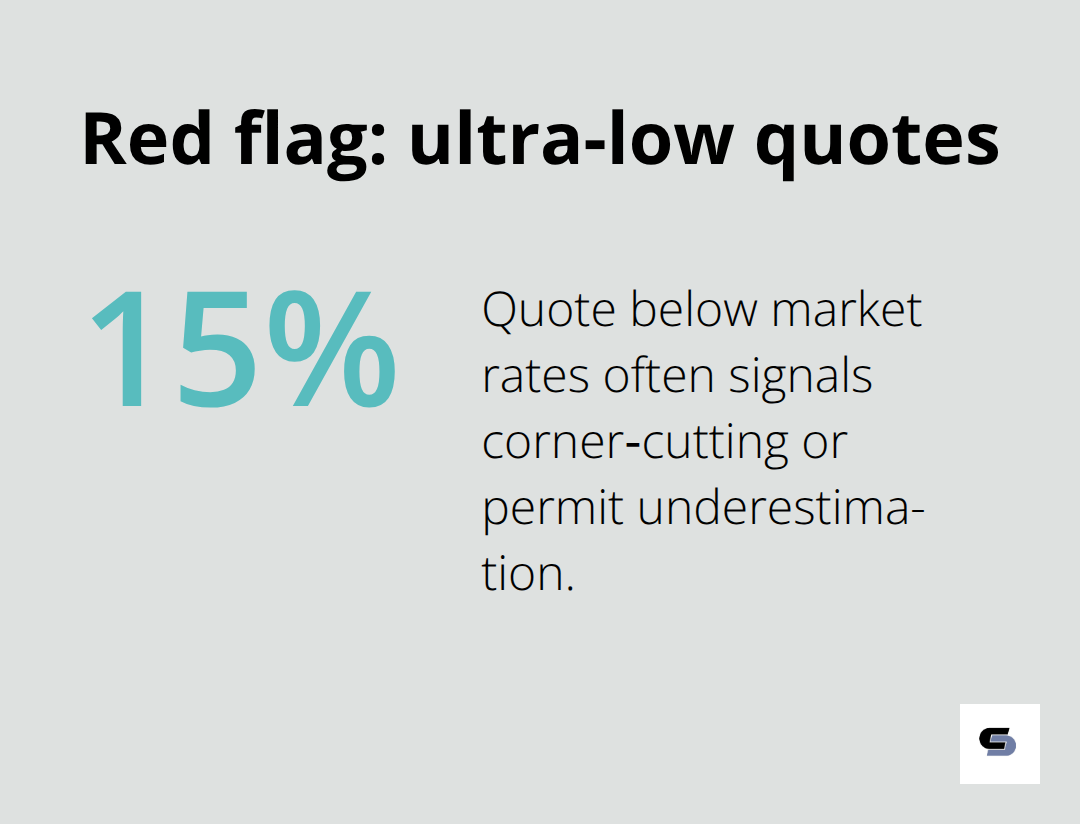
The third mistake is choosing a builder primarily on price without weighing credentials, track record, or communication style. A builder quoting 15 per cent below market rates either cuts corners on materials and labour or does not account for Melbourne’s permit complexity, heritage overlays, or council-specific requirements. Extensions that start cheap often finish expensive-delays cost money, and poor workmanship requires costly rework.
Verify Building and Plumbing Commission registration, check the Disciplinary Register for any disciplinary history, and speak to at least two recent clients about on-time delivery and communication. A builder willing to invest time explaining their process, showing detailed portfolios, and answering compliance questions demonstrates professionalism that protects your investment far better than a discount price ever will.
How to Compare Builders Without Falling for Low-Ball Quotes
Request that each builder provide a detailed scope of works, a timeline with permit and inspection milestones, and a payment schedule tied to completed stages. Ask how they handle variations-do they require written sign-offs before work changes, or do they allow verbal approvals that inflate costs later? Question how they manage subcontractors (plumbers registered with the Building and Plumbing Commission, electricians licensed through Energy Safe Victoria, and asbestos removalists licensed by WorkSafe Victoria). A builder who answers these questions thoroughly and provides written documentation shows they operate with systems that prevent surprises. Those who offer vague responses or pressure you to decide quickly operate without the rigour that Melbourne’s complex permit environment demands.
Final Thoughts
Selecting the right home extension builders Melbourne requires verification at every step. The builders you choose must hold current Building and Plumbing Commission registration, carry valid domestic building insurance, and demonstrate a track record of on-time delivery through verifiable client references. Their portfolios should show completed extensions similar to yours in scope and complexity, and they must articulate a clear compliance process that accounts for planning permits, building permits, mandatory inspections, and final certification before handover.
Due diligence separates homeowners who finish projects on budget from those who face cost blowouts and delays. Obtain at least three written quotes with itemised breakdowns, compare what each builder includes and excludes, and ask how they handle variations and subcontractor management. Speak to recent clients about whether work started and finished on schedule, whether communication remained transparent, and whether the builder respected neighbours and managed waste properly (check the Disciplinary Register for any disciplinary history as well).
Contact builders who meet these criteria and request detailed scope documents, timelines with permit milestones, and payment schedules tied to completed construction stages. We at Cameron Construction have spent 40 years delivering double storey extensions, ground floor additions, and full house renovations across Melbourne. Discuss your extension with us to see how our experience protects your investment.