Heritage Style Renovations Melbourne: Preserving Character in Modern Extensions
Melbourne’s heritage homes tell stories through their architecture, but adding modern space doesn’t mean losing that character. We at Cameron Construction work with homeowners who want to extend their properties while keeping the charm that makes their homes special.
The challenge isn’t choosing between heritage style renovations in Melbourne or contemporary comfort-it’s doing both well. This guide shows you how.
What Makes Melbourne’s Heritage Homes Worth Protecting
Melbourne’s heritage homes represent more than nostalgia. Properties built before 1940 command a 15-20% price premium over comparable non-heritage homes in inner suburbs like Fitzroy, Carlton, and South Yarra, according to real estate analysis across Melbourne’s council areas. This value reflects the quality of original construction-solid brick walls, high ceilings, and craftsmanship that modern building standards struggle to replicate affordably. When you own a heritage property, you hold an asset that appreciates because of its character, not despite it.
Understanding your home’s heritage status
Not every old house qualifies as heritage. Melbourne’s councils maintain specific heritage registers that identify properties with architectural, historical, or cultural significance. A home built in the 1920s might receive protection while an identical 1960s property doesn’t. Check your council’s heritage overlay before planning any extension-this determines what you can and can’t modify. Abbotsford, Hawthorn, and Toorak have particularly strict controls because entire precincts receive heritage listing. The Victorian Heritage Database and your local council’s planning department provide free access to this information. Knowing your home’s specific heritage status prevents costly permit rejections later.
The architectural elements that define value
Victorian terraces feature ornamental iron lacework, pressed metal ceilings, timber skirting boards, and original window joinery that define their appeal. Weatherboard cottages rely on proportional facades, pitched roofs, and symmetrical features. Edwardian homes showcase decorative brickwork and distinctive cornicing. These elements serve as structural and visual anchors that buyers notice immediately. Removing or altering them, even partially, triggers council scrutiny and significantly reduces your property’s market appeal.
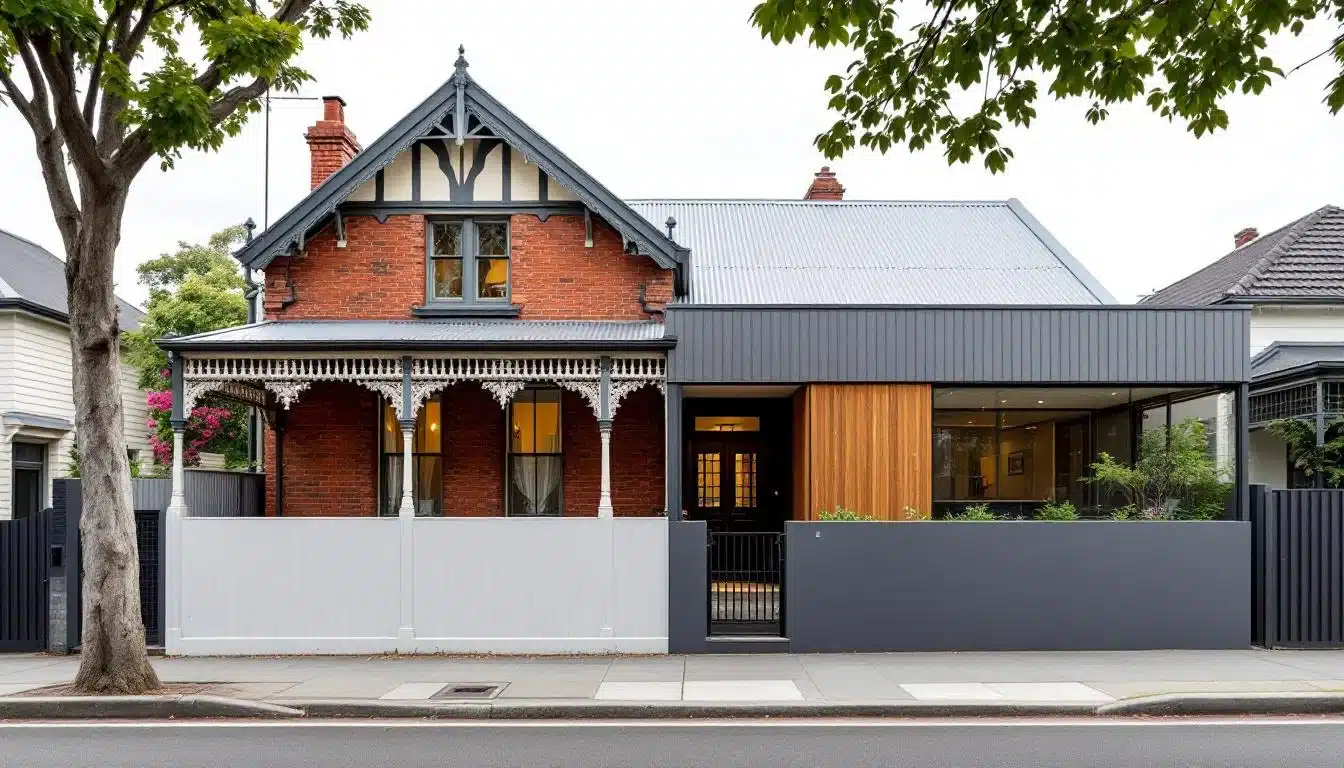
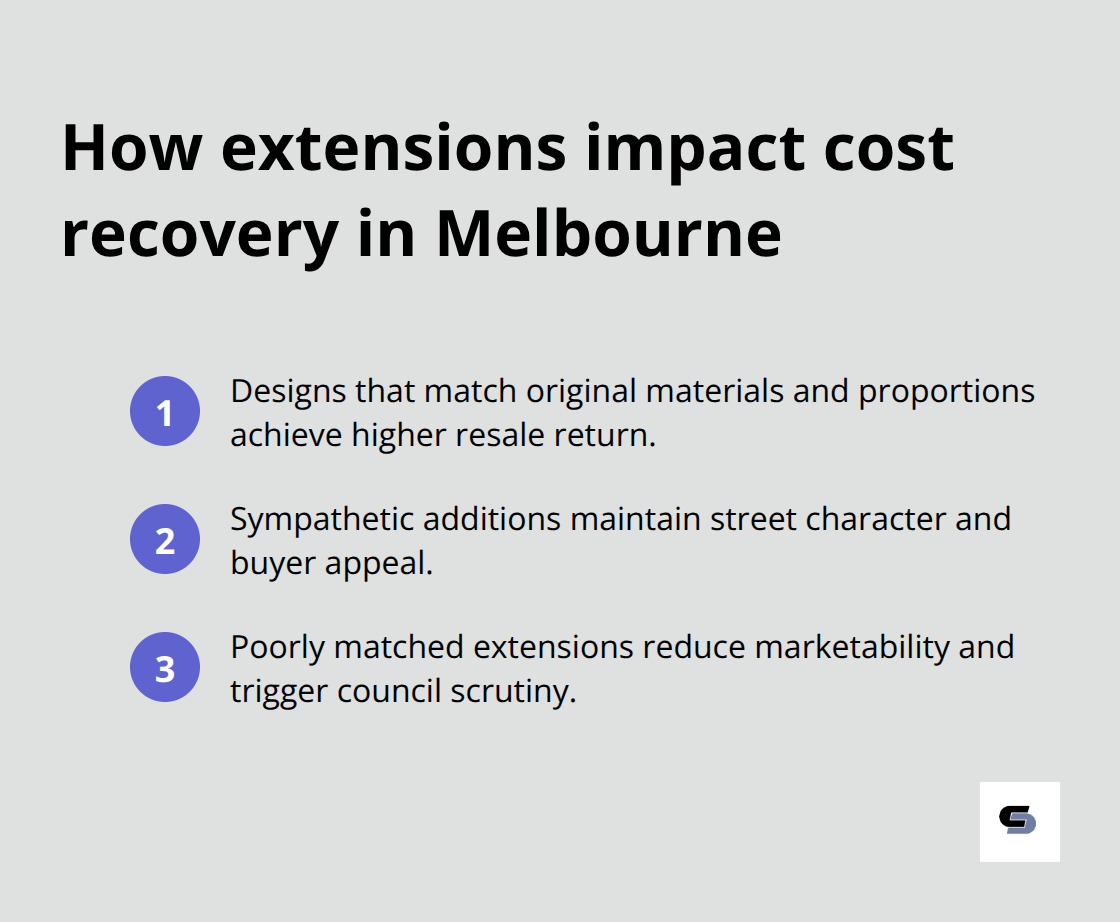
Extensions that respect these elements-by matching materials, proportions, and setbacks-add genuine value. Poor heritage extensions that ignore original design typically recoup only 60-70% of their build cost, whereas sympathetic additions achieve 85-95% cost recovery based on Melbourne’s extension market data. This difference matters substantially when you consider selling or refinancing your property.
The real opportunity lies in understanding how modern extensions can work alongside heritage features rather than against them. Council requirements and design principles shape what’s possible, and getting this balance right from the start determines both your project’s success and your home’s future appeal.
Getting Heritage Approval Right from the Start
Council requirements shape what’s possible
Melbourne’s councils treat heritage properties differently, and understanding these requirements before you design anything saves months of delays and thousands in redesign costs. Most heritage overlays restrict what you can do to the front facade, side setbacks, and roof forms, but they’re far more flexible with rear extensions and ground floor additions that remain hidden from the street. Abbotsford, Hawthorn, Carlton, and South Yarra councils require heritage permits alongside standard planning approval, which adds 4-8 weeks to your timeline.
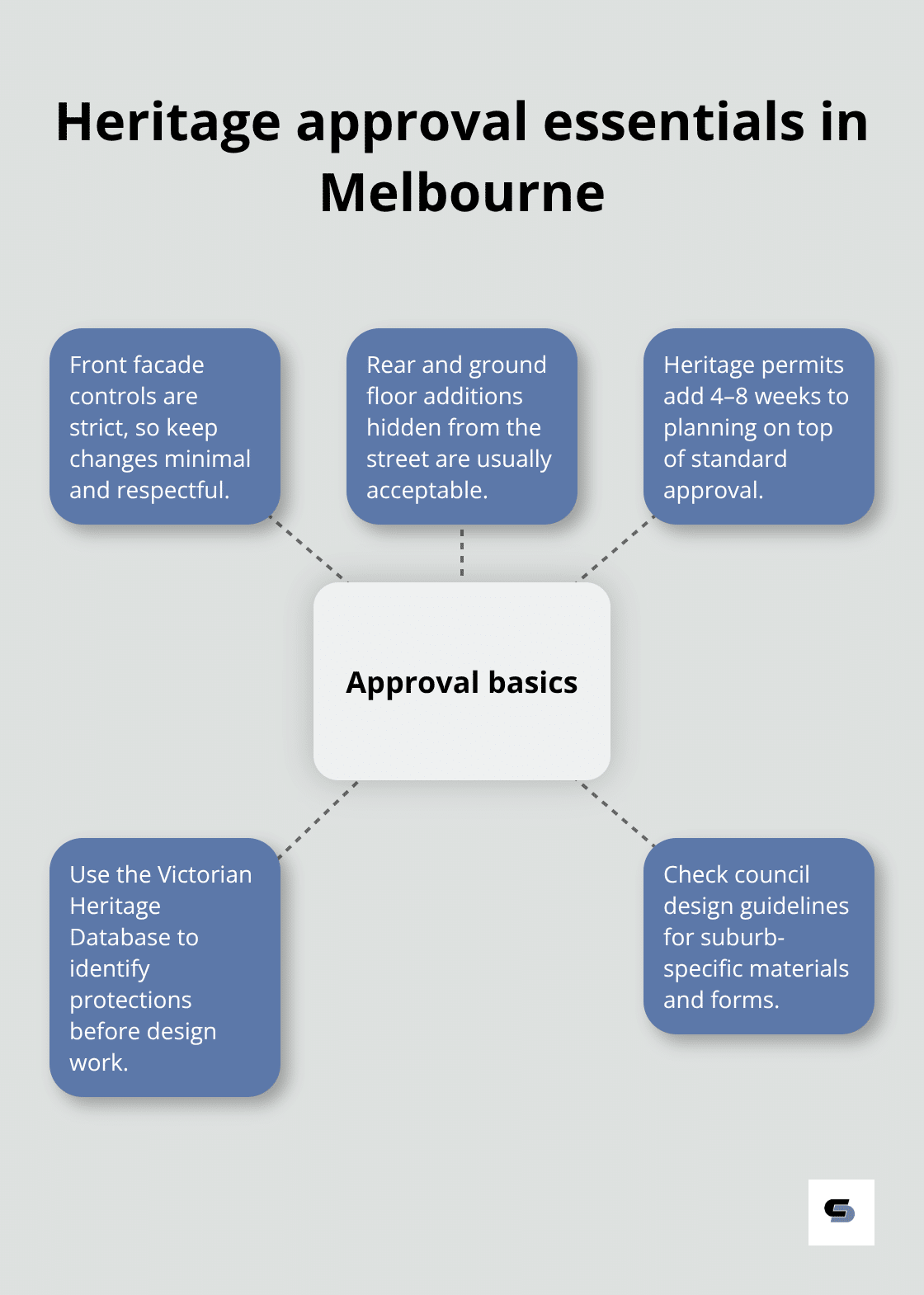
The Victorian Heritage Database lists every protected property, and your council’s planning department provides detailed heritage design guidelines specific to your suburb’s architectural character.
Reading guidelines prevents expensive mistakes
Many homeowners assume their extension needs complete redesign when council rejects it, but the real issue is usually setbacks, materials, or proportions that the guidelines spell out clearly. Reading these documents upfront costs nothing and prevents expensive mistakes. Your council won’t accept modern materials that clash with original construction-so render that matches existing brickwork, roof tiles in the same profile and colour, and timber joinery that echoes original windows aren’t optional extras, they’re baseline requirements. This typically costs 15-25% more than standard construction, but it’s the cost of respecting your home’s character, not a design flaw.
Heritage architects accelerate approvals
Heritage architects understand these constraints and design around them, creating additions that feel natural rather than bolted-on. They know which setbacks trigger less scrutiny, how to position extensions so they’re barely visible from the street, and which materials councils approve without negotiation. Working with a heritage-experienced designer isn’t luxury-it’s the fastest path through approvals because they speak the council’s language and anticipate objections before you submit. Extensions that ignore heritage character get rejected or forced into redesigns that destroy the initial concept, whereas sympathetic designs move through approvals cleanly because councils see genuine respect for the original home.
The material choices and design decisions you make now determine whether your extension enhances your property’s heritage value or undermines it. Getting these foundations right opens the door to practical solutions that actually work within Melbourne’s regulatory environment.
Making Heritage Materials Work in Practice
Sourcing materials that match original construction
Victorian brick rarely matches modern equivalents because clay composition, firing temperatures, and colour variations have changed dramatically over 100+ years. Reclaimed bricks from demolition sites across Melbourne offer the closest match, though this approach adds 20-30% to material costs and requires patience to locate the right stock. When reclaimed materials aren’t viable, specification becomes critical: your heritage guidelines will demand bricks within a specific colour range and texture profile, which means working with suppliers who stock heritage-matched ranges rather than standard builder’s ranges.
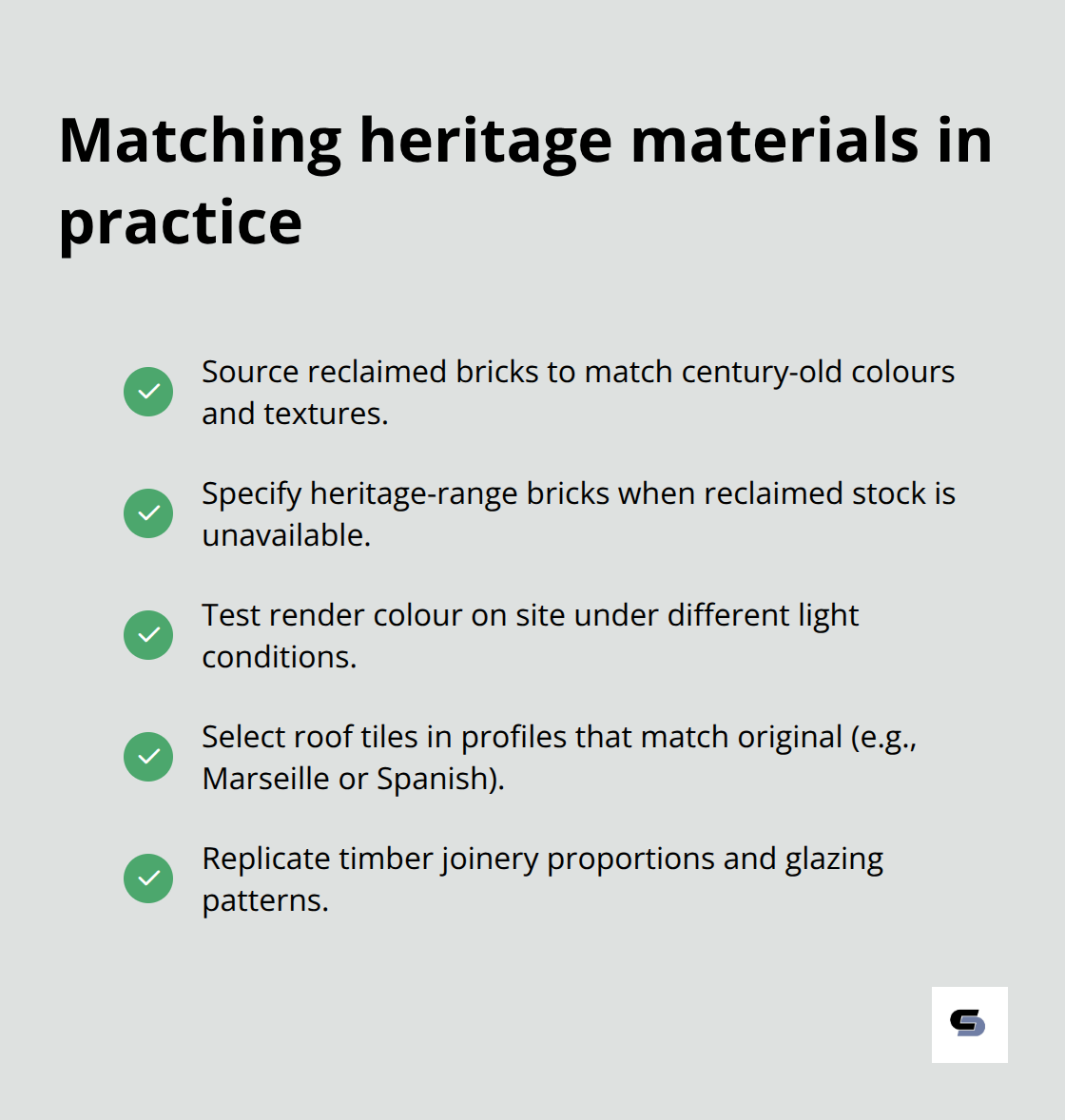
Render colour matters equally-councils across Melbourne’s heritage suburbs reject bright white or modern grey finishes because they clash with original palettes. Matching existing render requires samples tested against your home’s facade in different light conditions; what looks correct indoors often appears wrong on site. Roof tiles present another practical challenge: original profiles like Marseille or Spanish tiles cost 40-60% more than modern alternatives, but modern tiles in matching profiles exist and councils increasingly accept them if the visual result matches the original.
Timber joinery for windows and doors follows the same principle-replicate original proportions, glazing patterns, and material rather than installing contemporary frames that destroy the facade’s rhythm. These material decisions aren’t aesthetic preferences; they’re the foundation that determines whether your extension receives approval or triggers redesign requests that consume months.
Positioning extensions to minimise council scrutiny
Rear extensions and ground floor additions that sit behind the primary street facade face minimal heritage scrutiny because they remain invisible from public view. This means you can use more contemporary materials, larger windows, and modern structural solutions without triggering objections. Double storey additions above existing single storey rear sections work particularly well because the original home’s character remains untouched from the street.
Setbacks matter enormously: pulling your extension back from side boundaries creates visual separation that councils view as respectful rather than confrontational. Most heritage guidelines specify minimum setbacks from original walls, typically 0.5-1 metre, which creates a visual break that prevents the extension from appearing as part of the original structure. This approach costs slightly more in design complexity but accelerates approvals dramatically because it demonstrates genuine understanding of heritage principles rather than pure convenience.
Navigating heritage permits effectively
Planning permits for heritage additions require detailed heritage impact statements that address how your design respects original character. Submitting drawings that already demonstrate this respect-through material matching, setback positioning, and sympathetic proportions-makes council assessment straightforward rather than contentious. The permit timeline for heritage properties typically extends 4-8 weeks beyond standard applications, but this assumes your submission addresses council requirements comprehensively from the first lodgement.
Poor submissions that ignore heritage guidelines trigger requests for information that extend timelines to 12+ weeks. Getting the fundamentals right upfront matters far more than rushing to lodge incomplete documentation. Heritage architects understand these constraints and design around them, creating additions that feel natural rather than bolted-on. They know which setbacks trigger less scrutiny, how to position extensions so they’re barely visible from the street, and which materials councils approve without negotiation.
Final Thoughts
Heritage style renovations Melbourne properties require you to treat your original home as the foundation rather than an obstacle. Modern extensions that respect period character deliver functionality without erasing the qualities that made your property valuable in the first place. The 15-20% price premium that heritage homes command reflects genuine market recognition that character matters, and sympathetic additions preserve that advantage while solving real space problems.
Extensions designed around council requirements, built with materials that match original construction, and positioned to protect street-facing character move through approvals cleanly and recoup 85-95% of build costs. Poor heritage extensions that ignore these principles face rejection, redesign delays, and poor cost recovery. The difference isn’t complexity-it’s understanding what councils actually require and designing accordingly from day one.
Contact Cameron Construction to discuss how your heritage home can gain the space you need while keeping the character that matters. We work through the entire process from concept through to completion, handling planning permits, council negotiations, and BCA compliance so you navigate these complexities with expert guidance. Whether you’re planning a rear extension, ground floor addition, or double storey extension, we understand how to make heritage properties work harder without losing what makes them special.