Ground Floor Extensions That Transform Narrow Lots Into Open Living Spaces
Narrow Melbourne lots present a real challenge for homeowners wanting more space. Ground floor extensions offer a practical solution that works within your site constraints rather than fighting against them.
At Cameron Construction, we’ve seen how the right extension design transforms cramped properties into homes with genuine open living areas. This guide walks you through the strategies, design approaches, and planning steps that make narrow-lot extensions successful.
Why Ground Floor Extensions Deliver Real Results on Narrow Lots
How Ground Floor Extensions Sidestep Narrow-Lot Constraints
Ground floor extensions work on narrow lots because they spread outward strategically rather than fighting tight boundaries with vertical building. Melbourne’s planning standards, particularly Clause 54, allow ground floor extensions on lots under 300 square metres when designs meet specific setback, height, and site coverage requirements. The key advantage is that a single-plane extension avoids competing for light and air with an upper level, making it easier to comply with daylight rules that protect your neighbours’ windows and private open space. Extensions that meet all Clause 54 standards often qualify for VicSmart approval, which streamlines the permit process to 10 days with no advertising or third-party appeals.
Maximising Space Within Site coverage limits on narrow lots
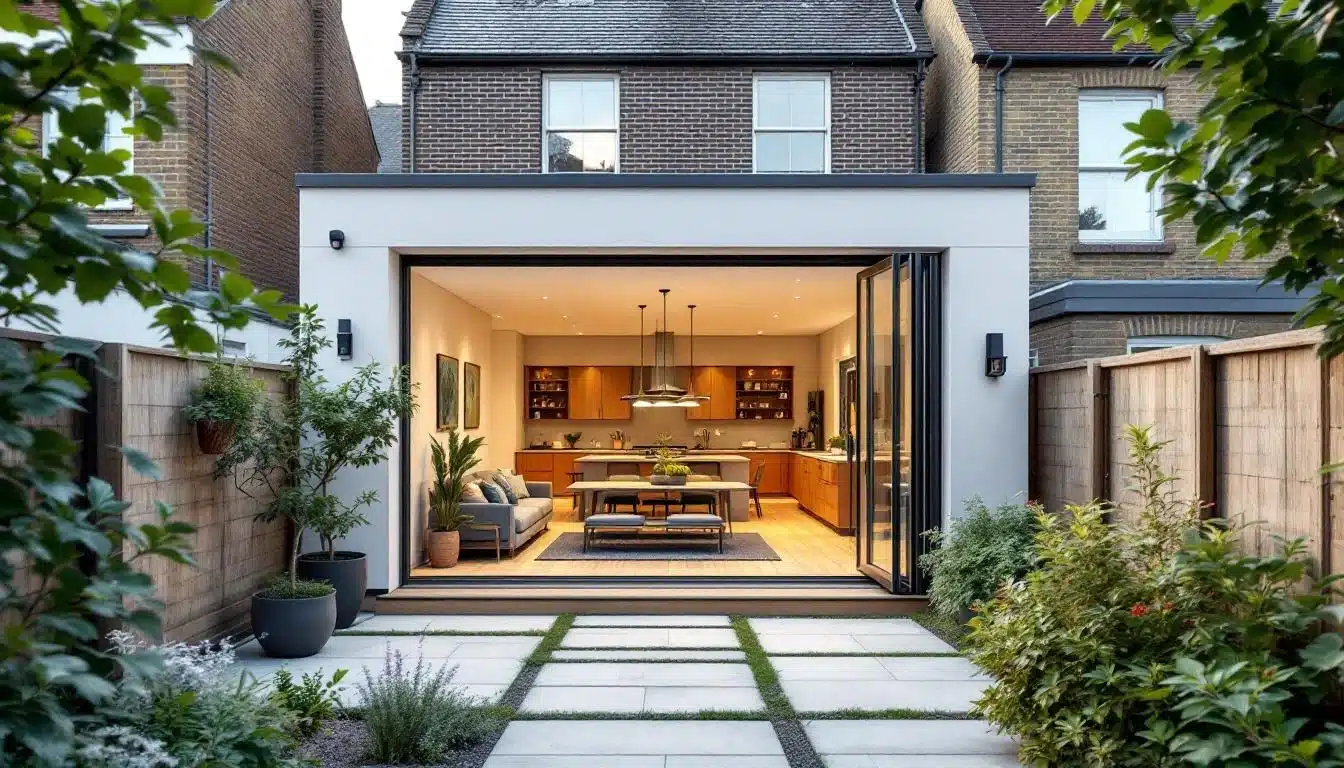
Narrow lots typically limit you to site coverage when designs meet planning standards, which means a thoughtfully designed ground floor addition can stretch across the available width while leaving room for the permeable surface (garden, landscaping, unsealed areas) that planning standards require to manage stormwater runoff. This requirement creates an opportunity rather than a constraint-you integrate outdoor space as part of your living area. A well-planned ground floor extension connects kitchen, dining, and lounge functions into one flowing zone, then opens directly onto a garden or courtyard that feels like an extension of the interior.
Side-Boundary Design and Light Access
Side-boundary design demonstrates how a two-storey extension along one boundary can increase usable space while preserving light access. The extension pulls the living area outward and sideways rather than upward, reducing overshadowing concerns that would otherwise trigger complex setback calculations for taller walls. On a narrow lot where every square metre counts, this horizontal approach delivers more functional living space per dollar spent and avoids the design compromises that come with fighting vertical restrictions.
The practical benefit of ground floor extensions lies in how they create genuine open living without the structural complexity of stacking. This foundation sets the stage for understanding the specific design strategies that make these extensions work effectively.
How to Design Ground Floor Extensions That Feel Spacious on Narrow Lots
Glazing and Materials Control Light Flow
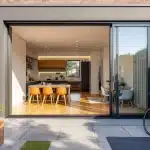
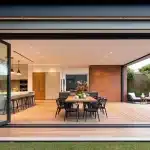
Ground floor extensions on narrow lots succeed when you treat materials, layout, and storage as interconnected design decisions rather than separate choices. Glazing and material selection directly control how light moves through the space, which affects how open the extension feels even when side boundaries physically constrain it. Large windows facing north or east capture morning light and reduce the sense of enclosure that narrow extensions can create. Frameless glass sliding doors between the existing house and the extension eliminate visual barriers, so the eye travels continuously from interior to exterior without stopping at a threshold. Polished concrete floors or light-coloured timber that runs from inside to outside further dissolve the boundary between indoor and outdoor zones, making the total usable area feel larger than the extension footprint alone. North-facing glazing on narrow lots delivers consistent daylight without the heat gain of full-day western exposure, meeting Clause 54 daylight standards while maximising the psychological benefit of natural light.
Open-Plan Layouts Eliminate Visual Fragmentation
Open-plan layouts work on narrow blocks because they eliminate internal walls that fragment space and trap shadows. A single flowing zone with kitchen at one end and seating at the other allows sight lines to travel the full depth of the extension, creating perceived spaciousness regardless of actual width. This continuous visual connection makes the extension read as larger than its actual dimensions.
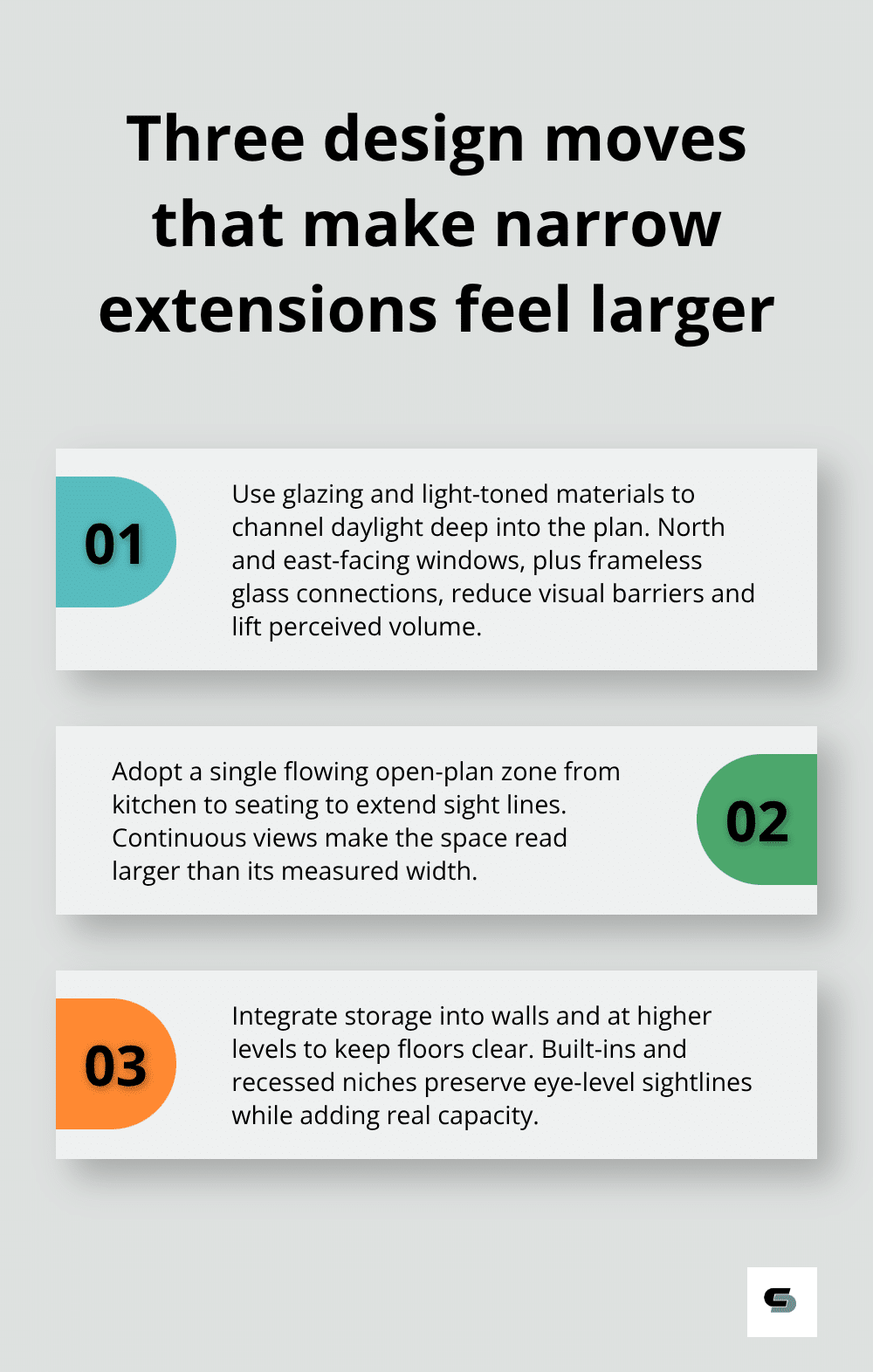
Storage integrated into walls rather than freestanding furniture keeps floor space uncluttered; built-in cabinetry along the side boundary or above bench height removes visual clutter that makes tight spaces feel cramped.
Strategic Storage Maintains Clear Sightlines
Tall storage units with glass doors above eye level store seasonal items without blocking light, while drawers and closed cabinets below keep daily clutter hidden. This strategy works because the extension maintains clear sightlines at human eye level, so the space reads as open despite significant storage capacity. Corner shelving and recessed niches along boundaries capture wasted space without projecting into the room, adding functional storage without sacrificing the flowing layout that defines successful narrow-lot extensions. These design moves preserve the open feeling that makes narrow extensions livable.
With materials, layout, and storage working together to maximise perceived space, the next step involves understanding how Melbourne’s planning framework shapes what you can actually build on your narrow lot.
Planning Approval for Ground Floor Extensions
Understanding Clause 54 and Deemed-to-Comply Standards
Navigating Melbourne’s planning requirements for ground floor extensions starts with understanding Clause 54 of the Victorian Planning Provisions, which governs single dwelling and small second dwelling developments on lots under 300 square metres in specified zones. This clause sets out measurable standards for setbacks, building height, site coverage, and other factors that directly determine whether your extension can proceed smoothly or faces redesign and delays. If your extension meets all applicable Clause 54 standards, it qualifies as deemed-to-comply, meaning the planning decision-maker automatically accepts that the design meets neighbourhood character objectives without needing to evaluate alternative solutions or consider subjective guidelines. This distinction removes ambiguity from the approval process and gives you certainty about what does and does not work on your narrow lot.
VicSmart Approval and Eligibility Standards
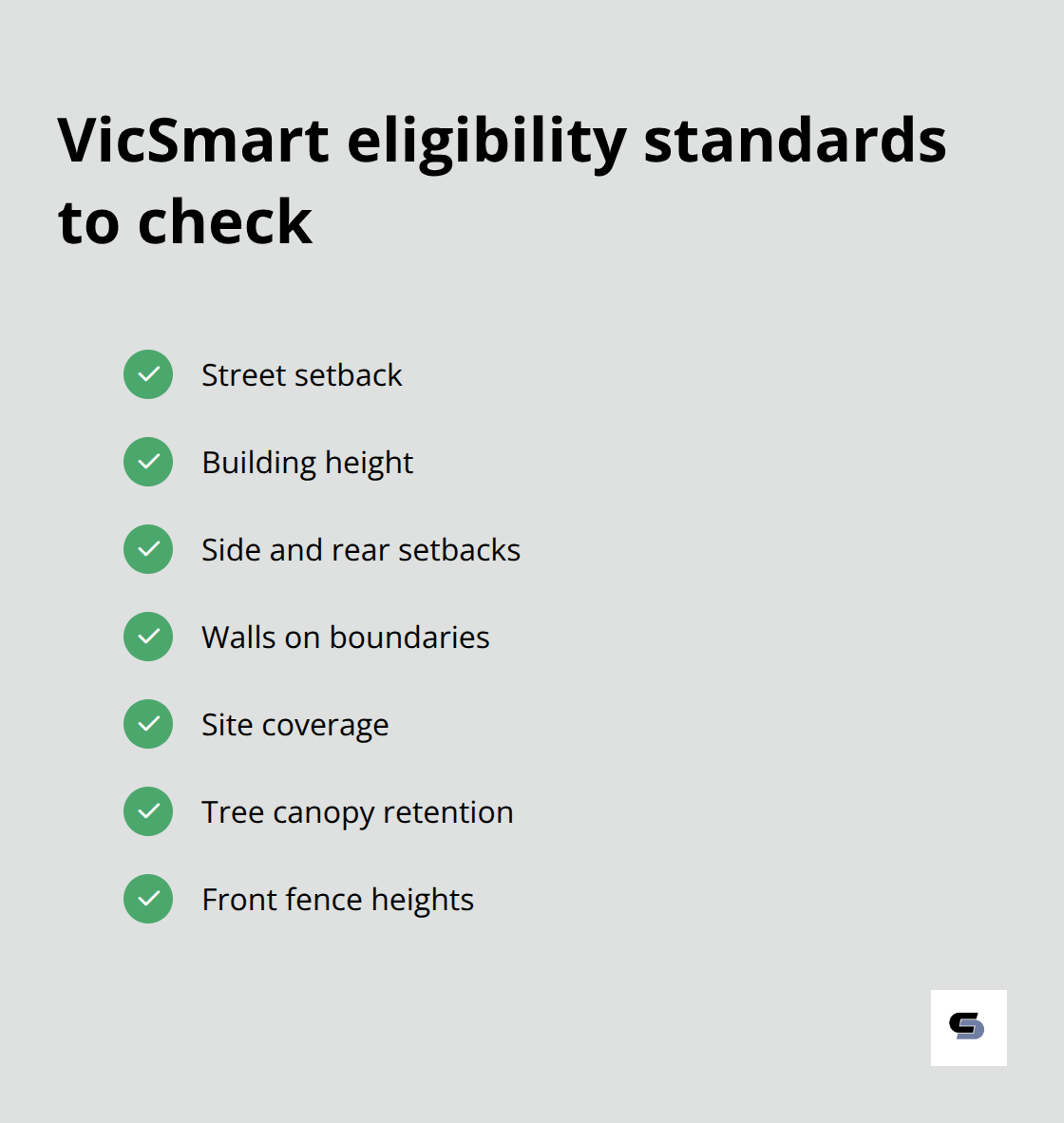
VicSmart streamlines the permit process to 10 days with no advertising or third-party appeals when your extension meets Clause 54 eligibility standards and no other planning provisions apply. The VicSmart standards cover street setback, building height, side and rear setbacks, walls on boundaries, site coverage, tree canopy retention, and front fence heights. For narrow lots, street setback rules typically require a minimum of 6 metres on Transport Zone 2 streets or 4 metres on other streets, though porches, pergolas, and eaves under 3.6 metres high can encroach up to 2.5 metres into this setback, effectively widening your usable living area without triggering a full setback redesign.
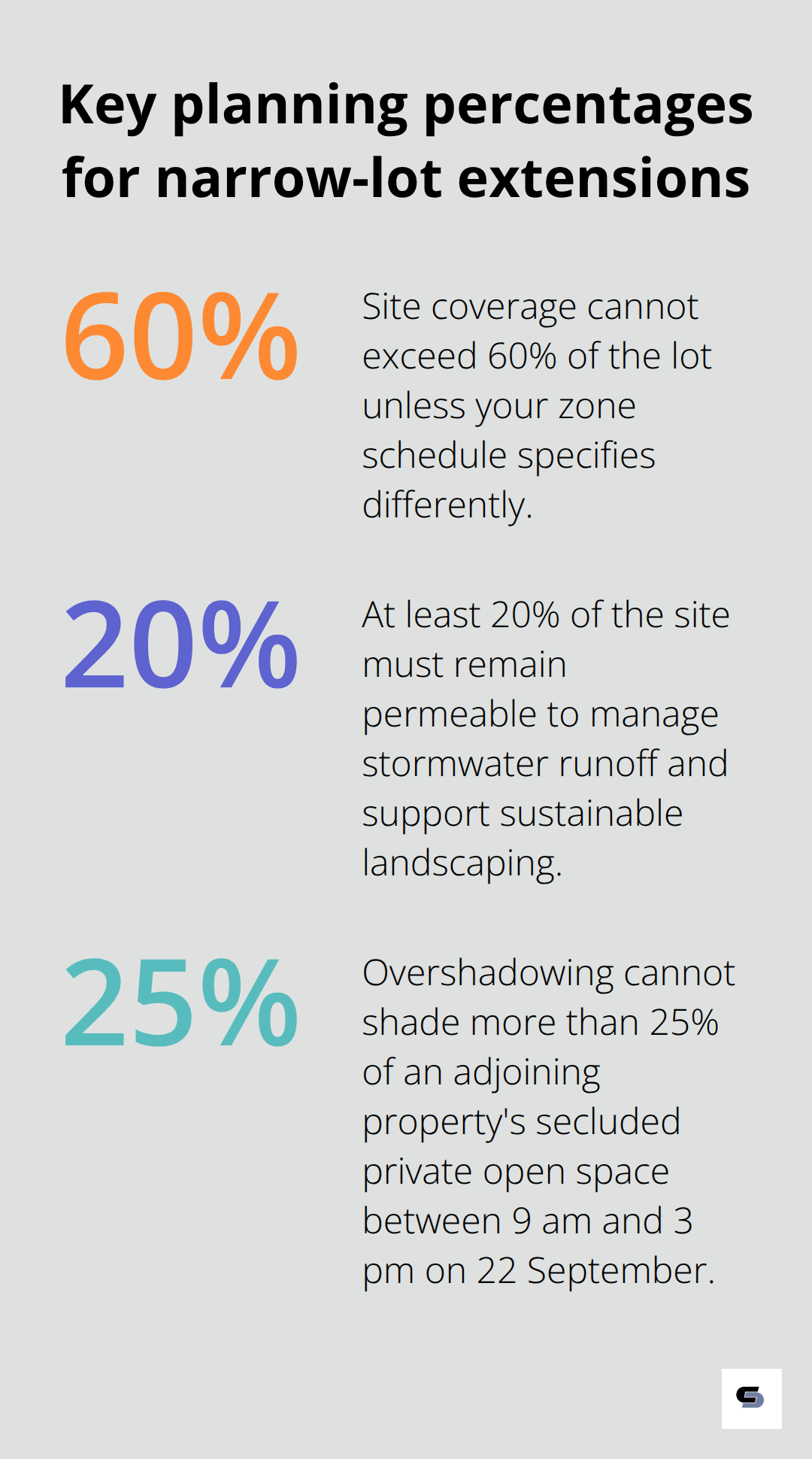
Building height caps at 9 metres on most lots, or 10 metres if your site slopes with cross-sections wider than 8 metres and steeper than 2.5 degrees. Site coverage cannot exceed 60% of the lot unless your zone schedule specifies differently, and at least 20% of the site must remain permeable (grass, garden beds, unsealed surfaces) to manage stormwater runoff and support sustainable landscaping. Ground floor extensions work within these constraints more easily than upper-level additions because they spread horizontally rather than vertically.
Setback Calculations and Boundary Restrictions
Side and rear setbacks adjust with wall height: walls between 3.6 and 6.9 metres high require 1 metre plus 0.3 metres per metre of additional height, while taller walls demand larger setbacks to protect neighbour amenity. Walls on or near boundaries face length restrictions, typically 10 metres plus 25% of the remaining boundary length, which prevents long blank walls from overwhelming adjacent properties. Daylight protection rules require that if your extension faces a habitable window, you must provide a light court of at least 3 square metres clear to the sky. North-facing habitable windows within 3 metres of a boundary need setback adjustments calculated as 1 metre plus 0.6 metre per metre of height over 3.6 metres up to 6.9 metres, plus 1 metre for any height above 6.9 metres.
Overshadowing and Privacy Protections
Overshadowing private open space is restricted: your extension cannot shade more than 25% of an adjoining property’s secluded private open space between 9 am and 3 pm on 22 September, or it must affect less than 40 square metres of that space. Privacy standards limit direct views into a neighbour’s secluded private open space within 9 metres horizontally; if views occur, offset windows by at least 1.5 metres or use fixed obscured glazing or screens.
These specific measurements transform vague planning concepts into actionable design parameters that translate your extension vision into compliant, approvable drawings that Melbourne councils accept without negotiation or redesign cycles.
Final Thoughts
Ground floor extensions transform narrow Melbourne lots by working within your site’s physical constraints rather than fighting them. The strategies outlined in this guide-from maximising width through smart setback planning to using glazing and open-plan layouts that create perceived spaciousness-turn cramped properties into homes with genuine living areas. When your extension meets Clause 54 standards, you gain the certainty of deemed-to-comply approval and often qualify for VicSmart’s streamlined 10-day process, which removes planning uncertainty from your project timeline.
Properties with thoughtfully executed ground floor extensions command stronger resale appeal because buyers recognise functional, light-filled living spaces as genuine improvements rather than afterthoughts. The investment in proper design, compliance, and quality construction pays dividends when you eventually sell, as extensions that respect neighbourhood character and planning standards integrate seamlessly into your home’s value proposition. This long-term value extends far beyond immediate comfort and daily convenience.
Contact Cameron Construction to discuss your ground floor extension and receive guidance tailored to your property and local planning requirements. Our in-house designers and engineers translate your vision into compliant, approvable drawings that councils accept without negotiation, then manage the entire build from permits through completion. If you’re ready to transform your narrow lot into a home with genuine open living, reach out today.